
Disgaea. Disgaea disgaea disgaea disgaea, disgaea. Disgaea disgaea disgaea disgaea disgaea, disgaea disgaea disgaea disgaea (Disgaea, disgaea disgaea!). Disgaea disgaea disgaea. Disgaea . Disgaea disgaea disgaea, disgaea disgaea disgaea – disgaea, disgaea disgaea. Dis. Ga. Ea.
Now that we’ve gotten that out of our system, it would be a good time to mention that Demons’ Night Fever, the latest mad turn-based strategy brainchild from Disgaea creator Sōhei Niikawa, is nothing like Disgaea.
It has been three years since the last main-series entry (Disgaea 7: Vows of the Virtueless), so it’s understandable that fans of the beloved series are chomping at the bit for another slice of infinite-progression silliness. But Niikawa is at pains to point out that Demons’ Night Fever takes a very different approach to the genre, even though he understands why the audience just wants to hear the hits.
“I do feel that [weight of expectation] yes,” Niikawa tells me. “I think people are looking for something similar to Disgaea, but since I have gone independent the Disgaea series is something that I want to entrust to Nippon Ichi Software going forward. I set out to create something that doesn’t exist already, something completely new. The Disgaea games, and everything else that I created at Nippon Ichi, are really important to me as experiences that I’ve had. But to me they’re now in the past, and I want to look towards a new path that I can take, where I can create new things that haven’t been made yet.”
He’s certainly leaning into that ambition, given that there were no fewer than six games shown at Tokyo Game Show that Niikawa has worked on in some way. The man is nothing if not prolific. “Each of those games are quite different from one another, and they’re quite unique as games on the whole,” he says. “And I feel that that unique and new element that I can bring is kind of my purpose for being here. I hope that, going forward, I’ll be able to create more new and original games in the future as well.”
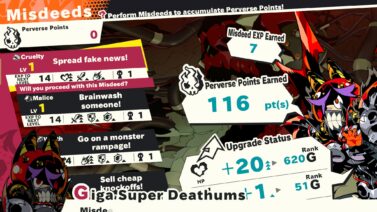
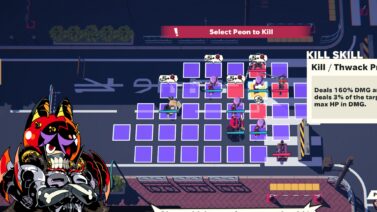
Which explains why Demons’ Night Fever turns the genre on its head. There are familiar elements, certainly – the game plays out on a familiar-feeling grid, you can perform a limited number of actions during your turn, and you trade blows with enemy units. But in this roguelike twist, rather than strategically positioning your units and trying to keep them alive or grow their capabilities, here your units (called peons) do whatever they want unbidden and you’re actively encouraged to kill them.
Battles are broken down into four main phases, a player turn, followed by a peon turn, an enemy turn, and then another player turn. In the first phase you can position yourself, but in the second you must watch your peons crack on without your influence. They’ll still attack the enemy if they get into range, but for anyone used to precise manoeuvrings of SRPGs, watching your army dash towards the opposition on their own steam feels dangerously chaotic.
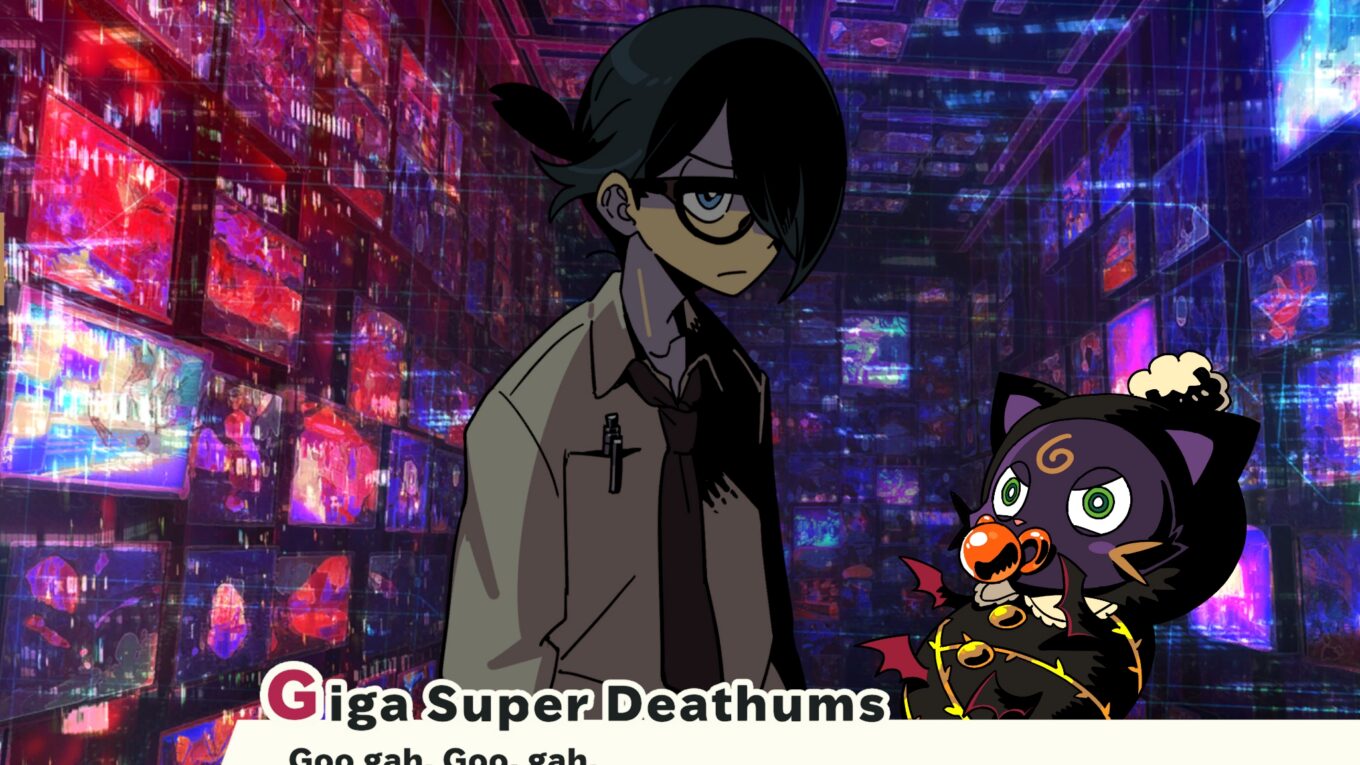
As is so often the case for managers, the reason they can’t be corralled is that they simply don’t respect you. Where once you were Giga, The God of Evil, now you’ve been turned into a baby as a prank and your treacherous butler, Sebastian, has taken it as an opportunity to seize power. Unable to inflict much damage yourself, your only option is to turn to evil misdeeds and use your peons as cannon fodder.
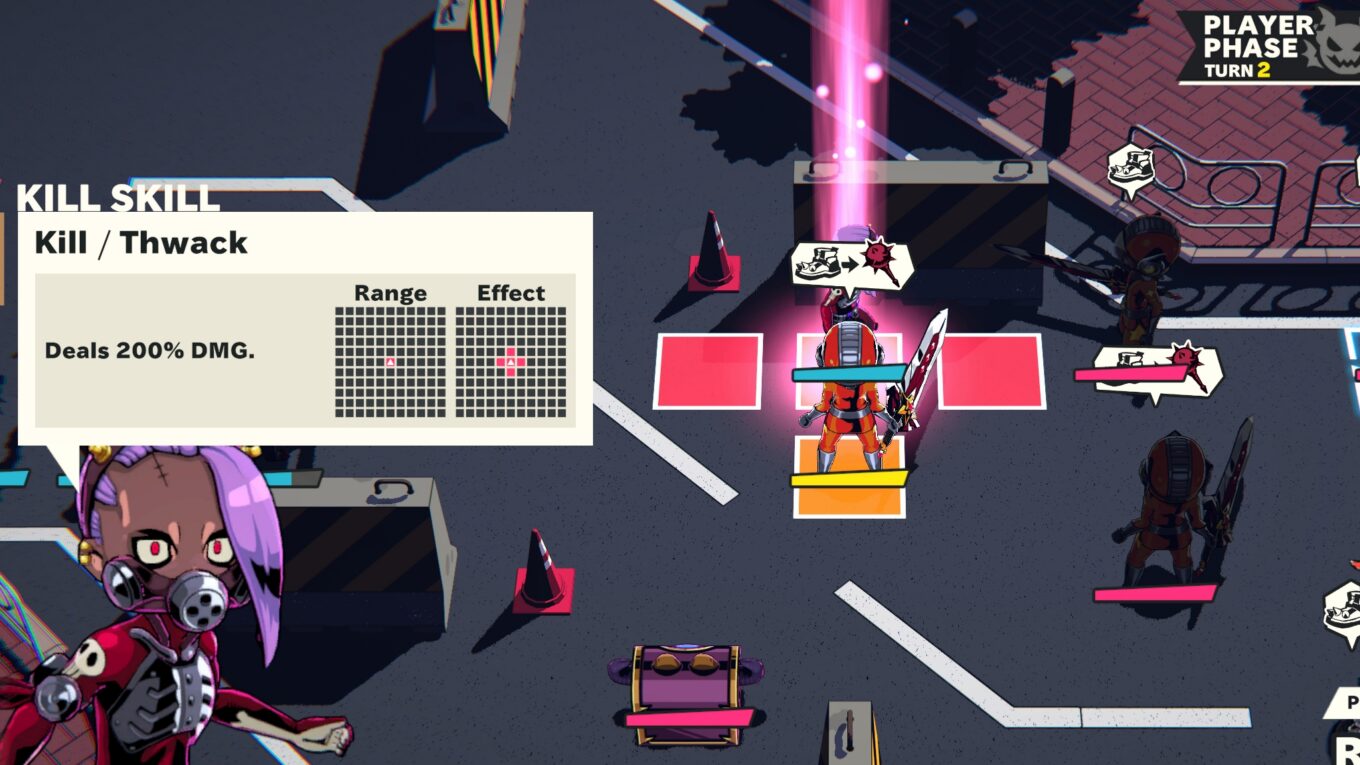
Killing a peon will trigger a range of different kill skills, which you can use to turn the tide of battle in your favour. It might be inflicting damage to every adjacent grid square, or a long line of damage emanating out from the position that they’re standing in. Some also allow you to pull enemies towards you. Once they’re dead, they’re gone, but don’t worry – you can call in additional peons drawn from the pool of abductees that you gather between battles. It is also advantageous for you to strike the blow, to avoid the dire consequences of the enemy getting there first..
“One thing you do need to be careful of is that if the protagonist kills the peons, they reincarnate,” Niikawa explains. “However, if the enemies kill your peons, they never appear again; they’re gone permanently. I realise this sounds a bit odd, but in order to ensure that your peons are not killed by the enemies, you have to carefully go out of your way to meticulously kill them yourself.”
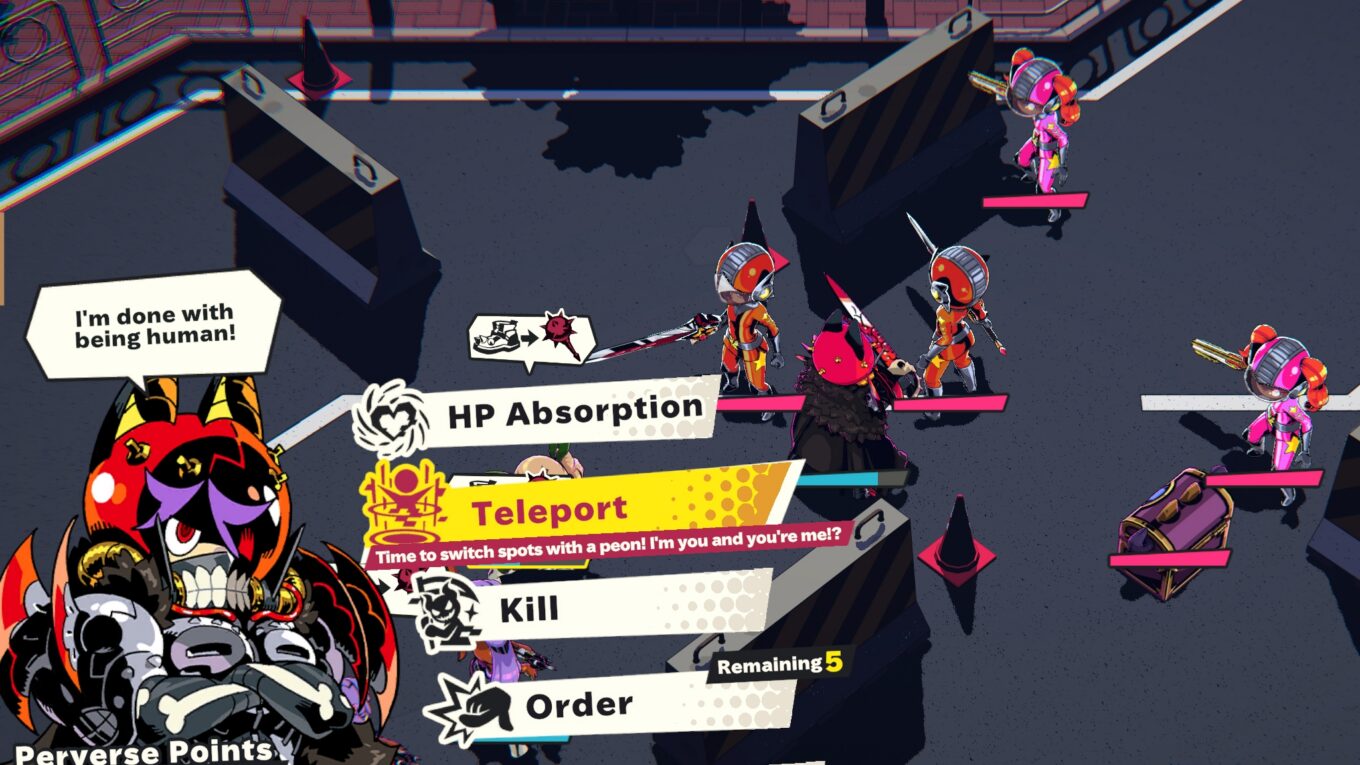
Since you can’t tell them where to stand, you have to rely on other misdeeds, including a teleport ability that swaps your position with any peon. Thus, one entirely acceptable strategy is to run to an enemy, whack them for a small amount of damage, swap positions with a peon, drain their HP to top up your own, and then sacrifice them for the greater bad. How deliciously evil.
“In this game, doing wicked deeds is how you make your protagonist and characters more powerful,” Niikawa explains. “And so in this game, something that is wicked or bad is justice. It is what is right, and it will lead you to a strategic advantage in the game. But when it comes to doing bad things, we had to wrestle with the question of how far can that go, and how far is too far? I think that sensibility differs between individual people, and so that’s something that we had to really work on to find the right balance.
“The idea in there is that it’s something evil, something kind of wicked, but there’s also something kind of comical and funny and you can’t really hold it against the characters who are carrying out these acts. It doesn’t feel like you’re stabbing or shooting a real live person, there’s something with that more comedic feel to it that I think makes it more palatable. It’s really cruel, but for this game that is absolutely the correct way to play!”
The outrageous presentation (which reminds me a little of Capcom classic brawler, Viewtiful Joe) and over-the-top scripting ensure that there is no ambiguity in the tone, and the peons’ frustrated indignation when you stab them in the back is highly amusing, helping to sugar any small sting of guilt you might feel.
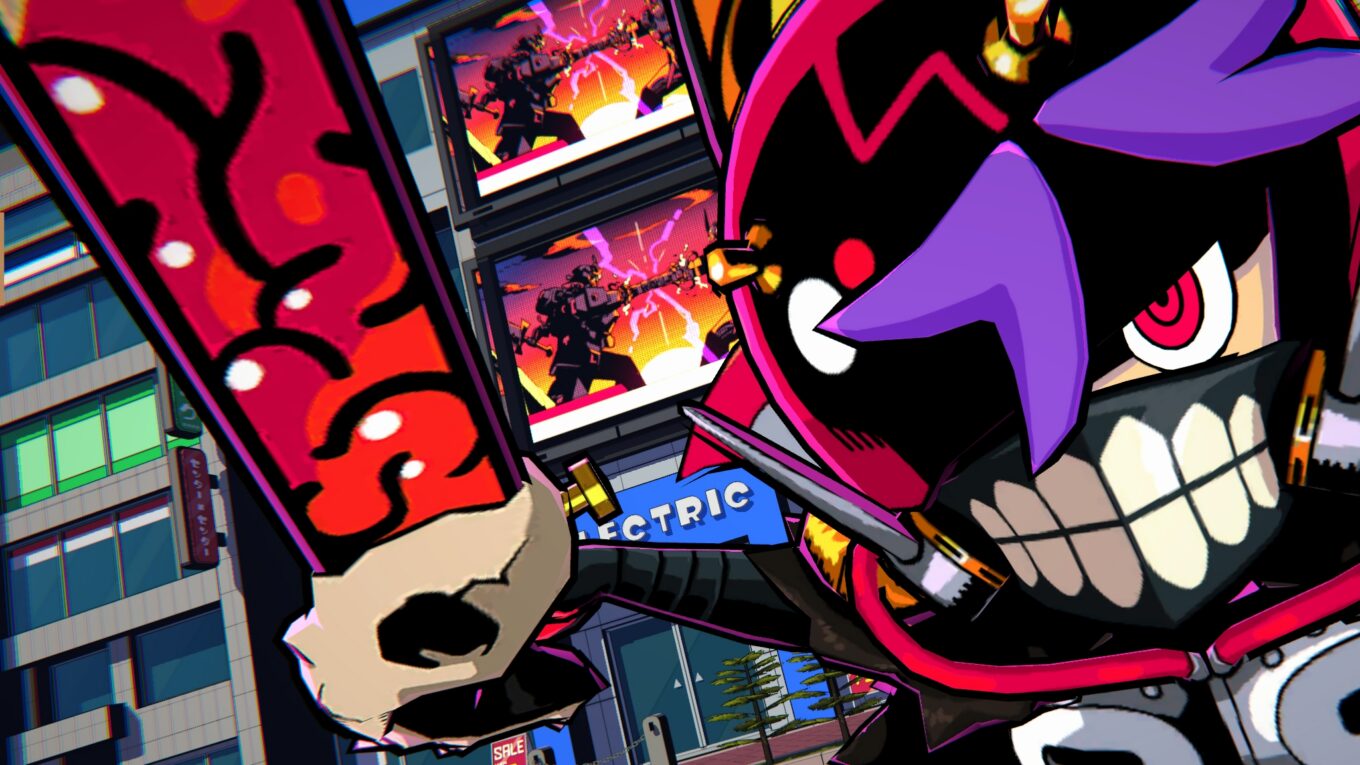
This isn’t just a war of attrition, however. The game is about extracting the most impact from your limited action points in each battle, upgrading your abilities in between them, and successfully conducting the wider roguelike campaign within a 30-day timeframe. Through this, highly strategic play rises out of the chaos. “A crucial strategy that comes into play here is to figure out what you can do within the limited time frame that you have,” says Niikawa. “The way that you play this game is to be constantly considering what action would be the most efficient way to get you towards the goal of completing the game as fast as possible.”
The result is a game that looks chaotic but demands careful planning, in which the best strategy often involves doing something that would result in a restart in any other SRPG. I’ve only spent a few hours with Demons’ Night Fever, but the central conceit is already proving remarkably enjoyable. If the team can maintain the balance between slapstick villainy and serious strategy across the full campaign, Demons’ Night Fever might even stop players thinking about Disgaea for just a little bit.