
Every so often, if I happen to find myself hooning down a remote country lane after dark, I’ll start to think about the unknown. Anything could be lurking in the blackness beyond those weather-beaten field gates, or the reach of my little 2003 Yaris’s weak headlights. Road to Jukai (née Silent Road) plays on exactly this kind of irrational paranoia, casting you as a taxi driver working night shifts in a haunted Japanese forest region infamous for its high suicide rates. You pick up and deliver quirky passengers in an unnerving liminal gloom, listen to their stories, and begin to question whether you really are cut out for night shifts when you start to see things that shouldn’t be there. Hazy Taxi, if you will.
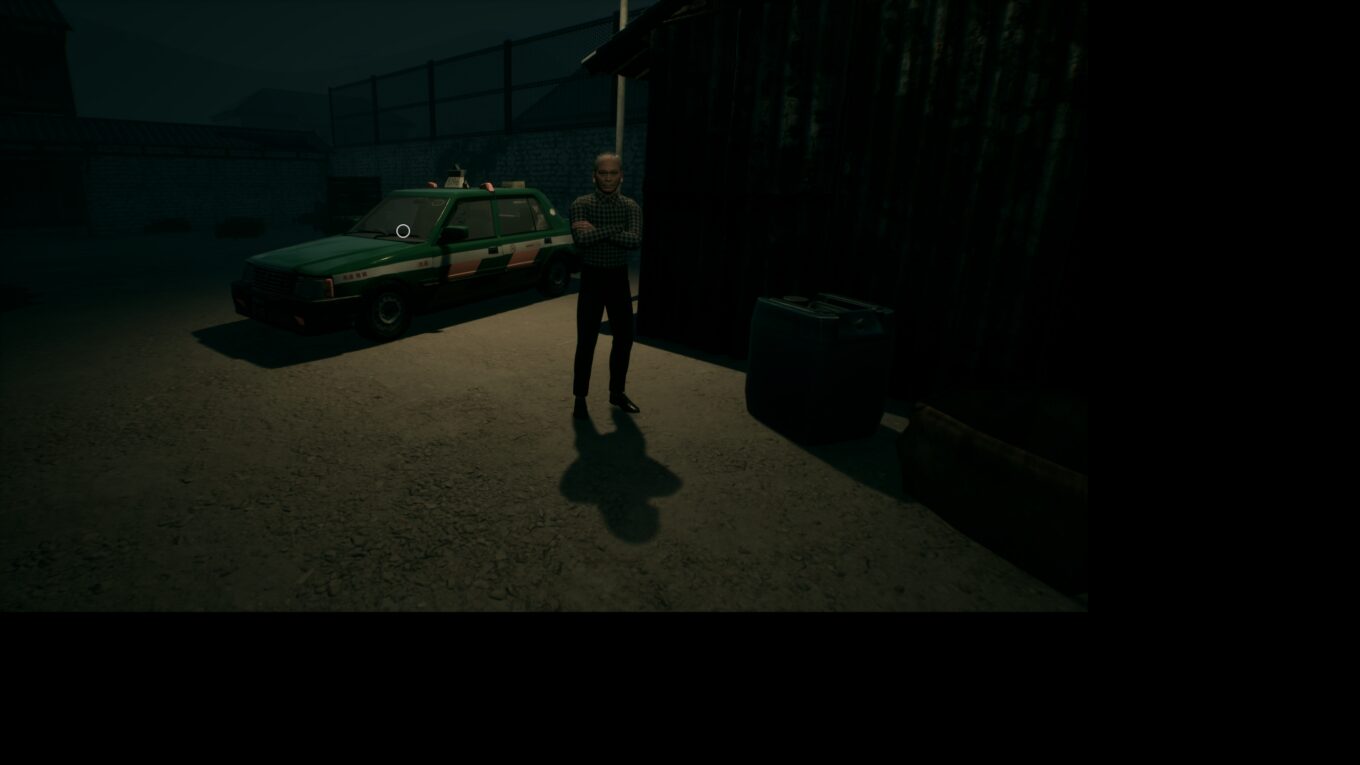
The demo starts with a handover, as your predecessor makes some vague noises about how this particular beat isn’t for everyone, and shows you the ropes on a drive back to his place. There’s no satnav, or road atlas for that matter, so you have to make do with the destination name displayed on your dashboard and good old-fashioned road signs. Click the right mouse button and you’ll look back at your passenger, although (quite rightly) doing so on this first drive results in an instruction to keep your eyes on the road.
You’ll need to, because the road signs are quite difficult to read. You don’t move particularly quickly, but the perma-darkness and colour-drained aesthetic had me straining to parse destination names – even with motion blur, chromatic aberration, and head-bobbing switched off. Perhaps developer Endflame is trying to simulate a shortfall of caffeine, but slightly bigger signs would be helpful. The stop-start navigation makes more sense within the limits of the various villages dotted across the region, though. Local signs will point you to the temple, or tea shop, or bookstore, as you crawl past looking for clues, trying to build a map of the world in your head.
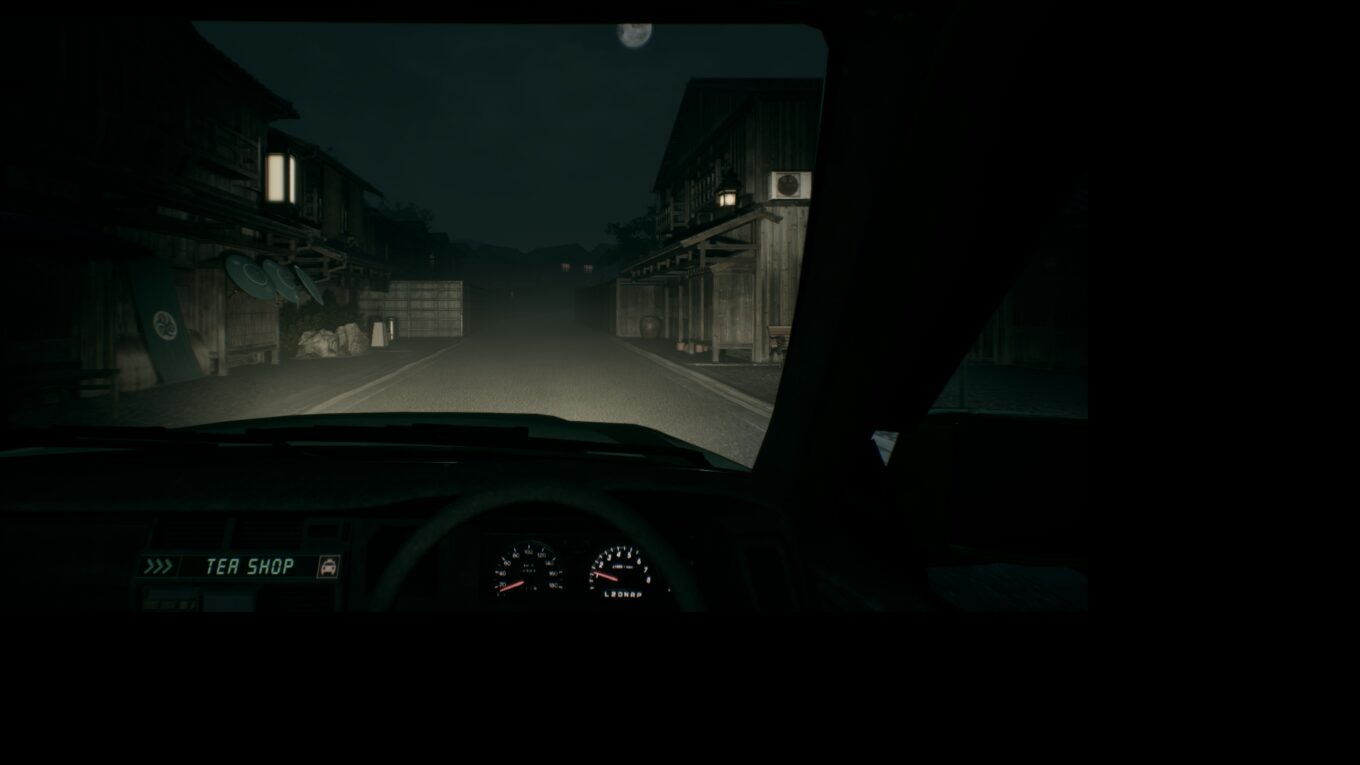
One slight bugbear here is that, while the trailer suggests that you can look around freely while driving, your ability to move the camera is actually heavily restricted while in motion. You can nudge the camera ever so slightly to the left or right, but you need to come to a stop before you can point it wherever you want. I can see the logic that may have led to this implementation, but this isn’t Forza and the speeds we’re dealing with here are not breakneck. When you’re trying to find a location in an unfamiliar town it can feel restrictive, and being able to look around for clues – like, for example, the distinctive architecture of a temple – would add to the immersion.
If you do crash into something, not to worry; there’s no vehicle damage, and your passengers remain impassive even if you roll the car onto its side (which happened to me twice while making slow manoeuvres, and is hopefully just a physics bug that still needs to be ironed out).
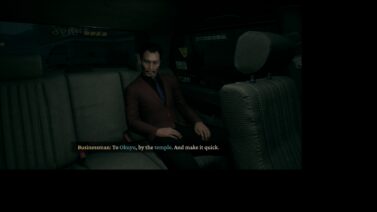
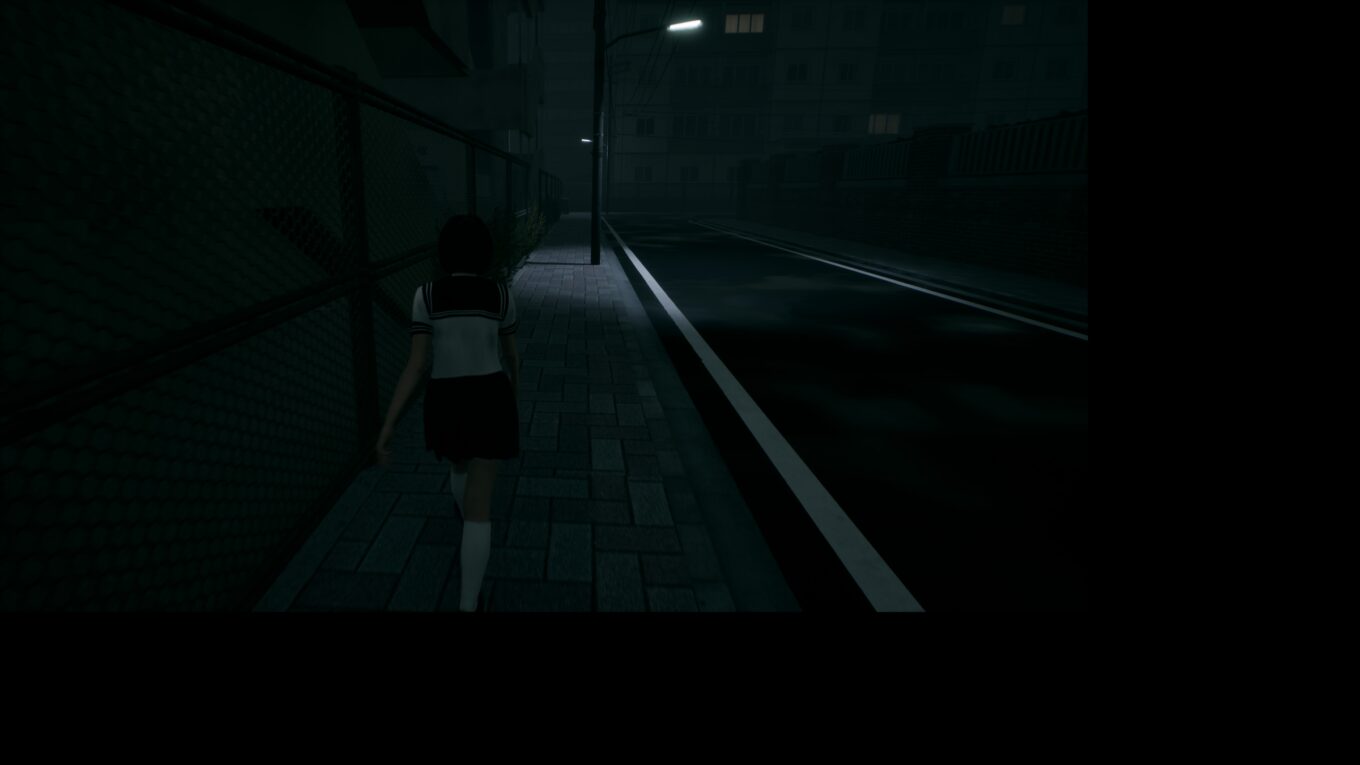
When you arrive at your destination, there’s often a multiple-choice conversation with your passenger (it’s a shame that these haven’t been integrated into the drives, which are usually conducted in silence and start to feel quite samey, even in the short demo), and perhaps a request. This might be as simple as walking someone to their door, but the moment you step out of your taxi you feel immediately vulnerable. Everything in this world feels off, putting you on edge, so when something as innocuous as a door opening occurs while escorting a student back to their flat, you jolly well follow suit when they begin to leg it.
A much better scare occurs on the way back to your car, however, when you turn a corner and clatter into an eager prospective customer, who has run up the stairs after having seen you from the street. It’s a playful moment, leaning into your already frayed nerves to make a friendly business opportunity spook you. And it’s emblematic of a tongue-in-cheek undercurrent that runs through the game – although it’s not in the demo, the trailer includes a moment where you play camera person to an amusingly depicted, and probably doomed, YouTuber – and serves to keep you on your toes. You’re never sure if the next moment will bring an idiosyncratic gag or a fright.
And perhaps that lack of predictability is where the long, uneventful drives start to make sense. Having slipped into a bout of highway hypnosis during a long drive home near the end of the demo, I was genuinely startled – to the point of letting out a little yelp – when I ran into a woman who suddenly appeared out of the blackness ahead of me. I slammed on the brakes, of course, and could only see the outline of something lying on the road in the beam of my headlights. Getting out of the taxi (you can only do this when prompted, rather than whenever you like), I apprehensively wandered over with a flashlight to discover only an umbrella.
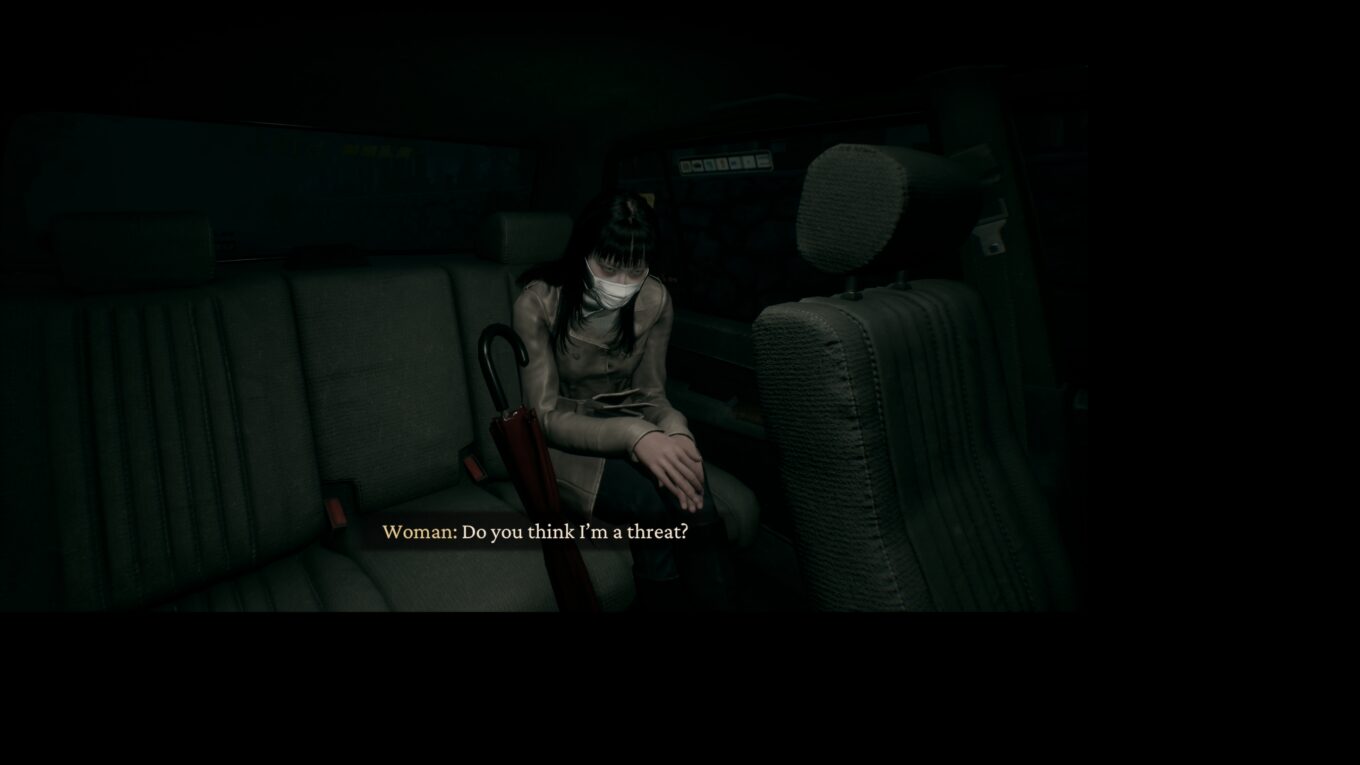
The situation worsened when I returned to the supposed safety of my idling taxi only to hear the words, “don’t look back” after setting off. This time it wasn’t road safety advice, but a warning from the spooky road lady, now in my back seat and looking a bit worse for wear. After a brief but unnerving chat, she disappeared again and I drove home – presumably to endure a series of nightmares until the next shift.
The brief demo lasted less than an hour, but it sets out an intriguing pitch in that time. It kicks off at the start of the game and things only get going towards the end, so initial impressions are affected by the fact that the vast majority of it consists of prosaic driving. But the slow build and effective jump scares nod to Silent Hill and Fatal Frame, suggesting that Endflame could have a fresh spin on the increasingly popular cozy horror genre if the handful of mechanical issues can be ironed out before launch.