

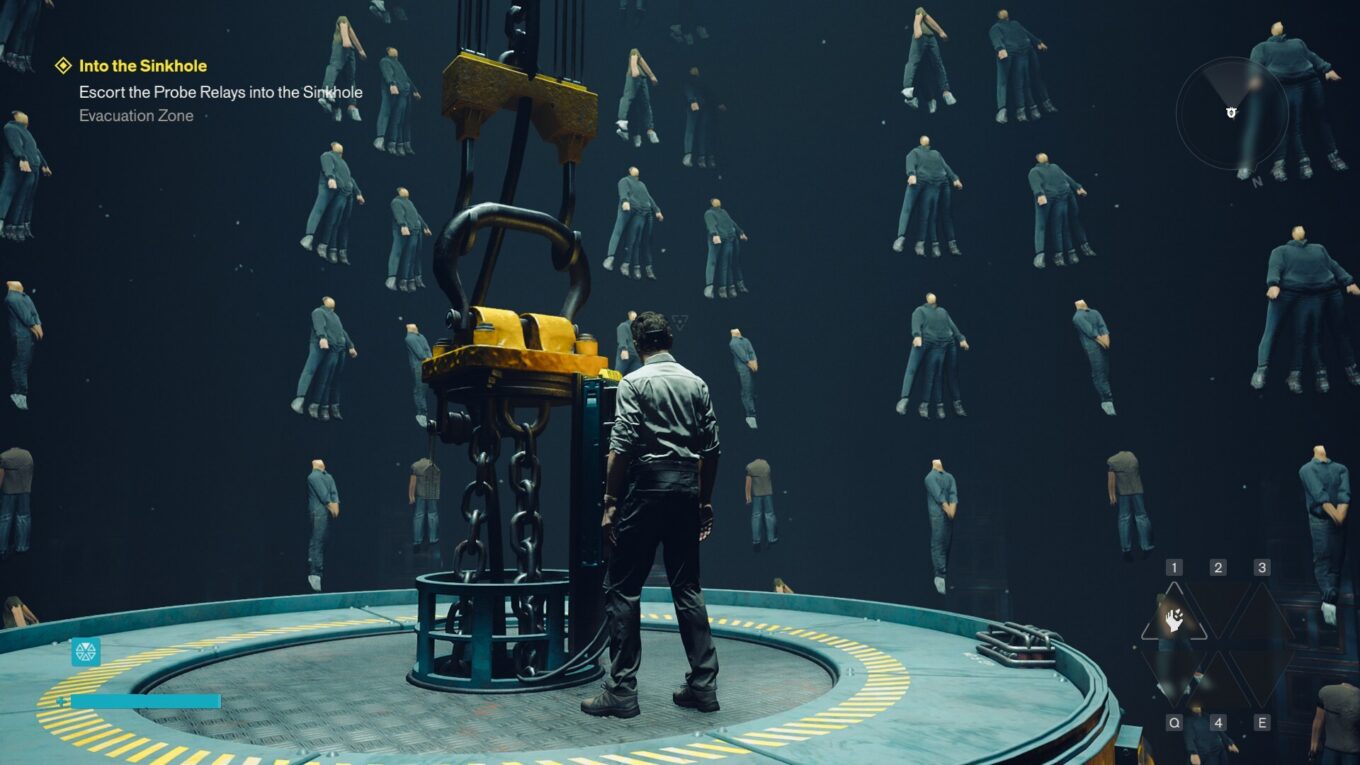
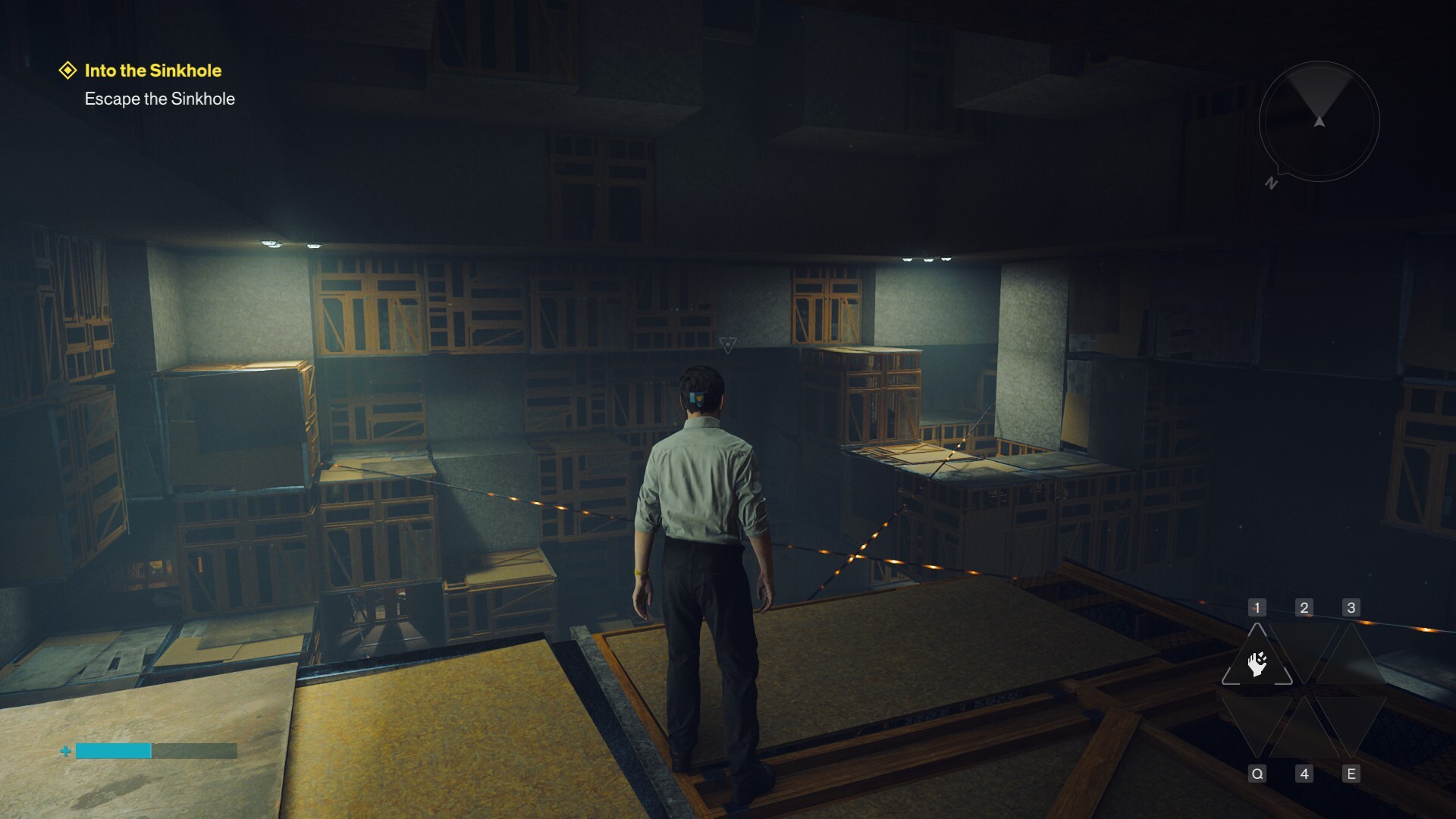
Control Resonant’s magnitude is a thing of marvel. Within the Oldest House, a space-shifting skyscraper central to the Control mythology, its concrete walls stretch to a staggering height, as catatonic bodies float to altitudes that can’t be reached. And in the paranormal-warped district of Manhattan, buildings – towering slabs of bricks – reach towards the horizon, transforming into colossal structures for Dylan Faden to climb and surmount. Then there are the boundless chasms that materialize where roads end and between the rooftops that Dylan must leap across, hinting at the expanse and depth of Manhattan that have become so astronomical, so monstrous, so hellish, that it’s no longer traversable by mere mortals. Against its vastness, the district has rendered Dylan into a diminutive hero, as if a figure of very little importance.
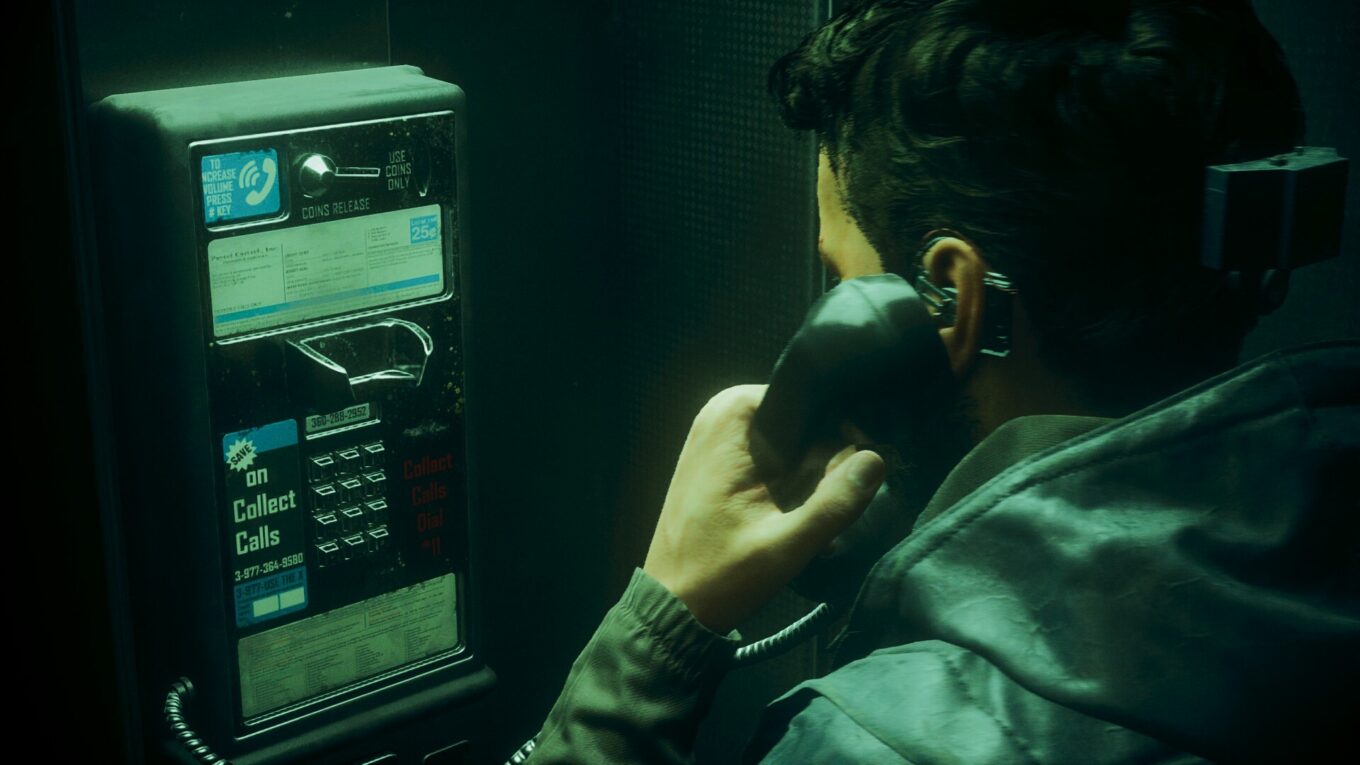
But Dylan is anything but. As the twin brother of Jesse Faden, the first Control’s protagonist, Dylan is imbued with the finesse and fortitude to pull off superhuman feats, from jumping miles high to ricocheting from one building to the next with ease. Freed from his prison at the Oldest House, Dylan finds himself at the center of the catastrophe caused by the Hiss, an entity that has escaped containment within the Oldest House. Manhattan thus has been warped into a surreal environment that resembles the impossible architecture of artist MC Escher, where roads bend and fold along dimensional planes, and the cityscape envelops the sky.
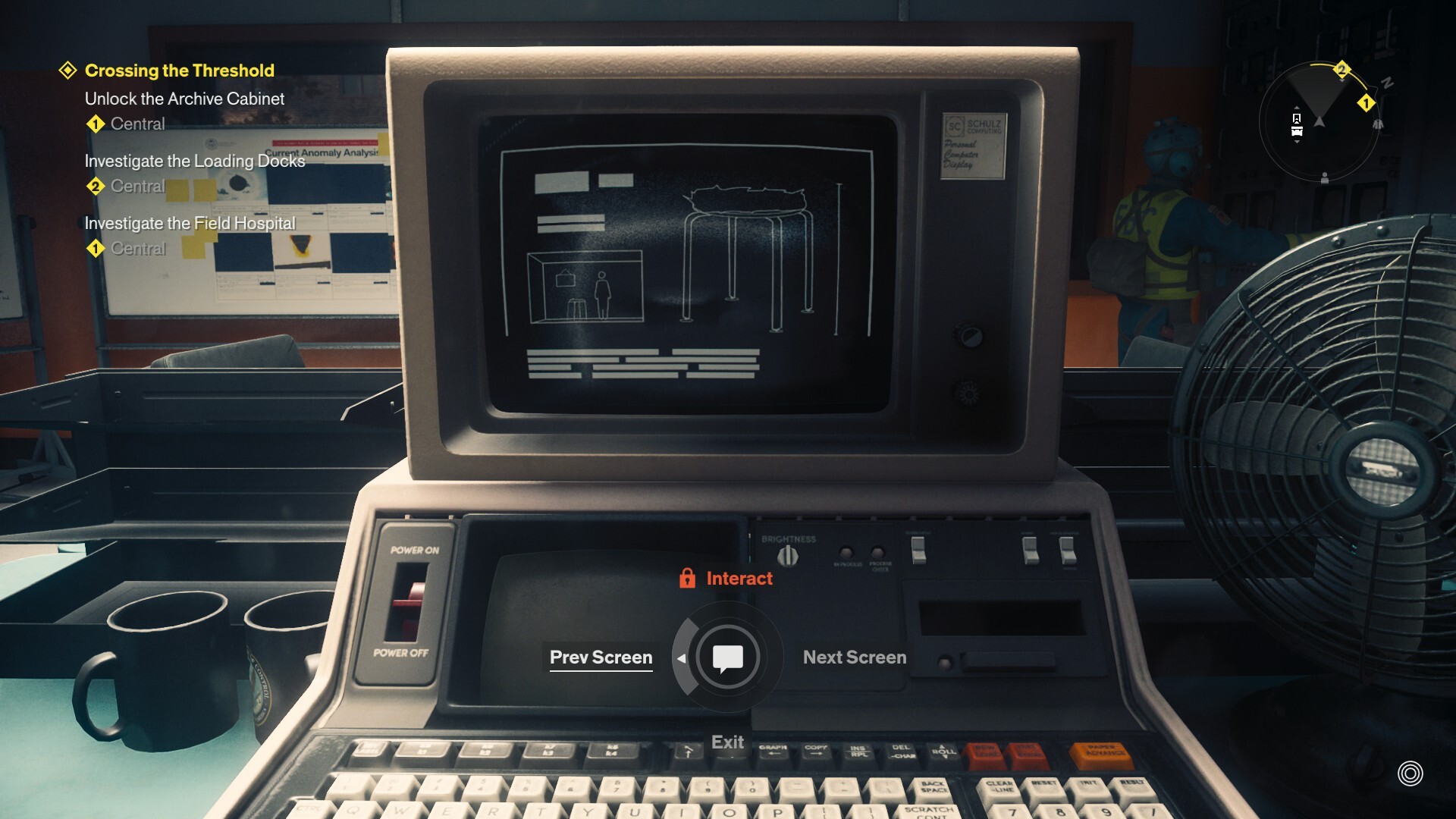
While it’s a significant departure from the clerical yet hypnagogic backdrop of the Oldest House, which Control was set in, this version of Manhattan is still a wondrous, intriguing setting to be let loose in. And the resplendent environmental design, the little nuggets of writing hidden in nooks across the district that make Control so charming in the first place, can still be found in abundance. A construction site becomes haunted by an errant camera that freezes everything in its lens. There’s a train station, converted into a research site, that’s being swallowed by a bright blue mold, peppered with paraphernalia, notes and recordings by researchers caught in an inescapable, dire situation. It’s almost as if the weirdness of the Oldest House has spilled over into the open world.
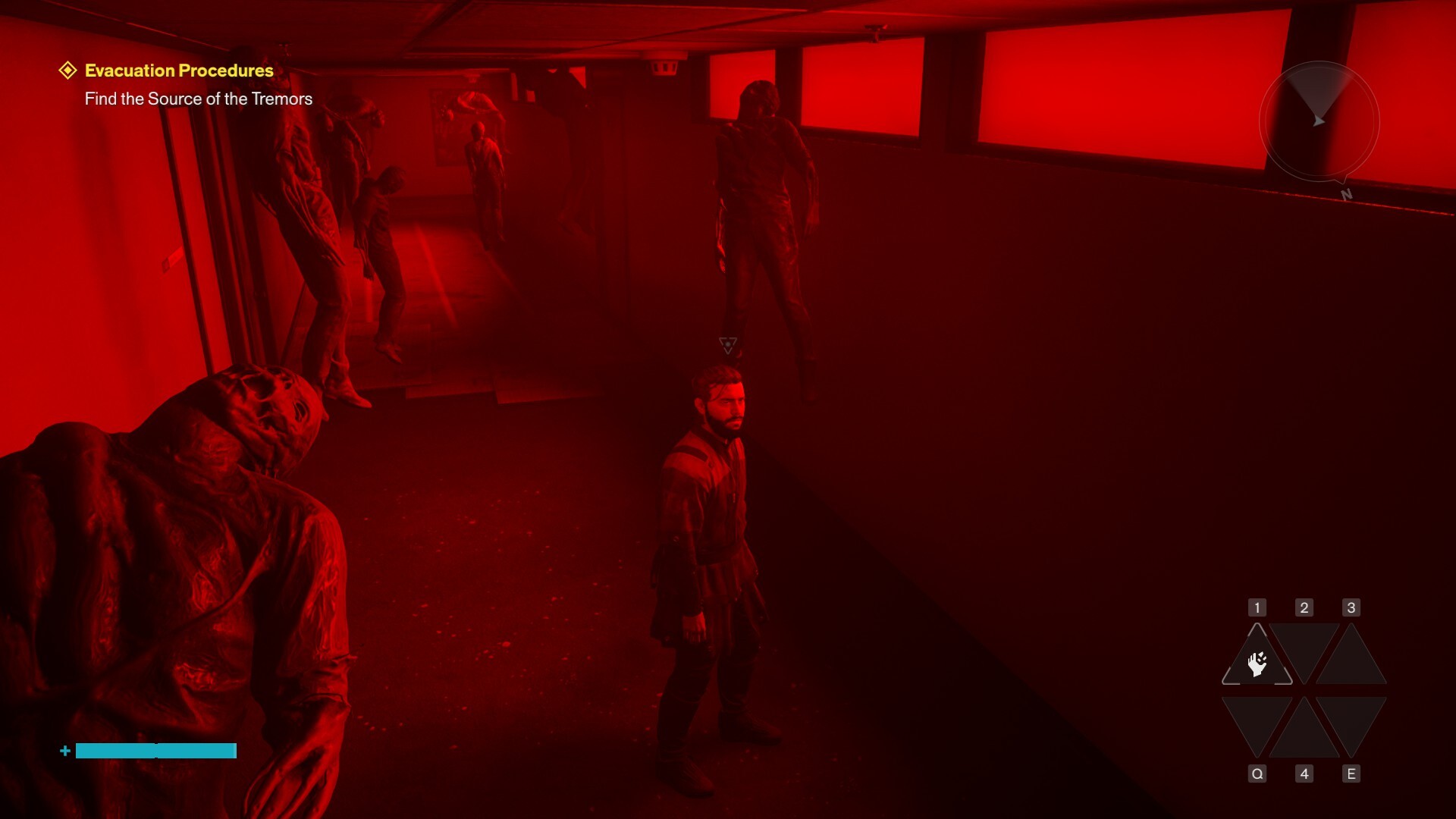
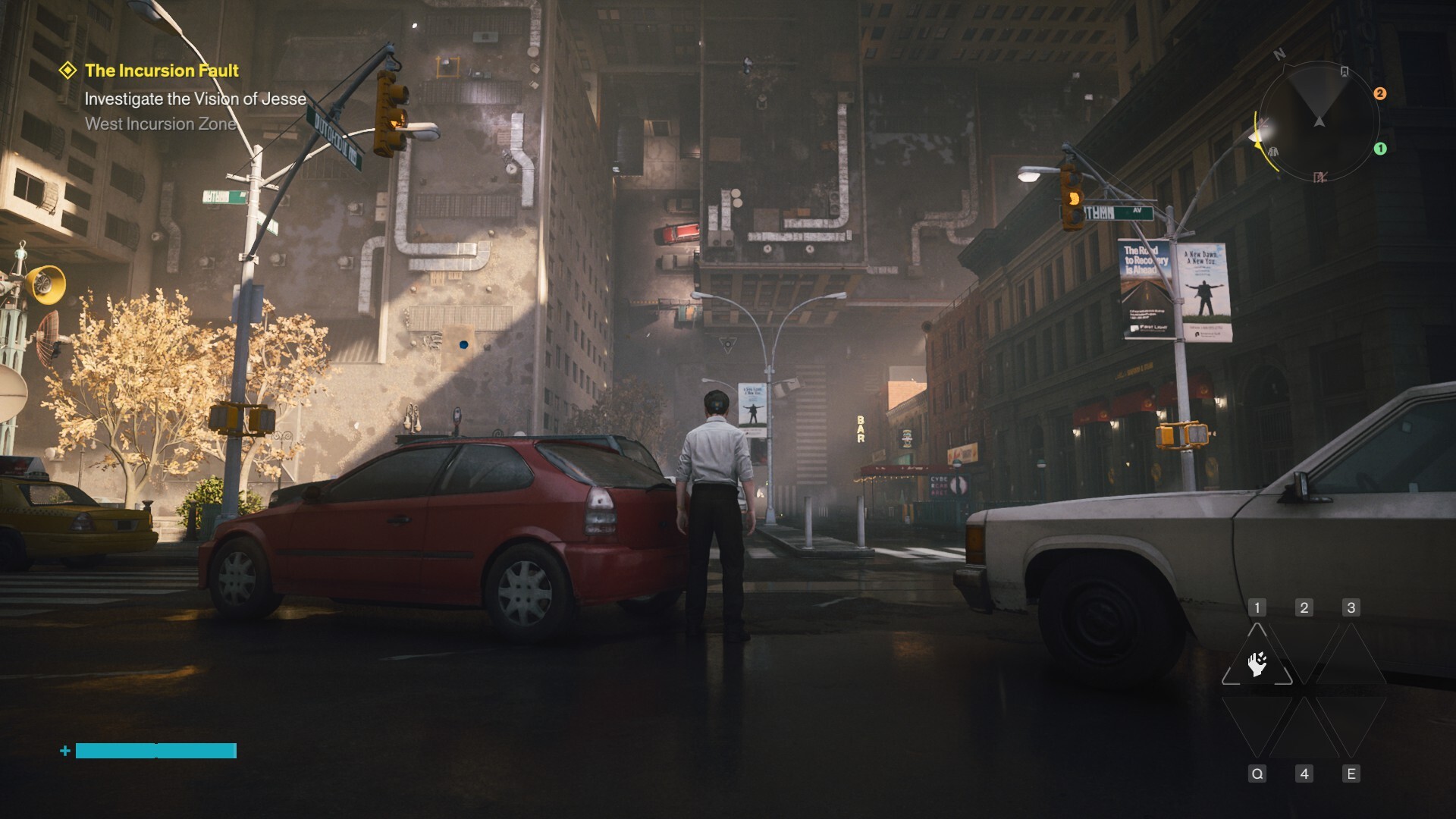
And it’s this sense of aberration, coupled with Control Resonant’s use of space and verticality, that makes the setting so invigorating. Dylan’s ability to leap and vault from one place offers a different, heightened perspective on the district, allowing him to platform from one surface to the next in refreshing, thrilling ways. At the same time, it transforms combat into an airborne affair. Placed alongside its predecessor, Control Resonant is decidedly more combat-heavy, with fights making up a generous proportion of the game. Dylan is armed with a weapon called the Aberrant, which is essentially a pointed stick that can take on several forms: strike (light), glaive (ranged) or cleave (heavy). Subsequently, the Aberrant can take on a secondary form, which essentially lets you string up attack combos as you take on hordes of enemies on the street. When Dylan strikes an enemy, the Aberrant will morph into a different form, the stick breaking off into remnants on the ground when the attacks conclude. It’s an eye-catching detail that speaks to the care that developer Remedy has when building out this world.
Armed with the Aberrant, Dylan becomes a melee combatant, with him fending off a lot of enemies both on the ground and in the air, hacking and slicing his way in dizzying ways. It’s a stark contrast to Jesse’s service gun, with combat here designed to be a lot more intense than Control. To survive encounters, you’ll need to be extremely familiar with the cadence of combat and how the Aberrant functions, from chaining up attacks with your chosen primary and secondary forms, to wielding additional abilities that complement your approach to combat. What’s notable is the distinct lack of parrying here, which highlights Remedy’s vision of making fights easy to pick up, even if they ultimately aren’t that simple to master. And when healing is also dependent on making bold, risky moves, this propels the sense of aggression in the game; as one tip in the loading screen suggests, offense truly is the best form of defense, after all.
Combined with the sheer variety and number of enemies charging at you, with troops coming in hot from all directions – and that includes the top, too – you’re forced to stay on your toes throughout most encounters. What’s more is that fights only dissipate when key enemies, which are marked with large circles as opposed to dots on the map, are eliminated, which changes the dynamics of combat to one that requires strategy over blind, brute strength – theoretically speaking, that is.
Here’s the first sign of Control Resonant faltering. Underneath a host of very good ideas and a clear vision of conducting aggressive and responsive skirmishes, the reality is that I was just smashing a flurry of buttons very quickly, which really doesn’t align with this vision. In fact, I was attacking and dodging and side stepping and flying and jumping all at once in the span of seconds, and given that every encounter is a fight of this variety and intensity, fatigue also sets in rapidly. Every mission you encounter probably involves a few bouts of such protracted fights, including side quests and a myriad of smaller encounters you’ll run into along the way. Combat that requires this amount of vigor works in smaller doses. Eventually, I find myself growing exhausted and hoping for more scraps of story progression, which Control Resonant isn’t as generous about as compared to Control (although there’s an assist mode that eases the pace of combat). Want to learn more about the downfall of Manhattan? You gotta experience the backbreaking labour of fighting through waves of Hiss-stricken entities, first.
Compounding this issue is the game’s semi-open world concept; there is plenty to see and discover, as evident in the dozens of icons across the map. Aside from the main missions, there are side quests to fulfil, upgrades to unlock in the form of locked boxes, and smaller encounters to clear, from collecting information on specific enemies by engaging them in battle, to supporting the Federal Bureau of Control’s armed forces against paranormal incursions. There are even dogs to rescue, arcade games to play, and secrets to unravel. Control Resonant incentivizes exploration by tying the resolution to these quests to improving Dylan’s abilities; the more quests are resolved, the more talent points you gain, while offering you access to better resources for upgrading the Aberrant, and crafting artifacts for improving your stats. Given the difficulty of combat without the right upgrades, searching out these side missions becomes pivotal yet tedious, especially when doing so involves more rounds of combat. For all its wonderful peculiarities, Control Resonant seems to adopt some of the most unimaginative features that used to pad out “content” from other open worlds, like that of Ubisoft’s icon-cluttered maps in their games.
To me, Control Resonant’s larger-than-life ambitions and proportions – the grandiose vision of a sprawling Manhattan, corrupted by paranormal forces beyond our comprehension – are simultaneously the most astonishing and underwhelming aspects of the game. What I admire most about Remedy is its willingness to create a sequel that’s simply not more of the original Control. In Control Resonant, we embody a different protagonist; rather than the charismatic Jesse Faden, we get the sad and perpetually guilty Dylan Faden (understandable, given that he did try to murder a lot of people in the first game). At the same time, Remedy is taking a marked risk in steering the sequel towards an entirely different genre altogether. But while Control: Resonant’s recreation of a cursed, crumbling Manhattan is sublime and awe-inspiring, flanked by a crisp combat routine that pulsates with responsiveness and power, it’s held back by deeply mediocre open-world conventions borrowed from other games, and overly frequent combat sequences that are more messy than exhilarating.
Despite these issues, I’m still deeply enamored by Remedy’s conviction to expand Control’s stylish, supernatural universe, including the bizarre, bureaucratic goings-on around the Bureau. So while Control Resonant doesn’t reach the sheer magnificence and exuberance of Control, you may find some reason to stay in its richly crafted, offbeat world yet.