
Thinking about hubs of game development, Kazakhstan is unlikely to be high on your list. With growing developer communities, however, as well as increasing institutional support and major tax breaks for creative technology companies, the country has rapidly grown into a potential melting pot of gaming creativity. While Kazakhstan’s gaming scene has focused on mobile, it has started to make strides on PC with games like Indika and She Sees Red. From that burgeoning scene comes Dragon Shelter, an initially charming though derivative farming simulator by Wild Forest Studio.
By securing western funding through a publishing deal with Curve Games, Dragon Shelter arguably places itself in the spotlight to highlight Kazakhstan’s growing gaming reach. It also places a heavy burden on the game to show the scene at its best. A burden Dragon Shelter does not wear comfortably.
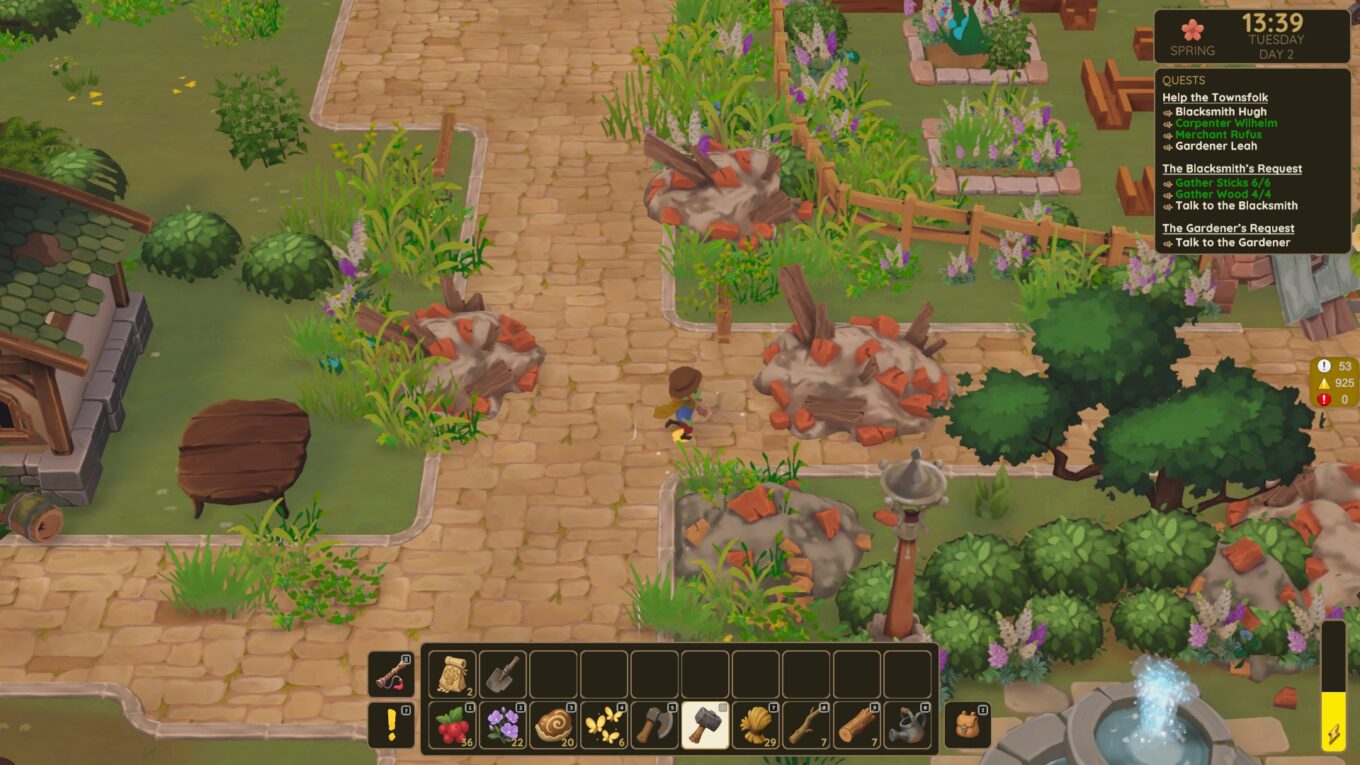
One tries not to talk about Stardew Valley when reviewing games of this type; preferring to judge them on their own terms. Dragon Shelter makes that impossible as it liberally pulls from well-tilled soil. That kind of borrowing is neither a new thing nor a fatal flaw in the genre. Stardew Valley is hardly shy about the influence Harvest Moon had upon it.
In repackaging the same elements in largely the same circumstances, only with cel-shaded 3D gloss that makes Dragon Shelter feel like a misbegotten and rushed next-generation sequel to Stardew Valley – at least, relative to the latter’s pixel art – Dragon Shelter eschews opportunities to step out of its predecessors’ shadows, even if it does add dragons.
You’ll have to wait to meet one. The pond in the corner of your family’s farm bubbles ominously, but after a long absence you’ll be busy clearing detritus and rebuilding your bed. Next door, the townsfolk are downbeat and letting the village crumble: unmotivated to do anything about it.
One might think a fresh face would bring with it renewed hope, but they seem even less enthused by your intervention – not helped by a choppy script (one translated, at least in the first instance, using generative AI). A few repairs and an influx of supplies later, the villagers remain unmoved. The only twitch of the needle comes from baked goods.
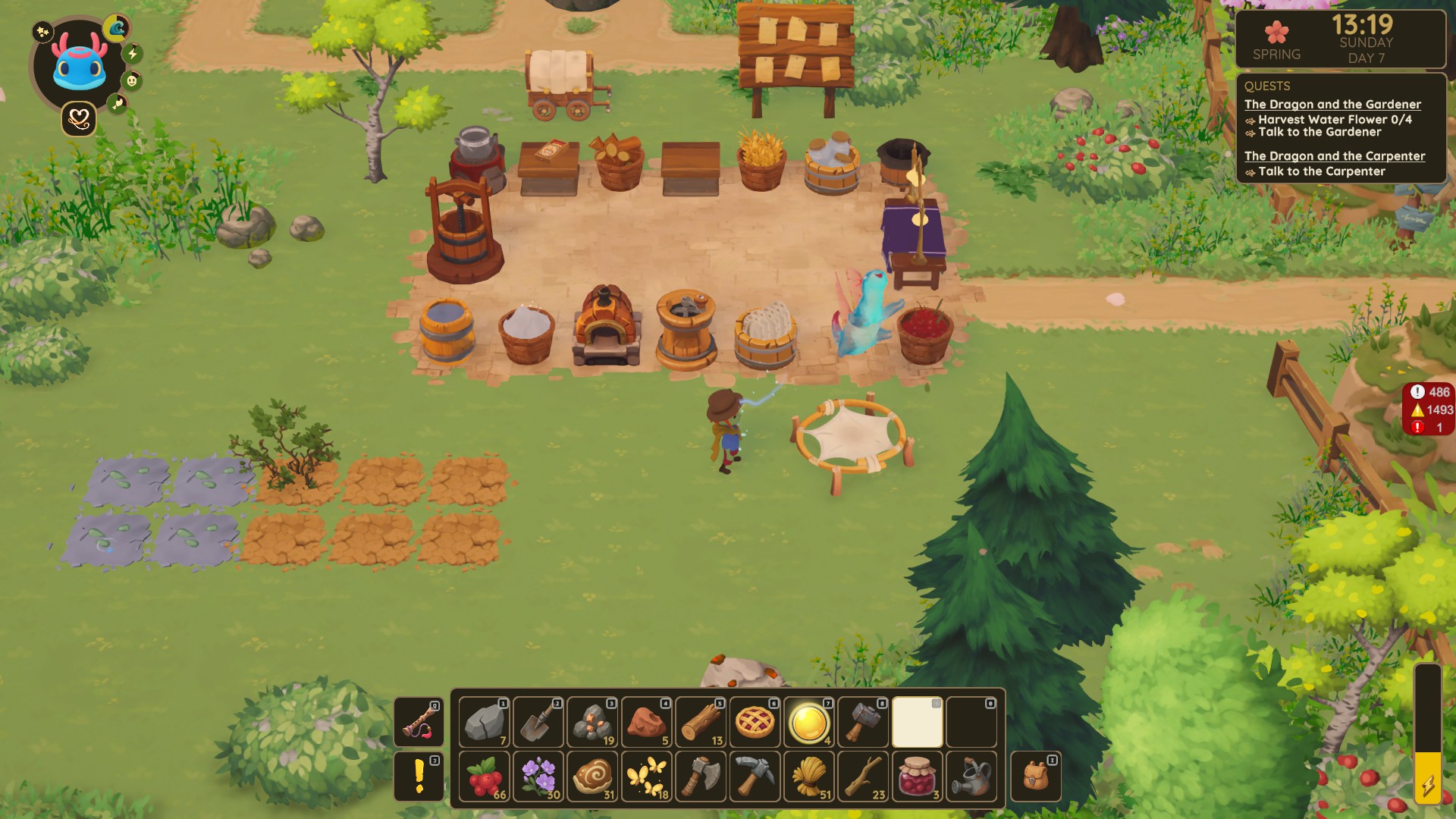
If Dragon Shelter has pretensions of being a Stardew successor, it’s a curious but welcome move to place so much onus on a cooking minigame. One which sees you run around a large open-air kitchen to follow a recipe pasted on-screen. In the first instance, you crush berries and mix them with water and sugar, before throwing it on the hob. Et voila: jam! It’s a breezy moment in a game that is too often sluggish, even if, perhaps to mitigate comparisons with Overcooked!, the time-sensitive elements of the demo have been removed.
Or maybe that’s not unfortunate. Cooking up your first meal coaxes a dragon from the pond. An event communicated through a cutscene that’s jarringly removed from the rest of gameplay. Once it’s out, and you begin your collection of draconic pals, the fun puzzle of cooking – already underexplored – is taken away.
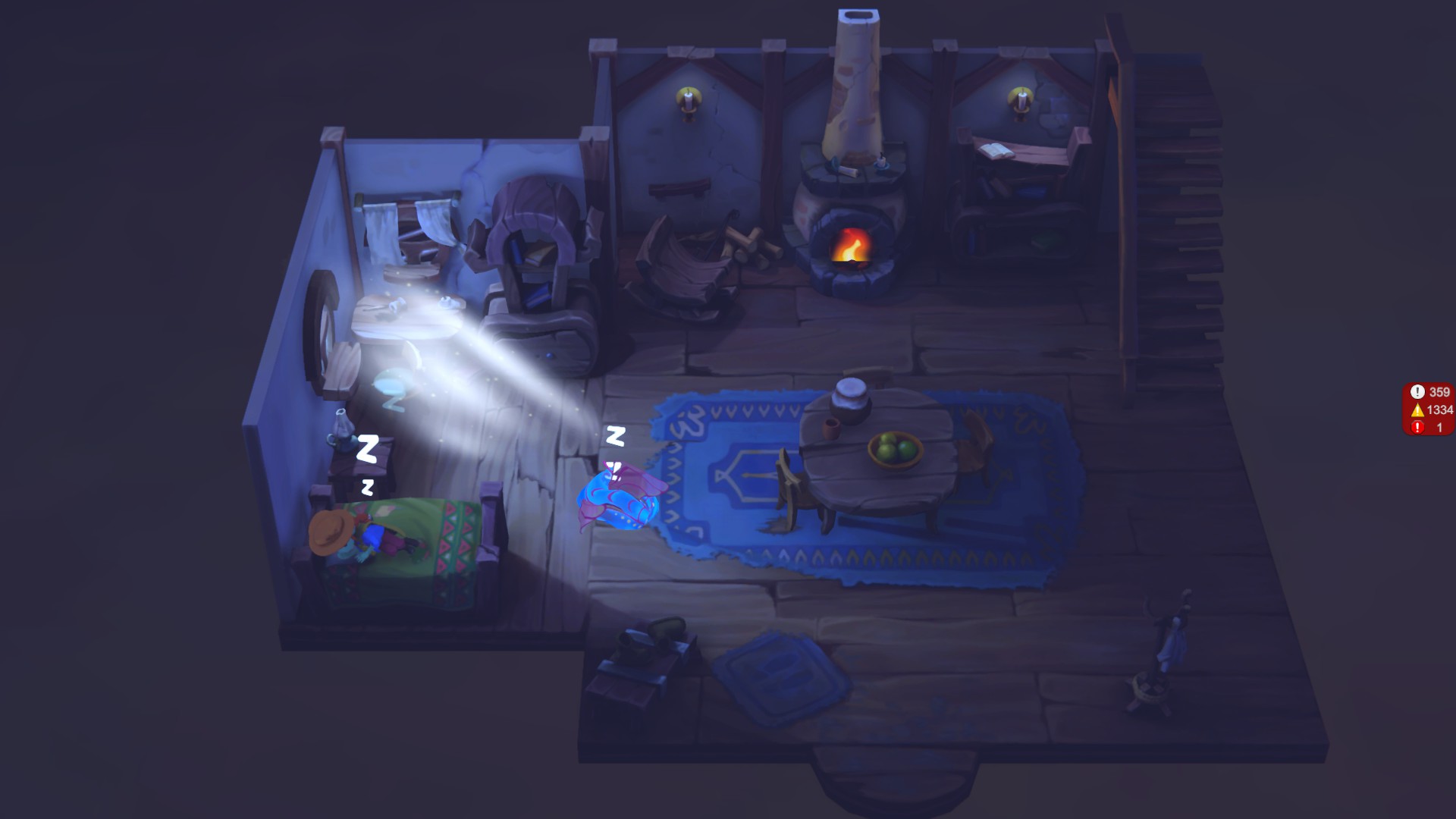
Your first dragon is a blue bundle of adorable noises and an insatiable appetite. Its appearance is auspicious, according to villagers for whom even the appearance of a new mascot cannot raise a smile. Thankfully, dragons produce joy: a bright nugget excreted at random when they are happy and well-fed. That you can feed that joy back to them to renew their abilities is something that doesn’t brook thinking about too deeply.
In gameplay terms, your dragons are extra workers. Hand them a tool and they will merrily join in as you fell trees and break stones. When it comes to cooking, however, they completely take over. On one hand, this leaves you free to take on other tasks like gathering materials for them. On the other, there’s precious little else to do in Dragon Shelter.
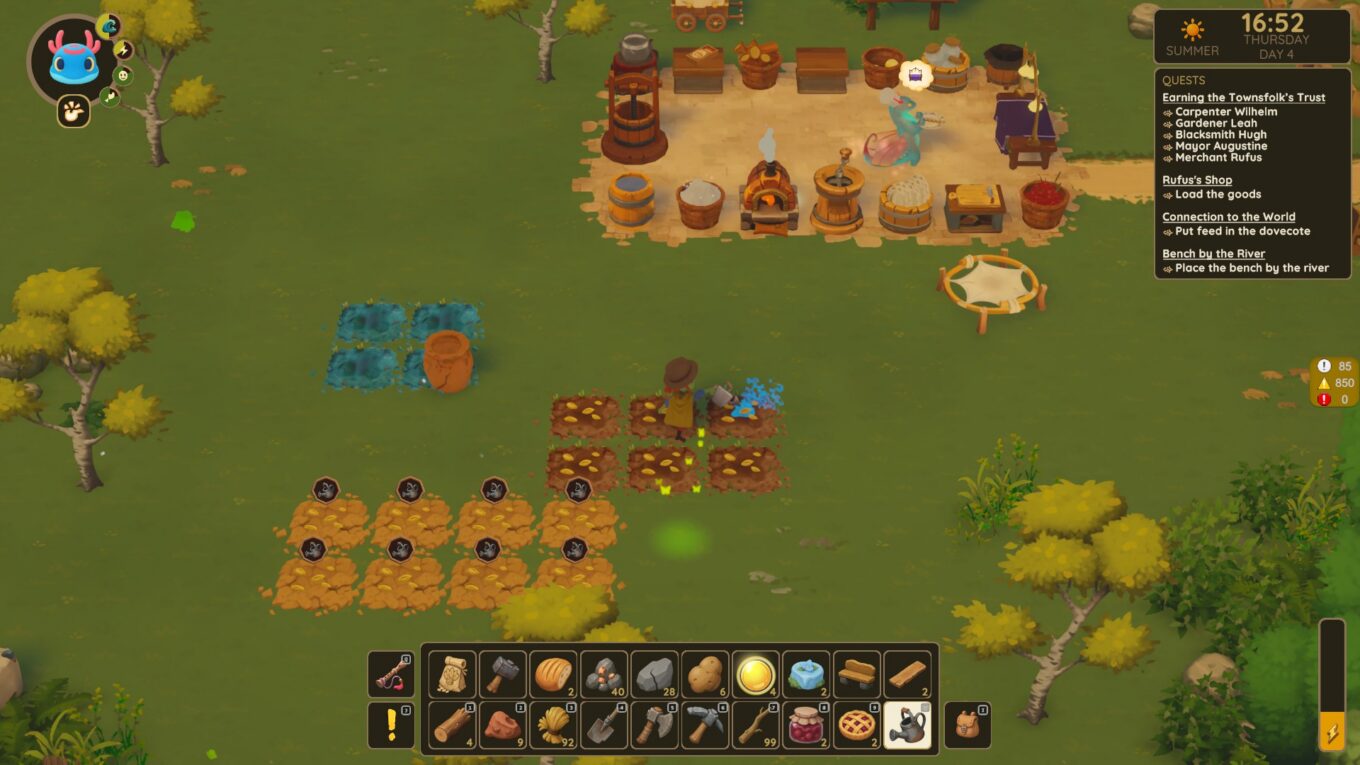
Helping your dragon isn’t recommended either. Interrupting them confuses their process, even if waiting for them to finish isn’t compelling either. Especially as, bless them, your dragons aren’t exactly urgent. Waking in the morning, your water dragon’s first instinct is to water crops. Without fail, I had already finished watering by the time it had ambled over. Cooking, too, is drastically slow under your dragons’ purview. It steals any sense of cosy momentum from Dragon Shelter as you race to get ahead of your dragons’ obstructive attempts to “help.”
There was an opportunity to create a greater point-of-difference in these dragons if Dragon Shelter revolved around wrangling unruly, unmotivated dragons in the kitchen. Indeed, there is an amusing concept in the idea of a cooking- and farming-sim in which dragons help you and are beyond incompetent, forcing you to clean up after them like Penny after Inspector Gadget.
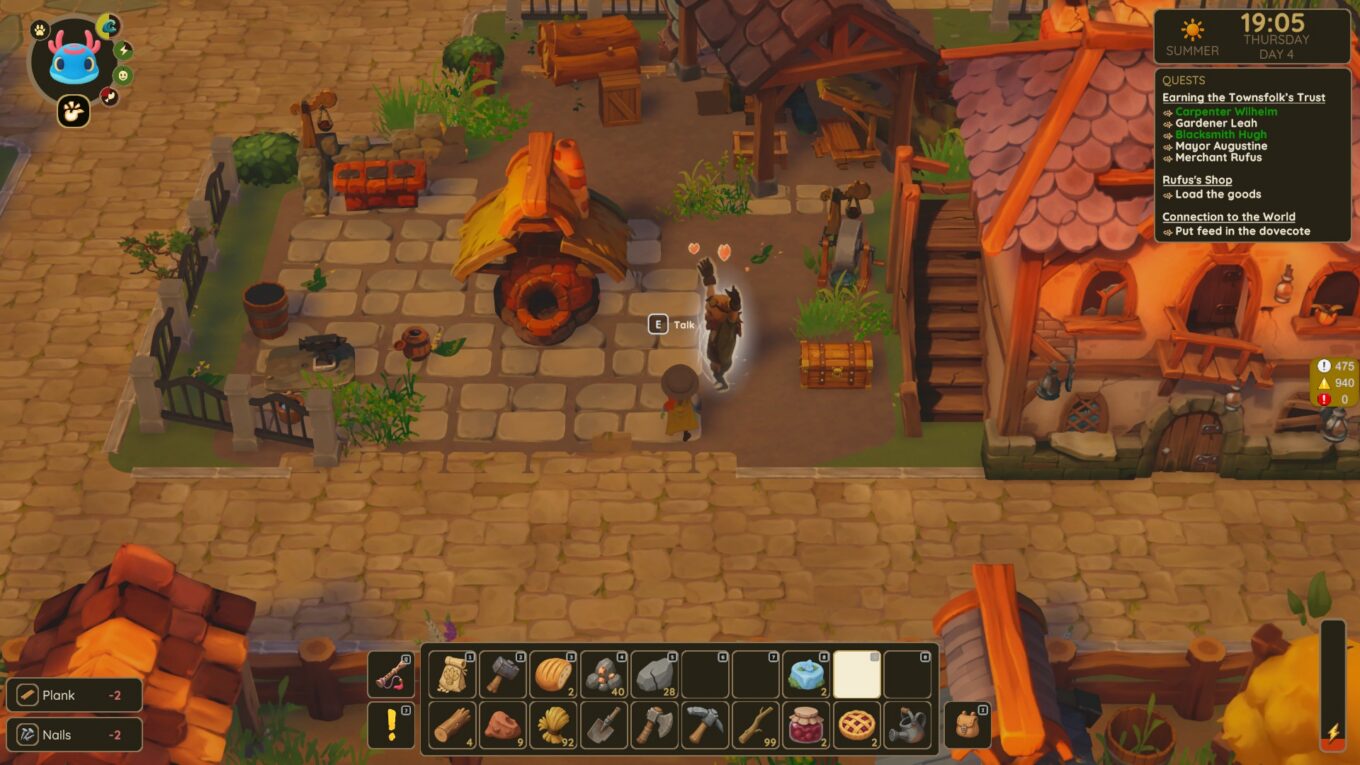
Wild Forest sidesteps potential in its two core distinctions in a mission to clone Stardew Valley by way of Overcooked!, however. Though I did find my dragons would often give up on tasks halfway through to play on a trampoline despite having plenty of energy, it was clear this was a bug attached to leaving for town as opposed to an intentional and whimsical quirk.
All of which is especially frustrating as your goal soon shifts to gaining the villagers’ trust by feeding them. Each order you deliver fills a sliver of a meter above their heads and requires you to devote days to cultivating and gathering ingredients, all while your sluggish friends occasionally deign to do some cooking.
All that costs money. The game’s economy rests upon cooking meals and selling them, to then buy seeds for future recipes. Between feeding your dragon and fulfilling quests, however, there’s little room for making extra. Even when you’ve satisfied the townsfolk, more arrive with similar requirements.
None of which is accompanied by any progression. You begin with an enormous inventory, to the point of not needing chests, and outside of farming and cooking there’s nothing to do. You needn’t earn the trust of your dragons, either. Orders are the only real forward propulsion Dragon Shelter offers and between dwindling resources and your dragons being useless in the kitchen, those are drawn out far beyond their natural endpoint.
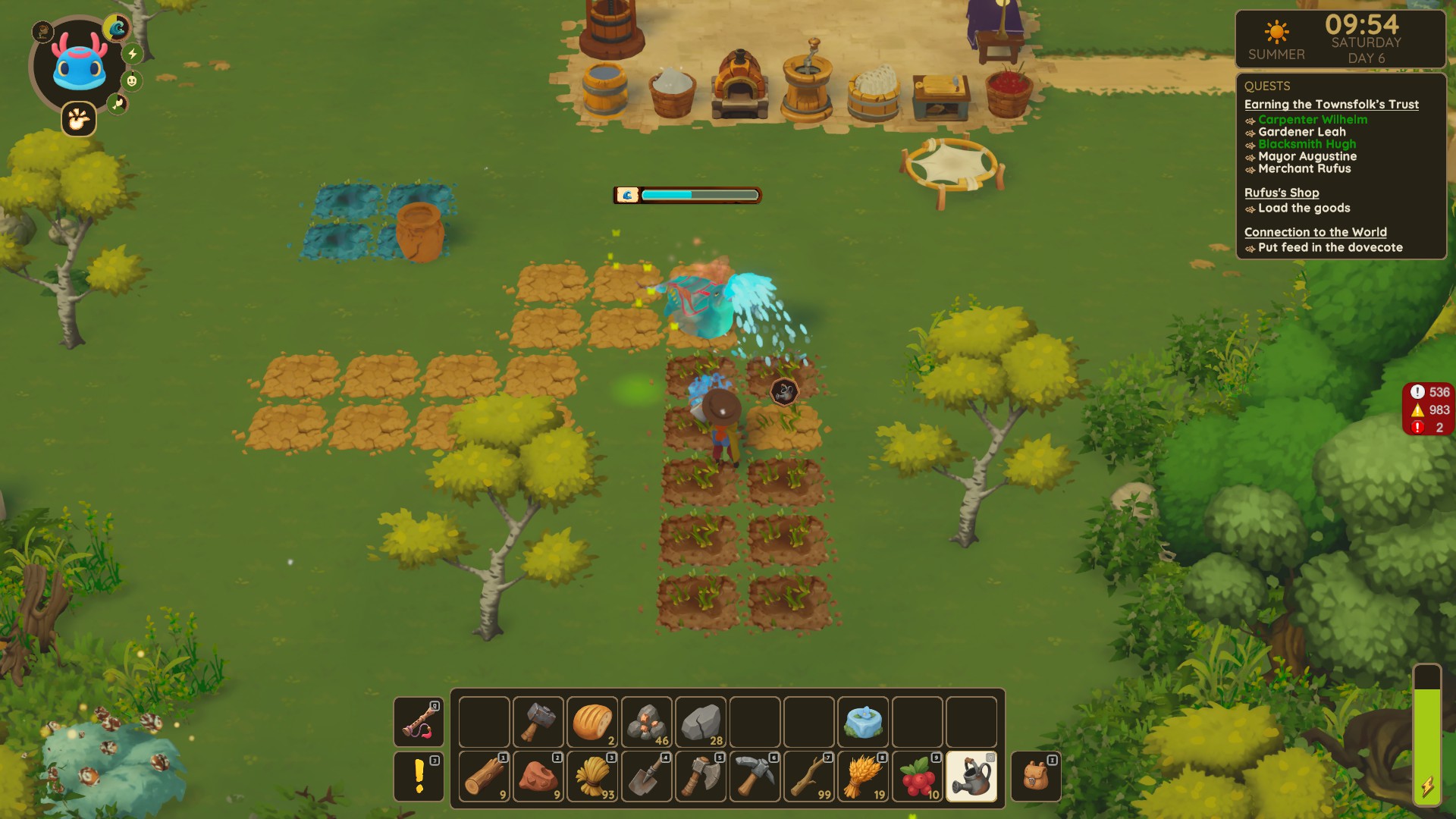
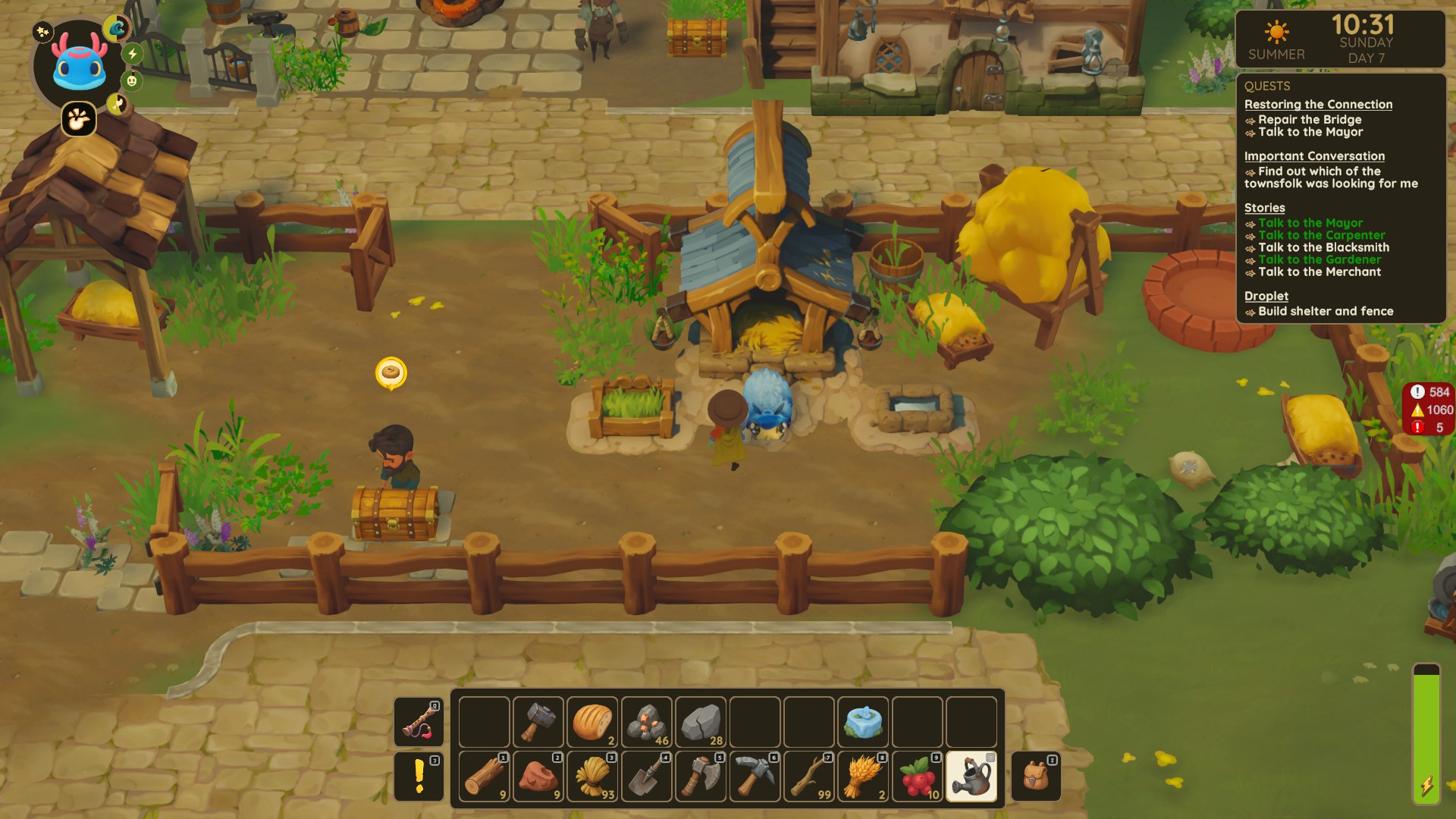
Once you run out of money, that artificial length becomes even more pronounced as you must pause to make food to sell – and hope you’ve not cut down all your berry bushes given how close they are to your trees. In days that are arduously long, and in which you will persistently run out of energy before night falls, that only feels longer. An already stuttering experience grinds to a halt to force you to, well, grind.
It’s a telling piece of design that, to offset how quickly your home becomes barren of supplies, Wild Forest drops two large areas onto the map with replenishing trees and rocks. Rather than consider a solution to account for this within gameplay, Wild Forest’s approach to the problem, and developing Dragon Shelter, is just to make the game bigger and less wieldy.
It’s sadly indicative of how Dragon Shelter has progressed since I previewed it. There’s no shortage of ambition, but perhaps that ambition would have been better served in creating something more contained in which the game’s evident charm could shine through. As it is, that ambition is devoted to a quantity over quality approach that expands the game into more walking between rote, repetitive tasks. Even its most obvious point-of-difference, the soft-automation of its dragons, devolves into offloading the labour of minor tasks (which you’ll have to do anyway) onto feeding your dragons and keeping them happy.
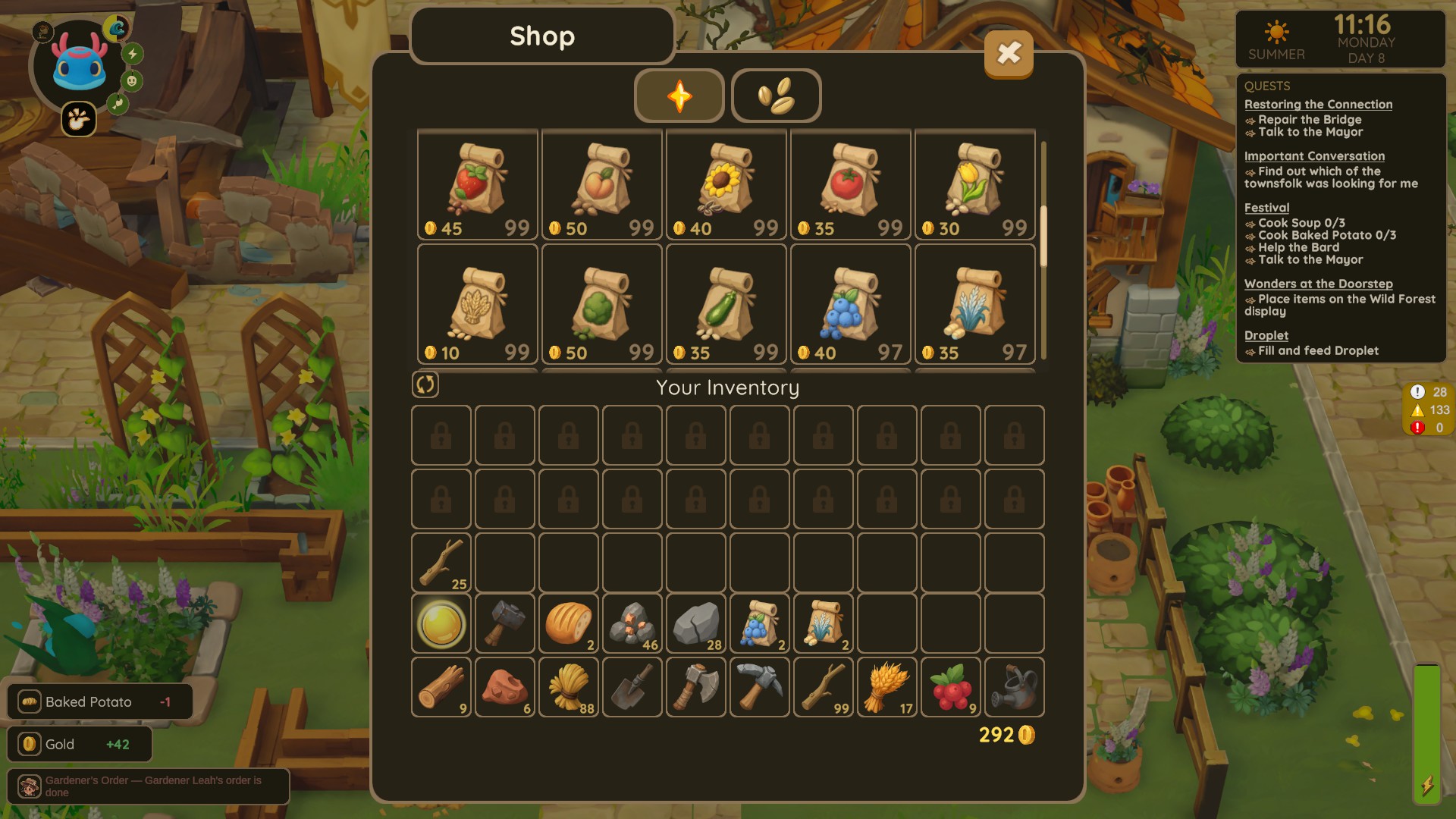

I noted many of these issues earlier this year, alongside how much potential Dragon Shelter had. It’s a shame then that Dragon Shelter doesn’t appear to have changed much since. Nor does it appear likely it will as Wild Forest has left its previous game, Night is Coming, abandoned – albeit since that game’s publisher pulled out.
Let me stress, then, that it’s impressive that Wild Forest dusted itself off and pivoted to Dragon Shelter. Less impressive is how derivative and unwieldy the game is as it chases physical growth rather than capturing the rhythms of those games from which it borrows so liberally. While Wild Forest appears to hope that the addition of dragons will conjure a unique identity within that repainted canvas, the pentimento below shows through almost immediately and lays bare how lacking in the pleasing minutiae of the genre Dragon Shelter is; dooming it to the growing pile of other, less-than-compelling, simulators that populate the market.