
Nobel laureate, Linus Pauling, once said the key to having good ideas is to “have a lot of ideas and throw away the bad ones.” One wonders if when making Kick, the football-themed sandbox, nospacelost was thinking of the common misquote: “The best way to have a good idea is to have lots of ideas.” Kick isn’t lacking for them, nor for interesting ones, but could have benefitted from Pauling’s real advice in its overstuffed, imprecise, and progressively listless platformer.
You become “The Kid,” a Japanese child kicking their football along the journey to school. A route that sees him climbing over abandoned detritus and infrastructure in downtown streets, across beaches, and past suburban neighbourhoods reminiscent, though tangibly removed from, the anime streets of our youths.
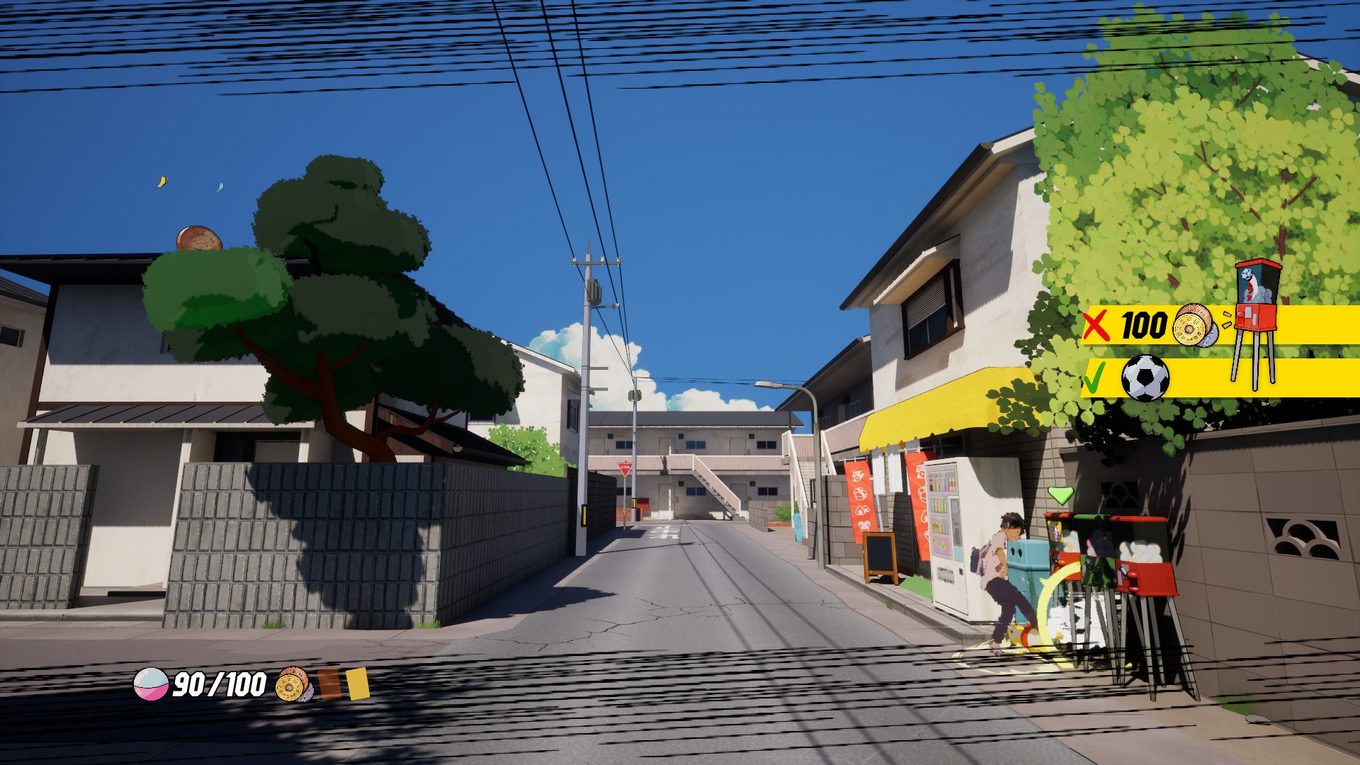
You’ll thread The Kid and his ball through railings, over benches, and between irritable commuters. It’s a fun idea: taking the gameplay of a series like OlliOlli and transferring it to football. In practice, Kick lacks the punch in all the wrong places, in a game that’s less the advertised nostalgic walk to school than an outsider’s view of Japan in which that is the most forgivable imprecision.
Of the many ideas nospacelost throws at Kick, the most common is simply navigating your ball from one end of the street to the other. In which you deploy a series of lobs, passes, and punts to weave it over, under, and through a string of obstacles like a less cooperative Flappy Bird.
Striking an obstacle represents a foul. You get four of these, with the final two represented by yellow and red cards – allergic as I am to sports that aren’t ice skating, I gather these are important in football (soccer, if you’re nasty). Where Kick offers variations on its formula it also offers foul idiosyncrasies. Where they will interrupt your attempts to flow through levels in some, in those that require you to gather 100 coins for a non-operation gachapon you’ll also lose cash.
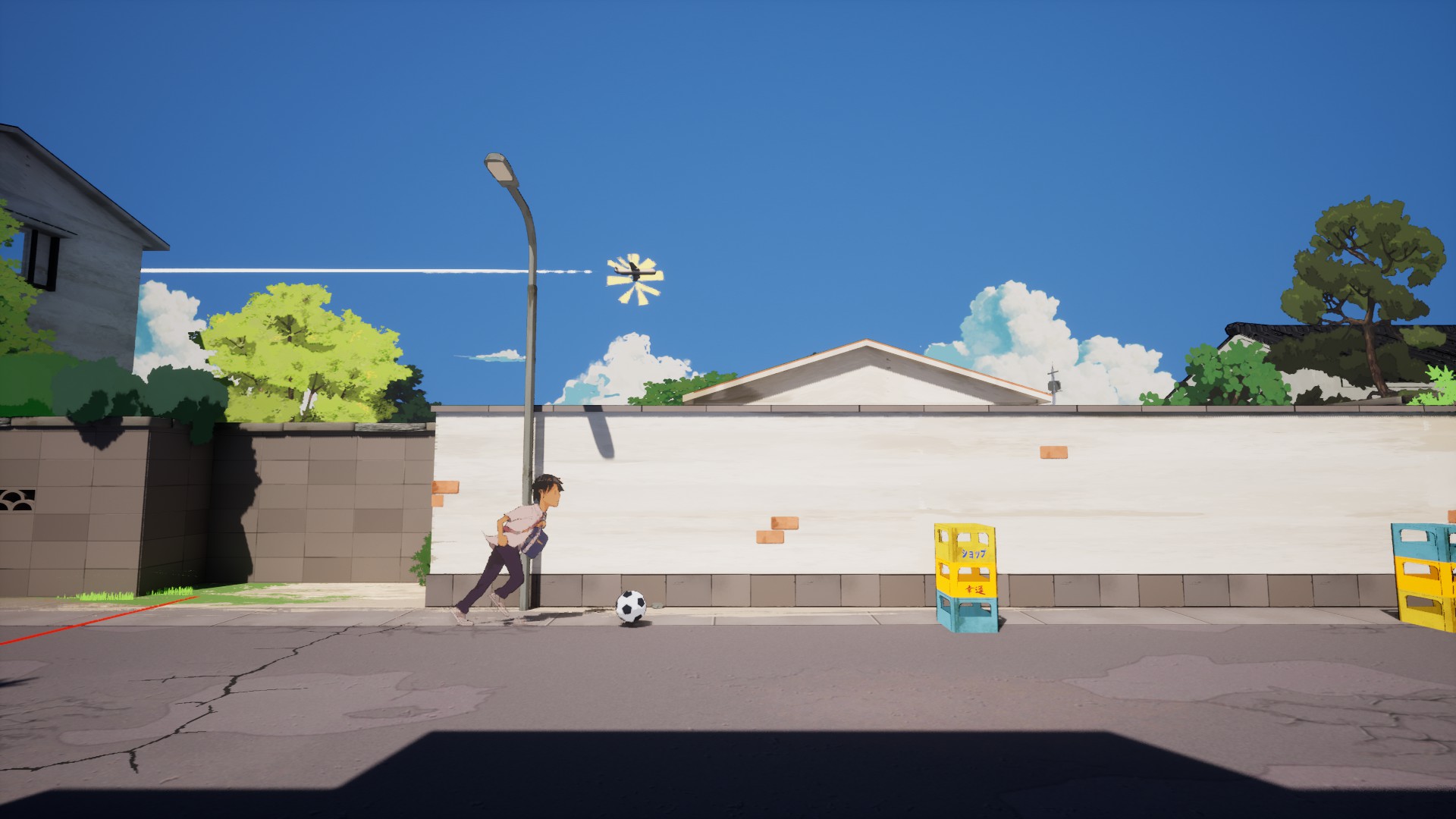
Other variations include racing something – in one instance, a plane – in which hitting a foul likely ends your run in Kick’s unforgiving timings. In one particularly insufferable level, you must guide a yellow balloon across the map using the ball and your body while cats wait to pop it.
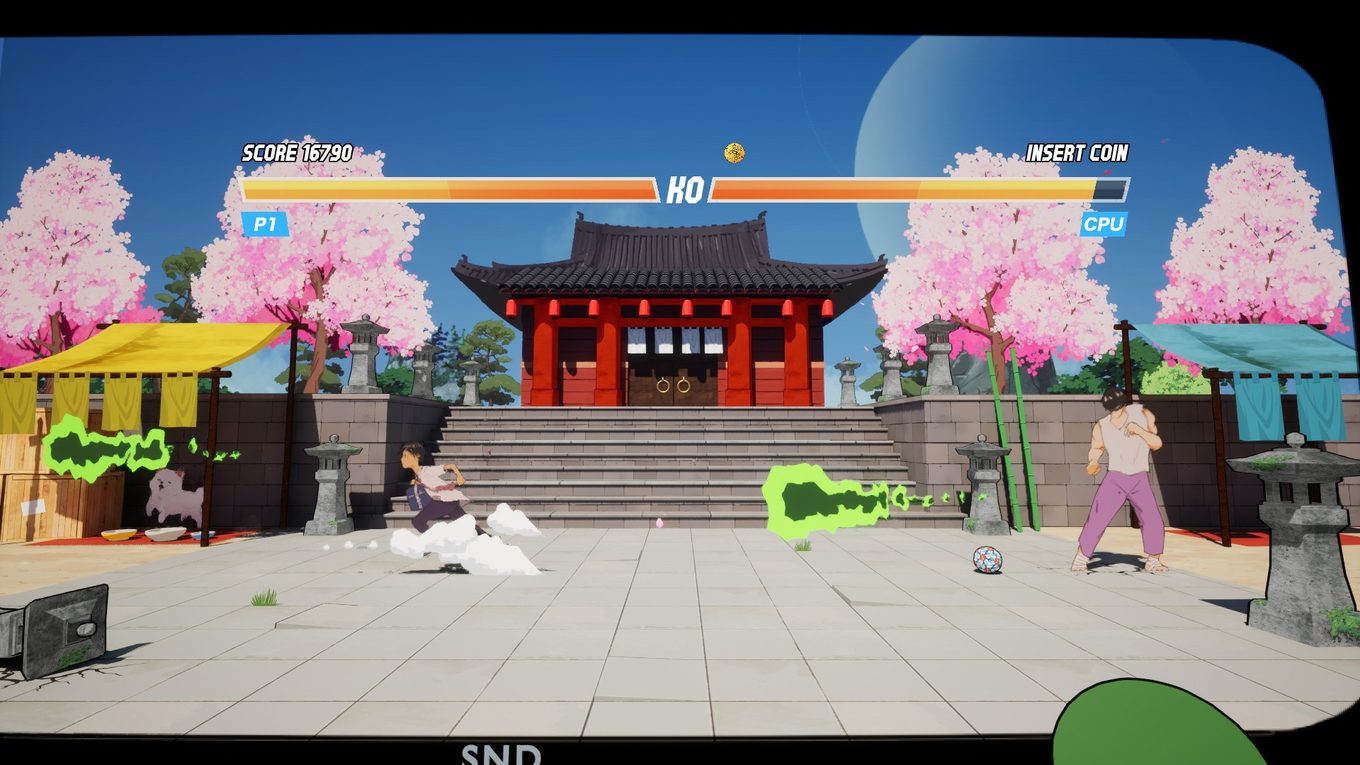
Every level adds something to the mix that makes Kick a near-impossible game to settle into. In something cosier, they might be more bearable. Though difficulty isn’t the issue here. It’s that these changes feel inconsistent and incongruous with what Kick attempts to set out. Using keepie-uppies to hit a lantern certainly looks Japanese and using the ball to fight a bout in a legally distinct Street Fighter is a fun idea, but they come out of the blue in a game that already struggles to cement a core loop.
That’s not helped by a football that behaves like a rugby ball. Much of your time will be spent watching it travel in a direction you don’t want. In places, that’s part of the puzzle: shiba inus love to send the ball rolling in the opposite direction. But in a game that demands so much precision from the player, that its implementation breeds unpredictability is a terminal error.
That manifests in you knocking the ball on when you don’t mean to, hitting kicks late, or sliding early. With multiple actions mapped to single inputs that inconsistency only multiplies, as attempting to slide will often see you try and kick the ball back and vice versa. It’s particularly noticeable when lobbing the ball. You’ll need to be on the move to kick the ball in the air. Except, too often it will sail upwards as if you were standing stock still while attempting to hit an object above you – itself a laborious exercise of trying to edge the ball into position – will see the ball sail into the distance.
It’s an imprecision that haunts every stage – which is to mention nothing of the lack of optimisation that sees Kick induce asthma attacks in your computer. Even in its most intuitive levels (its races) Kick finds ways to arrest your momentum no matter how many times you retry and, yet, curiously offers you no way to trap the ball and bring it to a stop.
At one point, I started to doubt myself about Kick. I was beating my head against an early race level and found it impossible to learn the course as one might in a similar title. Reloading and reloading, I noticed that something was off. That cone used to be a sign; that jump a slide. I wasn’t imagining things. In certain stages, Kick changes obstacles on the fly, seemingly loading any of its static objects at random to the point that many runs are simply impossible to complete because their distribution means you’re unable to pass certain combinations.
Randomness in these games isn’t necessarily a bad thing. Limiting playing Kick to sight-reading alone would make another interesting idea, but a combination of not leaning into that fully and failing to anticipate the issues that might emerge from that randomness means Kick, as an interactive experience, feels out of your control. That’s the last thing this style of game should offer. Mistakes should be yours, frustrations with yourself, to encourage coming back to overcome your own limitations. When the limitations are with the game’s basic design, it’s hard to justify continuing with it.
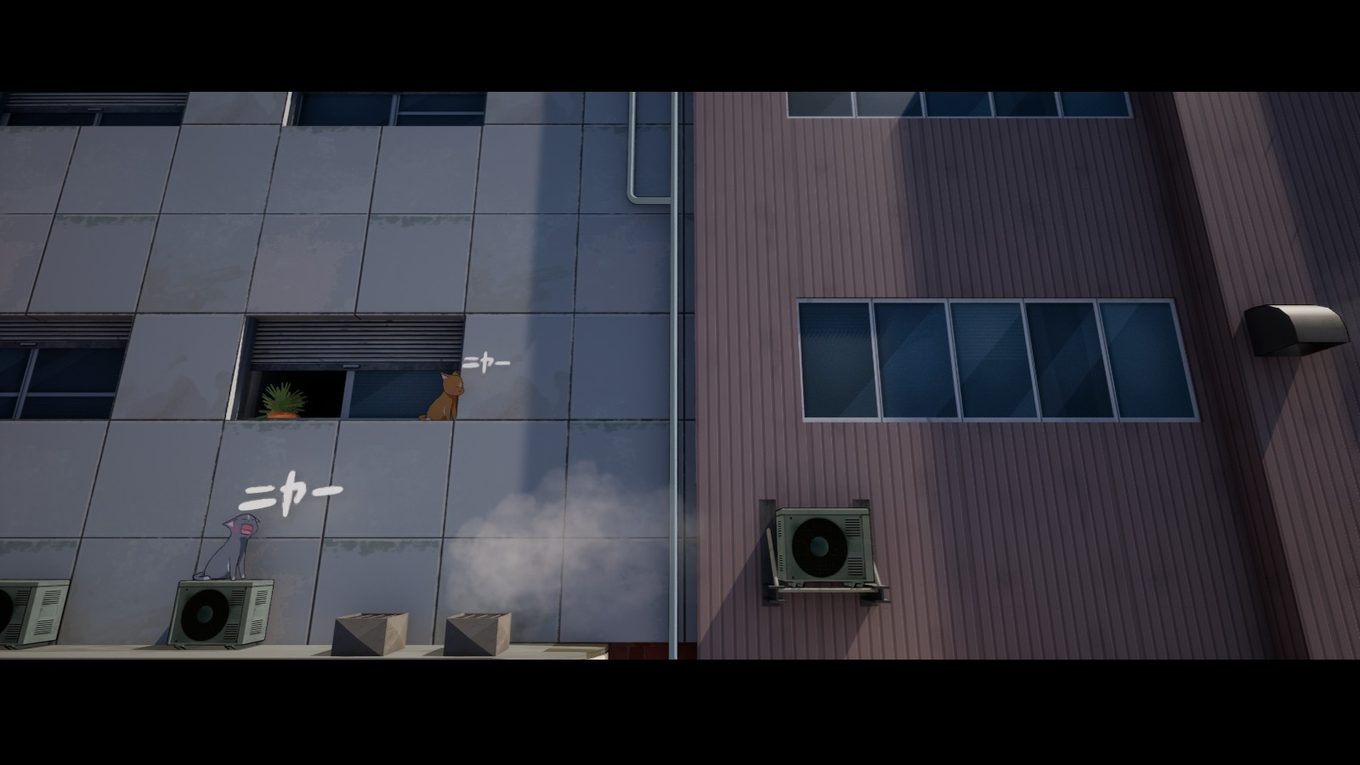
It’s not even clear what Kick wants you to feel. With frustrations that feel accidental, it can’t even claim its own difficulty. Similarly, though it markets itself as a nostalgic, anime-inspired stroll it lacks character. The Kid is mute, static, and unresponsive to the world around him.
For instance, in an early tutorial popup, Kick frames its foul system as The Kid begging forgiveness for inconveniencing others until people lose patience with him. It’s something we never see play out. Knocking the boxes from a deliveryman’s hands or hitting a woman with an umbrella elicits nothing: no reaction, no gestures, no hurried apologies. You can “pet” animals, but there’s no interaction. It does allow you to pass unimpeded but that is rendered useless by the tight timings you have to keep.
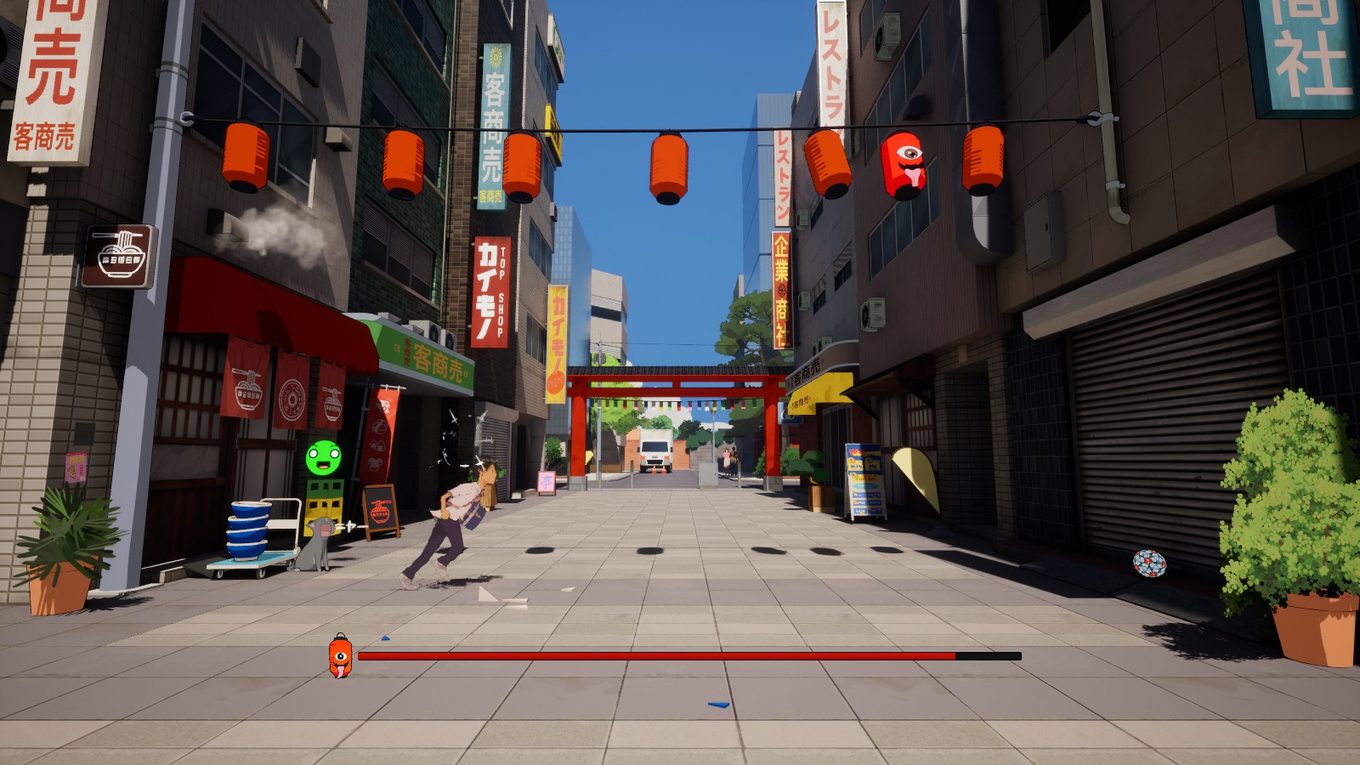
They’re tiny things but they’d add a splash of colour to this curiously empty world. Kick isn’t helped by releasing alongside other games that evoke 1990s anime with more aplomb – including Danchi Days. But even without those immediate comparisons, Kick offers nothing to back up its claim to nostalgia: not that I’m sure many have wistful memories of walking to school. Instead, nospacelost appears to bank on visuals alone, and a surface-level context for them, to evoke an idea of the period.
All of which makes Kick a frustrating game to review. If only because, by necessity, time must be spent describing what buttons do and don’t do. I wish I could offer an experience, any sensation, that heightens the game. But there is none. All I can do is marvel that it exists at all given nospacelost is a solo developer who had never approached development before.
That goes a long way to explain the helter-skelter nature of the game and its failings. One can imagine the excitement that comes with building a game for the first time and the temptation to throw every idea at it. Working solo, you’ve no one to pull you back to focus on a core concept. It’s also why the game’s reference feels so weak: nospacelost has previously stated he started watching the anime that inspires the game’s “nostalgia” during development process.
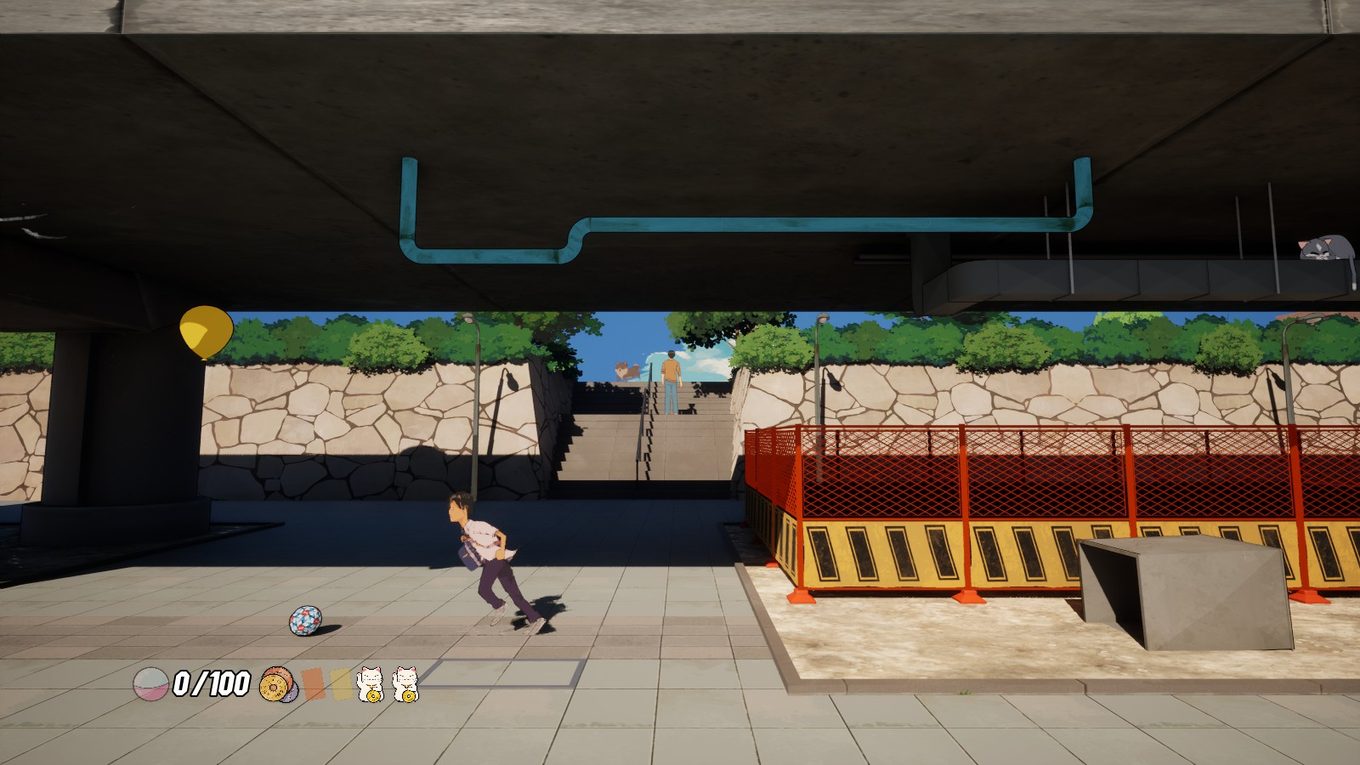
Impressive, then, that Kick is what it is, even if that’s a game that’s rarely rewarding or pleasant. There’s something here. There are a lot of good ideas. They just lack the restraint and developmental nous to make them work.
If I can laud one thing about Kick, it’s that it’s enthusiastic – sincere, even. You can feel nospacelost’s evident relish at building a game within it. I hope he takes that forward as his developmental skill grows to meet his ideas. But in terms of Kick, clumsy controls, inexactness, and a lack of character leaves it feeling devoid of life, depth, and rhythm.