
No Such Place grows on you. That’s fitting, considering the fungal horrors that stalk this pixelated extraction shooter. Rendered in thick, crunchy pixels, its monsters half belong in The Last of Us and half in Bloodborne.
Two games that make up a fraction of No Such Place’s far from subtle DNA. As an Unknown Research Consortium agent, you are dropped into interdimensional rifts in a narrative that echoes the Strugatsky brothers’ Roadside Picnic – which also influenced the S.T.A.L.K.E.R. series and Otherside Picnic, both of which are also represented here. In addition, the mechanical and borderline isometric perspective feels like Project Zomboid.
Whether Chinese development team ChillyRoom can marry these disparate parts into a cohesive, satisfying experience remains to be seen. Its demo proves No Such Place has the potential to carve out a distinct niche, but it also has a long way to go.
If you’ve played an extraction shooter, you already know No Such Place’s core loop. You drop into a region, scavenge for resources – food, weapons, and medical supplies – and attempt to escape while keeping yourself fed and watered. Die, and you lose everything. Survive, and you stockpile resources with which to fuel future expeditions.
ChillyRoom adds little material innovation to this formula outside a few surface-level twists. On the more eccentric side, your principal means of evacuation will be toilets – you may only leave a rift through portals tied to the concept of “departure.” Broadly, however, your mission is to explore rifts so that you may continue to explore rifts. The narrative of which unfolds through messages from the URC on your hideout’s computer. This terminal serves as your main hub to buy supplies and view URC missions, the latter of which offer some direction as you explore. Usually, those tasks entail killing a certain number of enemies for “research” or gathering materials to upgrade your base.
Exploration occasionally yields secrets like keys and codes that can unlock more lucrative loot, or other avenues of escape. For example, finding a supermarket key secures enough food and water to support multiple subsequent expeditions – while also adding some rare peril to having a full bag in No Such Place. Unfortunately, there’s little variation to that. Currently, for instance, you won’t run into traps or high-level enemies by being too greedy to explore locked doors. Nor is the loot you find game changing.
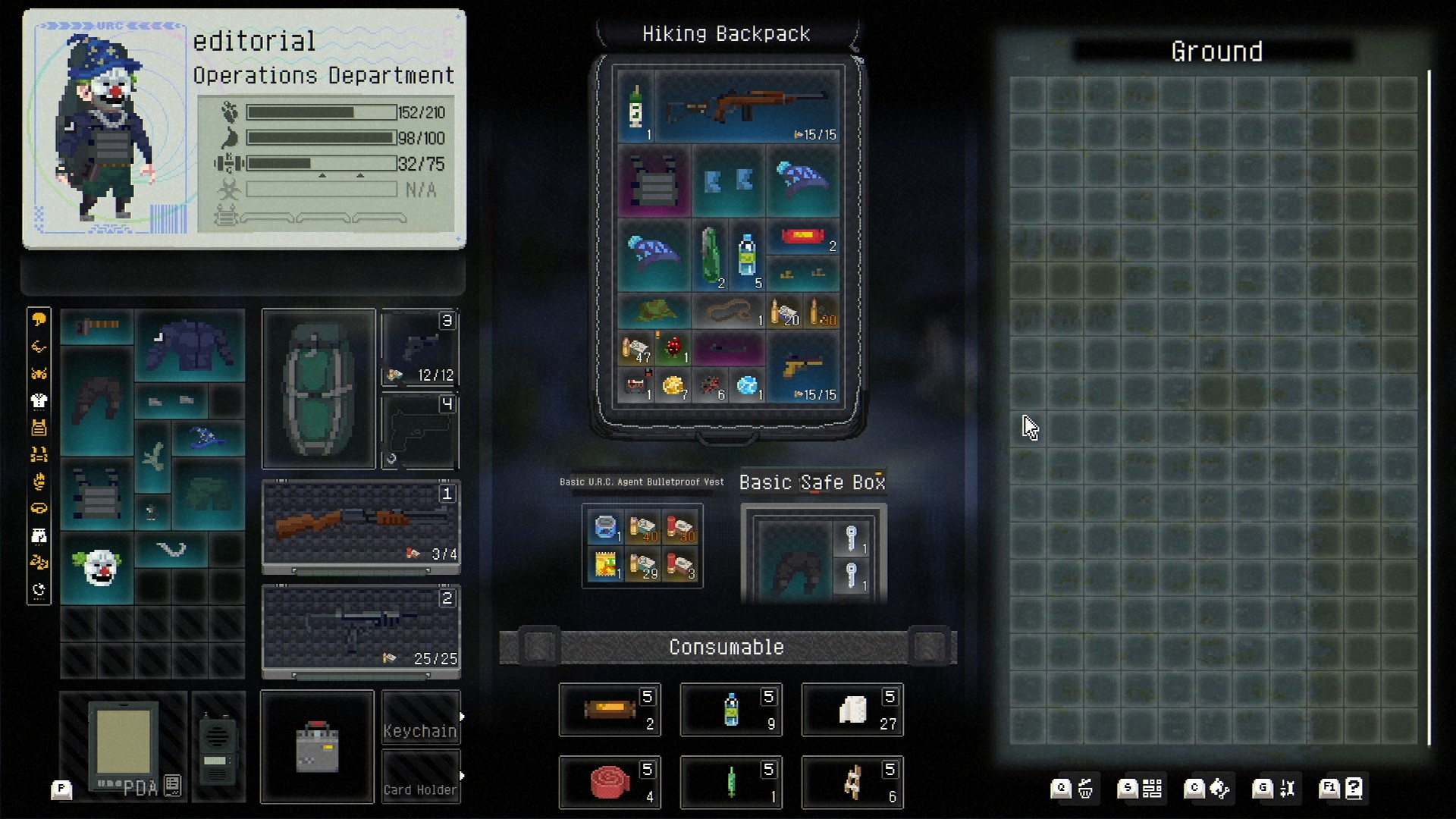
Generous safety nets also mean there’s little consequence to losing your inventory – normally so central to the stress of extraction shooters. You can insure gear, have permanent safe slots in your inventory, and can find enormous backpacks. That’s great for hoarding items but, combined with an overabundance of supplies and ammo, it trivialises the risk of pushing deeper into a rift. It also highlights how far No Such Place remains from striking a compelling balance between the friction it craves and reward.
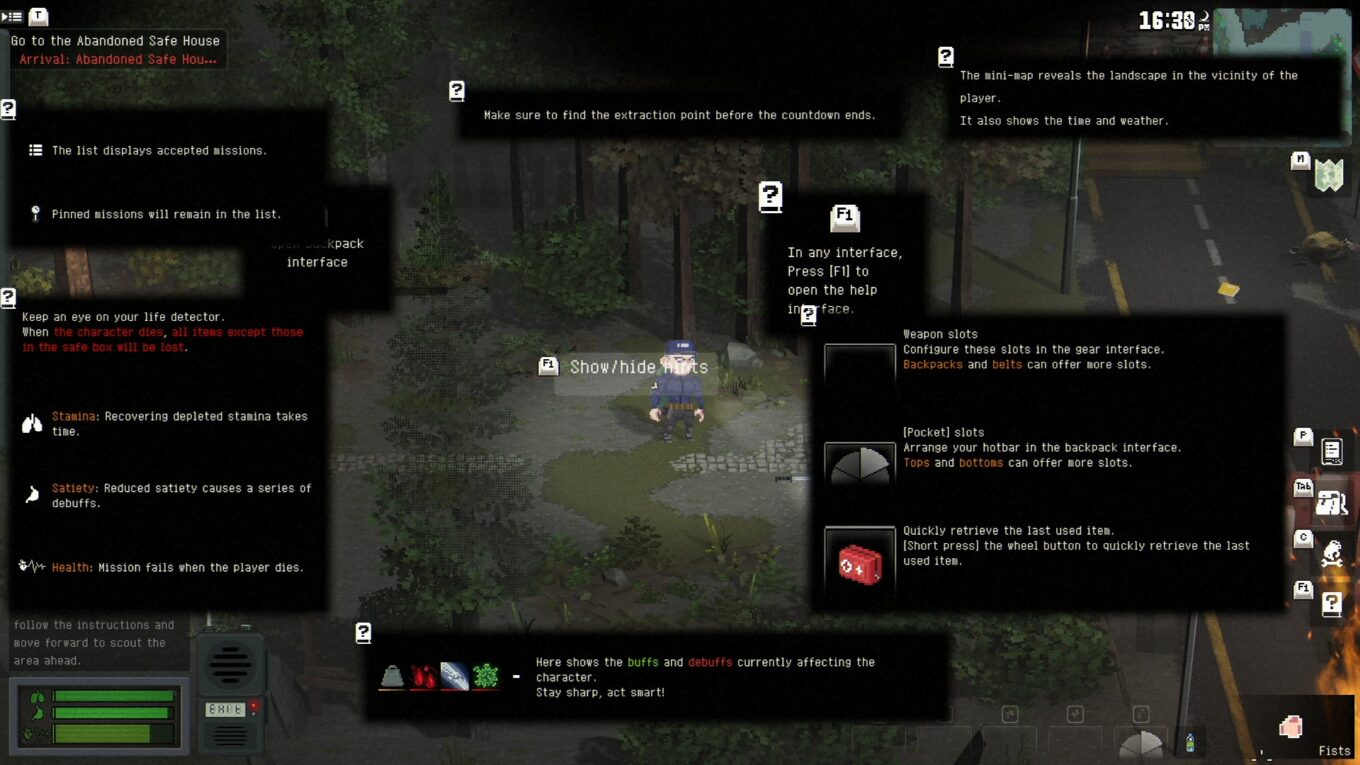
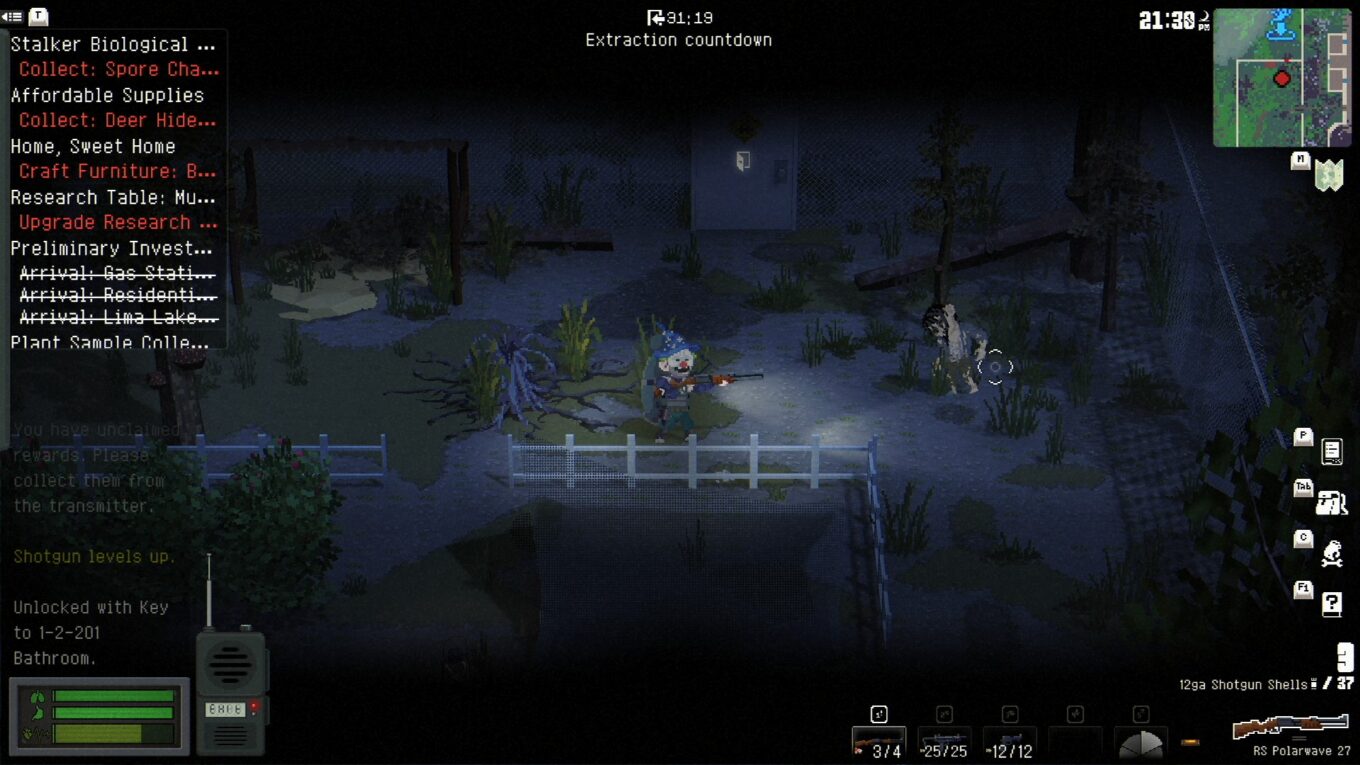
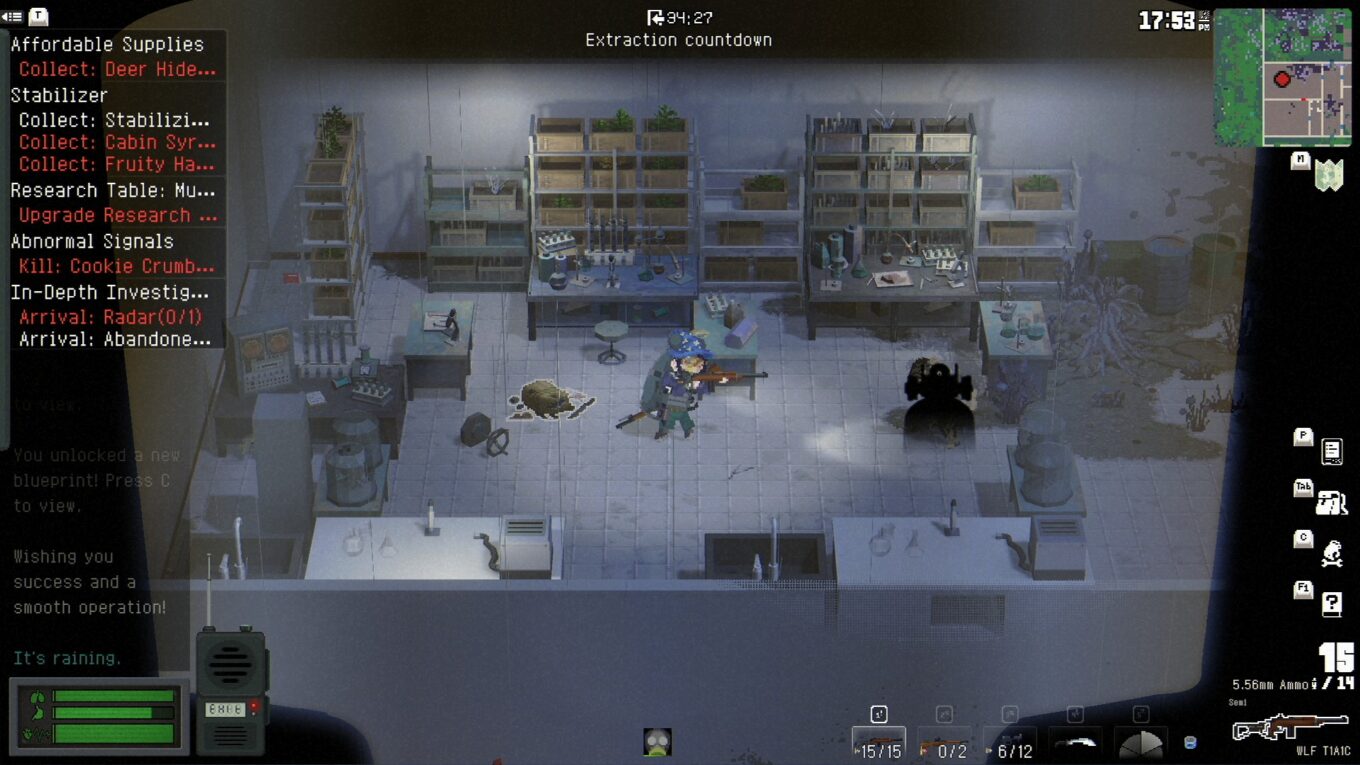
That lack of peril is mitigated somewhat – for better and worse – by the stress induced by No Such Place’s perspective. ChillyRoom bills the game as a “top-down” shooter, but in reality it employs a three-quarter, almost isometric, view that consistently blocks your sightlines. To counteract this, No Such Place turns nearby walls translucent so you can see inside buildings as you explore. This is only in a restrictive radius, however; and that inside an existing radial limit to your vision as the borders of the screen are blacked out by murk. The resulting fish-eye effect is not just uncomfortable, it regularly blinds you to enemies and obstacles.
Layered on top of this is a raft of visual noise, VHS scanline filters, and more that only exacerbate the sense of having to squint through fog to see anything. Combine these effects still further with dark blue and grey enemies set against a backdrop of sickly greenery and black tarmac, and No Such Place regularly becomes impossible to parse visually.
It’s part of a broader sense that ChillyRoom has prioritised a retro aesthetic over basic UI and UX functionality, exemplified by No Such Place’s many menus. All of which are crippled by inconsistent, inaccessible typography. For instance, your equipped weapons and ammo are displayed at the bottom of the screen in a thin, pixelated font. Directly adjacent sit solid white icons directing you to your inventory and crafting menus. Yet, your current ammo count is duplicated between the two in an ultra-bold pixel typeface that is rendered unreadable by being visually comparable to the icons above.
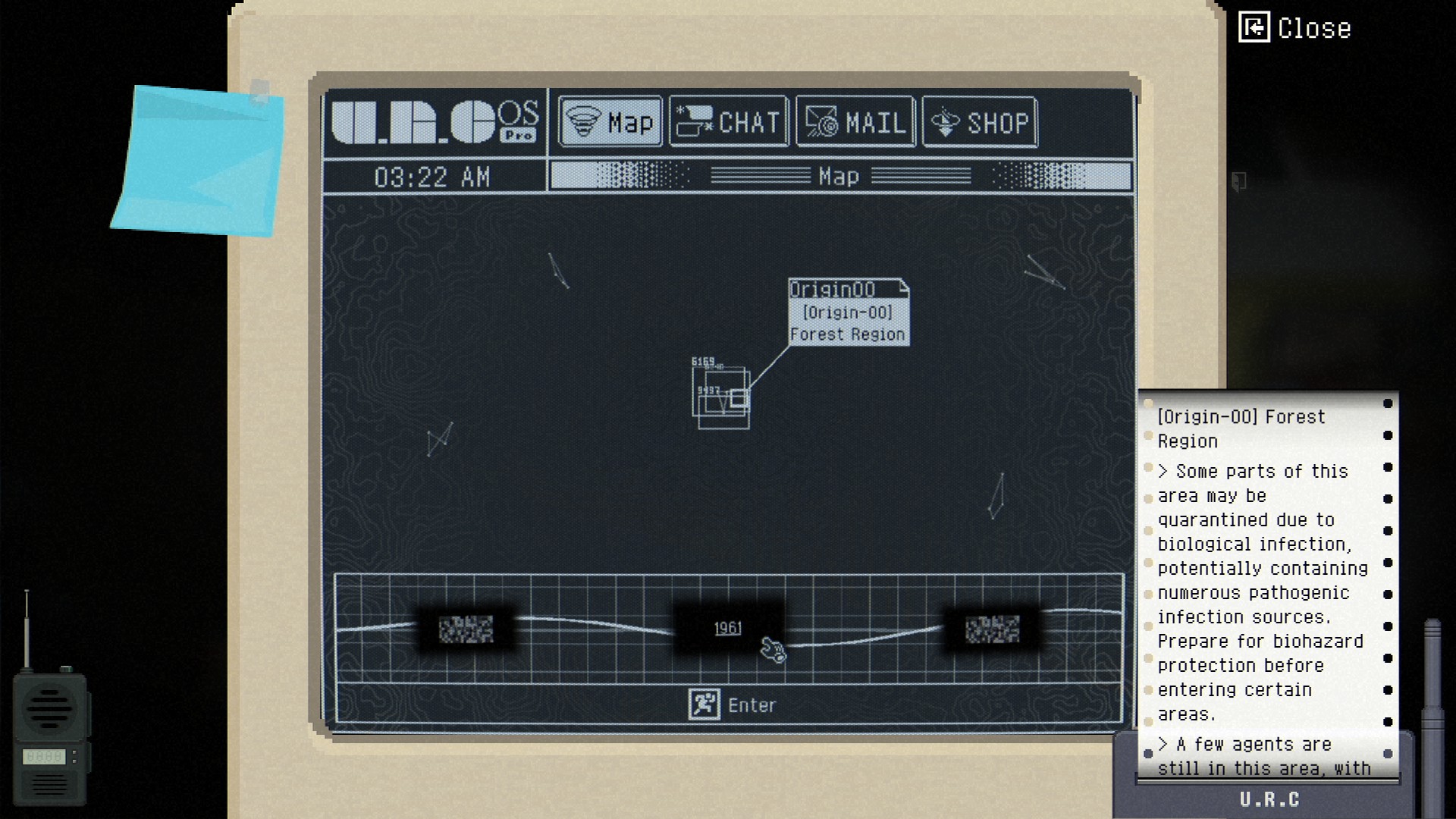
Back at your base’s computer, the text logs that both unfold No Such Place’s narrative and describe your missions are further obscured by terminal filters and race past far too quickly to read. The demo offers no accessibility toggles to mitigate this – no character outlines, no way to remove filters, and no simplified text.
It is increasingly difficult for indie developers to prioritise accessibility and this is a demo build, with room to add more support later. However, these shortcomings highlight fundamental design flaws that are harder to ignore. In particular, in how art direction and functionality should be a conversation between two disciplines, rather than a conflict.
The most obvious symptom of this disconnected approach to design is the game’s combat. There is a case to be made that players should avoid conflict as much as possible in No Such Place – it made the demo more enjoyable for me. Slipping past slow-moving zombies and avoiding human camps (and their guns) injects a hint of tension to exploration.
Indeed, No Such Place thrives when a brooding anxiety can shine through, as when it forces you to navigate abandoned buildings in the rift. With nowhere to run, it’s increasingly difficult to avoid enemies and a single gunshot can bring a horde down on you. That’s only more thrilling when you’re carrying a full pack and find yourself cornered. Even as I struggled against No Such Place’s inconsistent design, it was these moments that still made the game pull me back in for further playthroughs.
Yet, the sheer volume of ammunition – and a seemingly now mandatory dodge roll – suggests that No Such Place wants you to try and mow down as many enemies as possible. Though this is immediately countered by the environment. During my first run, a survivor quickly gunned me down not because of a lack of familiarity with the controls but because I became caught on terrain I could not see. It would not be the last time.
Most enemies are more manageable than that, though a giant fish-spewing monster that teleports through the ground ended most of my subsequent expeditions. Its ranged attacks are difficult to avoid, particularly if it appears indoors, and the cluttered environment leaves no room to manoeuvre. If it is meant to be a stalker enemy designed to punish greed, the game never signposts that; in fact, the tutorial frames it as an easy kill. Despite that, after a string of frustrating deaths, the creature vanished.
Which is to say that, as much as did keep wanting to come back to No Such Place, its myriad contradictions were always apparent. With so much baked into No Such Place’s demo design indicating that ChillyRoom isn’t yet sure how it wants the player to approach its rifts, I’m not certain how the player is supposed to know.
In an extraction shooter, a player’s mistakes should carry significant consequences. But when a game’s flaws punish the player, the balance between friction and frustration skews too far in the wrong direction. No Such Place’s failure to interrogate its narrative and mechanical influences ignores what makes them work in their respective origins – and what conflicts might need to be resolved to marry them together. It means that No Such Place veers inconsistently from too generous to deliver a true survival horror experience to unfairly difficult due to poor visibility, odd choices, and clunky movement.
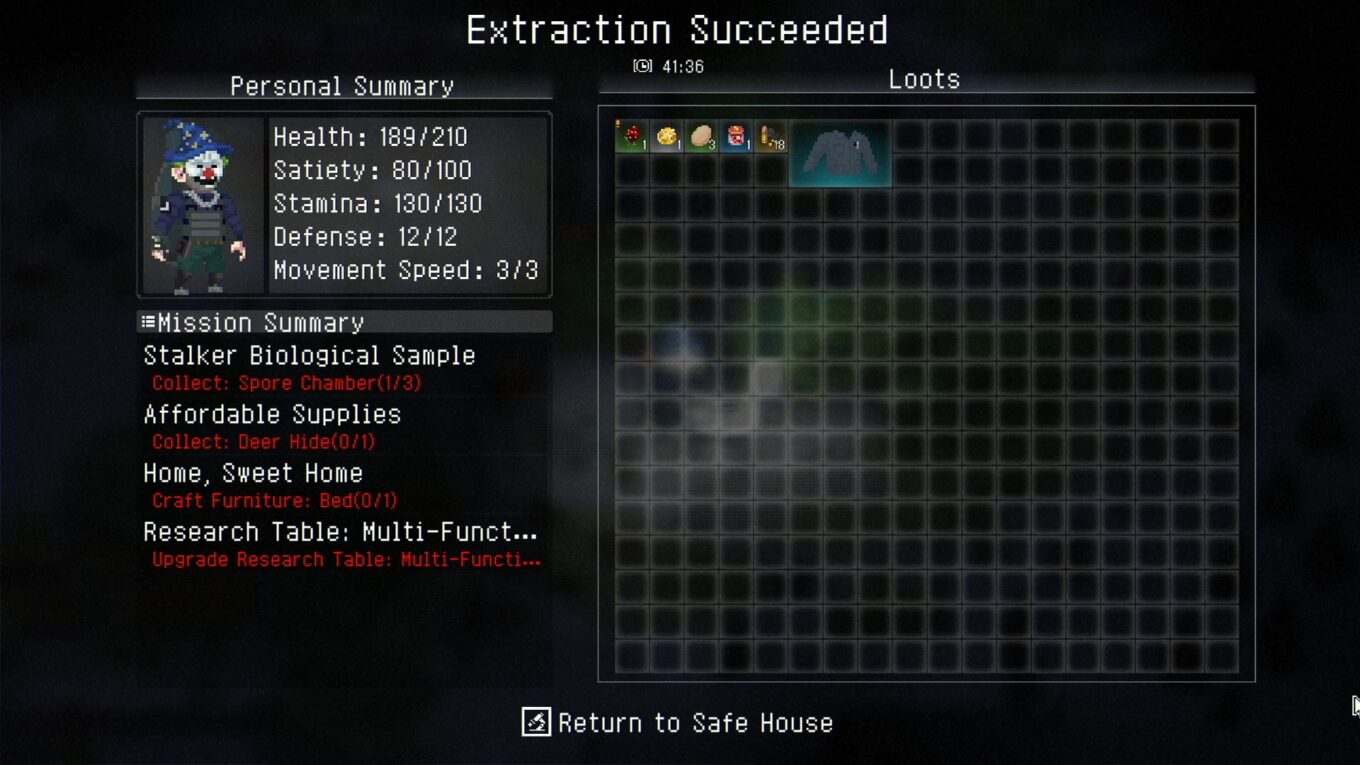
Solutions may still come. Beyond the demo’s single region, it teases multiple worlds and timelines in the full release. As ChillyRoom adds variety to these worlds, further iteration may organically highlight the issues that haunt No Such Place and make them easier to identify and iron out. I hope it does. Despite glaring problems, I was fascinated by No Such Place’s world, curious about where it could go, and I did genuinely want to engage with its core loop even if its presentation kept driving me away.
If ChillyRoom can better consider the difference between friction and cheap frustration, No Such Place could carve out a distinct niche in an increasingly oversaturated genre. To find that niche, however, No Such Place has to overcome fundamental design errors that currently make it an uncomfortable and imbalanced proposition.