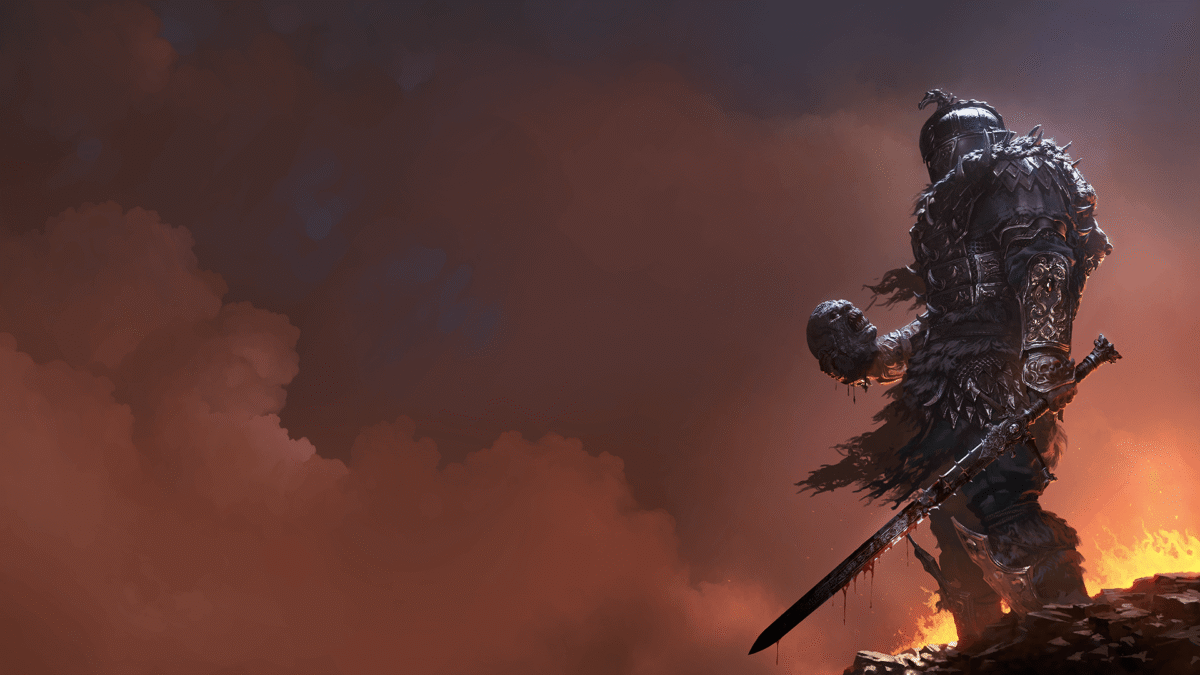
In a speech on the 12th August, 1880, Civil War general William Sherman declared, “There is many a boy here today who looks on war as all glory, but, boys, it is all hell.” It’s a sentiment that has been recycled across a century of wartime media to the point of cliché. Particularly in video games, which routinely divorce war from its reality in service of the arcade joy of mowing down faceless bad guys. “War is hell” but you’d never know it looking at the gaming industry. Reading its Steam description, I hoped Medic Pacific War might counter that trend.
Developed by Polish studio Hypnotic Ants and just launched into Steam Early Access, Medic Pacific War shifts perspective away from the barrel of a rifle. It casts you as Mayers, an American medic stationed in Hawaii in December 1941. Thrust into the midst of the attack on Pearl Harbor, it falls to Mayers to rescue the wounded as the port burns and Japanese Zeros carve aimless lines across the sky. It is a premise ripe for examining the realities of war. Instead, Medic Pacific War dissolves into a series of quick-time events.
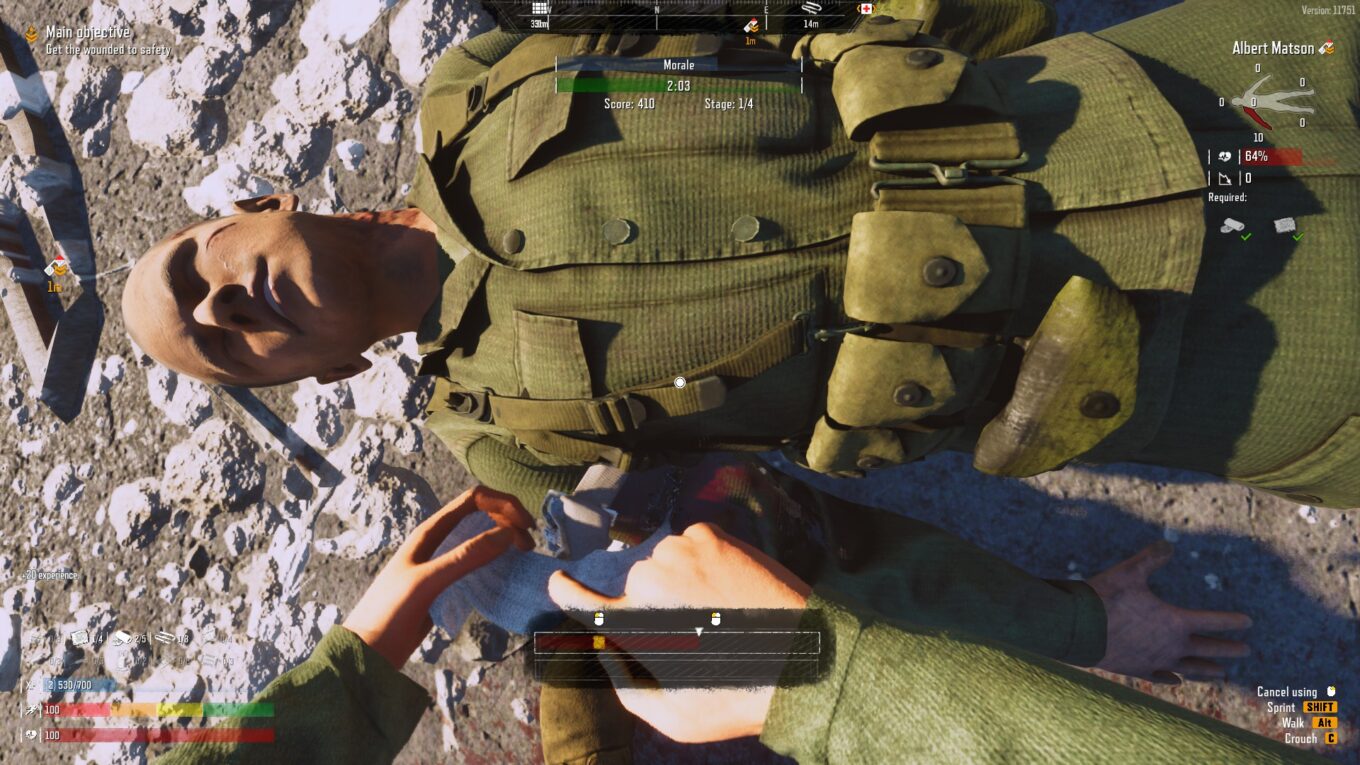
Those minigames represent the core gameplay of Medic Pacific War, through which you stabilise patients – primarily by awkwardly poking gauze into wounds. You can take a safe or fast approach in many situations: designated by needing to hit larger or smaller segments on moving metres. Elsewhere, you hold a specific position on a metre to tighten a tourniquet or rapidly tap a key to squeeze ointment onto a dressing. Miss the mark and you push your patient closer to death. Few of these inputs make much sense compared to what’s on the screen.
None of these activities are difficult nor mechanically interesting. Though Medic Pacific War insists via its many pop-ups that time is of the essence and your triage choices carry weight, that rhetorical urgency never manifests in gameplay.
Medical supplies are not scarce resources to be husbanded across an overwhelming volume of casualties. You’re never forced to watch a soldier fade because you didn’t take a risk to scrounge a dose of morphine or peel a bandage off a dead comrade. On rare occasions, you do need to assess who and what to treat first. But when the ramification for losing a patient is a pop-up that tells you to “try harder” there isn’t a lot of motivation to go out of your way.

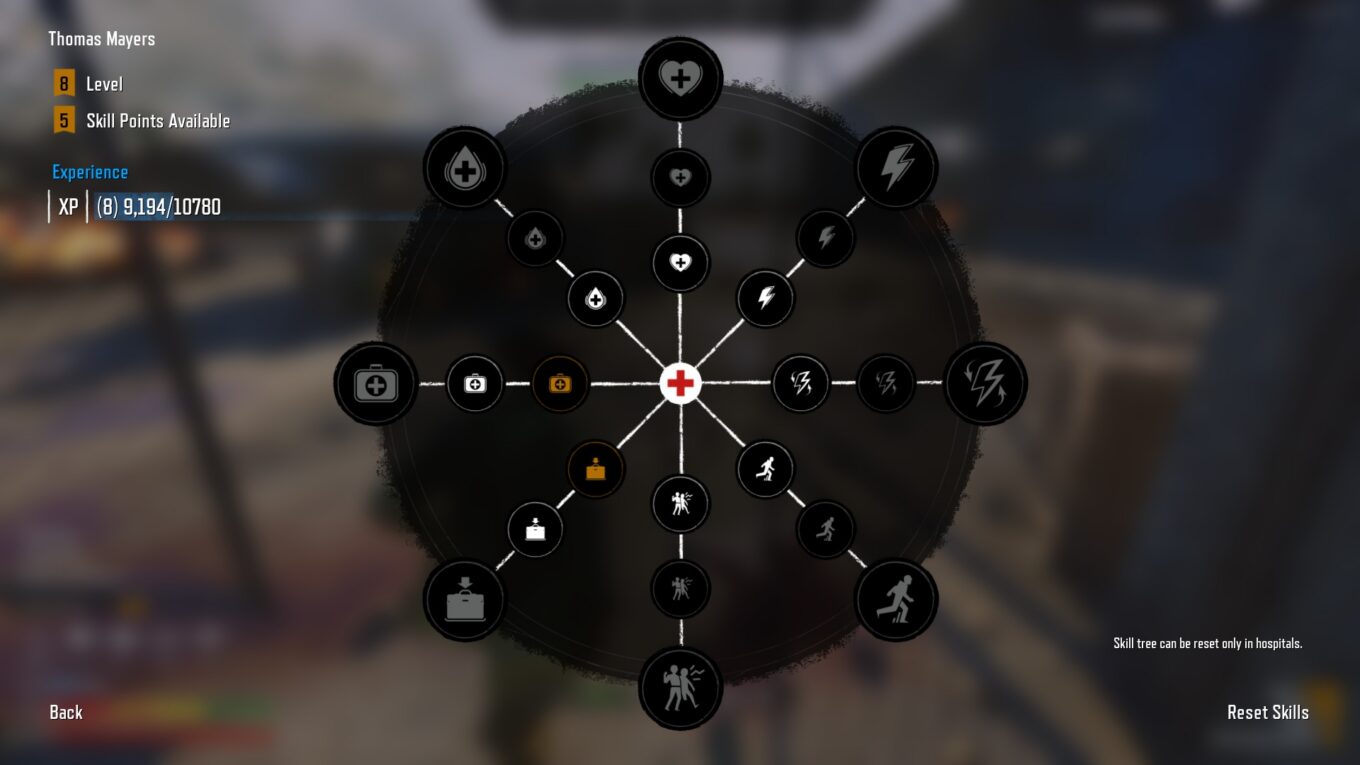
That structural triviality is exacerbated by a levelling up system in which you earn experience for saving men. After only a few, you’ll unlock upgrades that allow Mayers to carry larger stockpiles than you’re likely to need. This is more of a balancing issue that may well be ironed out as the game moves out of Early Access. But in a holistic consideration, it is only one desultory element among many.
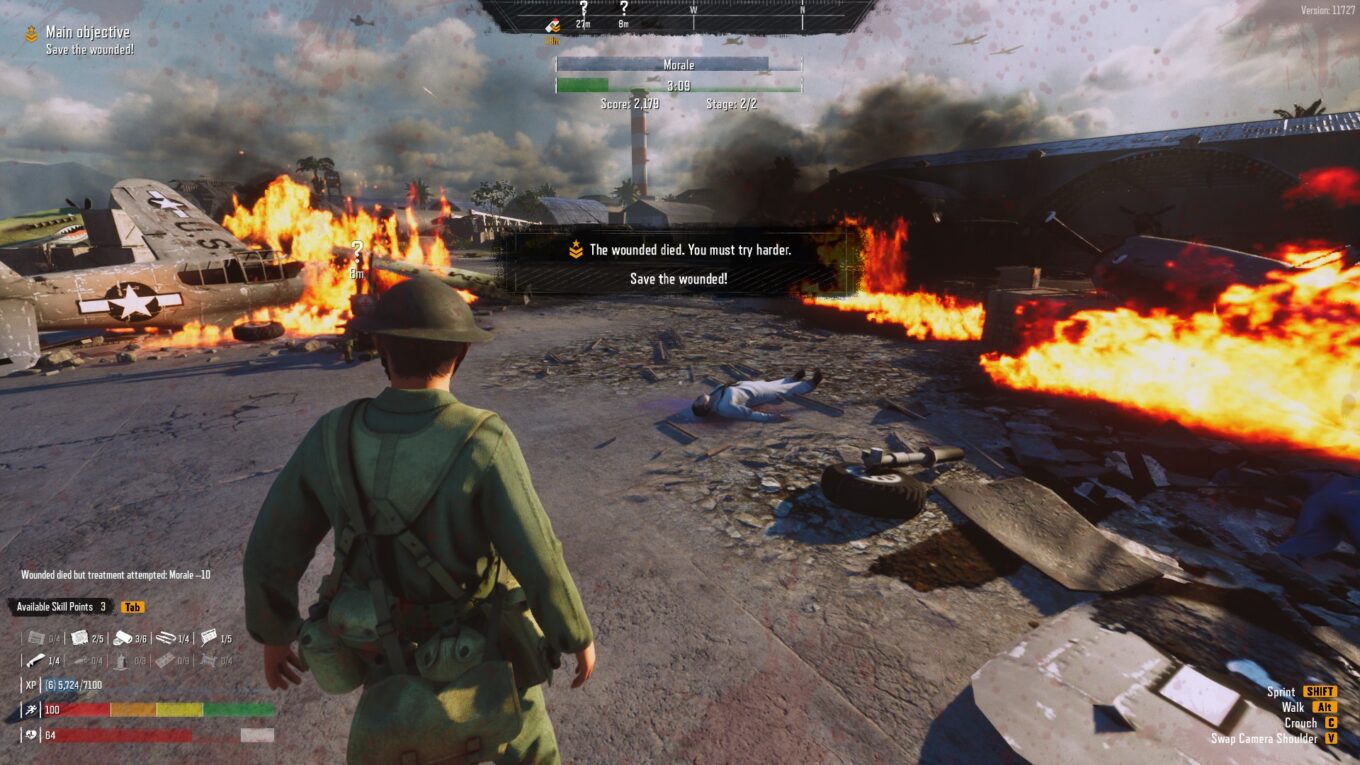
To its credit, Medic Pacific War does try to offer variation. In certain spots across this build – which spans the attack on Pearl Harbor and the defence of the Malinta Tunnels on Corregidor – you stumble into broader set-pieces. At Pearl Harbor, this is a timed sequence of saving as many men as possible on the airfield.
That does offer a point of difference to the linear gameplay thus far. Though, it also became repetitive when I had to visit it four times. First, due to crashes sending me back to the start of the section. Later, because the game’s unclear checkpoints meant I felt safe quitting after getting new orders and a new objective, only to be taken back to the beginning upon reloading. Eventually, I abandoned stabilising patients in favour of running them to nearby ambulances. None of them died. All did hand me points, however, that I could spend on supplies at the quartermaster. I suppose someone is making a quick profit in the middle of a catastrophe.
This sudden influx of new mechanics is down to these sections – there’s another, longer one in the Philippines – being shortened renditions of Medic Pacific War’s arcade mode “Lifeline” parachuted into the campaign.
It’s just part of the strange rhythm the game’s missions take on. The airfield feels like the natural endpoint to the first chapter. Yet, immediately after, you are ordered to carry a box from one end of the runway to the other. Next, to deliver a critical message to the port, though that’s immediately forgotten in favour of shuffling ammo crates between checkpoints.
Though it lacks some visual polish that may arrive later, Pearl Harbor is an impressive and sprawling digital environment. Yet, Medic Pacific War has no idea how to employ its scope beyond making Mayers into an errand boy.
What you should be doing is delivering a vital message to save the USS Nevada, via a radio operator named Stinard. To locate him, you must interrogate wounded soldiers before walking away without offering assistance. When you do discover him, Stinard is also injured. Despite requiring a tourniquet on a leg and an arm, rather than setting him at a nearby aid station or loading him into an ambulance, the game forces you to carry him to his radio so he can tell the ship not to leave the port.
It’s a narrative lurch that’s part of a broader tonal incoherence pervading Medic Pacific War. A charitable reading of how uncanny and detached the game feels would attribute it to the unpolished nature of Early Access. Yet, with so many core systems in place, it speaks of a more fundamental and careless inconsistency.
Consider Stinard. Mayers refers to him as “Stin-erd” while NPCs alternate between “Stine-ed” and “Stine-ard.” It never feels like an attempt to add real human error to characters, but rather a linguistic carelessness that’s common in the game’s spoken lines. And there are a lot of them. Mayers routinely barks generic platitudes like “Give ‘em hell, boys!” or sighs, “Hell of a day to stay alive.” Elsewhere, he tells a soldier with a severed leg he’ll have a good story to tell his family while his patient politely groans on the ground. All delivered in a disconnected, automatic tone that betrays no relationship with what’s being said or what’s on screen.
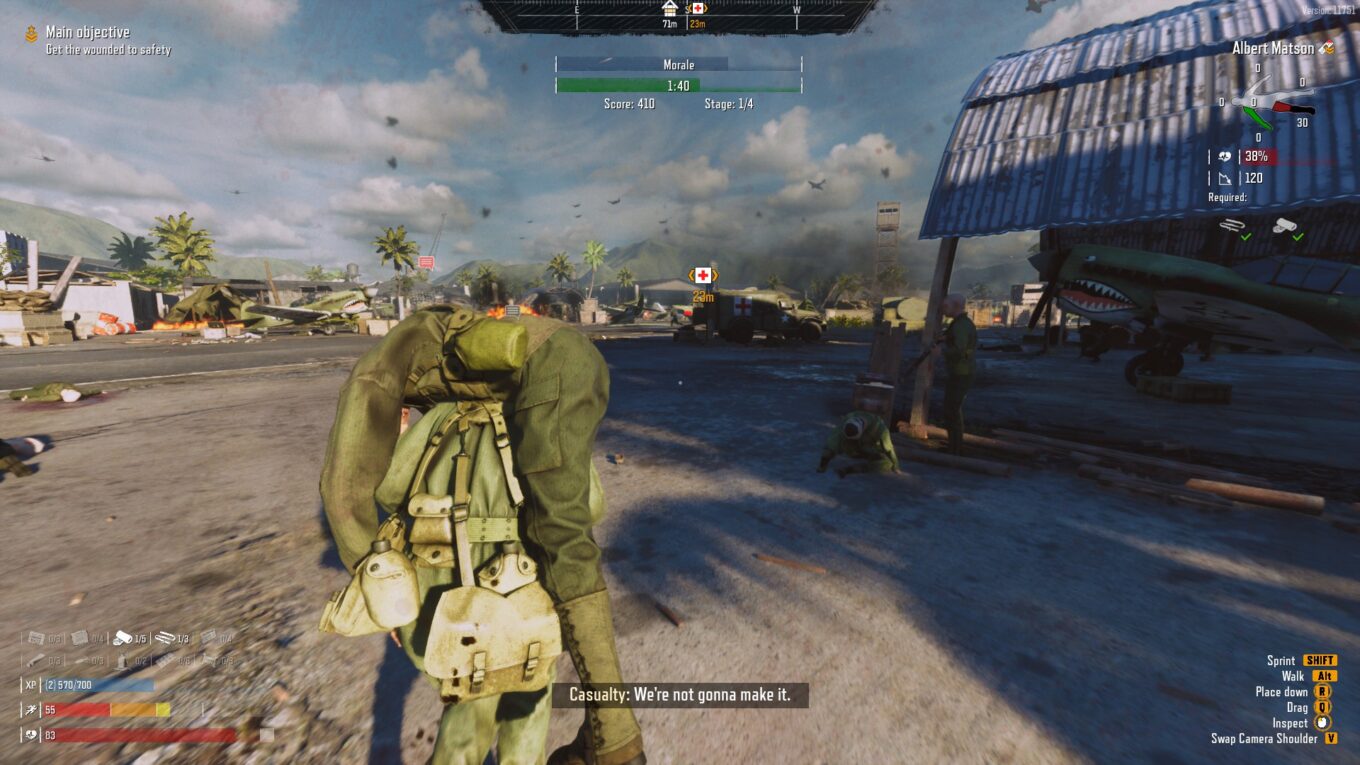
That, in turn, is layered onto a background of near silence. Chatty as Mayers is, the environment around him remains eerily quiet for a harbor reeling under aerial bombardment. In place of an expected symphony of explosions, AA guns, and screams Medic Pacific War offers an acoustic void. One is only seldom interrupted by the faint purr of a passing fighter and the lonely ringing of a solitary bell.
Some of that emptiness can be put down to Medic Pacific War’s Early Access status, but it also speaks of an historical drama with precious little to say. The concept of a game centred on a combat medic is a good one. In a contemporary gaming landscape that insists on placing a gun in players’ hands without ever asking them to ponder the consequences of what they do on screen, a focus on a non-combatant grappling with the reality of war feels radical. It’s the perfect opportunity to recontextualise video game warfare as the horror it should be. This is only more true for a game set in the Pacific Theatre, an underexplored and especially bloody stage of the Second World War.
Medic Pacific War doesn’t even try to engage with that. It doesn’t have to. And it would be unfair to criticise a game too much for not being what a broader industry needs it to be. But what is there isn’t fun, either. Something that only compounds its failure to try something within its premise.
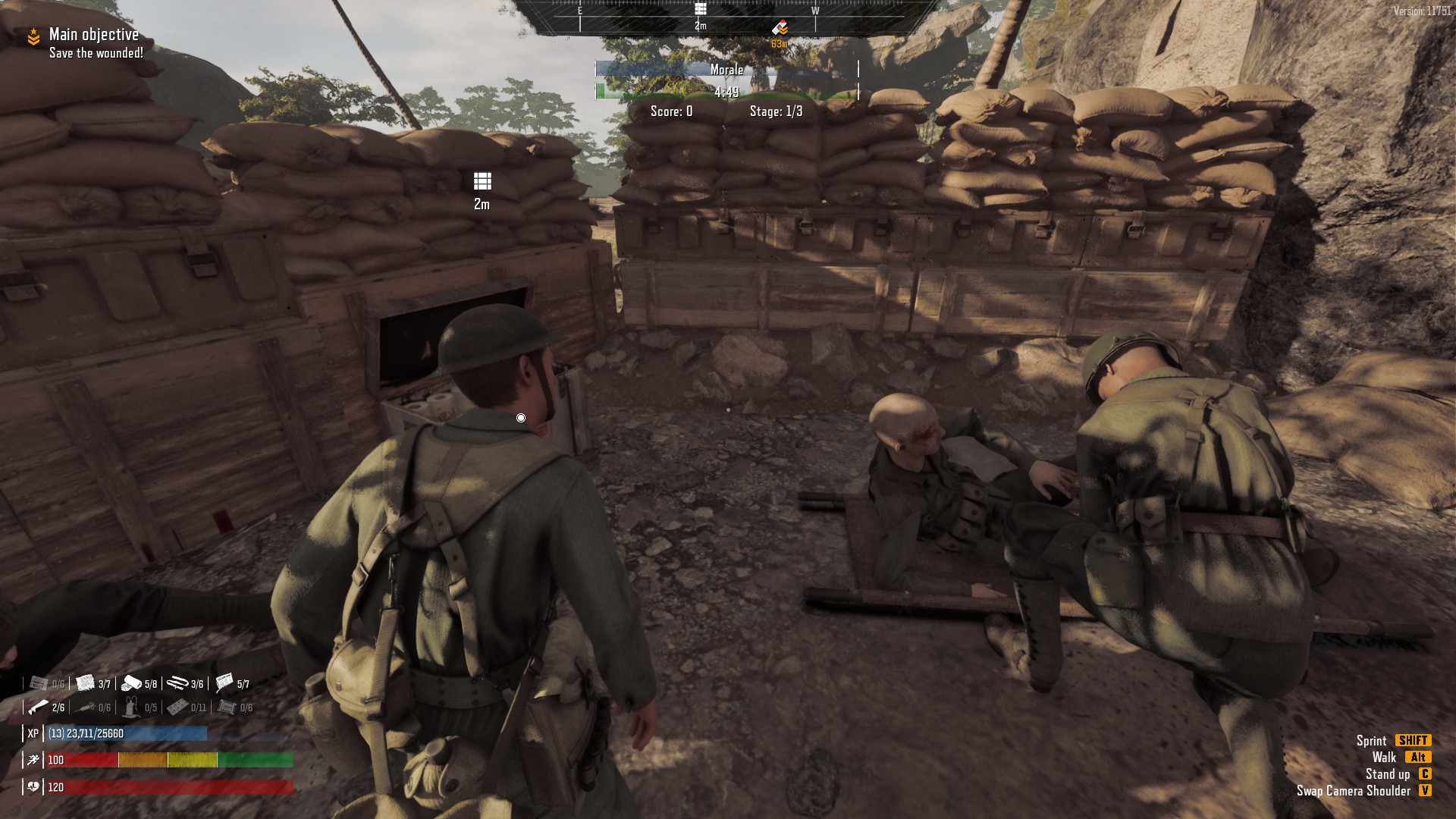
That failure can be explained by Hypnotic Ants’ oeuvre of simulation games, of which Medic Pacific War is yet another. It’s clear, though, playing through this Early Access build, that this game is not about simulating the war in the Pacific. Rather, it’s an ill-considered skin for a conventional simulation game in the hopes it might offer a point of difference to cleaning walls and organising bedrooms.
In doing so, however, Medic Pacific War both fundamentally misunderstands the appeal of the simulation genre and the requirements of portraying something on the scale of war in the Pacific. Though it could, and arguably should, be a counter to the continued sanitisation of war in modern gaming, Medic Pacific War chooses to take it further. Ignoring the fact that war, in all its guises, is hard to sell as cosy.