As a child, I spent long hours sabotaging my conquests in Age of Empires to instead build beautiful cities. I have lost numberless hours in years since to the minutiae of management in the Total War series. I am, in short, possessed of a particular itch. One that only worsens with age. As the joy of organisation has become more apparent to me, I’ve accepted that the quickest way to my heart is via a blank spreadsheet or a novel storage solution. Modern games since, however, have largely failed to satiate that desire. On the evidence of its brief demo, The Guild – Europa 1410 may finally scratch that itch.
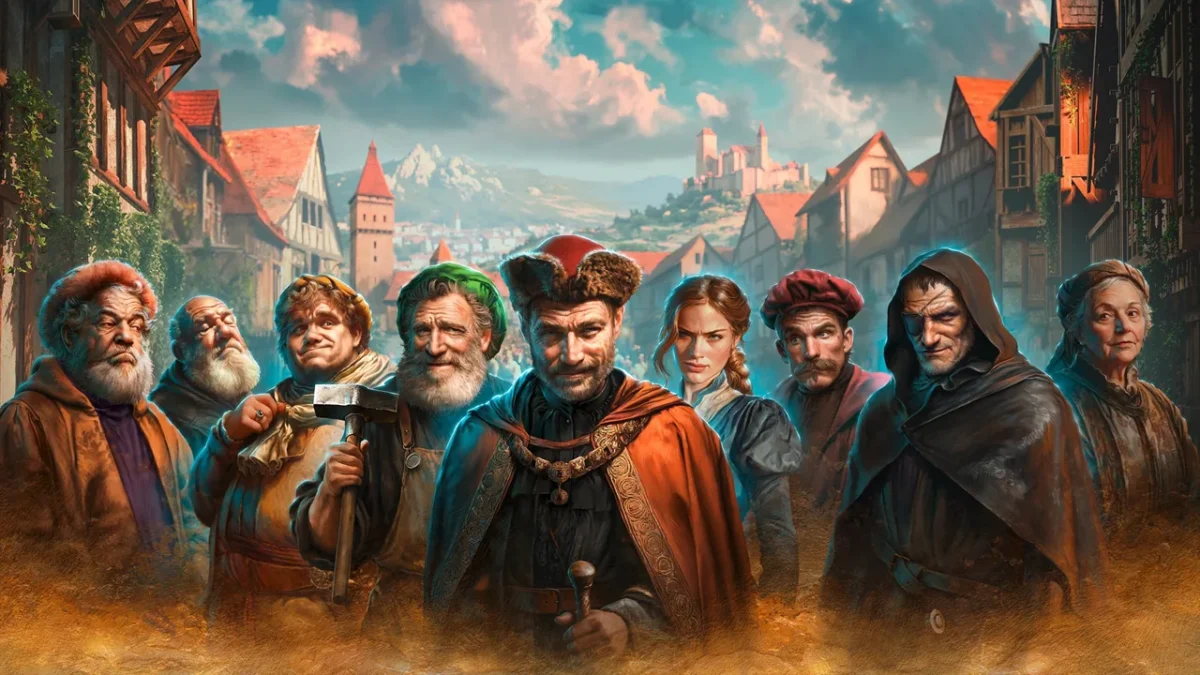
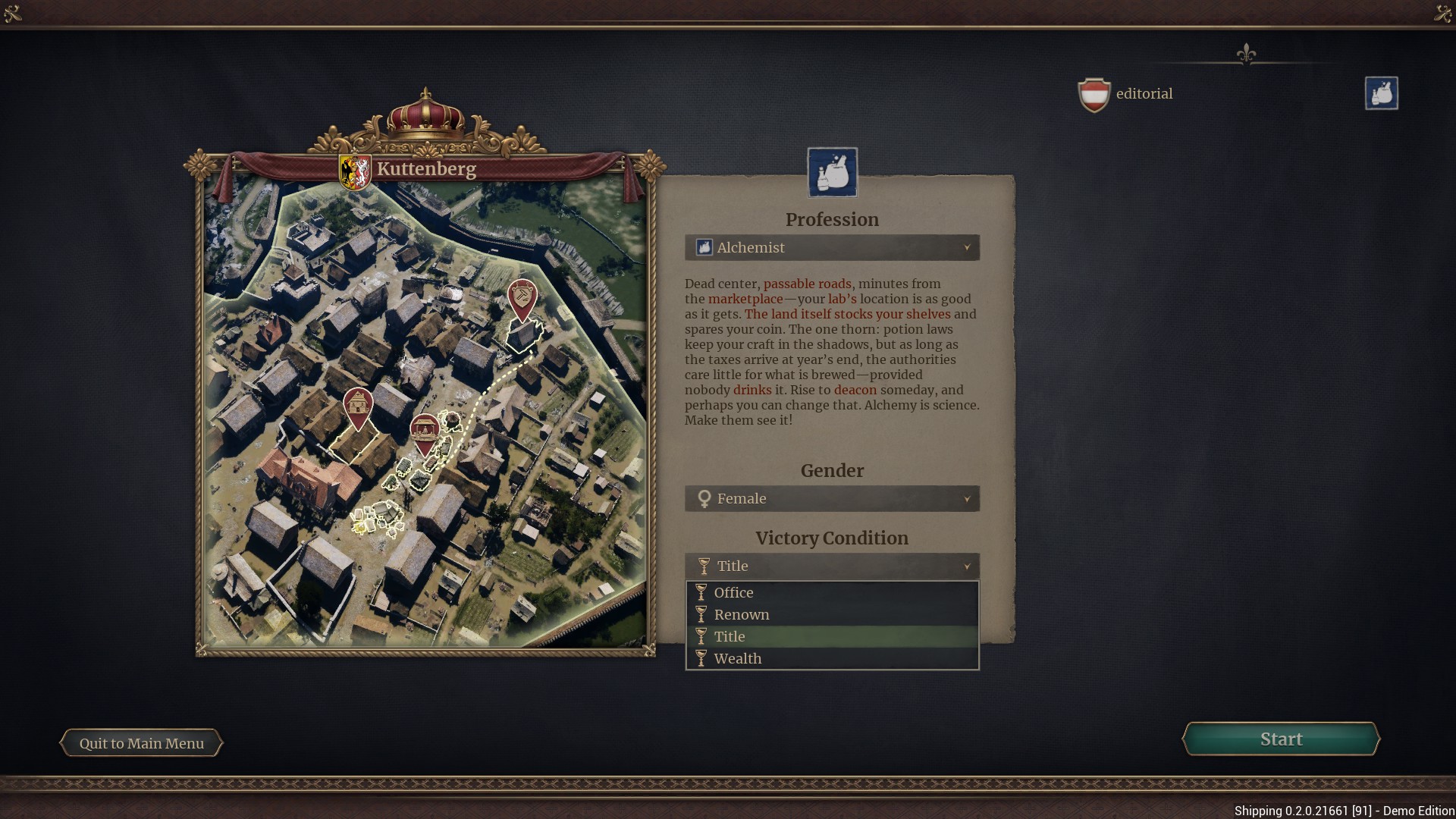
The Guild – Europa 1410 drops you into a 15th century Bohemia on the edge of the Hussite Revolution. In the guise of a local business owner, you must build a dynasty within the Czech city of Kuttenberg — the demo, which is set to debut during Steam Next Fest, teases Nuremberg, Graz, and Wrocław as alternate starting points. Similarly, the demo limits you to three starter professions: alchemist, smith, or taverner.
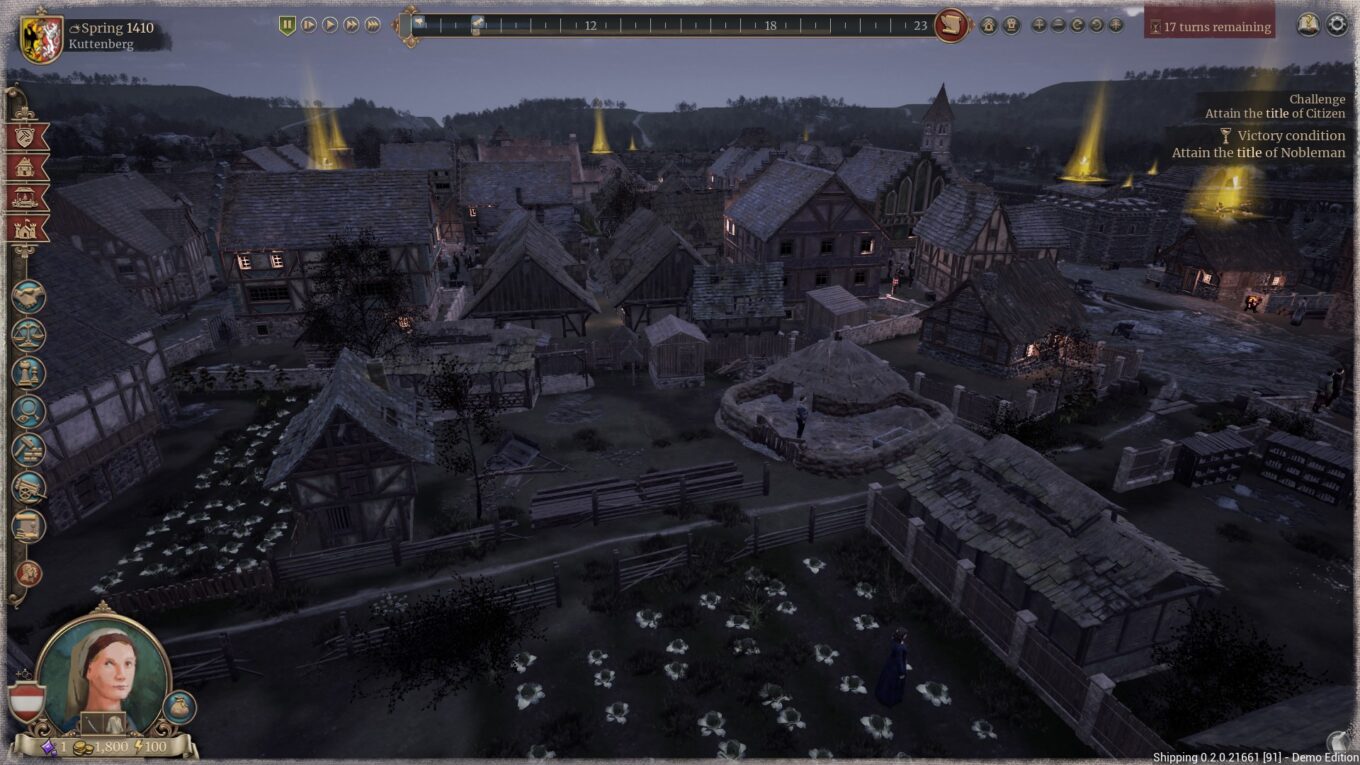
Your goals from there will vary based on the victory condition you choose. You may want to climb the political ranks of the city, become its most wealthy patron, or influence your way into the aristocracy. Paths that may be made easier or more difficult depending on how each profession situates you in an increasingly volatile city. The Guild – Europa 1410 promises to accommodate these Machiavellian fantasies, and perhaps a few more.
For now, those ambitions are beholden to a 20-turn limit. Each turn spans a single in-game workday but represents an entire season. Though the full release promises a more sprawling narrative, the demo contains you within the anxieties of a civil war in which you must build a business, a home, and cultivate relationships.
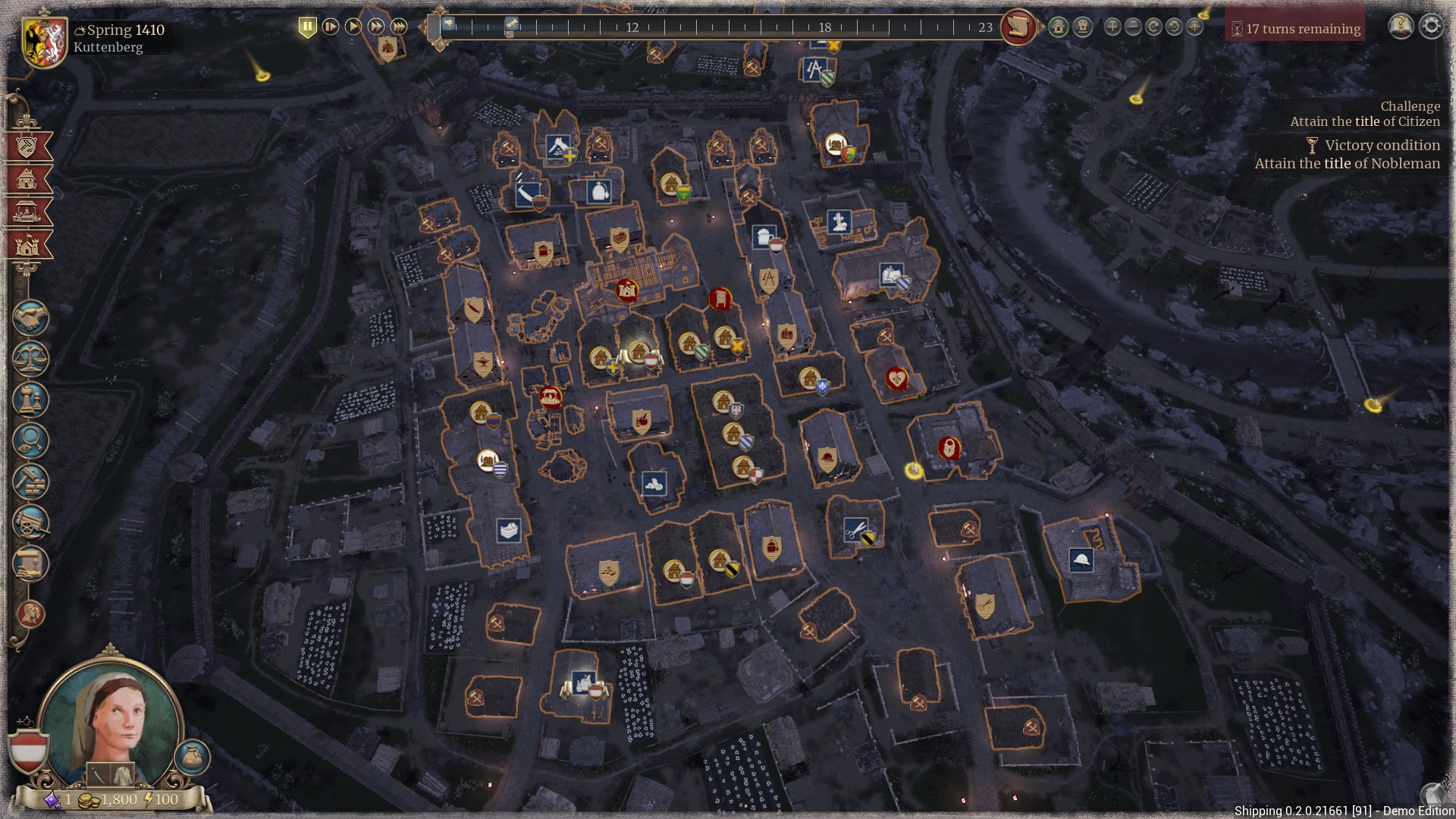
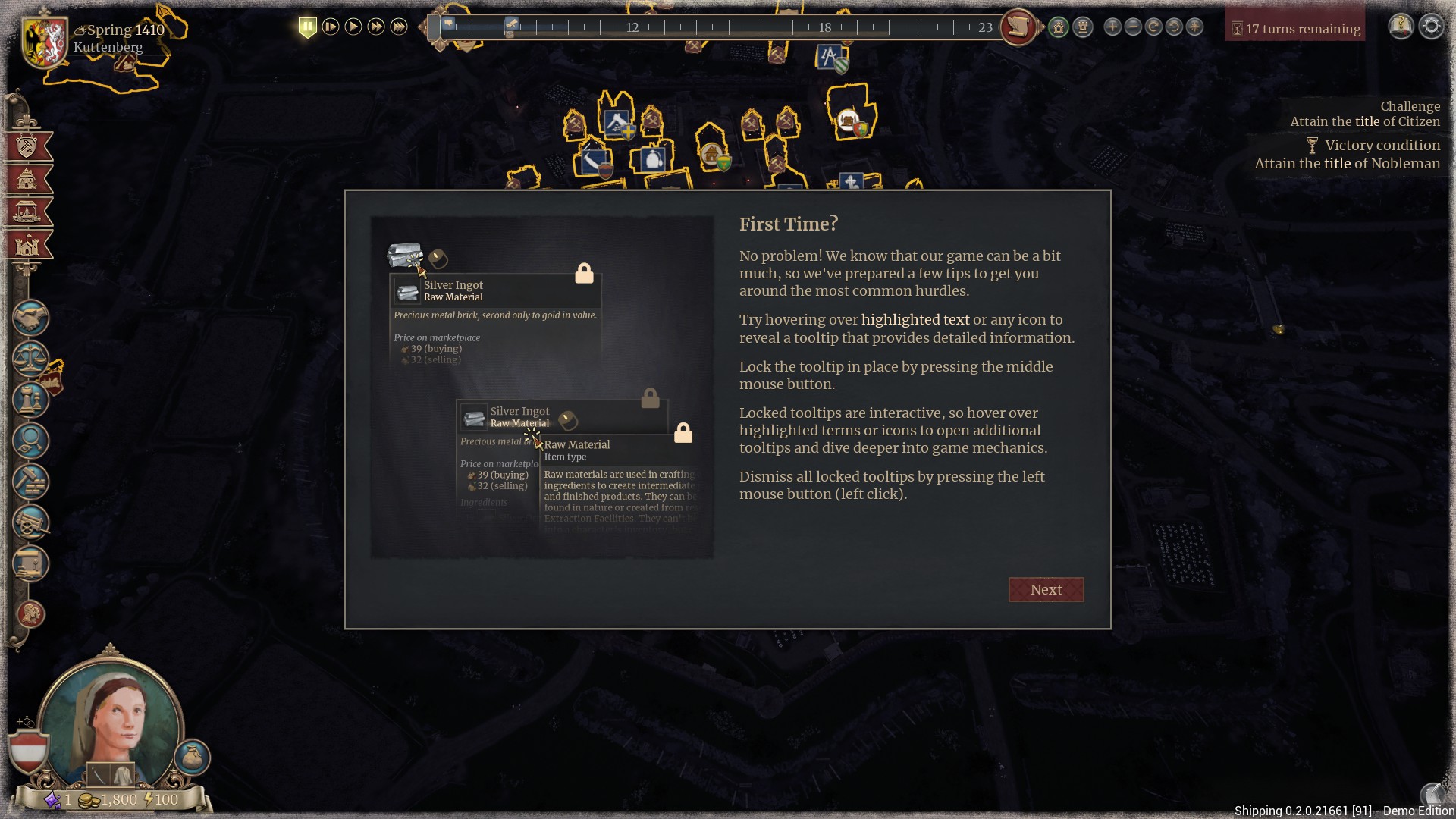
The top-down city sprawl that greets you is dense, beautiful, and gets confusing fast. If you don’t enjoy menus, you may be out of luck with The Guild – Europa 1410. Menus layer upon menus, often literally, in nesting-doll complexity as you navigate The Guild – Europa 1410’s diverse systems and mechanics. The game mitigates this through quick navigation to civic landmarks including your business and the marketplace, alongside quick keys to monitor and develop your character.
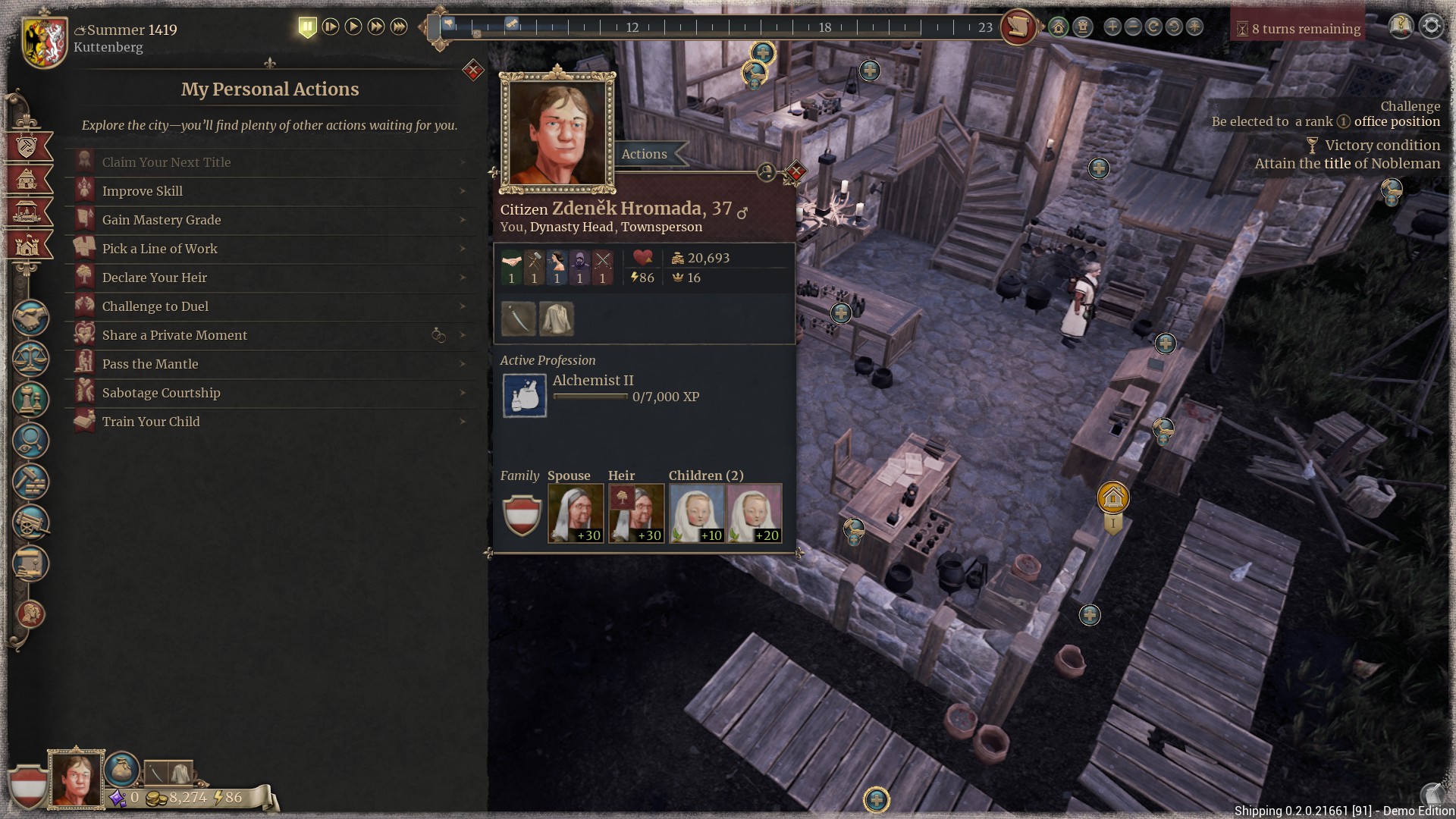
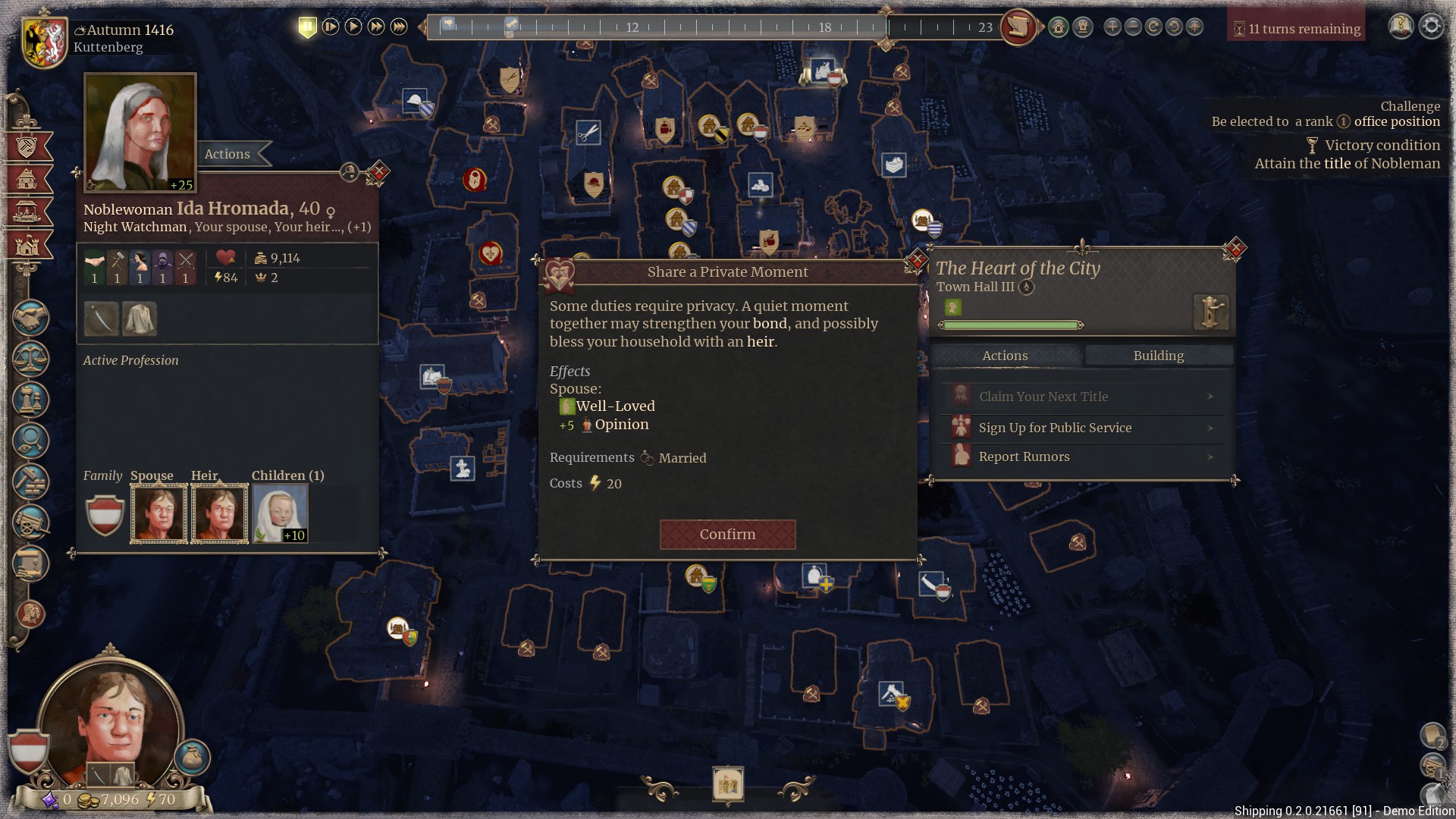
Developer Ashborne games acknowledges The Guild – Europa 1410’s heterogeneity in the demo. To support new players, it anchors every interface with granular tooltips that explain menu options’ functions. In lesser hands, that rhetorical hand-holding might feel suffocating; here, with so many avenues of progression open, it’s necessary.
I found myself restarting the demo three times within the first few turns. Not due to frustration or because I hit a mechanical dead end. Rather, each time I had learned something new and was excited to apply it as early in the game as possible. That’s not a friction everyone will suffer gladly. For an organisation sicko like me, it’s bliss.

With only a short amount of time with The Guild – Europa 1410’s demo, I focussed my energies on transforming my humble alchemical store into a thriving business. I dispatched my employees to forage herbs and distill them into potions and concoctions I could sell at market. Other trades, like smithing, will have to rely on setting up more regular supply chains. My moneymaker, for instance, turned out to be bombs. (I elected not to ponder who was buying piles of ordinance from me in the middle of a civil war). To craft them, however, required regular trades with a local iron mine.
That’s already a lot to juggle. Yet, overwhelming as The Guild’s scope can be, it’s never stressful. It’s a game to learn. That will take some time but it’s also part of its charm.
There’s more, too. Employees are humans (despite the capitalistic gears driving Kettenburg’s economy). They tire, become dissatisfied, and can even grow to hate you. Which is only one thing that may impact your broader reputation and hurt your chances of social and political advancement.
Having spent much of my playthrough playing the part of a benevolent business owner, whose chief concern was enriching my growing family I had neglected to grease the right palms. As a result, I found it impossible to scale even the lowest rungs of the civic ladder. Applications to lower council positions — key to satisfying my chosen victory condition of becoming a nobleman — failed as the townsperson deciding on who was to be elected actively despised me.
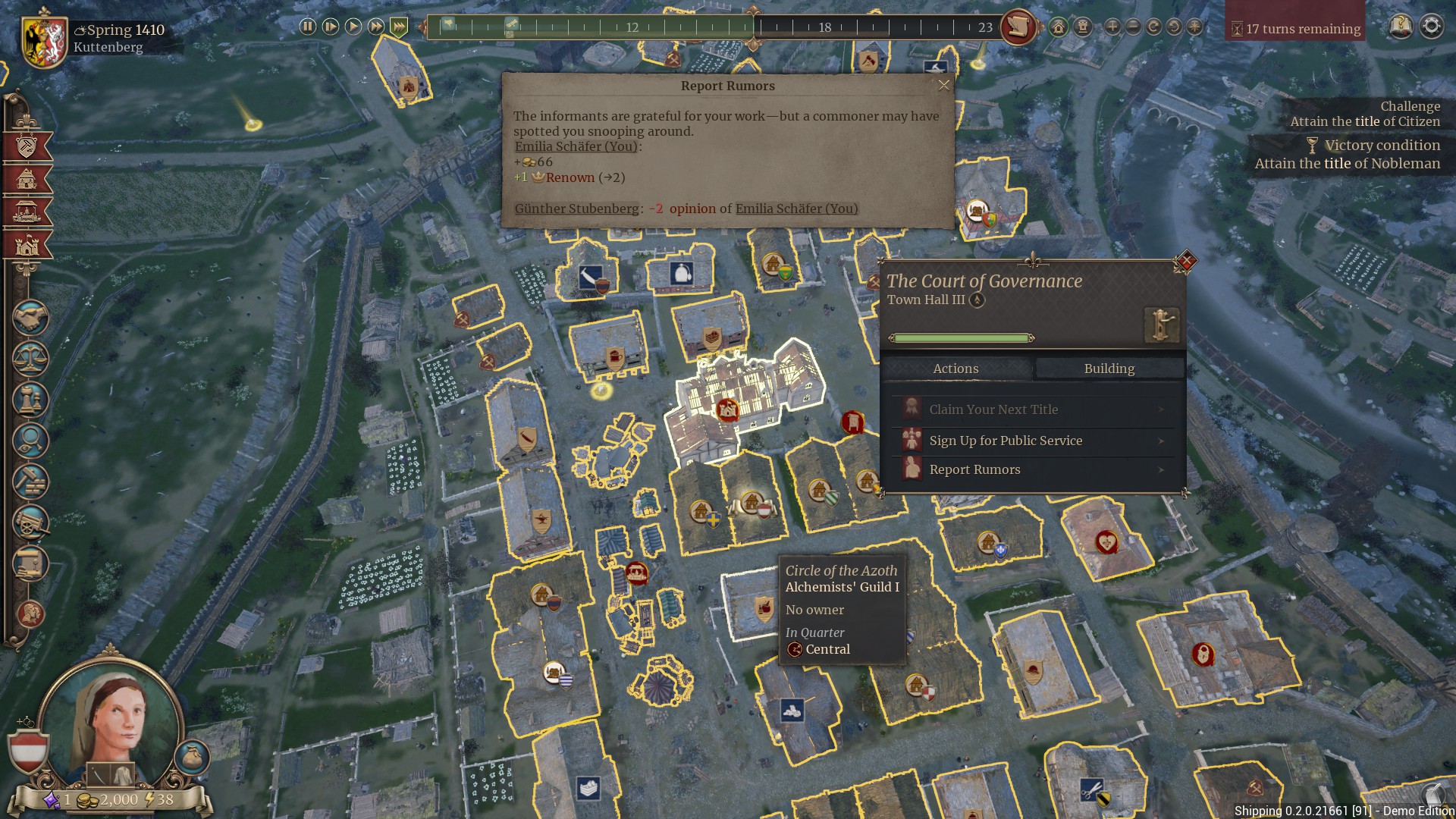
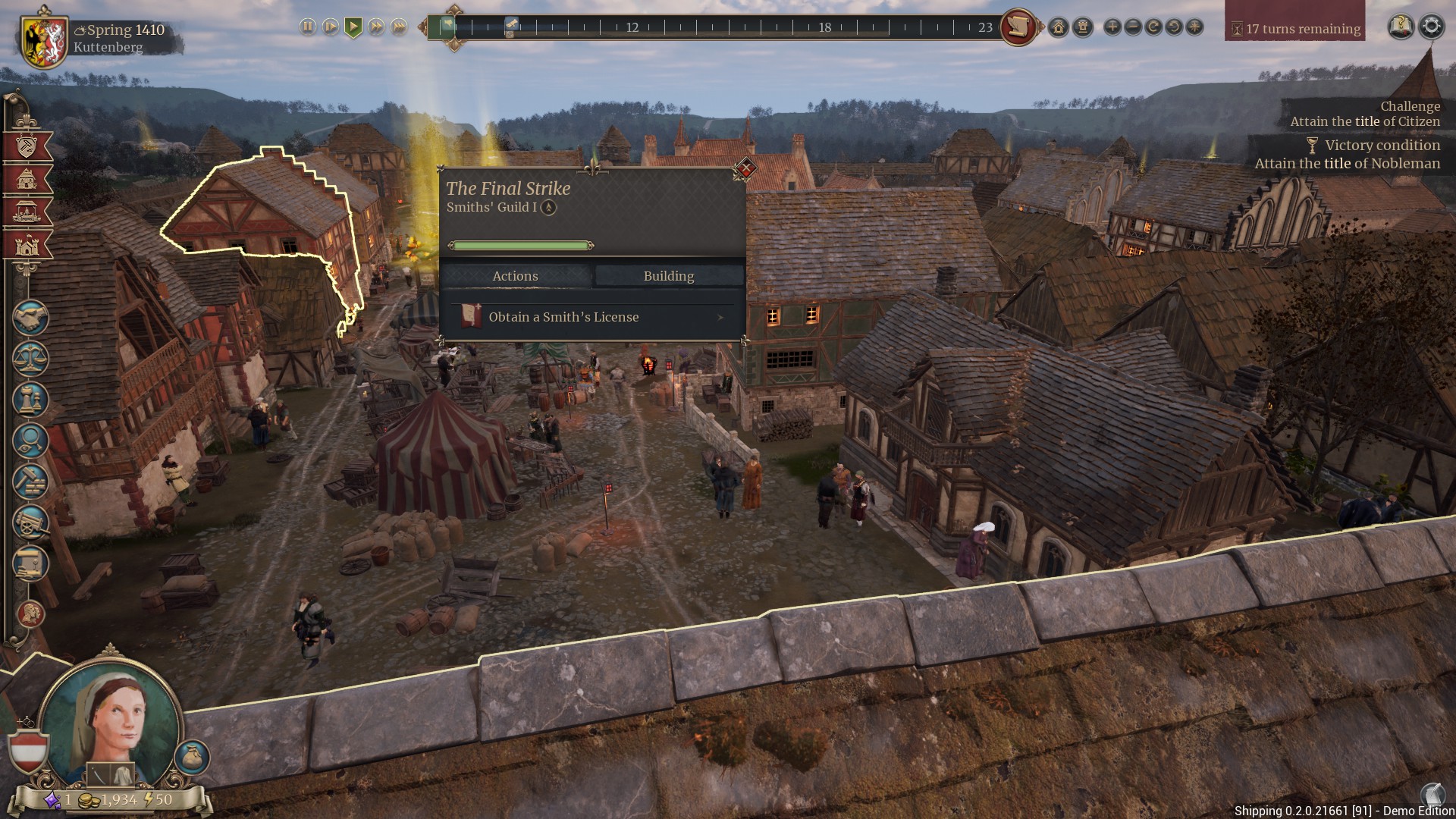
Advancement, instead, requires building and maintaining relationships in various branches of municipal and ecclesiastic government. You may choose to court the local aristocracy for influence, or you may ingratiate yourself into the church. As the Hussite Revolution continues — a theological war between proto-Protestant reformers and the Catholic Holy Roman Empire — leaning one way may leave you on the wrong side of the prevailing political winds.
Your choices are also likely to be influenced by your chosen profession. For instance, advancing to the rank of church deacon will be useful for an alchemist keen to keep their trade above board, as it lets you legislate the legality of potions. If you wish to expand your business empire instead, you’ll want to secure the role of lease master to manipulate the cost of property rentals and acquisitions. For those developing a dynasty through less orthodox means, you may be more interested in making your city more Purge-y.
Any one of these threads — or one of the many I’ve not had room to describe — would, in isolation, make for a compelling premise. That The Guild – Europa 1410 manages to synthesise these concepts into a controlled sprawl, even in the more limited scope of its demo, is remarkable.
The Guild – Europa 1410’s ambition does not stop at mechanics. Its narrative unfolds in the text-driven cadence of a traditional tabletop role-playing game to which I am usually so allergic. Yet, here — perhaps owing, somewhat, to the boardgame nature of this style of game — it serves as a passive way to build context around changes in the city without interrupting the flow of gameplay. As I went about the daily rhythm of commerce, I could learn about Jan Žižka holding the line against Holy Roman Emperor Sigismund, and why his reforms may be impacting my standing in the city, with an impressive level of historical detail.
Those beats aren’t limited to the macro, either, as The Guild – Europa 1410 is adept at shifting focus to the micro-level. On multiple occasions, a broken-down cart nearby offered the opportunity to pillage salable goods. On others, the omen of a passing comet energised the populace during a turn, or a street preacher started defending Catholic orthodoxy and I had to decide how to address them.
In one memorable sequence, a pilgrim collapsed on my doorstep and begged me to deliver a relic to the church. The request presented the opportunity to curry favour with the local clergy. But I could also keep the artefact to secure more local influence, or even sell it for a quick profit. Every narrative choice in The Guild – Europa 1410 is underlaid with an elegant architecture that forces you to weigh short-term gains with long-term boons. The consequences of which are often not known immediately and run impressively deep. It’s testament to Ashborne Games’ attention to detail that makes The Guild – Europa 1410 so involving and transporting an experience, even in demo form.
It is important to emphasise that, while The Guild – Europa 1410 scratches a specific itch the Total War franchise has previously satisfied, it is far more demanding. While it acknowledges its complexity, it can be unapologetic about it and demands patience. Depending on how you engage with the need to invest time into games, that could be alienating or a balm to the current media landscape. Vitally, even in its truncated demo, Ashborne Games has an impressive grip on the game’s complexities. That control not only makes certain the game is never complicated for the sake of it, but also makes its structured friction a joy to navigate.
As early as its introductory menus, The Guild – Europa 1410’s demo sold me that it has the potential to be the ne plus ultra of modern management simulation. If there is one flaw I can find in its structural competence, it’s that it teases how that will expand into something far grander and yet strands you on the edge of it. Yet, somehow, The Guild – Europa 1410 even makes that torture exquisite.
The demo of the game will be available during Steam Next Fest from June 15.