They say that behind every great man is a great woman. In an early preview build of Dragon Shelter, developer Wild Forest Studio proposes a more whimsical alternative: behind every great man is a carefully managed collection of dragons wearing hats.
Dragon Shelter, a cosy pastoral ride that sees you resurrect a dying town, drops into an already crowded farm-management genre. Where it wears its creative influences openly – even brazenly. A brief watercolour slideshow that serves as a prologue deposits the player onto an overgrown plot of land, choked with weeds and rubble. Immediately, the protagonist’s inner monologue – delivered via the first of a cascade of text pop-ups – reveals that our hero has returned to their grandfather’s farm after a lengthy absence.
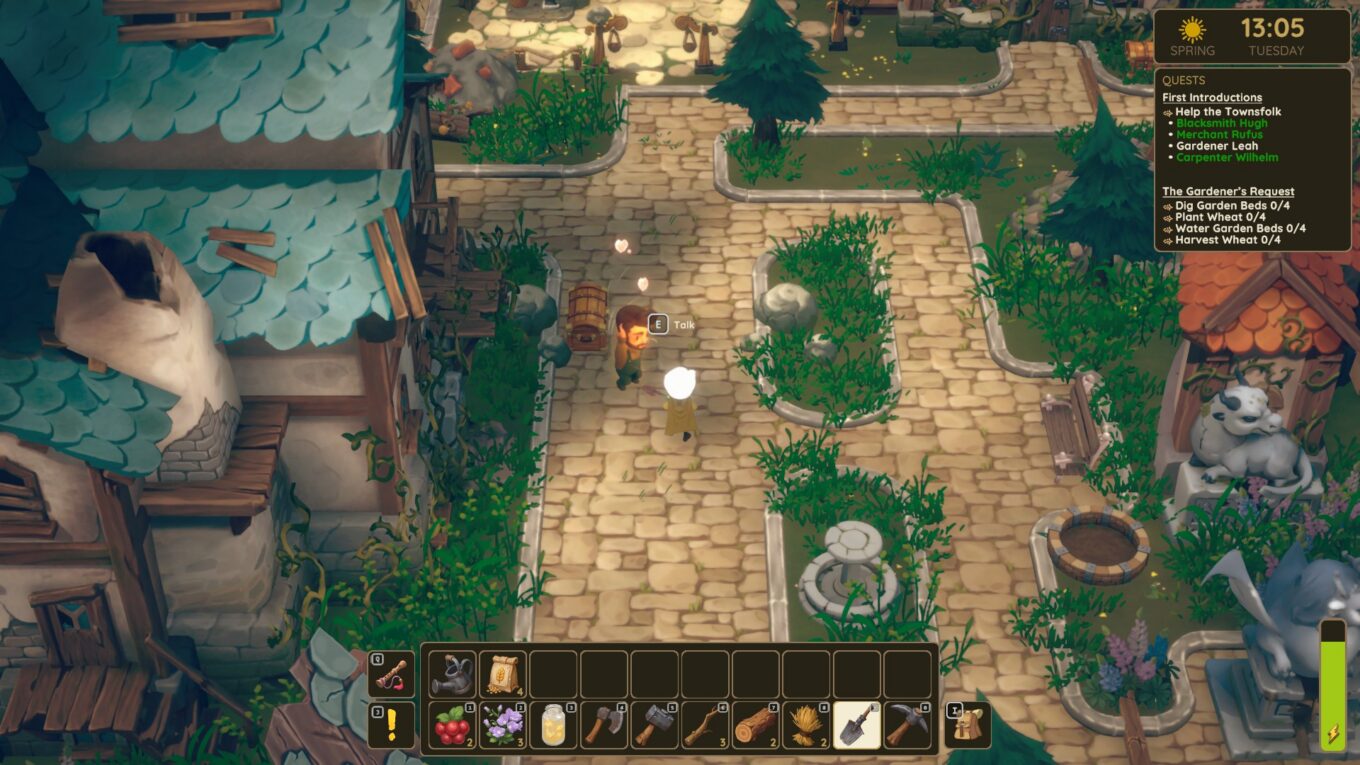
Much of the bedrock shoring up Dragon Shelter’s narrative and early-game thrust is similarly drawn from the already well-tilled soil of Stardew Valley. This includes the conspicuously vertical energy meter in the corner. Though it shows you’re already exhausted, the bed is in pieces, and to repair it, you must retrieve an axe from a nearby chest and gather sticks from the overgrowth outside. The axe is old, your avatar notes, “but it’ll handle a bush just fine.”
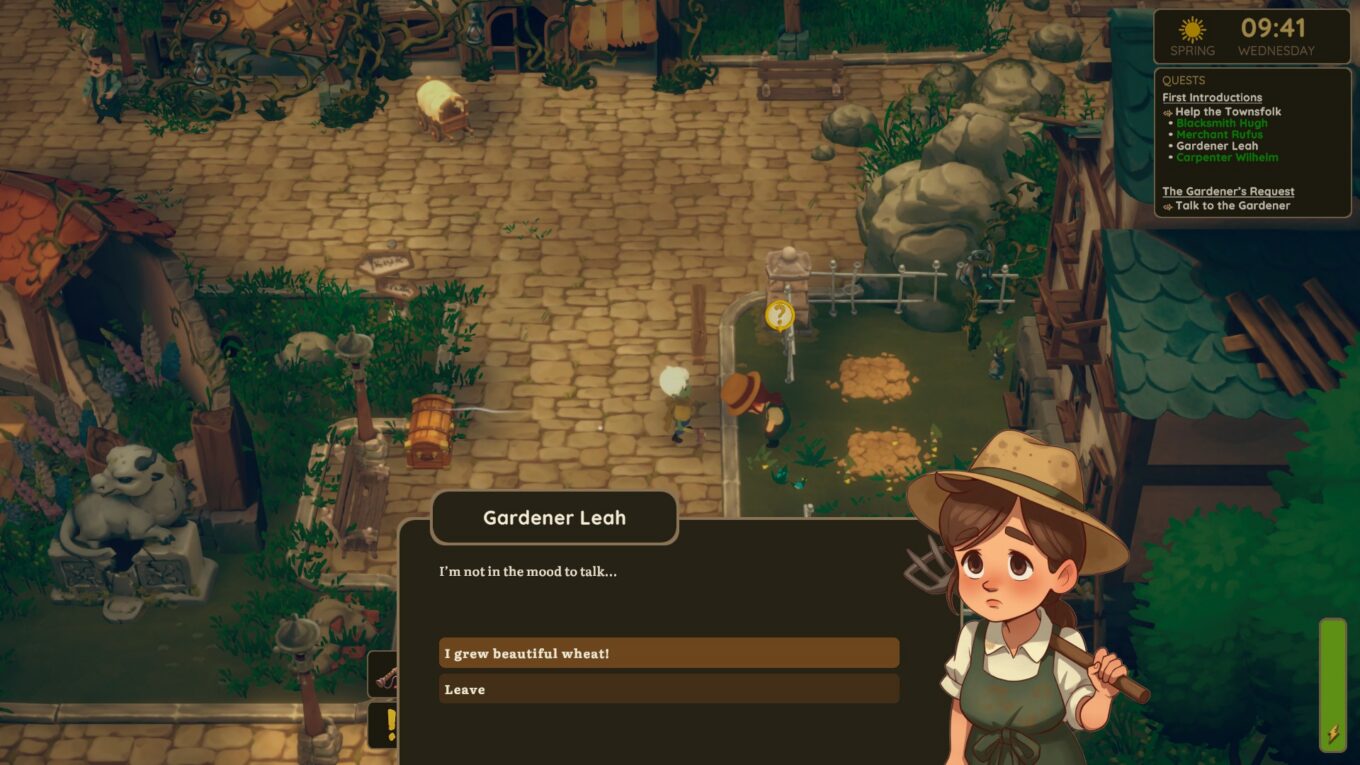
The following morning, you head into town to question the mayor about the curious bubbling in the farm’s pond. He’s indifferent. A similar malaise infects the rest of the town. Instead, he requests you introduce yourself to the remaining inhabitants – the blacksmith, carpenter, gardener, and merchant – and offer assistance.
The blacksmith will trade sticks and wood for a pickaxe with which you can clear rocks from the farm. The merchant purchases berries and with the proceeds you can buy a shovel, which is key to satisfying the gardener’s request to test their wheat seeds. It’s a tutorial that sets up Dragon Shelter’s familiar pattern: farm, gather resources, clear junk, repeat.
With these immediate pastoral concerns settled, your next task is to bake the mayor a loaf of bread. Fortuitously, the carpenter happens to have all the tools required to construct a kitchen.
Dragon Shelter’s spatial geometry does, however, prove eccentric. At the time of preview, the game’s controls are bound to the orientation of buildings’ foundations – everything you build has one that needs to be laid in the bounds of which you can place a build’s items. I made the mistake of rotating the kitchen 90 degrees which swapped left and right with up and down, and made reaching the stove a nightmare.
This was the start of my issues with this preview build. Uncertain whether structures can be edited – menus and random key presses offered no assistance – I had to start again. The first of several restarts as performance issues rendered the game unplayable at times. Turbulence like this isn’t unexpected at this stage. Though the game has been in development for at least two years, Dragon Shelter’s preview build still feels like a build in its infancy.
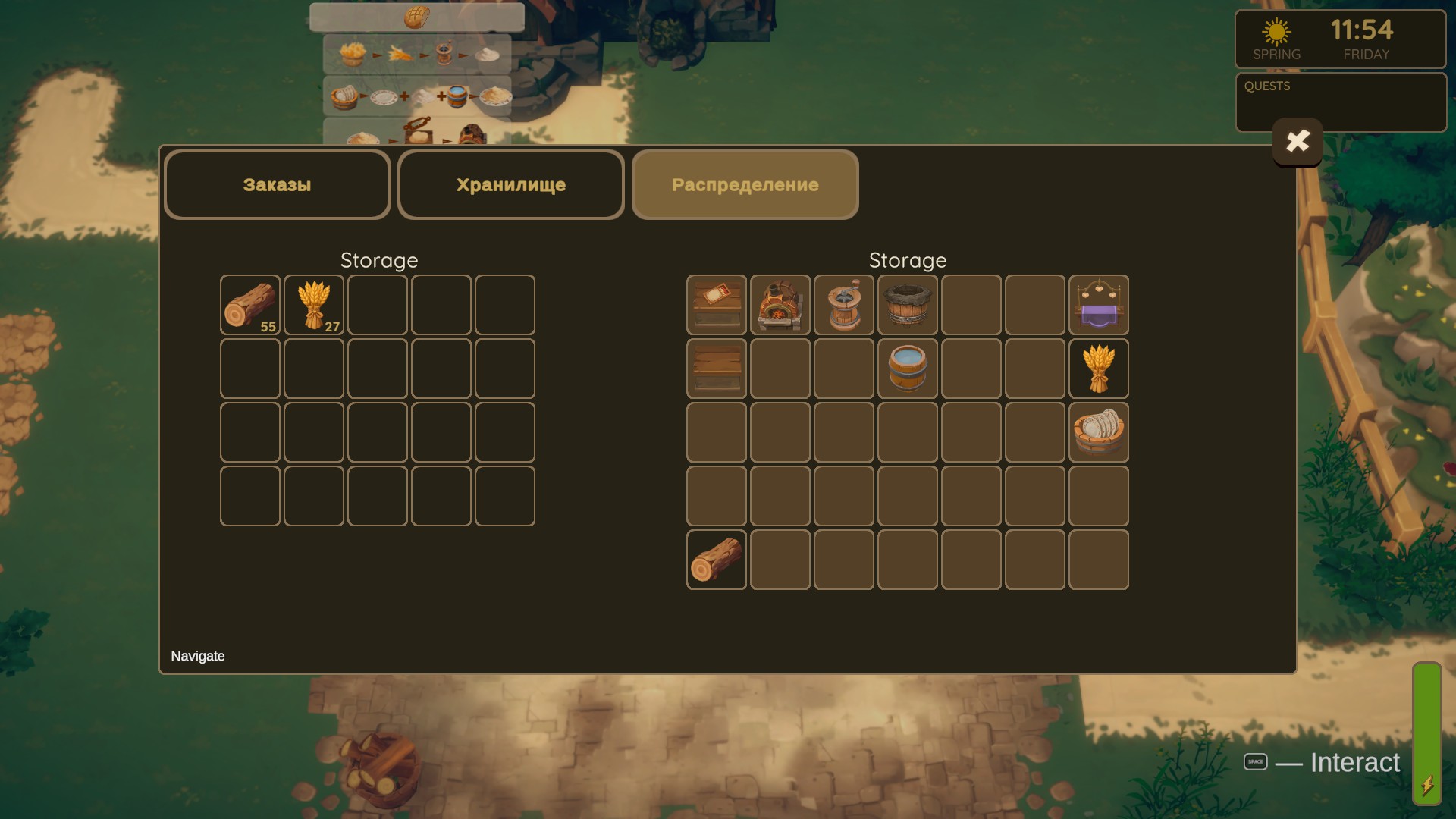
The bigger flaw lay in the fact that, despite numerous pop-ups and descriptive quests, the game offered no guidance for its new cooking mechanic. The mayor hands you a recipe for bread, which shows pleasing illustrative instructions on the culinary process. Yet the mechanics of their execution are left to the player to decipher.
After three in-game days, I puzzled out that the player inventory is irrelevant to this process. Instead, you must interact with the bulletin board near the kitchen from which you select the recipes to follow. In a separate tab, you may move resources into the kitchen’s dedicated storage and, in yet another tab, move those resources into barrels that are accessible during cooking. A patch shortly before publication did compress these steps into two tabs. It remains, however, an overcomplication.
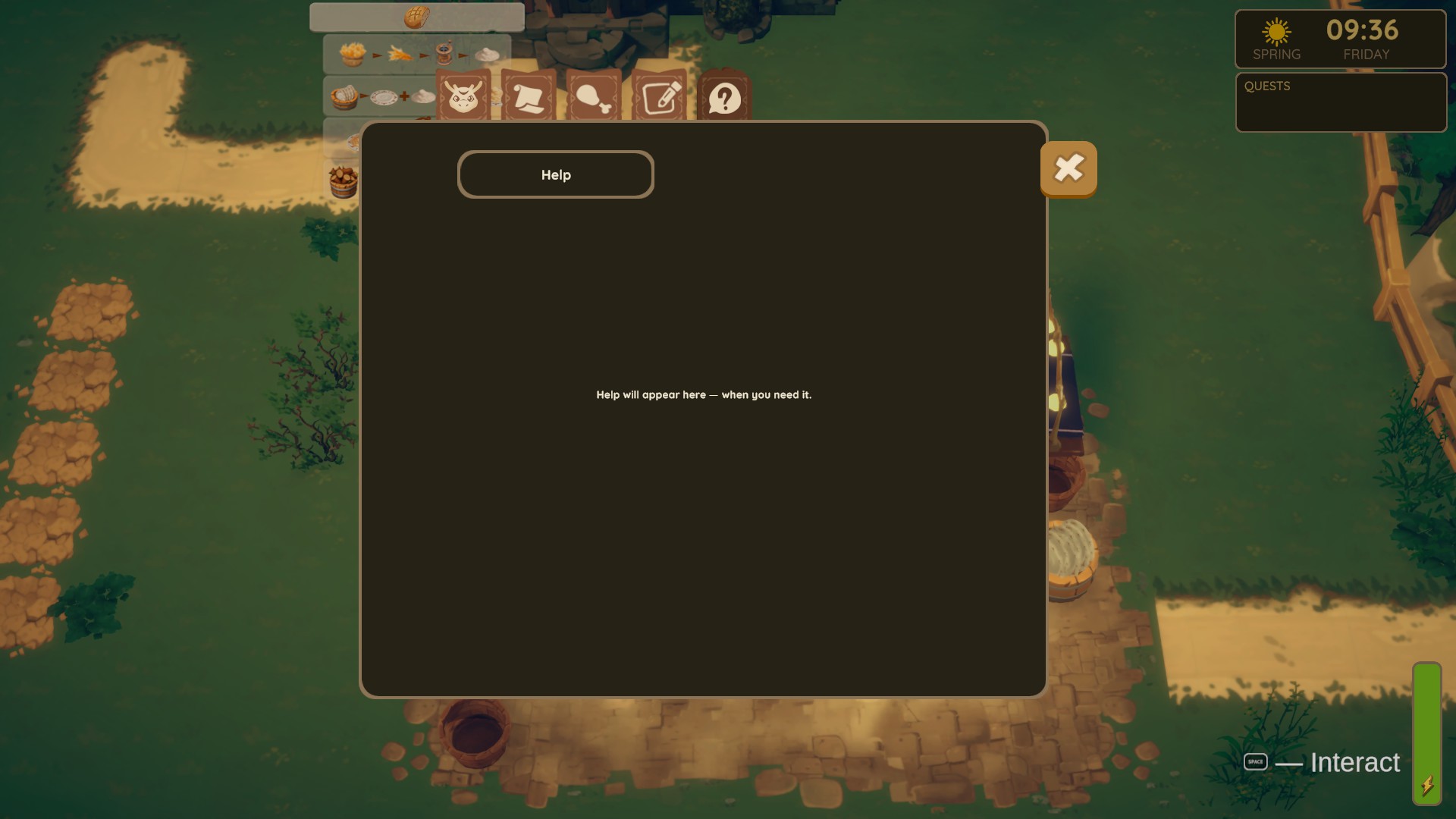
In the build with which I spent most of my time, the bulletin board also featured a help menu. When consulted, it offered, “Help will appear when you need it.” Reader, help did not appear when I needed it.
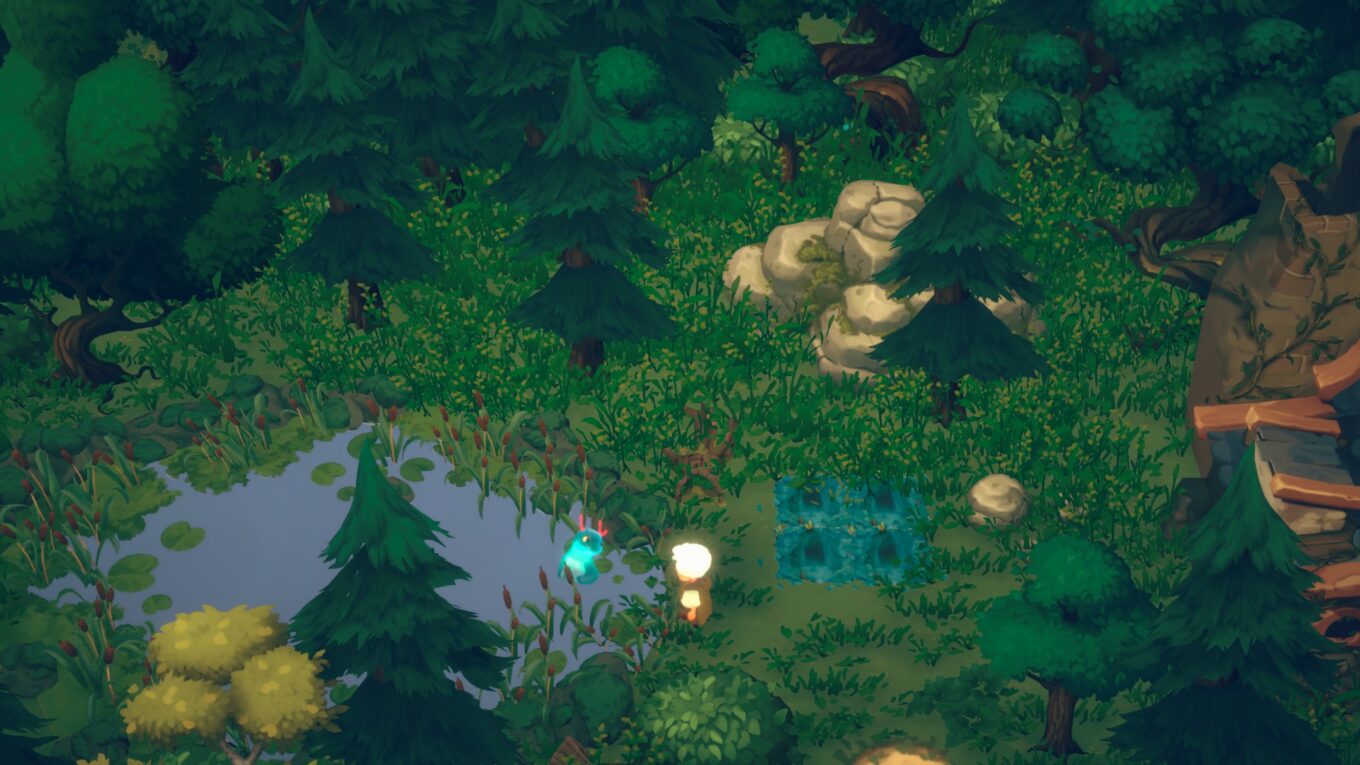
What did appear was a dragon. It materialised, without introduction, below a new quest to feed it jam. I assumed this was the source of the bubbling in my pond. Something the aforementioned patch confirmed as it shunted my progress with my new blue friend back in order to show the introduction scene that was missing – and compel me to feed it even more jam. Frustrating as all this was, it was gratifying to see that, even in the week I spent playing this preview build, Dragon Shelter improved significantly.
Though, that patch did not mitigate the build’s performance issues – the cause of which appears to be a refresh rate that defaults to its maximum every time you open the game.
Once cooking is deciphered, it becomes a pleasant change of place. You scuttle around the kitchen, discover you’ve laid the area out in the least intuitive way possible, and manage an escalating complexity of recipes. Wild Forest Studio clearly has some ambition to pull Dragon Shelter from the growing crowd of similar cosy management sims.
Which makes it odd that this mechanic is removed as soon as you complete your first meal. Once the dragon is sufficiently fed, petted, and tamed, it commandeers kitchen duties. This does free you up for the de rigueur of farm life and makes fulfilling the increasing food orders from town more efficient. Though, out of a paternal instinct, I often felt compelled to supervise my dragon.
How much you’re intended to interact with this process is uncertain. I found trying to get a head start on future orders didn’t interrupt my dragon, but nor could I cooperate with them.
Those dragons do, however, bring their own qualities to the process. A fire dragon will be able to light stoves without the use of matches. Your new moist friend, similarly, cuts out adding water to recipes by spitting on your food. None of these shortcuts are particularly helpful. Nor is the dragon’s ability to moisten tilled soil. But that may be something that changes down the line; if, for instance, matches become a finite resource or your watering can gains the ability to empty.
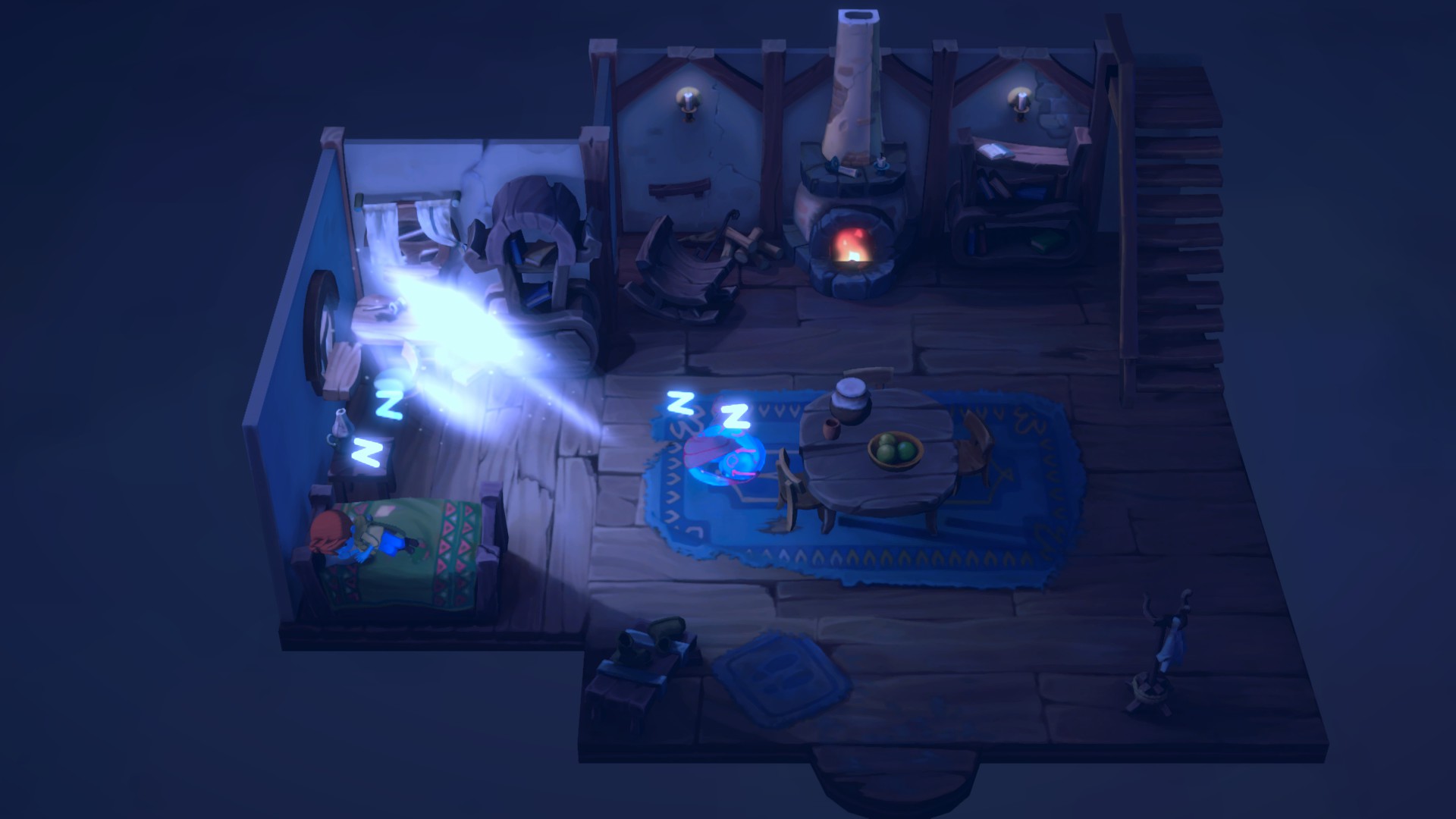
One delightful side-effect of my new draconic companion was insinuating myself into the villagers’ day to insist my dragon was both very cute and very sweet. It should be given how much jam I was forced to feed it. It is cute, too. The animation when it jumps on a trampoline is lovely and watching it curl up like a cat at night engenders a genuine sense of responsibility for this ball of blue goo that crawled out of my pond to help me cook pies.
Dragon Shelter aspires to be a glow-up of Stardew Valley, shifting from 2D sprites to slightly crunchy 3D. That doesn’t always work and the shift doesn’t feel complete, but in focussing on the dragon first, Wild Forest Studio knows exactly what’s going to be most engaging in its visuals.
That said, I found myself more attracted by the restoration of the town than homesteading. Seeing the ramshackle village slowly come together as I cleared brush and repaired lampposts was genuinely gratifying. Something that hints at a superior version of Dragon Shelter bubbling under the surface. One in which the traditional farm management serves as an engine to revive a dying community.
Cracks remain visible in the foundation, but Dragon Shelter is adding new ideas to the genre’s established formula, albeit incrementally. Remaining beholden to its inspiration does, currently, make it feel like two games taped together.
A literal division, given the town and the farm are separated by a hard screen transition. On one side: a familiar farm simulator; on the other, a more involved civic management game in which you use dragons to help heal a broken town. There’s no reason the two cannot combine, but they require a tighter, more organic integration as development continues.
But what Dragon Shelter lacks in originality and mechanical sophistication, it thus far makes up for with an abundance of charm. There are numerous rough edges left to polish. Though with the right refinements, this quirky, dragon-fuelled farm-sim has the potential to rise above being Stardew Valley with more stops and to the top of an already crowded genre.