Playing this simple, Fable-inspired RPG from seven-person studio Titan Roc feels like uncovering some lost media. You could tell me that I’d actually spent the week playing an unreleased title from 2004 and I’d believe you.
That’s good and bad, obviously. On a technical level, Vahrin’s Call feels not just simplistic but unreliable, with some control inputs not registering until I rebound them and an overall fidelity level that feels stuck halfway between trying to compete with blockbuster modern productions and going all-in on a retro aesthetic. The combat is beyond simplistic and the inventory menu is simply a list of your stuff. These are prime original Xbox era issues.
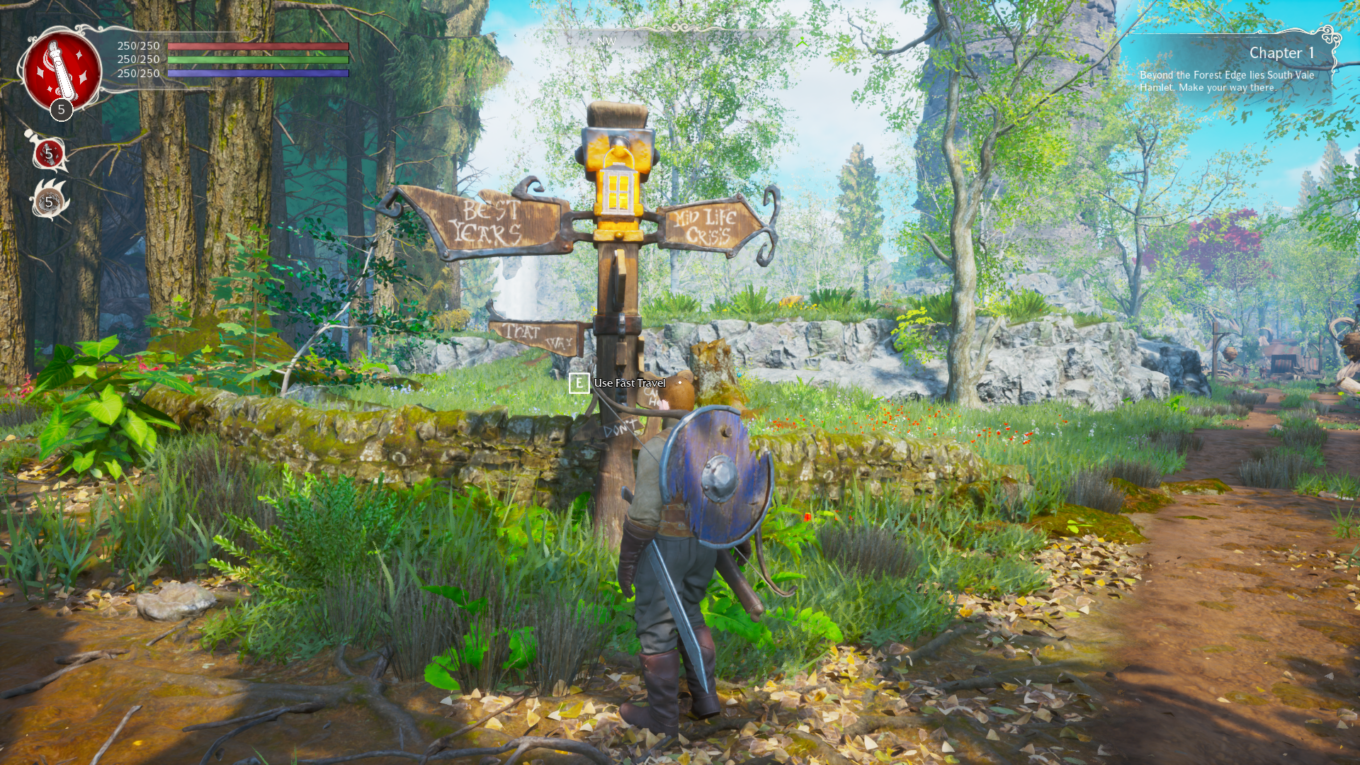
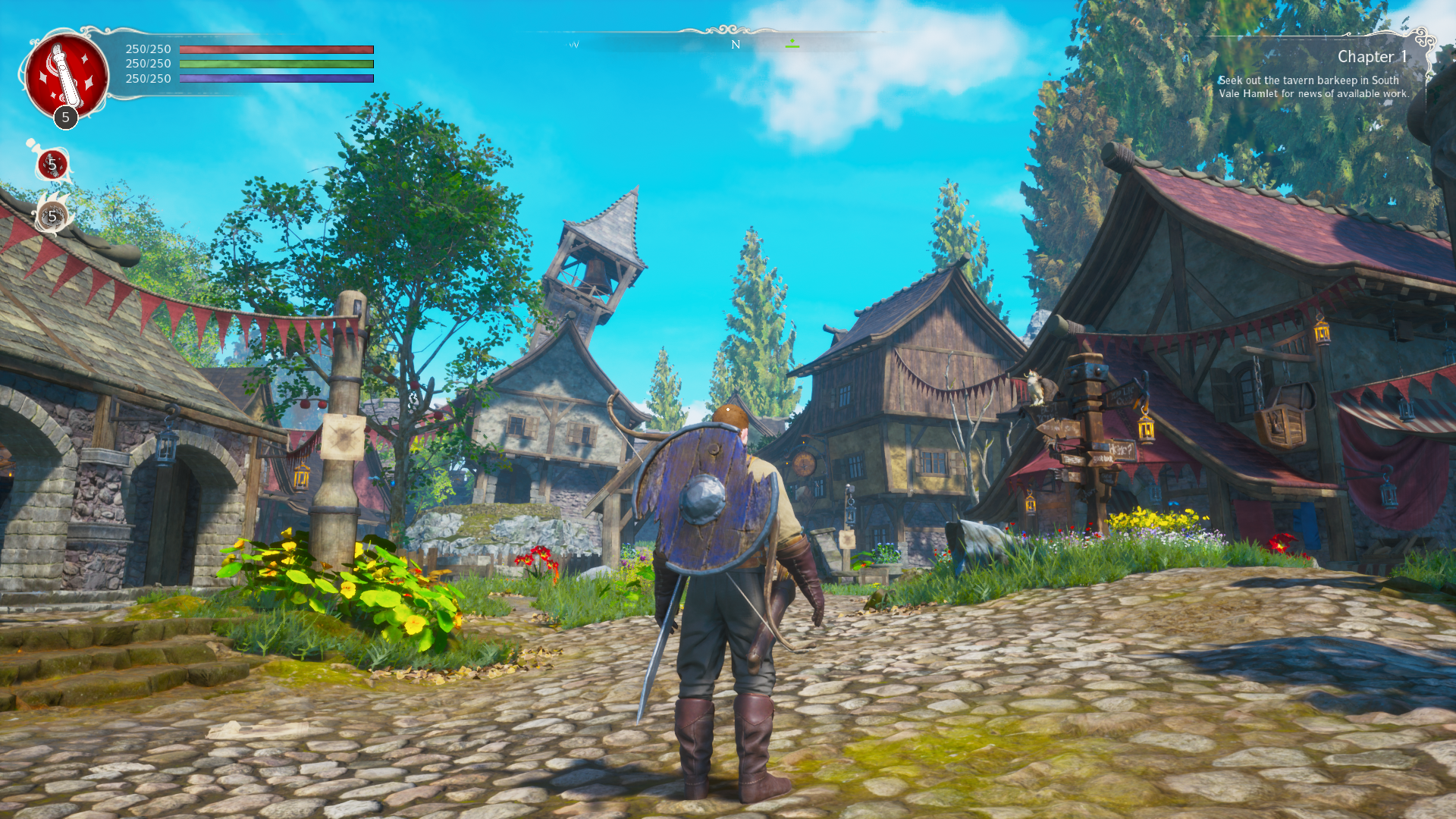
On the other hand, often the game’s step out of time nature lands with real charm. The world’s full of quaint cottages, pumpkin patches and crooked spires, drawn in a manner that would have delighted a young Peter Molyneux. It’s silly, in a way that few games these days are. And I was surprised to find that after a couple of hours of acclimatisation, I grew to rather like the ‘just click on stuff until dead’ fighting mechanics.
The Vale of Vahrin was once a peaceful place, but as a Tim Burton-esque extended camera sweep introduces you to it at present, you quickly learn it’s become far more dangerous. Mercenary bands are at war with each other, and someone’s been letting monsters loose in the mines and castles where previously citizens worked in peace.
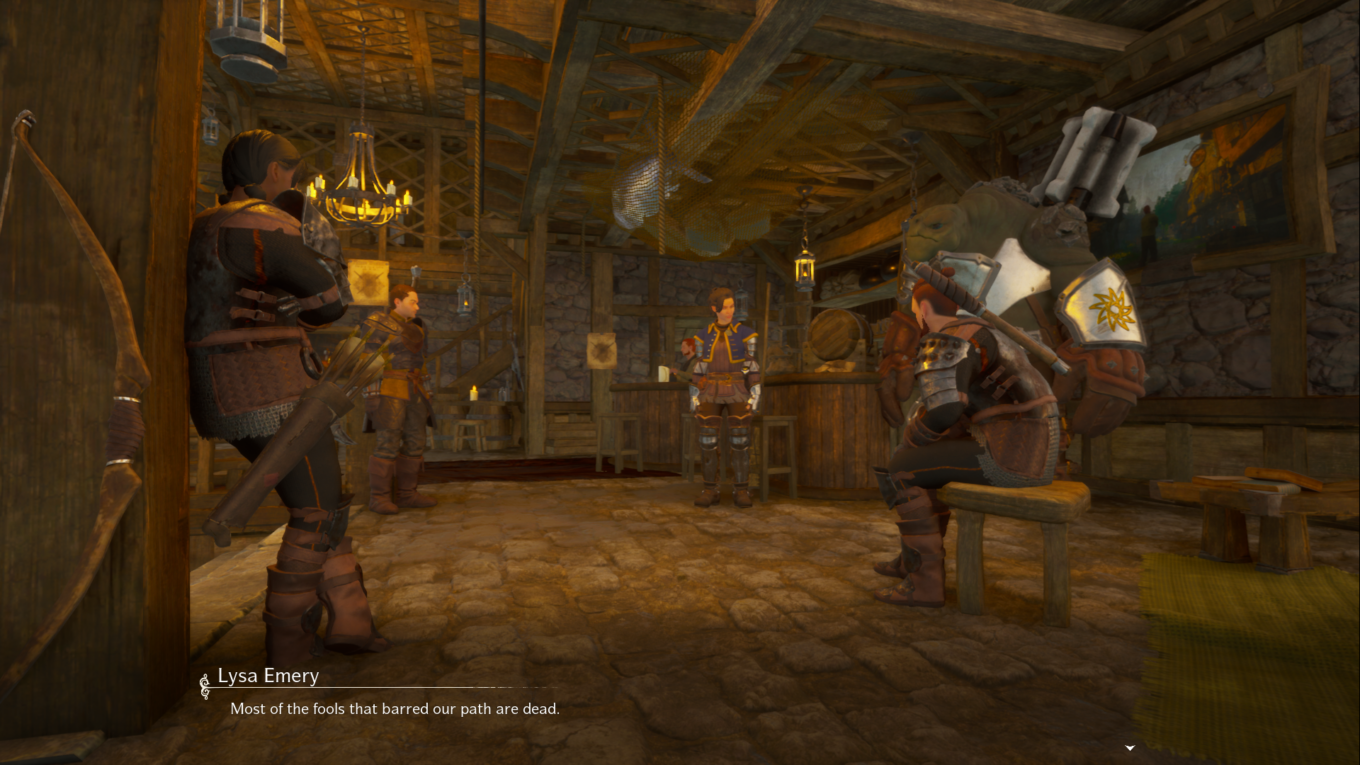
At least, that’s what you glean from the brief snippets of cutscenes and dialogue as you go. Plot exposition often feels like eavesdropping in this game – indeed during the prologue and opening chapter, that’s exactly how it takes place. You keep stumbling into scenes where powerful-looking people in fancier cuirasses than yours are discussing courtly intrigue and conspiracies that you don’t yet understand. And once they notice you, they purse their lips and tell you to mind your business and go ask someone nearby for work. Only after defeating the first two major bosses do you become more closely intertwined in the main narrative, but even then, narrative depth and payoffs feel thin on the ground.
The obvious reason for this is sheer production cost. This is a David vs Goliath project: seven people trying to make the type of game it usually takes hundreds of people and millions of dollars to make. Concessions have had to be made, and that means this game doesn’t have Dragon Age-level hours of dialogue in the archive.
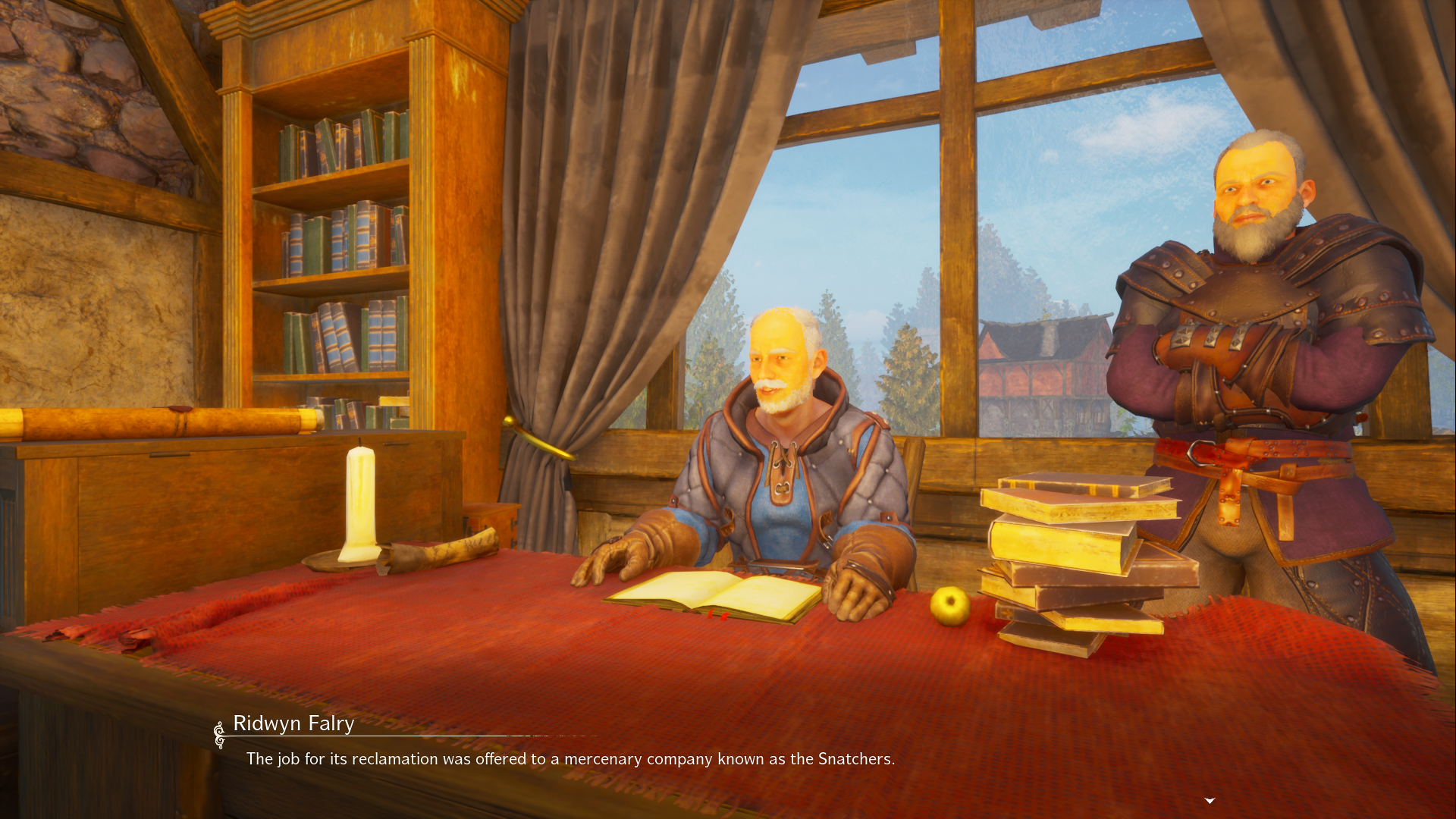
It’s bittersweet that the voice acting and dialogue are actually a real strength of this game, because that makes you want more of it. And more, one suspects, simply wasn’t possible. Nevertheless, the direction, writing, and the performances themselves, are all very strong, and they make you wonder what this team might achieve with a bigger budget or some outsourcing help.
The game calls itself an epic fantasy, but actually it’s more distinct than that: it’s a micro-fantasy. This is a short game by RPG standards, about 9-10 hours of questing and an additional few hours of collectible-harvesting if you particularly care about locating and smashing gnomes.
And personally, it’s that succinctness that I found especially compelling. Too many games want to be our entire gaming diet for months on end, so when one arrives like this and simply wants to tell you its story and then rolls the credits, it feels refreshing.
It’s structured in a compelling way too, with a simplicity that once again feels like a retro throwback title. It goes like this: someone tells you to go and talk to the guy in the tavern, or the lord in his castle, or the mercenary leader, because they have a quest for you. You journey across some scenic landscapes, find them, pick up the quest, and begin an extended dungeon-crawling sequence full of convoluted pathfinding, enemies, and the odd bit of platform-puzzling.
At the end of that long and twisty dungeon sequence, there’s a boss with a big old health bar and some very simple attack patterns to fell. Pick up a shiny new loot item from them, get a pat on the back from the quest dispenser, rinse and repeat.
Context matters here. Were this the new Dragon Age release, I wouldn’t feel so positive about that rudimentary structure. Nor the combat, which consists of light and heavy attacks, a parry and a dodge, neither of which are needed all that much because the difficulty’s tuned so far in your favour. But here, both these simplified elements become a strength.
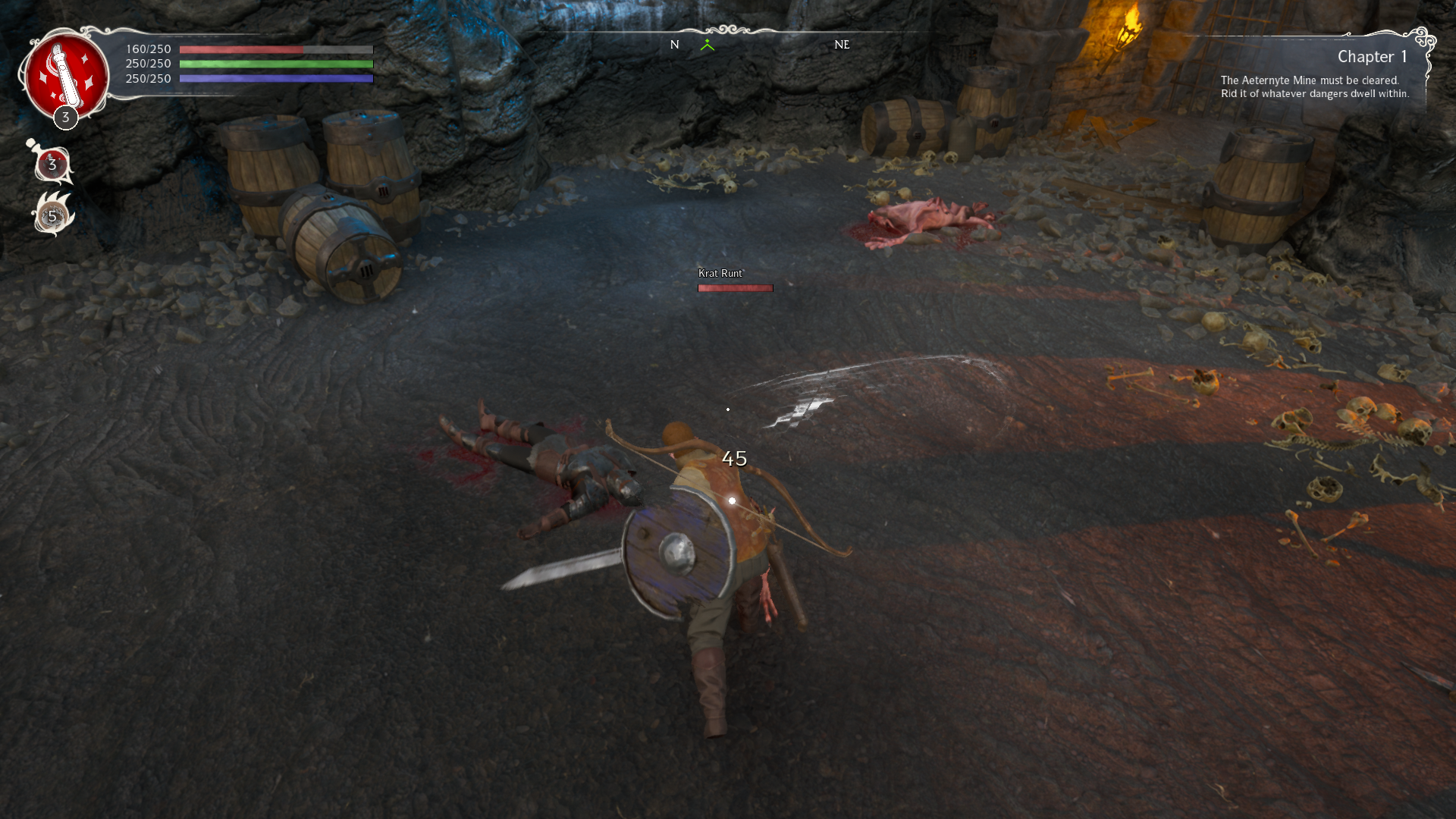
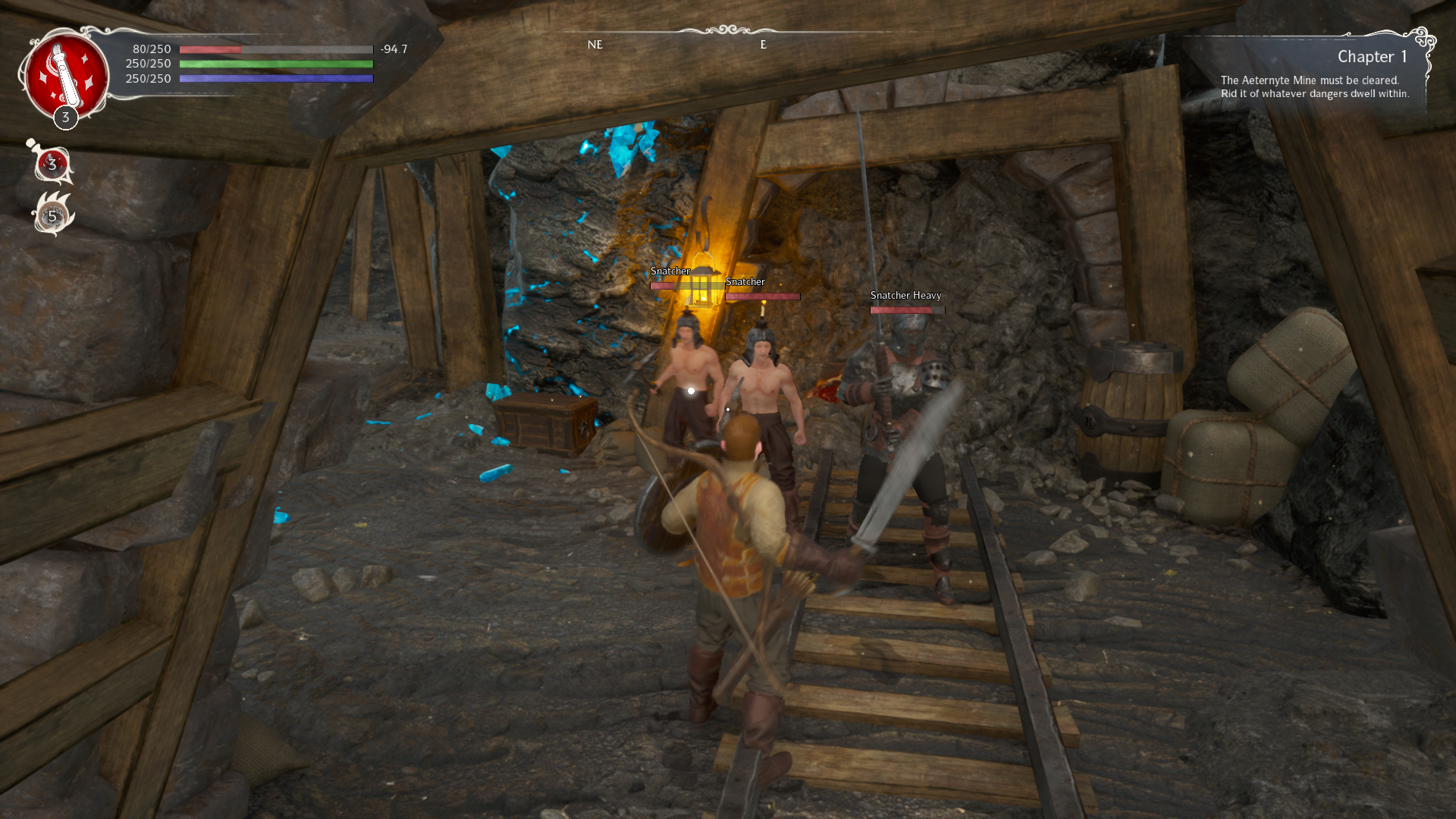
As I slashed fairly mindfully through mercenaries and insectoid nasties, I remembered y2K-era games like Rune, and Heretic II and sure, the original Fable, which Titan Roc has cited as an influence. If you don’t have the same warmth of feeling towards this era of gaming I do, your mileage may vary. Personally, I started to enjoy the simplicity of it all.
With some caveats. There are some timing-based run-and-jump puzzles which end up highlighting how ill-suited the controls and animations are to executing actions with the kind of precision they ask of you.
And as for the magic ability system, I simply kept forgetting to use my elemental attacks. There never seemed to be a combat encounter that a fireball would have been better in than a good old-fashioned axe swing.
In some chapters, these combat areas go on for slightly too long, to the extent that you begin to feel Vahrin’s Call is using them as filler. Maybe that’s a side effect of the route-one combat – since I never felt compelled or required to experiment with my approach to fights, seeing the next group of mercenaries or monsters on the horizon didn’t feel exciting.
Some users have reported PC performance issues since launch, but my personal experience was barely affected by frame rate drops. The RTX 2080 TI I’m playing on is seven years old now so I’m hardly using a Meta datacenter to play it on, and at max settings the game never dropped below the high 50s, and that only happened when entering towns. That said, the level of fidelity onscreen does not explain why there should be any frame drops at all.
Developer Titan Roc has released a statement acknowledging these issues and confirming that they’re working on several fixes, including ultrawide screen support, Custom key binds for the shortcut wheel on mouse and keyboard, performance optimisation and more localisation options.
This seven-person team has been working on Vahrin’s Call since 2014. I can’t imagine what it must be like to work so hard on one project for so long, and then release it to the public. It’s true that this is a flawed game, with rough edges and technical problems, and one that can’t compete in a straight fight with the titles it’s inspired by.
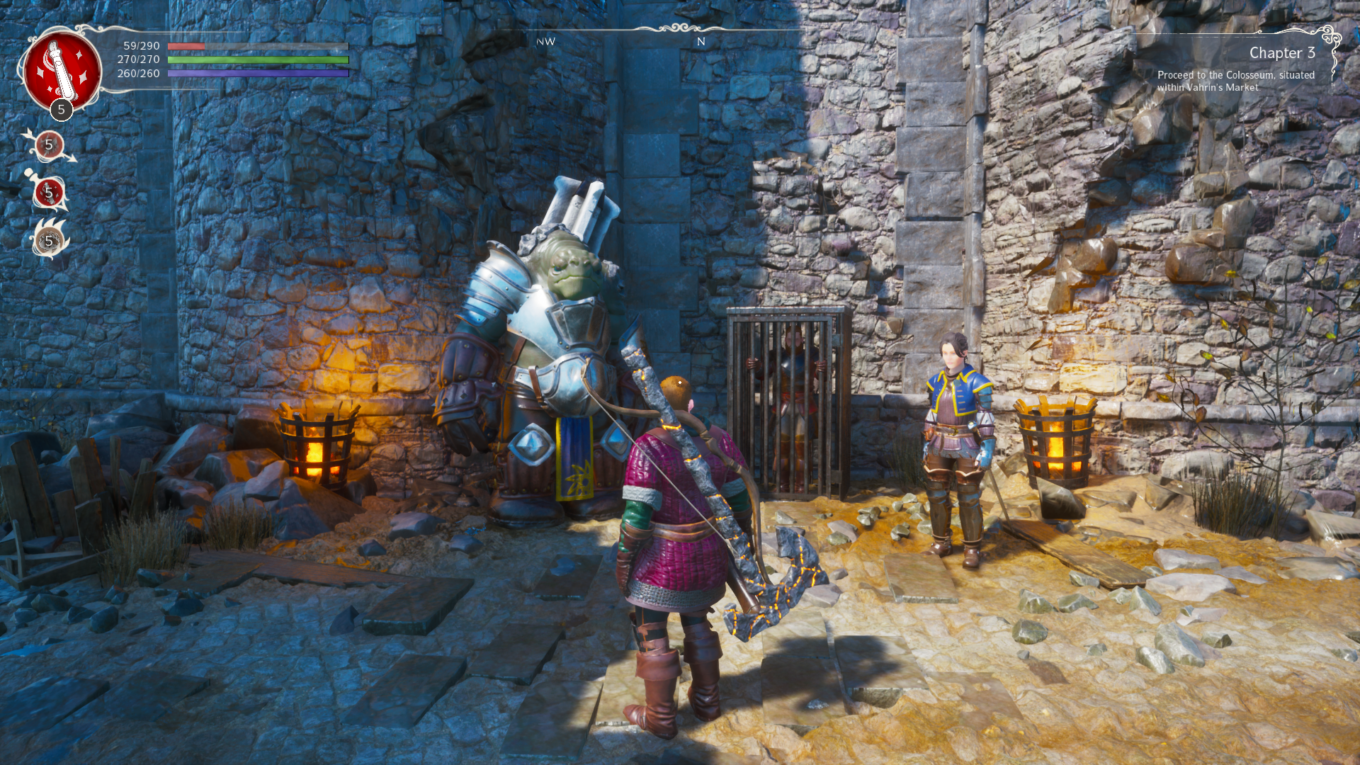
Simultaneously, it’s also true that it’s an incredible accomplishment in its own right. The aspects I wish there were more of – more NPCs, more lore-building dialogue, more ways to feel connected to its quaint world – are completely understandable and forgivable in their scarcity. It matters more that this feels like a passionately human-authored game with touches of personality in every scene. Its fast travel points are signposts with things like ‘Mid-Life Crisis’ and ‘Nowhere’ written on it. Its collectible gnomes giggle at you, infuriatingly. The architecture of its towns has no right to be as intricate as it is.
When it comes to slapping a score on it, then, I’m intensely aware that really there are two people scoring it: the game critic, who’s in awe of such grand projects from such tiny teams and has some dim awareness of how difficult game dev is at all in 2026, let alone within these constraints; and the gamer, who just wants to have more fun and to poke around in the lore, and for everything to work perfectly. The two of us have arrived at a qualified recommendation – play it if you love y2K adventures, simplicity, and games that respect your time, but don’t expect a lot of polish.