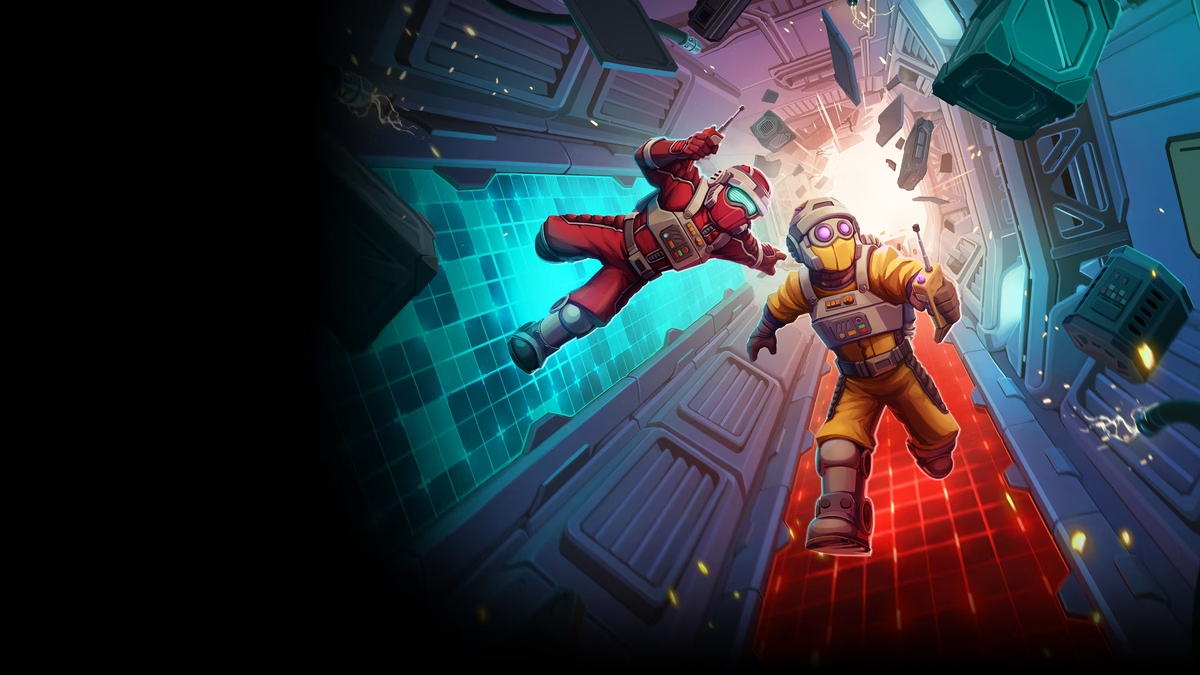

Dead Space on happy pills. There, I’ve summed it up for you – you can stop reading now. But before you cheerily bail, I would caution that this pithy, and rather fatuous, synopsis only goes some way to describing Capcom’s remarkable, idiosyncratic advancement of the third-person action-shooter genre.
Those initial comparisons come from Pragmata’s striking aesthetic: protagonist Hugh Williams’s chunky, functional-looking spacesuit; floating in-world UI elements which serve both Hugh and the player; a primary weapon that has more than a whiff of Dead Space’s iconic plasma cutter; and seemingly endlessly detailed, plausibly utilitarian architecture. I’m especially fond of that last aspect, and have spent an inordinate amount of time in these games (Alien Isolation is another shining example) just admiring the various panels, wiring, and doors, while imagining how the long-dead workforce might have used the various spaces.
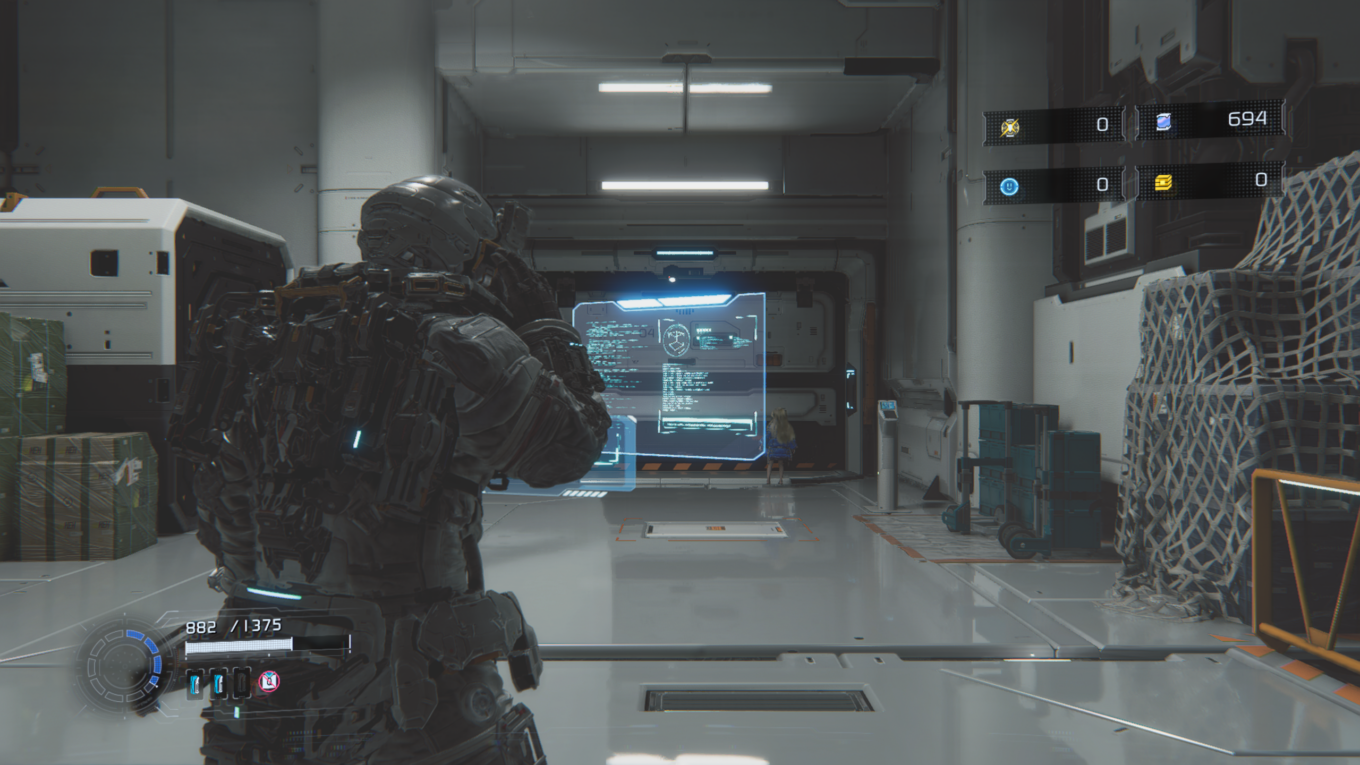
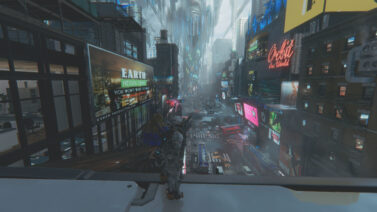
But rather than the Ishimura’s Nostromo-inspired oily bonepunk gloom, Pragmata’s messed-up moonbase offsets the aftermath of a life-or-death struggle with NASA optimism, searing LED lighting, and earthy ‘70s tonal highlights. Let’s call it clinical clutter, and all agree that it looks absolutely gorgeous. Capcom also carves out unexpected variety from a quirk of the narrative: this Delphi Corporations-owned base, named The Cradle, is actually a giant research station dedicated to 3D printing on city-sized scales. Which explains why I find myself, early on in the game, emerging from a smashed up lunar-station tunnel into an approximation of New York City. The coordinates are wrong, certainly, but something else feels ominously off, too: there are printing errors everywhere, almost as if whatever has made this place doesn’t quite understand the essence of what it is aping.
Like Dead Space’s Isaac, Hugh is embroiled in this off-world predicament by dint of his engineering prowess. Sent by the company to fix the station’s unresponsive AI, he and his colleagues find an installation in disarray and no welcome party. The US voice acting is initially offputting – it’s all a bit ‘Squid Game VIPs’ – but a subsequent narrative beat improves the situation as a lunar quake tears through the Cradle and mercifully thins the ensemble, sending Hugh and a recently printed industrial ‘Walker’ robot tumbling through a collapsing floor.
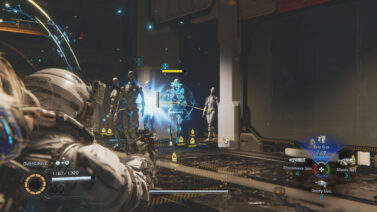
It’s here, lying broken and in a newly downsized team, that Hugh meets two more machines: D-I-03367, a highly advanced robot that looks and behaves like a young girl and which he nicknames Diana; and IDUS, the Cradle’s not-so-errant-after-all AI which promptly instructs the walker to “remove” him. Oh dear. What follows is a simple encounter that introduces you to the basics of combat. Hugh can jump and hover for a short time, dash using thrusters, and return fire with his Grip Gun – a basic weapon with recharging ammo which is always on hand, but weak against enemy armour. While it is possible to slowly chip away at most health bars, you’ll quickly be overwhelmed when facing multiple assailants.
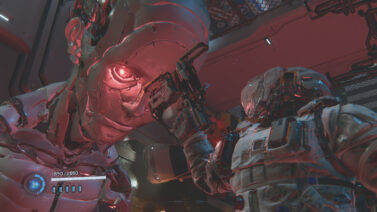
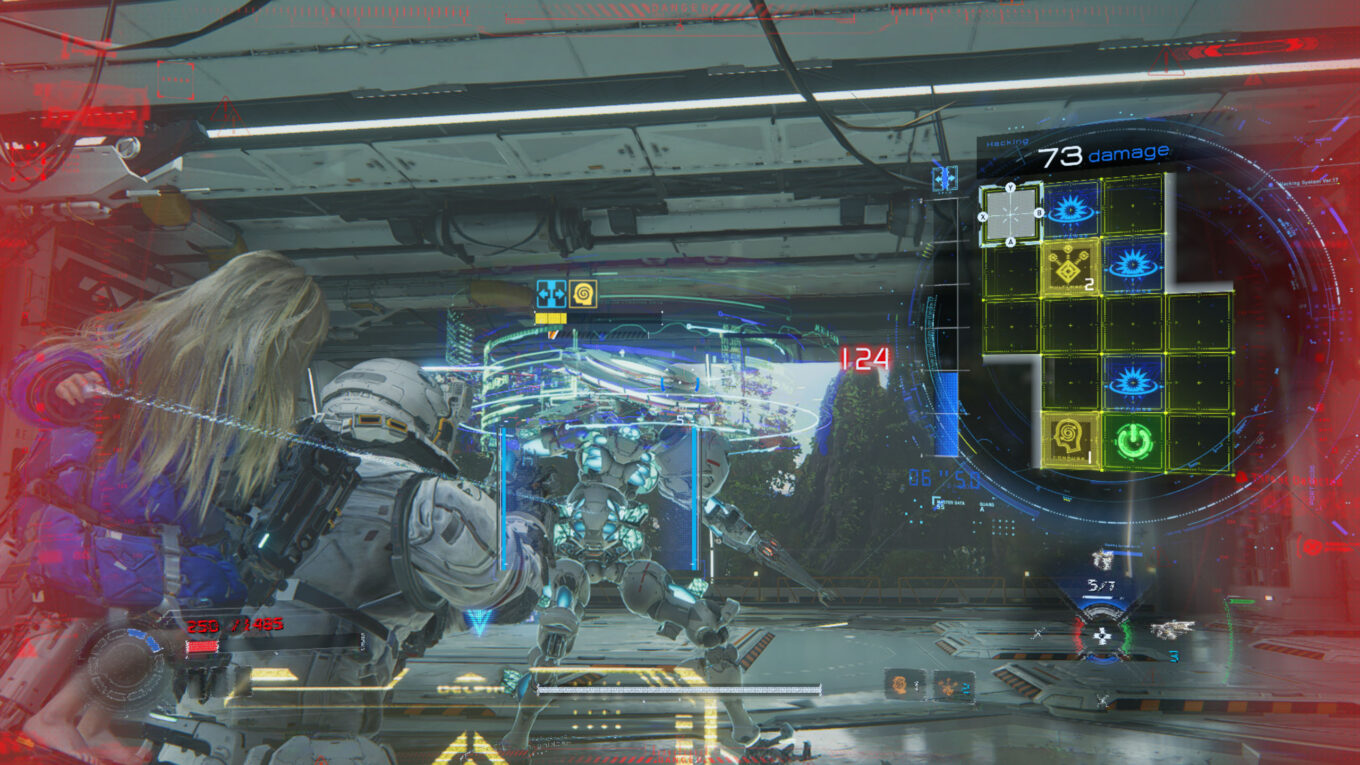
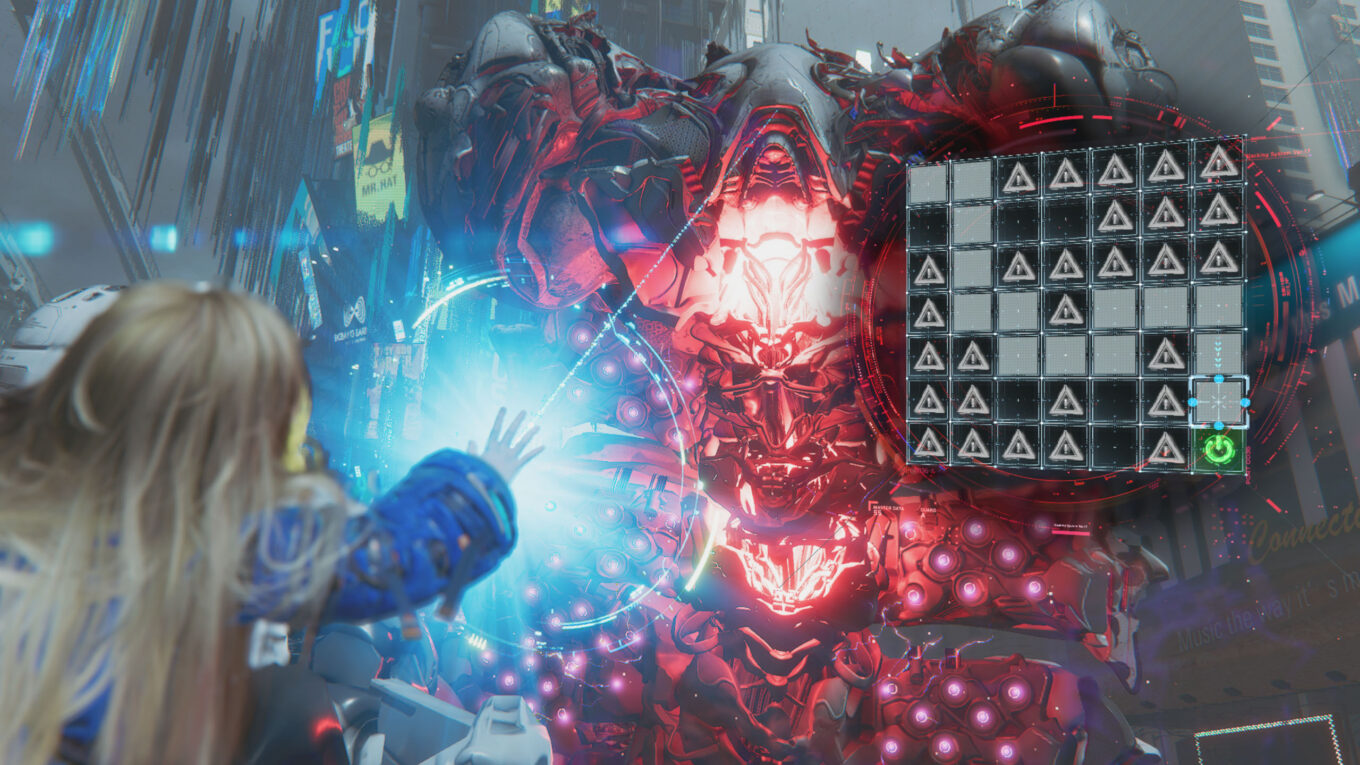
Which is where Diana comes in, offering to help by lending her hacking skills to the party. Hacking takes place on a grid which pops up when you aim at an enemy. The game doesn’t pause, and you must quickly navigate to a green EXE node using the face buttons (playing with a controller is recommended over mouse and keyboard, and works significantly better) which will temporarily open an enemy’s shell and expose weak points that flash orange when shot. Passing through blue ‘Open’ nodes on the grid stacks damage and exposure time, but requires a more circuitous route, and you must do all of this while dodging incoming attacks and keeping your intended target in view (the grid will disappear if you don’t, but your progress will still be there when you aim again, and only resets if you take a hit).
Later you’ll find additional hacking nodes which, when held in unlockable inventory slots, will appear in the hacking grids. These confer various effects, such as Multihack, which links enemies together and opens multiple targets via a single hack (at the cost of reduced damage), or Confuse, which results in friendly fire. Grids also vary in size, shape, and complexity depending on the enemy they belong to – basic walkers display a simple 4X4 grid, but before long you’ll have complicated shapes, blocked and corrupted grid squares, dead ends, and other obstacles to navigate. On top of all of this, you also have to decide whether or not to deploy your hacking nodes – take a moment longer hacking to include them in your sequence, or avoid them and save the effects for a more dangerous foe?
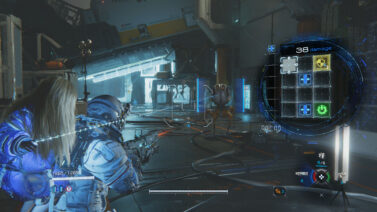
Further nuance is added via unlockable mods and hacking modes. The former offer global effects such as increasing attack power under certain conditions, extending hacking node duration, or boosting your max HP. The latter offer subtly different playstyles, including Offense Mode, which turns Open nodes into even more powerful damage multipliers when hacking an already exposed enemy, and Combust Mode, which boosts heat-gauge buildup. Oh yeah, there’s yet another system to factor in: enemies heat up under fire, and if they overheat they’ll become temporarily staggered, allowing you to move in for a one-hit critical shot that will take them out of the battle. There are other ways to achieve critical shots as well, but if I attempt to describe every system that the game throws at you we’ll be here for a very long time. Capcom offers up new mechanics, enemies, and twists on established ideas at such a rate that it feels like you’re never going to reach the bottom of the toy box. It’s dizzying, in a good way, and expertly paced.
Talking of toys, you’ll find consumable weapons out in the field which offer limited ammo but more power than your Grip Gun, and prove particularly useful against particular enemies. They’re broken down into three classes: Attack, designed to inflict heavy damage or stagger enemies; Tactical, which are all about controlling the battlefield and creating opportunities; and Defense, which are probably better thought of as tools of distraction. I found myself gravitating to particular combinations, often favouring the Riot Gun (essentially a crowd-control grenade launcher that knocks foes off their feet), Drone Hive (releases a swarm of micro bots which harry enemies), and Shockwave Gun (an enormously satisfying sci-fi shotgun). The Sticky Bomb launcher also deserves special mention as an example of the way the game’s systems mingle – every bomb attached to an enemy will not only deal damage when it detonates, but also reduce the hacking grid’s size and complexity, allowing you to open the machine more easily and inflict even more harm.
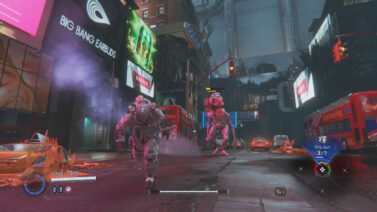
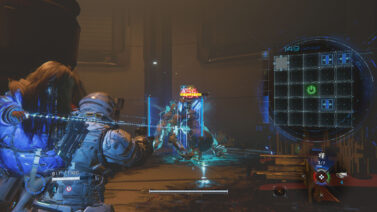
On paper it all sounds like a lot to process at once, but – other than the absence of a melee attack, which takes a while to adjust to – feels remarkably intuitive in practice. In flow it’s revelatory. Pragmata’s combat is rich and addictive, blending strategic prioritisation with maze navigation and reflexive acrobatics. It’s also responsive, even your Grip Gun feels weighty and impactful. While there are marauding enemies wandering about, most encounters lock you into particular space, and Capcom uses this to add further colour to battles by varying the shape and size of arenas, available cover, and verticality. In one particularly fraught skirmish on a rooftop I avoid an incoming missile by dashing behind cover at the same time as finishing a complicated hack just before an Executor (a giant robot built in the image of an eerily expressionless human toddler) takes a swipe at me, delivering the coup de grace while simultaneously dashing sideways to avoid a group of energy-sword wielding Walkers and hacking a second missile to return it to sender.
Pragmata makes you feel absolutely awesome in the moment, formidable and ingenious all at once, and as each increasingly convoluted combination of enemies is thrown at you the system becomes ever more satisfying and exhilarating. It’s in these moments that the game evokes the character of distinctive Xbox 360/PS3/Gamecube era shooters such as P.N.03, Binary Domain, and Vanquish (incidentally, director Cho Yonghee used to be an art director and concept artist at PlatinumGames). It’s a welcome return to a highpoint for the genre.
There’s also a dash of Souls structure thrown in to boot. The Cradle is divided into distinct areas reachable by a tramway, and as you explore each one you can open escape hatches which serve as checkpoints and a route back to a central shelter where you can do various things including upgrading your kit and your suit’s firmware, define a starting loadout, partake in training missions that unlock rewards, or just hangout with Diana. If you die or leave an area enemies will respawn, and they drop lunafilament when killed (one of Pragmata’s upgrade currencies). You won’t lose anything you’ve collected when you die, however, which makes for a satisfying gameplay loop in which you can grind more brilliant combat encounters or go searching for secret stashes to overcome a particularly difficult section or boss. Battles are challenging but not overwhelming – on normal difficulty I never needed more than two attempts at a boss – but adrenaline junkies can dial things up even further by tackling optional Red Key areas (which offer extravagant rewards but are populated with extremely dangerous enemies) and completing the game also unlocks New Game+, a challenging bonus area, and Lunatic difficulty.
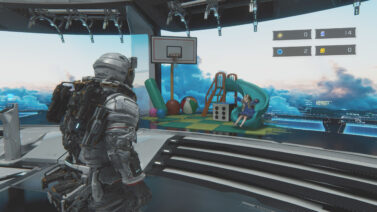
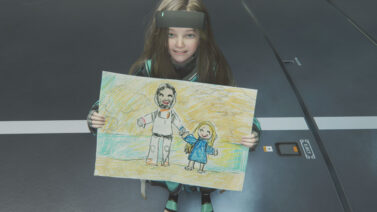
Among all this, Diana proves to be a genuinely charming companion, and the interactions between her and Hugh counterpoint all the robot dismantlement with heartfelt and often quite moving observations on the human condition, loss, and the nature of authenticity. Their relationship is wonderful, and develops organically over the course of a very enjoyable storyline. You can chat to her in the shelter, too, and print gifts called ‘Read Earth Memories’ – a skateboard, a slide, a crayon set – which are found in difficult to reach places around the world. Maybe it’s just because I’m a dad in real life, but I found myself inextricably compelled to collect them despite a pressing copy deadline for this review. Watching her interact with various Earth objects that she’s never had the opportunity to experience is delightful, and makes for one of the most satisfying homebase-improvement metagames ever committed to code. And that’s even before she starts drawing pictures of the pair of you, which subsequently decorate the cold metal walls.
Capcom has found itself the beneficiary of excellent timing with Pragmata. The initial concepting for the game started way back in 2020, but it’s launching right in the conjunction of fervent debate around AI slop’s enshitification of everything it touches, a real-life NASA moon mission, and the warm afterglow of Project Hail Mary’s all-conquering cinematic release – a similarly singular and enchanting odd-couple-in-space saga. The world couldn’t be better primed to embrace Pragmata’s thoughtful musings and eccentric vibe. Now if you’ll excuse me, I have a few more REMs to find for Diana.