

If you told me I’d be farming rats and tilapia in a cyberpunk shop simulator, I’d have asked you what substance from the game’s black market you’d been dabbling in. But, both things are undeniably true and, I hasten to add, entirely of my own choosing. Yet, these two endeavours were not available to me when I first demoed the game for a preview back in early August.
In Probably Stolen, you take over a shop on the decaying space station’s Lower Levels. And much like any societal structure, the Lower Levels signifies the underbelly, the plebians, or Marxist’s less-catchy lumpenproletariats. You’re a nobody, but what you do have is the ability (and premises) to buy and sell your way out of this mess.
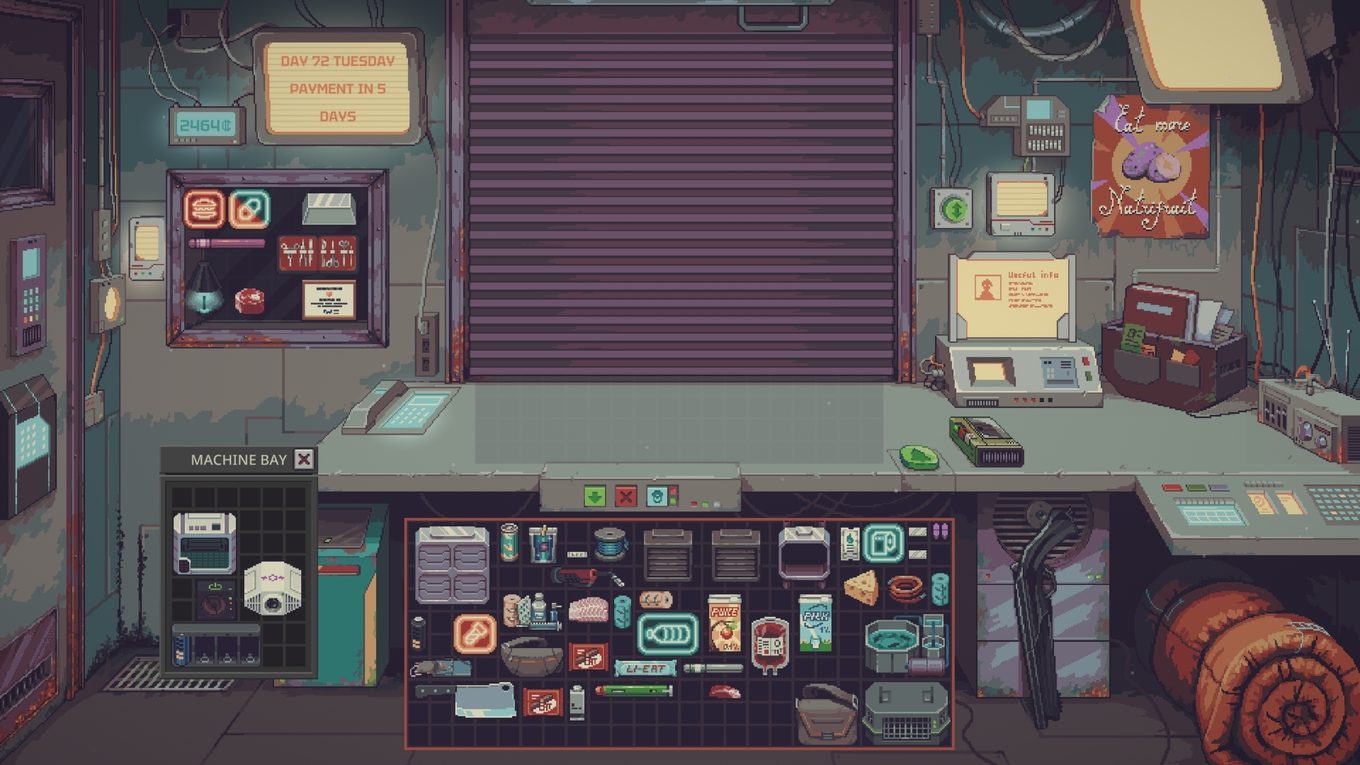
Unfortunately, while you’re taken under the wing of The Mentor who funds your initial shop rental and hands over some handy starter items, you’ve got to earn your own Credits to placate the perpetual weekly visits from The Landlord banging down your door for rent. At some point, you’ll buy this place out. At least, that’s the dream.
Running this shop sim isn’t just about personal gains. In fact, it’s not really about personal gains at all, as you spend each night trembling behind the shop counter in a worn-out sleeping bag, occasionally braving a visit to the Dumping Grounds in search of value in trash. It’s hardly lucrative, sacrificing your personal wellbeing for a bit of scrap metal, but somebody’s gotta do it. You live in the shop and people treat you with as little respect as they can muster, but you can earn it.
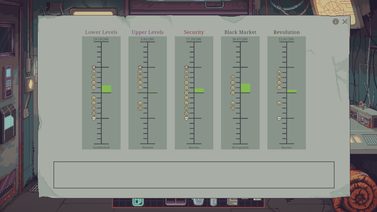
Within Probably Stolen, there are several factions to earn or lose favour with. And the faction(s) you choose to cosy up to will offer you perks in return. Via the feedback box on your store’s door, you’ll be able to assess where your favour lies, across the Lower Levels, Upper Levels, Security, Black Market or Revolution. And with each comes the opportunity for discounts, donations, and visitors, but also the risk of increased security checks, thieves and reduced customers.
But, before factions matter, starting up in Probably Stolen requires some hefty decision-making. Will you embody an Apprentice and take the handouts from the Mentor? It’s recommended you do so if you’re a new player, but certainly not required. Instead, you can opt to specialise right off the bat, dealing in basewater, black market goods, guns, or even organs. If you’re feeling bold, you can start from rock bottom, with absolutely nothing to your name aside from a hope and a dream (and some misplaced hubris).
Probably Stolen has an interesting perks system that kicks into gear immediately, a launchpad for your perpetual moral dilemma arc within the game, defining what you stand for and what you’re willing to sacrifice for your own advancement. Perks aren’t just acquired through spending the 3 available points at the beginning of the game though. You can also take on negative perks that’ll in turn give you more funding for better ones. If you choose a Bad Lease that’ll increase your rent by 40 credits, you could transfer it for additional rep with every single faction.
It’s wildly clever to completely alter someone’s game from the get-go. My experience will be different to yours and that’s almost entirely based on personal decisions. And developer Questing Goose Studio start as they mean to go on. Perks and specialisations are just the tip of this Orwellian iceberg in Probably Stolen. Every single customer you serve comes with a choice. Will you sell them goods? Will you haggle? Will you barter? Will you take on their stolen goods with varying degrees of heat? Will you decide to farm hydroponics, wine, beer, narcotics, ammunition, fish, and so much more?
Being the shopkeeper in Probably Stolen comes with a lot more stress and cognitive dissonance than I’d ever imagined. While I thought I’d be worrying about the array of delectable treats on display, I’m in fact spending my days annihilating elder rats with a meat cleaver to fund my lottery scratcher ticket habit. You see, what Probably Stolen does so incredibly well is set you up to fail.
When I got hands-on with the demo, I spent 100 days trying to purify water and ferment wine and I barely made more than 2000 credits. It was punishing (or I was a truly terrible businesswoman). The second time around, whether it’s from thoughtful updates and/or attention to feedback, I’m having a much better time – all things considered. But, I’m still suffering from the lure of temptation.
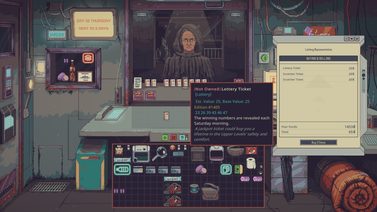
As the game’s name suggests, a lot of the goods that come across your shopfront are probably stolen. And when these goods arrive, it’s a constant battle with yourself to risk taking them on and selling them off for profit. Especially considering there are an unbelievable amount of surprise visits from security. You can unlock a service that’ll give you an early heads-up, but you can almost guarantee that even without this knowledge, there’s a shady security inspector gleefully whistling their way to check out your wares. But, you can be shifty, too, hiding them away in your Smuggler’s Bay.
There’s a big ol’ world outside of simple trade agreements and battling with your conscience. In fact, Probably Stolen’s breadth of opportunity is immensely vast. You can produce your own goods, as I mentioned, from rats to fish to farming seeds. You can join the appraisal board and price up goods, for a fee. You can phone in orders of extra stock from substances to narcotics, at your leisure. And you’ll become privy to all of this by visits from a range of dodgy characters.
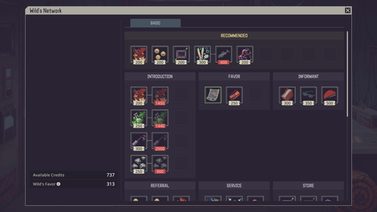
Joe Wild, for instance, comes around sharply suited up in red, a jaunty hat atop his head, looking like a distant relative of The Mask. But, despite his garish fashion sense, he’s a well-liked and well-connected man. As favours, he’ll hook you up with services spanning anything from a buyer referral service to free power, called upon whenever you need.
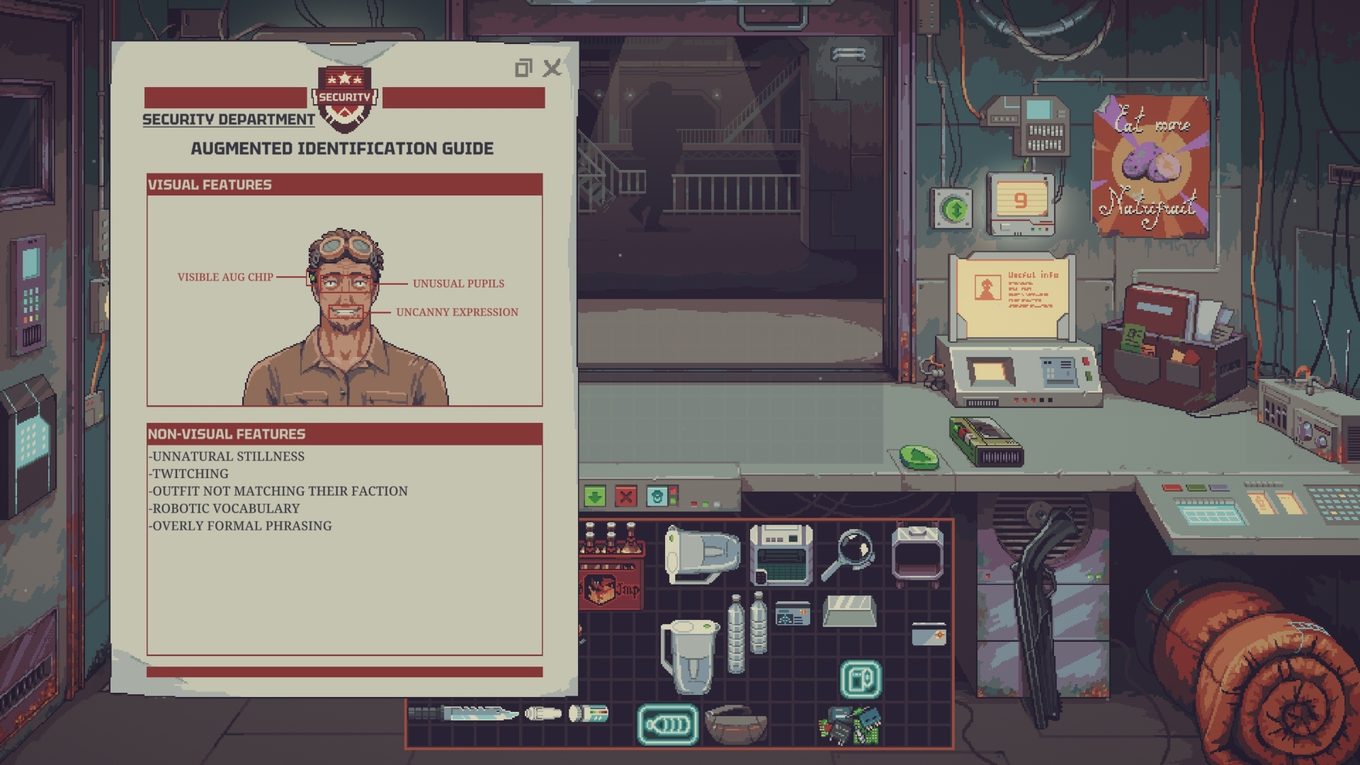
On the other hand, the Security Department will want you to call in Wanted criminals for Credits. In my preview, I was a do-gooder, stuffing myself into any Officer’s pocket that visited me, smarmy and protected. This time round, I figured being secure isn’t exactly lucrative and when I’m offered contraband – a locked crate with ‘enough here to put the entire Lower Levels behind bars’ – I believe this to be my villain origin story.
You straddle a very fine line between criminal genius and clumsy offender no matter which route you take. The Security Department will continue to visit you for random searches that you may or may not be ready to receive. Joe Wild will offer you a range of services for a fee, but whether you can shift or hide the goods quick enough is down to you. And each decision alters the way the factions of Probably Stolen feel about you in return.
And so, when Odin Haroldsson, the Lower Levels most wanted, pays me a visit, I choose to act with mercy rather than enforcement. He tells me to keep schtum, so I oblige. He says he’ll buy contraband in exchange for my silence and fortunately, I’ve got a hot supply crate that needs shifting. Turns out my sudden muteness pays incredibly well. Much more than if I’d continued to be security’s puppet on a string.
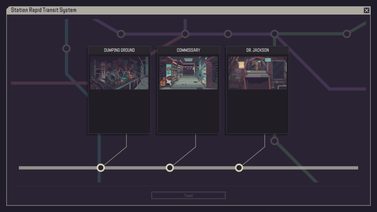
But to run a successful shop, you also need to be on top of your tech. In Probably Stolen, machines are hard at work from robot vacuums cleaning up rat faeces to projectors boosting the attractiveness of your shopfront. You’ll need energy cells to run them, materials to fix them, and you can get creative with modules that’ll add different perks to your machines from efficiency to performance, all available from bespectacled tech mogul, Dr. Jackson.
Each encounter made me question what I could’ve done differently, but with profit in hand, I could feel assured I wasn’t doing a terrible job. Though questions arose again when I dropped 200 Credits on lottery and scratcher tickets. Old habits die hard.
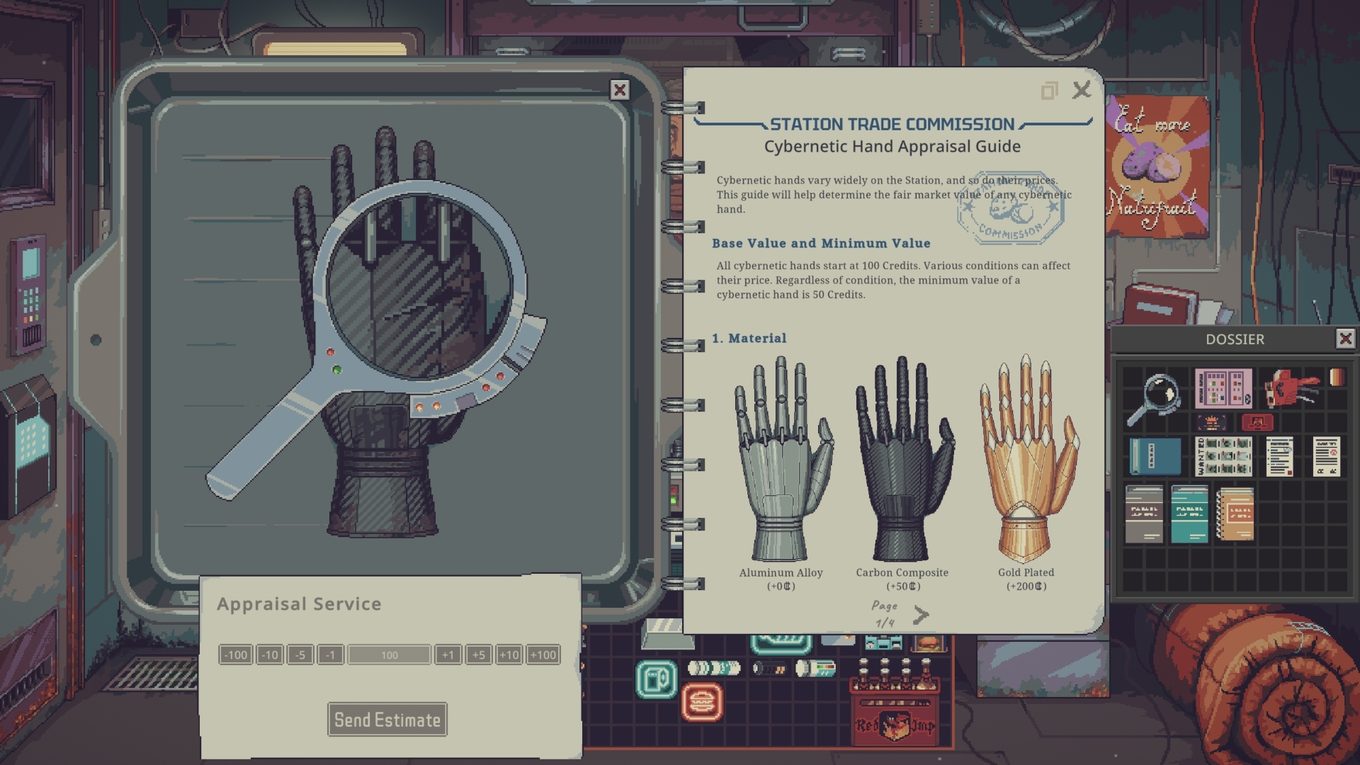
Probably Stolen is certainly a shopkeeper sim at heart, but it’s so much more than transactional. From appraising Ribwich sandwiches to smuggling toxic waste in my trash can, everything you do is for profit. Unfortunately, you also run the risk of being caught. While Security will confiscate stolen goods and varying levels of contraband, they’ll add your crimes to a dossier to perhaps, eventually, shut you down for good.
Amongst animal cages and vending machines, I sit and wonder whether Probably Stolen asks you to spread yourself too thin. Bordering on choice overload, it certainly doesn’t ask you to do anything you don’t want to do. It suggests it, sure, but I’d be a fool not to take them up on such an offer. At the end of the day, no matter how down bad you are, in Probably Stolen you still have autonomy. Even if that autonomy is tensioned centrally to earning money and trying desperately not to get caught with your hand in the cookie jar.