It’s a curious feeling to realise a vertical column of text defines a genre. Yet, opening The Necromancer’s Tale, Psychic Software’s moody, if desultory, CRPG is to be confronted not with a lineage of a genre that stretches back decades. Rather, one cannot help but think of Disco Elysium.
Its debt to ZA/UM’s RPG clear, The Necromancer’s Tale apes the visual and narrative grammar of Disco Elysium’s inner monologue. Yet, in doing so, Psychic Software erects the first of many obstacles that threaten to undermine the expertly fashioned sepulchral atmosphere that permeates The Necromancer’s Tale’s story of generational trauma and domestic horror.
A horror that, for its first few hours at least, almost paves over the game’s cracks with a richly-sewn history of occult decay that feels genuinely distinct.
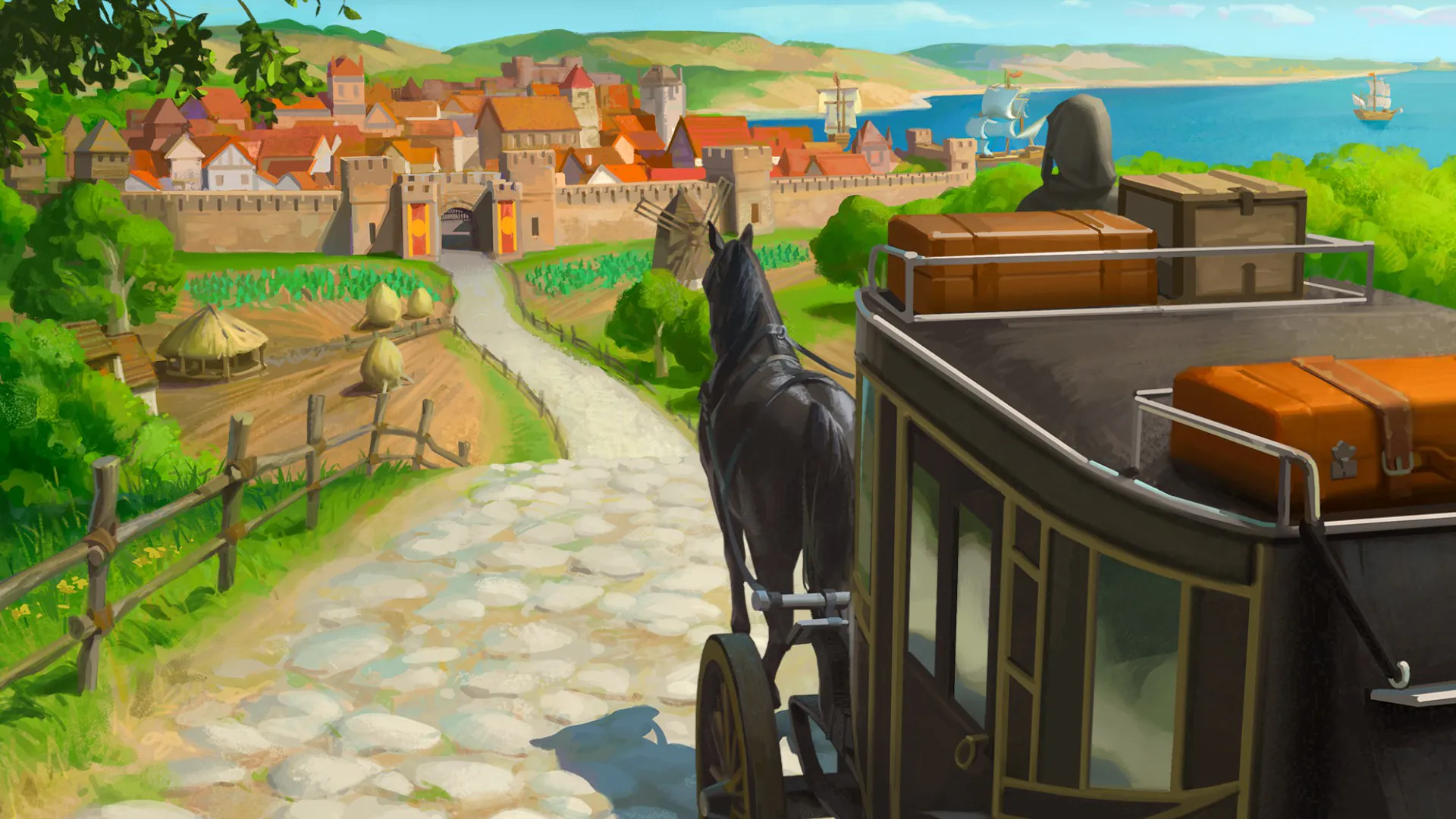
That history is communicated via a lengthy interactive narration that transports us to 1701. The Republic of Venice and the Monarchy of Rulsthen are at war. With Rulsthen hard-pressed, three of its generals travel to Golgotha to retrieve a book of dark magic capable of raising the dead. With the help of whom they succeed in driving out the Venetians. But Rulsthen has signalled its willingness to turn to forbidden magic.
Three years later, your character is born to one of those generals: Zelig Van Elstrik. Through a series of formative vignettes, you sculpt your identity through core skills — categorised into physical, mental, and social. For instance, a comet may pass overhead on the night of your birth and enhance your agility, acuity, and “impress” skills. Deciding you were raised by a local poor woman gives your social abilities a further boost, while a childhood lie informs your ability to sway others.
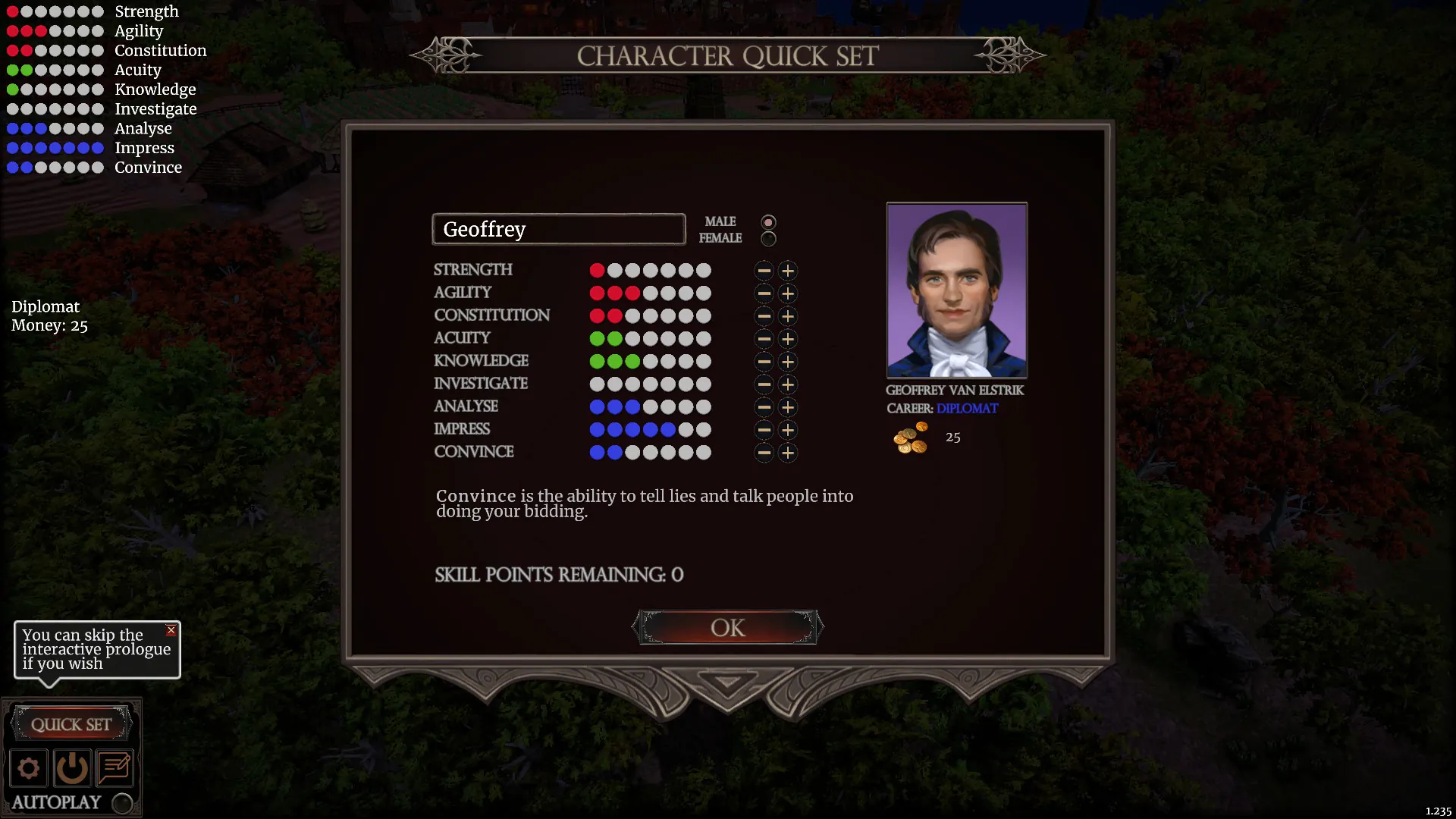
It’s an elegant solution to the necessary elucidation of the alternate history of The Necromancer’s Tale. One that breaks up an, at times, exhausting information dump but also establishes your character within a grim, uncharitable world. Lack of clarity in those vignettes, though instructive of later narrative missteps, is also mitigated by the ability to reassign points at will at the end of the prologue.
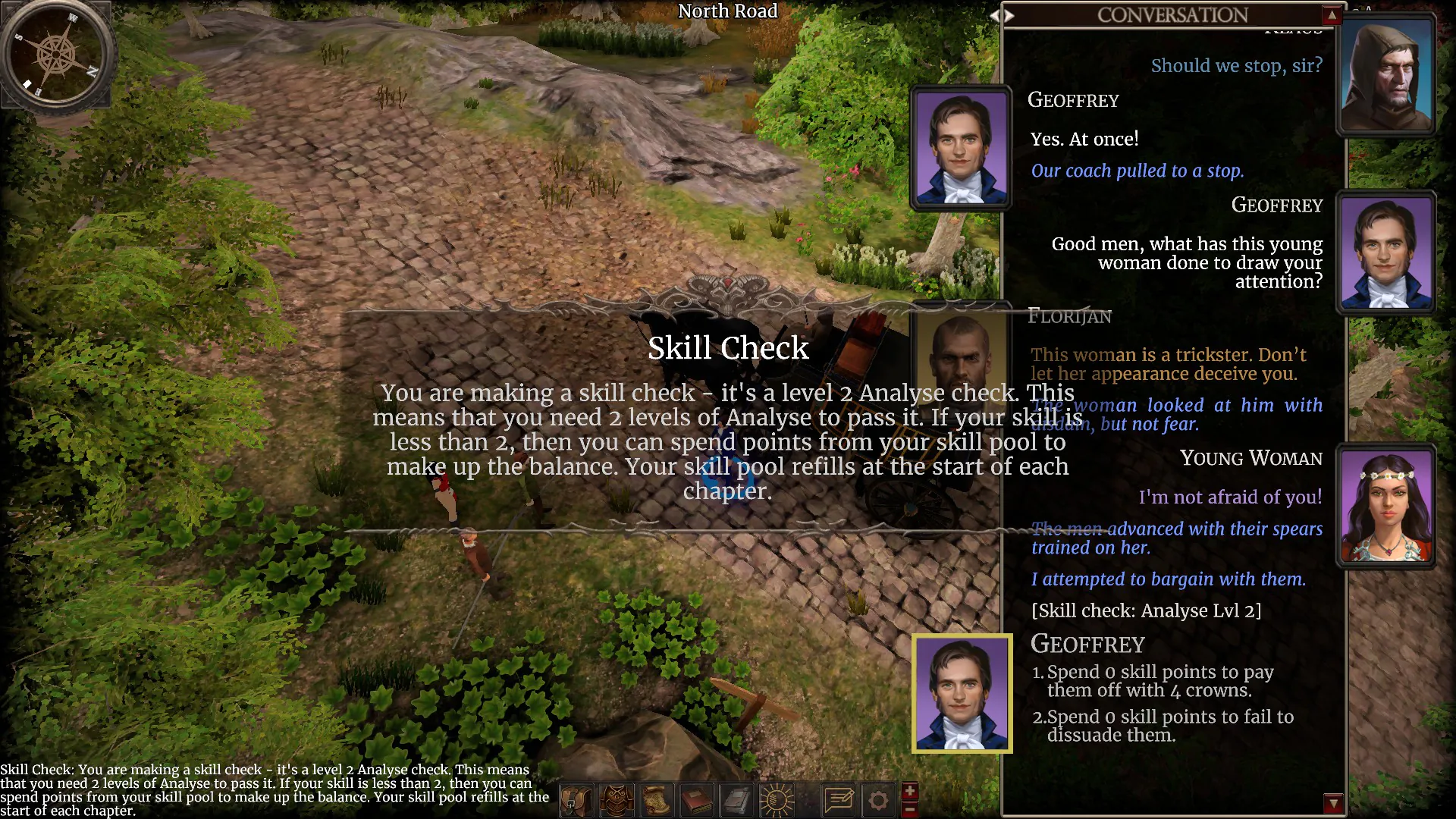
At which point we fast-forward to 1733. You return home to the city of Marns after a long absence. Gaining control of your character for the first time, you are tasked with breaking up a tussle in the street, one that will influence much of the later story, as a group of men harass a young woman. To do so, you utilise skill points – confusingly distinct from those assigned during the prologue – the number needed influenced by your discreet skills. With a high enough “convince” stat, you may not need any. Get into a fight with low physical stats and you may need to use them all.
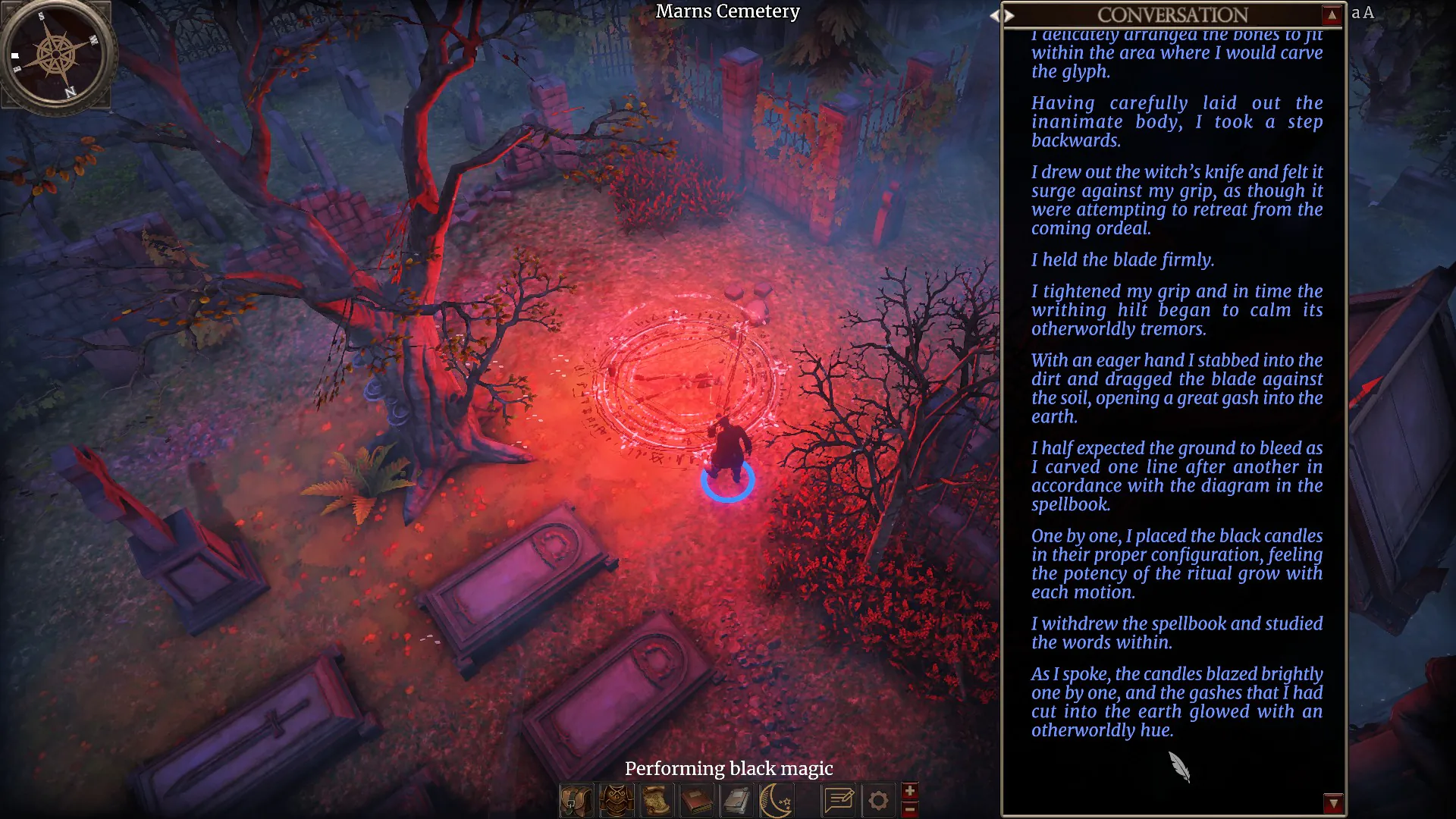
This is also the moment The Necromancer’s Tale introduces its rendition of Disco Elysium’s dialogue pane. Conversations are voiced, at least in your first interaction with a character — though this is inconsistent. But text drives the game; the principal way you play the Necromancer’s Tale is to read it. Text, however, is riddled with basic typography errors. The leading (space between lines) is tight and clumsy justification leaves wide chasms running through paragraphs and makes reading uncomfortable.
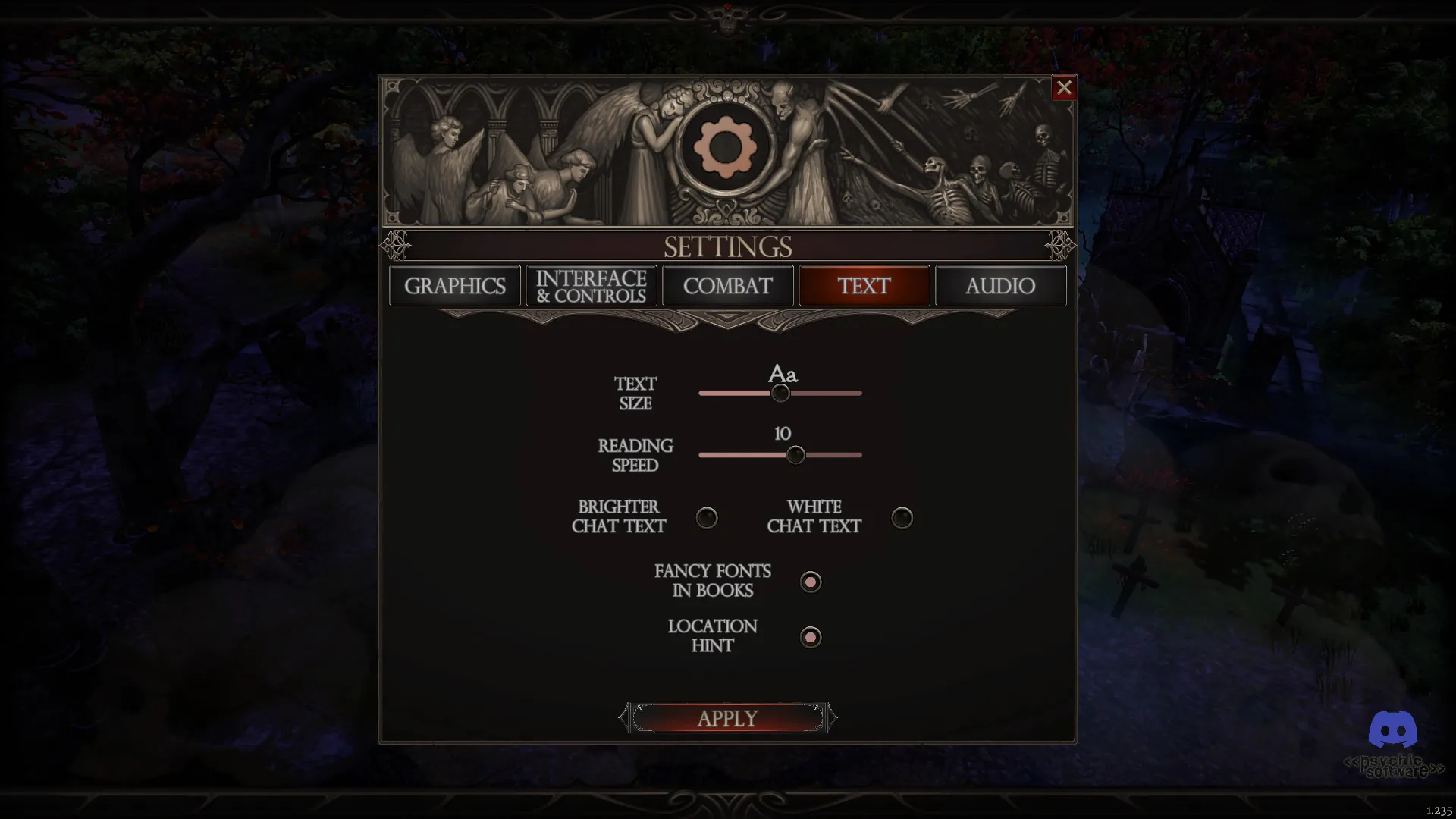
It’s a significant issue for a text-based game. One that undermines the welcome accessibility features The Necromancer’s Tale offers around text. Which includes the ability to zoom on text and replace illegible fonts in books with simpler options.
What also stands out at this early stage is the atmosphere The Necromancer’s Tale conjures as you return home to attend your father’s funeral. A claustrophobic, brooding unease creeps through the walls as your mother, Juliana, wanders in a daze, haunted by her late husband. Your aging butler, Albrecht, is distracted trying to wrangle her and arrest the family’s financial slide.
In the midst of this chaos, you find the funeral has proceeded without you. Your uncle having insisted that the affair be rushed lest a sinister cabal known as The Shroud use the wait to spirit Zelig’s body away for their maleficent purposes.
Purposes with which you will quickly acquaint yourself as you reintegrate into Marns society and attempt to decipher the mysteries around your father’s death. Something you do through a series of ill-advised rituals – including, but not limited to, trying to raise him from the dead — which introduce you to Marns’ underworld populated with criminals, witches, and ghouls (literally, the monsters in this game are called Gūls).
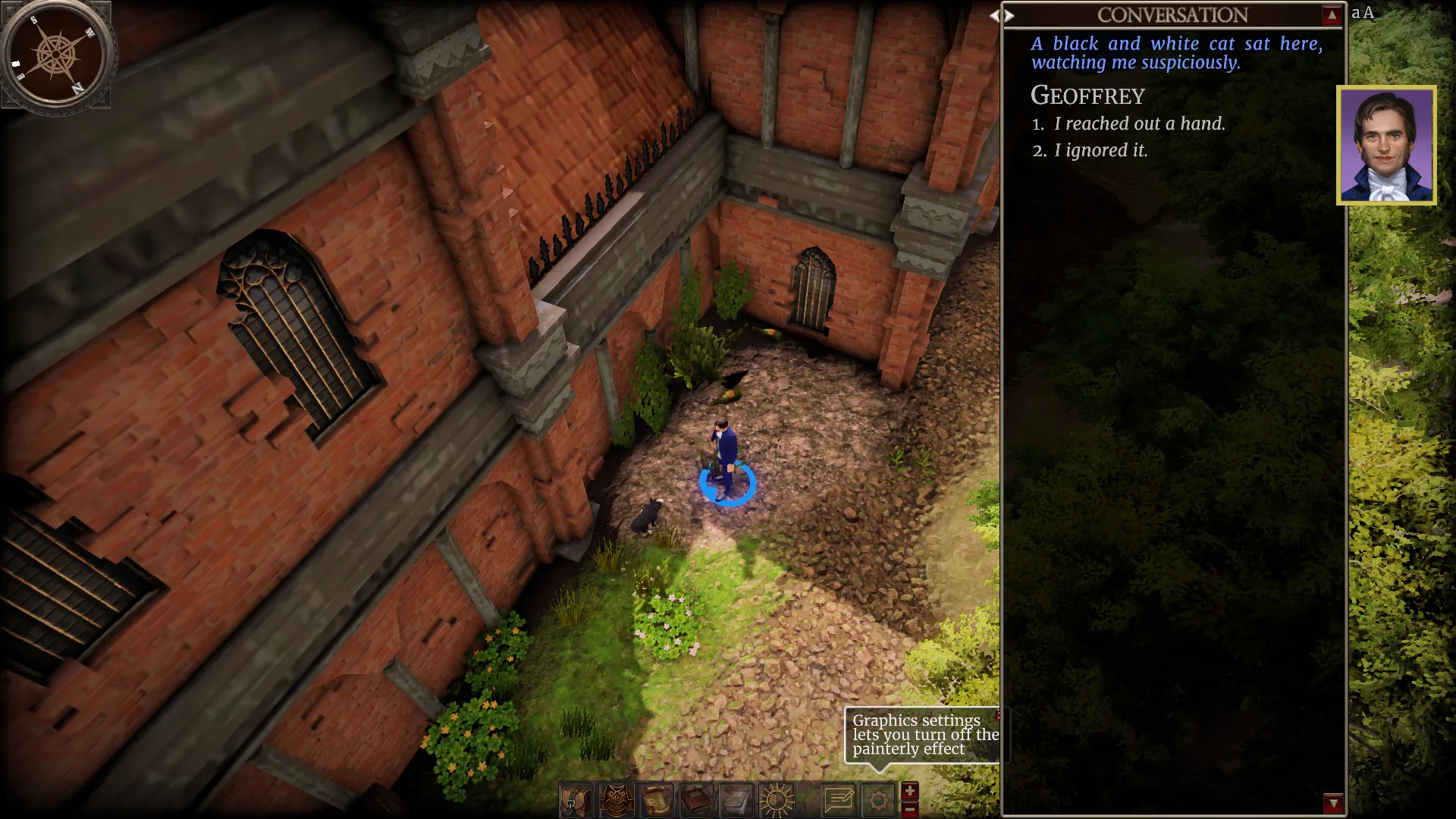
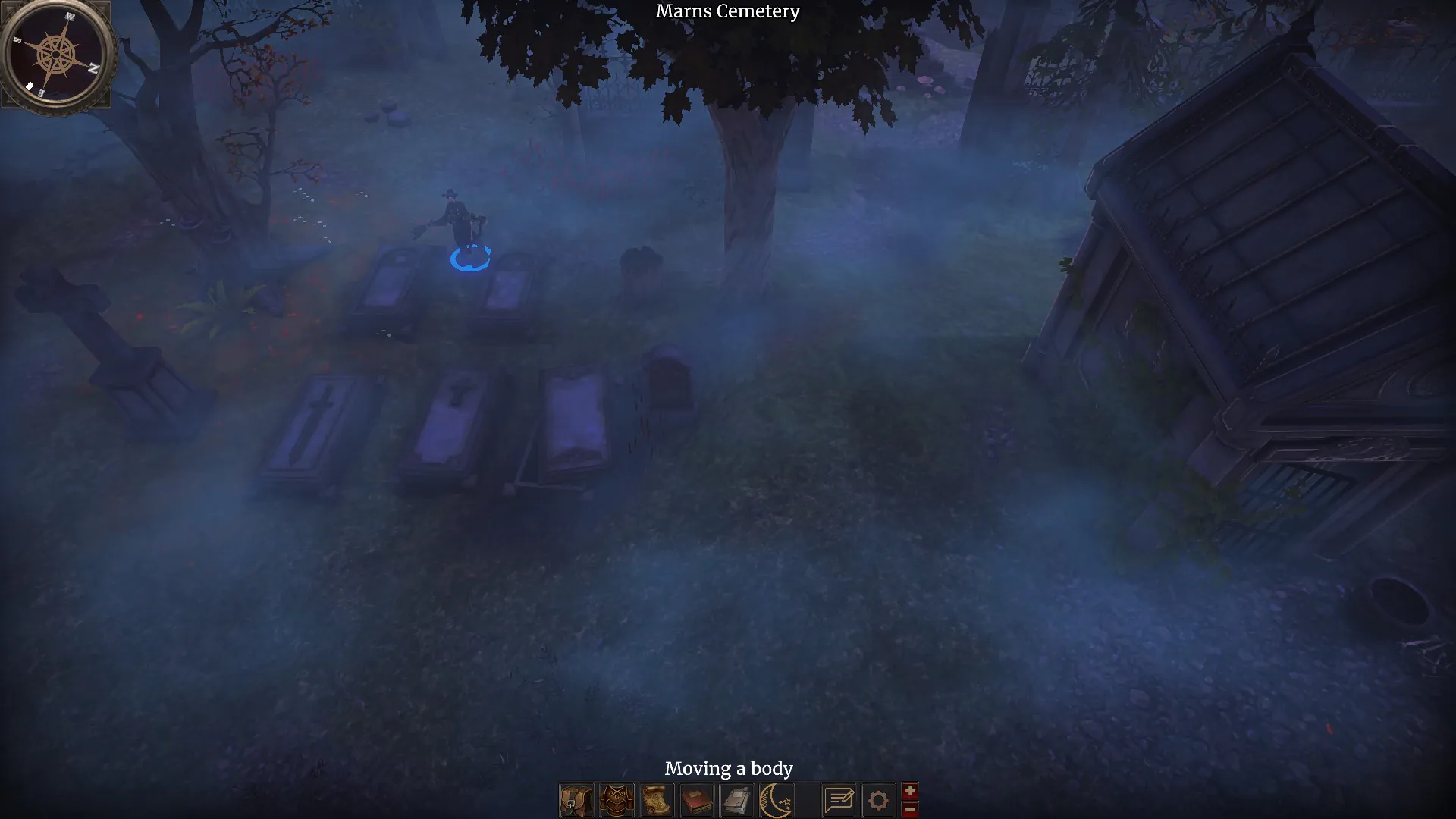
That introduction to magic is, however, pleasingly gradual. You do not arbitrarily level up into magical ability nor are you a special case. Rather, you slowly decipher increasingly complex, and taboo, spells from your father’s library.
Navigating all of that is achieved through standard point-and-click conventions. This is supported by a generous fast-travel system (you do not, for example, need to discover areas to travel to them), the ability to highlight areas of interest with a single input, and an interactive to-do list. That quest log will automatically bold critical tasks, but you may also re-order them and add your own notes. Given the intense cognitive labour required to track the game’s mysteries, it’s a welcome addition many similar games neglect.
These boons too often clash, however, with erratic quest design. Your first task when you return home is to discuss your family’s financial straits with your mother. Something she refuses to entertain. Albrecht is no help; he insists the conversation is best saved for her. Left to wander, you eventually find a locked drawer in your father’s study. Albrecht only notes that the key is somewhere on the premises and rebuffs any attempt at further conversation.
There’s no clear way out of this dead end. The solution, it turns out, is to ask Albrecht about Zelig’s death for a third time. Only then does he reveal where your father died and spawns in the key. There’s no option to independently discover the item — I had already explored the house and its grounds. On paper, it’s an excellent loop of discovery; forcing you to examine your surroundings. But the threads are too removed from one another to the point of feeling arbitrary.
It’s a pattern that only worsens as you delve deeper into The Necromancer’s Tale. Something that suggests Psychic Software ran out of steam as the game grew. But it means you’ll often find yourself stranded in events that, despite proximity to one another, rarely connect naturally.
In one early sequence, your childhood friend Sofia expresses frustration that a guard won’t investigate the local tavern. If you convince the guard to act — resulting in a patron’s arrest — she turns on you, causing Marns’ workers to lose Trust in you.
Trust is an already volatile resource through which you maintain relationships. One that the game often forces you to lose as its internal monologue persistently guides you towards inflammatory dialogue choices that, in their writing, are rarely signposted. Encountering frequent moments when you must lose more simply for trying to help people exacerbates that frustration.
Not least as these interactions have so little lasting impact otherwise. Re-enter conversation with Sofia and she returns to her cheerful default loop.
Some of that friction may be deliberate. As I worked deeper into the game’s later chapters, it became clear that after so long spent with the undead my character found it harder to relate to the living. That is an excellent narrative payoff on the game’s early atmosphere. But a lack of precision in the game’s writing leaves the interactions that lead to it unsatisfying.
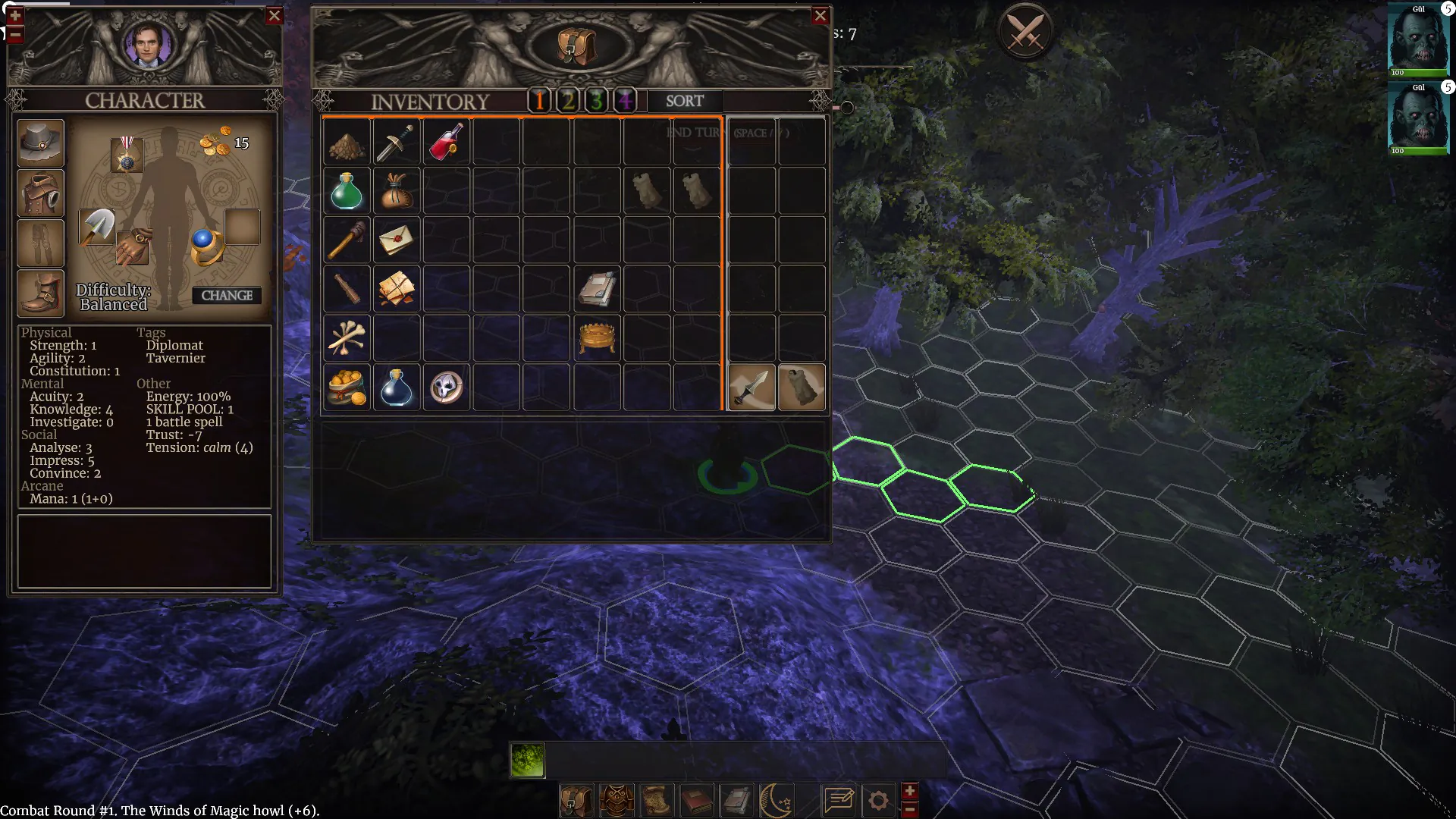
That clunky sensation extends to quest design and combat, the latter of which feels dropped wholesale from elsewhere without consideration. The former is generally a string of errands that involve repetitive fast-travelling back and forth between two places to deliver messages and pick up items. You may encounter multiple paths through certain quests though, like conversations, they barely intersect.
In practice, these frustrations are small within what remains an ambitious game. But they mount to the point that The Necromancer’s Tale feels misleading and in need of a significant amount of further polish — despite releasing almost a year ago on Steam.
Which is a shame, because there is plenty to celebrate in The Necromancer’s Tale. Its brooding, initially unseen, horror is something few modern games can match and its central mystery, while often disconnected from the game’s myriad additives, is compelling. If it stopped there, remaining a moody investigative game, its faults may have been easily forgivable.
As it is, The Necromancer’s Tale occupies a strange space. Plenty of games endure a rough start only to rally an hour or so in. The Necromancer’s Tale flips that script: starting strong but fizzling out as its ambition grows far beyond its initial strong storytelling and limited bank of novel ideas.