
During the Monster Fantasy preview event I attended, the two comparison points that came up most were Monster Hunter and… Animal Crossing. Before you spit out your coffee and become traumatised at the idea of a four-villager hunting party whaling on Blathers (although, let’s be honest, Tom Nook could do with a slap), know that these action RPG and cosy life-sim threads are separate experiences within the game’s vast world. So much so, in fact, that you can elect to ignore one or the other and just focus on the bits you enjoy most (I mean, you could even ignore both halves if you wanted, but that would make it tricky to justify your purchase).
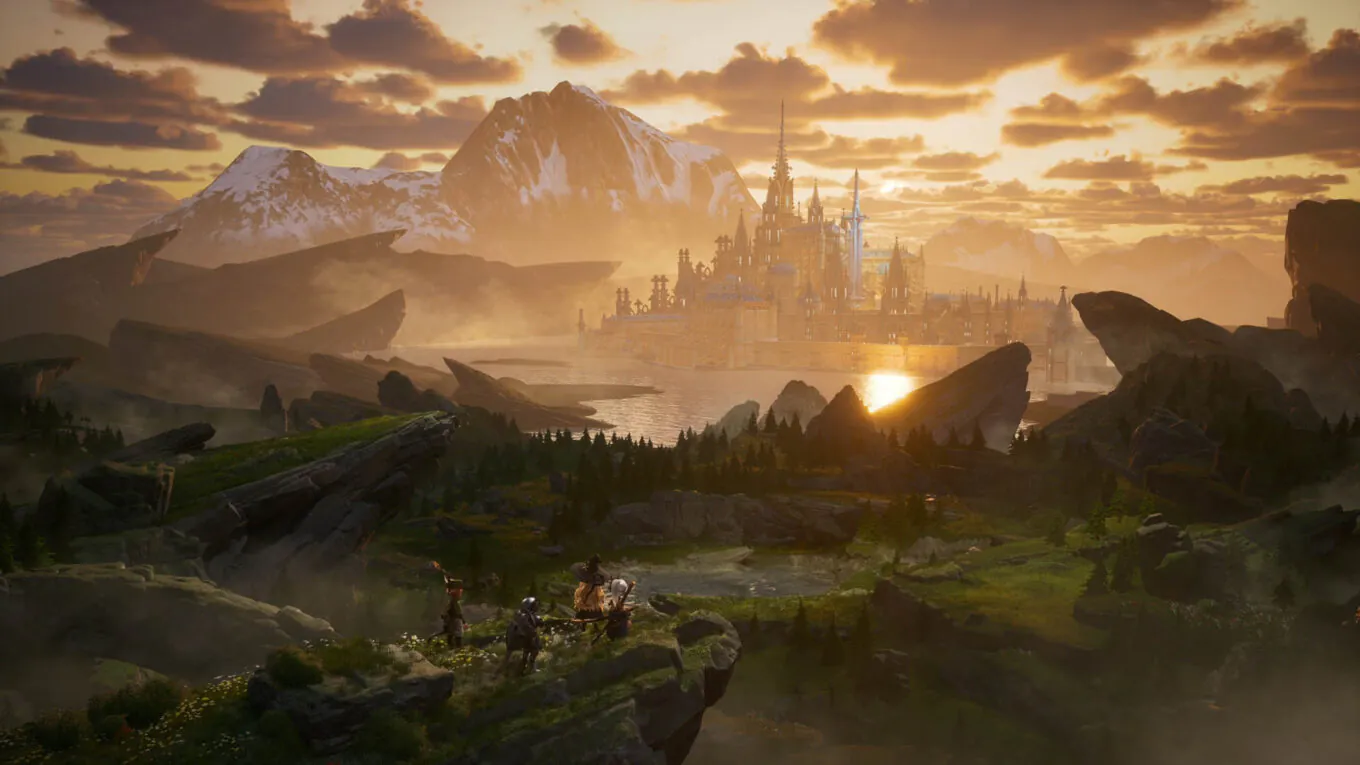
However, the touchstone that kept leaping out to me was Final Fantasy IX. That’s mostly down to the game’s handsome juxtaposition of chibi-style cute characters with more muted, naturalistic environments. There are no fixed camera angles here, of course, but the appealingly squat characters, pseudo-medieval fantasy architecture, and – in particular for me – a brief glimpse of a pub scene, all conjure up pleasant memories of playing Square’s classic RPG.
There are no turn-based (ish) shenanigans here, though. Up to four players can team up to hunt Monster Fantasy’s massive prey. The territorial fauna that’s been shown so far includes a towering griffin, a fearsome-looking ruby-red dragon, a massive rhino beetle with stone-plate armour, and – perhaps most blood-curdlingly – a bear-sized squirrel. The final game will include over 50 monster types, divided between common and legendary types, all of which can be either tamed and converted into mounts or butchered for rare materials to craft and upgrade gear (including special monster-themed garb and weapons), depending on how much empathy you can muster.
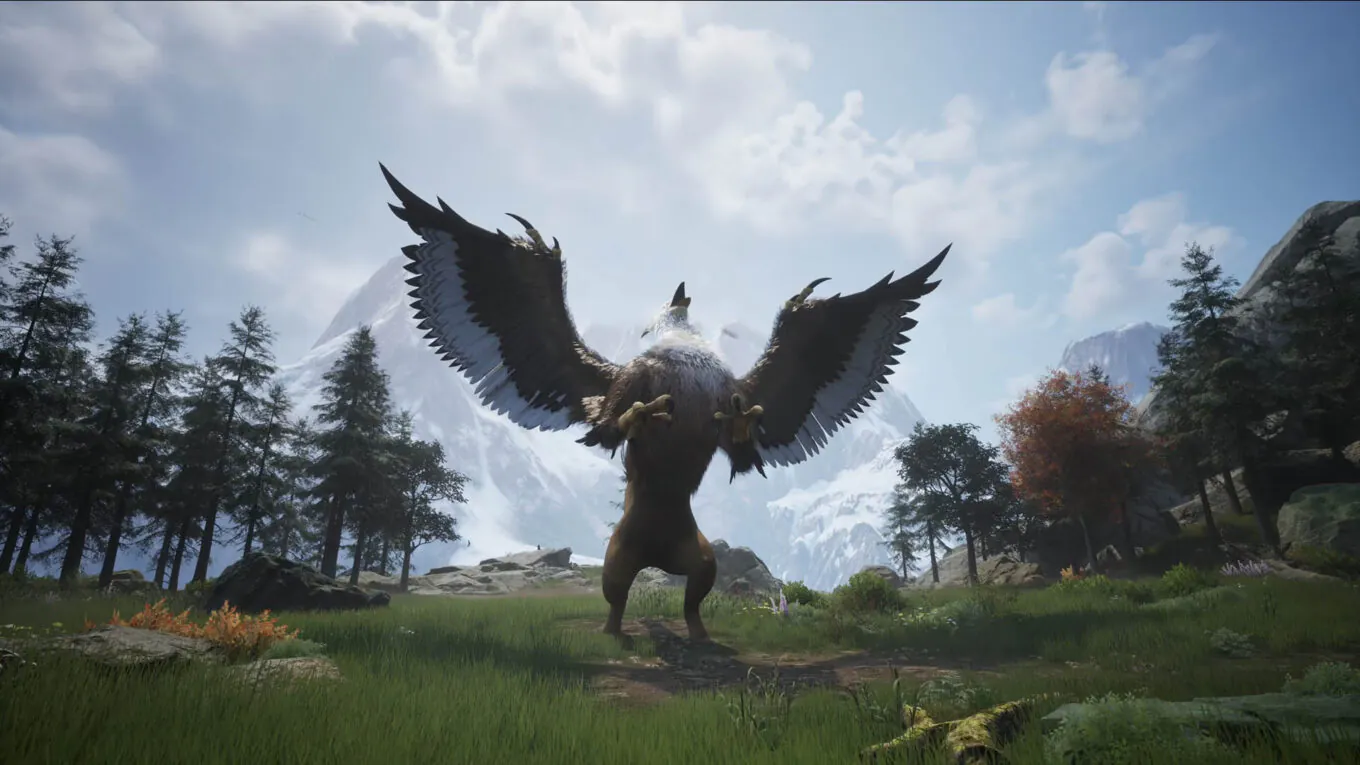
Each monster evolves through various stages of development, transitioning from kuddly to killer. Once tamed, you can hop on their back to get around the world faster, but also bring them into battles with you to further stack the odds in your favour.
Along with the specifics of each of the game’s various biomes, weather conditions and a day-night cycle will further affect monster behaviour, meaning there might be a particularly good time to strike. You may have to stay up quite late, however, as the day-night cycle is realtime, and synced with your timezone – an intriguing prospect that could add an extra sense of adventure during sessions where you plan to meet up with friends in the wee small hours. Equally, it could just be slightly annoying, but I’m erring on the side of optimism here.

The world, called Eldoras, is split into four main areas, each with its own village, wilds, and wildlife. While the world is interconnected, you access these areas from your village via teleportation crystals. Giant Crown Rainforest is a verdant sprawl of towering ancient trees, hidden caves, and epic waterfalls. Cloudstep Highlands stretches across rolling green hills, lakes, and arid desert plains. Frost Rift Valley has distinctive Scandinavian-inspired architecture and, as I’m sure you have deduced, lots of ice and snow. And Ashlands is a bleak volcanic expanse with unforgiving, vertiginous terrain.
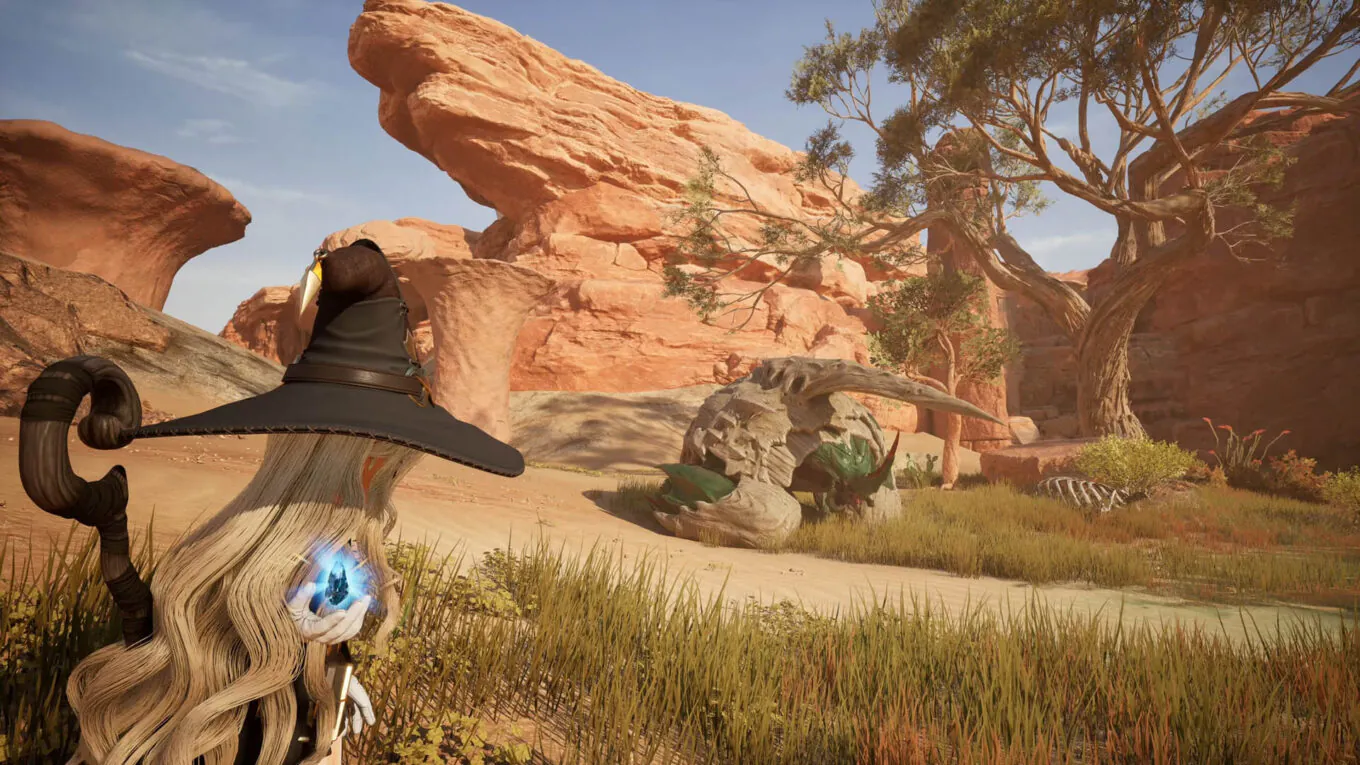
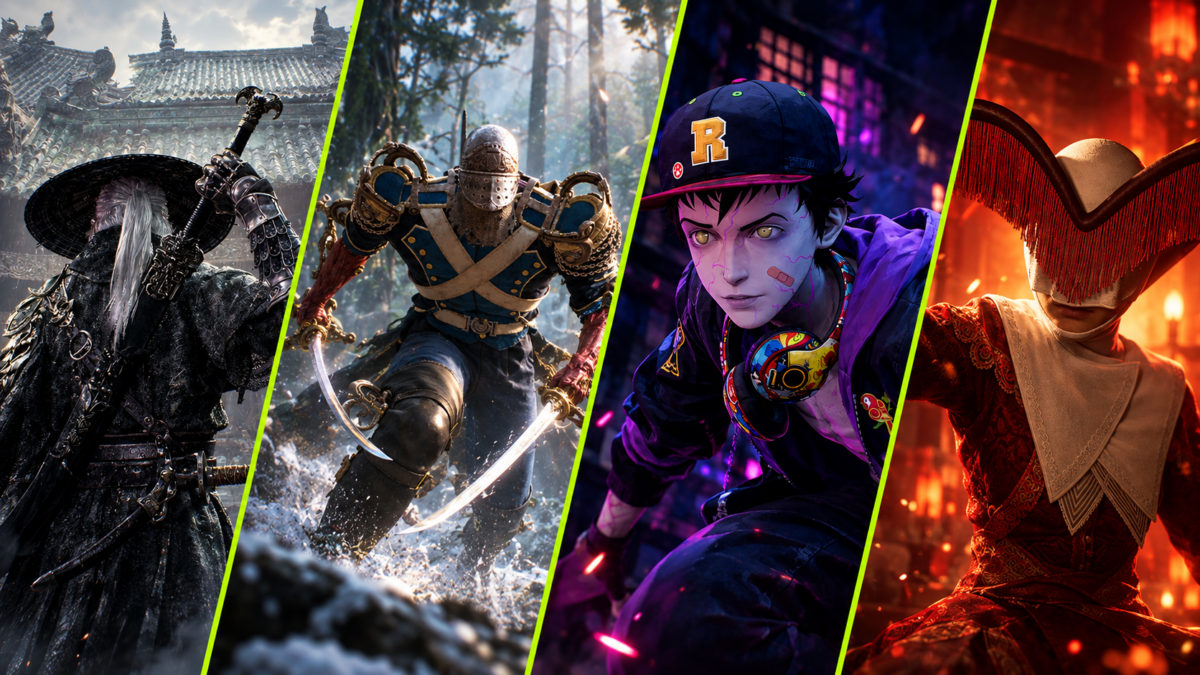
There are currently four hunter classes, though more may be added for the final release. The Warrior is a bit of a tank and built around blocking attacks, while the Swordsmanperson wields dual katanas and moves quickly, dodging attacks and running rings around their prey. The Archer and Mage, meanwhile, provide ranged options, in the first case via homing arrows and in the second through combinations of four elemental magic types. In a nice touch, you’re not locked into a single class, and can swap between them freely just by changing your weapon (though the game won’t pause), which has the potential to create pleasingly dynamic encounters as your party switches roles on the fly.
Back at your village, the pace of life changes dramatically. Bucolic and laidback, you can shape your homestead and invite passing travellers to settle. Here you can shop, cook food, brew potions, smith weapons and armour, mine for materials, chop down trees, go fishing, tend to farmland, and – of course – have a beer. As in Animal Crossing, you can chat with villagers, give and receive gifts, and build relationships, and every villager has their own particular personality, strengths and weaknesses, and even hobbies.
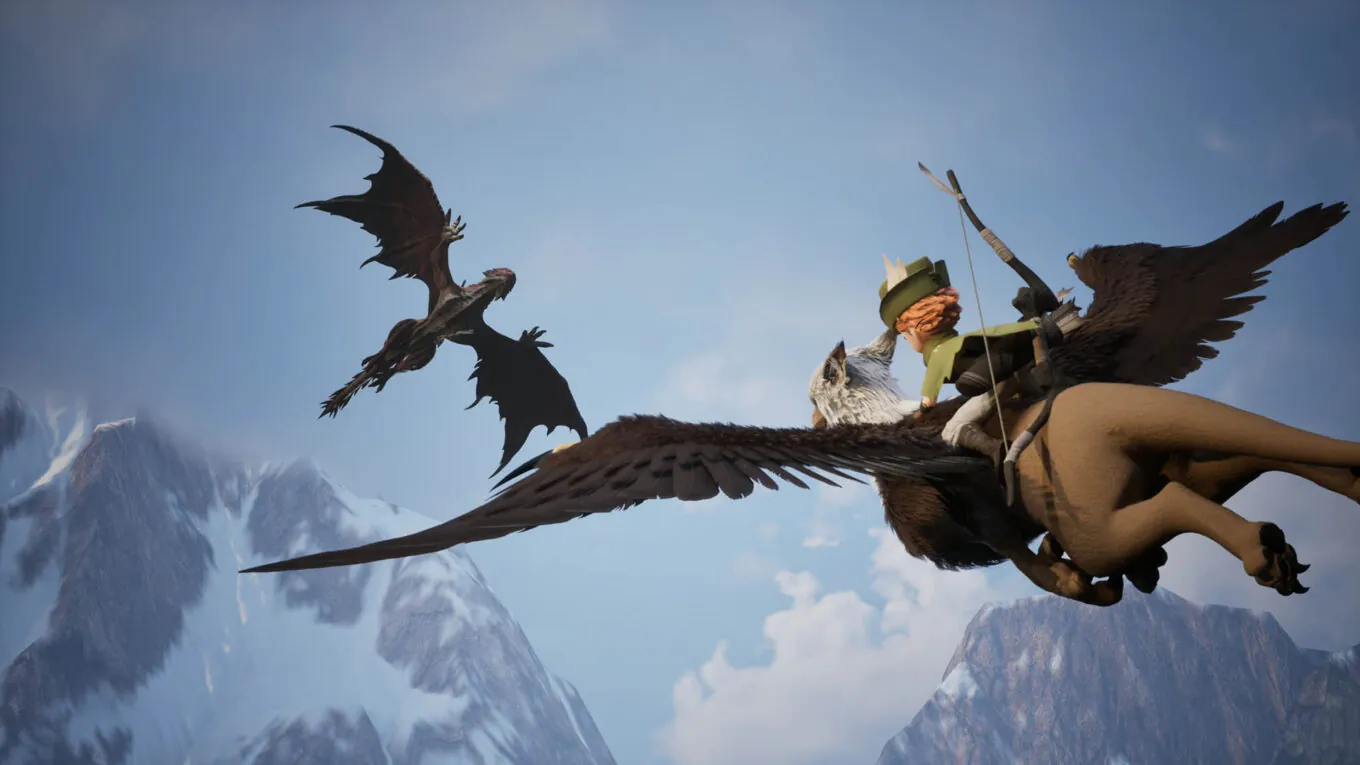
More than that, villagers can fight alongside you on hunts if you can’t convince any of your real friends to come online for the 3pm raid you’ve been planning, and you can even task them with carrying out the jobs you don’t fancy. This includes just doing the hunts for you, if you’re more of a homebody, but you could also assign them to, say, gathering wood or mining. This mechanic means that every player will be able to acquire even the rarest materials, no matter what parts of the game they choose to focus on.
Monster Fantasy is an ambitious project, combining a great many ideas into one whole. Even before the cute visuals charm players, the sheer flexibility built into the gameplay should guarantee that it finds an audience across many different demographics. It will be fascinating to see how those different strands come together. While the game doesn’t yet have a confirmed release date, a Kickstarter will launch on July 15 alongside a playable demo that offers a little taster of both halves of what is shaping up to be a rather enticing proposition.