
Witnessing the monstrous amount of layoffs taking place across the games industry – and the broader trend of supposed AI-driven job cuts everywhere else – can be rage-inducing. Take the utter decimation and mass layoff of Kwalee’s dev team, the studio that just launched their bullet hell game Luna Abyss a month ago; it’s an utterly negligent, even tone-deaf decision, a choice that reduces the developers to disposable resources, to be discarded after their labour was wrung out of them. Securing a job these days becomes a frustrating and seemingly futile exercise, which feels even more fruitless in light of arbitrary hiring systems and opaque recruitment processes. The stress builds up inside you; it’s like having a vessel beneath your skin that can rupture at any moment.
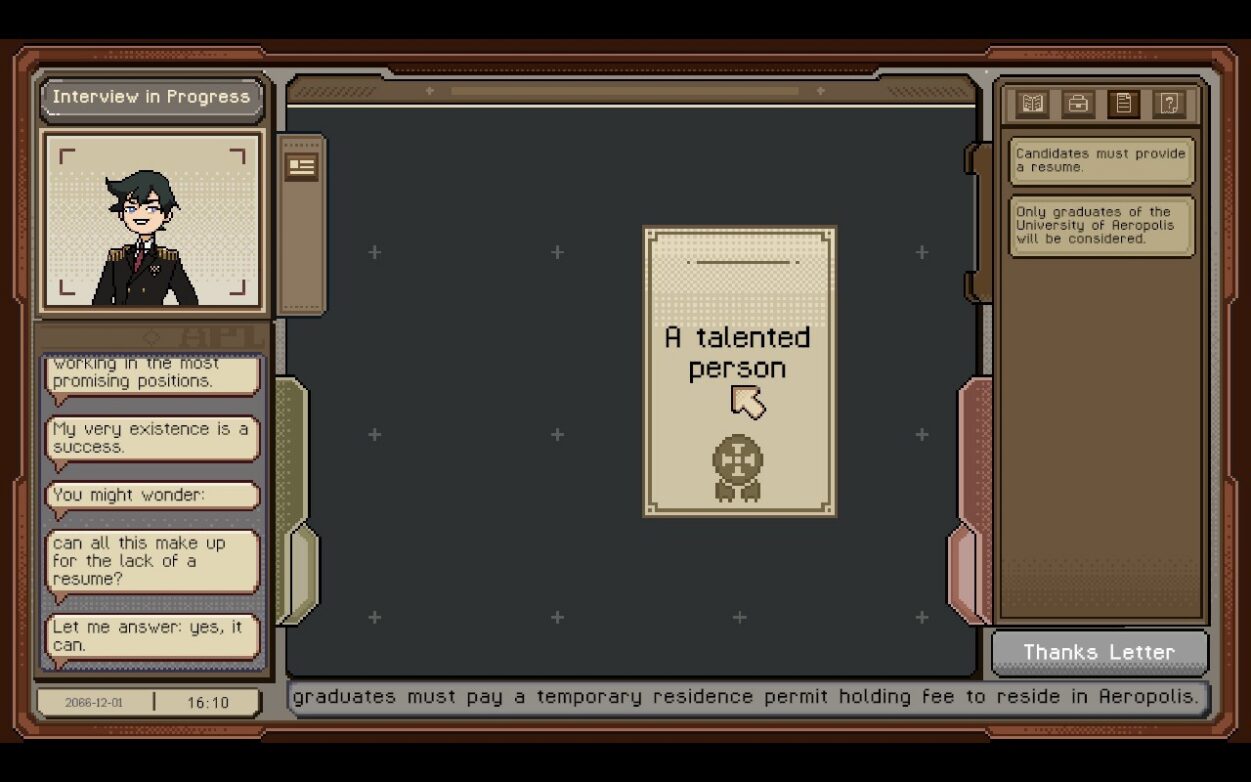
Thank You For Your Application seeks to speak to this despair, one that’s produced in the current climate of joblessness, with the game deliberately reducing the recruitment process to thankless, bureaucratic grunt work. You’re a college graduate who, after slogging through 15 rounds of interviews, can’t snag the job, but is instead offered the role of a junior interviewer. That said, this may not be the lucky break you wanted, since your responsibility is to screen the resumes and applications of equally desperate candidates looking for a job. The more accurately you screen the candidates, the more you earn, which you can use to pay your rent and other basic necessities. It’s a routine that harks back to Papers, Please, Lucas Pope’s joyless, critically acclaimed game about working as a Soviet immigration officer.
This isn’t to frame Papers, Please in a derogatory manner, but the joylessness is the point, a critique of the often inhuman immigration policies propped up by unethical social structures. Likewise, the central mechanic in Thank You For Your Application is drawn from this sentiment. In the latter’s first few days, your candidates are college graduates who present documents that you must examine: resumes, university certificates, and even employment forms from past internships. These requirements evolve eventually; at first, your company will only accept graduates from a certain university. Yet, due to intensifying backlash against the organization as revealed through newspaper headlines, this sees the company potentially accepting candidates from local universities, even as it still rejects graduates from community colleges. You’ll also have to look through these documents for any discrepancies, be it an identity card with a lapsed expiry date, or even a forged certificate with an incorrect school stamp. You can also interrogate candidates about these inconsistencies, even though you’re given very little incentive to care, since you can only accept candidates who have fulfilled the company’s byzantine requirements. Otherwise, their resumes are dragged to the rejection pile, all but forgotten.
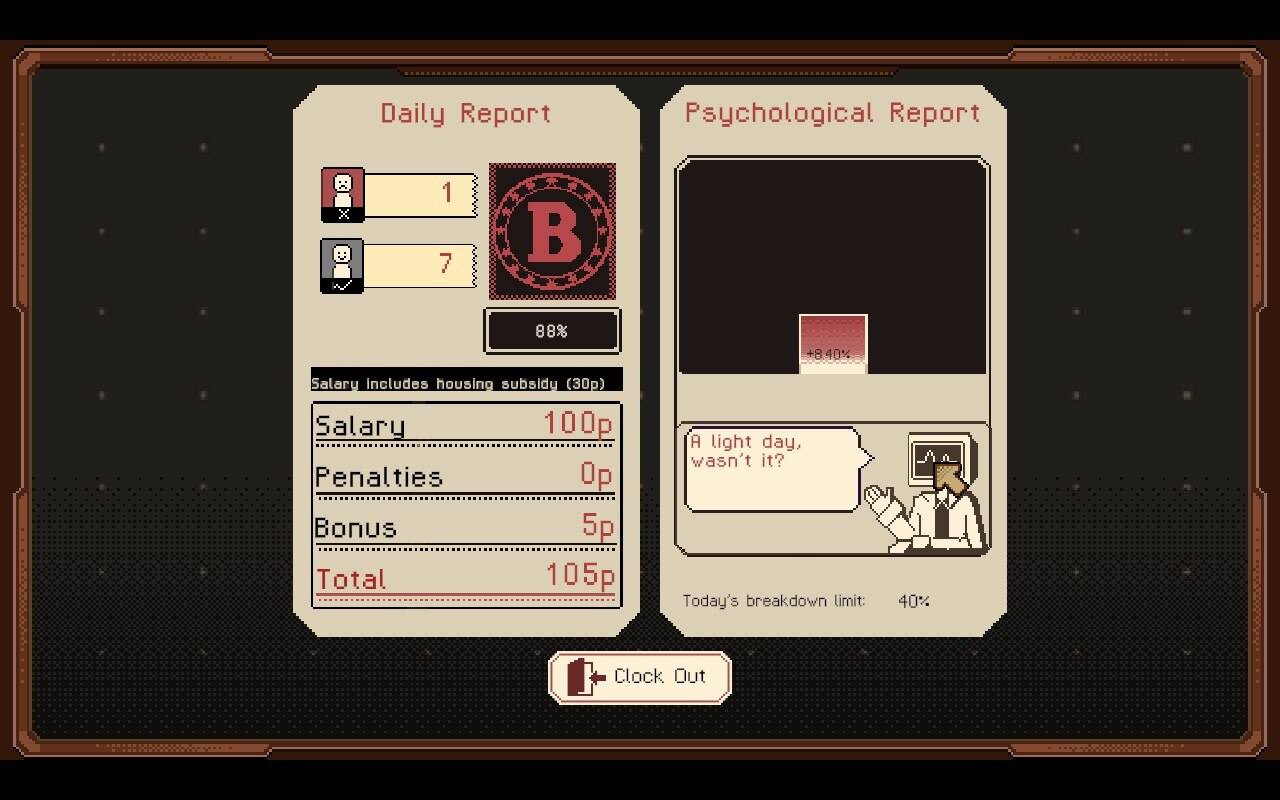
If you have played Papers, Please, these cycles would be familiar territory. This busywork is exacerbated by the increasing demands your organization imposes on candidates each day. In one week, candidates will need to show they have at least some past work experience while sharing their employment documents. In another, those who worked for a competing organization won’t pass the interview. Subsequently, thanks but no thanks letters – papers that explain why candidates are rejected – have to be produced. Later cycles even require graduates to take a psychological evaluation test, after one candidate ended up trashing the office from sheer exasperation when they were turned away from the role. Thank You For Your Application then introduces more seasoned candidates, which translates to more documents to be examined. Over time, you’ll create your own internal process for sifting through these documents with ease: verified paperwork will be tossed to the left, while questionable applications will immediately be flagged. You’ll learn to filter out whatever small talk or excuses candidates may make to get into your good graces. Time is of the essence; the more accurately and quickly you screen, the more you earn.
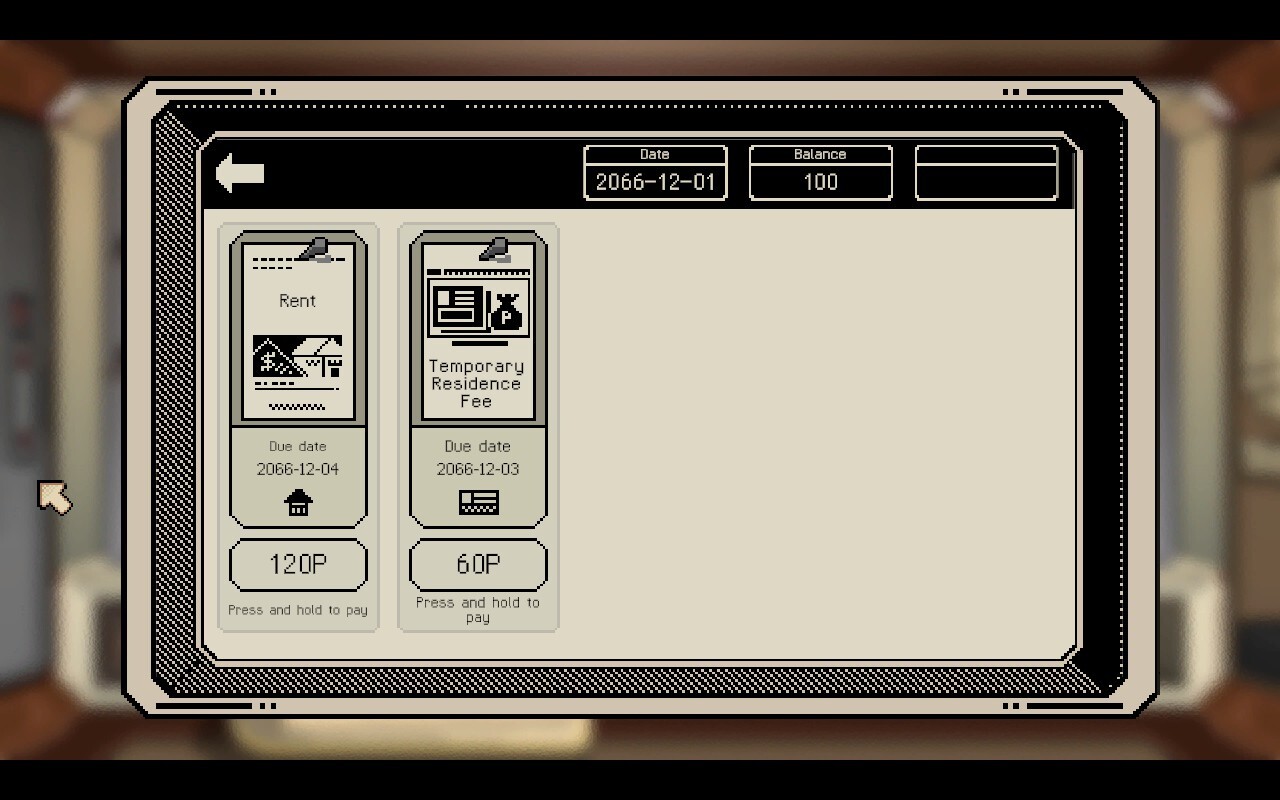
The discomfort, therefore, comes from the inhumane, yet rewarding practice of screening these candidates with impunity, so you’ll earn enough money to pay off your bills. You’re encouraged to disregard whatever misgivings you may have in the name of efficiency. That’s because any mistakes are penalized with a fee, and the bills are persistent, be it electricity, rent, or permits. And then there’s your family, who may struggle with paying their own bills. At one point, the town they’re based in was besieged by a flood, a catastrophe they were not prepared for. Safe from the impact of the disaster from the city, you can send your mother a not insignificant sum to tide through the emergency, or advise her to take up a part time job. In the end, there’s only so much compassion you muster; you may end up being tossed to the streets if you fail to pay your own rent.
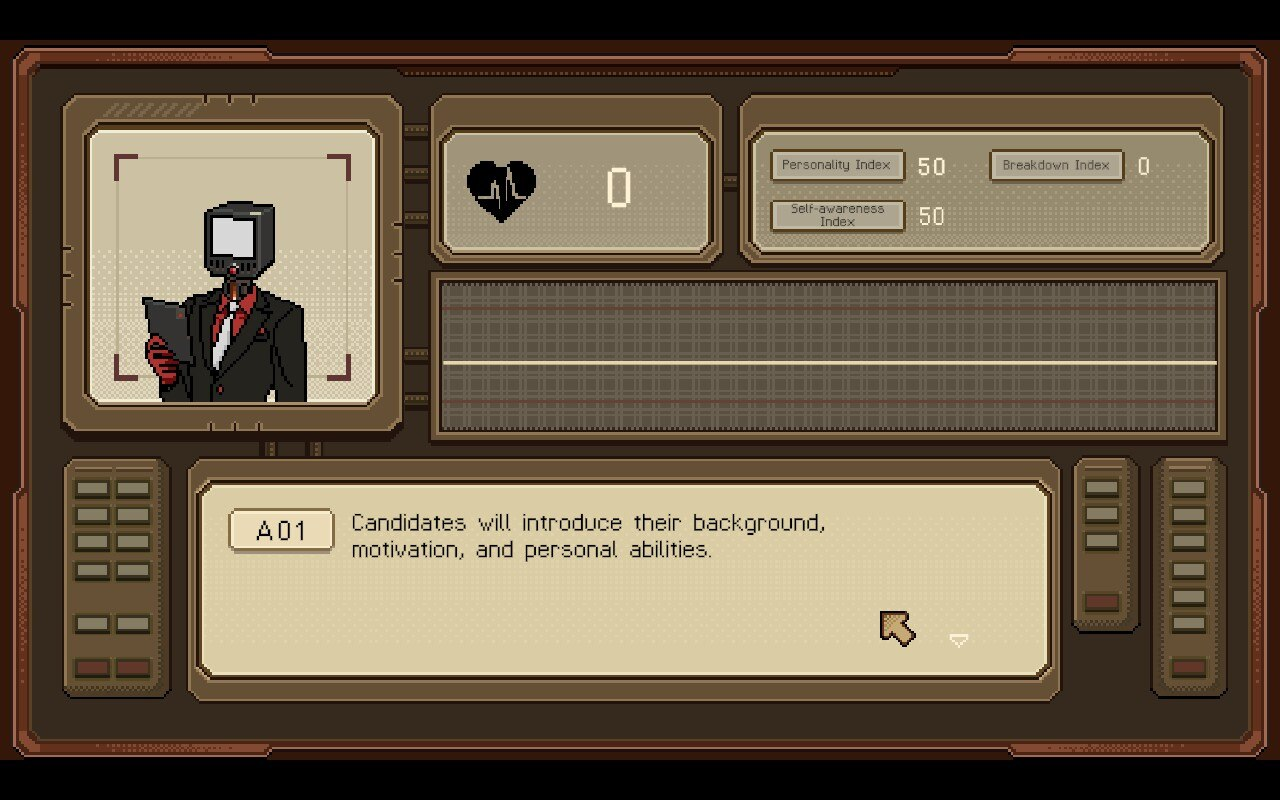
Thank You For Your Application deepens the dehumanization in this bureaucratic process with a few details. People are not referred to by their names, but their social number. Your colleagues are, for instance, known as T19 and K88, whereas candidates present themselves as figures like S45 or D31. Your manager isn’t human, but an intelligent machine with a screen as its head -surely a warning about the role of AI to come. You hear anecdotes about how these androids take up more managerial roles in the company you’re in.
At the end of the workday, you can’t leave your apartment, and your only company is a bot that constantly reminds you to pay your bills. A few candidates will even try to bribe you so they can pass their interviews, and you may be tempted to accept them if you’re toeing the poverty line. The entire experience is truly uncomfortable, and you’ll meet some individuals who will plead with you to let them pass the interview: immigrants with expired permits who want a job to stay in the country, but also need valid permits to secure a role; frustrated graduates who bemoan the brutal reality of finding work after applying for numerous interviews; and candidates who are too old to qualify for the role. It’s depressing because most of us have experienced these dehumanzing process ourselves, or have been made redundant due to the inexplicable whims of a board of faceless, capitalistic decision makers.
Despite its tirade against the often soulless hiring process, Thank You For Your Application doesn’t steer the conversation around labour towards any new, revelatory direction, instead opting to grind our souls beneath the sort of banal, recognizable indifference we already see in other people. It is, at heart, Papers, Please with a different wrapper, with the balancing act of choosing between conscience and survival a deeply familiar cycle. Then there’s the elephant in the room that I was hoping Thank You For Your Application would address, but never really did: that layoffs and rampant unemployment are also a matter of racial and queer discrimination. Many companies, from Meta to Walmart, have dismantled their diversity initiatives. Marginalized developers are disproportionately affected by these endless rounds of restructuring and redundancies, and face more obstacles in getting hired.
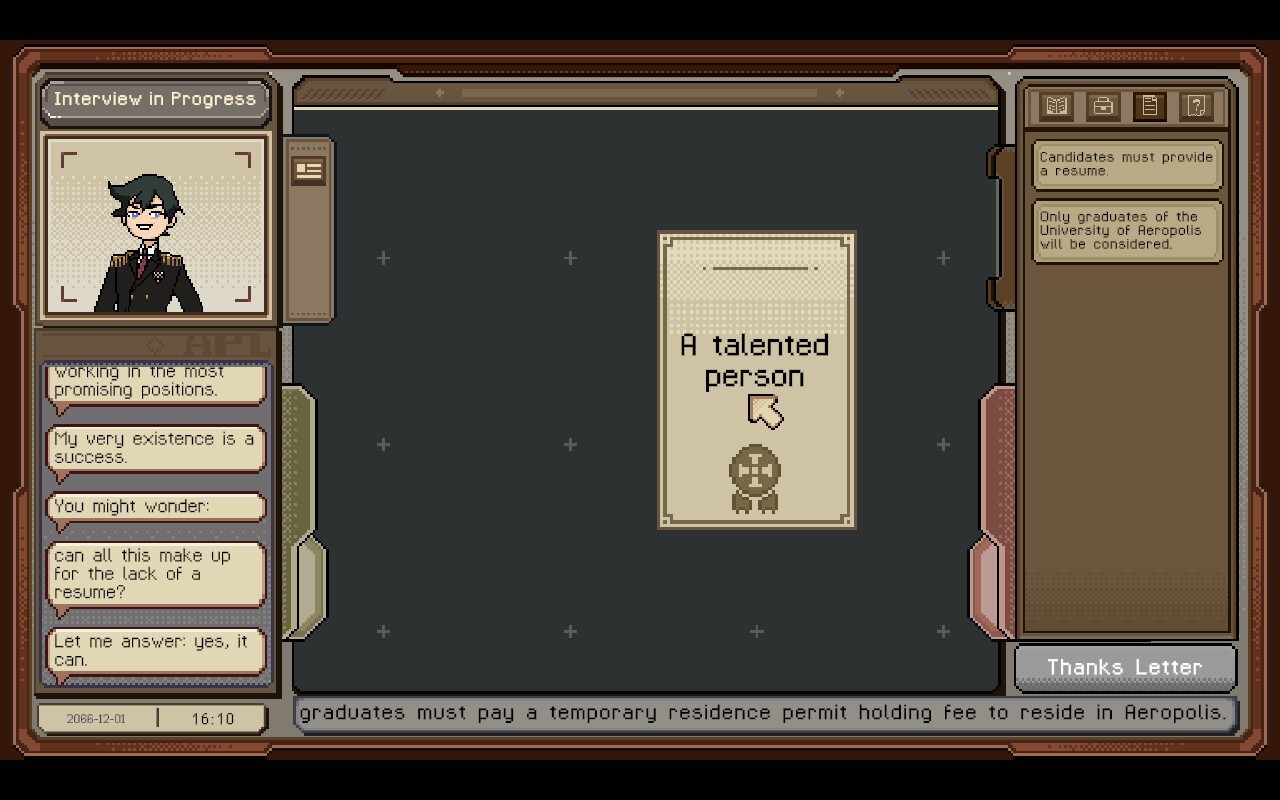
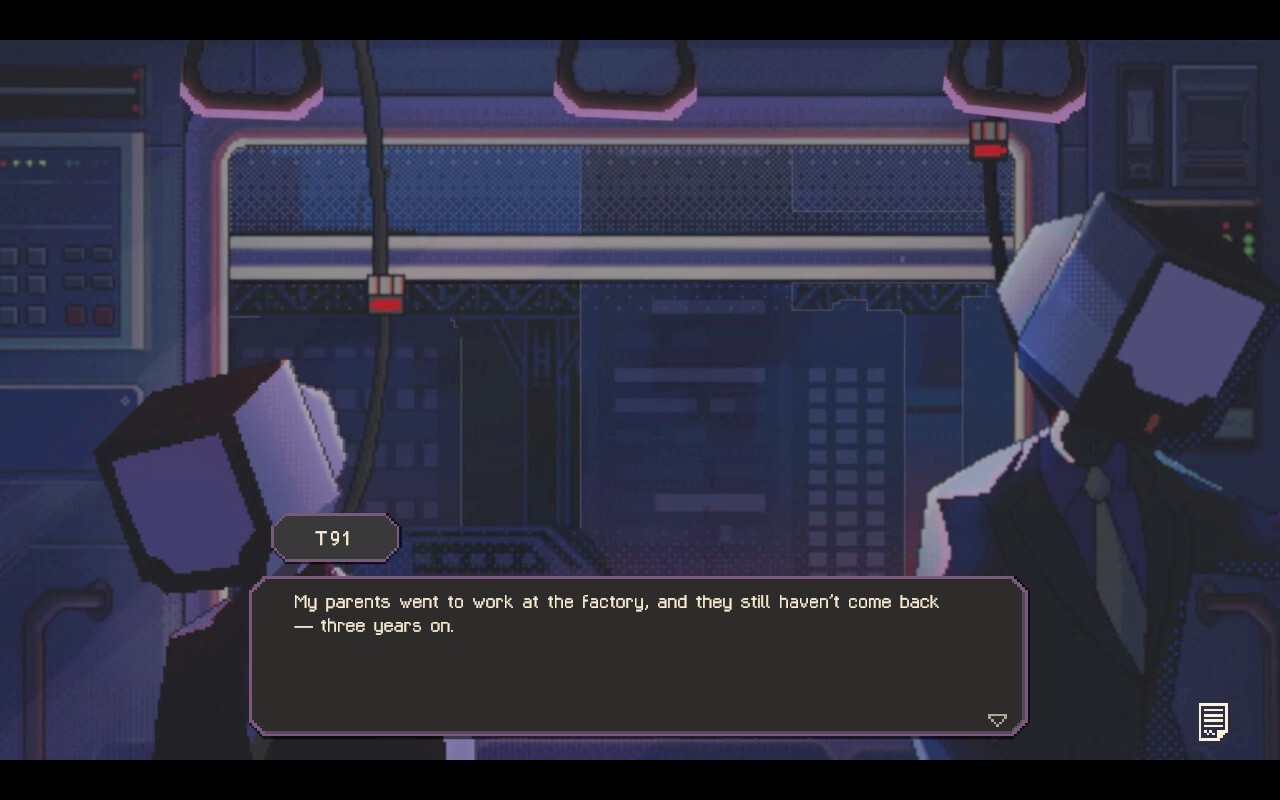
Then there are its narrative elements, including a larger tale around your character’s relationship with their family, as well as side story involving a colleague’s missing father, aren’t too memorable. Perhaps this is by design, an effort to anonymize these very human issues so as to ease the bureaucratic interview process, to flatten their problems so that they become a mere blip in your workflow. Instead, the moments that tug at my heartstrings the most are meeting the candidates who ask if you can bend the rules out of compassion: the candidate who shared that they wouldn’t be able to find another job because of their age, and the fresh graduate who, when realizing they were rejected, said, “At this rate, when will I ever find a job?” in despondence.
The unsettling reality that Thank You For Your Application presents about job hunting stings. And then you begin to gain an uncomfortable understanding of why many real-life recruiters and interviewers seem just as blasé about the hiring process as you are in the game; in the end, you, too, are merely several lines of text and an unrecognizable visage materializing on their screens.