
Here’s the thing about the Byzantine puzzles in We Were Here Tomorrow: there’s no brute-forcing the solutions. To my chagrin, I had deployed the usual manoeuvres when stuck at puzzles, such as tapping on buttons repeatedly, tugging at levers at random intervals, and peering into every nook and cranny in hopes that an answer will unexpectedly materialize. These efforts don’t really work in this co-op puzzle game, and the only way to progress through any headscratchers is to keep attempting them in brand new ways until something, somehow, clicks into place.
It can be painfully frustrating, but that’s all par for the course for We Were Here Tomorrow, the latest entry in the We Were Here series of co-op puzzle games, which are known for their immensely challenging puzzles. Like the previous games, We Were Here Tomorrow is designed for two players only, with solving its puzzles contingent on communicating clearly and coordinating solutions with your buddy, usually via a walkie-talkie, in order to escape your surroundings. This time, the goal is to find an exit within a futuristic, far-flung facility you and your friend have inadvertently found yourselves in, where some very elaborate science experiments that involve anti-gravity technology and manipulating the fabric of time are taking place.
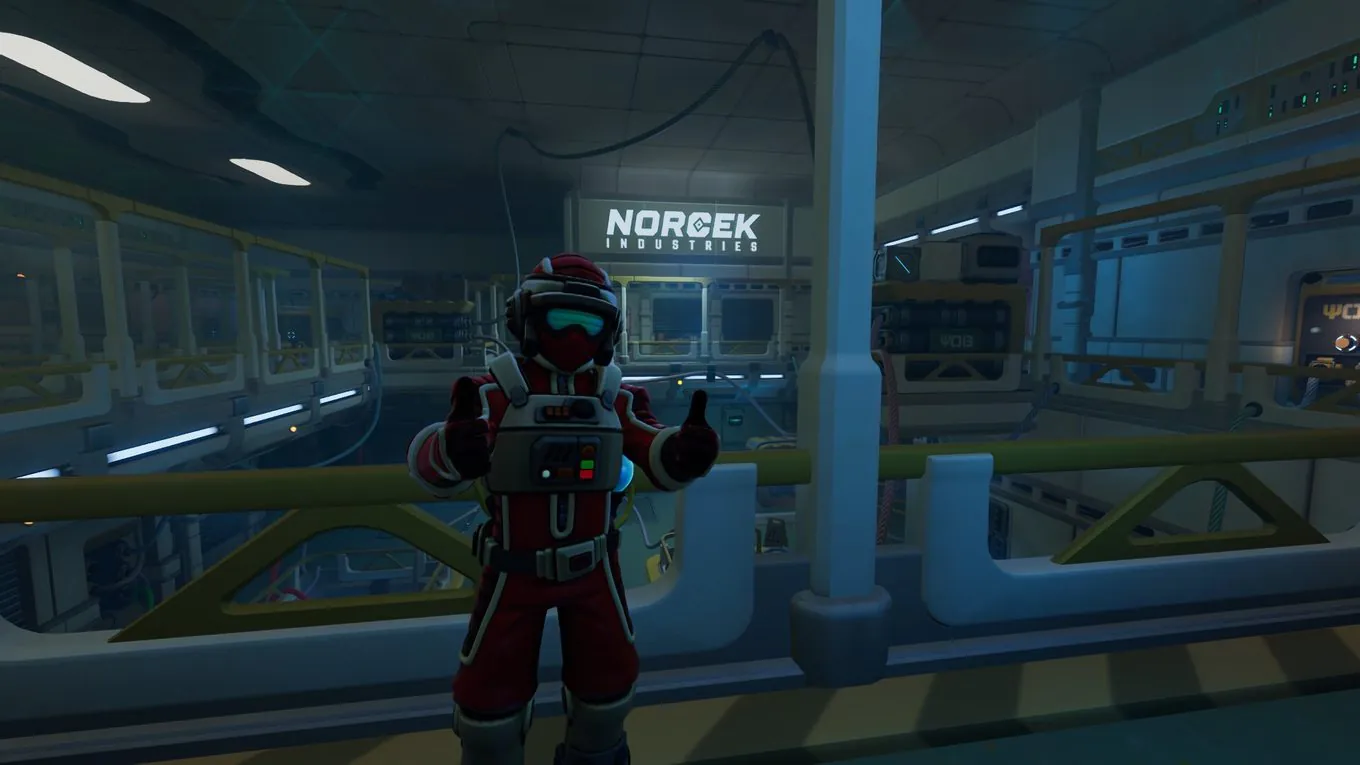
But while the puzzles may be challenging, they’re also thoughtfully and carefully calibrated. Solutions are a matter of logical deductions and observational skills, rather than having to conjure up some implausible connections, like picking up unrelated equipment in order to unlatch a door – none of that sort of odd issues that plague poorly designed puzzles in other games. Even the tutorials will simply toss you into the deep end, with We Were Here Tomorrow introducing you to the basics by tossing you and your partner into rooms filled with incomprehensible symbols and lots of levers. Its instructions are straightforward but scant: you can step on this giant button on the ground by walking on it, for instance, and you can jump to pull an overhead lever or clamber onto a ledge. But what do all these multiple screens do? What do pressing all these tantalizing buttons entail? And why are there so many colourful cables poking out of the odd contraption near the door? The rest is up to you and your partner to figure out.
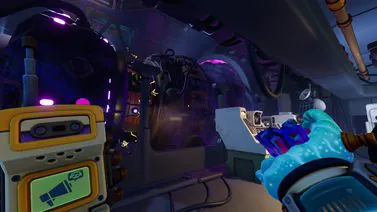
Even though they can be infuriating when you can’t crack them, deciphering these puzzles is immensely satisfying once you understand how they function. Take one of the game’s earliest puzzles in the tutorial; my partner and I were ushered into two separate rooms, and she will need to push some buttons, labelled with several symbols, in sequence. The same symbols are being displayed on the screens in my room, which she has no access to, and I’ll need to describe what they are to her. However, these images are not the easiest to describe, as they aren’t just regular circles, squares or triangles. Instead, they are a complex amalgamation of shapes and elements, much like the ink blots you see in Rorschach tests where very precise language are necessary. One symbol, for example, may resemble an eyeless Cthulhu, and another may be a jellyfish with several splatters emerging from its center. Thus, thorough, frequent communication is of the essence, and you’ll end up talking and collaborating with each other a lot to solve these problems.
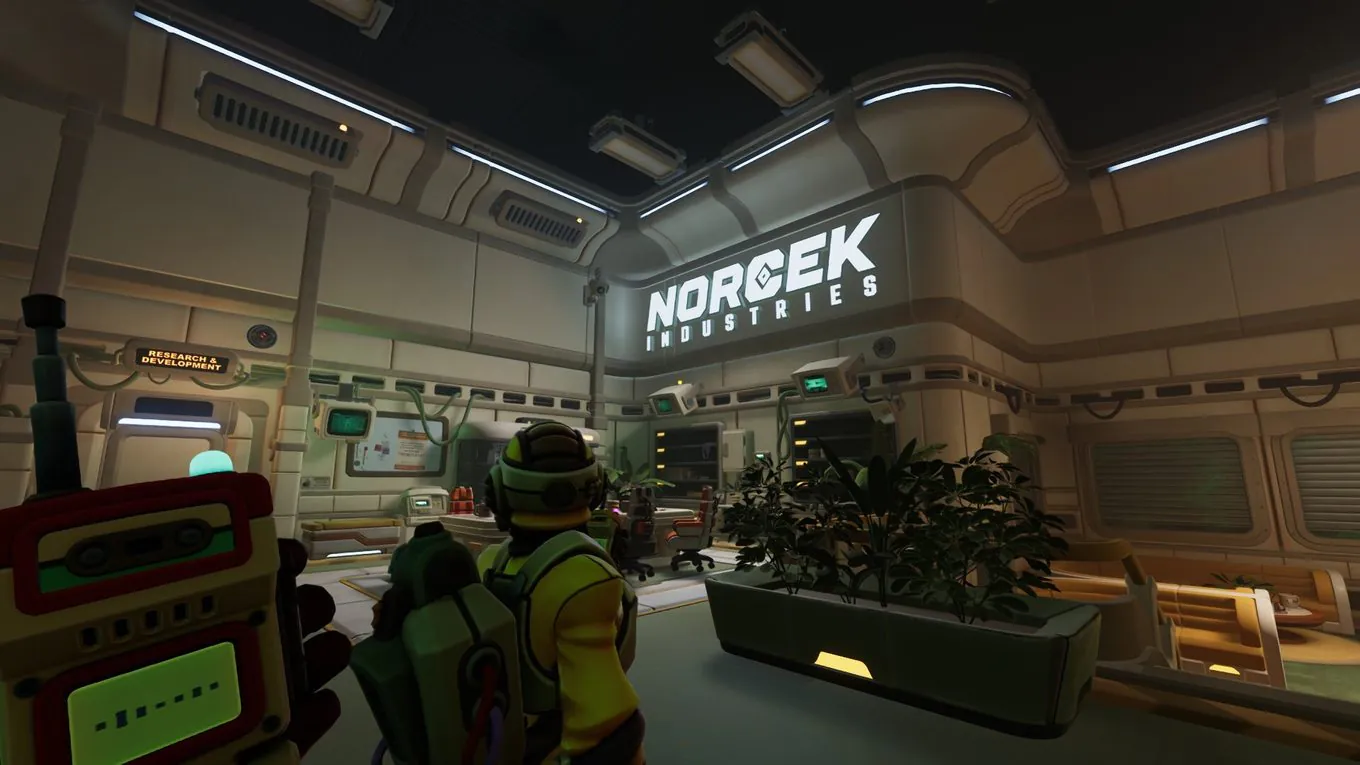
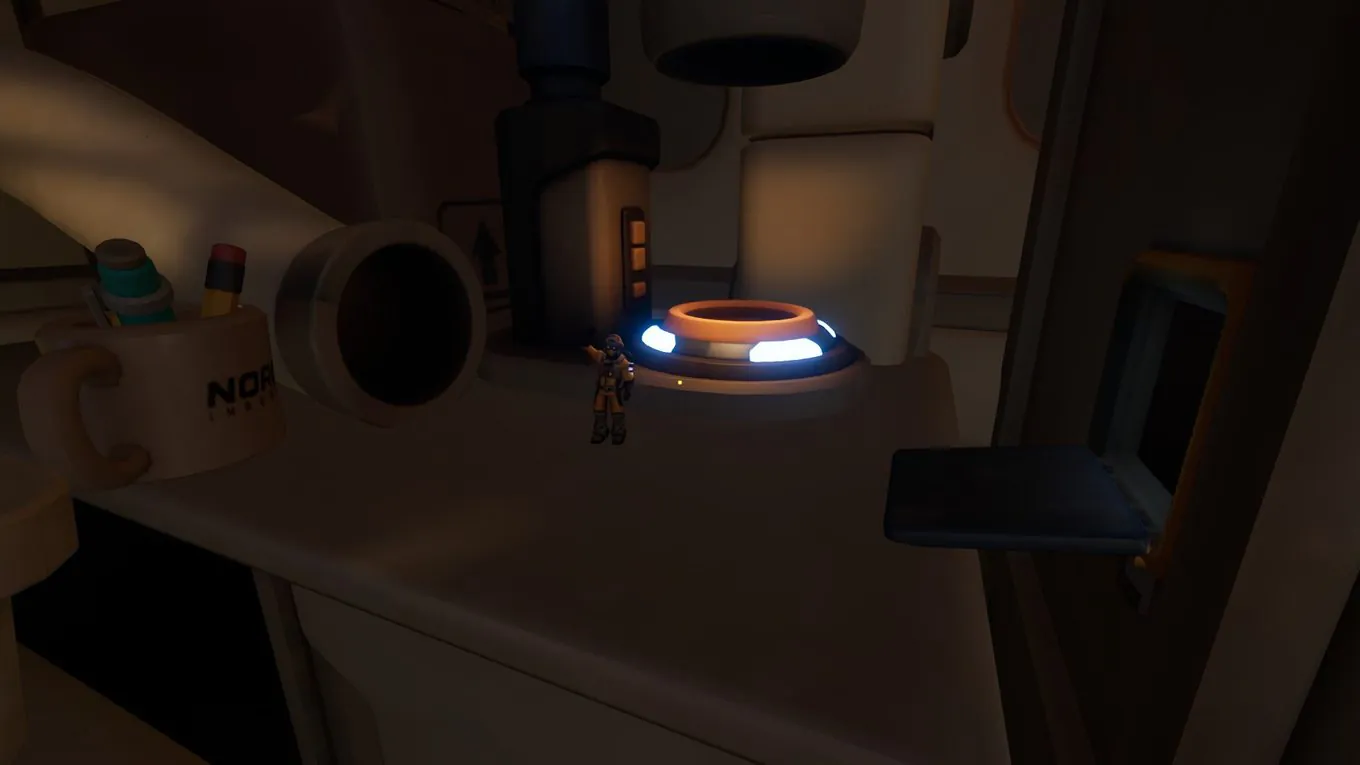
What complicates matters, however, is the walkie-talkie, which only allows one player to speak at a time, preventing either of you from talking over one another. While this doesn’t pose a significant challenge when you’re in the same room as the other player and can speak to each other freely without the device, using the walkies does slow down conversations, leading to some frustrating moments when you’re physically apart. This becomes particularly pronounced in another puzzle we encountered, in which my partner was being shrunk down to a very diminutive size by a machine, so she could complete some miniature obstacle course. In this case, her voice has been distorted into a high-pitched squeak, which prevents me from comprehending what she’s trying to tell me (to be fair, I was also laughing way too hard to pay any sort of attention). In the end, we simply resorted to chatting outside of the in-game comms in order to complete the puzzle. Use the in-game system if you wish to dial up the challenge, I would say, but given the difficulty of the puzzles in We Were Here Tomorrow, I expect more players will end up chatting via Discord instead.
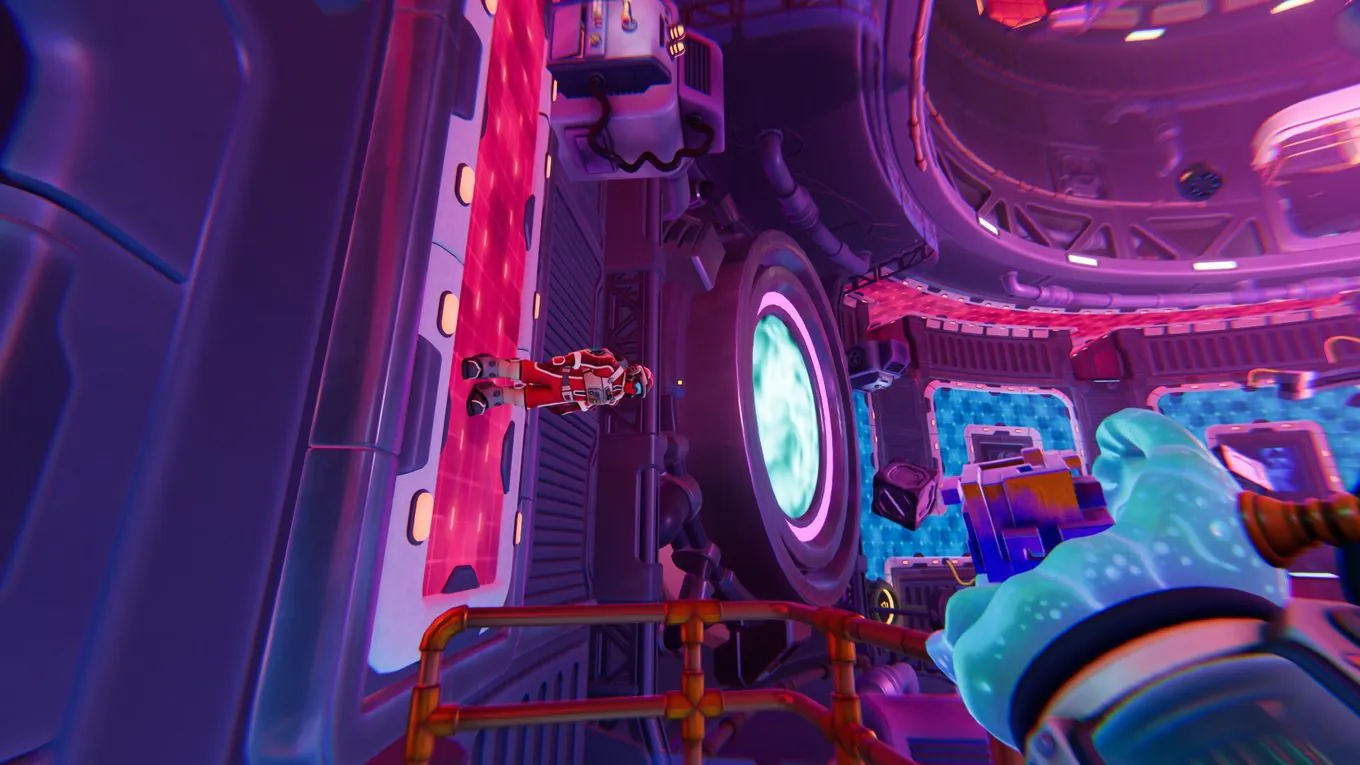
Adding a wrinkle to these challenges are the specialized guns you can pick up in a lab – and there’s one for each player to wield. They have their own uses and properties; my gun can shoot blobs that coalesce into a cube, which can then be used to climb to higher, hard-to-reach platforms or hold down pressure plates. Meanwhile, the other gun my partner uses can produce a long, rubber hand that can pull levers or buttons from a distance. In a later chapter, these guns are also upgraded with additional capabilities. I won’t spoil what these are – discovering their quirks can be quite gratifying – but they add a whole new dimension to the puzzles, while forcing both players to make ample use of these features to their fullest extent to solve them. My suggestion? Just shoot these guns liberally, experiment a little and see what happens; you may unlock something that helps you solve these finicky puzzles.
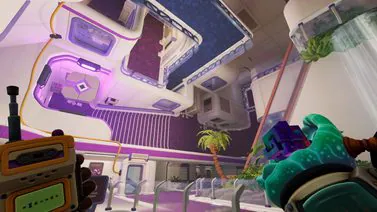
Complementing the puzzles are the environments, and We Were Here Tomorrow boasts some of the most dazzling set pieces to marvel at. In between levels are trams you can ride from one station to the next, and peering at the arctic landscapes beyond the facility can feel as exhilarating as a roller-coaster ride at a theme park. Some walls, too, can be traversed on, thanks to the laboratory’s anti-gravitational technology, and it’s always whimsical to spot your partner treading on ceilings across rooms. Then there are offices that are designed in this utterly topsy-turvy manner, with clues and additional bits of lore strewn across discrete areas. Sticky notes and computer terminals hint at what happened to the missing crew in the facility, even though, like the previous entries in the We Were Here series, the plot is just as threadbare, and perhaps only appealing to the most die-hard of We Were Here fans. In subsequent levels, the rooms become a sprawling labyrinth, and its smallest details – a hidden penguin, a hilariously doodle on a post-it note, emails about petty office politics – makes exploration an utter joy.
Ultimately, the puzzles remain the main draw in We Were Here Tomorrow. Achieving a breakthrough in a seemingly impossible obstacle has induced a surge of pure dopamine in us that we haven’t quite experienced in other puzzle games; upon solving one extremely tricky puzzle, we simply had to pour out some wine to celebrate (and I got slightly tipsy). At the same time, We Were Here Tomorrow doesn’t offer any in-game hints if you’re hopelessly stuck, and you can’t wander into another room to tackle another puzzle; you simply have to deal with what you see in front of you. Your veins may pop from the red-hot sensation of frustration, let me warn you first, especially when you are potentially spending hours, or even days across several sessions, on a singular obstacle.
If you’re a hardcore puzzlehead who enjoys tackling some of the most cleverly designed puzzles the genre has to offer, you’ll find plenty of reasons to stay and bash your head against the wall in We Were Here Tomorrow. There’s online matchmaking if you don’t have a friend to play this game with, but I would suggest grabbing a patient friend who is willing to devote hours to being completely stumped by some of the game’s most strenuous bits with you. I can’t imagine playing this game with a less-than-communicative partner, after all.