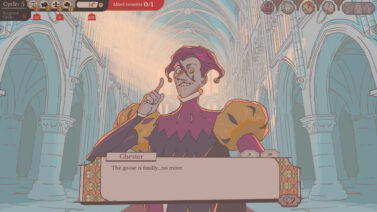
There’s a goose loose aboot this hoo… well, public baths, actually. It’s blocking the entrance and Chester the jester, whose reputation precedes him (and by reputation, I mean aroma), is deeply concerned. He hasn’t bathed in 15 days for fear of being attacked, so he has come to me, his god-anointed (and, might I venture, delightfully scented) sovereign, to ask for help. Verily, I hath sent a knight to royally fuck up this quarrelsome waterfowl. Problem is, on returning from her mission my knight informs me that the goose was just protecting its eggs, so we need a change of plan. I do what any right-thinking king would and instruct that the goose be left alone, and then invite Chester to join my Round Table. Another satisfying day’s work done.
Sovereign Tower is an anarchic blend of management sim, visual novel, and dating simulator (it’s a pretty realistic simulation: even though I was was the one that gave her permission to have a cat, my flirty ‘meow’ is met with confused silence from Angelica, one of the knights in my service) and feels like a charisma-soaked evolution of Reigns, Nerial’s Tinder-inspired yes/no royal decision maker from 2016.
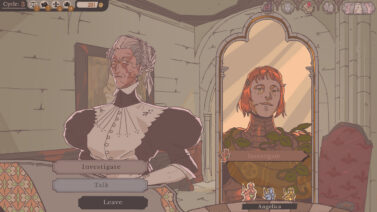
The game has two primary phases, which themselves take place within cycles. In the Audience phase you’ll receive court visitors from across the land and listen to their problems – some big, some goosey. You might have a plea from a local town to recover an artifact stolen by a magpie, a request from sailors to improve the local roads in order to bolster trade, or a good old-fashioned appeal to kill a roving monster. Your guests will also include would-be heroes looking to join your Round Table, useful individuals that you can employ elsewhere, a courier who brings you random quests, and even people who seek to dethrone or kill you. Your advisor, Arlin, will help you with these matters and more.
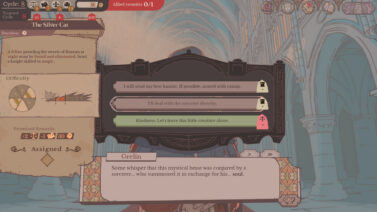
Once you’ve decided who you’ll help and who you’re happy to offend, you can leave the receiving chamber and move onto the Round Table phase. Here you assign knights to the quests you have accepted (or have been sent), attempting to match their particular skillsets to each mission.
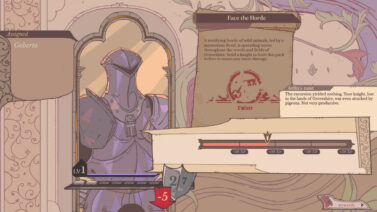
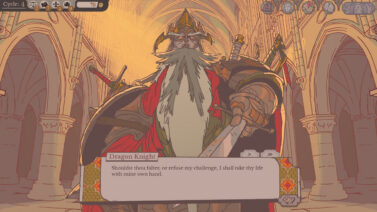
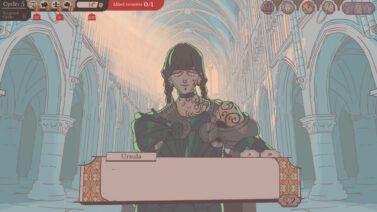
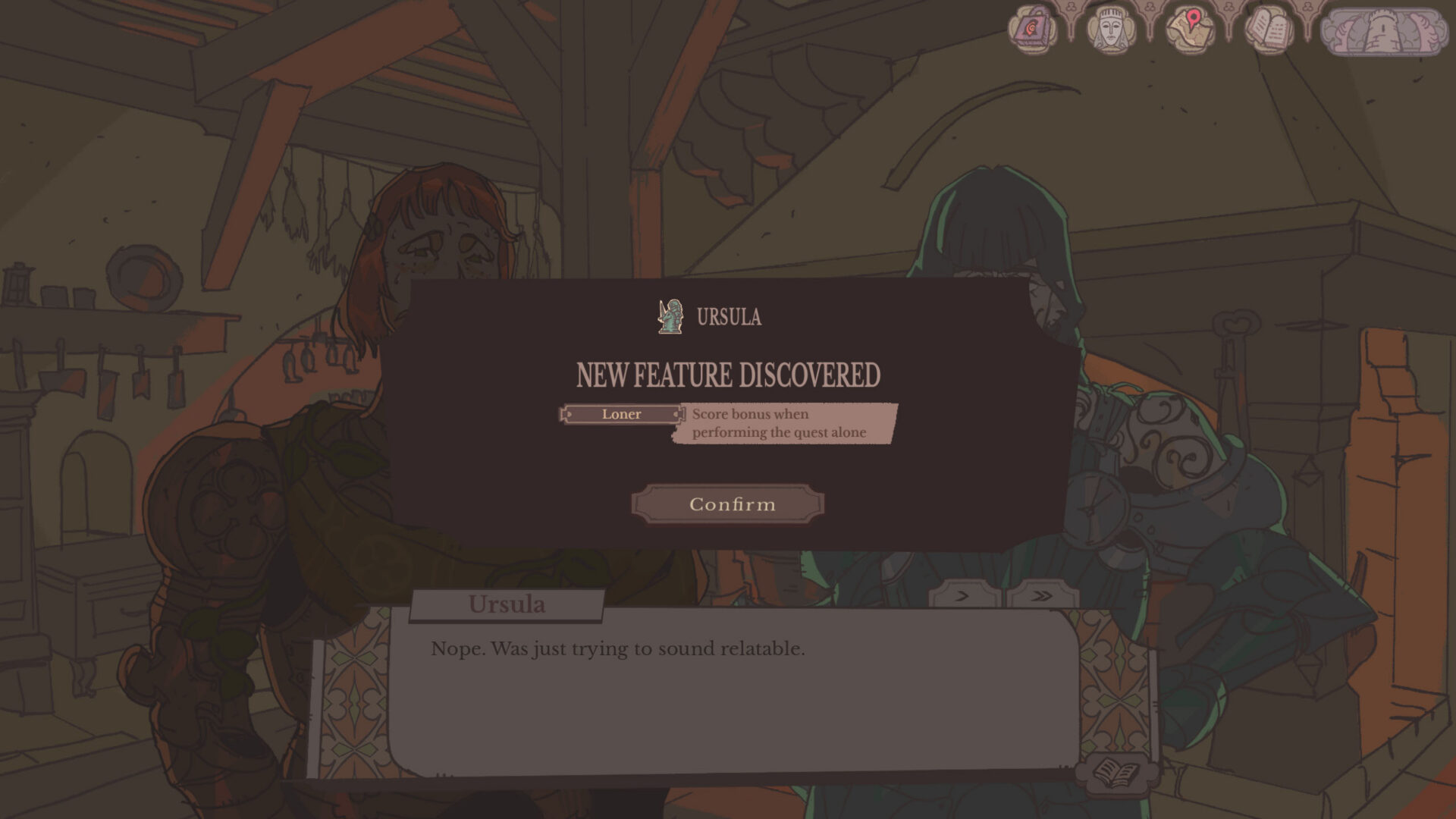
Every knight has various attributes (naive, perhaps, kind-hearted, or jaded) which affect how they will behave during a quest, as well as its potential outcome. You must work out exactly what effect they have through trial and error, though highlighted words in quest descriptions helpfully nudge you in the right direction. Knights also have preferences, which won’t directly impact performance in a quest but will factor into their loyalty towards you – if their affinity drops too much, they could leave the Round Table, but if you can increase it enough you could gain new dialogue options (potentially ones even more impressive than making animal noises at women). If you assign well, knights will succeed and level up, allowing you to add a point to one of their basic stats.
Gwenden, for example, isn’t into relic recovery, is arrogant, and is afraid of the dark, so best not send him to explore that cave to retrieve a scroll. Angelica, meanwhile, loves cats and favours diplomacy, so would be well suited to resolving arguments without resorting to force. I’ll save that for Goberto, a perpetually armoured cliff of a man who gets a bonus for being equipped with cheese. Fill his bag with Wensleydale, point him towards the entrail-eating rabbit that’s been terrorising local villagers, and witness history being made.
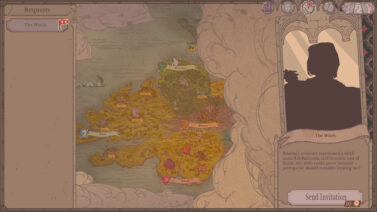
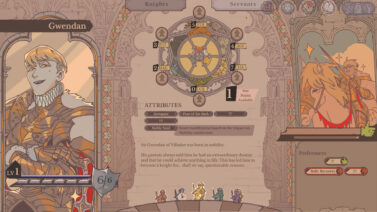
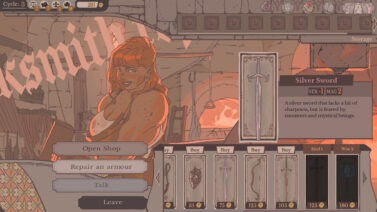
Along with dairy products, you can equip your knights with swords, shields, and even steeds. All can be acquired from quests, but the first two can also be made in your forge. Crafting weapons comes at a price, however, and you only have limited funds from taxes and quest spoils to deploy – you might choose to spend some of that on making problems go away during the Audience phase, and you’ll need to repair your knights’ armour in between quests to ensure they don’t cark it while adventuring.
The forge is unlocked by recruiting a servant during the Audience phase, and then speaking to the Lady of the Tower, a talking statue that protects you against threats, is much easier to flirt with than Angelica, and is also the key to many other rooms. There’s a witch tower for brewing stat-enhancing potions, stables for breeding steeds, a training ground for improving skills, and the Intendancy – once unlocked you can chat here to the stern-but-nosy Lady Alwena and get her to investigate your knights. She can carry out one investigation per day, and will reveal an attribute or preference of your chosen knight, allowing you to (hopefully) make better-informed decisions when assigning them to quests. You might also find out more about them simply by chatting between quests, of course, and their various quirky personalities make doing so wryly amusing.
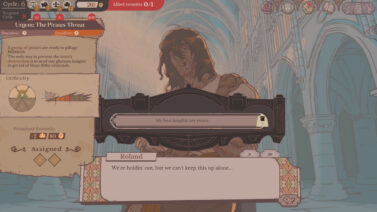
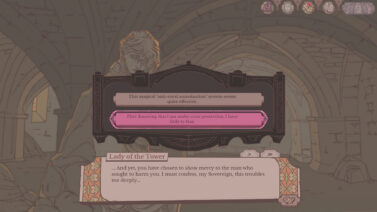
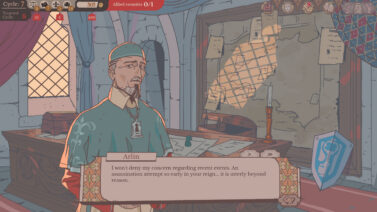
Your choices around quests will define four Sovereign archetypes: audacity, wisdom, tyranny, and kindness. You must also juggle the satisfaction of four societal classes: the people, the nobles, the merchants, and the scholars. As with so many other aspects of this game, boosting class satisfaction and your archetypes will unlock additional dialogue options, but it’s rarely possible to please everyone and you might not even have the resources (or desire) to help every person that asks it of you. Wild Wits Games acknowledges this messy truth by reserving some dialogue options that are unlocked according to how far apart certain Archetypes are from each other.
It’s a huge amount of fun to clatter through the game’s moat-deep decision trees, but Wild Wits Games saves its trump card for indecisive or completionist players who want to explore every possible outcome without having to restart the whole game. It arrives in the form of a disconcerting, time-manipulating demon hiding inside a padlock in your castle’s basement. By using this cursed security device you can rewind to any previous cycle within the chapter you’re playing and make different decisions, this time armed with all the knowledge you had previously acquired, including juicy info on your knights and all of your Sovereign Archetype progress. The short demo doesn’t provide much opportunity to explore this intriguing mechanic, but using it will unlock even more dialogue options and it’ll be fascinating to see how richly layered it could make playthroughs.
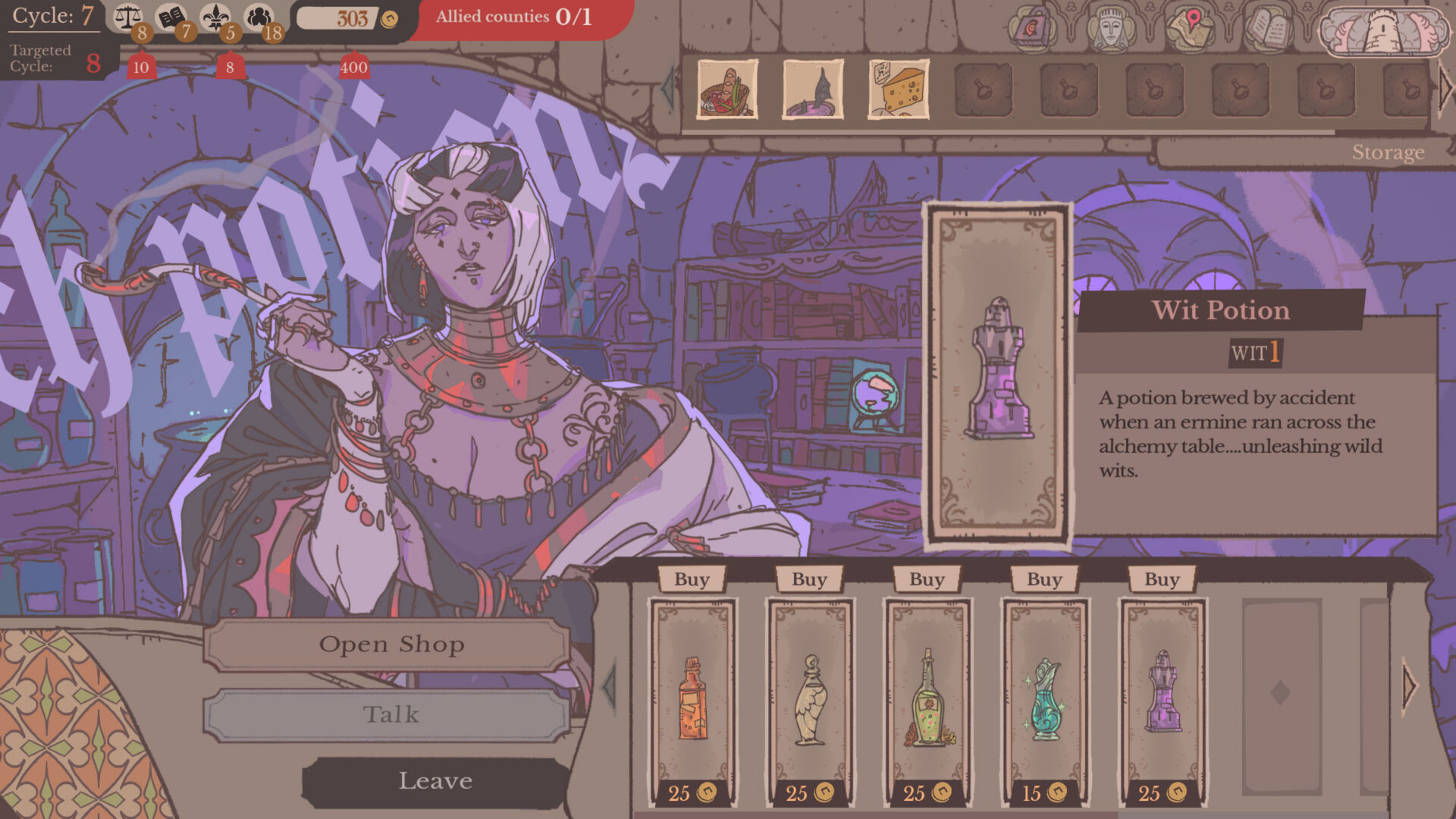
Sovereign Tower makes a strong impression on first contact, then (not least because of its gorgeous art design, which sits somewhere between medieval ink on parchment and Art Nouveau), and benefits from a self-aware tone that seems to simultaneously rib the genres it sits astride while also professing its love for them. With any luck I’ll be a little better at flirting by the time it’s released.