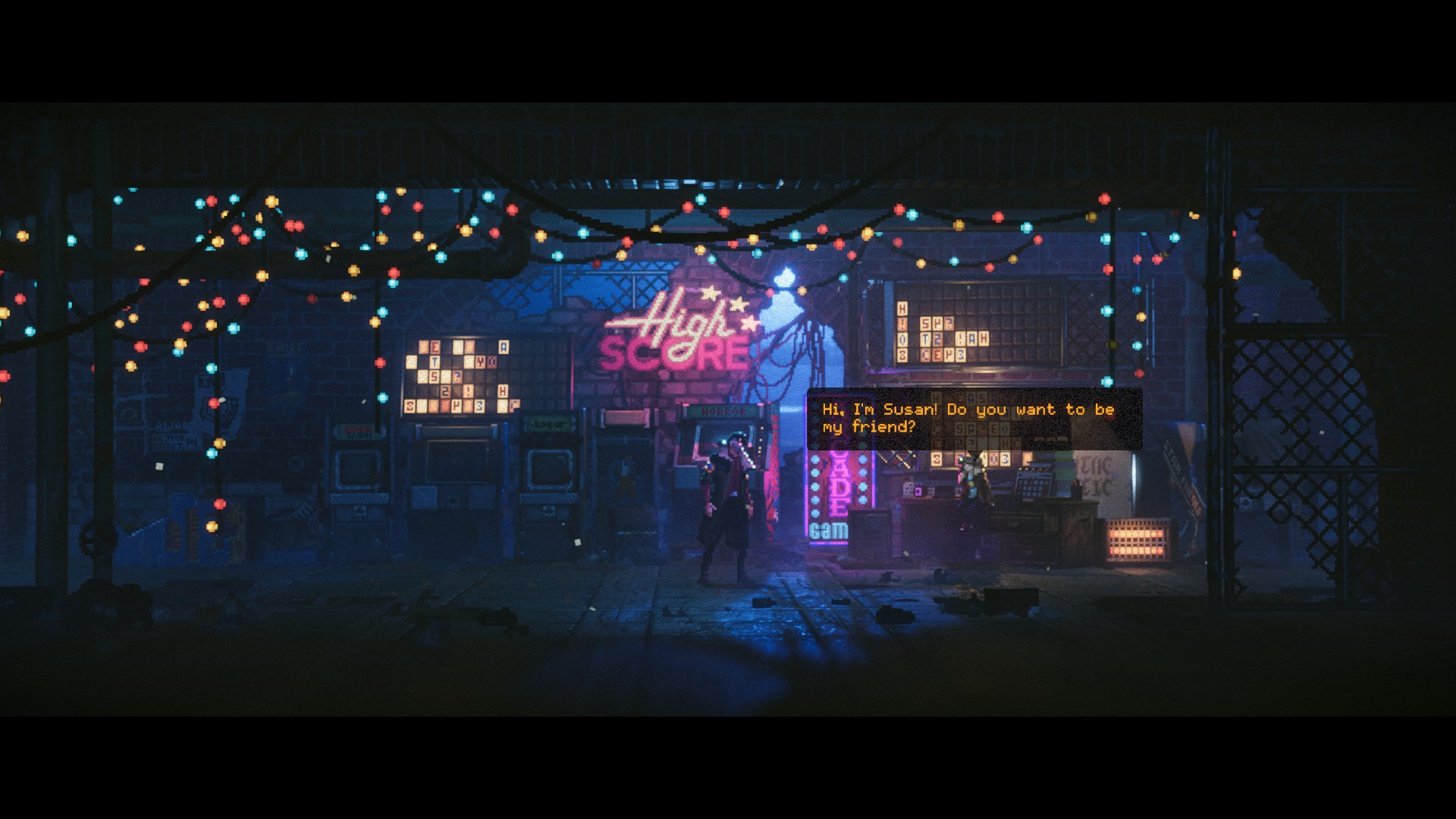
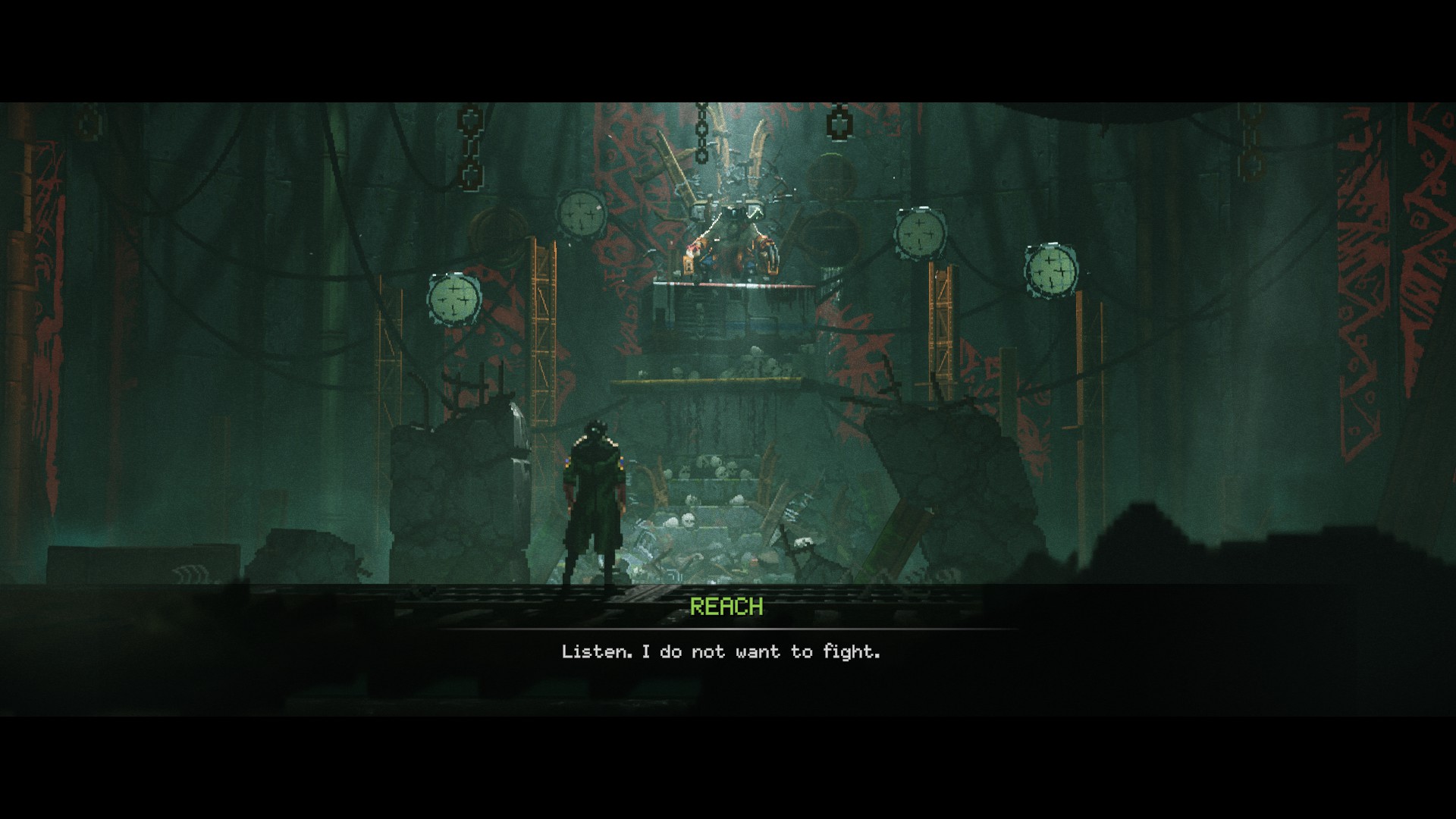
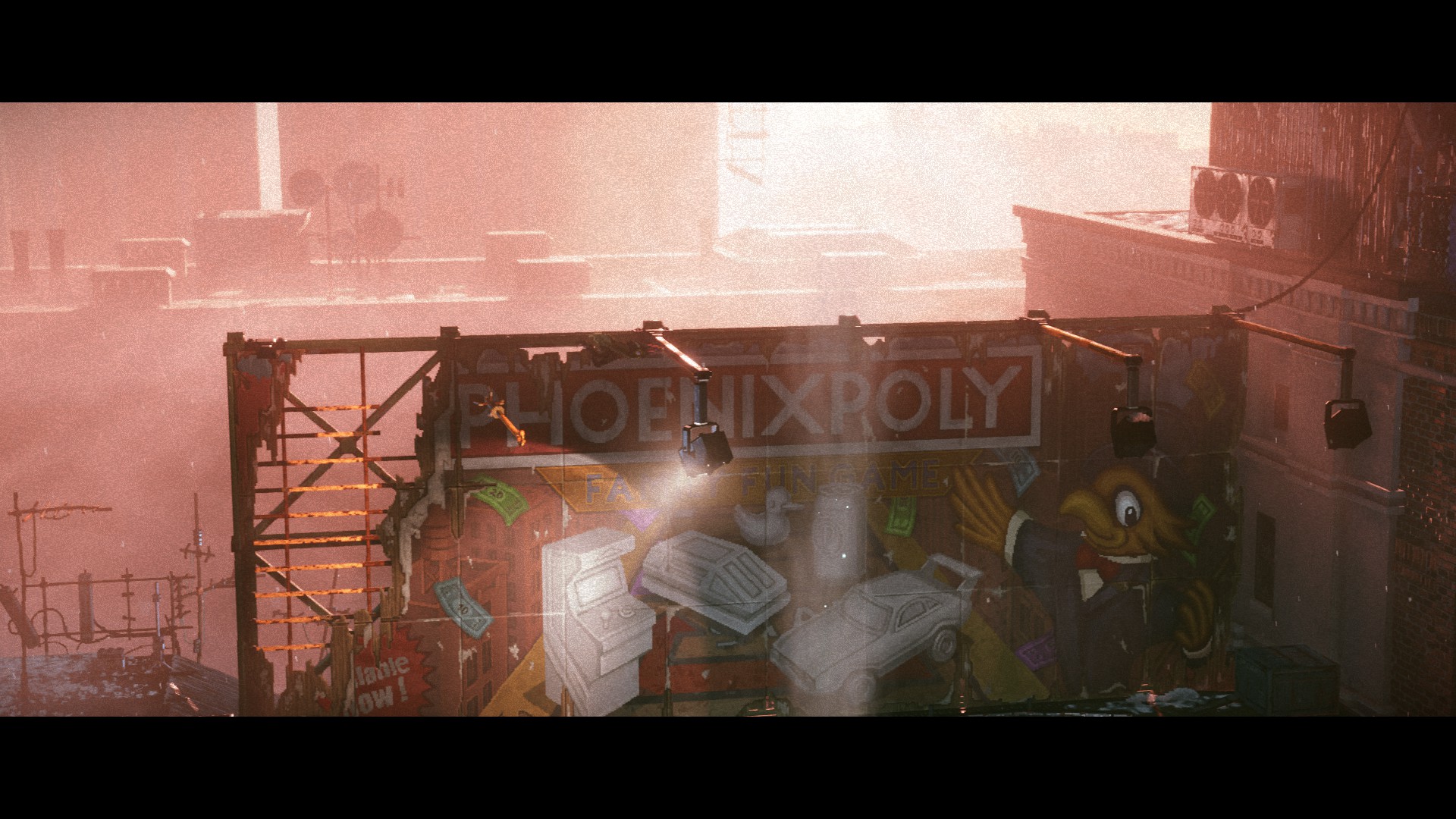
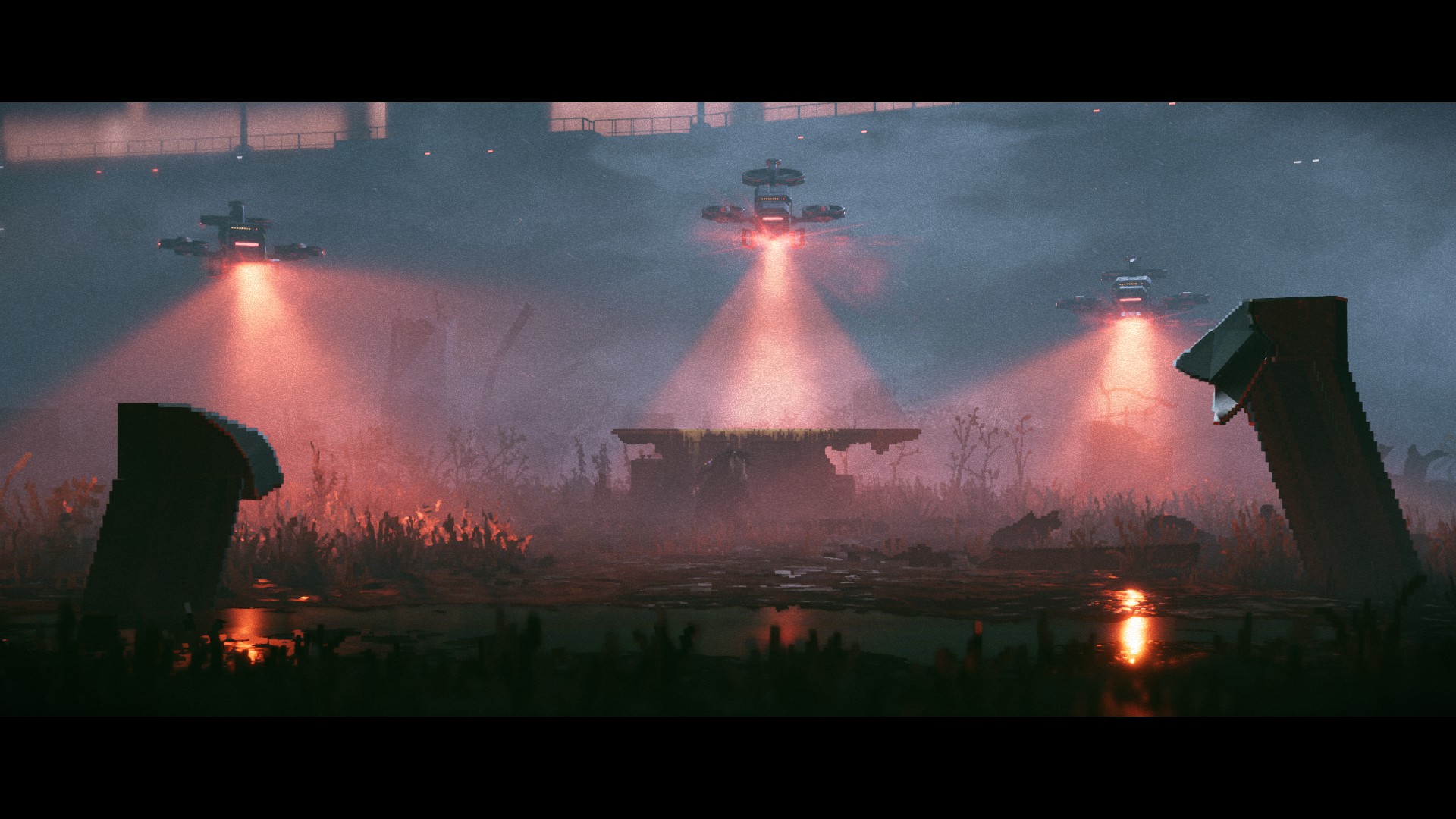
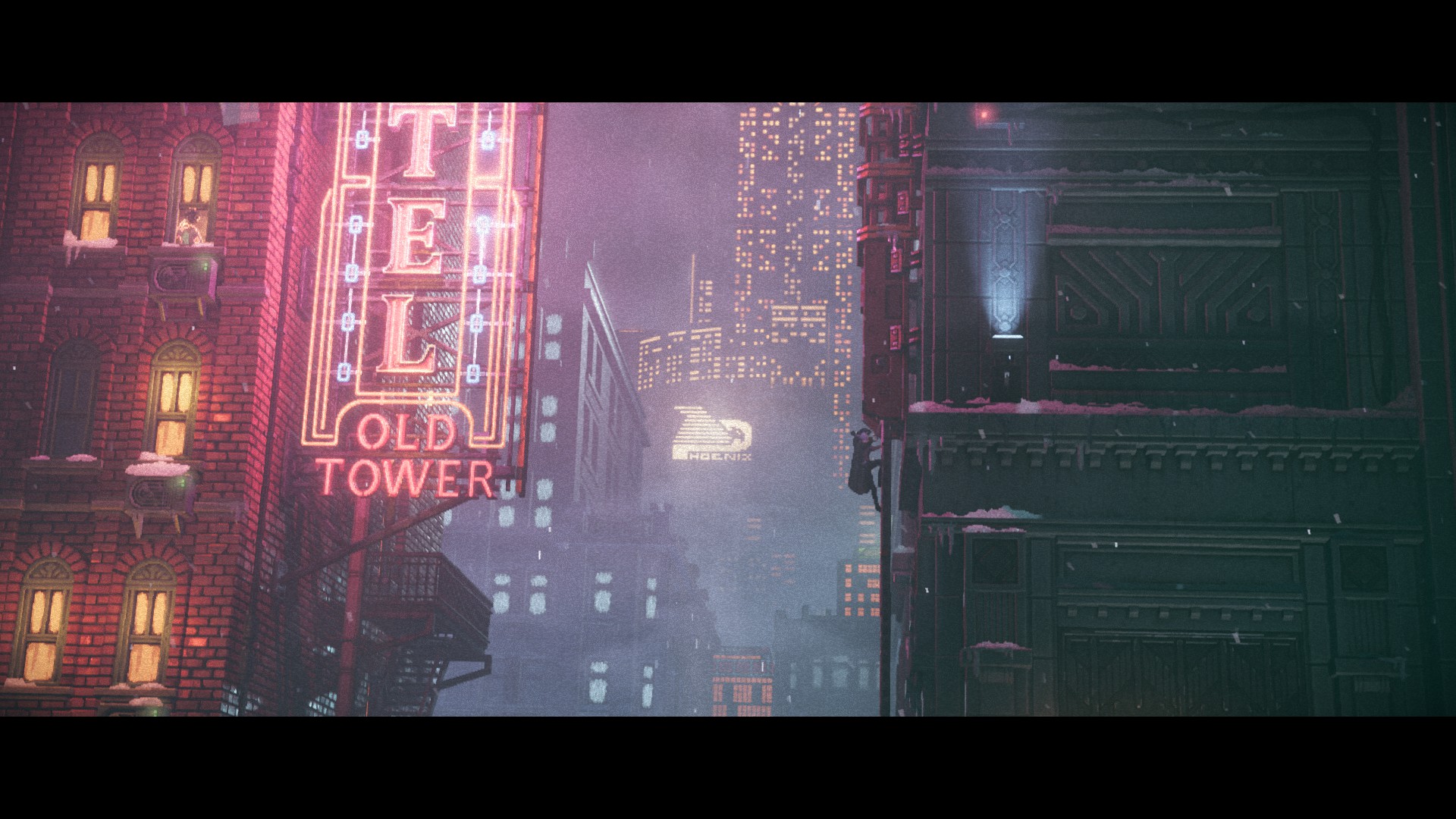
An eye-catching presentation is paramount in any work of art. It’s a way to get somebody’s attention and lure them into a new world for discovery. Replaced understands this, it’s an artistic marvel that blends the hand-crafted medium of pixel art with modern visual effects in illumination, particles, and shadows. There’s not a single environment and frame in the game that isn’t eye-catching.
After eight years of development in which the project saw multiple delays, in part due to the Russo-Ukrainian War, which prompted developer Sad Cat Studios to relocate from Minsk, Belarus, to Cyprus, the labor behind Replaced is tangible in every one of its visual corners. Yet, almost every other element falls short in comparison, with the overall promise being mired in tedious platforming sections, uneven checkpoints, shallow combat, and a story that can’t escape the genre’s tropes, despite its enchanting wrapping.
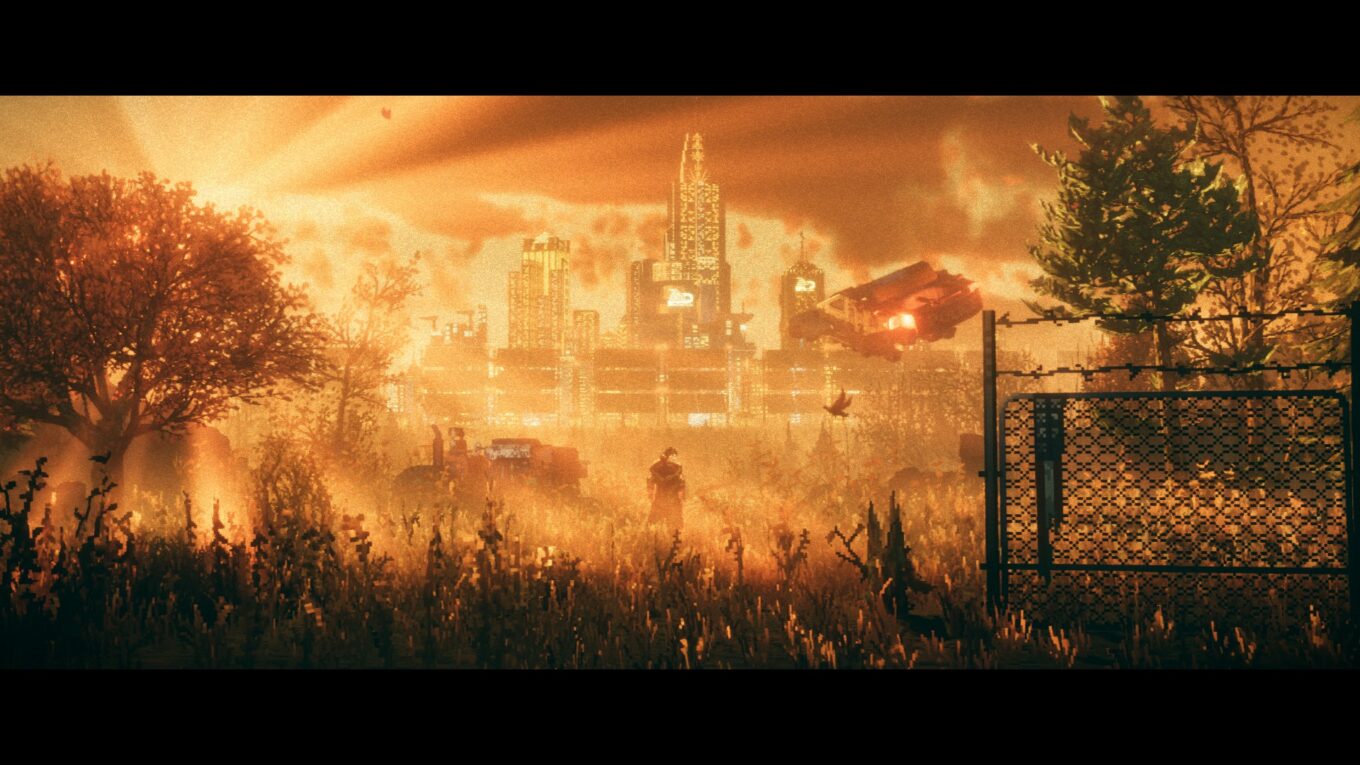
Replaced takes place in an alternate depiction of the United States in the 1980s, which was reshaped by a nuclear catastrophe. You’re situated in Phoenix-City, one of the biggest strongholds of the Phoenix Corporation, the entity behind Reach. This all-encompassing AI ends up being trapped in a human body against its will, which is soon after misplaced and on the run, having to retrace its steps back to the laboratory to try and fix the situation.
Taking cues from the likes of Altered Carbon and Blade Runner, the world of Replaced is dystopian through and through. The grandiose status of the city is immediately put into contrast with the outskirts of the wall surrounding it, which is inhabited by raiders and only a few remaining survivors who are trying to maintain a community away from the security and the financial net of the wealthy bunch.
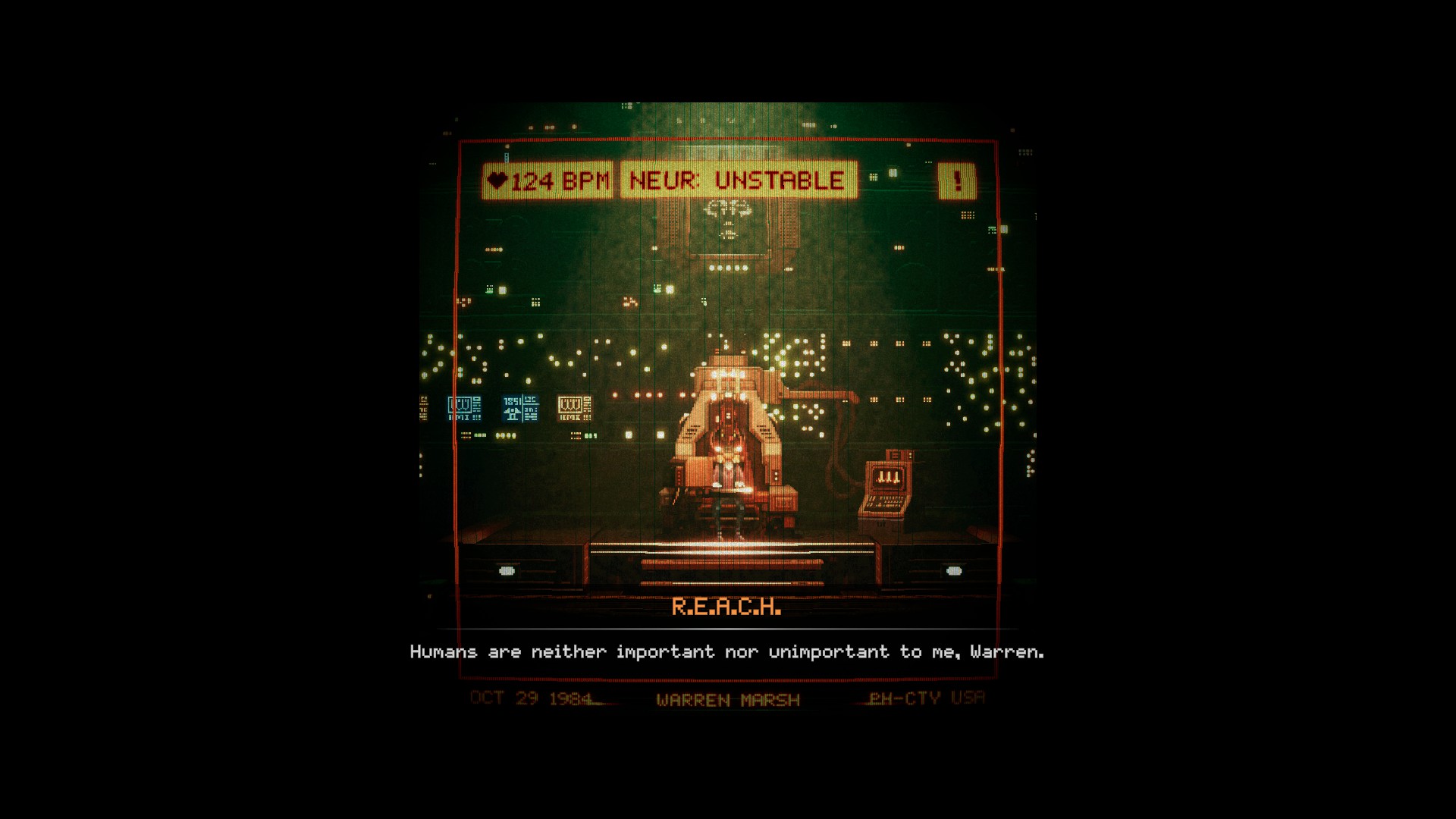
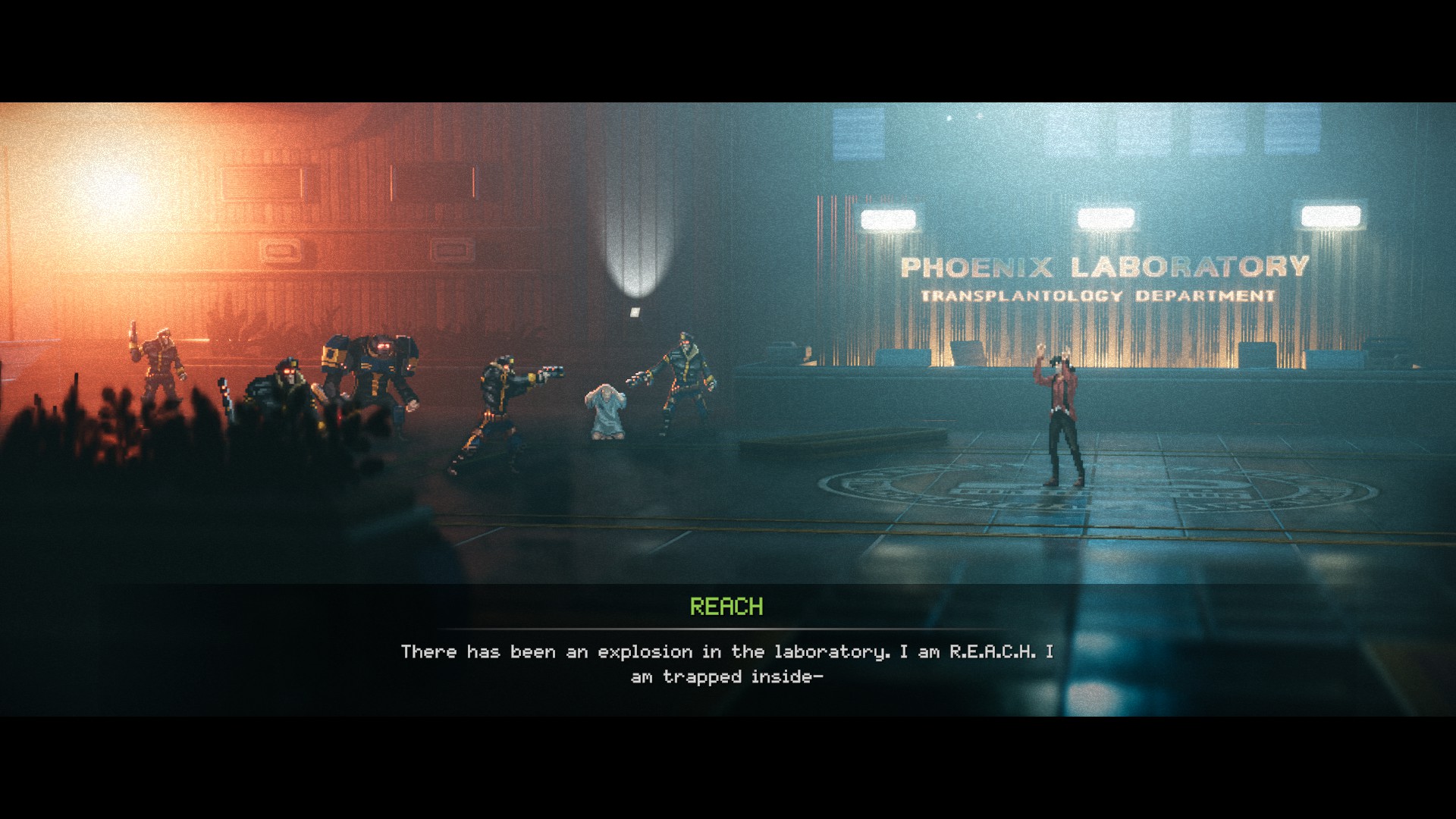
If you’re familiar with the genre, you can expect to encounter many sci-fi tropes. Experiencing the story events through the lens of Reach, however, makes for an interesting change of perspective. At first, Reach follows its ingrained protocols, instinctively looking for police patrols because “cops help people, and we need help,” and then being surprised when the same troopers end up assassinating people. “The standard protocol says the troopers must help the survivors, not eradicate them,” Reach claims at one point. “There must be a fatal error.”
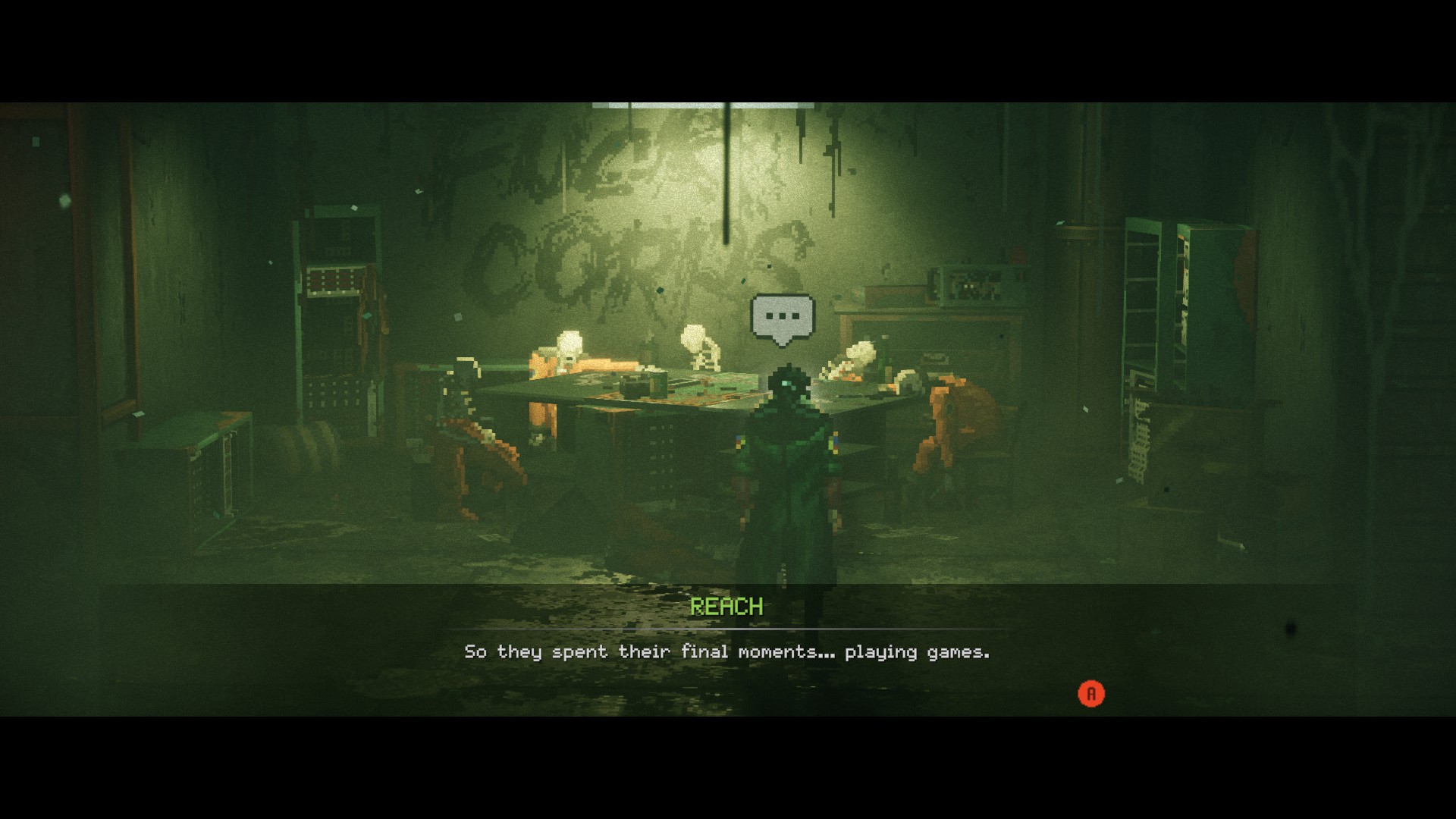
As time progresses, Reach becomes more self-aware of its role in this situation, basically puppeteering a person’s body and doing anything that’s necessary to survive. As the AI says after killing dozens of enemies, survivability is the mission’s top priority. Over time, and without veering into spoiler territory, Reach starts being sympathetic toward the lives of the people outside the city, understanding their struggles and fostering an attachment to key characters you meet along the way.
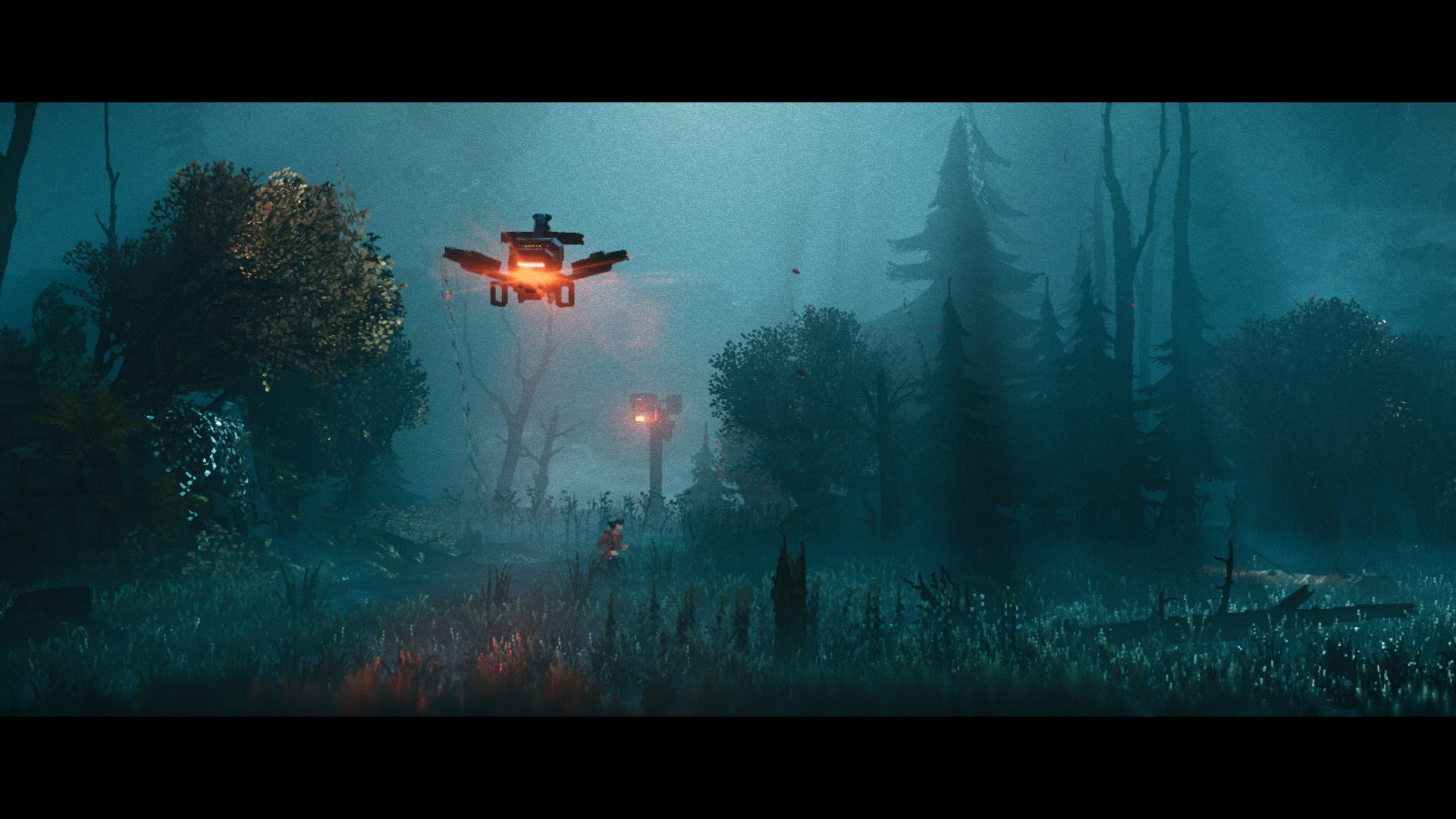
Some of these tropes are easy to gloss over thanks to Replaced’s top-notch visual presentation. It’s everywhere, starting with camera tricks, with the screen’s aspect ratio changing in real time, and some sequences featuring parallax effects or the entire screen spinning as Reach gets hit by a trooper’s baton and violently falls to the ground. And it’s also easy to be mesmerized by the composition of each level and the small details scattered around: small rats scurrying in the background of the sewers, how the light reflects on the water and trash is gently rocked by it, and the way the wind gently moves foliage back and forth are only a few examples. When it comes to seeing other characters and the myriad of animations they present, it all comes together to be quite striking.
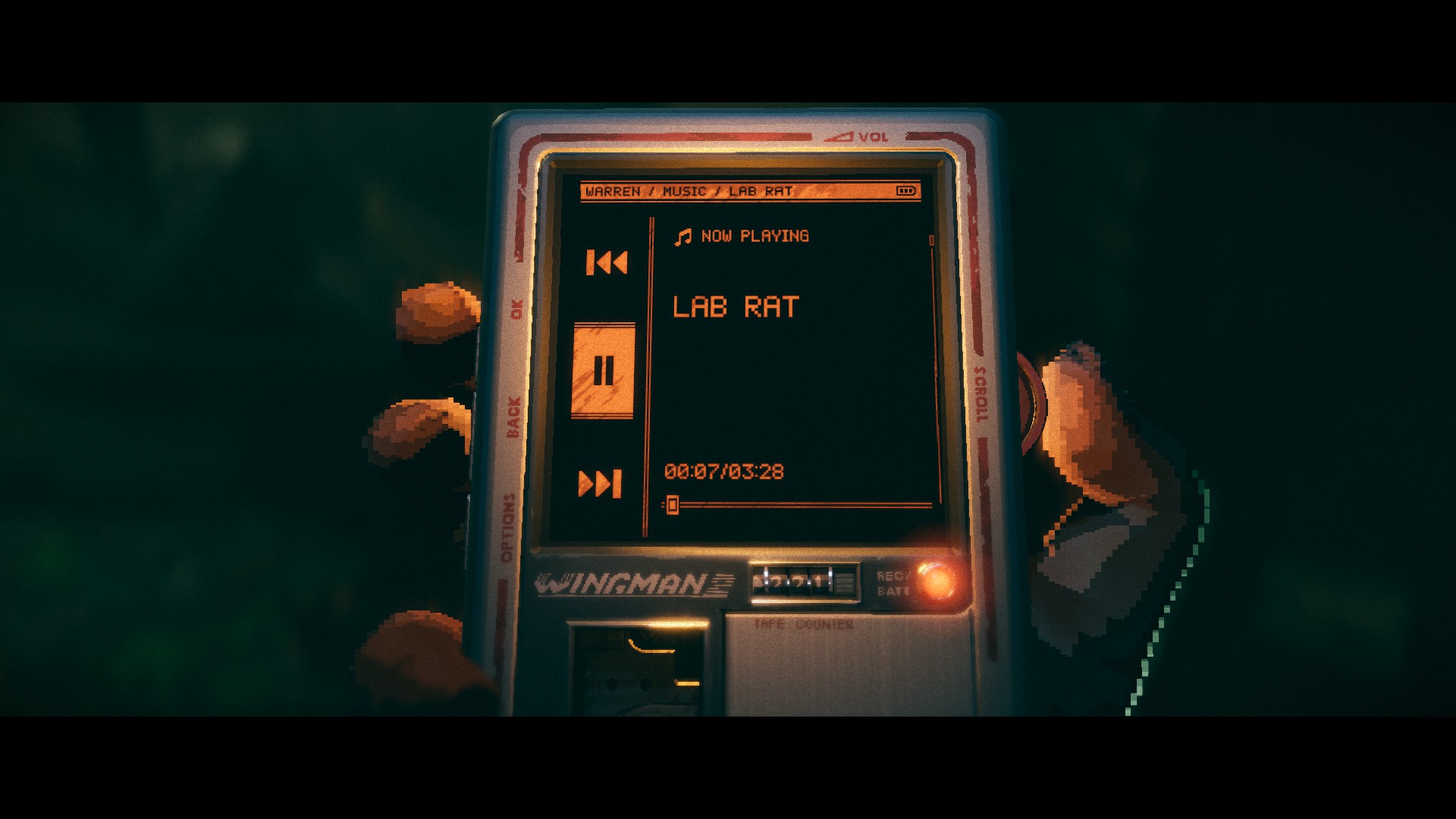
The eye-catching nature of the game is welcomed, as the structure itself is, for the most part, quite linear. You’re tasked to go from point A to B from the get-go, and that’s exactly what you do. There are some moments where you’re encouraged to take on side quests and help some of the townsfolk you come across. Some of these tasks are more involved than others – a quest involving a recluse young woman in an arcade ends up with an actual minigame with a high score to beat. These are, sadly, few and far between, and most end up being short fetch assignments. Don’t expect any loot or to trade with a merchant, the rewards tend to be upgrades to your existing tools, such as your health bar, as well as objects to scan and get a lore entry on that you can read on a portable device.
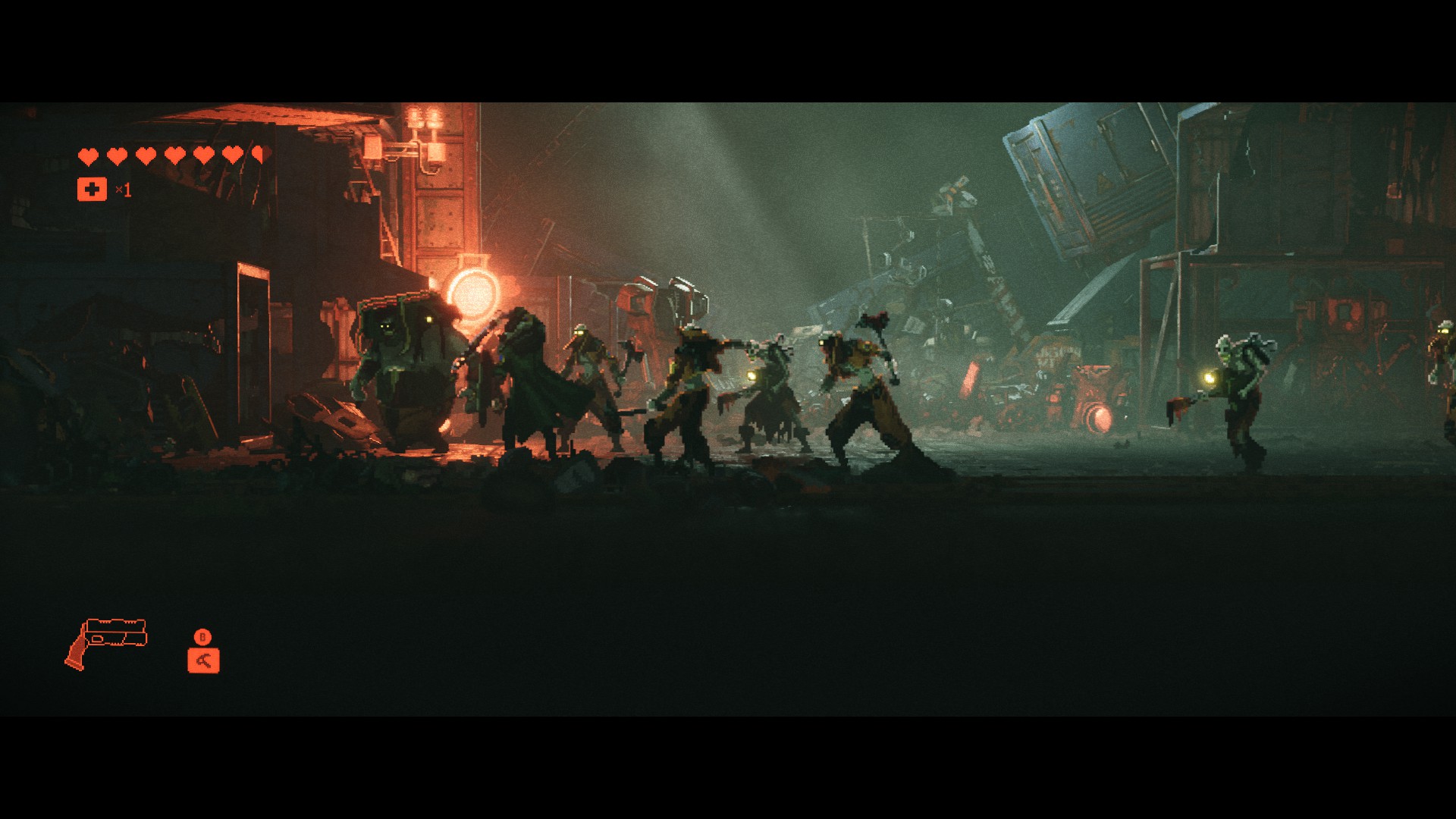
Most of your time in Replaced, you’ll be doing two things: fighting enemies and performing platforming tricks. Let’s start with the first. There’s a weight to Reach movements, from the way its body walks to how each jump must be calculated, that is translated to the combat itself. Think of it as choreographed action, following the long-standing legacy of the Batman Arkham series, in which enemies signal whenever they’re about to perform an attack that can be parried, and an attack that must be dodged.
Most combat encounters can be completed by repeatedly mashing the attack button and paying attention to the enemy markers. There is an attempt at variety carried throughout with the addition of different enemy types. Some shoot at you from a distance, others wear shields that must be torn apart to inflict damage, and on later levels, some foes must be parried multiple times to attack them.
Another way in which combat is somewhat revitalized at different points of the story is through abilities. Gun blast, for example, lets you fire with your pistol, but only after charging enough energy to do so. This is done by attacking and countering enemies in quick succession, and is decreased by dodging and acting passively. There’s also the option to deflect enemy shots if you time a different parry correctly, as well as doing a shock blast and a sort of overdrive mode where you can fire your gun multiple times.
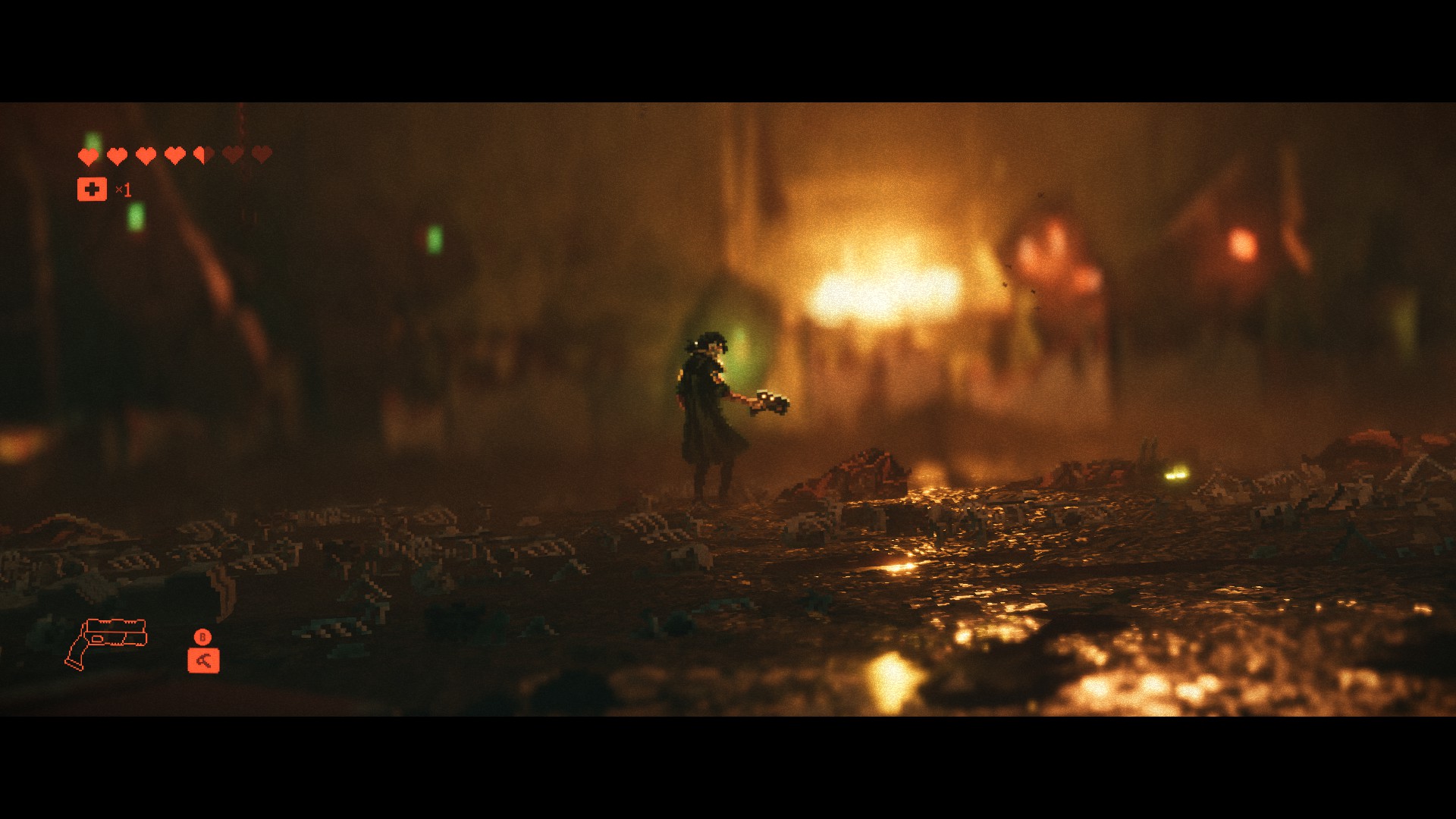
While these elements sound promising on paper, they quickly become tedious. The addition of these upgrades and enemy variants is quite spaced out from each other, and toward the second half of the game, most encounters played essentially the same, as I had already learned all patterns and knew what to do. The biggest issue, however, is an odd delay with inputs, which meant I was getting hit more often than not in situations where I shouldn’t have. Sometimes you may be preparing for a counterattack, but the animation sort of freezes you in place and leaves you vulnerable to, say, a bulky enemy charging toward you or an upcoming bullet. Considering that checkpoints can be quite sparse, combat becomes far less enticing than it could be.
Replaced’s biggest aggravator, however, comes in its platforming sections. These are the bread and butter of the whole experience. When you aren’t watching a cutscene, of which there are literally dozens, or slowly walking from one side of an environment to the next without anything to do, you’re forced to leap to monkey bars and use a pickaxe to latch onto specific parts of the environment to progress through dilapidated bridges and tall structures.
This platforming has virtually no variation, and on top of that, there’s always a layer of annoyance. For example, there are quite a few sections where you need to grab a battery, which is usually in the next room, bring it back slowly, insert it on a platform, move said platform, all to activate an opportunity to make a double jump. Failing to calculate it correctly, something that is easy to do given the slow nature of the overall movement, and the checkpoint will likely make you repeat this all over again.
There are also chasing sequences where things need to be timed perfectly, or else you end up failing time and time again. It literally feels like playing Temple Run, as you’re tasked to leap over logs or boxes to maintain the speed. It takes a while for your character to recover from stumbling, which usually means getting insta-killed and having to redo the section again, so, yeah, it’s repetition until you learn exactly every pattern you must follow to finish the sequence.
If the unnecessarily long walks where nothing happens, tedious chase sequences, and a myriad of slow objects to carry or push over aren’t enough to tire you, there are also stealth sections. Quite a few of them, actually, which follow a similar structure. If you happen to be in the vicinity of an enemy at any point, you’ll be instantly killed. The checkpoints around them are, as you’ve probably guessed, equally annoying.
Throughout the story, it feels as if Replaced is constantly attempting to slow you down, but without a specific purpose. Much of the story itself, for example, is relegated to the aforementioned code entries. If you want to learn more about the world, you need to fully stop, open your portable device, and read them, rather than the game itself integrating these lore snippets during the rather lonely walks.
Reach’s perspective, in which it progressively realizes that not everything is as pretty as its archives and data make it out to be, is the most appealing aspect of Replaced. As a cyberpunk thriller, however, it doesn’t hold many surprises, even when presenting certain plot twists and revelations in its final moments. And while it is a marvel to look at, much of the focus is on providing a cinematic experience, sidelining the actual game in the process.