Awash in a dystopian world riddled with microplastics and floating rubbish is where I find myself at the beginning of Tides of Tomorrow and where I’m unfortunately destined to stay, even if it’s slowly killing me. This is the state of the world, as imagined by developer Digixart. Plastics rule and humans certainly do not as a disease called Plastemia threatens to cause human extinction, turning the infected into plastified mummies at a terrifying speed.
But I’m a Tidewalker I’m told by the ambitious Nahe, as she saves me from the depths of the sea, that I’m rather special. I’m not the only Tidewalker to have traversed these lands looking for a cure though. I’m part of a collective that can make a difference, and while I won’t strictly get to meet another Tidewalker, Tides of Tomorrow lets me follow a player of my choosing. Through Tides of Time visions, I’m shown distinct moments of their playthrough delicately laced throughout my game. Their decisions affect me, and my decisions affect anyone who follows after me like a Tidey conga line with potentially devastating consequences.
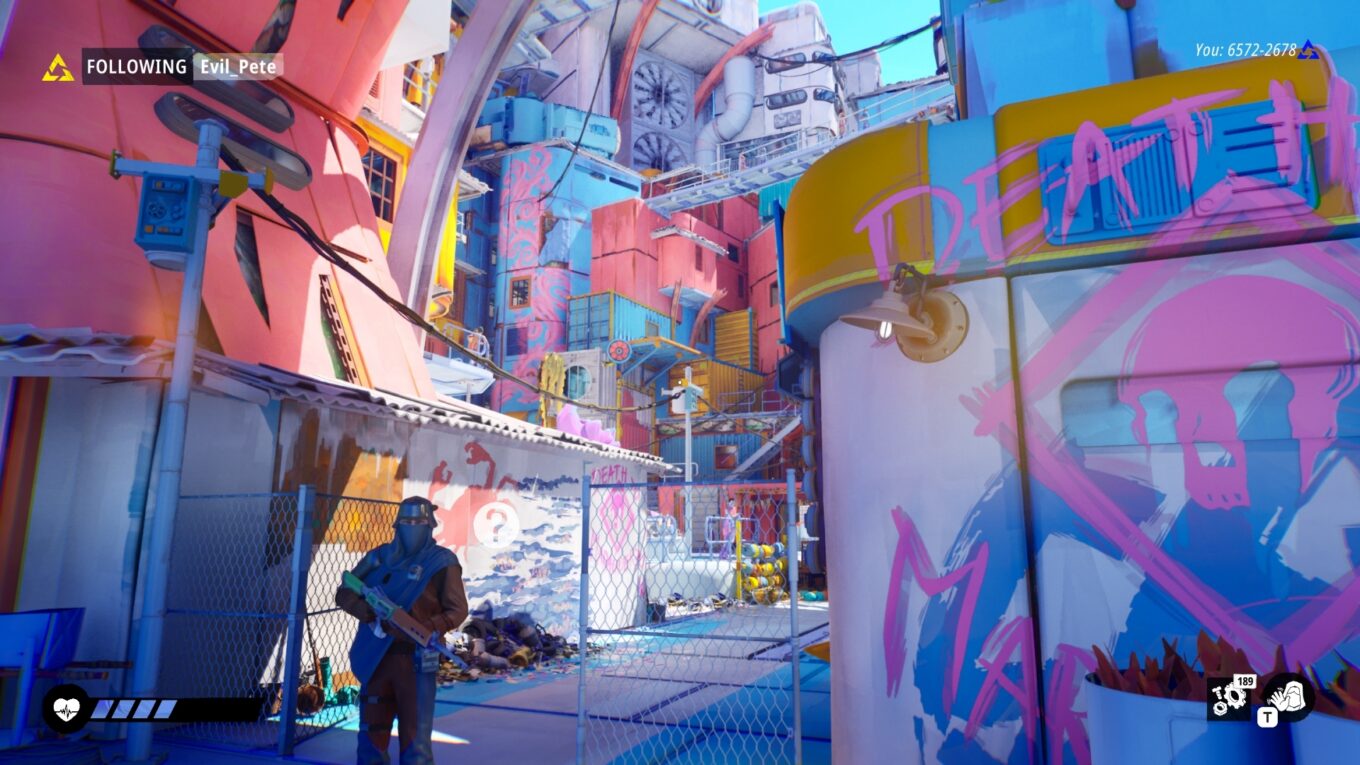
For my review, I’m told that I should try following one of the Tides of Tomorrow team. I picked Kevin Bard, Producer, and in-game personality, Evil_Pete, who possesses the traits of a Troublemaker, one of five that you can earn through your decisions. But, I like the idea of causing some ruckus and I want to see what he did. Unlike The Wand Report’s very own Ben Maxwell, during his Tides of Tomorrow Preview, I didn’t opt to embrace his profoundly nice nature. I’m perhaps a little less kind. But, I quickly learned that by following a player whose decisions quite deeply impact my own playthrough, picking a Troublemaker meant, well, that his naughty decisions made my time a lot harder.
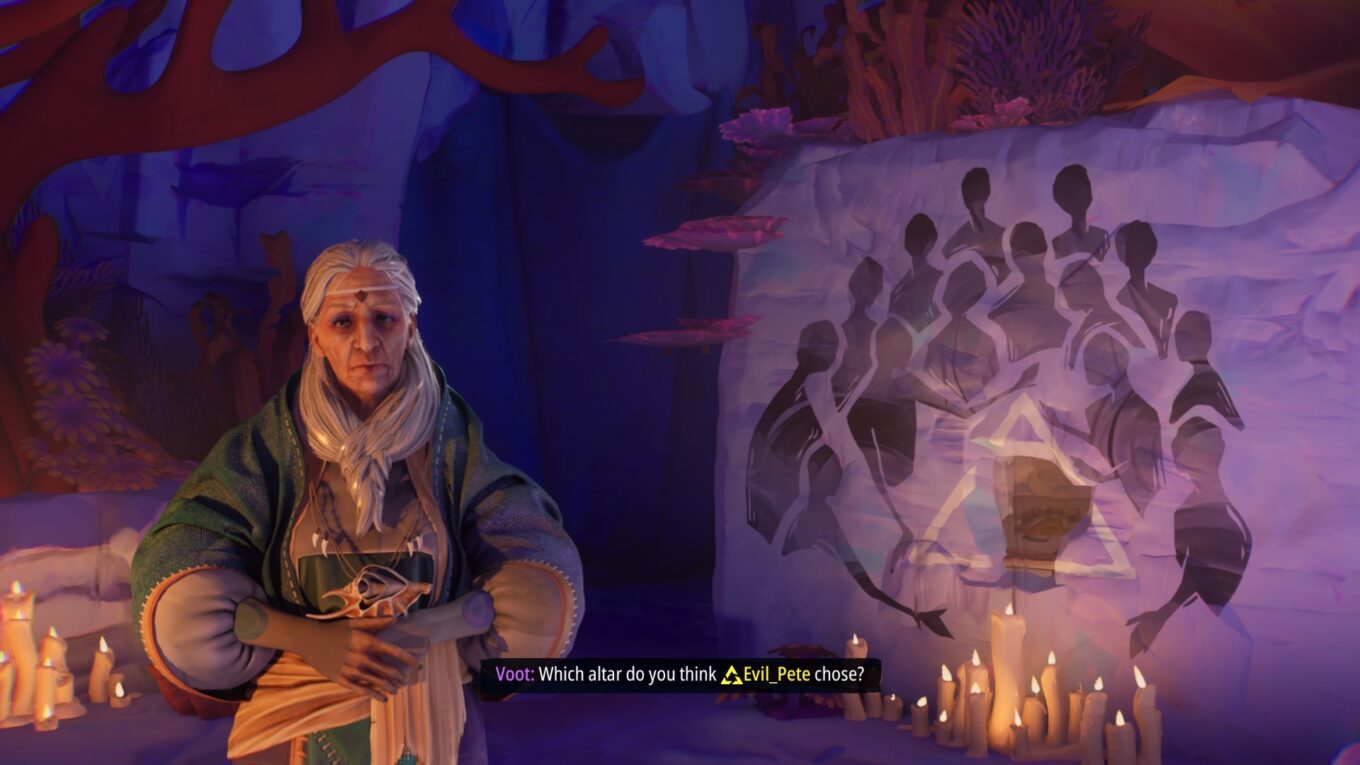
The Tidewalker concept is connected via the game’s unique Online Story-Link, a mechanism that allows you to follow the shareable seed of a player. Your journey is thus shaped by the actions of those who came before you. Throughout, an icon appears against narrative decisions that shows what they chose. You may feel influenced to follow in their footsteps, or you may choose a contrary path. You can also track them and watch them, as mentioned, by your Times of Time supernatural ability. And, in playing your own game, your choices will also impact the story of anyone bold enough to follow you next. With all this in mind, I decided to create as much chaos as possible in the hopes that someone has to live amongst the repercussions.
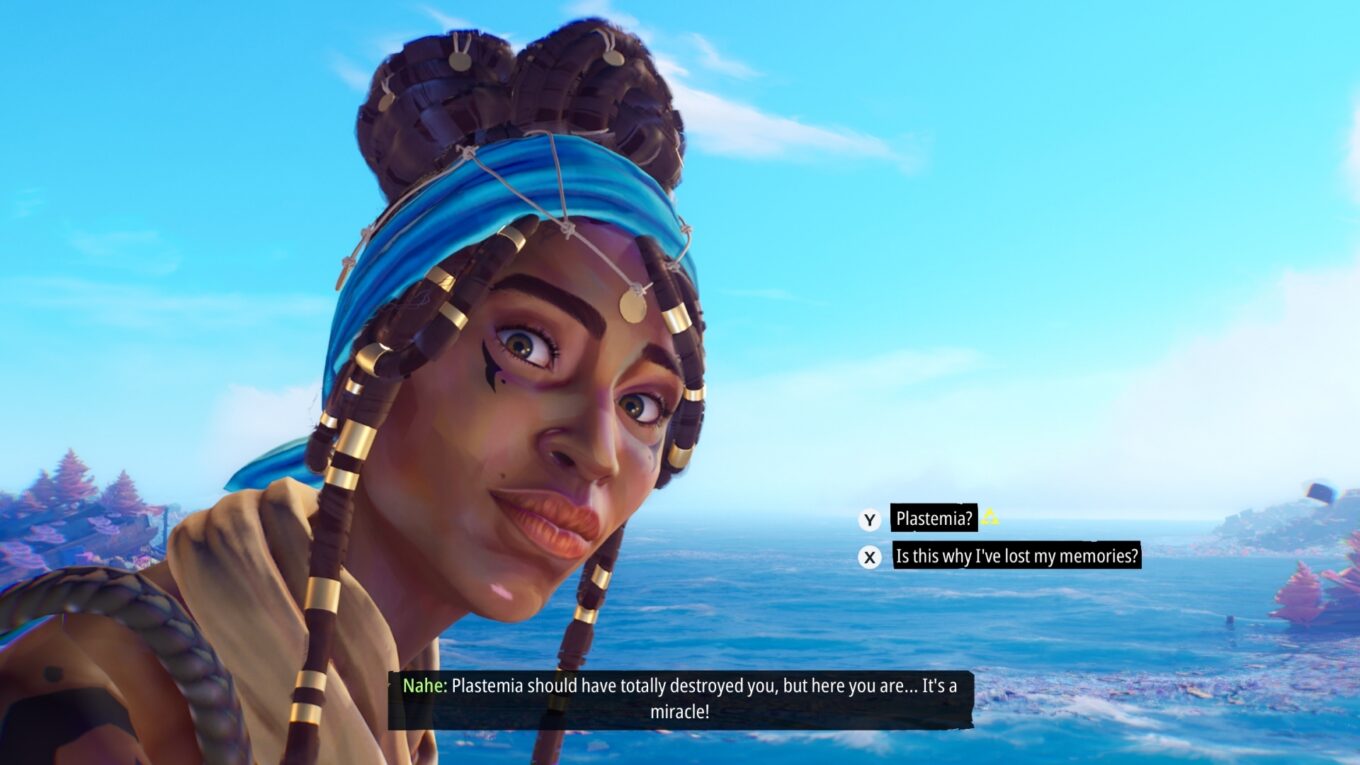
In Tides of Tomorrow, the world is deeply troubled. Riddled with microplastics, the only temporary fix for Plastemia is to huff as much Ozen as you can get your hands on, or risk turning into a rather vibrant, almost art gallery-worthy, plastic bottle of a person. Ozen isn’t a long-term fix though and as the people of Tides of Tomorrow float on their rubbish islands surrounded by trashy icebergs in a deep sea filled with ways to hurt you, they’re trying to come up with a solution.
For this, they’ve primarily evolved into three distinct factions; Marauders, Reclaimers, and Mystics. Throughout your journey in Tides of Tomorrow, your decisions will greatly determine who you end up siding with. Whether you choose to try and team everyone up together (and possibly fail, like me) or make huge decisions that ultimately restructure entire factions, what is clear is that your decisions are unbelievably impactful.
There are five traits that you can end up possessing through your narrative choices. These are Troublemaker, Pro-Mankind, Pro-Nature, Survivalist, and Cooperative. Ben also mentioned in his preview that he wasn’t sure how his traits would play out, given that he only got to enjoy a short demo. So, I was ready to pick up said mantle and see how off the scales I could take it.
I almost felt like I was taking a Briggs Meyer personality test at points and, unfortunately, not coming out too hot. I even replayed the first hour or so of the game, adopting different narrative choices to witness the immediate consequences of my actions. And they really did, taking me down alternate paths and changing the game entirely. I’m told by Digixart, that there are five major game endings, which makes replayability a hot commodity.
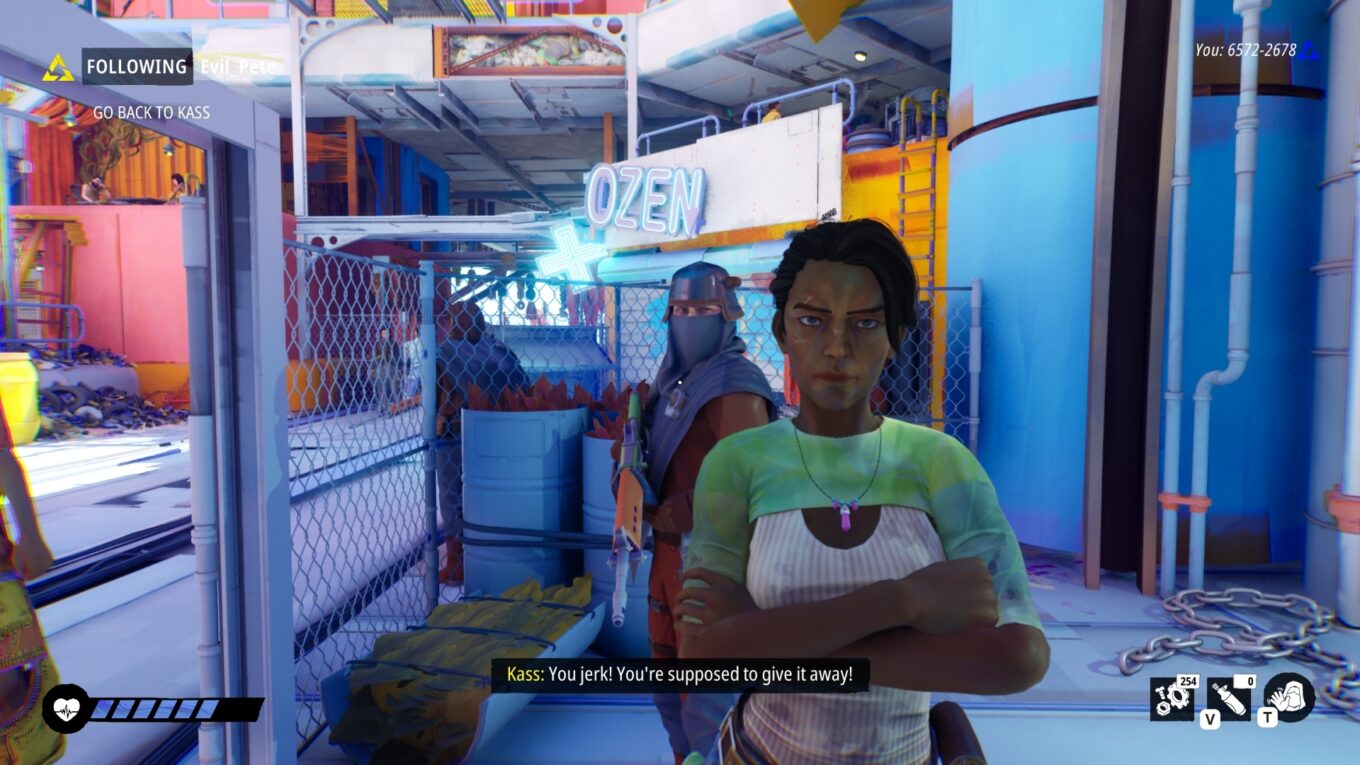
I felt almost manipulative in nature as I made my choices. Some narrative picks felt like they’d point me towards obvious traits, like a sarcastic remark boosting Troublemaker or a nature-heavy obsession boosting, well, Pro-Nature. Ultimately, I realised that I wasn’t unlike my predecessor, which proved both amusing and challenging in equal measure. At one point, I was asked if I thought Evil_Pete had changed a password for his own gain and I knew he had because it’s what I’d do, too. But then I also had to deal with things like an increased security detail and a hostile populace because he’d caused such a mess before me making it almost a challenge to make it any worse.
Following Evil_Pete had an immediate effect on my time in Tides of Tomorrow and so it should. Digixart’s bold narrative mesh is at the core of this game and I really felt its perplexities running through every aspect of my game. It’s what makes this game truly stand out. But you can also ignore it in a large part, if you wish. You don’t have to witness every Tides of Time vision littered across the map. In fact, I’ll admit, I even forgot about it at times, feeling I was making garbage-infused waves of my own. But you’ll also notice it when it’s missing. Some narrative choices will be cut off, marked as an ‘Undiscovered Vision’ that could be impactful for your game. At other times, a vision could save you a lot of time in trying to figure out your next move.
Your decisions will ultimately impact the opportunities you have too. There are narrative choices that can’t be accessed when you don’t possess enough of a certain trait. Or, the narrative might not lead you to certain items that could be convincing in certain situations. Evil_Pete, as his name suggests, lived a more evil life and I felt the impact of this at almost every turn. There’s the odd storage box that can be filled with scraps and Ozen for the next player dotted around. He never left anything in these. And, I don’t blame him. In finding empty storage boxes, I didn’t leave anything for the next player either. I was in pursuit of maxing out the Survivalist trait, and by taking everything for myself, it gave it a little boost.
While I felt the impact of Evil_Pete’s decisions, the game itself doesn’t make you feel guilty for choosing to act a certain way. In a game based on the crumbling state of the world directly impacted by people’s decisions, I was thankful that I wasn’t made to feel like a heathen for my downright rude behaviour.
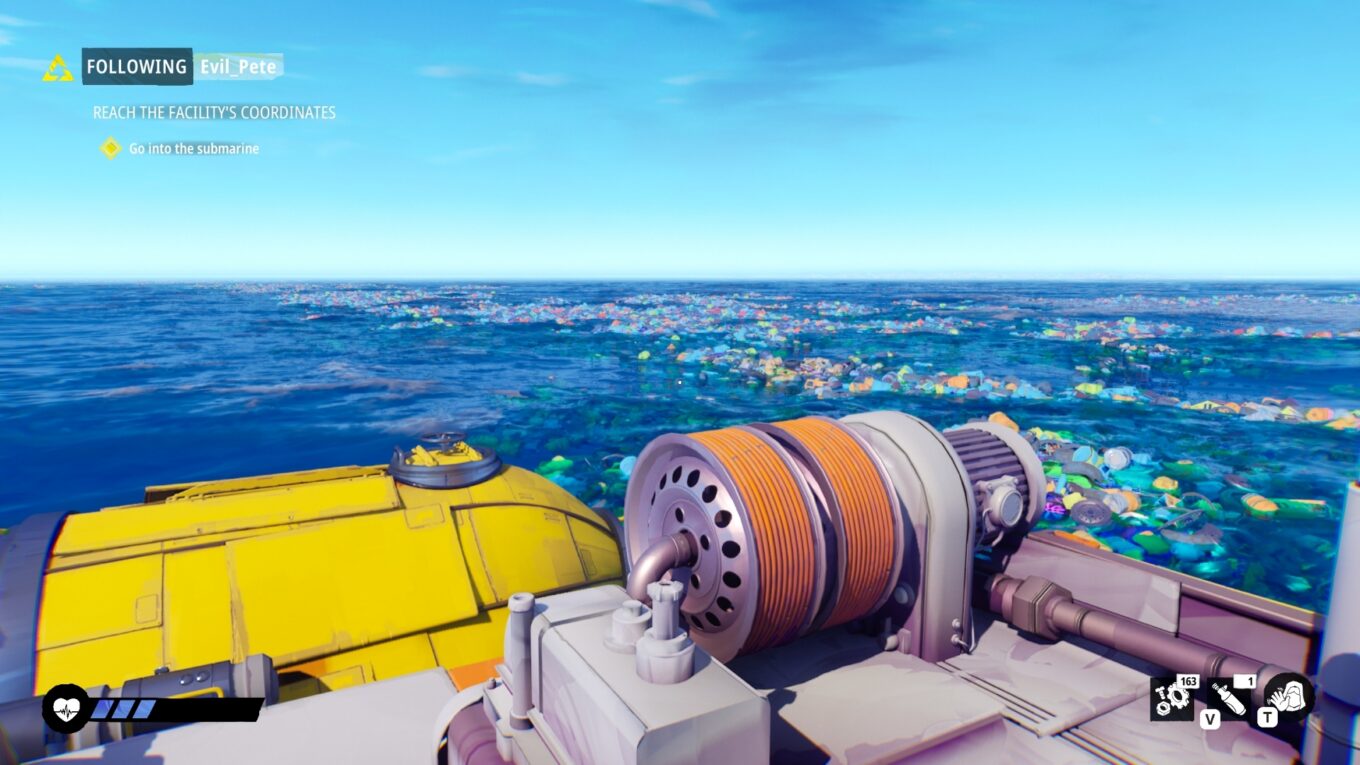
Between each narrative location, you spend some time floating in the sea aboard your speedboat feeling the damning effects of the microplastics surrounding you. But you can also choose to follow a new player at every one of these turns. I did once, but it turned out following someone more Pro-Nature made me feel a bit bad about myself. That’s not the game; that’s a deep-seated personality issue we don’t need to get into right now.
Aside from gathering Ozen, you’re also collecting scraps, the game’s currency that’ll buy you, well, more Ozen and something a little more important further down the line. You’ll also use it to repair broken bridges, ladders, and assuage beggars, impacting the next player’s game as you go. These scraps are found around the map, mostly in glowing piles of more rubbish or in bins, ironically, considering the whole world feels like a bit of a bin. They’re really your only incentive to stray from the linear path you’re given throughout Tides of Tomorrow. Most of the time, your exploration potential is stunted by a need (and want) by the developers to get to the next narrative arc and move your story along. This game’s freedom is seated firmly in your narrative decisions and not in any great adventure of your own.
With a lot of focus on the Tidewalker mechanism, there are also a few other actions littered within the game to act as a reprieve, including races and chases. There are even ocean events for extra resources and restricted areas to stealth around as the red vision of the guards threatens to catch you. But, none of it is hard. Ultimately, if you’re looking for a game filled with action or combat, you’re not going to get it here. The focus is on the narrative, the stealth mechanism is basic, and the action scenes led only by storytelling.
I’ll caveat that I also came up against a couple of frustrating glitches, directly affected by narrative. I took Ozen at perhaps an inopportune time during a conversation or I walked away from the person talking to me because I’d magpied a bit of scrap and the whole thing would freeze. However, there’s a day one patch that’ll hopefully iron out any of these gripes.
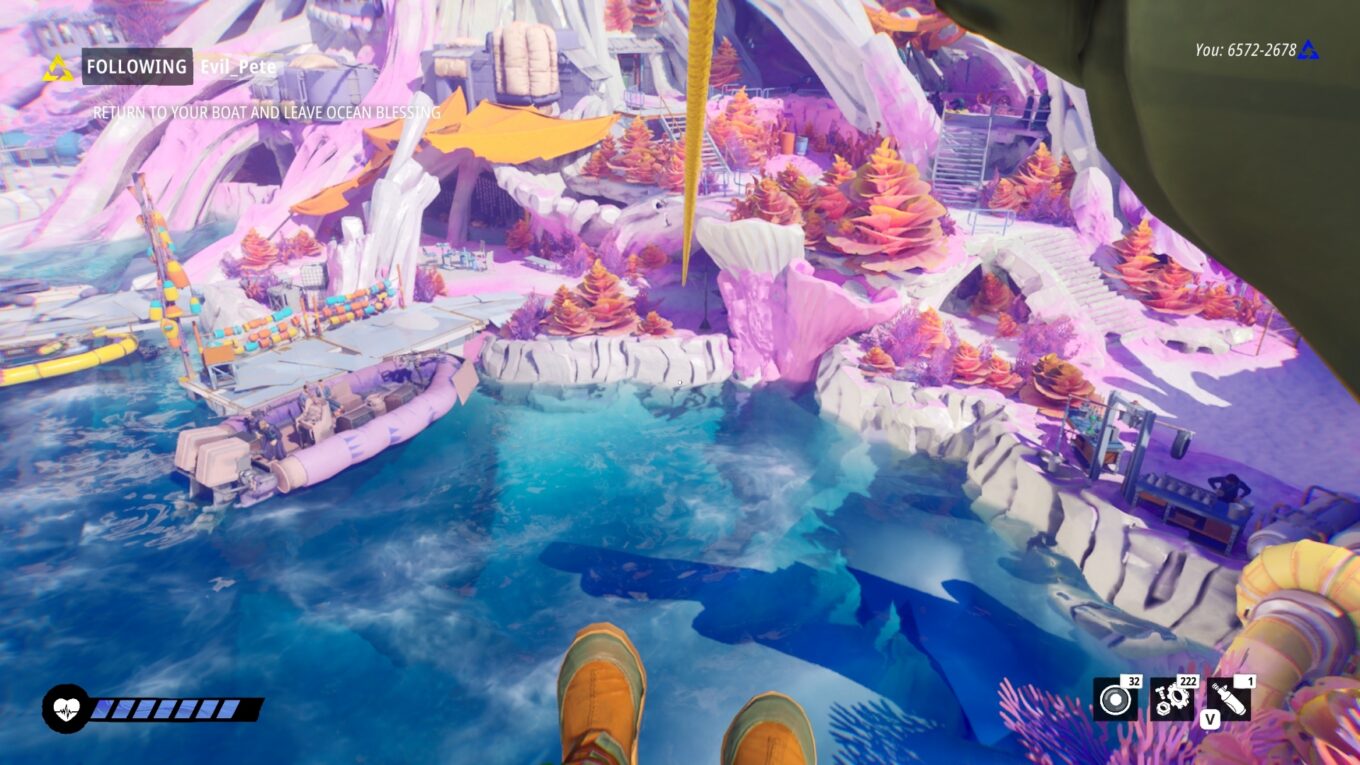
With a vibrancy akin to Borderlands and Fortnite, it’s lovely to look at, if a little dizzying at times. Diving into this bright, yet disturbing world felt like I was part of a movie rather than part of a game, watching long swathes of narrative and acting out my pivotal role as Tidewalker. The action isn’t as important as progressing the storyline and the game urges you to move on with its linear path, scene by scene, restraining you from misstepping.
Nahe told me early on: “You have no idea how important you are” and I did feel important. At times, I even felt competitive to do a better job than the Tidey that had walked this path before me. I met strange characters along the way, both comical and haunting and I’d urge you to keep taking any Ozen you get your mitts on, unless you want to meet one particularly disturbing character in particular.
I’m left wondering what world I would’ve ended up in if I’d made different choices, perhaps even better choices, but will I play it again? I’m not sure. I’ll certainly give it unwavering praise for being a game that feels impressively unique and wildly ambitious.