Isometric shooters have been in a considerable state of neglect in recent times. There have been a few examples, such as Ruiner, the first Helldivers, the excellent Nex Machina, and more. Yet, studios have been pushing for different perspectives when it comes to shooters. The studios behind the last two games I mentioned, for example, went out to make third-person shooters. Much of the previous DNA is present, sure, but the endearing aspect of the isometric view is lost in the process.
I remember spending countless hours in games like Alien Shooter and Zombie Shooter back in the day, and I haven’t been able to find modern renditions of them in the years since. If you’re also a fan, I’m sorry to say that Brigador Killers isn’t following those steps to a T. In fact, it feels akin to isometric RPGs in some ways. Yet, its action has a chunky feeling that has made a lasting impression on me. This is notable, considering pretty much everything else surrounding the experience has a long way to go.
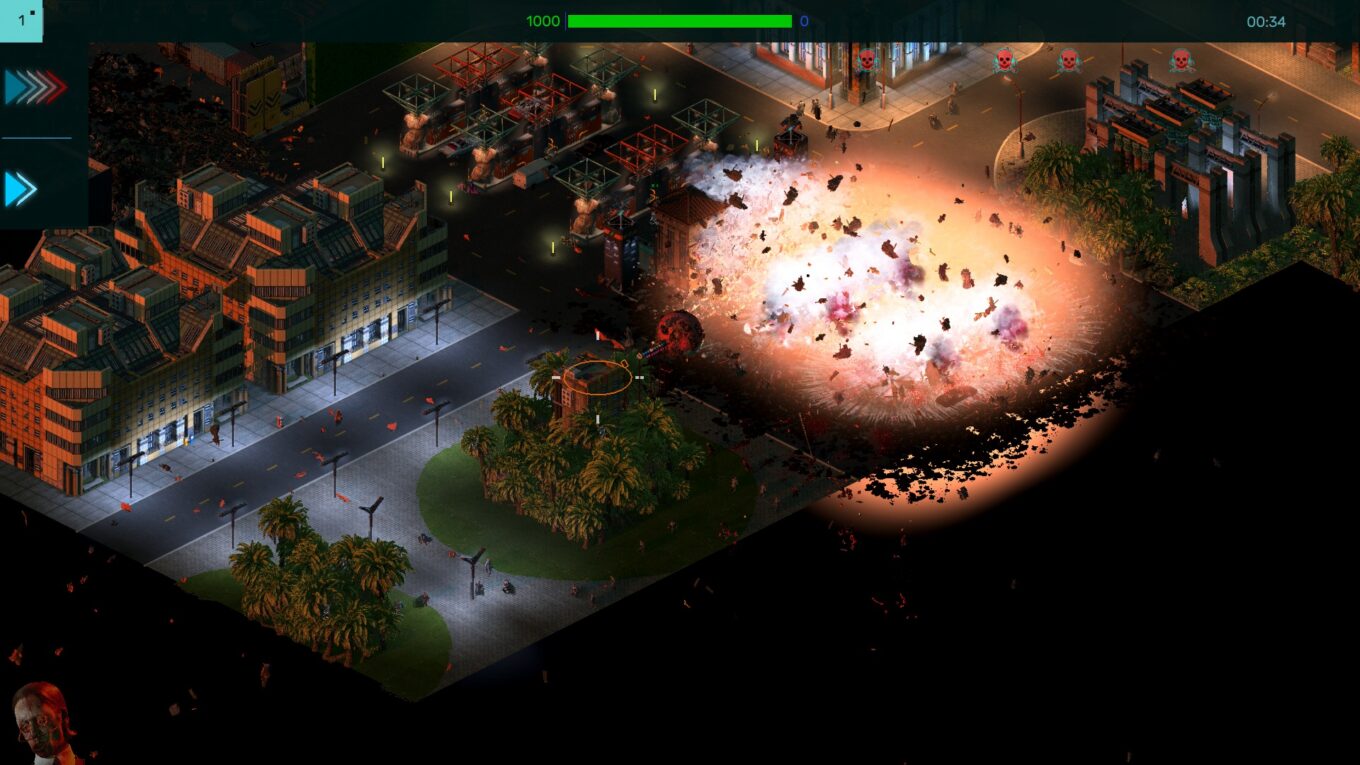
Brigador Killers is the work of developers Stellar Jockeys and Gausswerks, and it’s actually a sequel of sorts. The original Brigador kicked off a closed alpha back in 2014, and got a 1.0 release two years later. The team continued working on it past release, but in 2019, they went ahead and teased Brigador Killers. It has taken the developers seven years to reach early access and continue the path in a more official capacity.
When comparing both games, there are similarities. In Brigador, you primarily piloted a mech with the goal of hunting down specific targets and pushing back a cyberpunk autocracy. It featured destructible environments, over 50 vehicles and 40 weapons, and it was jam-packed with intense action moments. Now, as an introductory message explains when you boot up Brigador Killers, the developers wanted to take a step further – figuratively and metaphorically. Yes, you still pilot mechs. But you can also get out of said mech.
As the studio explains, this decision led them to revisit existing features and add new ones, such as dialog with NCPs and an inventory. Most of the previous elements are still present, including the destructible environments and the snappy moment-to-moment action. But it’s clear that this is a more ambitious endeavor from the ground up.
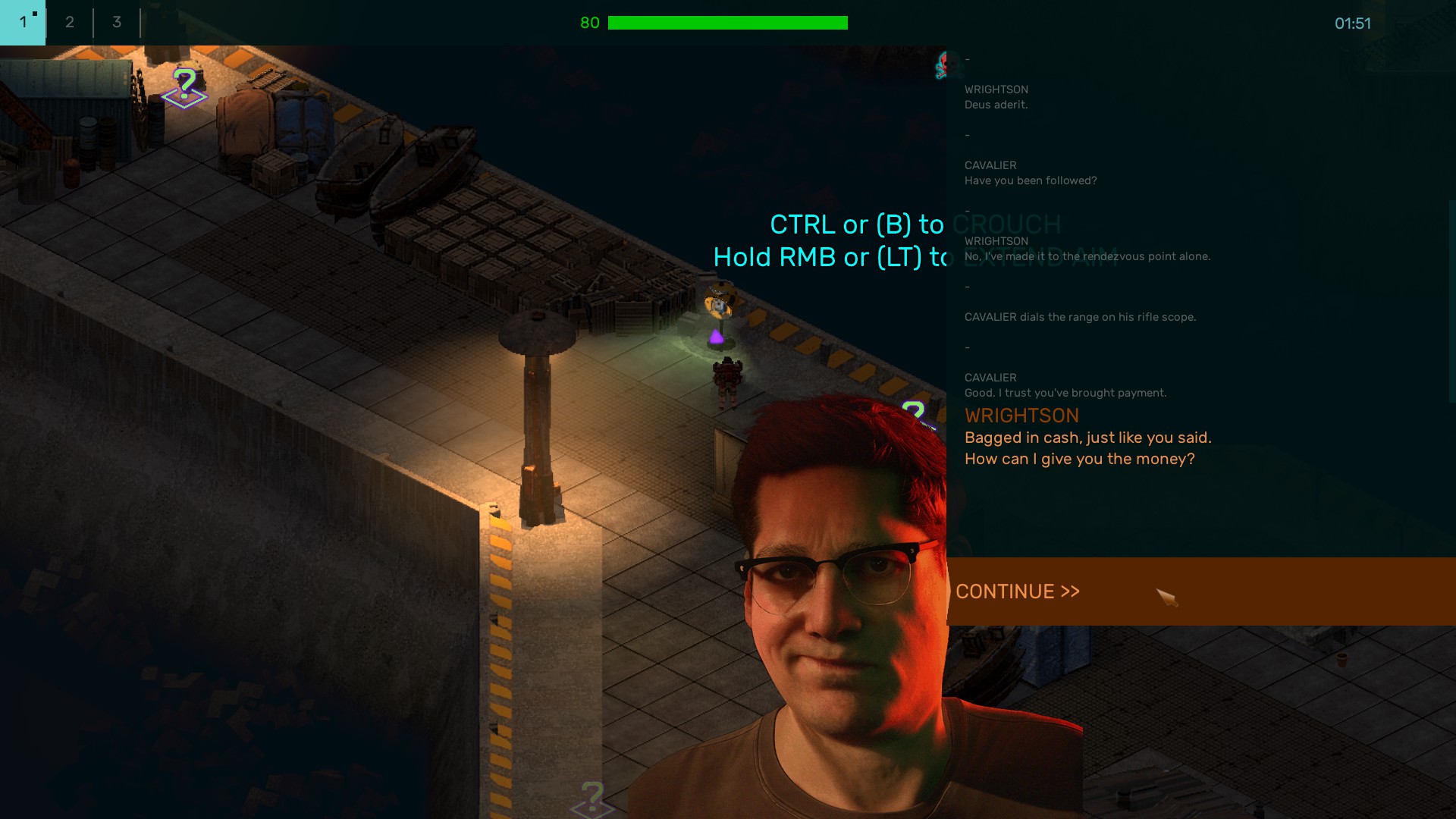
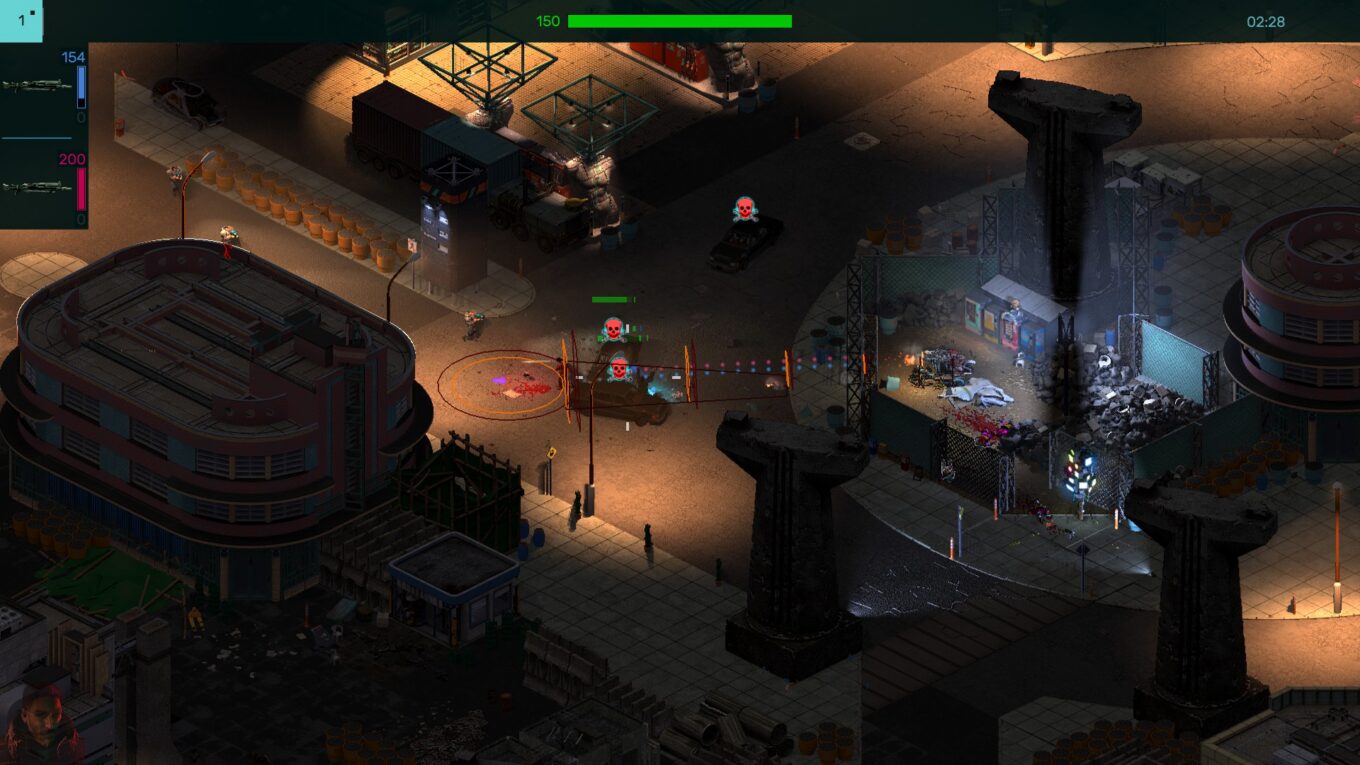
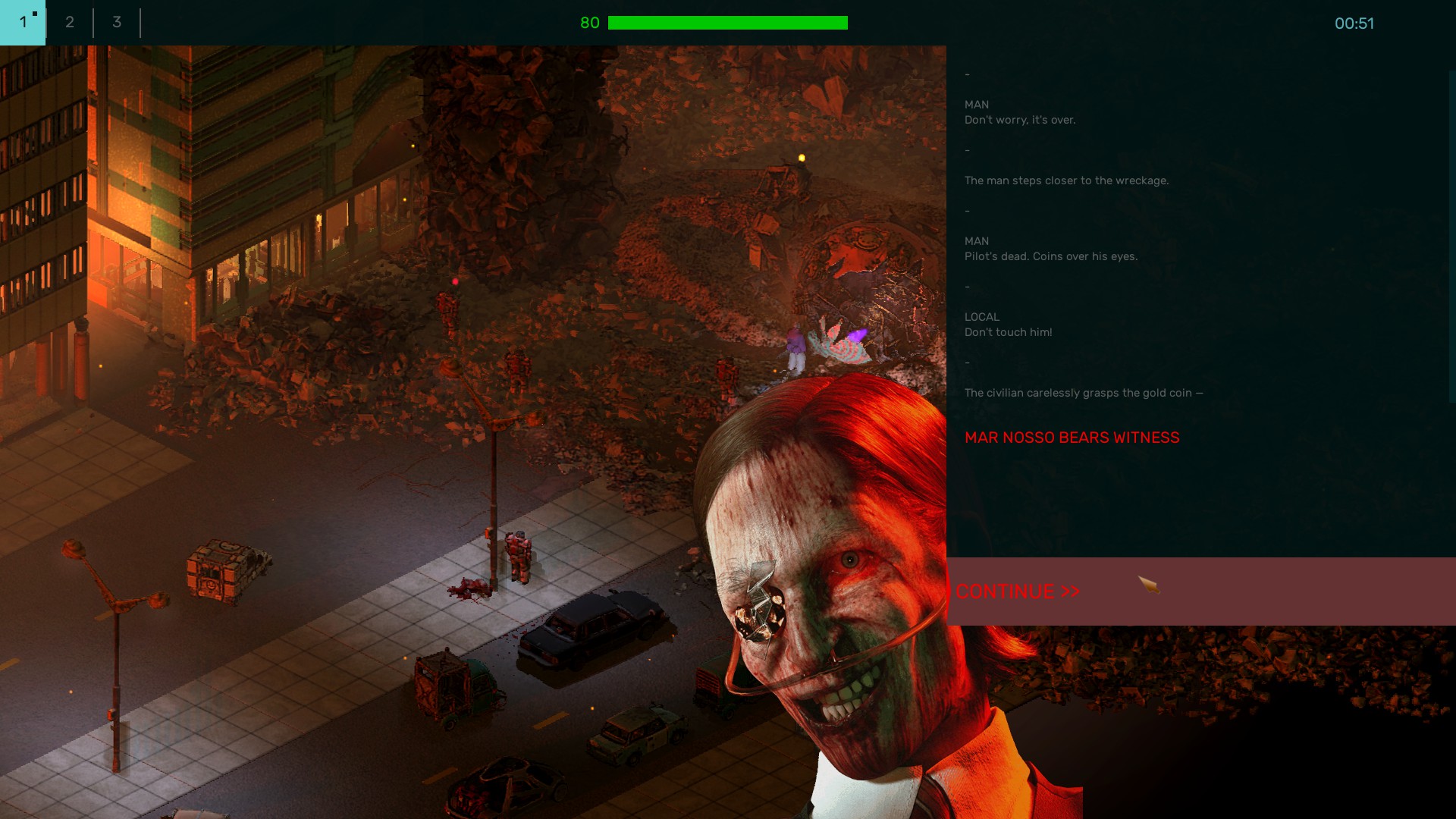
One of the aspects that is clearly getting more attention is the story. The game kicks off with you controlling an unidentified spherical weapon, tasked with ramming through a lively city. The next scene takes place in an obscure hideout, with a squad of characters using codenames planning an attack. While there are tutorial messages throughout, you’re immediately taken into a series of assassination missions: a hit on a former soldier on a “corpo plaza” when his guards aren’t looking, the delivery of a van full of explosives to the outer grounds of a mansion, a sequence with a sniper across a river. They’re all snappy, bite-sized displays of Brigador Killers, and the rhythm felt great throughout.
Then, after a big story moment involving the weapon you control at the start, you control a different character that lacks the gear and preparation of the squad, basically beginning from scratch again. The way all of these narrative threads intertwine is intriguing. Even if the writing isn’t the strongest and can be quite cliché at times, I was cautiously invested. Yet, the problems that I was experiencing only aggravated from there, engulfing the entire experience in a way that’s hard to reconcile.
In the aforementioned introductory message of Brigador Killers, the developers say that “what passed for early access in the mid-2010s wouldn’t fly nowadays.” Yet, the presentation and current level of polish of the early access build make it all feel like a game stuck in that era. It’s closer to what I imagine an early project looks like when pitching it to publishers and investors in search for funding, rather than what you’d put on the market for players to try and provide feedback on.
Missions can be quite short and, for the most part, rather unimaginative. The dialog between characters, the main tool to sprinkle some narrative and color on these assignments, is simply rough. The character portraits are stiff and seem based on free models that developers use to prototype their games, not as final assets. Brigador Killers is an early access game, sure, but it is a jarring display when even placeholder silhouettes would have carried more personality.
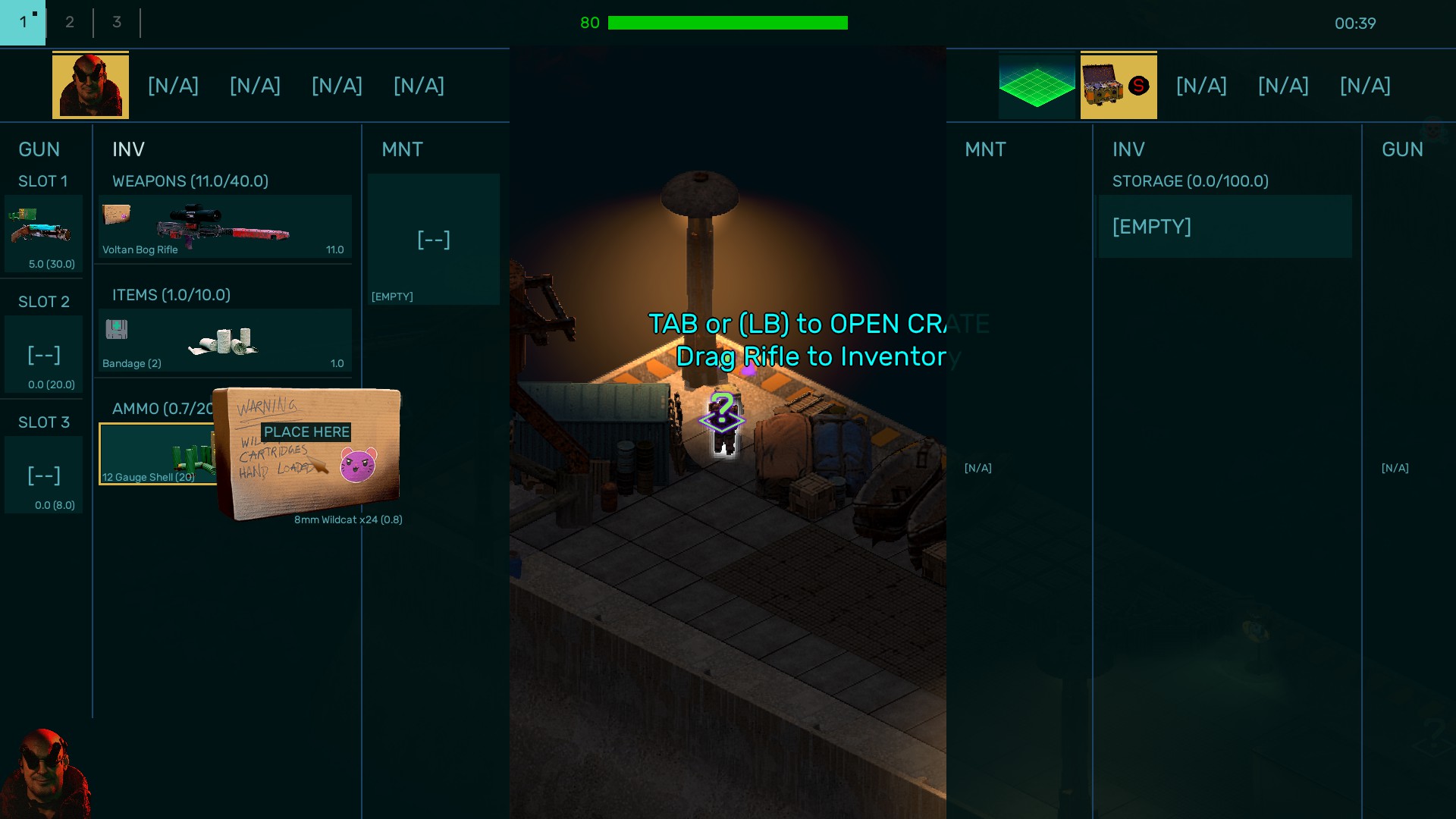
Then, there’s the inventory, which is frankly annoying. You need to manually drag items from corpses or other objects like cars onto your screen every time. Double-clicking doesn’t work, and each item needs to be under its corresponding category, like ammo or guns. It just takes unnecessary time – time in which enemies can and will respawn to interrupt you. Considering you also need to manually equip weapons rather than grabbing something from the floor and automatically being able to use it, it is all unnecessarily finicky. I can see how it could add some sort of pressure in the final game if balanced carefully, but as it stands, it’s just unpolished.
Missions can be a hit or miss, too. After the major story event, one of the objectives prompts you to tackle a series of tasks in order to restore power to an underground facility, open the gate that’s keeping you and another character captive, and finally escape. It is straightforward enough until the very end, in which you’re prompted to carry the second character to the elevator, as he’s too badly injured to do the walk himself. The problem is that at no point does the game clarify how to do so. The answer is needlessly convoluted, and I only found it through guides online, which were all fostered by similar frustrations. Consider how cutthroat some missions can be, adding a series of steps that aren’t really explained altogether feels like a massive curveball.
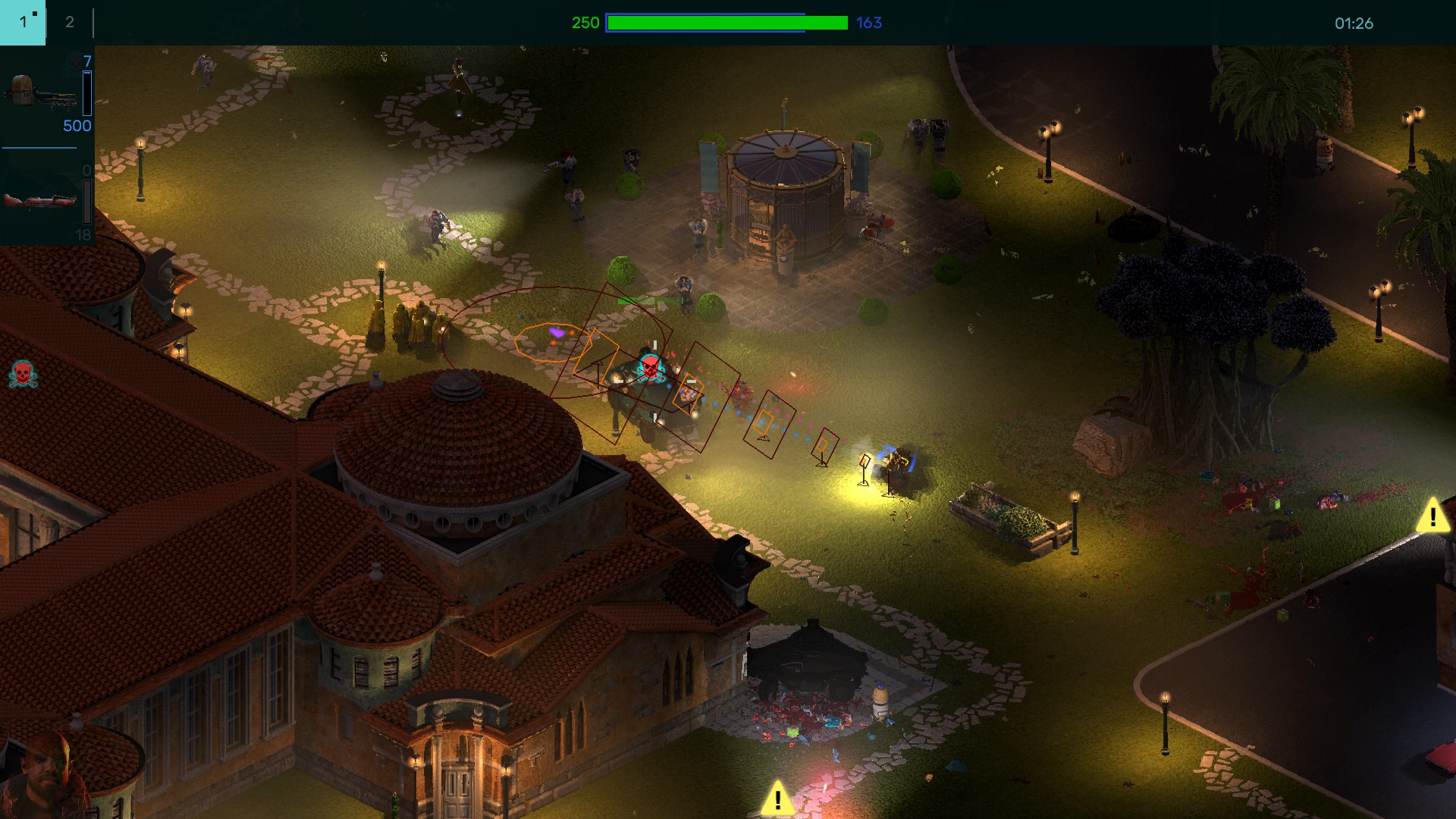
Ultimately, my frustrations come from the fact that, at any given time, I just wanted to return to shooting, which is by far the most promising aspect of Brigador Killers’ current state. The sense of momentum feels quite distinct, almost as if you’re skating on ice when you’re sprinting, but with enough control to not feel unwieldy. Shooting itself is interesting, too, as you need to manually aim each time, wait until the reticle adjusts, and then wait until it centers itself to really nail the shot. Considering how scarce ammunition can be and how many bullets some enemies can withstand before hitting the ground, it becomes an interesting strategy component. This all changes significantly when you’re piloting a mech, however, which feels like an all-against-one showdown that is always exhilarating.
There was one section in the current build that seemed hell-bent on undermining the shooting. When you switch characters in the underground facility, you spend a significant amount of time using rocks as your primary weapon. When you equip a rock, you get six “ammunition” of said rock. There is a waiting time between each throw, almost as if you were reloading it, which gives enemies plenty of opportunities to add a few bullet holes to your body. Once you actually manage to clear the room to loot their bodies, do the whole inventory thing, and finally equip an actual gun, the rhythm is brought back. But I feel moments like that encapsulate just how much inner conflict there is in Brigador Killers, and how some fundamental decisions are compromising an otherwise interesting vision.
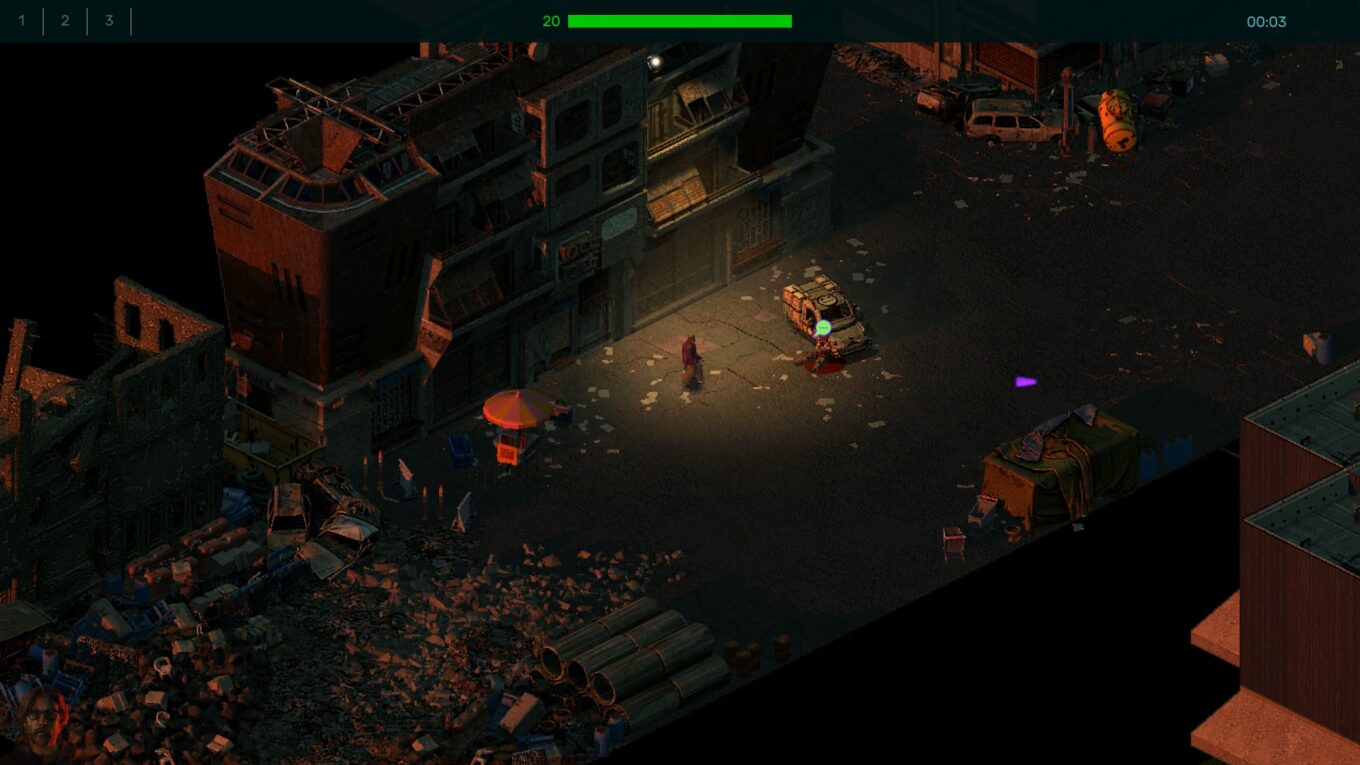
When it comes to early access builds, Brigador Killers is in a tough spot. As many people on Steam have been reporting, the demo available before and after release contains more content, and is closer to the promising foundation that is obfuscated in the official build. It’s one of many odd decisions that are intertwining with the game. Yet, it is still early days. Considering how much of a following the initial Brigador has, it’s not unfeasible to expect that the developers will be able to pay attention to the community and focus on what truly shines in the legacy they have built years ago — even if it feels like slowly throwing rocks at the problem for a while.