
Burning Sword: Death Sun is all about repetition. Repetition of combat. Repetition of levels. Repetition of sound design. Repetition of bugs. It’s a bloody action game that shows you what life could be like in a tutorial where you’re significantly overpowered, and then forces you to start the game proper with a severely pulled back arsenal that only repetition can fix.
Such design presents a significant problem, even at this early access stage. Having to continually retread the same ground shines a spotlight on flaws that Nomadic Games may need to sink serious time into fixing.
I’m confident most players’ response to the Burning Sword will follow a similar path; initial excitement at the combat flow, met with thoughts that ‘this is pretty good for an indie game’. Then, minutes later, a more complicated reality sets in.
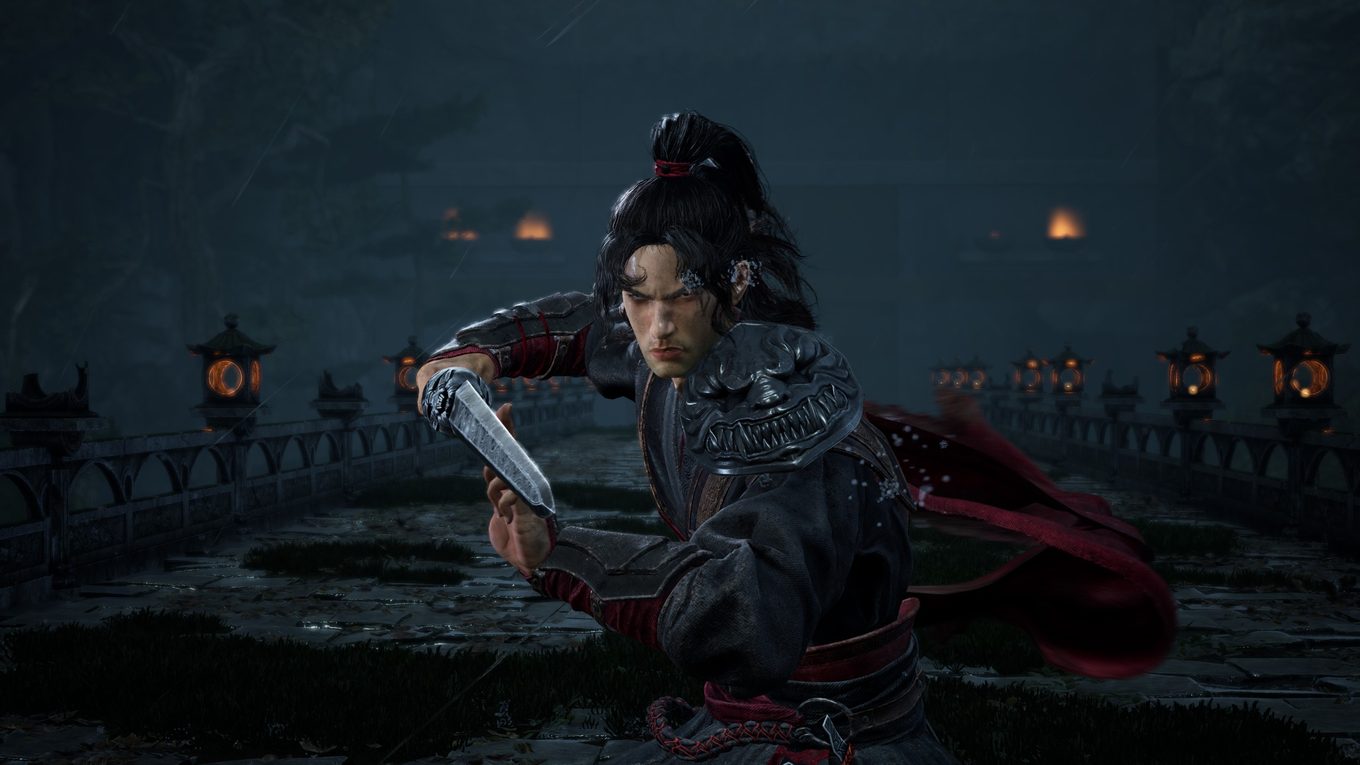
It’s a valid response. Taking control of Zhang Yixian during the tutorial is a fun experience. He’s brutally strong, easily ripping through hordes of enemies on his initial quest for revenge. The blood-splattered executions and slick cutscenes are stylish, and undoubtedly confident, but everything is quickly stripped back and forward momentum is exchanged for grinding with systems that aren’t intuitive.
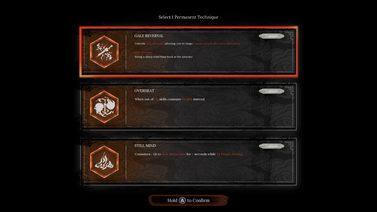
The light rogue-like elements are a good example of this. You have the chance to buy temporary boosts to Zhang’s abilities that last until you complete the contract-styled levels, or until you die. The alternative option is to eventually buy the same upgrade, permanently, but for considerably more resources.
Perhaps it’s just me, but there never seemed a reason to go with the temporary option. You get closer to affording the full unlock with every death, so a little patience goes a long way. Granted, some upgrades will take many runs to afford, but consistently renting seems like the quickest way to stunt Zhang’s evolution. If you’re going to grind, the longer term goal seems more productive.
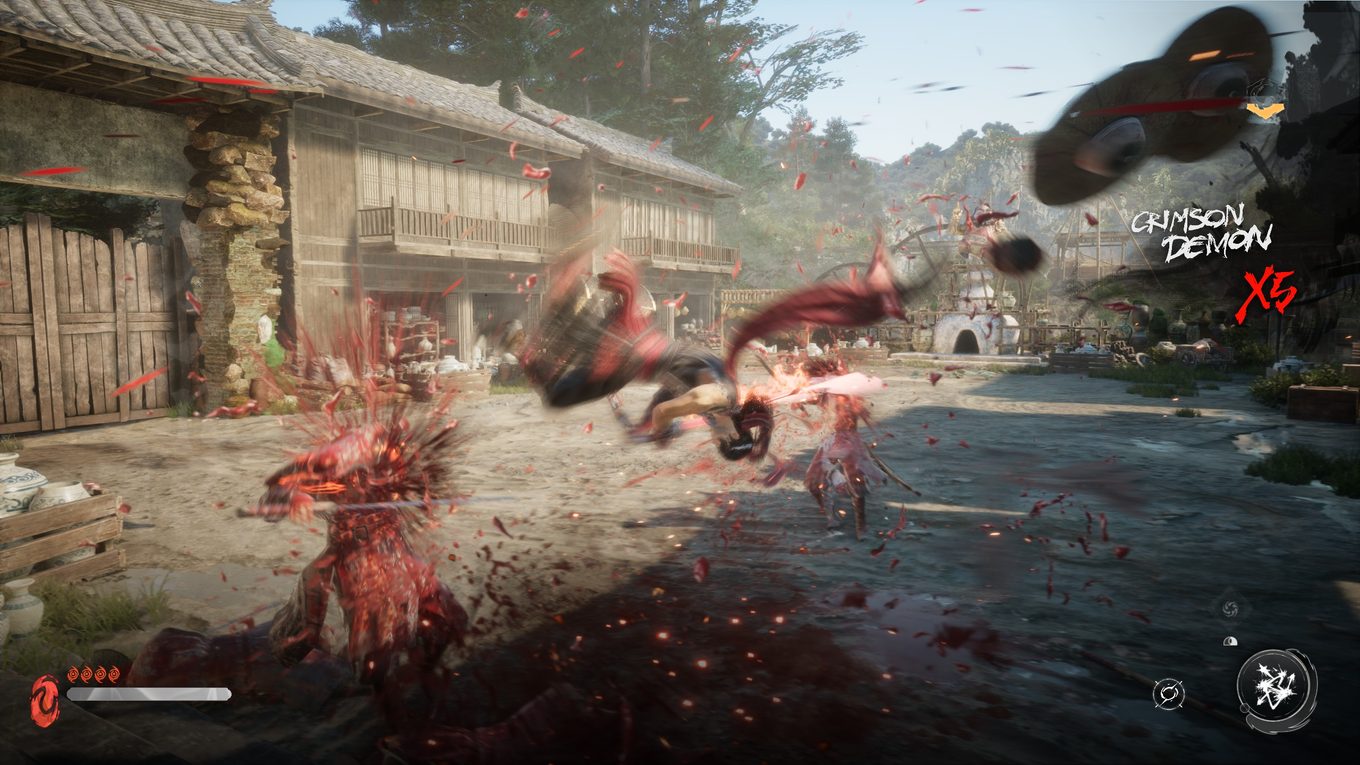
Runs barely feel different whether you decide to do that or not. Burning Sword isn’t procedurally generated, so the linear routes are quickly lacking in surprise. This includes enemy placements and platforming sections that are built on all your favourite wall activities, such as wallrunning and bouncing between two closely-placed walls to get higher up. Zhang can even glide a little bit, but does so with the uncertainty of a Buzz Lightyear toy that’s been lobbed off a building with no guarantee he’ll reach his destination.
The lack of variety stales the combat and overshadows Zhang’s most interesting ability, which allows him to extract Qi from certain foes. The consistent health top ups are absolutely vital, because the game’s camera and lack of onscreen direction make it easy to continually receive damage when you’re not expecting it. The FOV is so tight you simply won’t be able to track every enemy.
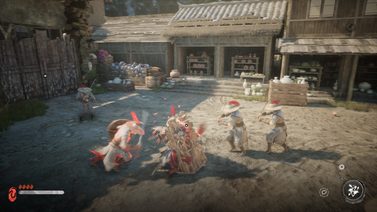
This becomes a major issue as soon as archers and bombers are introduced, as the trajectory of their attacks aren’t telegraphed in a way that allows you to effectively plan ahead. Archers may well continually scream ‘Watch out!’ to their brothers (and I mean, continually), but if they’re out of view, there’s no real indication what direction you need to move to avoid their shot and remain in a strong position against melee foes.
The blast radius of grenades is made clear, but tunnel-like arenas are soon so overwhelmed that they’re immensely difficult to escape. Quite often I was locked into one of Zhang’s special moves – which takes a few seconds to execute as he zips between enemies – on top of where the next explosion was going to happen.
Such onslaughts are incredibly fun to dish out, but everything feels sharper and more precise when fighting against one credible opponent rather than endless goons.
Suddenly, a dodge system that is mostly used to escape danger from all directions becomes a tactical way to set up a counter-attack. Likewise, the parry system, which is hit-and-miss against so many enemies, comes into focus as a mechanism to master against bosses.
One-on-ones also eliminate the sticky lock-on system that doesn’t always work as intended. Sometimes the game doesn’t seem to switch on command, making it difficult to prioritise the killings that can give you health.
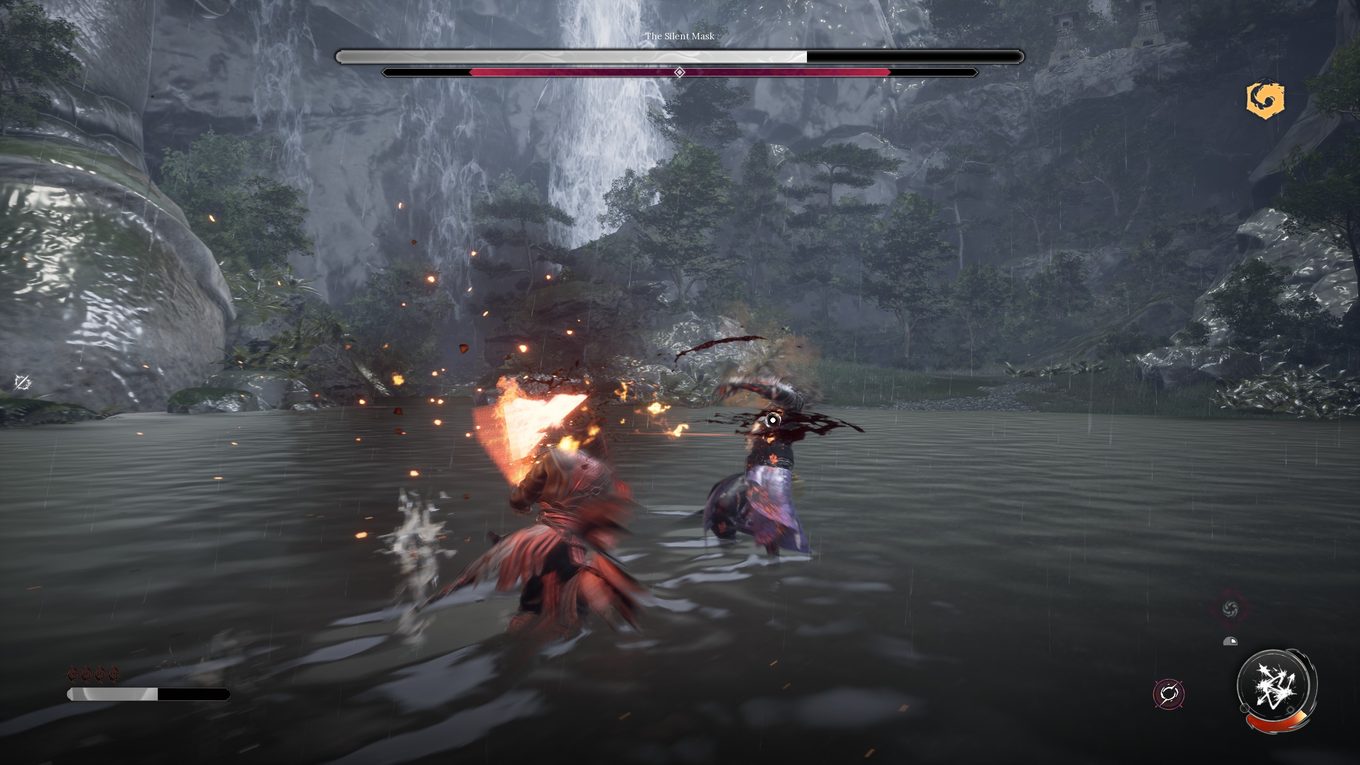
Highly-populated areas seem to amplify Burning Sword’s most prominent issues. You can be running towards a seemingly abandoned arena before multiple enemies pop into existence. You can even run straight past some who don’t initially react and just stand in place.
Those who use long-range tactics are prone to getting stuck on barriers, and the repeated sound board of soldier cries is a grating issue that is painfully obvious within a couple of minutes of play.
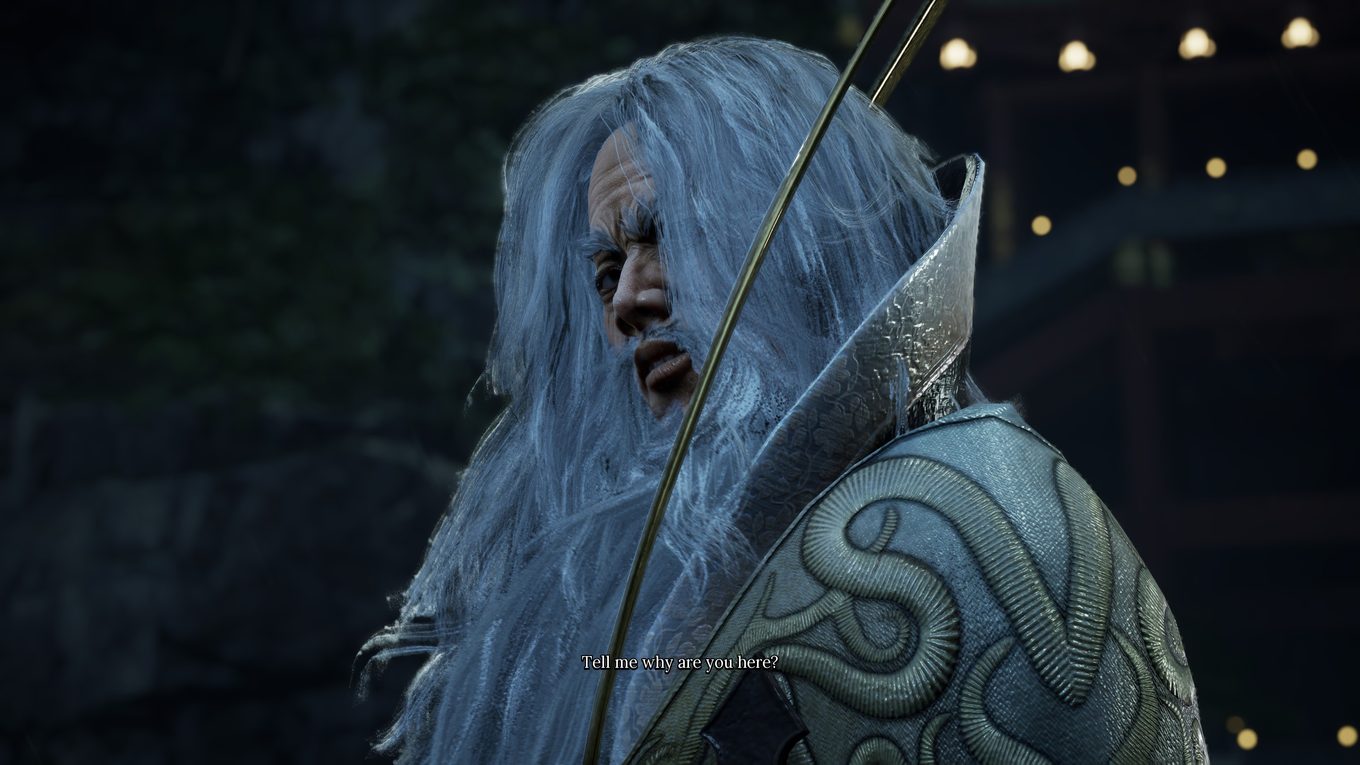
It’s quite jarring that Zhang’s homestead feels so bare in comparison. Each death is met with waking up to a barren wooden hut that has no personality or character. It’s perhaps a metaphor for Zhang himself, who stands out as pretty soulless against the supporting cast, and even the bosses he’s taking down. Conversations do offer interesting tidbits on the politics of the world, but the English voice-acting is so cheesily delivered that any seriousness is undercut.
The good news for Burning Sword is there’s still time to get this right. A little more restraint is needed in many areas – on half-hearted systems, audio cues and enemy numbers – to really up the quality of each fight. Right now, the extended grind is a hard sell that offers players very little in return for doing a lot.
Despite this, Nomadic has undoubtedly put together a game that looks impressive in full flow. It’s important this early access period is used to add greater substance, iron out bugs, and somehow find an addictive reason to keep fighting through the repetition that currently douses Burning Sword’s flame far too quickly.