Celestial Return invites comparison, and contrast, to Disco Elysium right away. In it, you play as a detective (Howard) who is worn through with internal voices, drunk and weary, with a good heart and a messed-up head. He has a past relationship with a distant woman that continues to define his life, though they have not spoken in years. He has a mysterious connection to supernatural forces which have implications for the world at large. The similarities are quick-to-hand. But by nature, such comparisons are reductive. Celestial Return’s protagonist has full hold of his memories. The game takes more cues from visual novels and cyberpunk comic books than Disco Elysium’s heady noir. Still, Celestial Return’s inspirations loom so large that it is dishonest to try and shake their shadows. More often than not, the comparison is unflattering.
Disco Elysium’s influence is a strange thing to chart. For one, the game’s claws are everywhere, from pop indie darlings like Citizen Sleeper and its sequel to the smallest of small time projects like Lovely Lady RPG. But for another, the ousting of creators Robert Kurvitz and Aleksander Rostov (among others) from developer ZA/UM have given the game a protracted afterlife and almost elevated it to the status of sacred text. Disco Elysium represents something totally singular, lost through the wars of capital and intellectual property. But multiple projects, from massive budget CRPGs to single developer one-offs, are trying to recapture it. Zero Parades, ZA/UM’s long-awaited and controversial follow-up, just got a demo on Steam as part of Steam Next Fest (alongside Celestial Return itself). We are just beginning to see Disco’s long aftermath, or perhaps the hangover after its drunken inspiration.
But just as Celestial Return’s similarities are obvious, its differences are stark and immediate. For one, you enter Howard’s head not at a moment of extreme despair, but at the razor’s edge of competence. Howard starts the game as a member of the PID, think a Blade Runner but for dimension-spanning horrors rather than androids. Those horrors are called “Abstracts.” The game starts with Howard and a squad of other PID troops hunting an Abstract in the bowels of a corporate lab.
This section puts some of Celestial Return’s strongest ideas forward. The immediate confrontation with Abstracts sets up that this is a surreal, cosmic cyberpunk story. The tutorial has its own miniature economy of dice (more on this later), which provides immediate context for decisions to come. It’s a beautifully constructed miniature, with a punch-like impact. When Howard and crew finally find the Abstract they seek, it is among an expansive rose garden. But the roses are Abstracts and wear human faces. In the ensuing chaos, every rose is razed, except the one which Howard saves, pocketing it. This central beat gives Howard some needed humanity. Whoever he is after this, whatever you make him out to be, he will always be the man who saved Rose.
A screaming field of roses with human faces is a good image to start with, but it’s soon after that when Celestial Return nuzzles into cliché. Years later, Howard has left the PID, settling for work as a police consultant. The game proper begins with him nursing a drink, mulling over the (plot-relevant) news, and unsuccessfully flirting with the goth baddie bartender. It’s trite. In some ways, this swing is Celestial Return’s central problem. From frame to frame, the game moves from provocative image to easy stereotype. You can probably guess what happens next. An old cop friend of Howard’s shows up, asking him to help on a case. A string of suicides hit Netherveil City and the ensuing mystery awakens long-lingering questions about the Rose Howard saved and the fabric of reality itself.
But, how does playing Celestial Return actually work? The game’s resource management takes from indie tabletop games like Blades in the Dark. In essence, you have an inventory of dice, from which you pull to make rolls. Each challenge has an associated number, roll the same as or higher than that number and you win the challenge. Roll lower and you lose. There are a few more twists. The dice in your pool have a personality of their own. Some will give bonuses to specific skills, others minuses. Contextual aids, like items in your inventory or status effects, can aid or hinder your rolls. This is a compelling loop, especially because you don’t know when you’ll loot another bunch of dice. Unless you are replaying, and sometimes even then, you are running in the dark. Will this success help me discover something important? Or is it just another breadcrumb that I could do without? The push and pull of saving and expending dice is tantalizing. It offers a special kind of dread to spend your best dice on a challenge that you still lose, only to find that a tougher roll is ahead of you and you have even less resources.
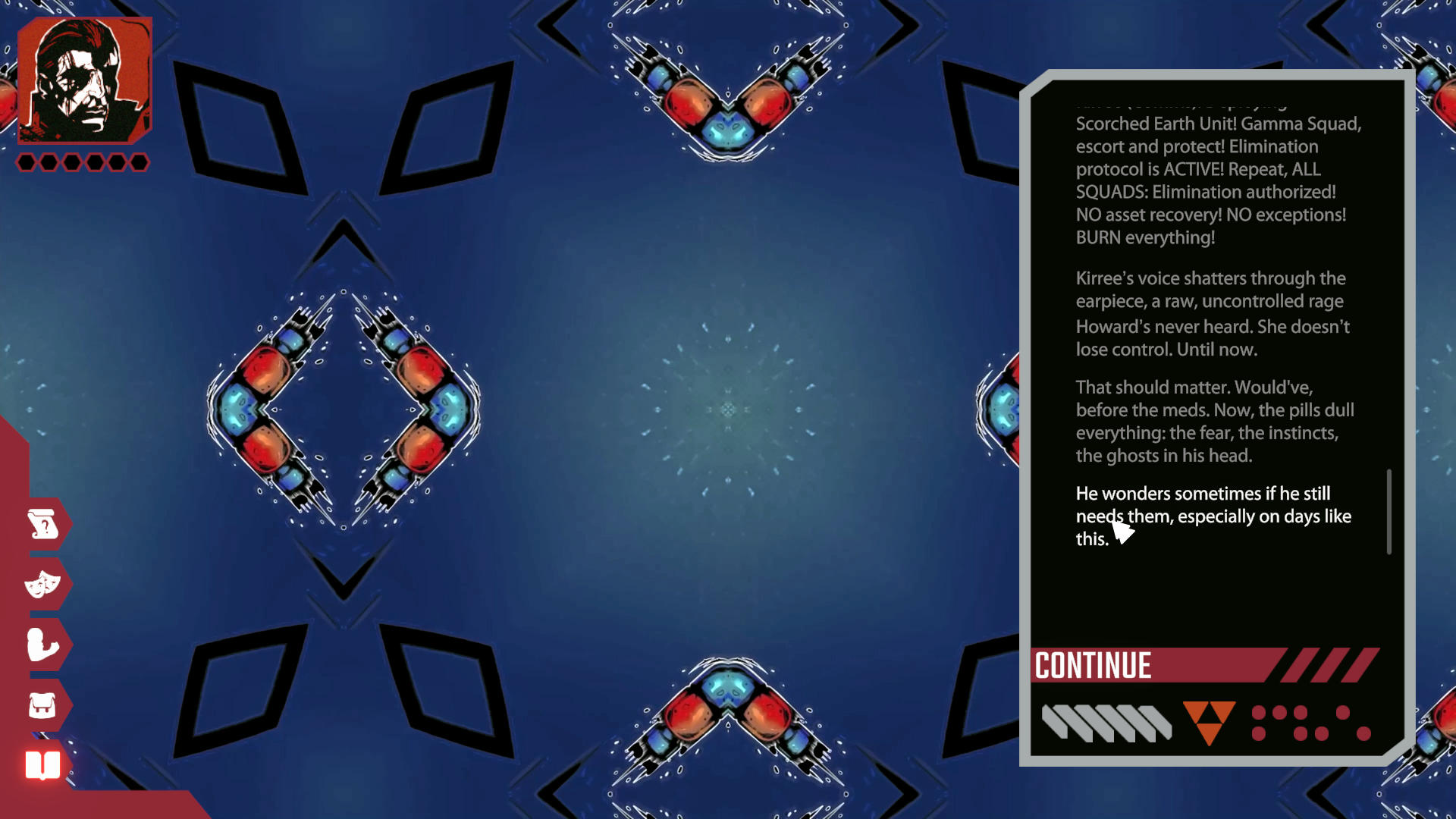
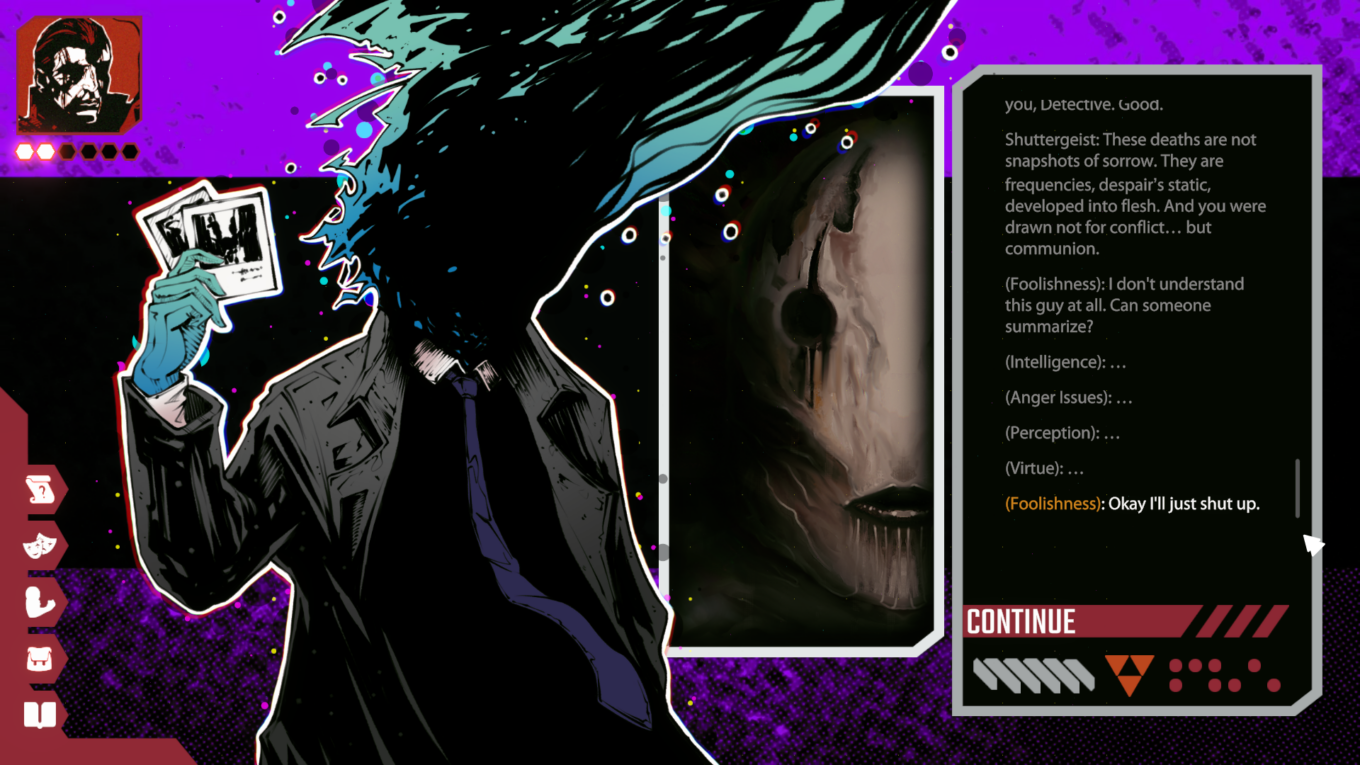
Like Disco’s protagonist Harry Du Bois, Howard is made up of individual personalities which also act as the game’s skills. To start anyway, there are no skills as brilliant or beguiling as Inland Empire or Shivers. In fact, all of them are more or less generic. Using Anger Issues will make you act impulsively. Tackling something with perception will help you catch unseen details. As you level them up, each skill becomes a little more specific. For example, in my case, Virtue became Truth Seeker. Yet, within the bounds of the demo, the voices feel like attributes a character like this is supposed to have, rather than aspects of a well-defined protagonist. The worst offender is the Foolishness personality, a dumb-and-dumber chaos agent who suggests non-sequiturs and absurdities. Disco Elysium successfully grounds its protagonists’ quirks into a psychology. Celestial Return only has a “lol random” personality.
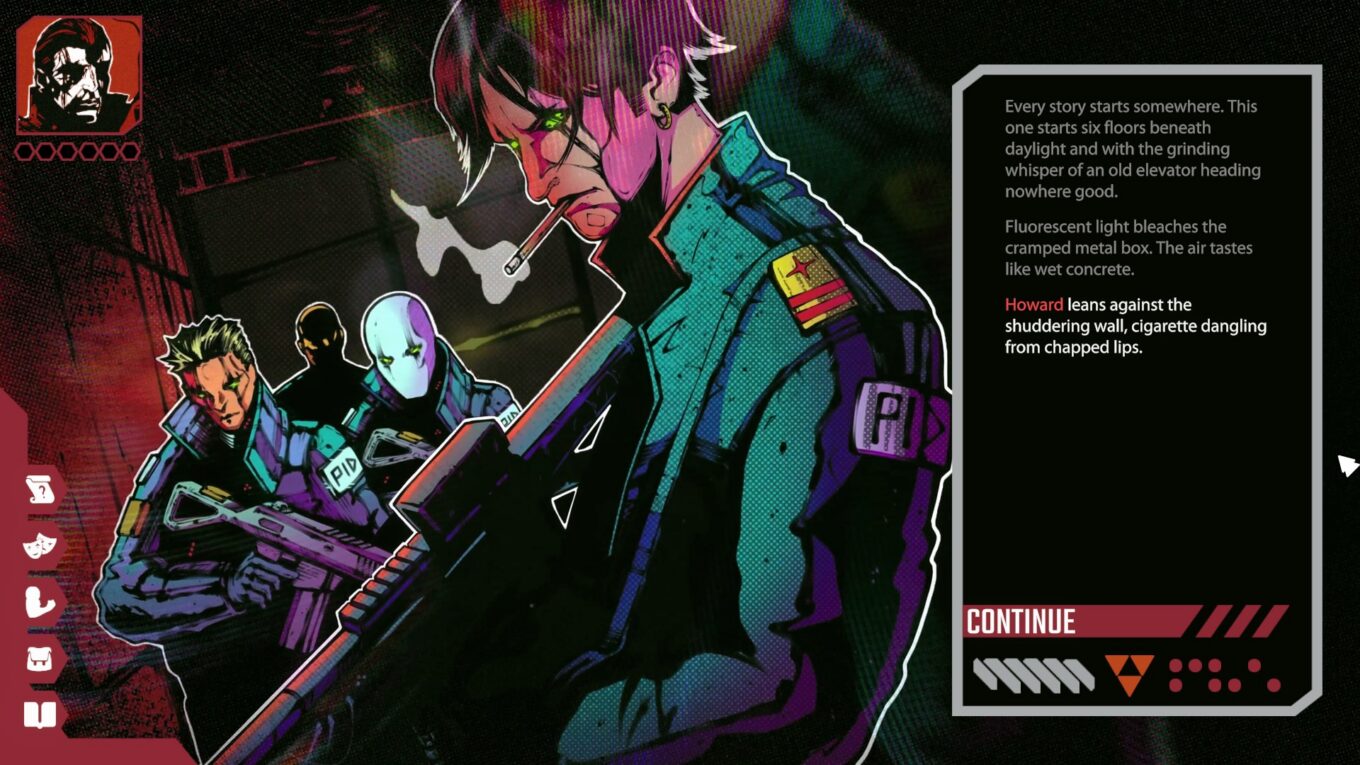
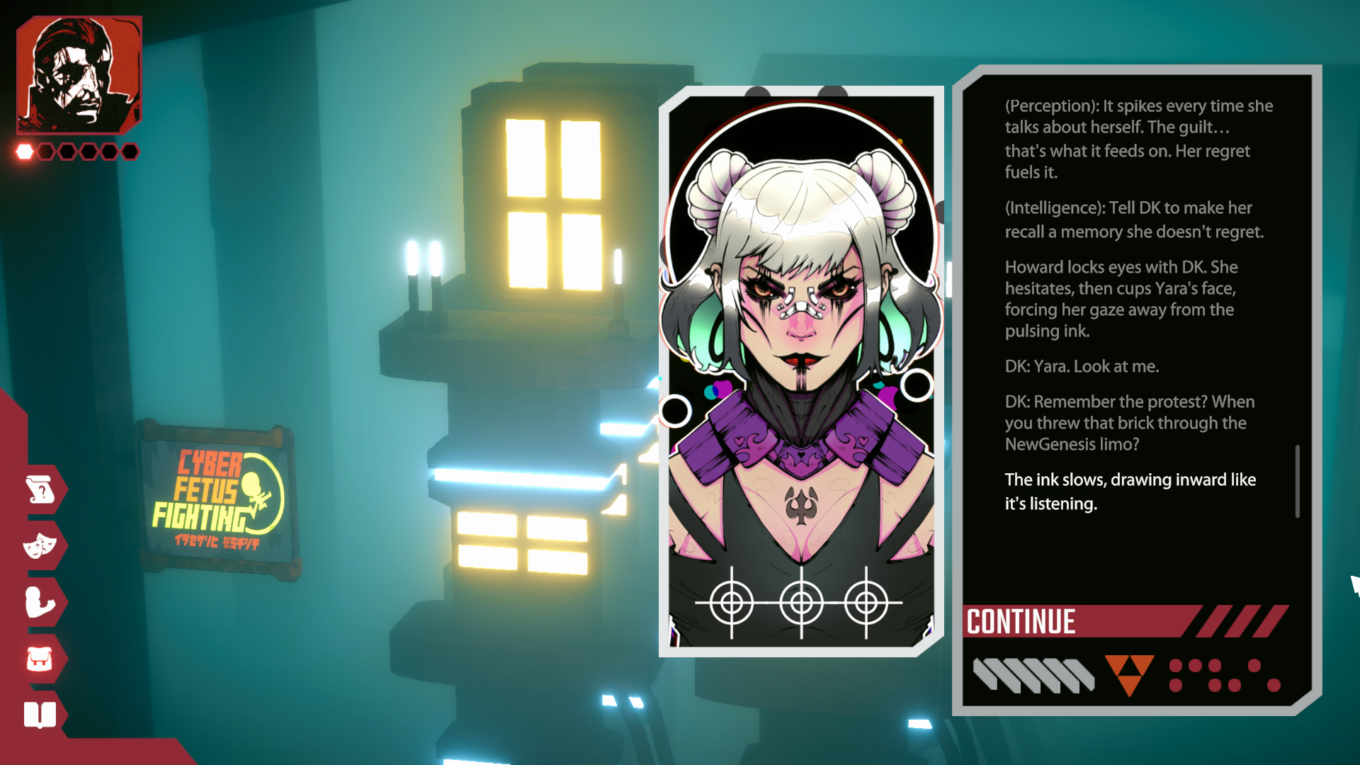
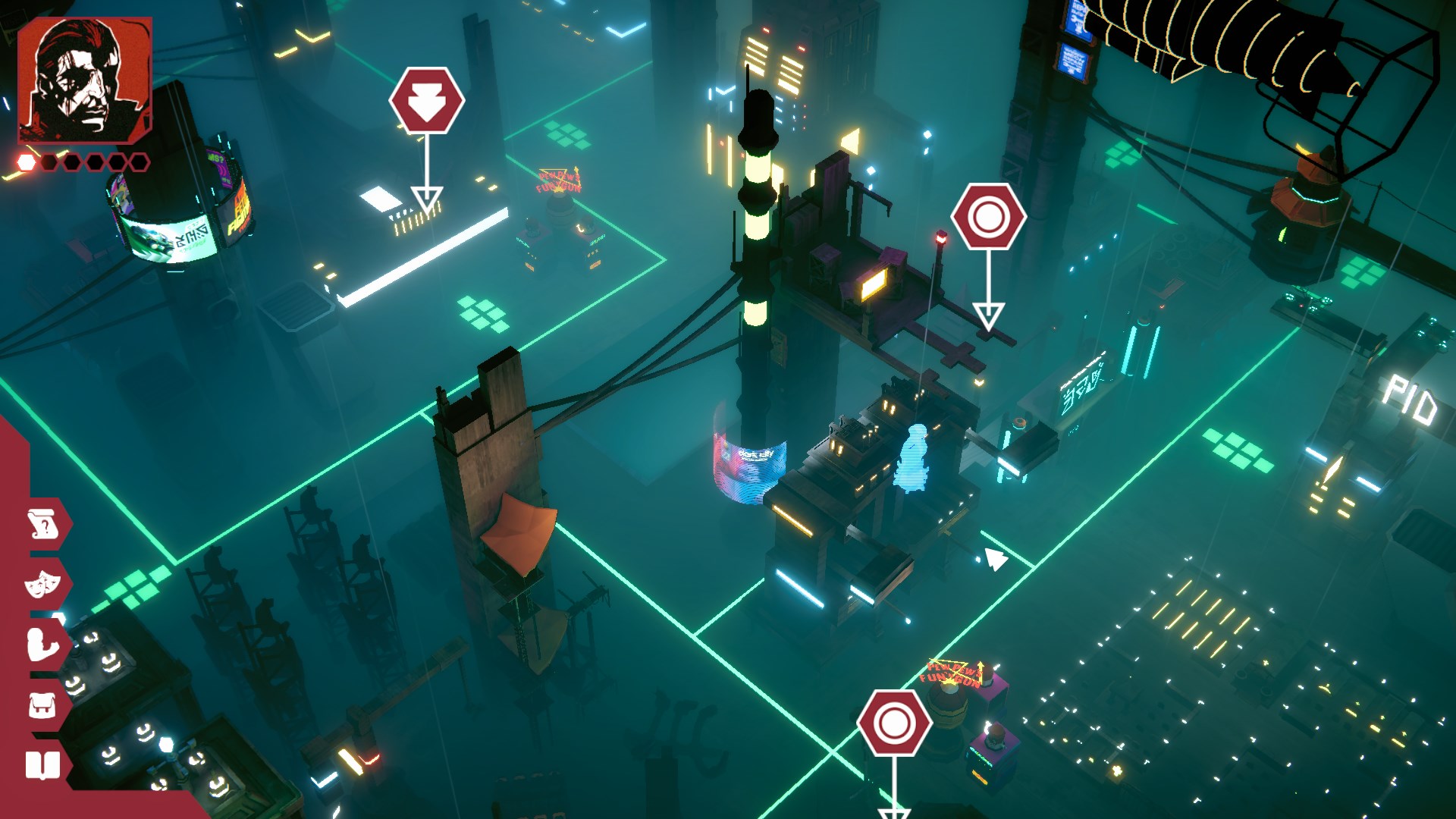
Celestial Return does not borrow Disco’s point-and-click UI. Instead, the game uses visual-novel style portraits and illustrations. In between conversations, you’ll travel a cityscape with points of interest, similar to Citizen Sleeper’s space station The Eye. In principle, this is a sharp change. You need far fewer assets to develop an abstract city. Even with this limited scope, you can pack in plenty of atmosphere. The problem is not design, but aesthetic. The city is an assemblage of Cyberpunk tropes: neon signs and shadow-laden skyscrapers. Plenty of games have this kitschy look, Celestial Return does itself no favors by employing it.
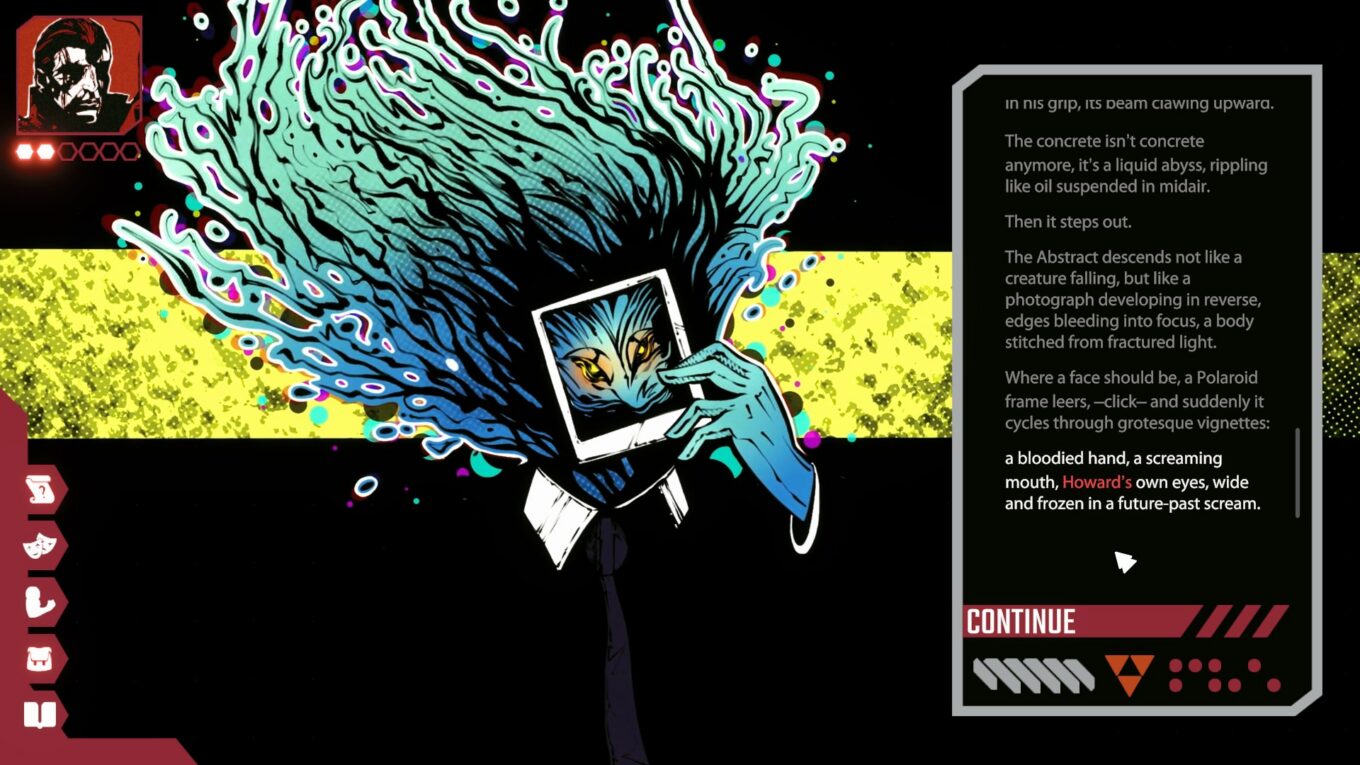
These problems don’t extend to the game’s hand-drawn art, which does have more than enough inky personality. Where Disco Elysium is painterly, Celestial Return is brash and comic-booky. It invites comparison to Darek Robertson’s work on Transmetropolitan. This look works both for and against it. On one hand, the game sings when it is at its dreamiest. Watching the sea of roses sway in the blaze in the first part of the game is still stuck in my mind. It’s worse when the game tries to be obvious. In one beat, Howard contemplates his mental health and the drugs he takes to cope. As he thinks, pills begin falling from the top of the screen like bombs. Whatever strengths Celestial Return has, subtlety is not one of them.
The soundtrack is another low point. Filled with chugging synths, you could put these tracks in Ghostrunner or Cyberpunk 2077 and they would not feel out of place. This combination of thick and obvious arpeggiation and undanceable EDM club tracks has been the major accompaniment of Cyberpunk for the last decade. I just want to hear something new. You don’t even have to go out of cyberpunk’s oeuvre to find other sounds. Think of Blade Runner’s saxophone haze or even the punk-rock of Refused’s contributions to Cyberpunk 2077. Perhaps the full game will incorporate a more diverse palette.
Writing previews like this is always a difficult task because, by definition, the game is not yet complete. Now, even full-fledged releases can rocket from abysmal failure to newfound classic with a series of updates. Celestial Return has some spunk. But I fear it is too buried under the weight of what came before to find its own footing. Disco Elysium has stretched its long arms across the role-playing game. It remains to be seen if its influences can squirrel away from its grasp.