Going round in circles, doomed to watch the same mistakes repeated over and over again, while desperately trying to enact small changes to meaningfully alter the course of history. No, I’m not talking about Cavalier Game Studios’ brilliantly eccentric 2017 timelooping jazz puzzler, The Sexy Brutale, I’m talking about politics. Yeah, take that society – nobody is safe from my searing satire. Clearly Cavalier has drawn the same connections given that its latest game (what is it with nine-year gaps recently?) is all about the kinds of monsters who are often drawn to power.
Literally, I mean. Prime Monster imagines a world where humans have been edged out by everything that goes bump in the night, and now the new ruling class has decided that the democratic society that they (presumably) ate was probably onto something, actually. As a result, they’ve formed political parties, a parliament, and learned how to debate. From this rich brew, Cavalier has crafted a card-battling roguelike that gleefully lampoons the act of governing a society.
To that end, every action is inspired by political process (and the grubbier machinations within). Once you pick your monster representative, each with a different ruling style, you’ll find yourself as the leader of the opposition. From here it’s your task to undermine the government by defeating the bills – a motion to ban showering, for example, or one to enact a flesh donation policy – that they bring to parliament. To do this you must convince as many of you MPs (monsters of parliament, natch) as possible to toe the line and oppose the bill, all while also seeking to weaken the government’s majority.
Each of both parties’ MPs will either vote to support, oppose, or abstain, denoted by a green, red, or grey highlight. In order to change your own monsters’ minds you must increase your unity score, at the same time decreasing your opponents’ in order to sway their representatives’ voting intentions. These scores are represented by a looping meter made up of 16 units – every time your unity score exceeds its maximum, one of your MPs will change their mind favourably. Every time you lose more than 16 points, one will choose to abstain (or worse, side with the opposition’s motion).
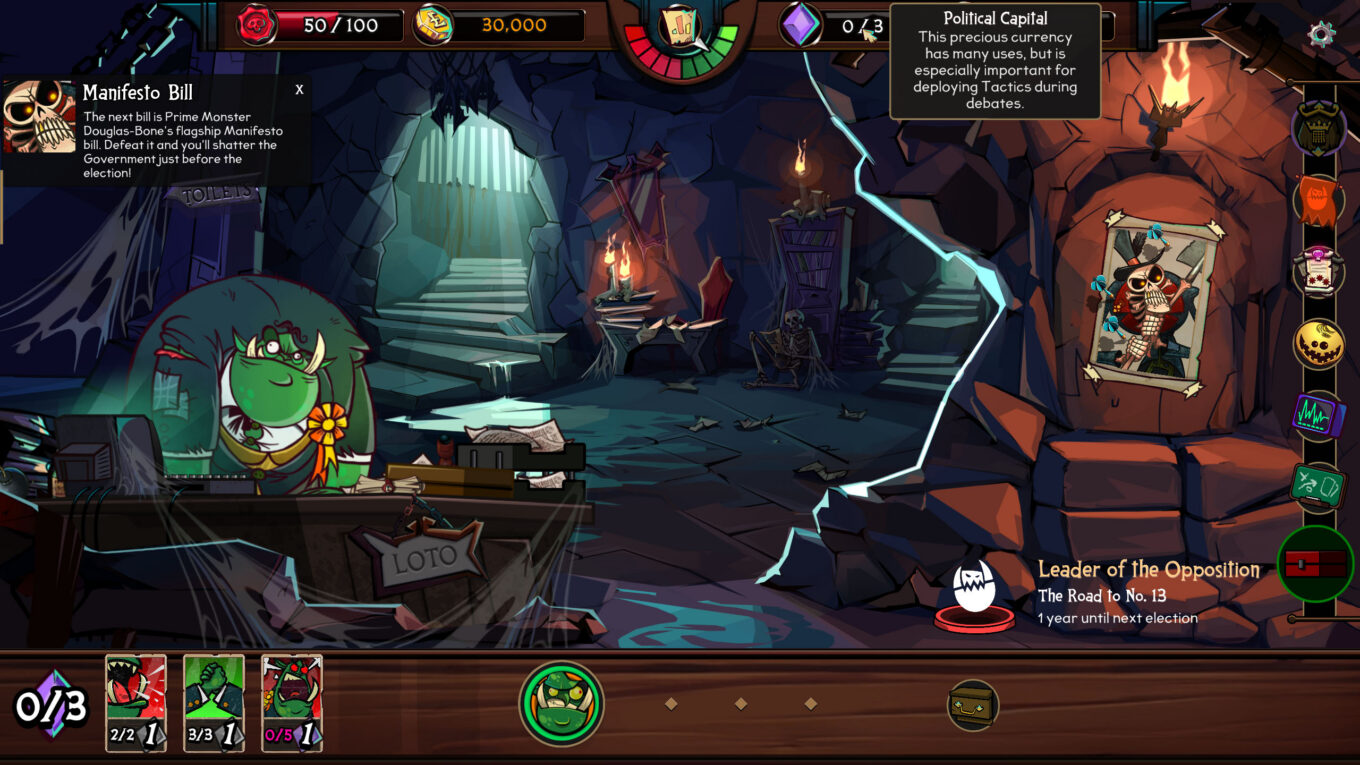
So far so simple, but the path to political victory is rarely a smooth one and changing even one politician’s mind is going to take some strong leadership. Fear not, as you have an array of tools at your disposal. The first of these is Tactics, which are represented by small, permanently held cards in the bottom left of the screen. These generally fall into two camps, either directly chipping away at your opponent’s unity or bolstering yours, and you can use them a set number of times during a game, denoted by a number on the card (though some are infinite, like ‘Egg On’, which allows you to roll for a chance to either temporarily stun or permanently knock out an MP). To do so you’ll need political capital – you start with three points to spend, and these can be replenished using items or by choosing to exploit (sacrifice) your Debate Cards.
The meat of your toolset, Debate Cards are initially held in hands of three, and can be used to either target individual MPs or their leader. The ‘Callout’ card, for example, allows you to stun a rival MP, nullifying any effects they have active while also dealing three damage to the party’s unity score. Or you can apply defence to your MPs to absorb any direct attacks from the opposition – particularly helpful when personal insults start flying which chip away at your authority. If your authority falls too far, you’ll start rounds with fewer MPs onside.
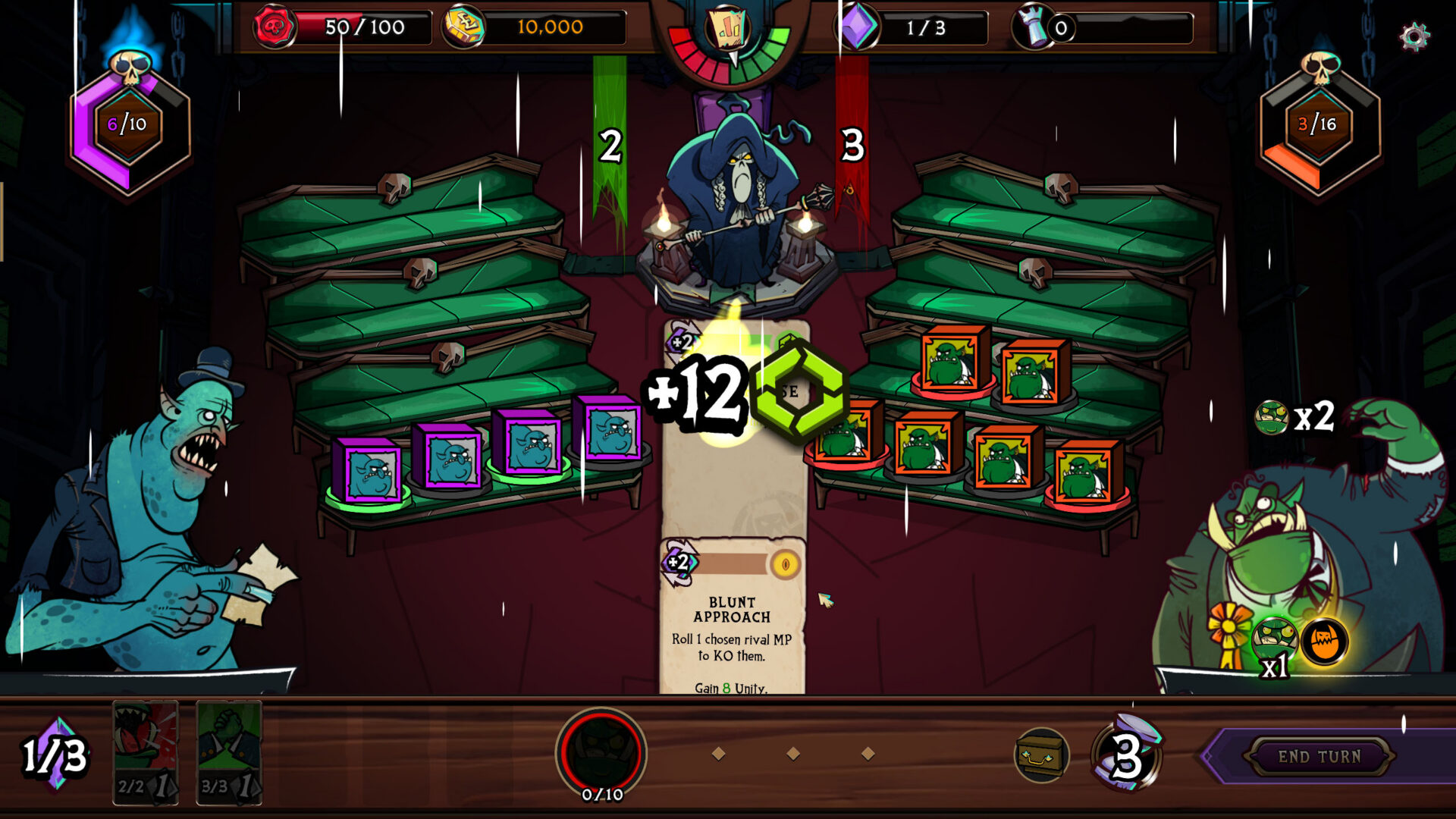
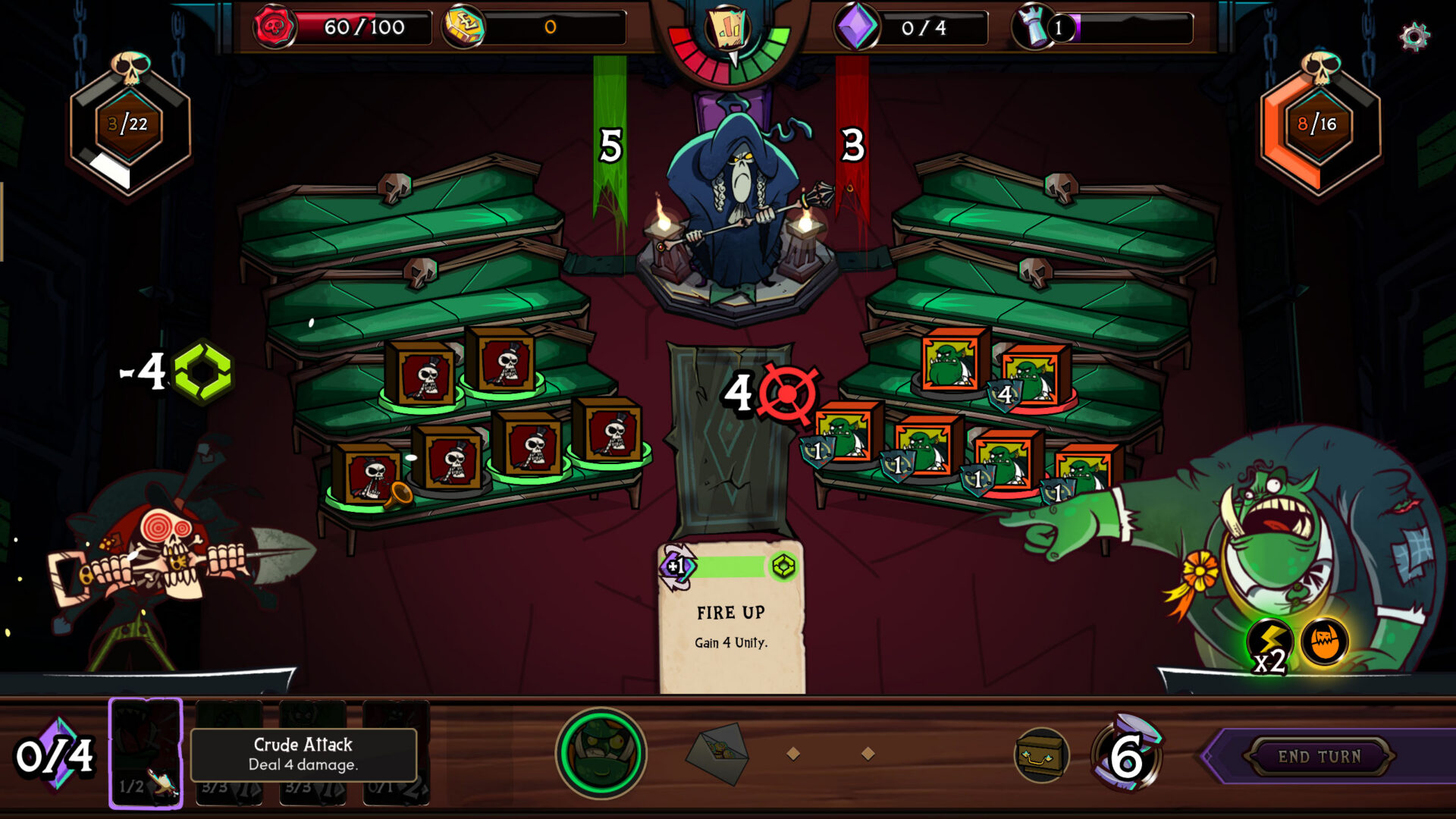
You can also upgrade both Tactics and Debate Cards, creating improved cards such as ‘Incite+’ – it costs two political capital rather than one, but as well as applying a frenzy effect to your chosen party MP (meaning they add an additional point of unity every time any is gained) you also get to roll for a one-time additional unity boost.
Some Debate Cards have an eye in the corner, which marks them out as Dirty Tricks. These powerful actions shortcut RNG calls and tend to have multiple effects, but their potency will draw the attention of the Shrieker of the House who will investigate you for breaking Parliament rules. A roll of the dice will determine if that investigation unearths any dirt – if it lands on an eye symbol, you’ll be caught and lose a precious voting MP for the rest of the turn. If it lands on a number, you’ve managed to cover up the scandal, but that number will now also be an eye symbol the next time you deploy a Dirty Trick card, increasing the chance of being caught.
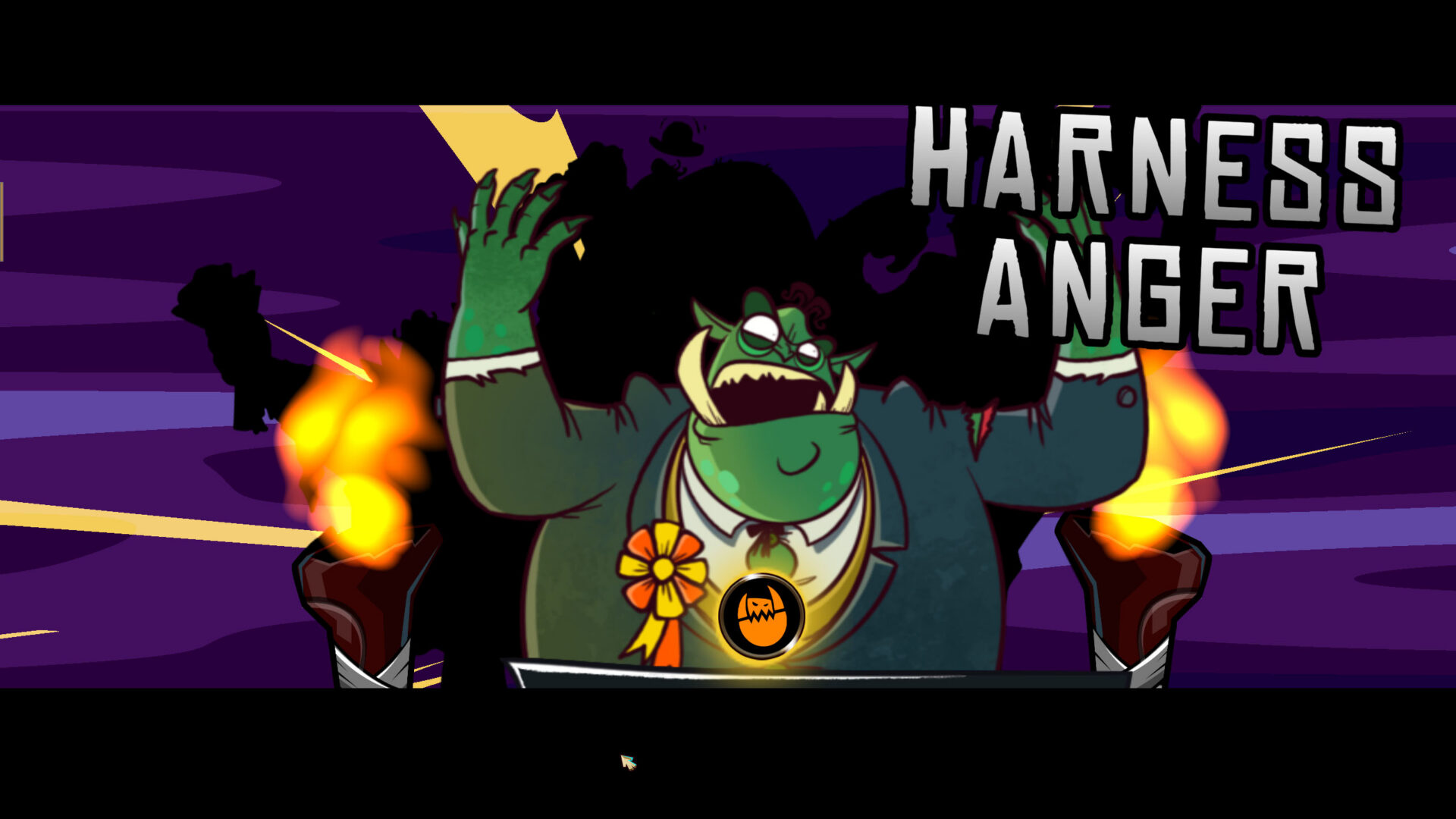
On top of all of this, each leader has a signature Charge Tactic which charges each time you lose unity points. Using it can change the course of a debate, either making a significant dent in your opponent’s unity or bolstering yours. Chopper Badstone, leader of the Orcs-4-U party and the only playable character I had access to in the demo, can harness anger to whip his party into shape, doubling the amount of points for the next unify action while also causing the same amount of damage to the opposition.
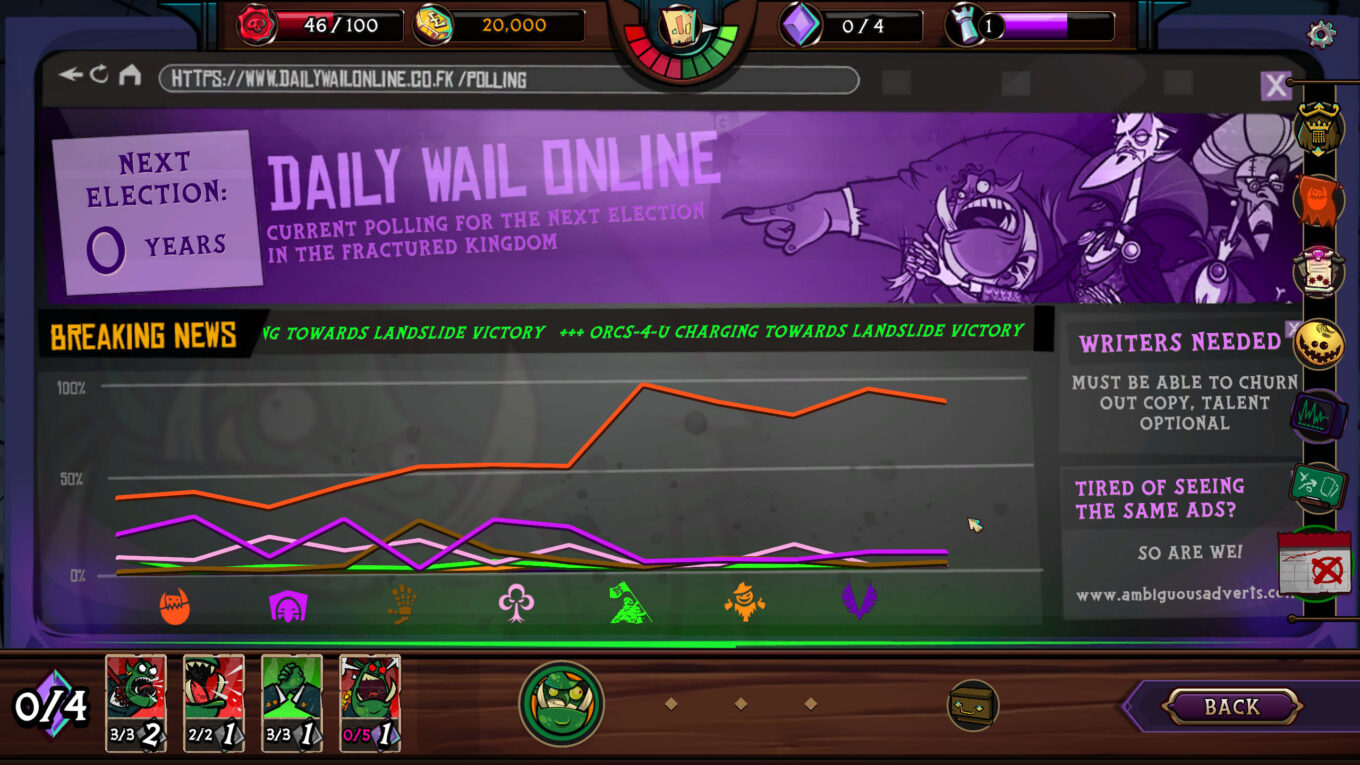
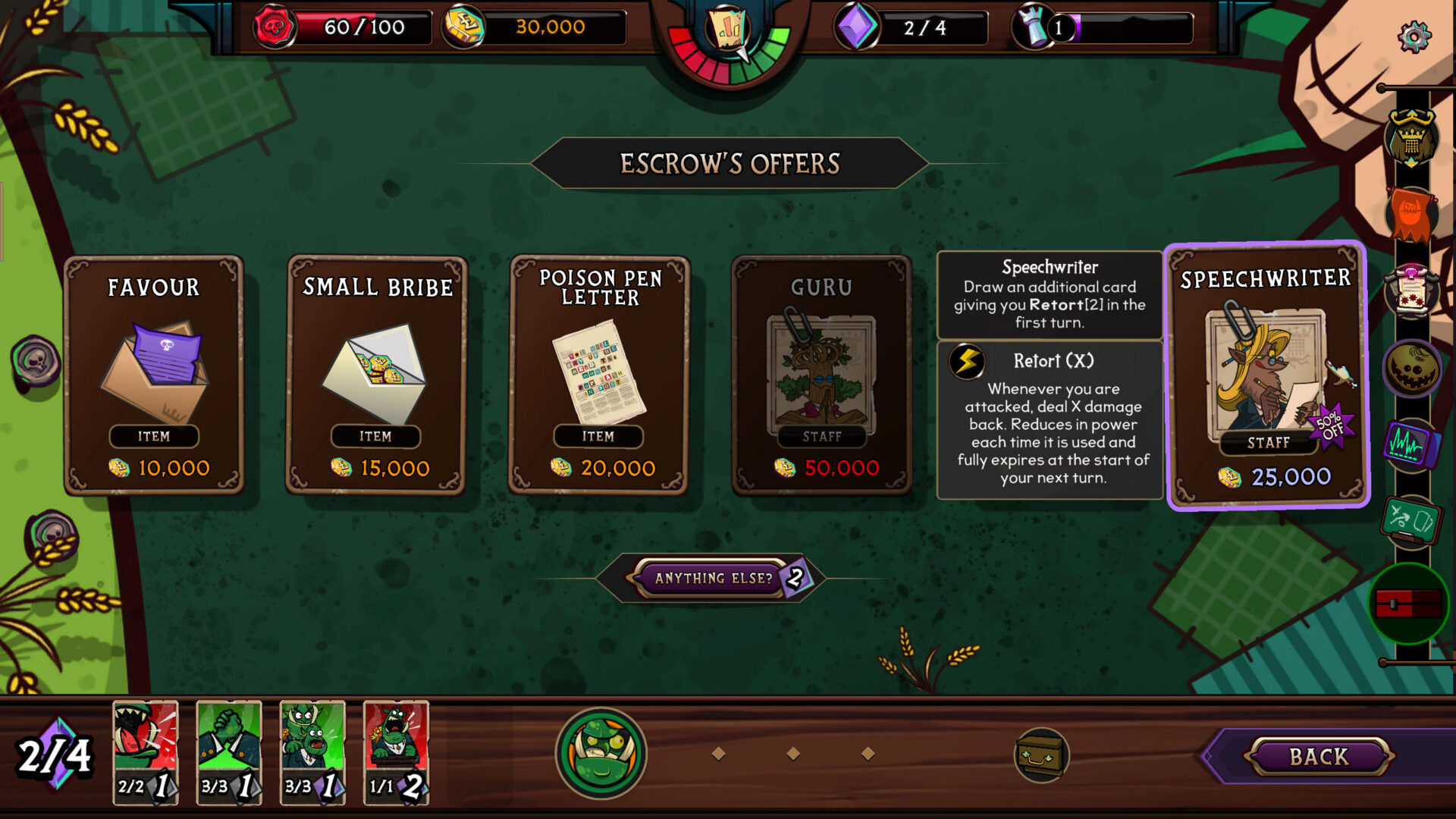
In between rounds you can manage various aspects of your campaign, including the Tactics you want to bring with you to the debating chamber, your expanding Debate Cards deck, and making increasingly tough choices regarding administrative matters which will help and hinder you. You can also purchase items and hire staff to add helpful gameplay effects, and monitor your popularity in the polls as the general election date approaches.
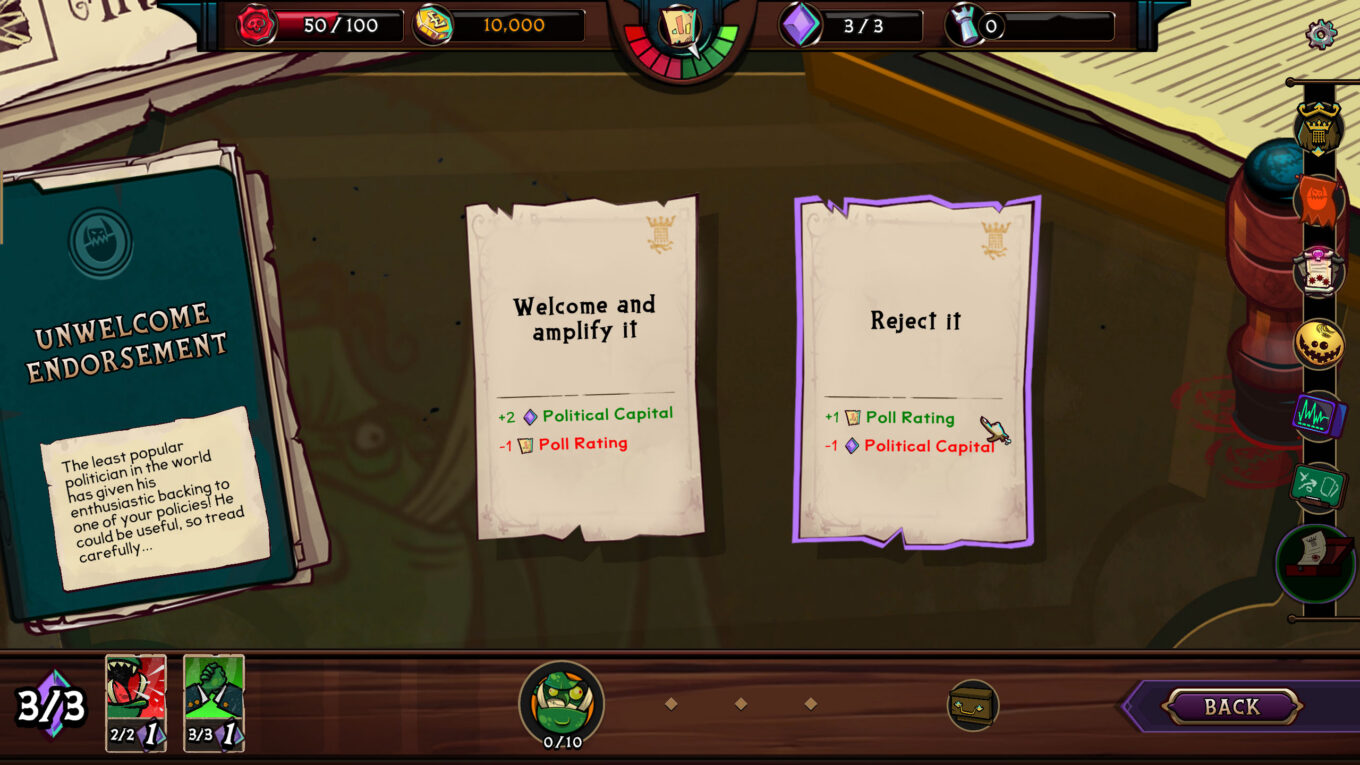
Ah yes, elections. You see, being in opposition is just the beginning – beat that portion of the game and the real challenge begins as you try to remain in government. My demo ended just as I was elected to the auspicious role of Prime Monster (I really want to say Prime Monister, is that just me?), but I note that there is the opportunity to resign if a run isn’t going well and double your current score, here defined as Legacy, due to history remembering you more fondly. A politician stepping down with reputation intact? Surely the most fanciful element of the entire game… SATIRE.
Prime Monster is an intriguing prospect. Like many card battlers, its mechanics are much more difficult to understand on paper than they are in practice, and there’s a notable pace to gameplay that marries well with its high-energy, raucous atmosphere. Its mapping of genuine (albeit heavily caricatured) political processes onto a polished-feeling card-based roguelike structure is imaginative and often genuinely funny. And while I only got to sample a handful of cards, it is already possible to see how the combination of the game’s various systems should be capable of bringing about a deep and meaningfully strategic experience. I’m already looking forward to running for office when the game releases later this year.