A bird has been following me for hours now. It’s been hovering around in the back of cutscenes, flapping awkwardly about ten feet above my head while I walk around in Hernand, tailing me like a vulture even when I’m on horseback.
Perplexed, and frankly running short of patience, I eventually give in. I google it. What does the bird want, I ask the internet. It wants to give me a letter apparently. I simply haven’t stood still for long enough to let it land on me and deliver its consignment.
Fine. Fine. I stand stock still and wait a few seconds, and sure enough the bird lands on my shoulder. A start button prompt appears onscreen, as they often do when Crimson Desert wants you to review a tutorial pop-up about a new action, ability or mechanic. I press it, and Kliff dons the Visione helmet and plays back a scene from the quest I just finished fifteen minutes ago. Nothing else happens. Ladies and gentlemen, welcome to Crimson Desert.
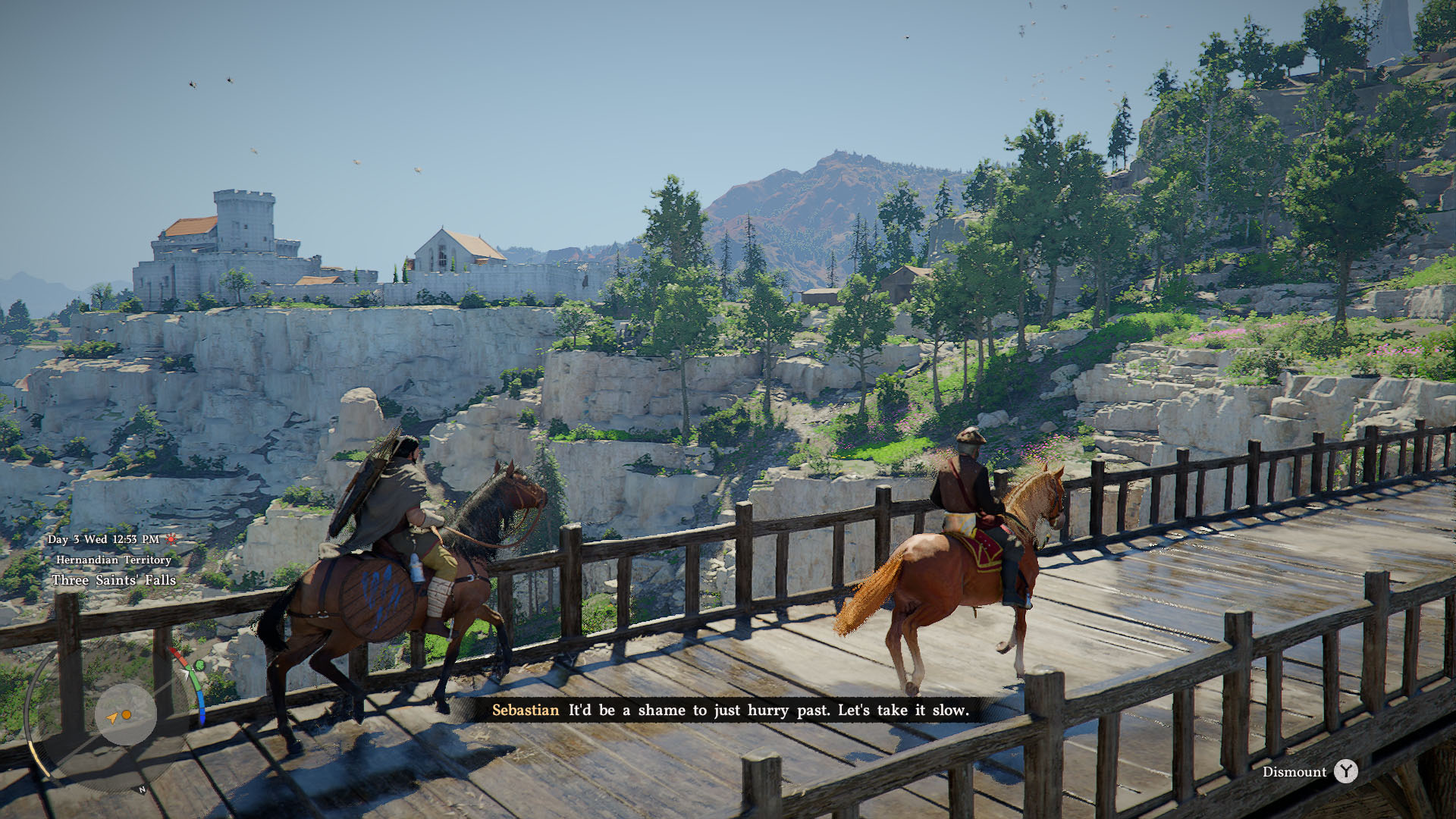
Developer Pearl Abyss made its name with Black Desert online, a stratospherically popular MMO that’s been going since 2014 now. But Crimson Desert is the studio’s first take on solo RPGs, and that shows in all sorts of ways. Some of them are positive: it exhibits way more systems and ideas than any veteran singleplayer RPG developer would deem sensible, and that often leads to moments of delightful experimentation and grin-inducing realisations. Oh wow, I can do it that way, you find yourself thinking on a semi-regular basis.
But more often still, that debutant naivety makes itself known in… less than positive ways. This game seems wilfully, petulantly unwilling to explain even basic mechanics, for example, and has a control scheme forged by hate-goblins in the deepest fires of RSI Mountain. It also features an opening – ooh, ten hours? – that’s paced such that it seems to be deliberately trying to lose you, as though it wants only the most dedicated, even-tempered alt-tabbers to see past chapter three. Dragon Age Inquisition’s infamously slow start feels like Baldur’s Gate II by comparison.
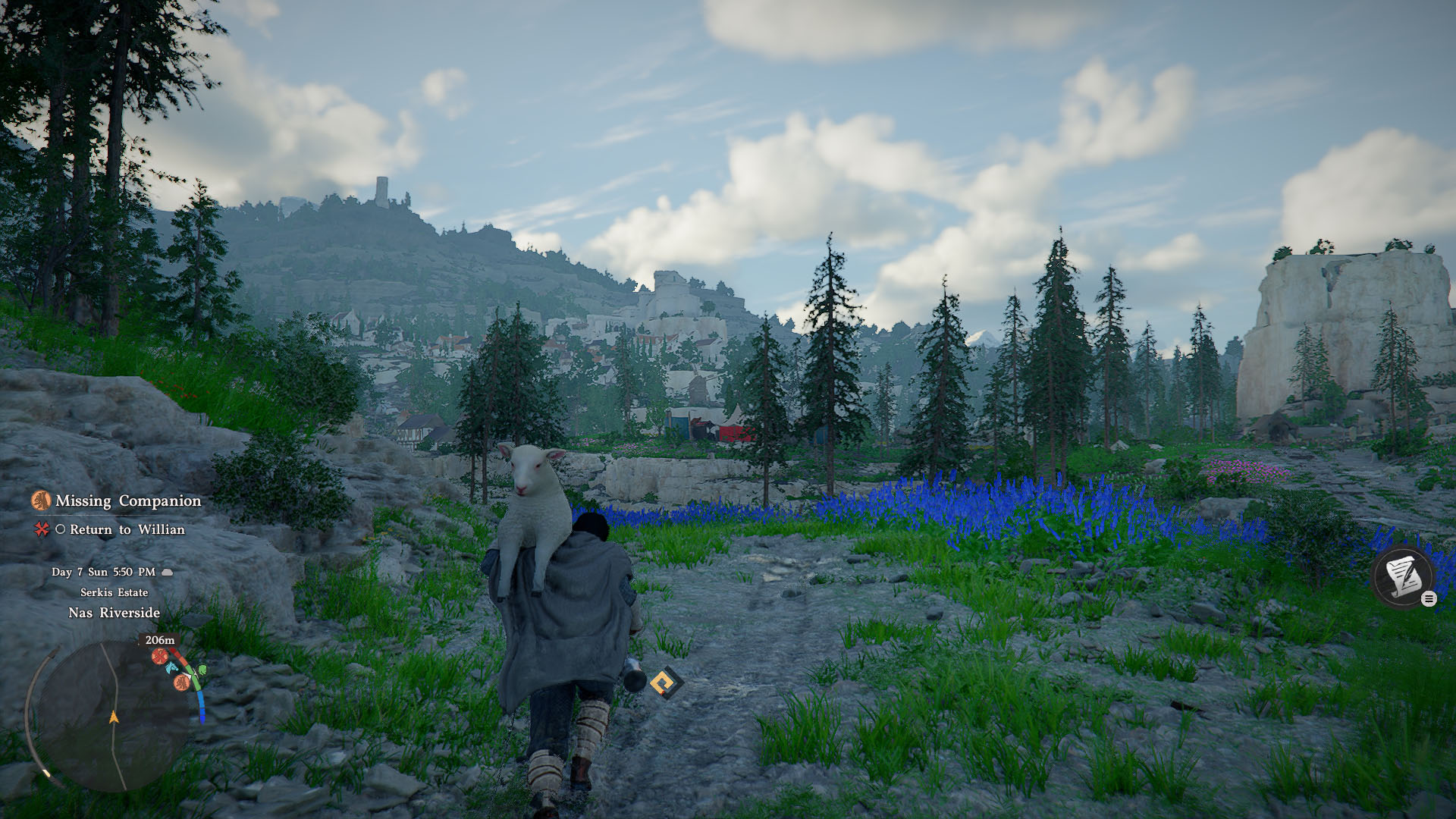
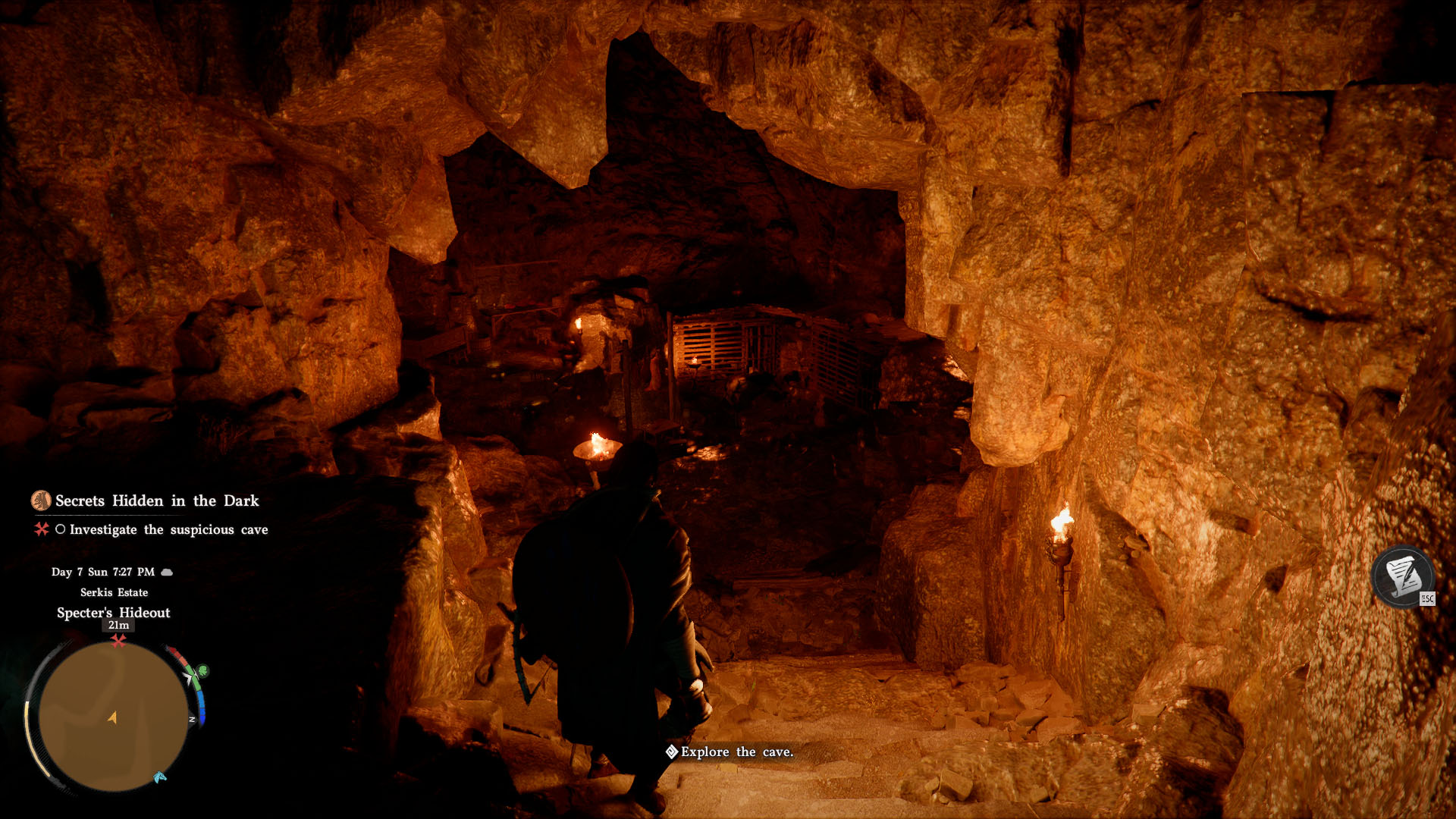
You are Kliff, a Greymane with some blue warpaint on your face that Mel Gibson would deeply approve of. After a prologue in which your tribe is slaughtered by a giant gruff man who leads a rival tribe called the Black Bears and you are unceremoniously killed, you’re brought back to life and introduced to another realm high in the sky above your familiar world. This world is comprised mostly of Breath of the Wild’s surplus puzzles, plus some floating platforms and fragmented landscapes that developers use when they do those ‘the protagonist is questioning their very reality’ sequences. Then you jump off the edge and land back in the trad-fantasty climes of Hernand.
I’m barely summarising here. That’s almost as much context and backstory as the game gives you during that sequence. Who Kliff is, why he was brought back from death, what it means to be a Greymane… these are all questions that only many hours of dogged perseverance can answer in Crimson Desert.
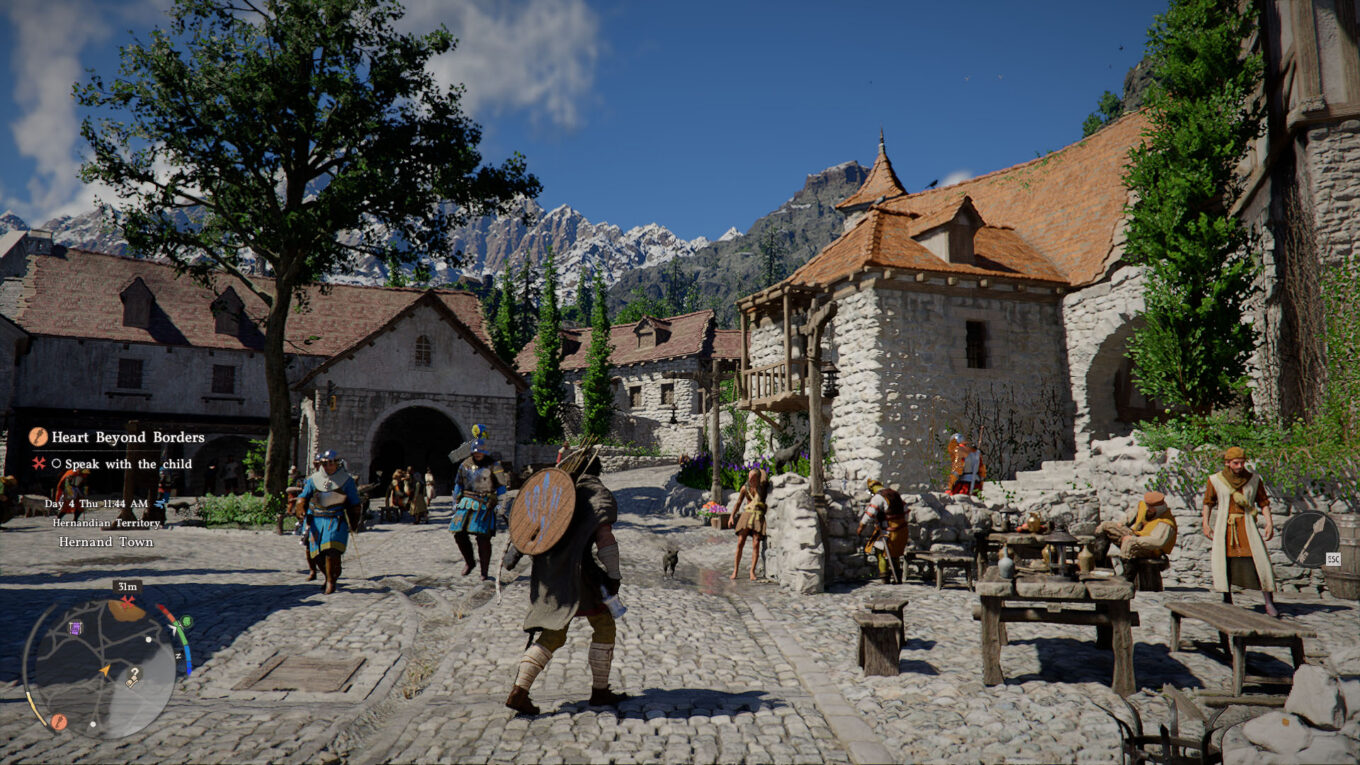
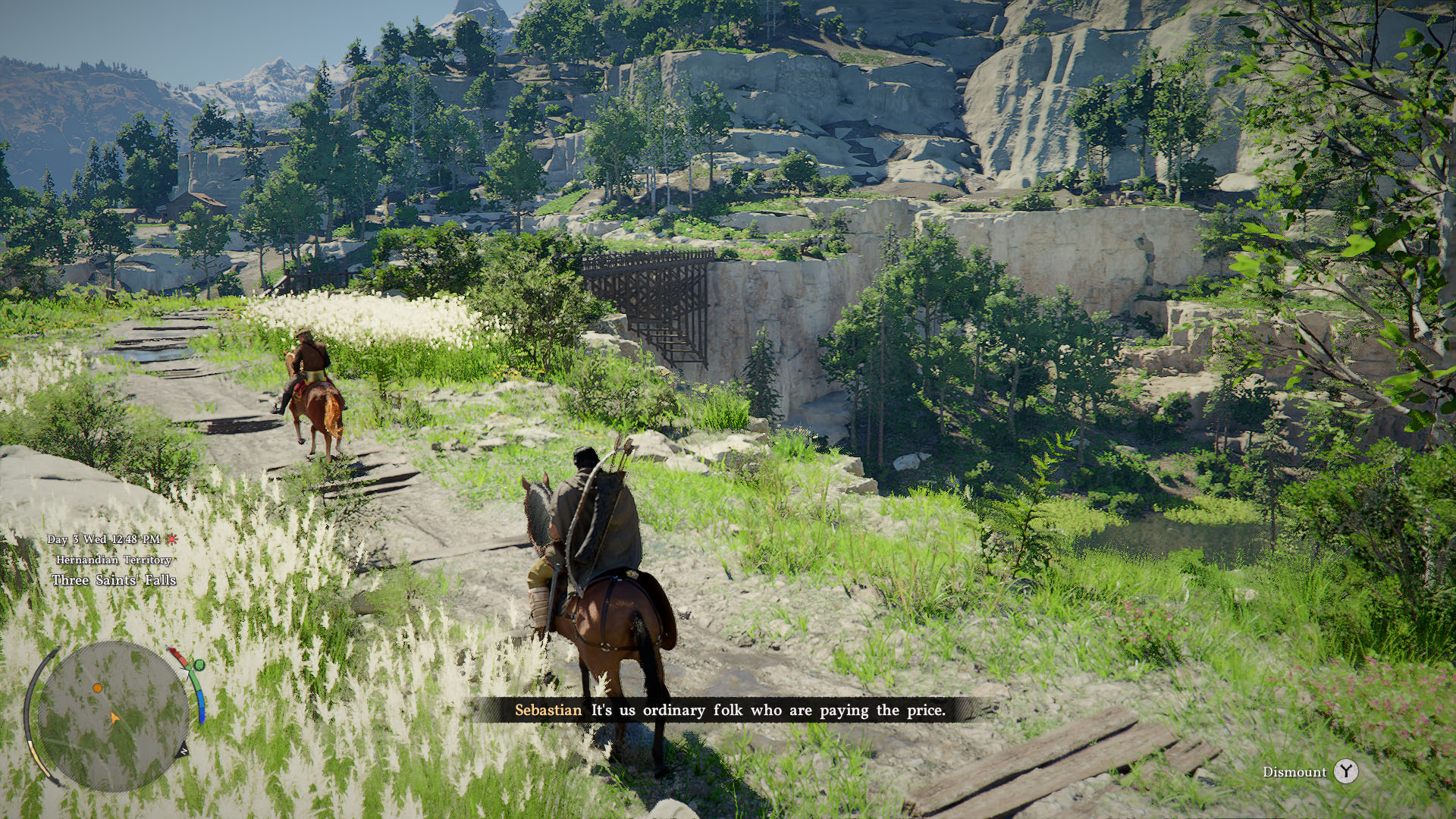
What does hook you in with some much-needed immediacy, though, is how stunning the game world looks. This is a world of remarkable fidelity, cast in a vivid but realistic lighting style that shows off its beautiful vistas, chalky cliff faces and rolling hills wonderfully. Happily, it’s also not a resource hog, and runs very well at high settings on my veteran RTX 2080 TI. It’s so well realised on a visual level, this world, so bristling with incidental set dressing, costumes that feel thought about and grounded in a consistent fantasy world, and for an hour or two that’s enough to convince you that there must be some deep lore and wonderful storytelling to unearth.
There isn’t. Crimson Desert is very much a systems game, not a narrative-led game where the systems support a story. The fun to be had here is the fun you go off and make yourself, after spending hours becoming fluent in its elemental abilities, clan settlement management layer and Kliff’s bizarre time-replay hat. It’s not a game that serves up memorable questlines or characters, or motors you along the critical path by motivating you with meaning. Many hours deep into Crimson Desert I still don’t particularly care about Kliff or the Greymanes. I do care about finding out more unexpected ways I can combine abilities, and exploring more of the incomprehensibly vast world map.
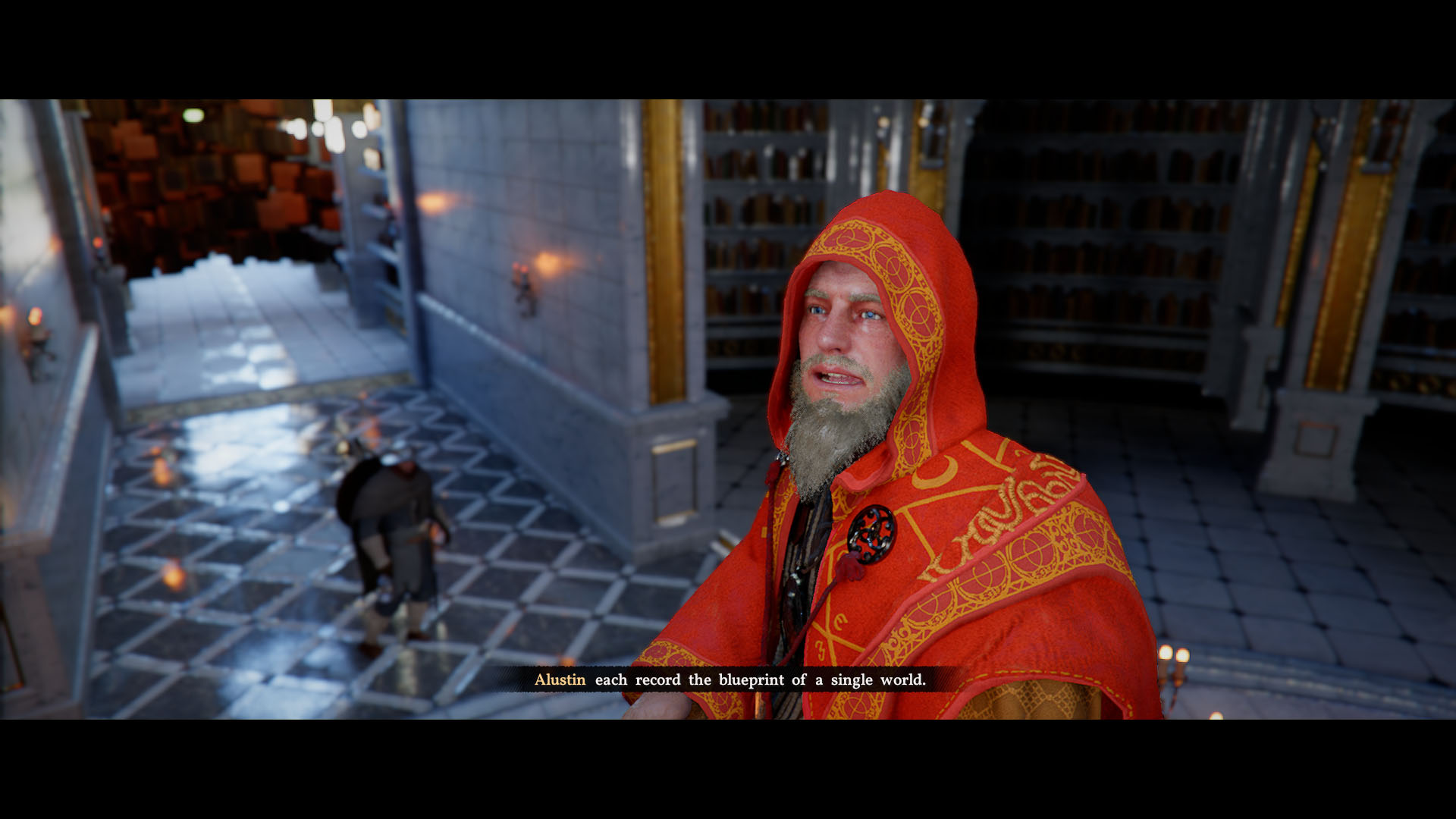
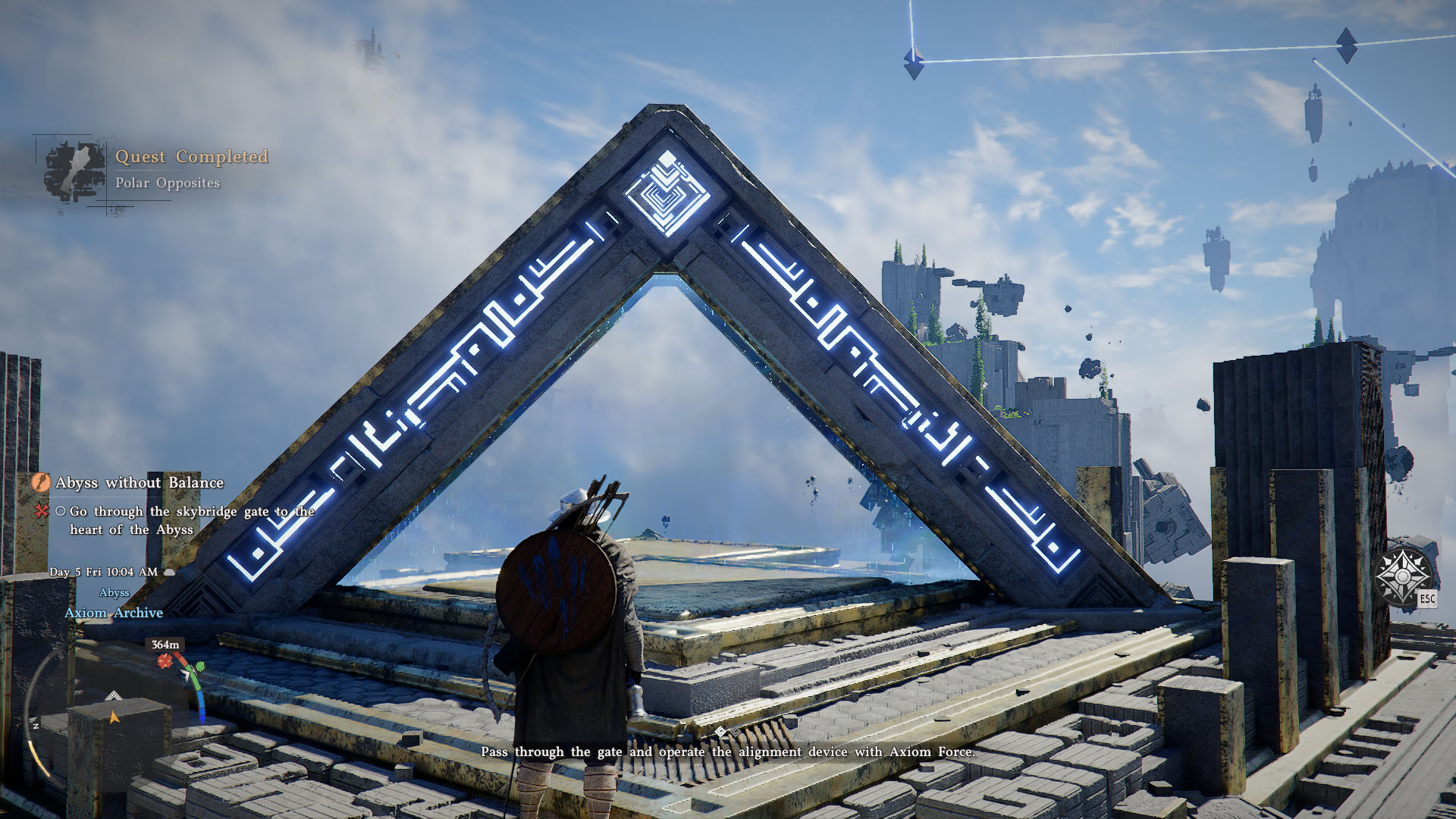
The quests are a big problem. Not only do they feel uninspired and arbitrary, it’s not even clear why you’re doing them or who’s actually asking you to. They simply appear in your journal (which is a misnomer, because the quests within it are written more tersely than a Cormac McCarthy novel and offer zero context or narrative flair) and when you clear one, another just appears.
It seems like a small point, but this totally shatters the immersion of being there, in the world. Instead, it’s like the game designer has a direct line to you. ‘Go and do this quest to progress the main questline’, they’re saying, over and over again. You don’t feel like Kliff, restoring the power of the Greymanes and unravelling the mysteries of the abyssal powers he’s been granted. You feel like you, sitting at your desk, ticking off objectives in an open-world game. The plot arc has plenty of meat on its bones, but it feels disjointed and unengaging because it’s told in this way. There’s no narrative cohesion. No finesse to it.
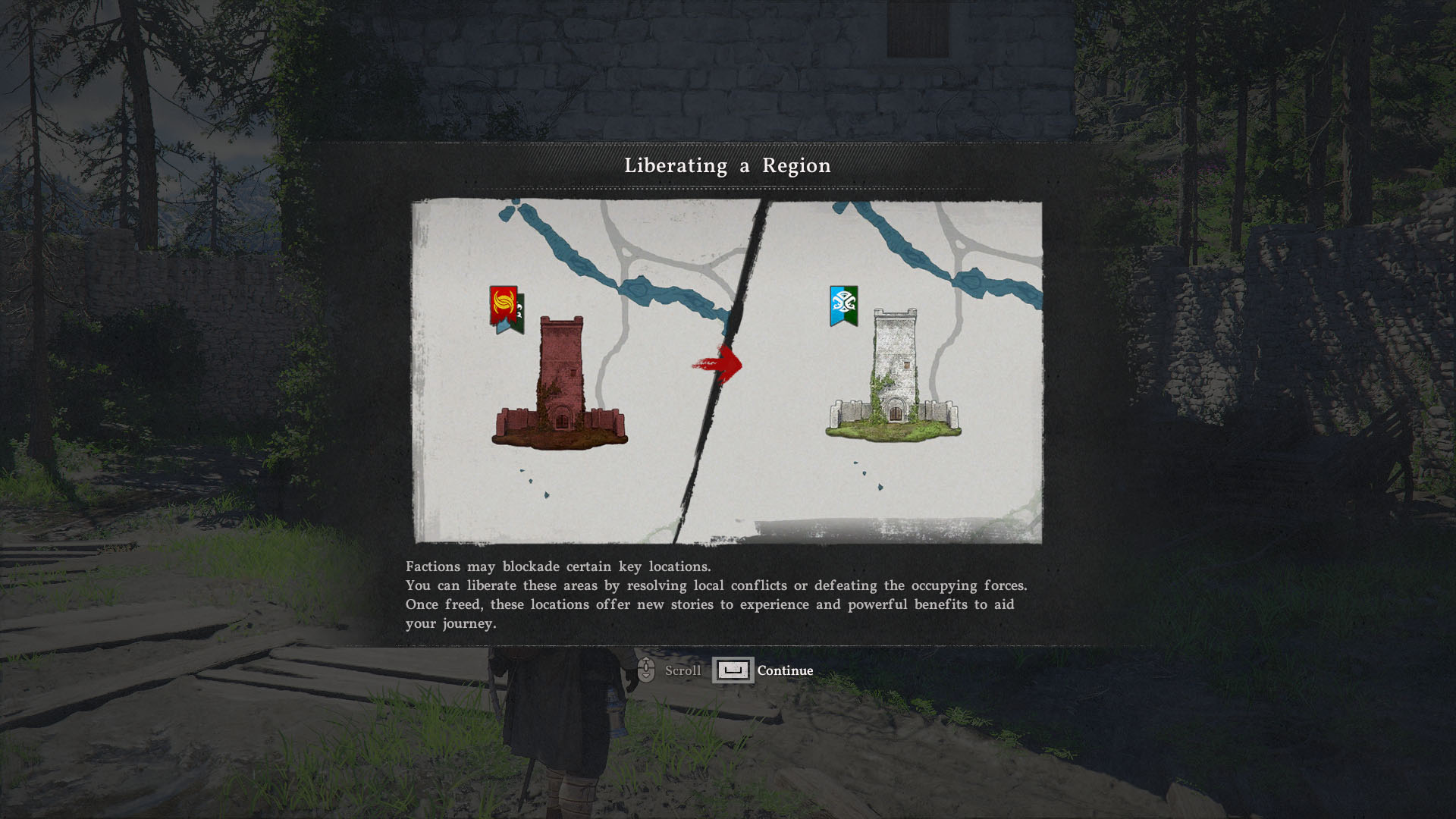
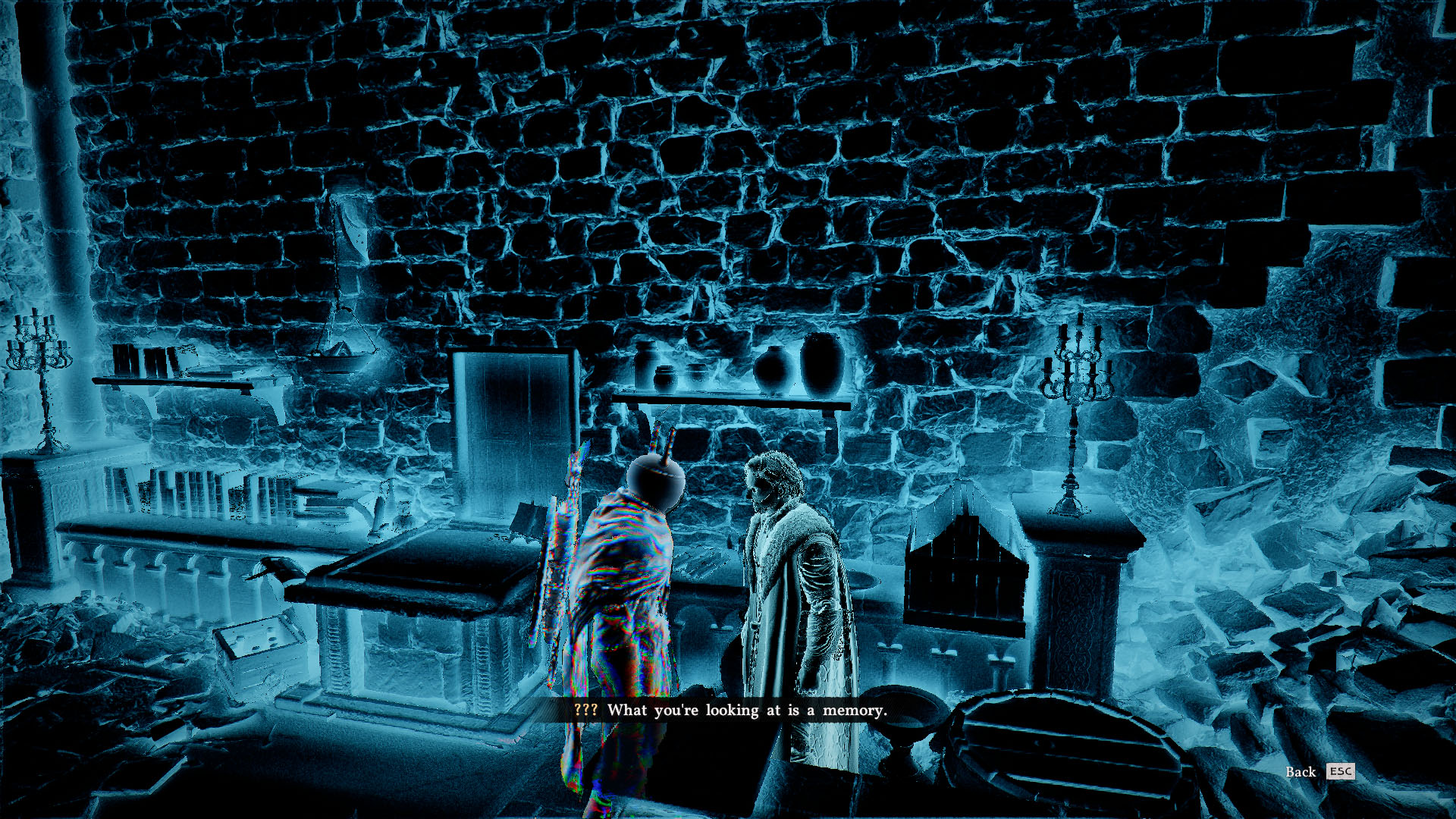
Meanwhile, there are about 9,000 different systems and mechanics lurking below the surface of the control set and UI. A lot of the early game quests are basically tutorials that try to explain the most fundamental ones, but they’re spectacularly poorly explained and often executed as puzzles that seem to have wildly illogical solutions. You have to navigate these puzzles with an unintuitive and awkward control layout, and you’re not even sure why your protagonist is doing this in the first place.
There’s far more joy to be had in simply stumbling upon these little gameplay touches out in the world. Once the disastrous onboarding gets out of the way, you start experimenting. You learn that you can cook food by taking it out of your inventory, putting it on the floor, and using your abyssal power to set fire to it. Or that you can go fishing without a fishing rod, simply by jumping in the water and chasing down fish.
It took me absolutely hours to work out that I could level up my horse by petting it, unlocking abilities like horse drifting (Need For Speed on hooves). I literally stumbled upon the pickpocketing mechanic by noticing that a ‘pick pocket’ prompt only appears on NPCs after you physically bump into them. You also need a mask that covers your face to commit illegal activities like this.
Discoveries like this set your mind racing with possibilities. They’re great. And they stack, too. You can lure NPCs to specific positions by dropping tempting inventory items on the floor, if you want to pick their pocket away from prying eyes. But you might never discover them, if you leave it to the game itself to educate you.
The combat? It’s fine. Absolutely fine. Boss fights were tuned too hard for most of my time with the game until a recent patch, but those difficulty spikes have been rounded off a bit now. There’s plenty of scope for experimentation and chaining combos, since you have a roster of weapon moves, melee attacks and abyssal abilities to throw in, in addition to ranged bow attacks and even kicks from your trusty horse, if you leveled up your affinity with it.
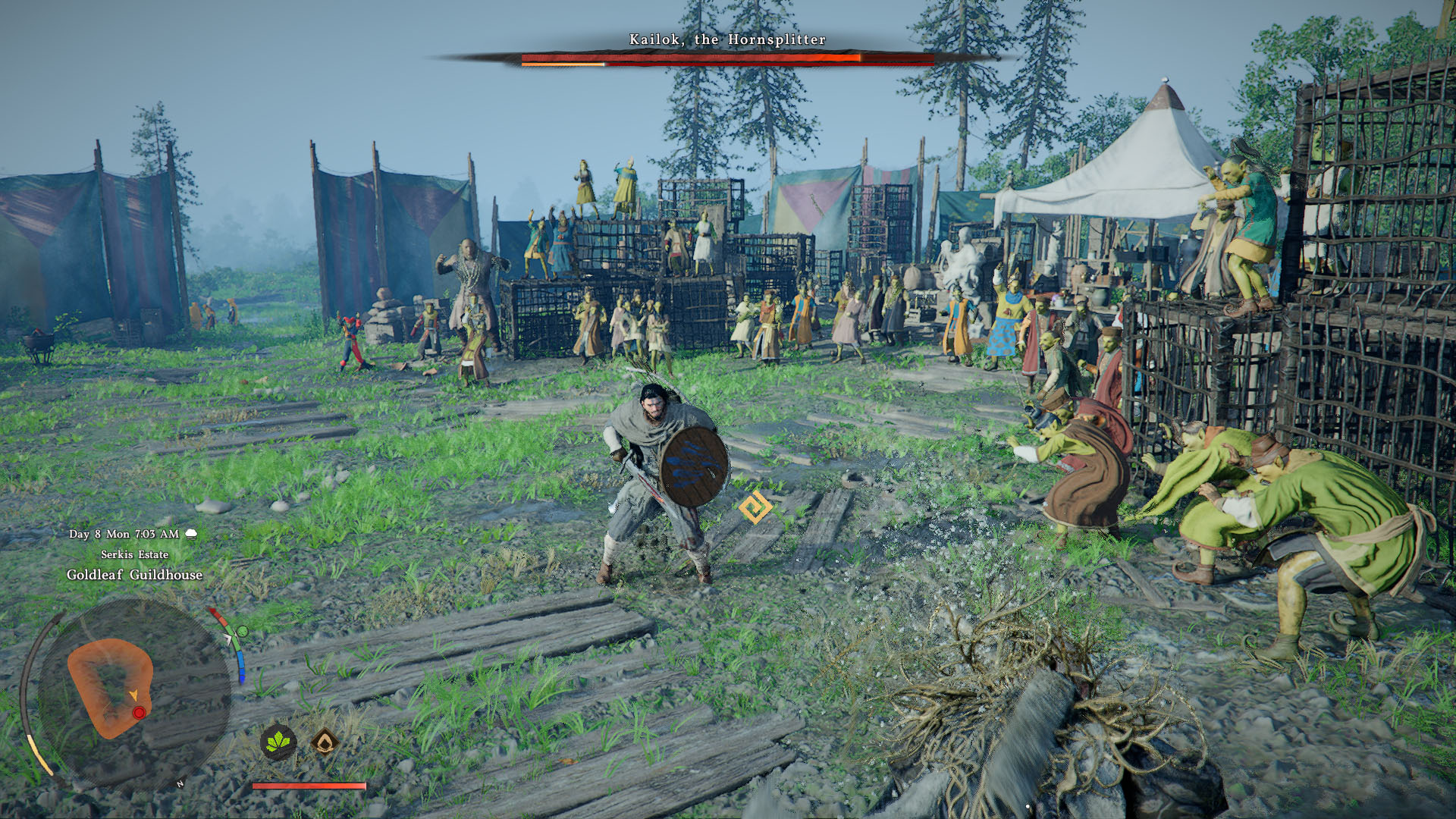
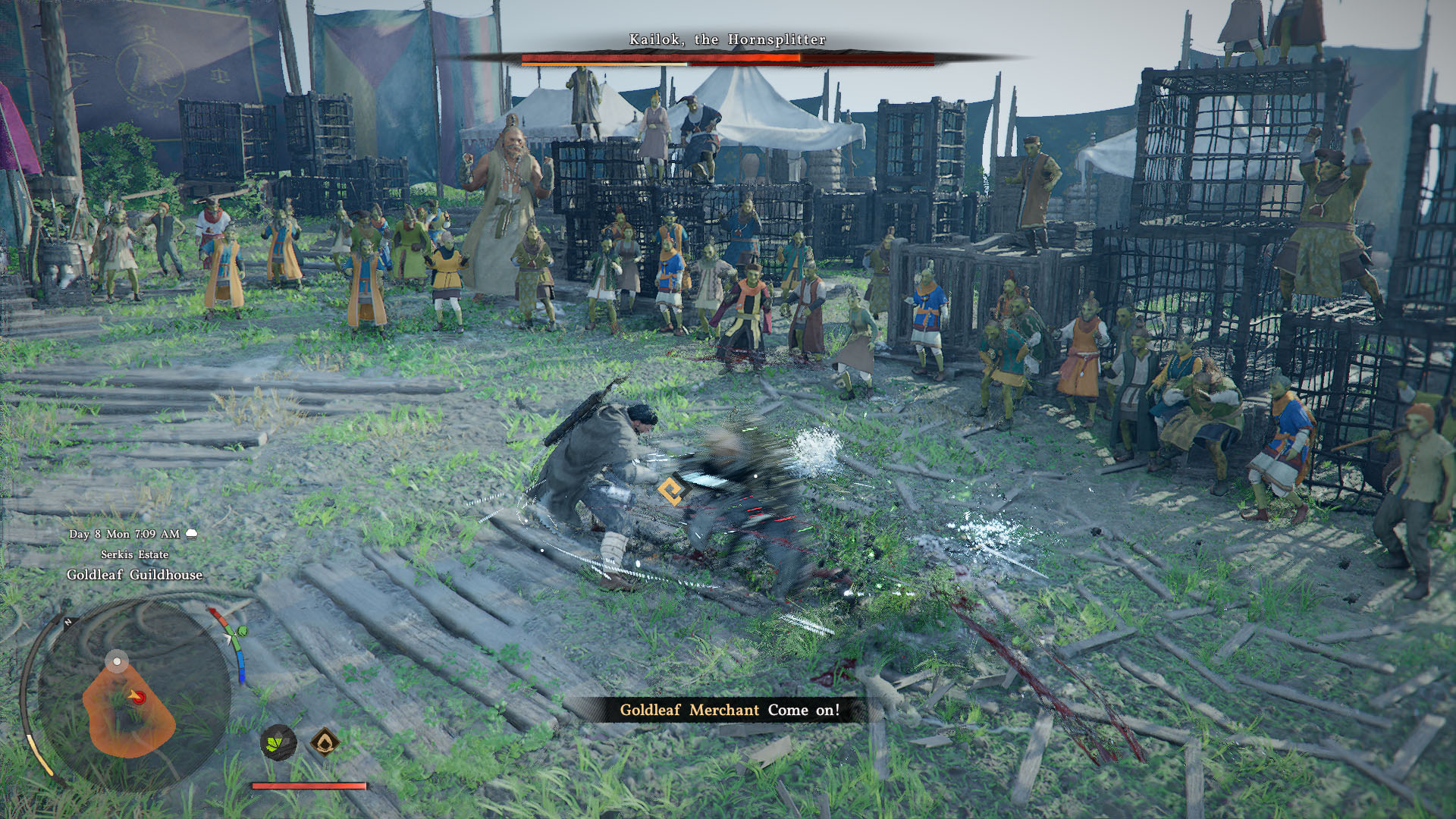
The ‘gang versus one supernatural warrior’ flavour of most fights is reminiscent of Warner’s Shadow or Mordor games, albeit without the exaggerated Batman-style counter frames and the brilliant, copyrighted, sadly missed Nemesis system. Still, there’s generally enough in your toolset to keep fights interesting, even if a lot of it comes down to pressing RB until everyone falls down.
You’ll probably have read things about the controls by now. Poison pen letters about them. They’re correct. Rather than following conventional wisdom, Crimson Desert attempts a sort of hybrid of GTA-style controls with tons of modifiers and contextual inputs and it’s frankly an absolute mess. Given that the most fun to be had in this game is experimenting with systems and abilities, it’s a disaster that those abilities often feel out of reach due to obscure mappings or hold this, aim there and then press that inputs. It’s finicky, awkward, and simply doesn’t put you in a very experimental mood, because when you try something it’s not clear whether the game won’t let you do that, or you just didn’t do it properly.
You’ll also probably have seen scathing commentaries about it, and impassioned defenses. They’re both right. There’s enough in this vast, vast game to make a case for, and certainly enough grounds for condemnation. You can’t hate a game for trying to implement this many complex and interlinked mechanics, and for showing such a sincere admiration for Breath of the Wild, Dark Souls and The Witcher that it wants to be them all at once, even if they are diametrically opposing concepts. But you also can’t love a game that makes it so difficult to unearth its qualities, and gives you so little context or lore about its world, so little of emotive value about its characters. A game that makes doing simple things feel complex, and where you do complex things by accident. The execution is often flawed and perplexing, but the intentions feel noble. Long live the brave, flawed experiments in gaming.