The original Diablo takes place in a single town. Granted, that town reaches into the depths of hell, where the titular devil awaits. But there is something to that scale. That entire journey all in a single place, reaching beyond its paltry borders into the fervent, fiery world of eternal suffering. Diablo’s world is quite literally deep and not wide. Its sequel immediately increased the scale. The games to follow would only continue that trajectory. Diablo 4 sprawls across an interconnected world. It’s even getting another expansion later this year. Dragonkin: The Banished has an obvious appeal for those frustrated by the series’ trajectory or even to those just yearning for even more dungeons to crawl. Yet it doubles down on the aesthetic ornamentation and expansive levels which have defined these games for decades. The result is a game that feels stretched thin, despite its enveloping focus on loot-and-click action.
As one might expect, the basic formulation of Dragonkin is entirely lifted from Diablo. You will choose a character from one of four broad archetypes: The Knight, The Barbarian, The Tracker (think Ranger in D&D terms), and the Oracle (a spellcasting-focused wizard class). Each class has its own set of attacks, many of which carry elemental properties like fire and poison. Enemies have a chance to drop gold, armor, and weapons; which you can also sell and buy when you return to the city. Anyone who has played an action RPG like this before will immediately grok Dragonkin’s basic feel and structure.
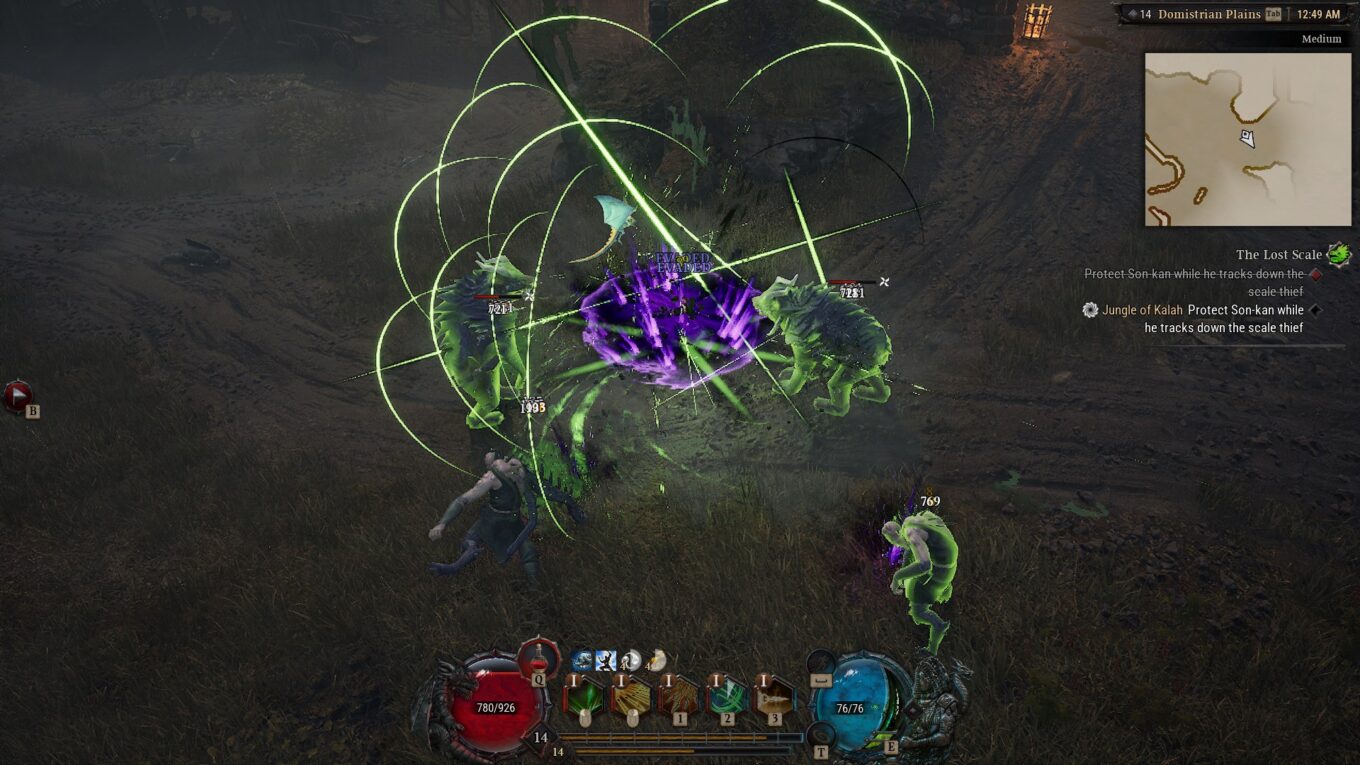
The good news is that Dragonkin’s hard focus, the action, is thrilling enough. Abilities crackle and blister across the screen as enemies die in droves. Each of the four classes available in the game so far feel deliciously distinct. Each click and button press places effective weight on minute tactical decisions. Should I drink a health potion now or later? What abilities should I choose for my dragon companion? What’s the best way to crowd control enemies so I can focus on a major foe? The pace of the game means you have to answer these questions quickly, without space for breath.
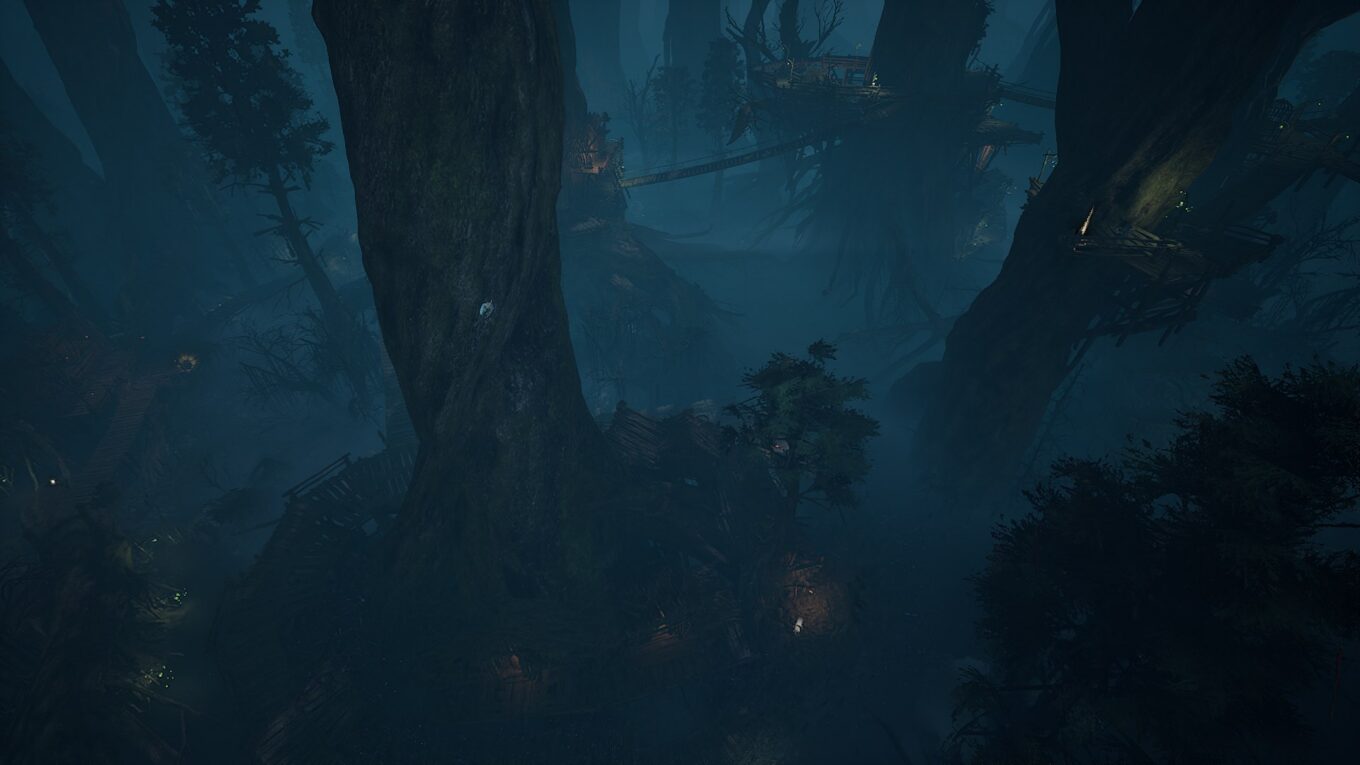
But when Dragonkin isn’t at its best, enemy types blur into each other, attacks feel indistinct, and locations vanish into brown textures and exploding particles. Part of these games is grinding through old levels for the best loot. The almost-brainless flowstate is part of the pitch. However, even early on, you might feel your attention wane, despite the plethora of systems which the game develops. In one early area, my character wandered across rope bridges. There was no room to move, but also no interesting confinement. Fighting squad after squad of the same enemy types held little pleasure after just a few minutes.
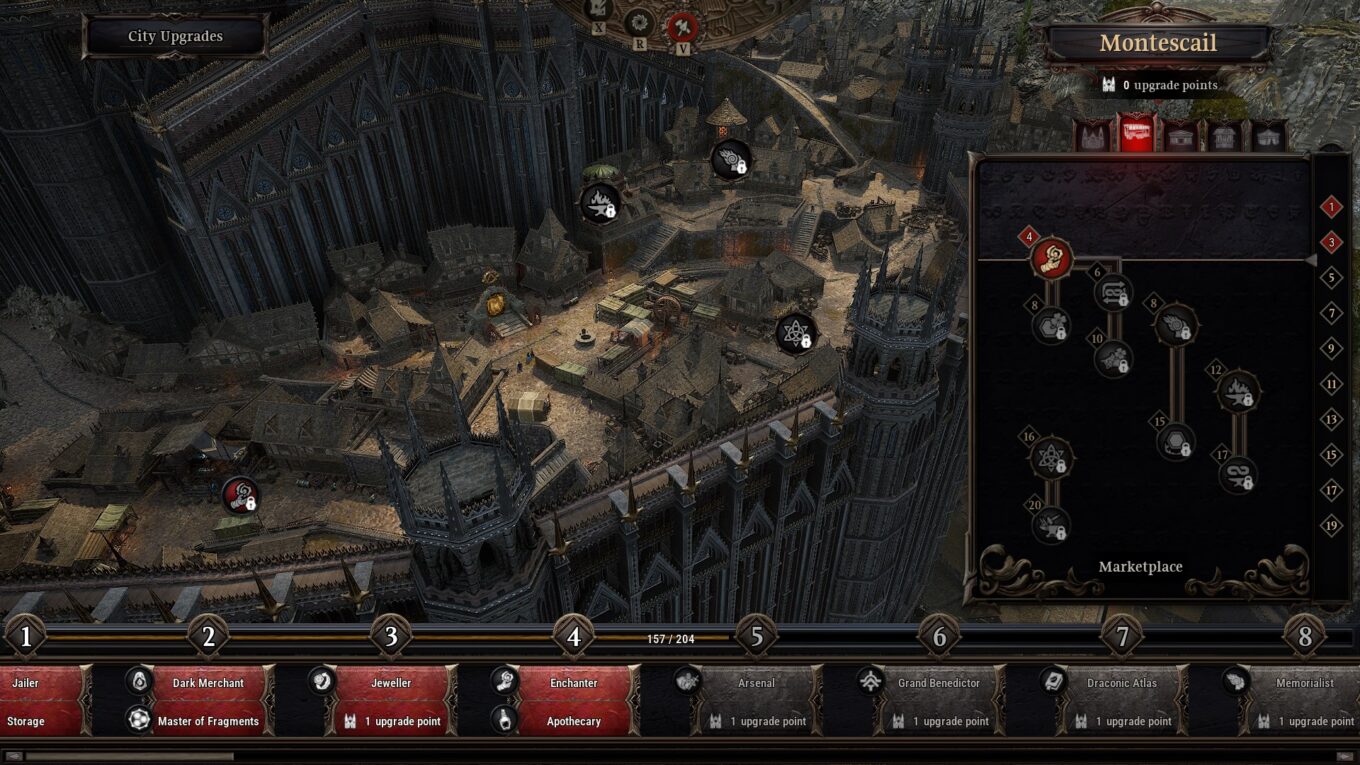
The wide array of systems makes the game feel blurred over and indistinct. You’ll upgrade your character, your dragon companion, and a home city. Each of these categories has their own trees of improvements. Level-ups for each category are swift and plentiful, and so are the choices that come with them. In addition, each of your characters’ attacks are not part of their level-ups, but are items you can pick up, buy, and equip in a hexagonal grid. Exactly how you lay out each ability on the grid determines bonuses and affinities. For example, when your miniature dragon companion activates their abilities is determined by what attack you place them next to. Each individual shop in the city has its own set of improvements as well. These systems are a little dizzying in their scope, as if the way to solve Diablo’s woes was to continue to stuff its design with more features. They are not inconsiderate; there are interesting and varied decisions to make. But it’s easy to lose them in a flood of slightly higher or lower numbers, ever heightening piles of loot, and almost no downtime.
Furthermore, convenience is everything in Dragonkin. You can travel directly to every shop within the city from warp points scattered across the whole world. The arc that defined the original Diablo, crawling down into the depths of the dungeon only to ascend back up to sell what you’ve found and upgrade your character, is quick and omnipresent, rather than ritualistic. The alteration between menus and action is intended to be so fast as to be almost meaningless. Dragonkin wants you to get back to the action as fast as you possibly can, spending as little time as possible wandering areas without combat. You can even fast travel within the main city itself, flitting from shop to shop like a hummingbird between flowers. These systems have the obvious upside of saving time. But they also make the world weightless, not worthy of contemplation. These words might be lost on the action RPG junkies who would be most interested in Dragonkin. Swift convenience and an emphasis on action might be selling points to the right crowd. Nevertheless, it is the slow parts that turn action into something vibrant. Without both speed and slowness, Dragonkin feels indistinct.
This blurring is far from unique to Dragonkin, but it does underline the game’s maximalist approach. It boasts more subsystems, more attributes, more ways to kill more enemies with ever more eye-popping HP meters. The burden of most of those subsystems is on Dragonkin’s clicky action RPG combat. All other features are in service to it. This is appealingly relentless. But Dragonkin lacks the sheer design to make that tick. It is both too expansive and too small.
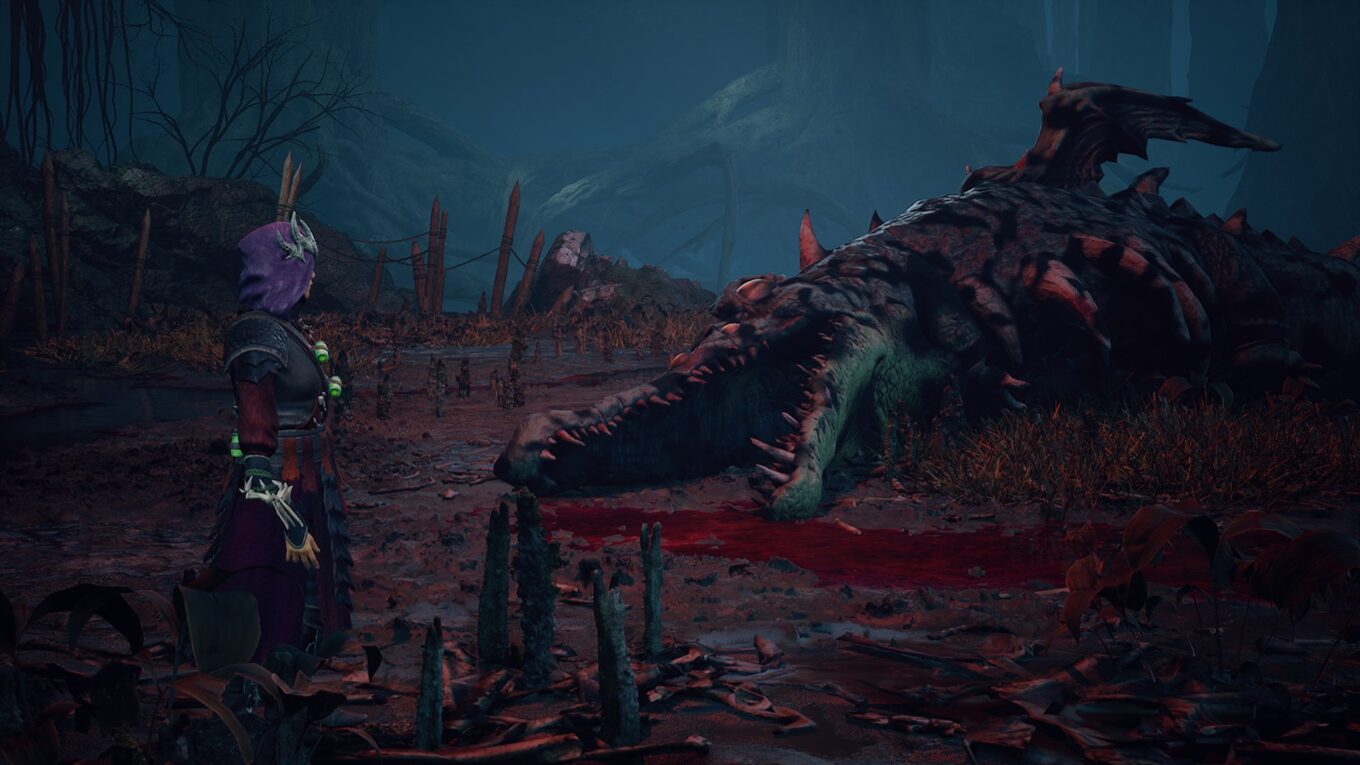
The game’s overwrought aesthetics don’t help the game stand out otherwise. Diablo’s atmosphere is still as thick and dark as a foggy night. It’s stark and bleak, with long shadows and glowing fires. Dragonkin, on the other hand, is excessive. Knights have pauldrons on pauldrons on pauldrons upon ornate armor. The enemy hordes are slobbering grotesqueries without real distinguishing features. The game feels almost dispassionate, a fantasy world made up of archetypes without any real evocative character, despite the excess of proper nouns used to characterize it.
Which brings us to the world-building itself, which is also without verve. The titular dragons are essentially eldritch creatures a la Cthulhu. They whisper dread secrets to ordinary people, luring them into transforming themselves into inhuman beasts which can be slaughtered indiscriminately. Everything about the world is either immediately understandable or else explained to you in the cadence of an AI voice reading a Wikipedia article about WarCraft lore. You may get the same feeling reading that sentence that I got watching Dragonkin’s interminable cutscenes. It’s a cheap, wearying kind of fantasy. The bad guys are depraved and blood-thirsty; the good guys are stiflingly noble and powerful. There’s no heart here, no hobbits among the towering heroes and kings. Perhaps in less self-serious hands, the aesthetics here could have a chintzy charm. But as it stands, Dragonkin is overwrought, exhausting, and cliched.
In the right player’s hands, Dragonkin could provide some hours of enjoyment. Its time in early access has made it slick. Its virtues are at least immediate. The action is punchy and readable. Its enemies do have sufficient threat that you are encouraged to make thoughtful decisions upon each level up. Relief overshadows every positive thing I could say is overshadowed by relief. I will never have to spend more time in this dreary world, clicking the same twisted forms over and over again until they die. If such things appeal, godspeed. I will not join you.