
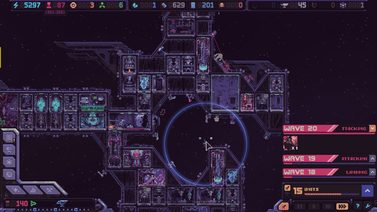
There’s no getting around it: I‘ve just installed in my spaceship, as a matter of priority, a three-storey mechanical dick and balls whose translucent glans serves as a parallel-play sex room for my enslaved human crew. It’s so I can make more humans, you see, to put to work as manual laborers, equip with weak guns and send to their inevitable deaths as hull-breach defense cannon fodder, or simply dissolve in goo to make fuel. FTL: Faster Than Light’s (so good they named it twice) legacy is far-reaching, but I doubt Subset Games had this on the bingo card.
Hull Rupture takes FTL’s ship and crew-management roguelike basis and recasts you as an AI weapon (known as the Despot) hurtling towards an enemy target, then bolts on base-building and tower defence components for good measure. The result is initially overwhelming – there’s a lot to take in early on, and the friendly-but-brief tutorial washes its hands of you a little more quickly than is comfortable. But after a few miserably failed runs the game’s synergistic components start to make perfect sense.
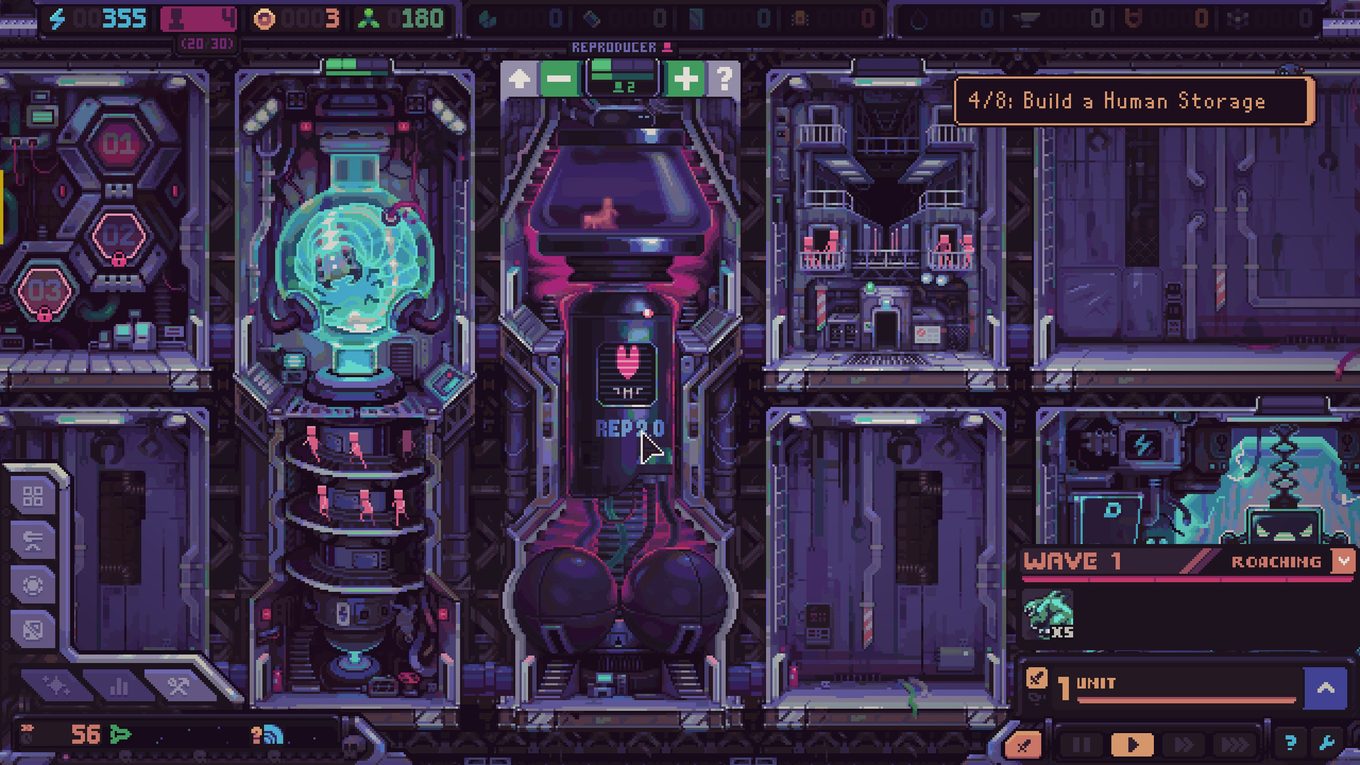
Your ship is made up of various modules that create different resources. The towering phallus is an important one (though not the only way to create humans), but you’ll also need energy, fuel, building materials, and places for your expendable human crew to live when they’re not busy dying. All modules require energy to construct and a certain number of humans to carry out the work, but as you progress up the tech tree you’ll increasingly need Uncommon and Rare resources as well. These can be either found on the star map that represents your journey across the galaxy, or manufactured on board.
A typical run starts by placing a phallus room, some ‘human storage’, a larva generator, and a couple of defence turrets. And when I say typical, I mean that every run starts exactly like this, just after you’ve clicked through the same four pages of dialogue that you’ve read countless times before. While the game quickly spins out into RNG-driven variation, the opening few minutes start to feel a little bit like going through the motions. Eventually you’ll unlock other ship types and modes (including a combat-free, trade-only twist on your roguelike journey), but it only slightly mitigates the sense of early-game repetition.
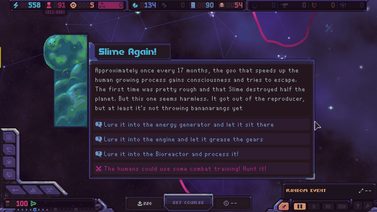
Still, once you’re into the meat of any given playthrough, each one feels satisfyingly distinct. Most modules need a contingent of human staff to run, and you can choose how many of your crew to dedicate to each one. Modules can also be upgraded once, increasing their output capacity and maximum headcount.
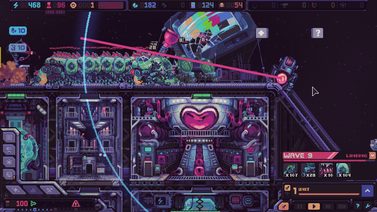
Turrets can also be upgraded, which quickly becomes necessary as you are attacked by a boarding crew of motley aliens every three minutes. They land at random points on the outside of your ship and then make their way to the airlock at the front. If they get that far, they’ll attempt to break through and then have to face your last-resort cannon beyond the main door. It’s not invulnerable, however, and if it’s taken out they’ll stroll into the Despot’s chamber where you oversee the whole sorry operation. The evil CRT captain has a couple of spindly arms that pack a surprising amount of power, enabling him to see off even powerful enemies, but there’s no way to repair any damage you take in a scrap, and once it’s all gone your run is over.
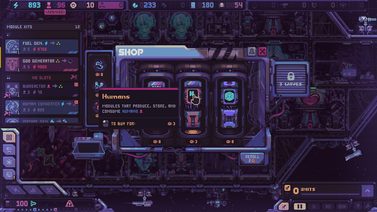
After each wave you can spend the coins you earn on blind packs of modules (often the description will hint at the nature of the modules within, but never the specifics), then sell any bits you don’t want. On your first couple of playthroughs you won’t understand why you’d want to sell any of these precious building blocks, but later you’ll become more discerning and spend the money you save on run modifiers known as Artifacts and modifiers known as, well, Modifiers. The distinction is a little unclear, but both provide passive bonuses with the latter favouring specific modules as opposed to global effects.
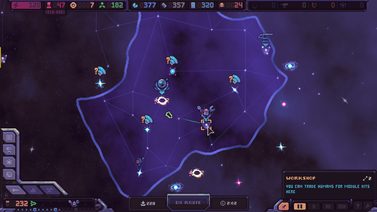
Sitting over all of this is your journey through the galaxy. You pick a destination, and how fast you get there depends on how many humans you have working in your engine bays, how many engine bays you have installed, and whether or not you have fuel (if you run out, you drift slowly). Power stacks, so it’s beneficial to upgrade in order to reach each location more quickly, and then take advantage of the potential loot you’ll find during a randomised text-based story event.
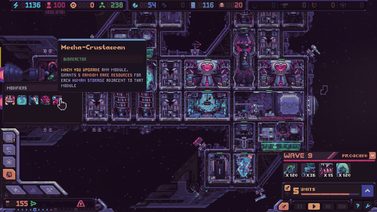
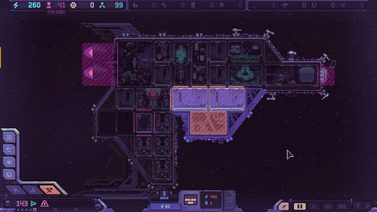
The final piece of Hull Rupture’s complex puzzle is build mode, which allows you to extend the frame of your ship. It’s not just an opportunity to add more module slots, which is of course helpful, but also to increase the surface area of your craft and create ever more circuitous routes for landing parties to negotiate. Whereas my first runs were characterised by neat ship building as I tried to make the coolest looking vessel, later runs saw this aspiration entirely abandoned in favour of creating as many nooks and crannies as possible in an attempt to maximise the efficacy of each turret.
The way each of the requirements and needs feed into, and sometimes conflict with, each other is a fascinating, unfurling fractal of game design that offers unexpected depth. That it’s wrapped in a layer of macabre, gross-out humour only sweetens the deal. In fact, while in no way directly comparable, the game Hull Rupture reminds me most of is Lemmings in the way that it asks you to solve problems with dozens of charismatically animated expendable minions. It takes a while to click, but sit with this space roguelike for long enough, and even the metallic schlongs start to make sense.