It’s been a while since I tackled a Metroidvania game, and I, very naively considering the genre, hoped I’d at least get a moment to stretch out my little gaming fingers and warm up. But MIO: Memories in Orbit wasn’t quite willing to do that. Whilst I was pleasantly lulled into the game with beautifully ethereal music and stunning visuals (a staple throughout, I must add), it’s a little like… wrapping up a scorpion in glitter.
Developer Douze Dixièmes has created a picturesque game that looks like something straight out of an art exhibition, but this platformer comes with a sting. If you’re up for the challenge, then you’re in for a real treat. Who says scorpions have to be deadly, right? Coincidentally, there was a scorpion-like enemy that tried to mess me up in the Feral Undergrowth, but I digress.
After returning what appears to be your soul into your body, little Mio with glowing, golden wisps for hair and waif-like arms and legs is ready to explore The Vessel, a broken-down spaceship filled with hostile units. Starting in The Severed Spine (yikes), it’s a robotic dystopia where unknown tremors threaten existence. And, through short explainers from NPCs, it’ssort of revealed that Mio has been tasked with making a difference. It’s not entirely clear what you alone can achieve, a tiny, somewhat adorable character. But with a fire in your belly, it’s definitely worth a try.
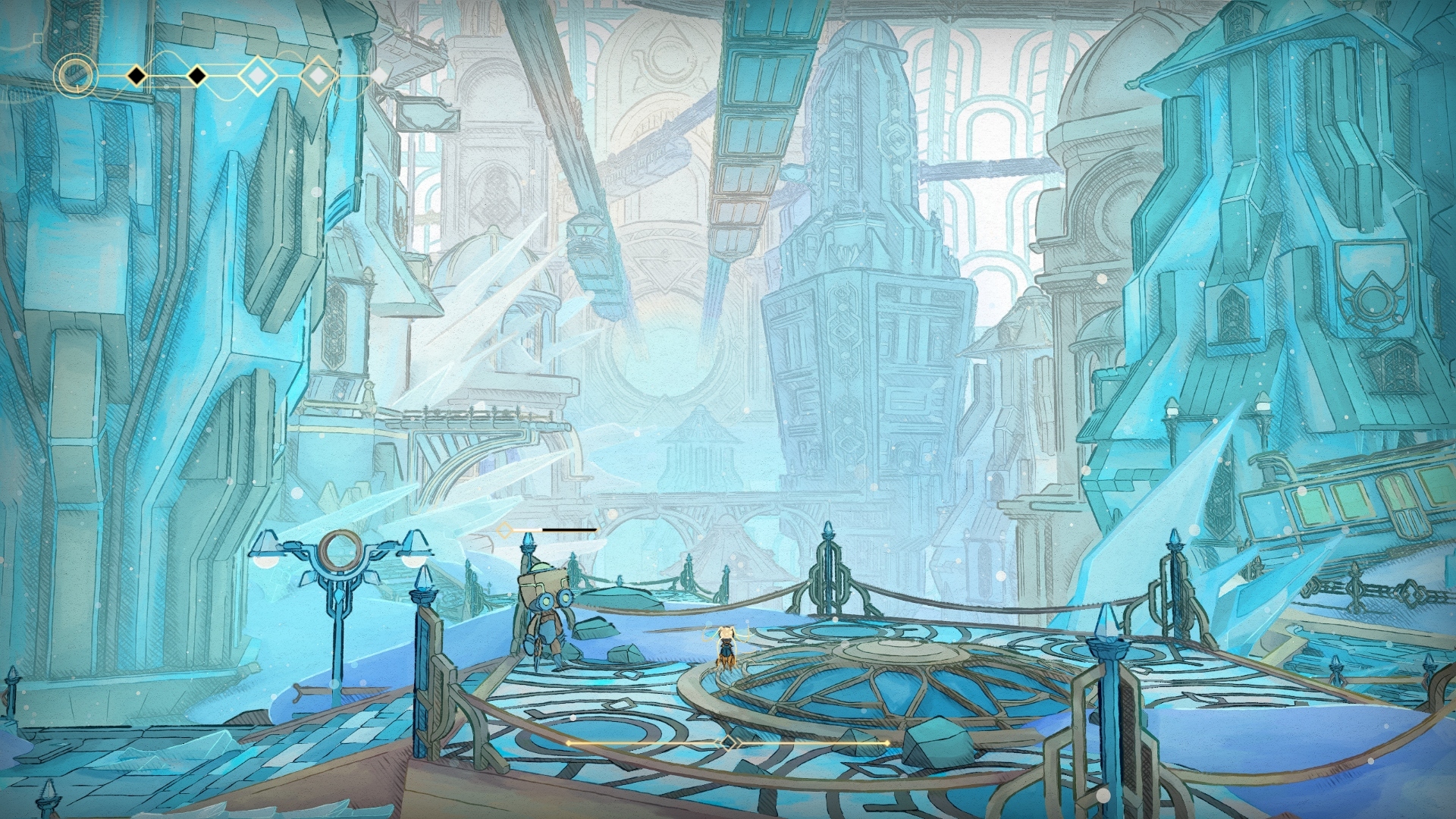
While I immediately busied myself with jumping around, exploring, and smashing up some fairly docile enemies (to begin with), I also spent a lot of time ogling the design and losing myself to the music that switches depending on the area you’re in. Traversing, with this in mind, is a dream-like experience, yet what you come up against is practically nightmarish.
At the beginning of the game, you’ll be heavily reliant on double jumps and clever timing to work your way around, but you’ll soon unlock the Hairpin system that opens up a new level of discovery. And if, like me, you were wondering what the random floating green orbs were around the map, it all becomes clear once you unlock it.
But, while it’s a beautiful game to look at, it’s also seriously punishing. Enemies, to begin with, are pretty simple. But they get harder, as do the various bosses. I’m not even sure I’m ready to talk about how many times I had to take on one particular boss to get past it. It almost felt like I’d never see another beautiful part of the map.
As MIO: Memories in Orbit progresses in difficulty, though, the moves you use to destroy said enemies struggle slightly to remain exciting. Combo three-move attacks and dodging with the Hairpin are about it. Don’t get me wrong, I’m not opposed to mashing up the same button and getting smart with it, but I wouldn’t have hated it to have a little more pizzazz.
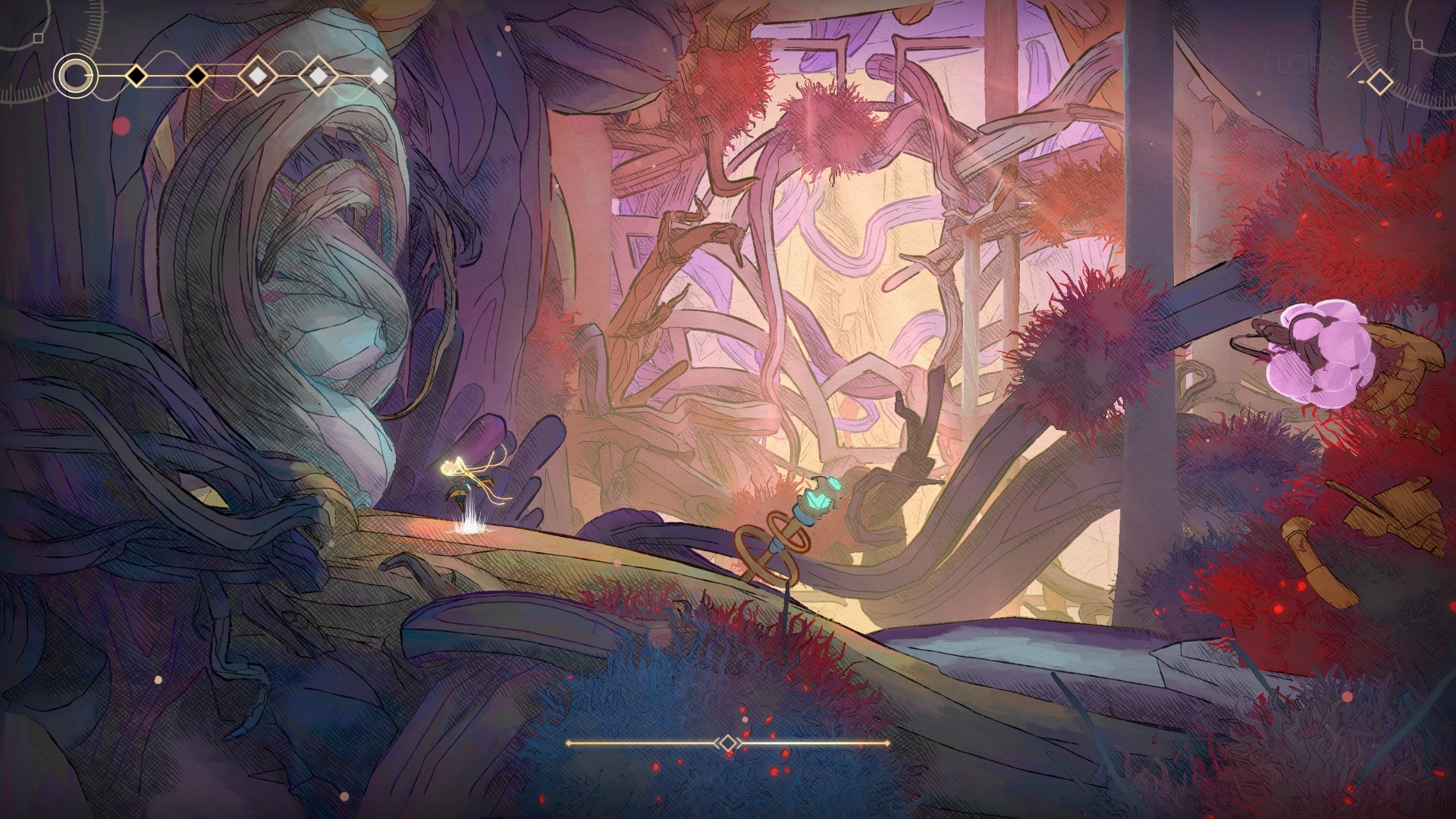
As a core part of the game, I need to delve into the fighting aside from the pure mechanics. To keep an eye on how you’re doing, there’s a fairly elusive health bar displayed in the top left of your screen (though you use up valuable modifier slots for the pleasure). There are modifiers to expand your health capacity and increase your damage. There’s also ‘Nacre’, the game’s currency, that you can spend in basins to restore your protective coat or at the workshop to unlock helpful aids.
But, especially in boss fights, you have to protect your health with everything you’ve got. And it’s hard. At times, I was screaming at my PC, and I’ll tell you the stark contrast between my frustrated wails and the ambient music was quite something. If you die, you head back to the Attuner, a checkpoint that can be so far away from where you were that you might need to walk away and take some deep breaths (a biscuit or two gave me my strength back, if only it were that easy for Mio).
All this said, it’s still utterly addictive. Aside from navigating back from where you died being a sometimes lengthy and repetitive process, it was still a joyful experience. Not only are the visuals a soft, watercolor-esque soup, but watching little Mio grapple, jump and whip around the map with an air and grace that my junior ballet teacher always wished I had was a delight to behold. And when you finally get past an area you’re stuck on, whether a tricky platform jump or a particularly aggressive enemy, oh boy, it’s a rush that only defeating a challenging Metroidvania will give you.
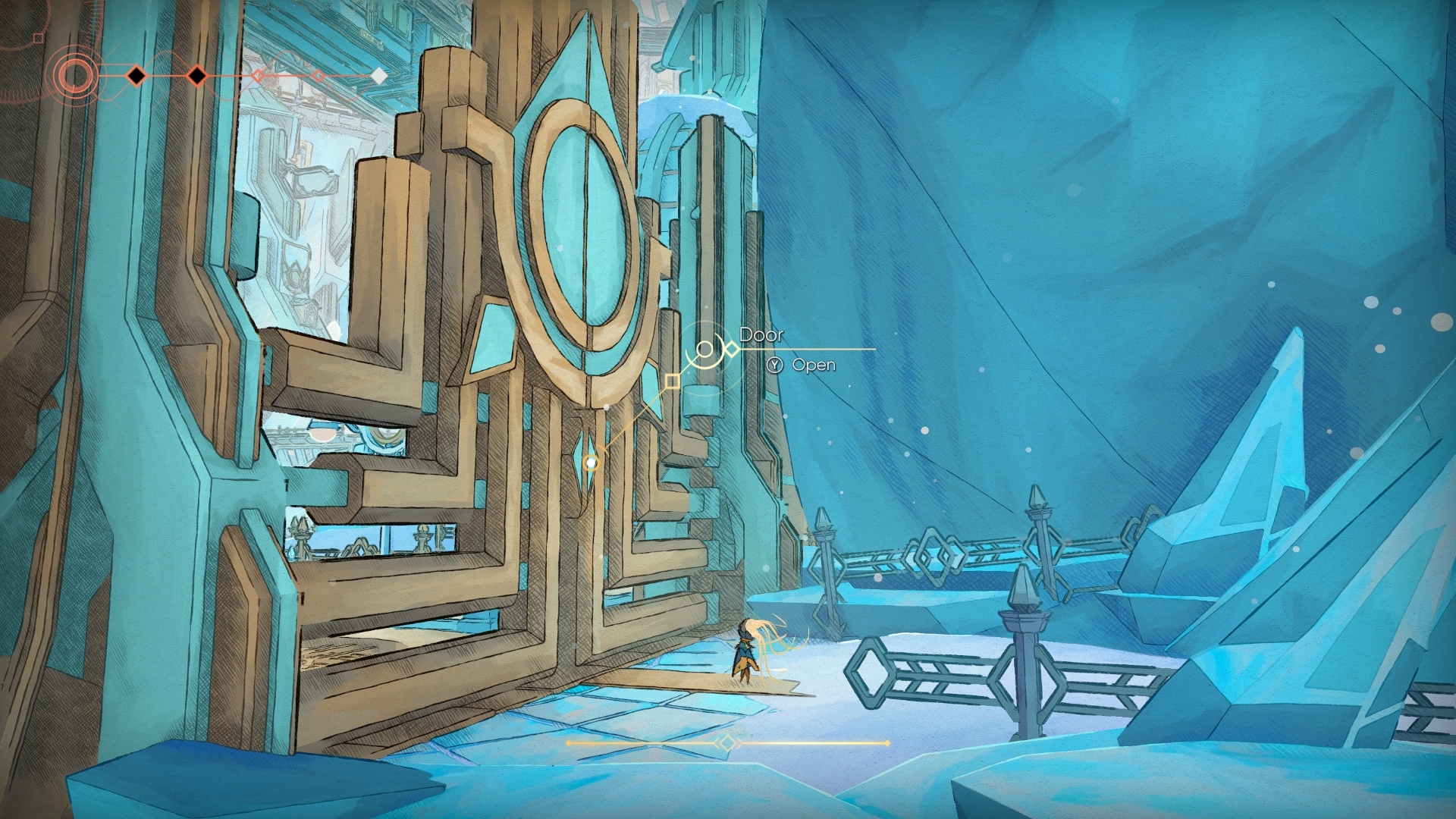
Sure, if you run the game along the main path with no frills, you’re technically looking at around a dozen hours. I can’t confirm these numbers though, because, for me, it was all about taking my sweet time. I was happily distracted, bouncing down rabbit holes, finding hidden objects and secret paths. And who knows if I needed to, but realistically, if you’re playing this game with adventure in mind, you’re going to be playing for much longer.
It’s also important that I tell you about the map system. Pretty early on, you’ll learn that you can unlock the map from Shii, feeding her Nacres to unlock the map and further Nacres to make it accessible in your pause menu. And MIO’s map is both stunning and terrifying. There’s so much to do, it’s completely overwhelming, but it’s also a masterpiece.
Unfortunately, it’s still way too easy to get lost, even with the map at hand. Death sometimes precedes a really long journey that I’ve taken through secret passageways and looping back on dead ends, and from that, I don’t know how to get back. Cue more frustrated wails.
Help is at hand, fortunately. While not explained, you can head to ‘Assists’ in the pause menu, where you have a few options to lighten the load. There’s Pacifist, meaning enemies (aside from bosses) will only attack you if you strike first. There’s Ground Healing, meaning you can gain an extra layer of protection by staying still for a little bit, and there’s Eroded Bosses, meaning they’ll remember Mio and be more brittle when they fight you next.
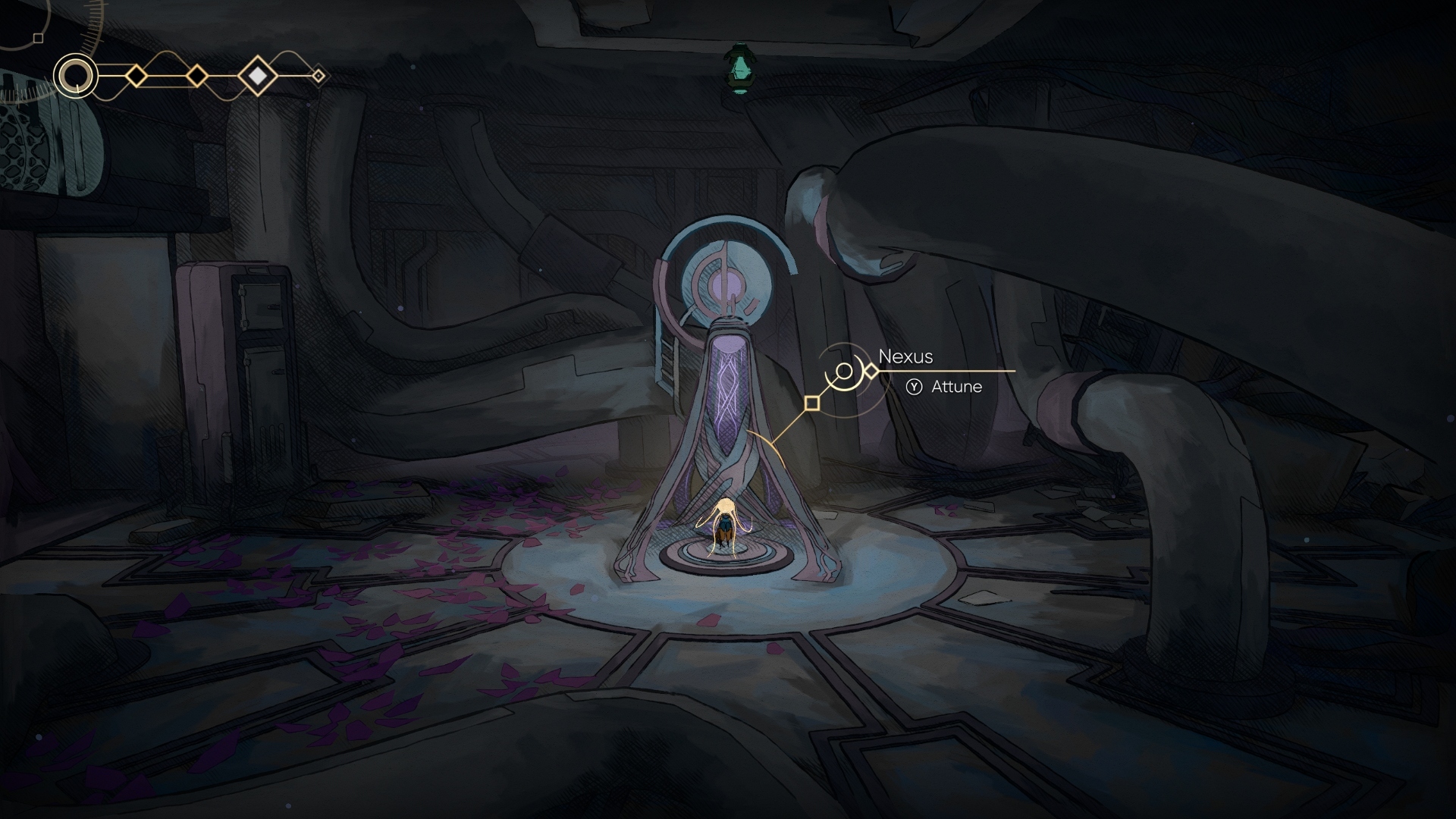
Ultimately, MIO: Memories in Orbit is a beautifully-designed game that’s faithful to the genre it’s inspired by. Yes, it can be frustrating at times (okay, a lot of times), but if you’re open to the challenge set to the backdrop of breathtaking design, then I’d add this to your must-play list. It’s not even that the enemies are that hard, I mean, don’t get me wrong, some of the bosses are thoroughly frustrating. It’s just that if you make a mistake and die, sometimes the journey back is excruciating.
I don’t think you should rush through this game, and developer Douze Dixièmes clearly don’t think so either. In fact, they’ll reward you for taking the time to look around, hiding some pretty nifty loot in hard-to-reach places. And you’ll be pleased with yourself, because you won’t have to return to an area looking for the one thing you missed that might make an improvement to your overall game and give Mio the little boost it needs.