I’m really struggling to build a box. My floundering could be down to the sub-zero temperatures chipping away at my motor skills – it’s chilly in the Antarctic at this time of year, after all – but, I’m willing to wager that a major contributing factor is Nova Antarctica’s maddeningly overcomplicated control scheme. I’ve already acquired a blueprint by scanning another box just a few feet from where I need to place this one to get up over that ledge, so now it’s a simple case of hitting ‘1’ to bring up the relevant rotary menu, hovering over the item I want and holding ‘F’ to build it (which adds one to my inventory, natch), then backing out of the menu and hitting ‘B’ to bring up an outline of the crate that I can position, before holding, erm, ‘E’ to, err, build it again… wait what?
Yes, that was a little much for an opening paragraph, I agree, but now you can share in my bafflement. The mechanics of RexLabo and Parco Games’ chilly collaboration never really coalesce into something intuitive, and you’ll find yourself getting muddled regularly, having to look at the UI to check which button comes next in whichever convoluted process you’re trying to complete. It’s just about manageable when you’re unhurried, sure, but harder to forgive when a deadly blizzard is drawing in. Which is a great shame because, much like the diminutive protagonist at the centre of this adventure, it’s hard not to root for this curious survival proposition.
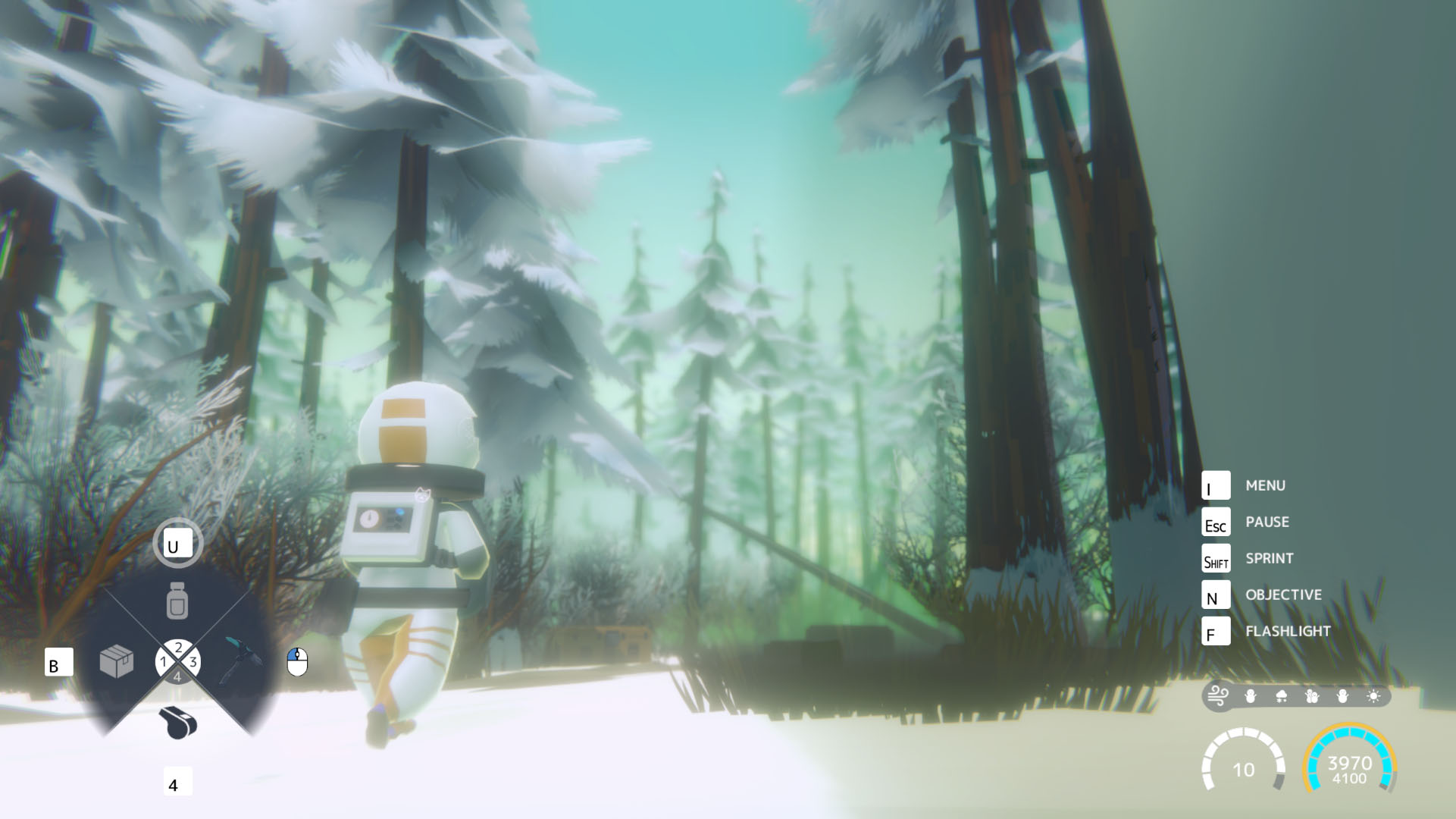
Set in an apocalyptic 2917, you play as an endearingly stubby child, kitted out in a little survival suit and faced with the unenviable prospect of trekking across Antarctica alone. The world has fallen to a number of calamities, including lethal viruses, global warfare, and food shortages – but a mysterious signal emanating from the South Pole provides a little hope, and a good reason to set out on this perilous journey, one tiny boot in front of the other.
The trek is broken into stages, in which you must survive the cold and extreme weather conditions and find a way forward. While varying in scale, each area offers a choice: head straight for the exit, or explore beyond the path to gather more resources at the cost of risking longer exposure to the elements. It’s a nice setup that occasionally plays with convention in an interesting way – one level starts you right in front of the exit while tempting you with distant resources. It’s -83° out, mind, so you’ll want to wrap up.
Your upgradeable suit and backpack protect you from the worst of the cold, but constantly burn fuel to do so. The colder it gets, the faster your protection depletes, so it’s imperative that you craft fuel cells to top it up. You also start each level with a finite amount of cold resistance which reduces this consumption, but is itself drained by the cold. You can recharge it in the warm, but you’ll be a few stages in before that becomes a realistic prospect. Heat is very hard to come by.
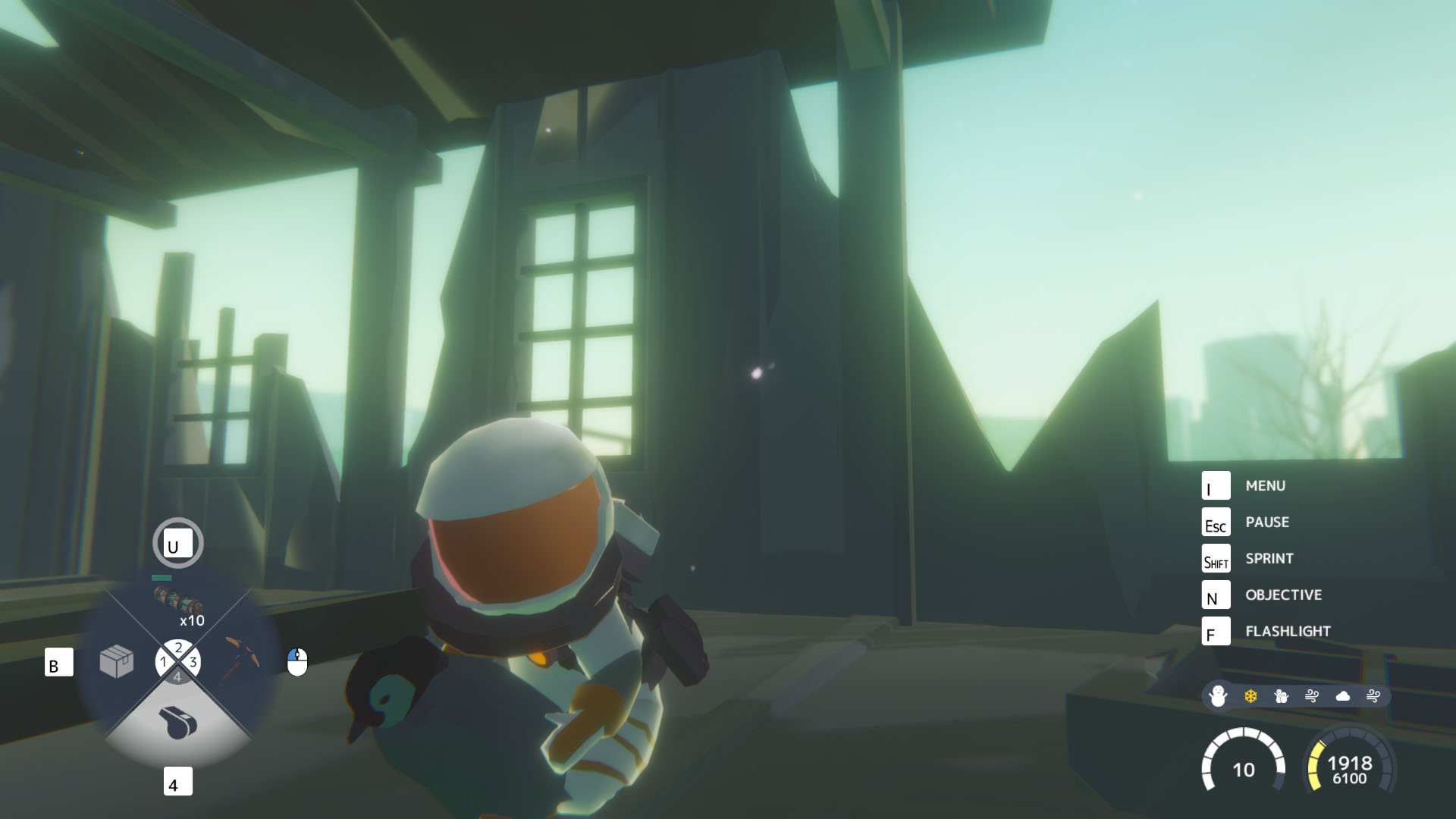
Alongside these meters, you’ll also have to manage your stamina. Running and using tools chips away at it, but you can craft health items or shelters that will top it back up at varying speeds. You can build a tent and a little fire, for example – though for some inexplicable reason each piece of fabric you make first requires you to craft two different types of lamp. At least, I think they’re lamps – none of the items in your menus are labelled, adding further confusion to the mix.
The environment you’re dealing with is notoriously unforgiving, but it’s gotten even worse in this unfortunate timeline. You’ll have to weather blizzards, radiation storms, dense fog, and sporadic extreme drops in temperature. A weather forecast in the corner of your screen shows what conditions are approaching, but it’s still possible to get caught out with too few resources and no adequate shelter. Blizzards roll in from a random direction and you must either find cover or build it – failing to do so can result in being hit by fast-moving objects, killing you instantly.
The jeopardy this creates is rather exciting, until you discover that the cost of dying in Nova Antarctica is restarting the level. I first learned this after spending an hour exploring one stage, strip mining it of resources and pumping much of those spoils into building a base. There’s no save function, so if you’re caught out it means that everything has to be repeated, and all of the (skippable) cutscenes will trigger again. The only saving grace is that any blueprints you have scanned remain in your inventory, but given how slow progress is in this game – the child’s pace is ponderous, at best – it feels overly punitive.

While you can prepare for a blizzard, there’s nothing to be done about radiation storms or dense fog. They’re considerably more survivable, at least (make sure you have enough health items in the case of the former, don’t wander off any cliffs during the latter), but hinder your vision entirely. Regularly rendering the game unplayable for minutes at a time is a bold design choice, and one further compounded by the fact that the game pauses whenever you open a menu – any thoughts of killing time by getting some crafting admin out of the way go out the window. In the end I found myself drifting into checking my emails, or brewing a well-deserved cuppa.
At least there’s a rescue penguin to cuddle. You see, while there’s no one around (living, anyway) at whom to vent about the mounting number of frustrating design choices, you’ll encounter a menagerie of helpful wildlife along the way. Each stricken creature that you aid will join your wandering party and assist you in some way – for example, feeding that famished penguin results in having a heat source to, literally, cling on to for the rest of your journey. Just call him over with a whistle, and pick him up. It’s an adorable idea that dials up the emotional weight of Nova Antarctica’s environmentalism-focused narrative.
It’s not enough to off-set the deeper issues that hold the game back from delivering on its laudable vision, however. With its epic trek and ballooning semi-open environments, Nova Antarctica nods to exceptional pilgrimages such as Journey, Abzu, or Herdling, but fails to provide the joy of movement and exploration around which those games are built. Even once you recruit a rideable wolf to get around a little faster, the game feels awkward and lumbering. When combined with its lack of polish, those overly punitive penalties for failing, and some plain confusing design touches, the result is a game that feels like the sketch of a charming concept that hasn’t yet been finessed.