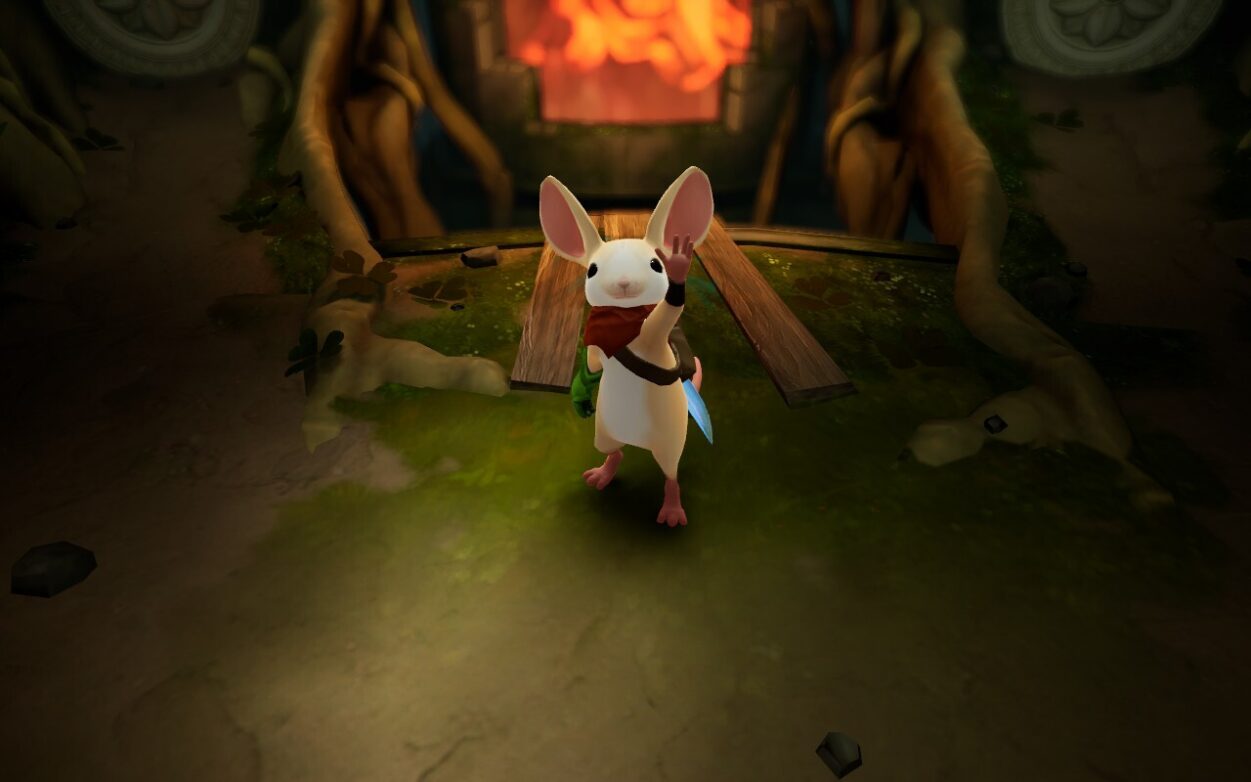
One of the most delightful sounds in Moss: The Forgotten Relic is the gentle pitter-patter of Quill’s tiny rodent feet as she darts and scampers through her environments, be it through overgrown woods or dilapidated, abandoned towns. Not only is it a reminder of her diminutiveness, it also points to the lush details that developer Polyarc Games has stuffed into the world of Moss, where towering, long-discarded swords in the background hint at a war waged among larger beings, while moss occupies the cracks between stone tiles. The Forgotten Relic is a thing of splendour, fronted by an impeccably charming heroine who looks at you — yes, the player — with an affection and unshakable trust that’s impossible to remain stony-hearted to.
This sense of intimacy is perhaps tied to The Forgotten Relic’s virtual reality (VR) roots when it was first released in 2018 as Moss, and its sequel Moss: Book II, in 2022. The Forgotten Relic is thus the flat-screen version of the two games in one polished package, and it’s a remake so seamless that you may not be able to tell that it was a VR-exclusive game in the first place. Take, for instance, the role of the Reader, an omnipresent, masked figure who works with and guides Quill through her adventure – and a presence who’s clearly a stand-in for the player themselves. As you take control of Quill in this top-down platformer, you’re also manipulating the environment as the Reader, nudging boxes and pushing chandlers so she can hop onto these platforms and reach higher ground. While it’s a mechanic that’s inspired by the first-person immersion of VR devices, it has become a wonderfully intuitive feature on flat screens in The Forgotten Relic.
But let’s start at the beginning. Quill’s adventure starts in the first half of The Forgotten Relic -that is, Moss: Book – with the story being imparted via the pages of a book, and the player being directly addressed as the Reader in here. In this tale, the plucky heroine has found a piece of a magical artifact known as Glass, with this discovery inadvertently forging an indelible bond between her and the Reader. Her uncle, however, was not as pleased about her newfound friend, instead sensing that a great calamity may soon befall the kingdom. He decided to embark on an urgent undertaking of his own, warning Quill not to follow in his footsteps no matter what happens. But when he didn’t return, the worried Quill eventually trailed after him, with an impish creature known as a Starthing leading her to where her Uncle may have been imprisoned.
As a platformer, The Forgotten Relic isn’t particularly challenging, although the unwieldy camera angles that plague the 3D platformer genre has made a return. At times, the camera becomes immovable, especially when Quill can’t move from a specific spot, such as when she’s on a small platform that doesn’t give her much room to walk about. This is a kink that isn’t present in the two VR Moss games, given that you’re experiencing them in first person and can peer around columns and walls if you need. But while it can impede some puzzle solving and feel a tad frustrating initially, the puzzles are fortunately largely easy to resolve with some trial and error.
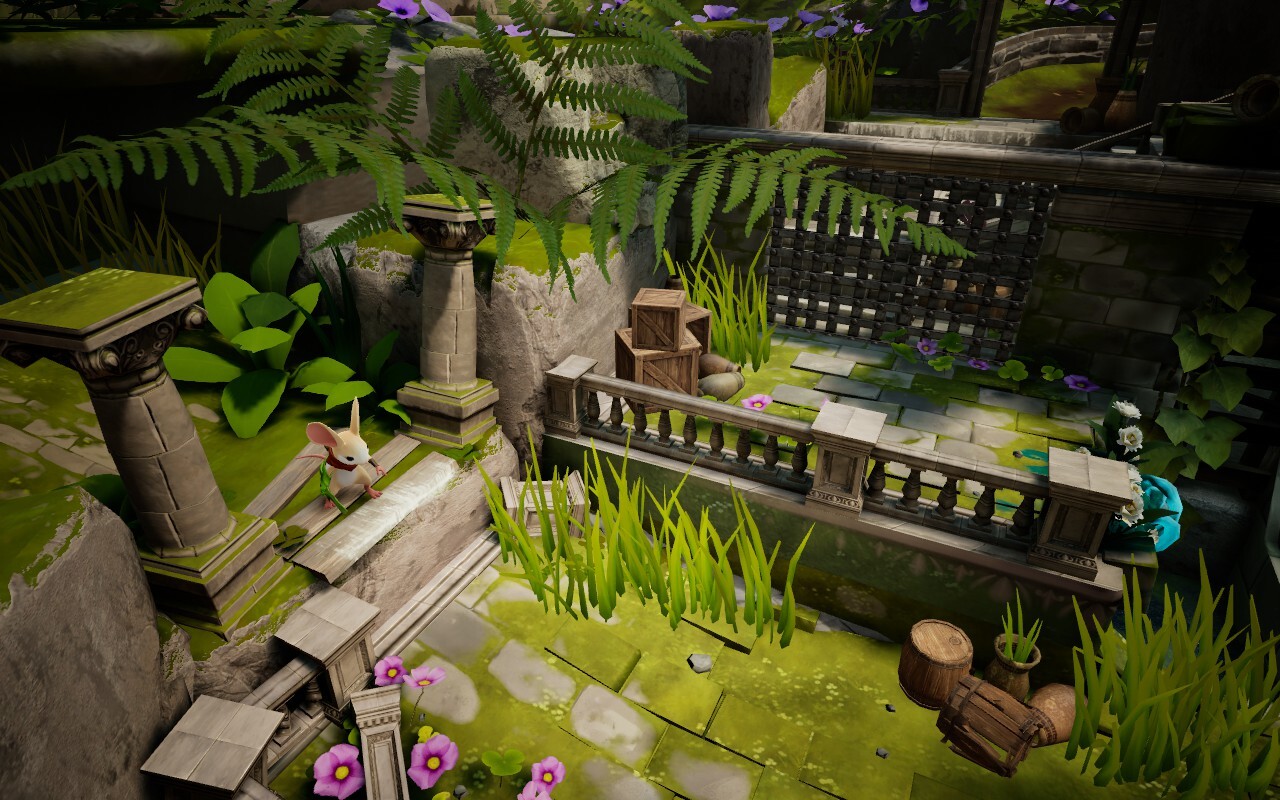
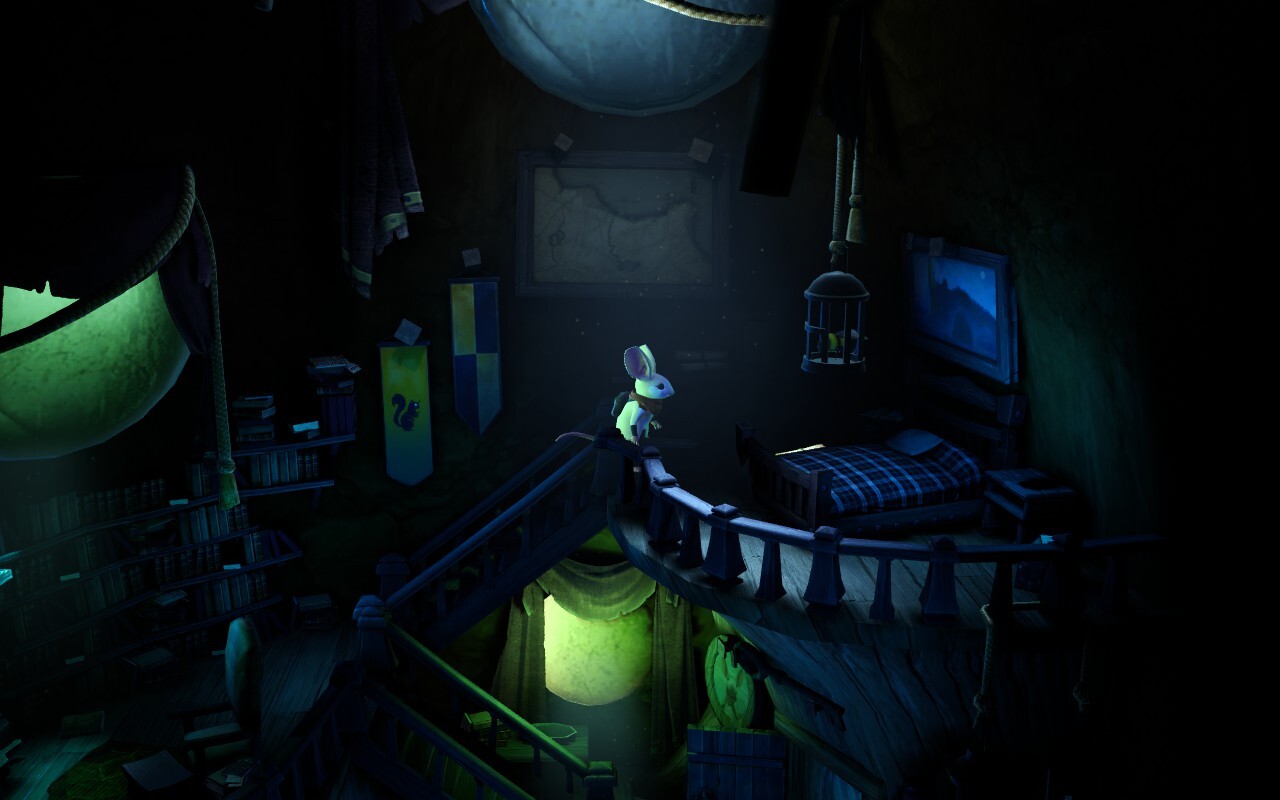
Integral to solving some of these, too, are the mecha-bugs that wander the landscapes in The Forgotten Relic. While they will attack Quill on sight, the Reader can take control of them, even directing them to specific spots that can open up new routes or gates for the mouse. For instance, certain metallic bugs can be nestled on buttons that can open gates, whereas fire-spitting critters can be piloted to aim their fireballs towards switches from a distance.
At the same time, you’ll need to assist Quill by moving objects in the vicinity around, like dragging a box closer to her, or stunning one of the predatory bugs so they do not attack her. The Forgotten Relic thus becomes a mechanical toy itself that you can prod at, as you experiment with its levers, devices and other curious mechanisms to see what springs forth from them, and marvel at how Quill can better traverse her surroundings. It’s endlessly charming and compelling. And even if you’ve failed a puzzle or a combat sequence, The Forgotten Relic would simply reload from a recent save point, which makes the whole affair a lot less vexing. Hidden amidst the nooks of The Forgotten Relic’s woodlands, too, are pages of a tome that Quill can gather. Completionists can comb through the levels for these items if they like, but The Forgotten Relic doesn’t make hoarding them necessary; they’re merely an excuse to explore its dense forests and towering structures.
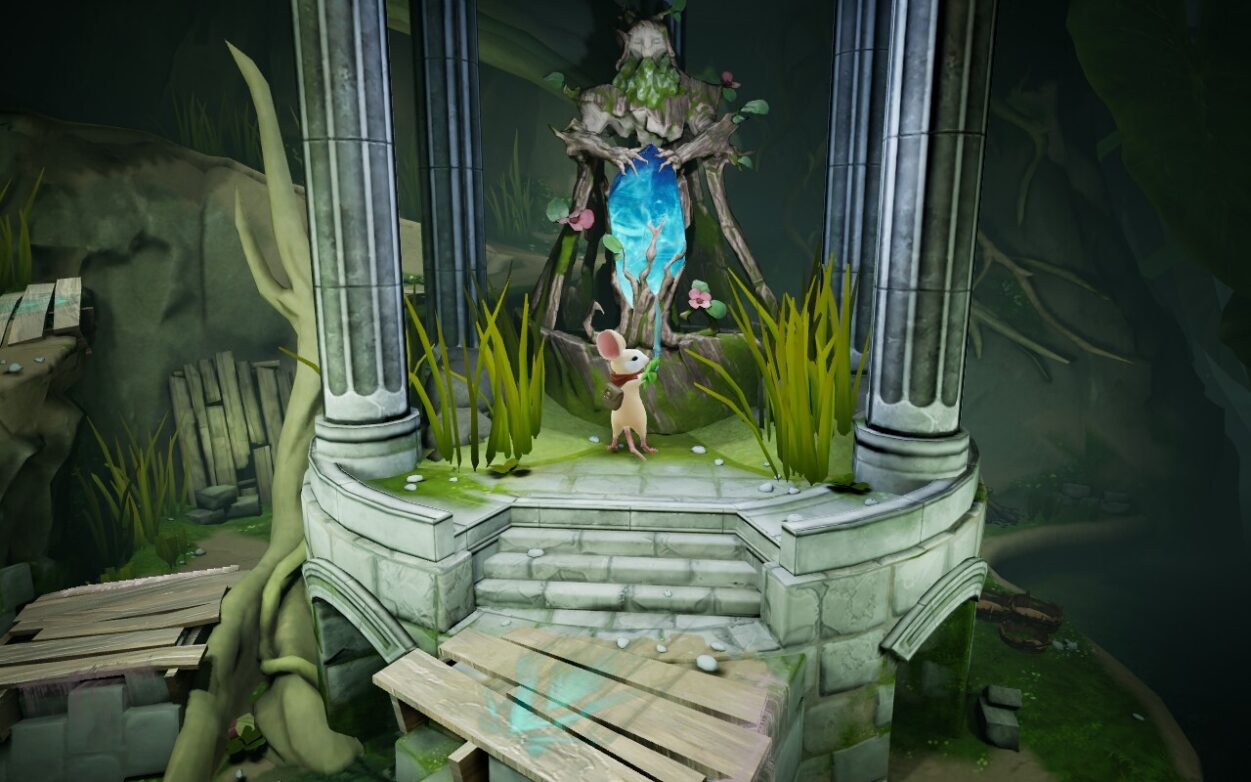
Then there’s the heroine herself. Quill isn’t the kind of rodent with the strength and agility to cut down her foes and outrun her dangers with impunity. For a mouse she’s still incredibly mighty, but she can’t leap across particularly long distances. She struggles a little to climb up a high wall. She can’t sustain too much damage inflicted by her foes, either. And while Quill is not completely helpless and is pretty handy with a sword, the dangers can be numerous, making her somewhat reliant on the Reader’s support to survive her fraught journey.
What she possesses in spades, however, is a sense of tenacity and optimism, as well as an inextinguishable faith in the Reader. If she were to fall into a pond or, God forbid, off a platform into the endless abyss beyond, the game reloads to the sight of Quill simply shaking the water off herself, preening herself and wriggling her limb as if to make sure she’s intact. When both of you manage to tackle a challenging puzzle or survive an intense bout of combat, she will raise her pink little paw for a high-five. She even communicates with you with American Sign Language, too. It’s these subtle gestures that make Quill more than just an avatar, but a heroine you really want to root for – a heroine who you want to see succeed.
Moss: Book II improves upon the first book’s underlying formula with several tweaks. There’s a metal pill bug, for instance, that can spin dash as a form of attack, allowing the Reader to wield the insect not just as a weapon, but also a tool for puzzle solving. The Reader themselves, too, can gain new ways to manipulate the environment Quill finds herself in, such as by growing moss or extending vines between platforms, offering Quill even more ways to traverse the landscape. Quill, too, also gains new abilities such as the sword dash, which lets her skip across large gaps and land greater and more precise damage to her foes. While combat was a tad cumbersome in the first half of The Forgotten Relic, these sequences become more thrilling in the second book, given Quill’s and the Reader’s new abilities. They become even more of a formidable duo. There are also new weapons to wield, and new characters to meet — new friends who are just as memorable, but perhaps not as joyously hopeful as Quill. You’ll see.
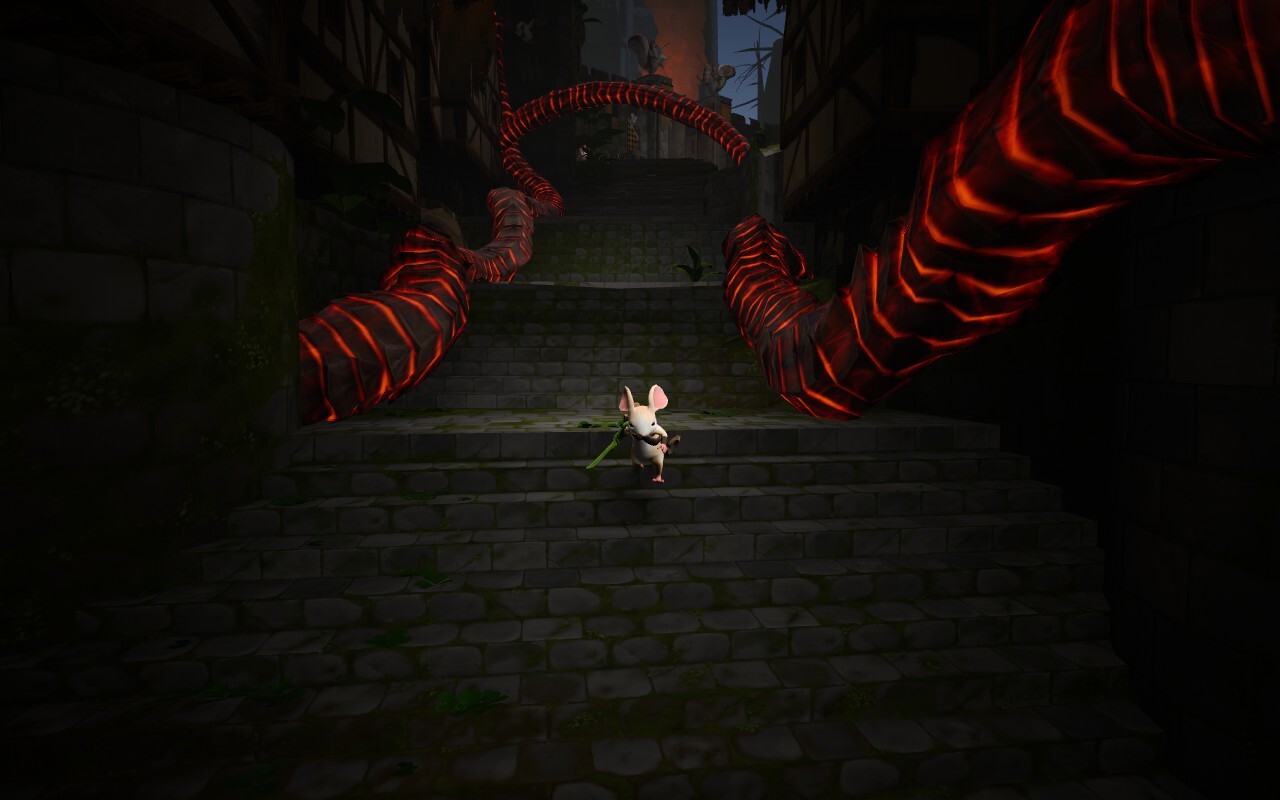
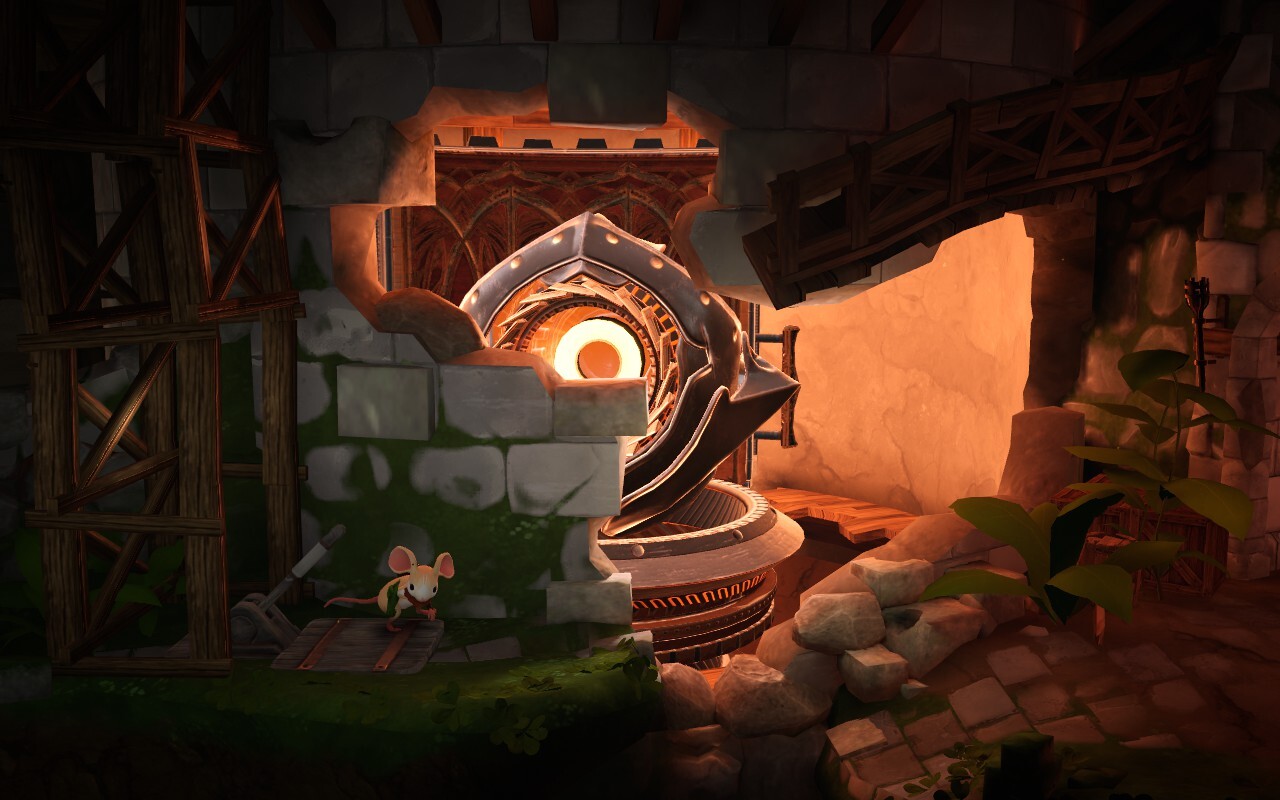
A recurring motif in The Forgotten Relic is the incursion of metal, the robotic and the unnatural into thickets and mountainous terrain, and the sight of smouldering, red-hot metal within the battered cities and crumbling buildings in the kingdom of Moss. Steel bugs chitter and clank their chitinous shells, and then there’s the central antagonist in Moss: Book I, which is a gigantic, caterwauling metallic serpent known as Sarffog. The metaphors around the industrial are obvious and straightforward as its tale, but it does little to diminish the charm of The Forgotten Relic, a game that never reduces itself to mechanical, repetitive routines. Quill gradually becomes a friend you solve its creative puzzles alongside, while experiencing the soaring heights and plunging lows of her exploits to rescue her beloved kingdom from a villainous other. Many games offer their players a view of the hero’s journey alongside a roster of compelling characters, but few are like The Forgotten Relic, in which you embark on the very journey yourself, side by side, with a friend.