There are more games than ever which play themselves. Games like Vampire Survivors and The Bazaar have had electric popularity, so players have definite interest. The appeal to indie developers is obvious. Much like a roguelike, these are games for which you can construct a limited number of art assets and systems which you can stretch out across individual matches or runs. They are low-cost, with potentially infinite reward. But the compulsive balance of these games is delicate. With such low, and often abstract levels of player input, it’s easy for autobattlers and clickers to feel both frivolous and frantic. Unfortunately, despite some aesthetic charms and welcome twists, Orc Incremental is no exception.
To summarize, Orc Incremental pulls from the aesthetics and themes of early Warcraft. You are the leader of an orc invasion into the world of humans and elves. You recruit a motley crew of warriors and spellcasters to tear across screens of enemies, upgrading abilities and changing your army’s roster as you go. The battles happen along the top part of the screen without any essential player action (more on this later). The bottom part is lined with troll potion sellers and orcish blacksmiths who will sell you upgrades. Each enemy killed grants gold. At first, upgrades are cheap and easy to obtain, but the further you battle, upgrades become more expensive and enemies more powerful.
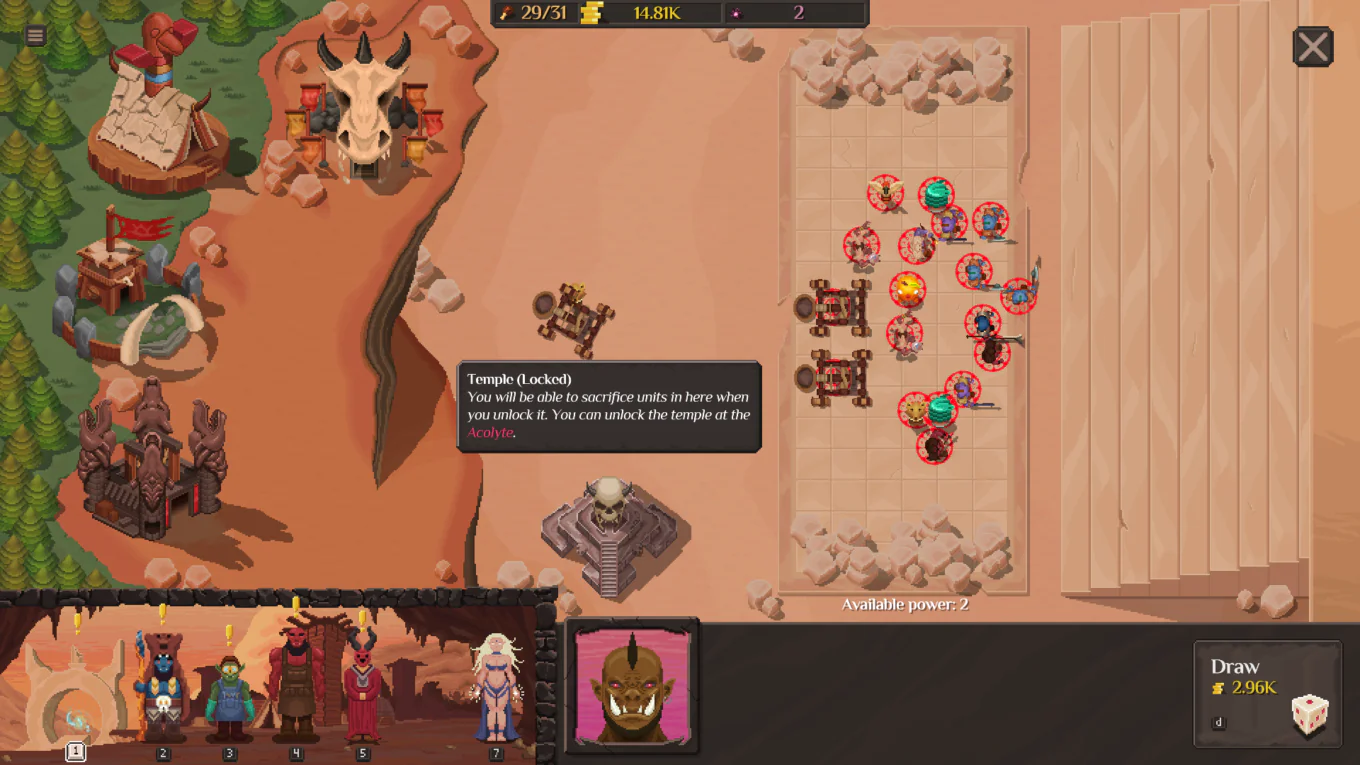
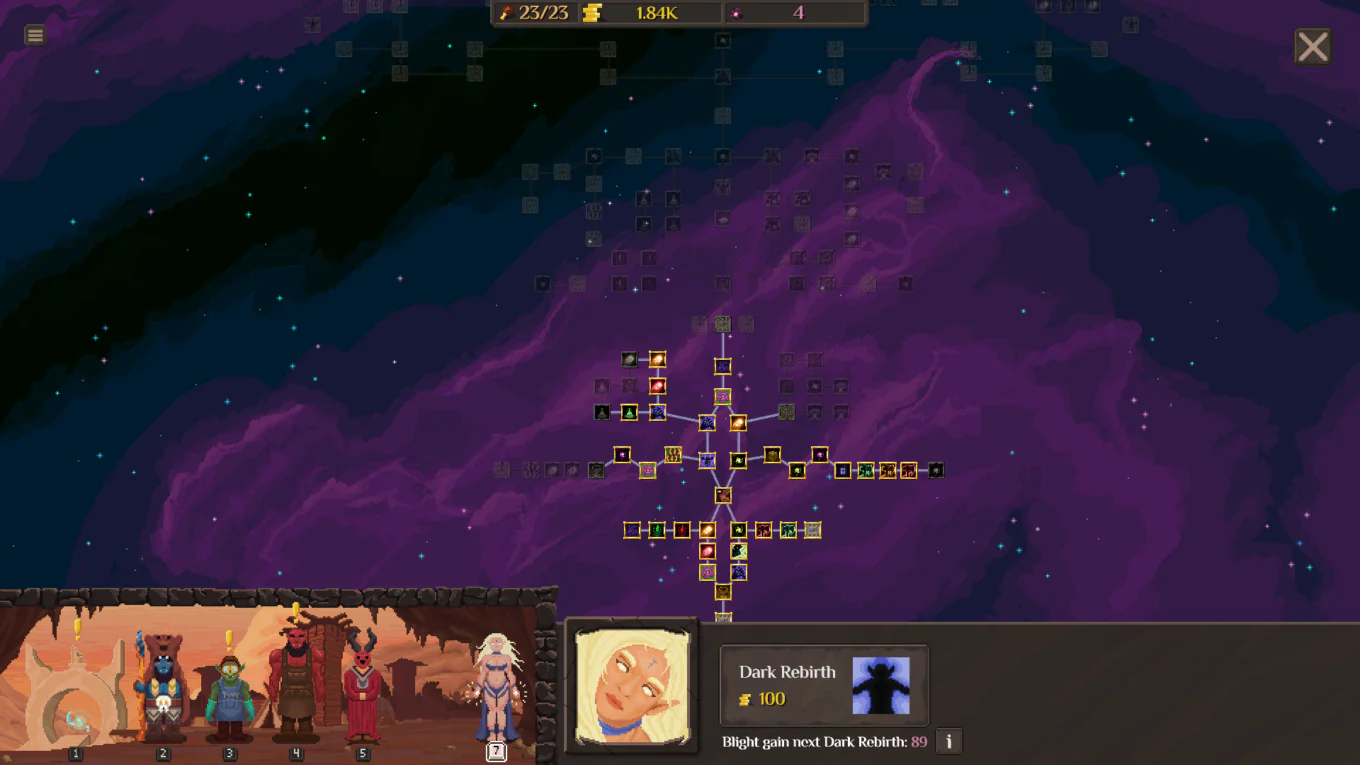
So far, so predictable. There’s nothing here that you haven’t seen already in a more popular and lavish game. So, Orc Incremental’s success, or failure, depends on its cleverness. It does have a few tricks up its sleeve. Blessedly, Orc Incremental foregoes the “look at three options; pick one” format which has dominated games like this for years. Instead, it offers up every available upgrade at once (if you have enough gold for them). This lets you make classic RTS decisions, like saving up for a particularly powerful bonus or heavily focusing on a particular unit. Although most of the upgrades concern damage output and health totals—in other words, obvious and trite mathmatics—a few expand or change your unit’s abilities, like letting some spellcasters unleash multiple spells at once. Much like its inspirations, there is a strategic joy to threading a tech tree and watching your units grow more versatile and capable.
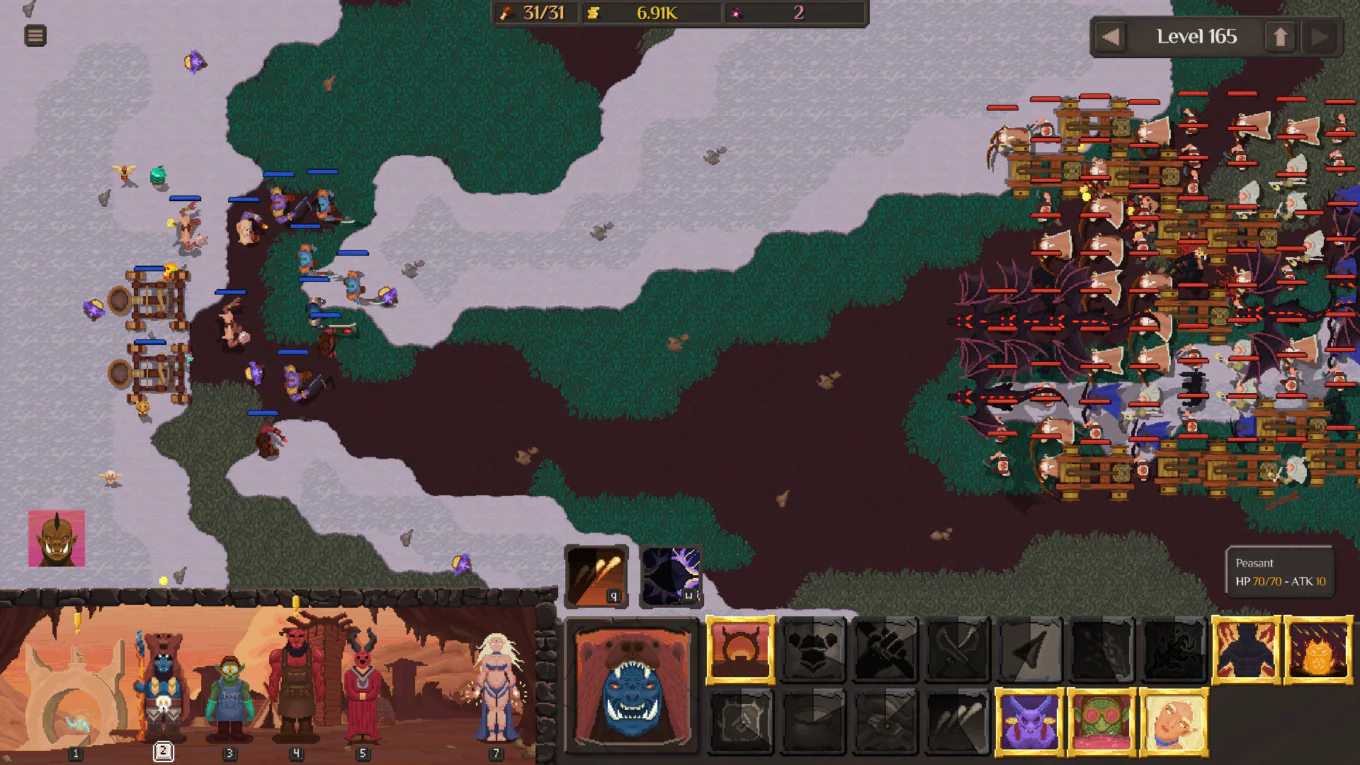
In fact, Orc Incremental gets at one of the RTS’ most fundamental pleasures: watching your army crash headlong into another. Whereas a game like The Bazaar gussies up timers, Orc Incremental gets the theatre of little guys killing each other. An Orc warrior can get enraged, slashing elven archers with wrathful glee. With a few upgrades, shamans’ lightning bolts will bounce from enemy to enemy sliding through foes like skates across ice. Witch Doctors heal allies and slow down foes by throwing magic vials on the ground. The effects are bright and readable, even as the screen floods with enemies and damage numbers. It’s a distinct, if familiar, delight.
But constructing your army is where Orc Incremental’s woes begin. From each run’s start, you are limited in buying and selecting units. Instead of purchasing units through constructed buildings, you draw random units from a pool, selecting one from two options at the game’s beginning. You start with a fairly limited stock of units. Much like Warcraft, you’ll need to buy upgrades to have space for more warriors. However, in RTS terms, Orc Incremental is not like carefully balancing a small force to outwit an opponent, but more like building the biggest army possible and rolling into your enemy’s base destroying everything in sight. There is the aforementioned aesthetic pleasure in that, but little to no strategic one.
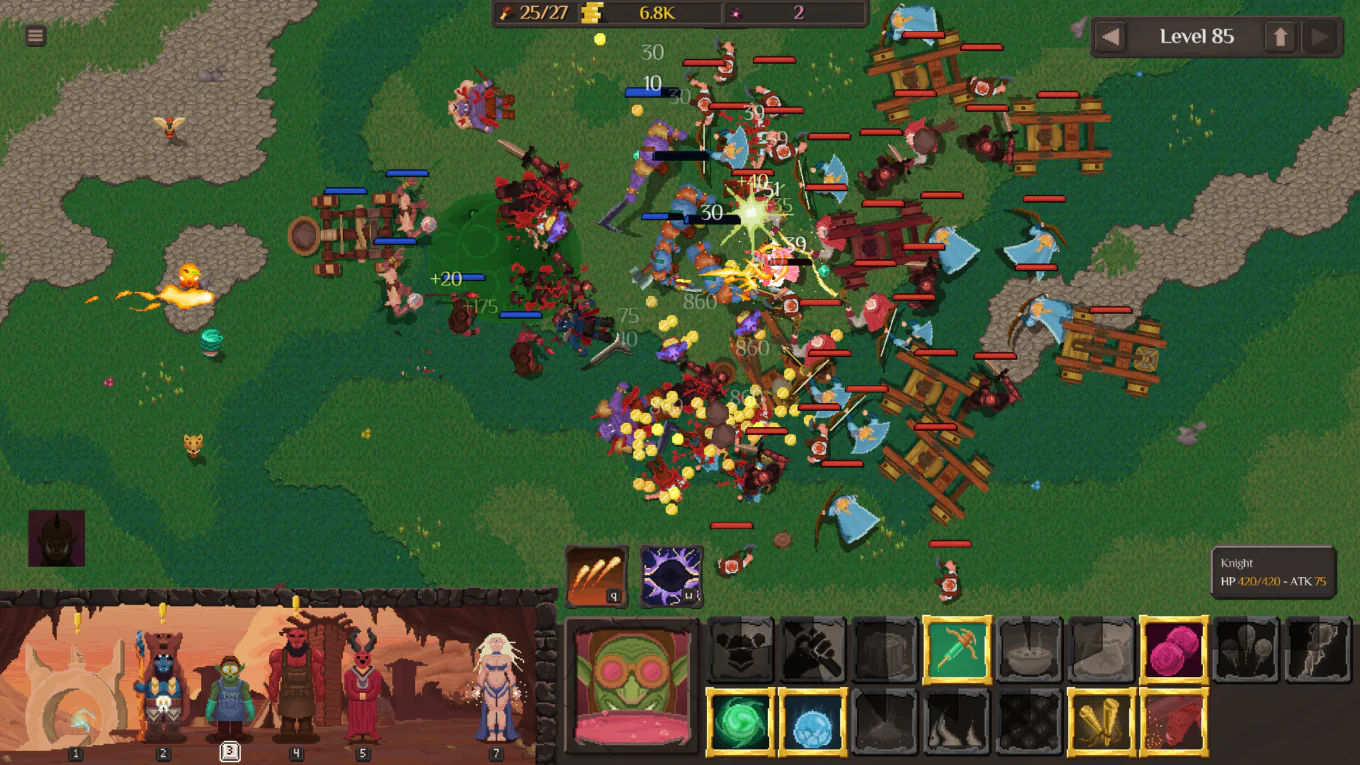
Additionally, besides buying upgrades and selecting units, player interaction with Orc Incremental is minimal. By clicking the mouse on the screen, you shoot a fireball in that direction. Among the game’s plentiful upgrades are more spells, like a black hole which drags enemies to its middle and prevents them from attacking or a rain of ice from the sky. But, for the most part, Orc Incremental plays itself. But that’s not the only problem. If you construct your army with any degree of thoughtfulness, you’ll rarely need to swap out types or reposition units to gain victory. Well-placed spells, or even just the consistent casting of fireball, can decide whether a battle is won or lost. But these decisions are more obvious than tactically tense. It can take dozens of levels to unlock even a second spell. For the most part, meaningful decisions are few and far between, rather than constant and exciting.
Eventually, you will get stuck. As the human hordes grow and your ability to get gold dwindles, you will have to start over. By resetting back to zero, you can advance meta attributes which stick across every run: enemies will drop more gold, your units will start with more health, rarer units become more likely to drop. But this takes forever. Within three or four missions of a Warcraft III campaign, you were already getting some of the more expensive toys to play with. By the end you had a bevy of strategic options. Additionally, in each mission, you were doing something at least nominally different than you were before. Here you are always doing the same thing, over and over again. New shake-ups take hours to arrive. Each new unit feels like like a new exciting tool to strategize with, a more like another grunt to place in the shredder
This is not to say that the game doesn’t have its charms. As you might expect, Orc Incremental takes a sympathetic view towards the orcish invasion. It is the humans and elves, not the orcs, which are summoning demons. And besides the orcs are just cooler: gruff and tumble and ugly in a way that the human’s shiny armor and elvish waifish beauty cannot match. The game is also handsome, boasting a clean and fun pixelated look. But both the game’s sympathetic posture and its aesthetic is taken from Warcraft. Additionally, Orc Incremental imports the freewheeling racism of those games, such as the caribbean-coded trolls and the “tribal” aesthetics of the orcs. This was pretty thoughtless stuff in 1994 (and 1995…and 2002…and 2005), it remains so now. It’s hard to imagine Orc Incremental offending anyone, but that is only because it is so derivative and staid that it is below any real emotional reaction. Warcraft did not have that problem.
And still, Warcraft did (and does) have joys Orc Incremental does not. The complaining bass voice of the orc worker unit is still lining the folds of my brain decades later. The orcs here don’t speak at all, at least not yet. In fact, the game treats them grimly. You can sacrifice units to earn free draws. Some upgrades cause units to explode upon death. The whole game is a brutal train of violence, one few of your orcs will survive. As if acknowledging this, Orc Incremental’s soundtrack is strangely mournful. It’s less “lo-fi beats to slay elves to” and more songs you might hear on a veteran’s day PSA. I wouldn’t say it is out of touch, but does reflect a lack of aesthetic consideration. There is little in Orc Incremental that feels purposeful and driven.
Look, these games make me feel somewhat existential. Video games, like anything else, are experiences. I have spent thousands of hours in the bounds of virtual worlds, largely entirely on my own. For the most part, I don’t regret this time. My interest in games has made friendships, deepened my thinking, and been the basis of most of my career. But looking back on a game like Orc Incremental, I only feel the pang of wasted time. Orc Incremental asks almost nothing of me but my eyeballs. What is there here to reflect on? What have I learned about games or about myself or about anyone else from this experience? Incremental gains, if any at all.