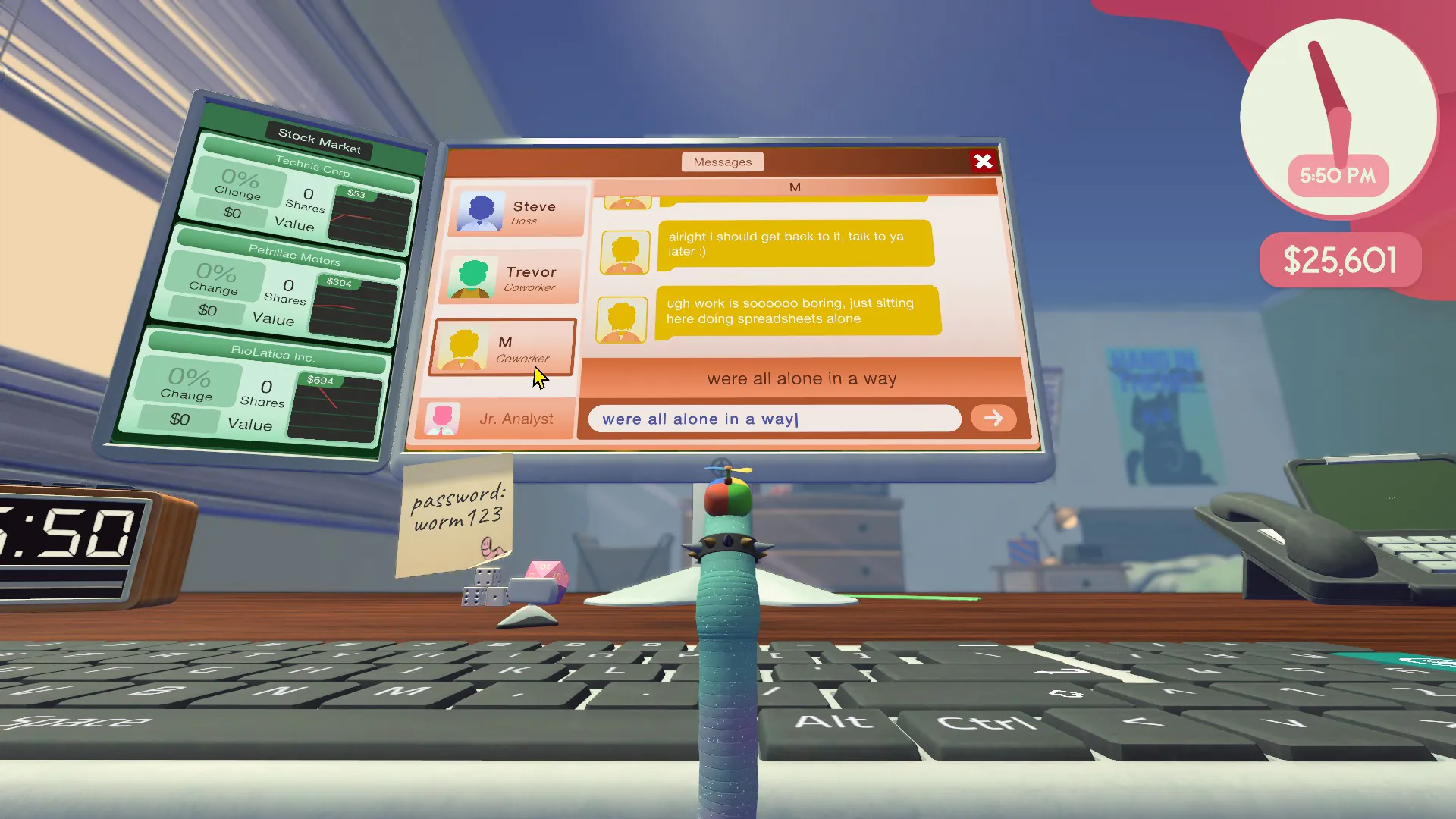
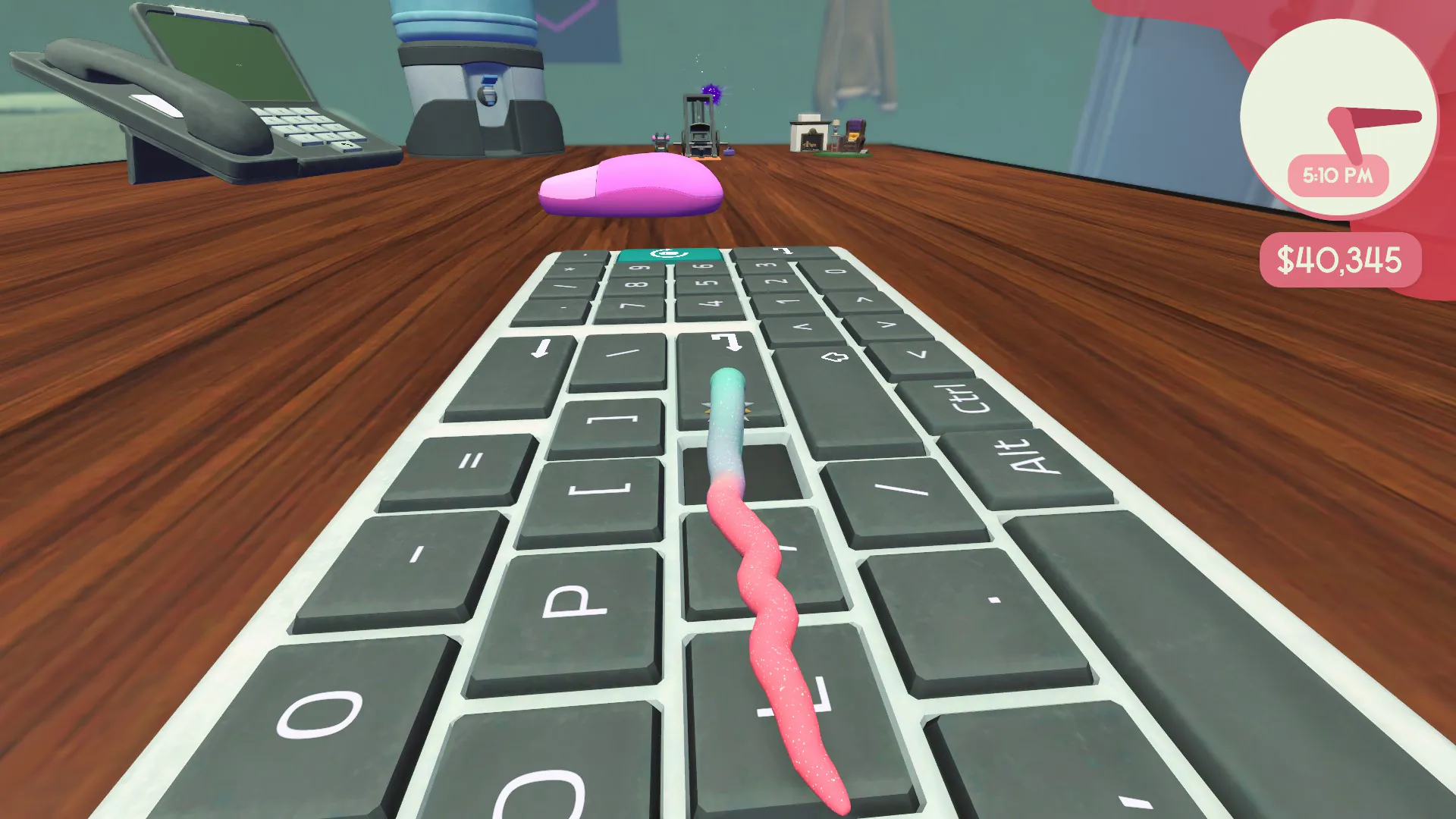
I am a worm. I type a message to a co-worker, wriggling over a keyboard and beating my tiny worm head against the keys. They wait, patient; it seems they like the strong silent type. I vault towards the telephone and dial a florist, only occasionally missing a key. Nothing to say? No problem, the florist can intuit where I want flowers sent. Romance achieved, I sit and read while a portal to another dimension wobbles in the corner of my eye – or, it would if worms had eyes.
Thrilled, concerned, resentful; how to quantify my feelings about Worming From Home, a game that makes me smile as much as ask, “What the hell am I doing with my life?” It is at once a simple physics sandbox and job simulator, developed by Zach Northrop and Mason Sabharwal, and also a baffling, disorienting, and pleasingly bizarre experience that gnawed away at my time.
I spent hours tapping keys, staring at computer screens, and avoiding contact with human beings. How has a video game persuaded me to repeat digitally what I already do in real life?
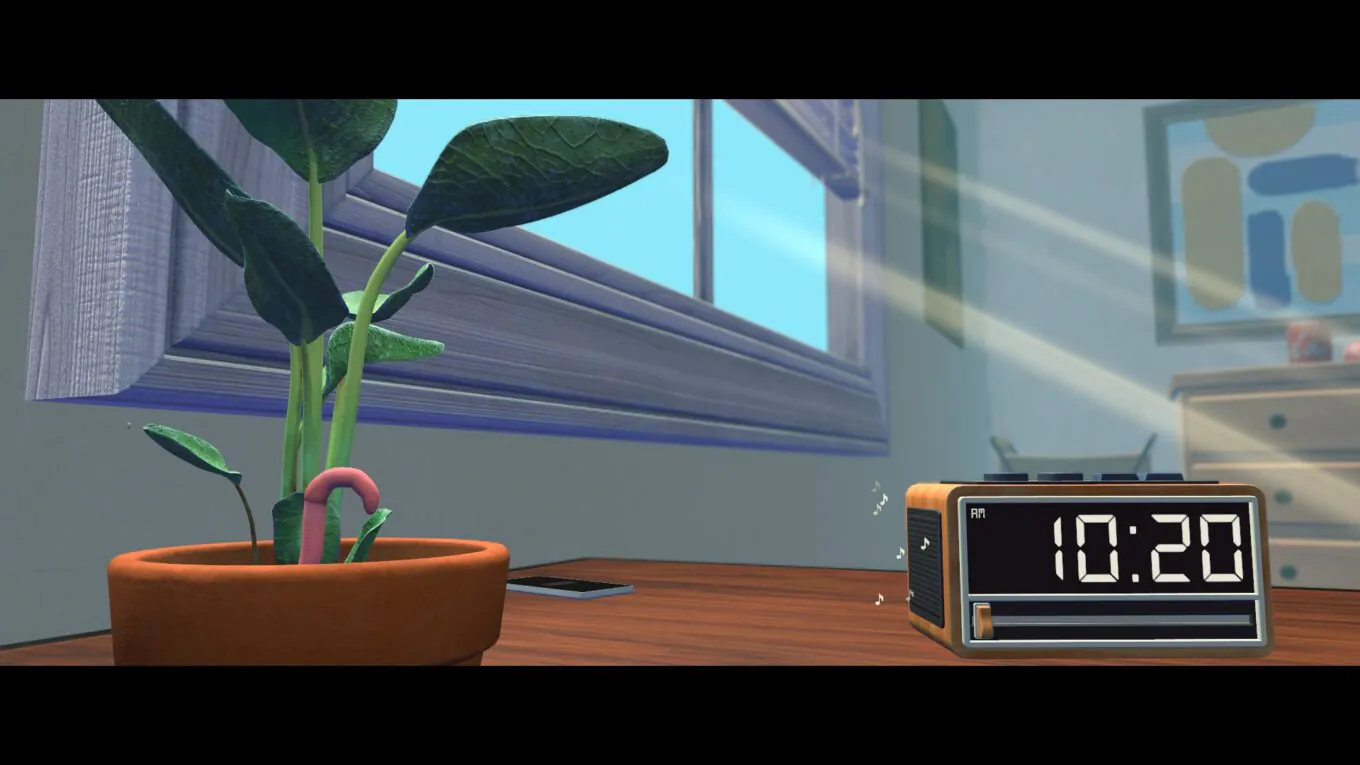
For most of us, being confined to a desk is metaphorical. For our worm (let’s just call him Worm) that’s a reality; falling to the floor sees you thrown back with a mild concussion. He’s been doing this for six years, never mind that worms typically live for between two and seven: fooling his boss into believing he’s a junior financial analyst, and human.
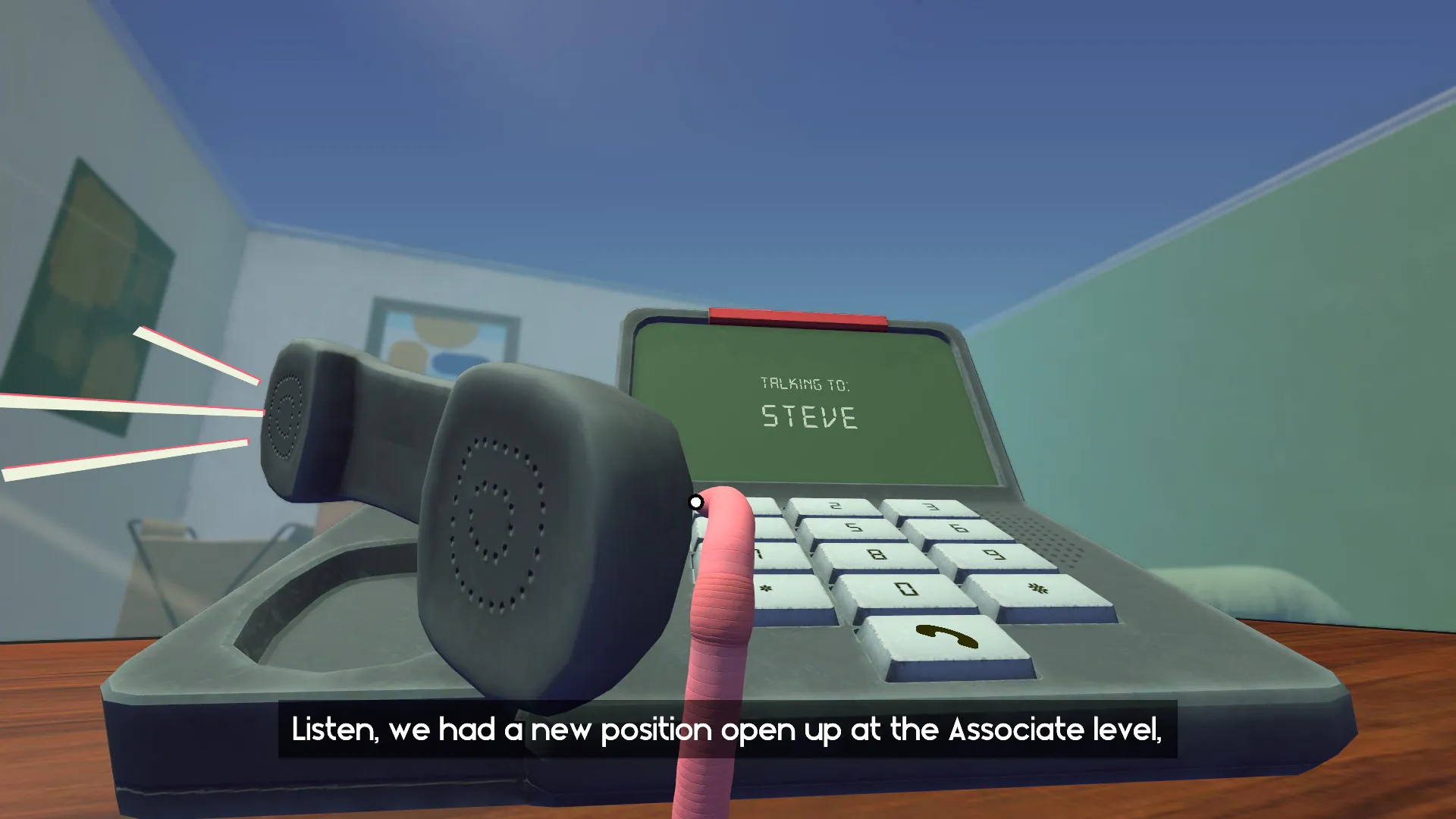
What do you do in Worming From Home? You slither from a plant pot, to which you’ll return each night, and open your computer. Worm is greeted by Tippy, his just the right side of legally distinct helper who also happens to be a balled up wad of paper. Tippy attempts to lead you through a tutorial only to be interrupted by a call from Worm’s boss, Steve. An associate position has opened up and you’re in line for a promotion.
Steve will be keeping an eye on you. Something that involves asking you to send him messages, print and sign contracts, and eventually consent to a video interview. All of which must be fudged in a series of hijinks and platforming. The main obstacle is Worm’s habit to ragdoll once airborne.
First, spreadsheets. You’re paid on a task-by-task basis as you solve increasingly complex sums and reformat existing information. Nose the mouse into place, open the spreadsheet program, and laboriously type out number after number. So far, so true to office life.
Formatting and copying is tougher. Worm can’t depress two buttons at once. Fortunately, he’s an insufferable dork and decorates his desk with three dice and a D20, which can be used to weigh buttons down. Is Worm playing Dungeons & Dragons at the weekend? I can feel my suspended disbelief suspending its disbelief.
Most job simulators stop there. Do the job, ad infinitum, until you no longer want to. Worming From Home, and Worm, is nimbler. Northrop and Sabharwal keep you moving from task to task. You can buy things to make your job easier: a more precise mouse, a keyboard with a lower action for easier movement. But mostly you’ll be clambering over your desk and buying products to make you money.
That includes interns. You can have up to 100 and they’re more expensive each time. But these worms tap away at their own, appropriately sized, keyboards and conjure ambient profit. Why do they get worm-sized keyboards and Worm does not? You’re asking the wrong question. What’s actually important is maintaining the facade.
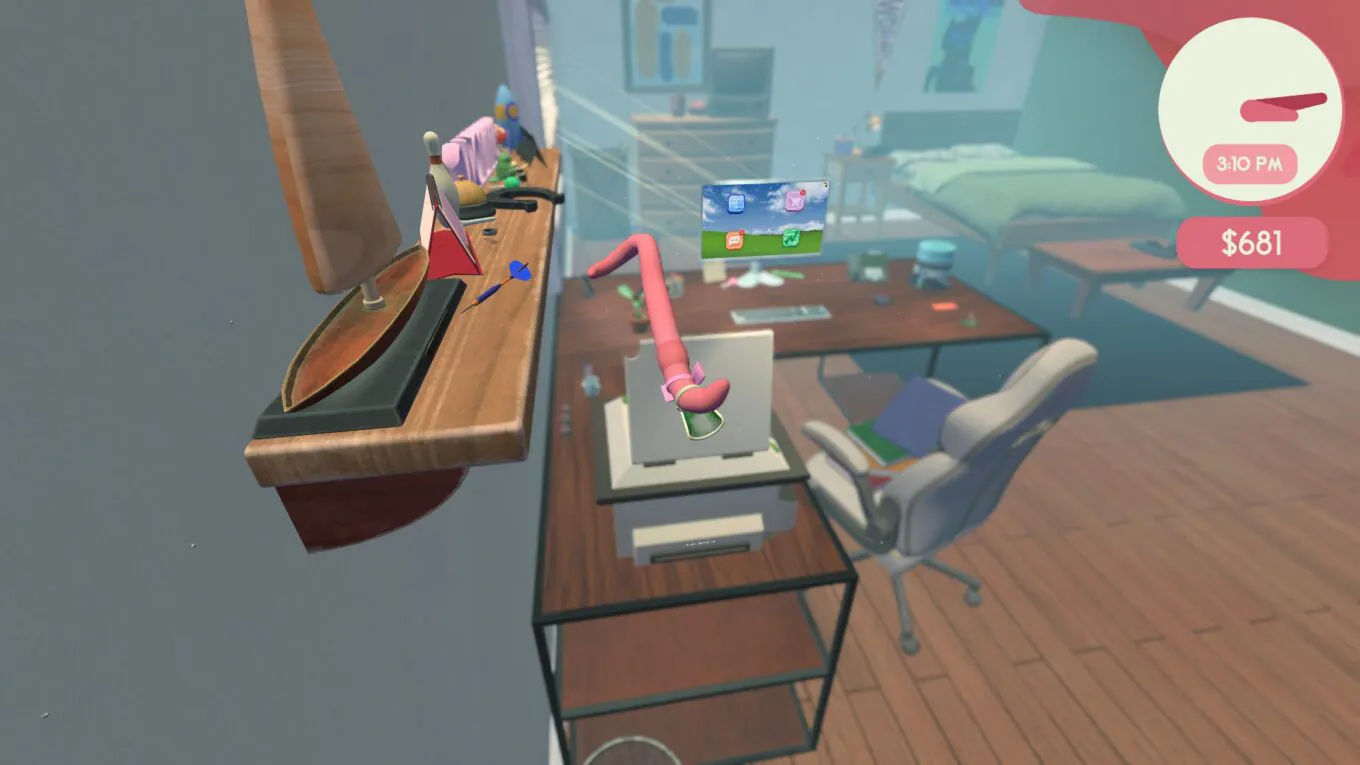
First, you’ll need a printer and some pens to sign the contract Steve insists you shouldn’t read. You can also pick up furniture: a cute reading nook and a set of worm-proportionate weights. Given worms are 1000 times stronger than humans relative to their size, I’m unsure why these aren’t comically large too. There I go asking questions again.
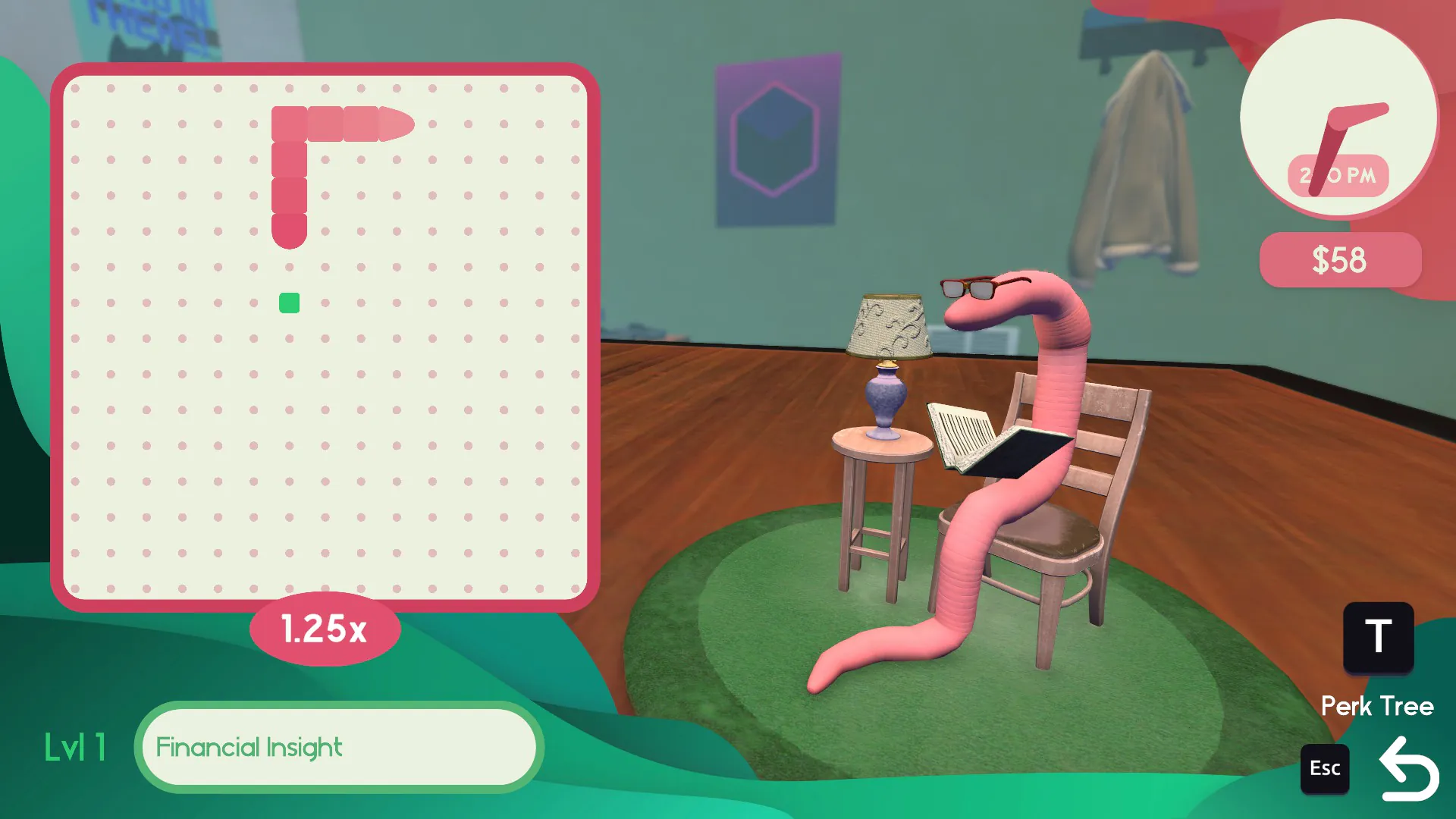
These aren’t for show. With them, you can train your body and mind through simple minigames. For the nook, that’s Snake (or, Worm?) where picking up squares activates a higher multiplier the deeper you get. The gym offers a Breakout clone that does the same. They grant you points that can be spent on upgrades to improve your leap or increase the money you make. The need for both of them disappears fast.
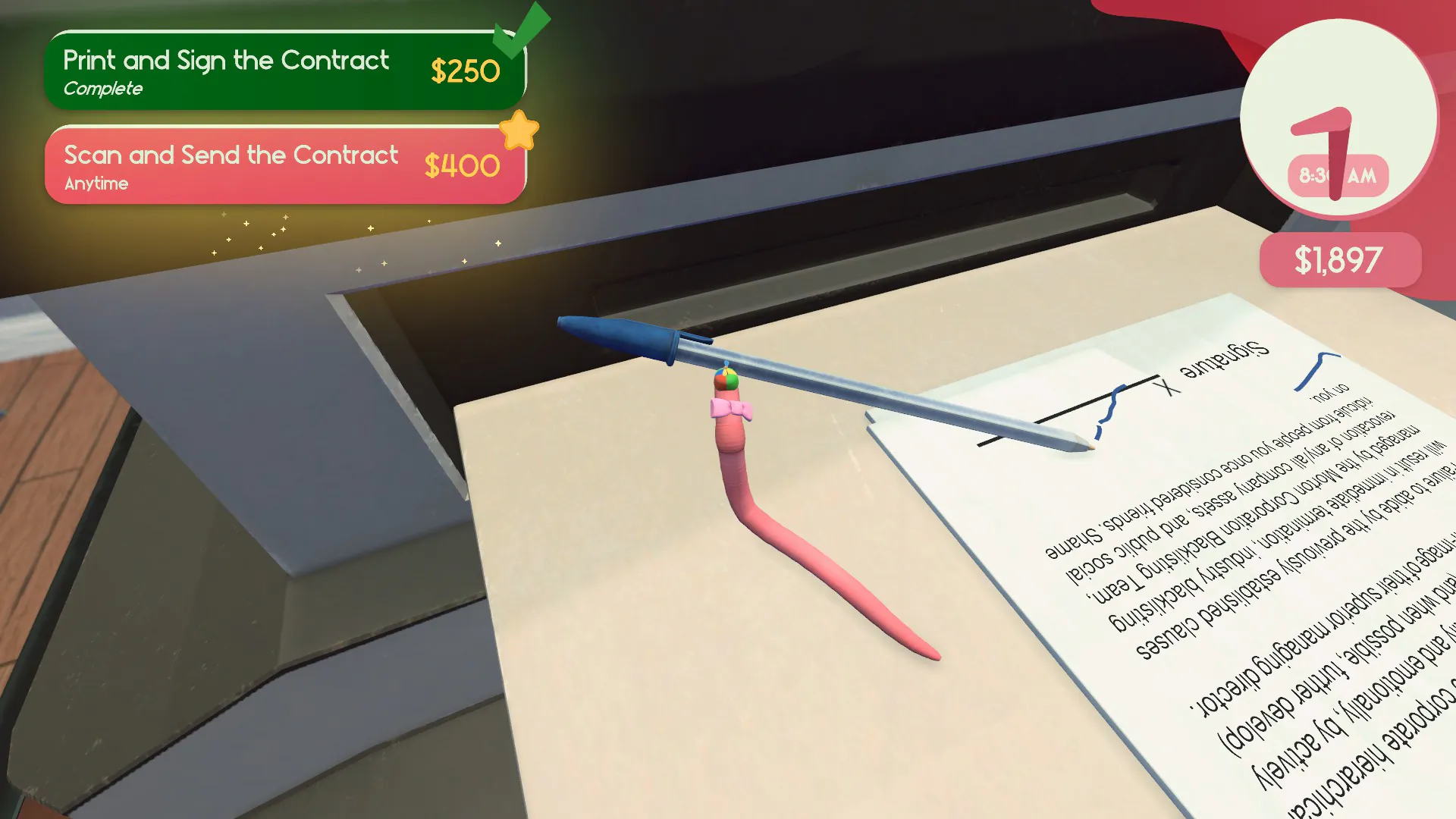
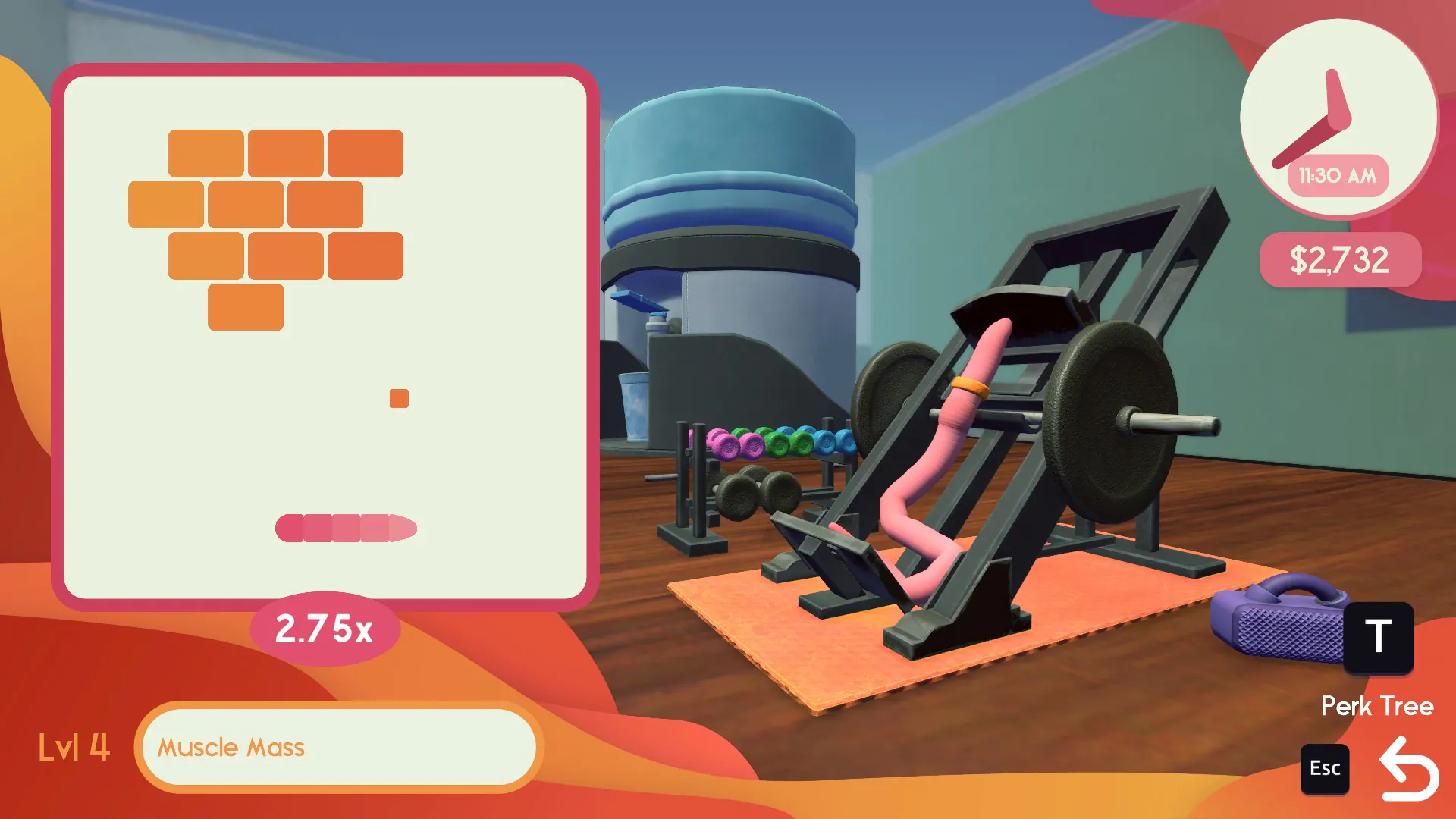
Worming From Home is a game of increments like that. You have motivation to work, but there’s plenty of new things to do and you’re rarely locked to one for long. Spreadsheets are mind-numbing but their necessity is fleeting, exercise is required only for a short burst, and even work eventually becomes passive. Oddly, for so silly a game, Worming From Home captures a facsimile of work with surprising fidelity.
Work is zipping from task to task with barely any room to settle. It’s monotonous yet relentless, and rarely as static as job simulators pretend. Perhaps that’s part of their appeal: they offer a glimpse of a bygone version of work that’s more stable and stationary. Most tellingly, the most demanding and time-consuming aspect of Worming From Home is sending messages and inter-office communiques that never really let Worm switch off.
There are moments, albeit short moments – Worming From Home’s main thrust only lasts a handful of hours outside extra modes and endless play – that drag that momentum to a halt. When webcams cost $3000, you will reach points where you must simply knuckle down and make money. Even though spreadsheets quickly lose their novelty, you’ll still need to fill them in or spend in-game days waiting for your interns to tick over enough money. You can upgrade them too. Though this is achieved by haphazardly carrying water over to them or dousing them in coffee.
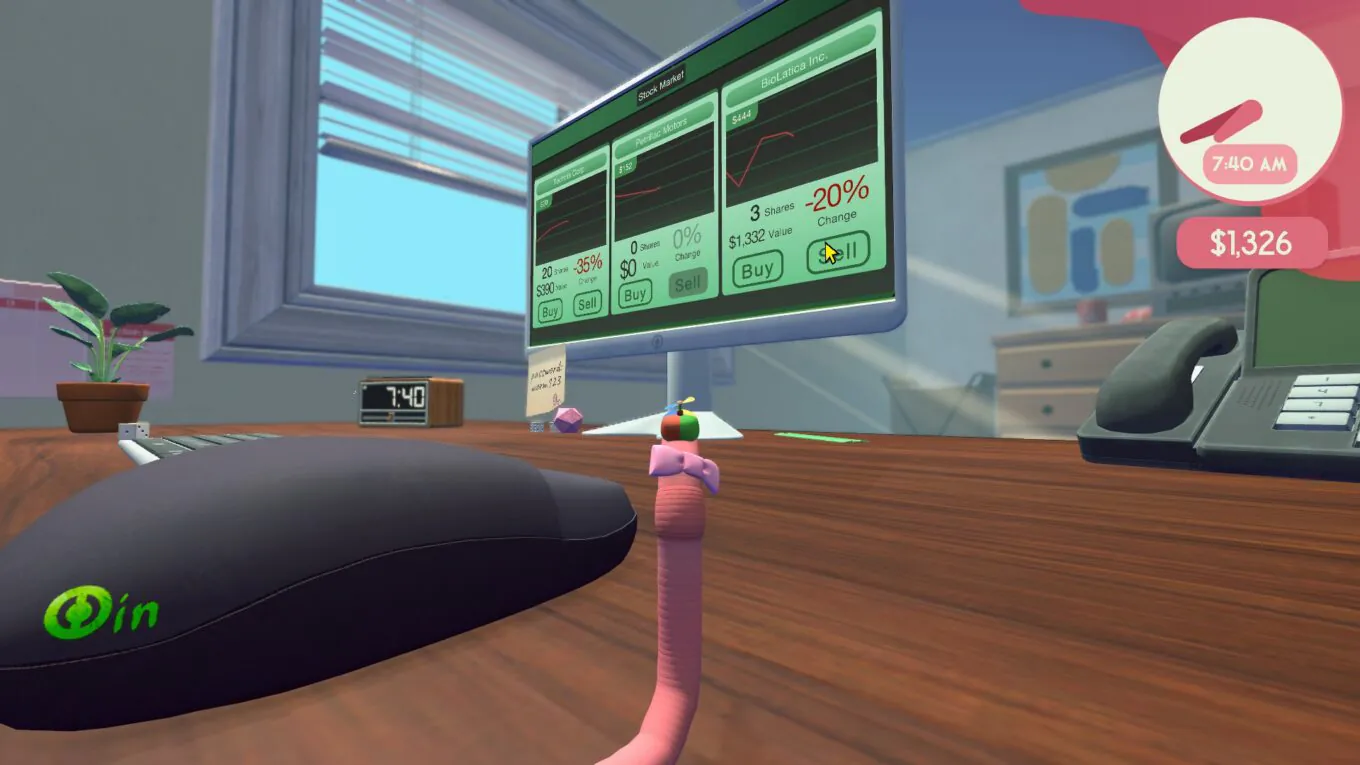
Stoppages are magnified as you shift to the stock market. Fluctuating with a predictable rhythm, informed by news that flashes on your computer screen or Steve delivers (wormsider trading, anyone?) you can monitor but not interact with them while working on other things. That leads to a lot of time staring at your computer to stare at the computer in-game.
Unfortunately, I have something of a “never mind the manoeuvrers” approach to trading, which left me with 50 shares of the most expensive stock for several days. Much of my playtime was spent staring at a red line and waiting for the number to go up. It did take some of the energy out of Worming From Home, but I also didn’t have it in me to do more maths (there’s a reason I achieved a U at A-Level maths).
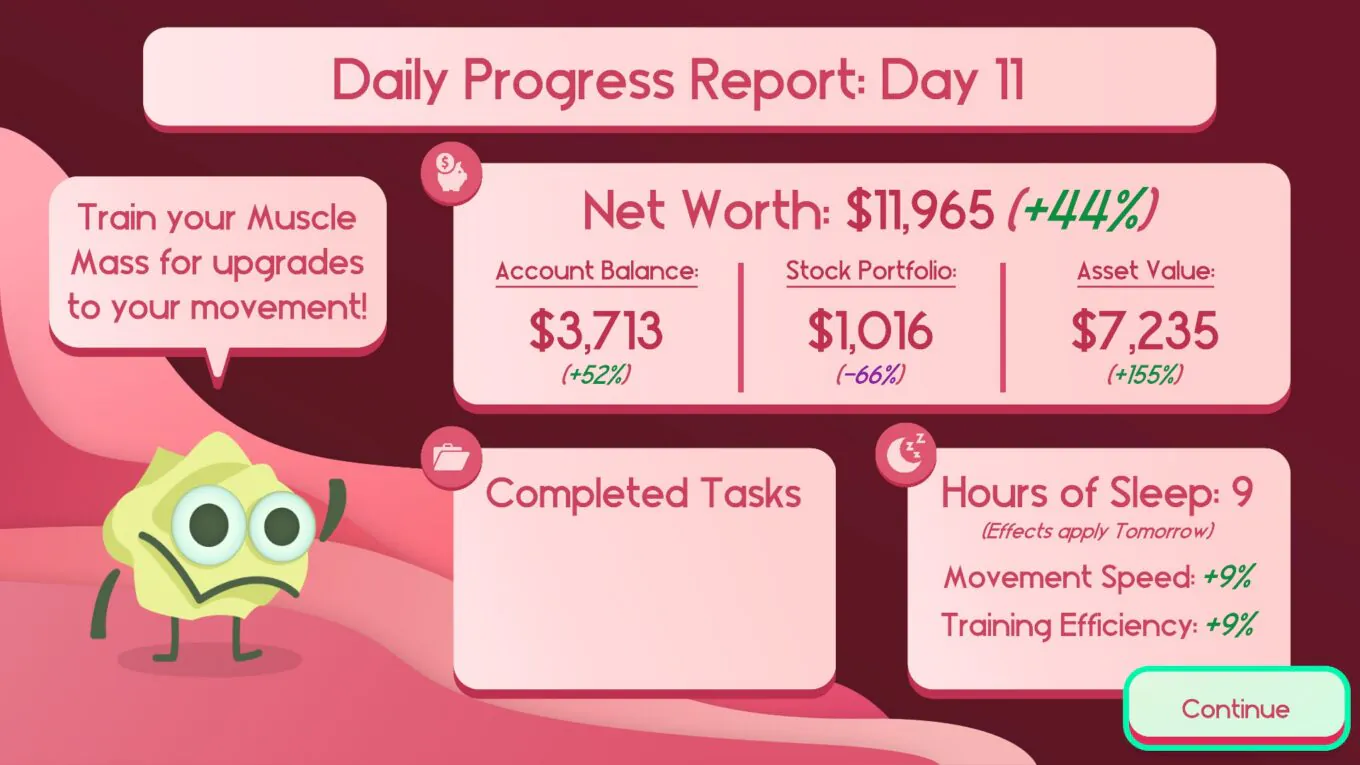
That may not sound fun on paper, at least compared to more madcap platforming. There’s plenty more of that, though, culminating in a frantic final call in which you must manage multiple tasks to keep up your pretence of humanity. But I did find Worming From Home’s stock market strangely zen-like.
I don’t know what that says about me. Perhaps I don’t want to know. As I repeated the mantra of buying low and selling high, I found myself curiously engaged by following market trends. The non-intrusive soundtrack, the absurdity detaching me from the reality of stock trading, the stillness of it all: it wormed its way into me until I found my happy place watching my shares, haranguing interns, and brewing umpteen cups of coffee. Things I never do in real life and yet was more than happy to do for Worm.
To the point that confronted by a completely random platforming sequence, my response wasn’t, “Why on earth (worm – I’m so sorry) would I do that?” Instead, I said, “Why not? I’ll spend five of my finite minutes on this planet bouncing a digital worm off some cubes.”
I can’t explain what happened to me while playing Worming From Home. It is not sophisticated: it’s goofy, its humour light (but relatable), and its gameplay is minimal. I’m not completely convinced it isn’t a complex psychopath test I failed by being drawn into its stock options. Nor am I sure that everyone in-game weren’t worms pretending to be humans. Why am I putting so much thought into something so silly, non-intrusive, and easy to zone out to? I have no idea. I enjoyed Worming From Home – and I think I resent that.