
Flat-bottomed taco shells seem like a brilliant idea on paper. Self-supporting, they allow you to stuff in plenty of filling without the faff of holding them up at the same time, and they’ll never unceremoniously roll over and spit pieces of chicken and pepper across the plate when left unsupervised. In reality, your perfectly presented plate only lasts up until the first bite, at which point that flat base absorbs all the force and shatters into at least three pieces, causing the taco to disintegrate across your hands, the table, and probably also your lap. If it ain’t broke, etc.
A roguelike spin on Serious Sam also seems like a brilliant idea on paper. All the elements are there: an extensive archive of ludicrous weapons, huge waves of enemies, satisfying gunplay and crowd control, and – just like an over-stuffed taco shell – spiralling jeopardy. And those are just the base ingredients. Onto these, Behaviour Studios has layered power-ups and combat modifiers, a dash move, multiple Sams with distinct abilities, run-based progression, procedurally arranged levels, Unreal Engine’s oomph, and a Doom reboot-inspired health recovery system. The moment you try to enjoy this ostensible feast, however, cracks start to appear.
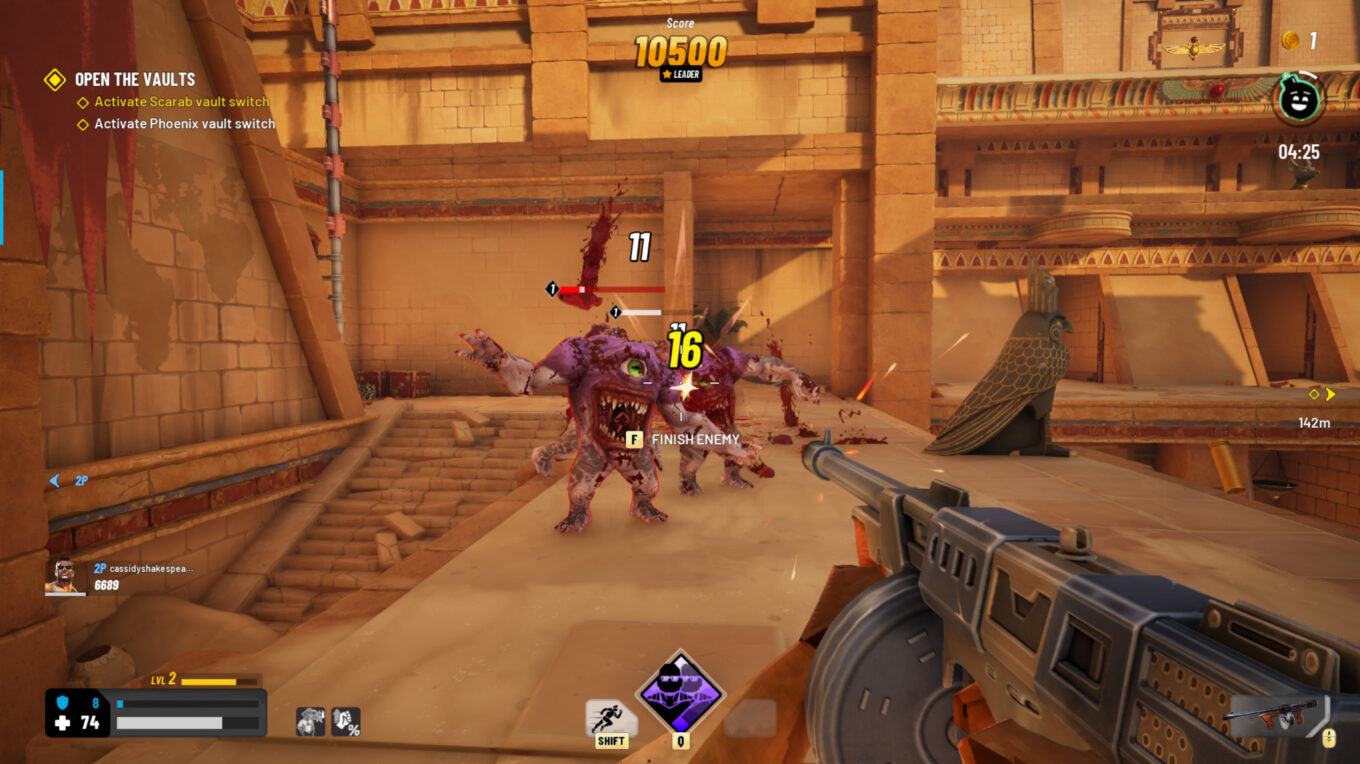
Every run in Shatterverse is split into nine stages, interspersed with break rooms and a shop, with every third one pitting you against a towering bullet-sponge boss. Enemies, destructible scenery, and chests will spit out coins, catalyst orbs, or a choice of three weapons. It’s Borderlands-y in its looter-shooter aspirations, and initially rides high on a similar combination of allure and satisfyingly clunky chest-opening sound effects – until you’ve opened three of four and come to realise that the weapons on offer are usually just a little bit shitter than the ones you already have. Very occasionally you’ll find something worth swapping for, but rather than a sense of continual progression, it mostly feels like treading water.
The problem is compounded by an unlock structure that requires you to spend catalyst orbs to feed new weapons into the RNG machine. Weapons are expensive, and orbs rare, so it’ll take a while to unlock everything. Moreover, it’s entirely possible to unlock a new weapon, let’s say the ray gun, and then only find pistols, tommy guns, and shotguns for most of your run. Early on, this results in a game that feels restrictive, chipping away at any sense of overarching momentum and eschewing the pacing of an expanding toolset for dealing with different enemies that the main series nails.
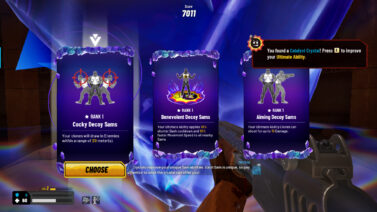
This initially underwhelming armoury improves in later stages, with more powerful weapons gaining elemental affixes that add status effects like bleed. Your kit can also be bolstered with Intel, upgrades that you apply every time you level up. They’re presented as red 3.5-inch floppies (I’m not entirely sure why – the series is set in the 22nd century, and has only ever come on CD-ROM or digitally) and gently tweak the way the game plays. Squad Mechanic boosts weapon firing speed when you’re within 15 metres of other Sams, for example, while Grounded Sharpshooter reduces spread and recoil as long as you’re standing still. Other intel might increase your accuracy while jumping, reduce explosion damage, or even let you see enemies through walls. Intel can also be upgraded in between runs, making upgrades more potent and serving as one of the permanent progression mechanics.
Trinkets are another perma-unlock. They drop during runs and can be arranged in switchable loadouts to further tweak your playstyle, while collecting full sets confers additional bonuses. You can upgrade these, too, by scrapping any that you don’t want in order to acquire Serious Dust, which can then be spent on increasing their rank.
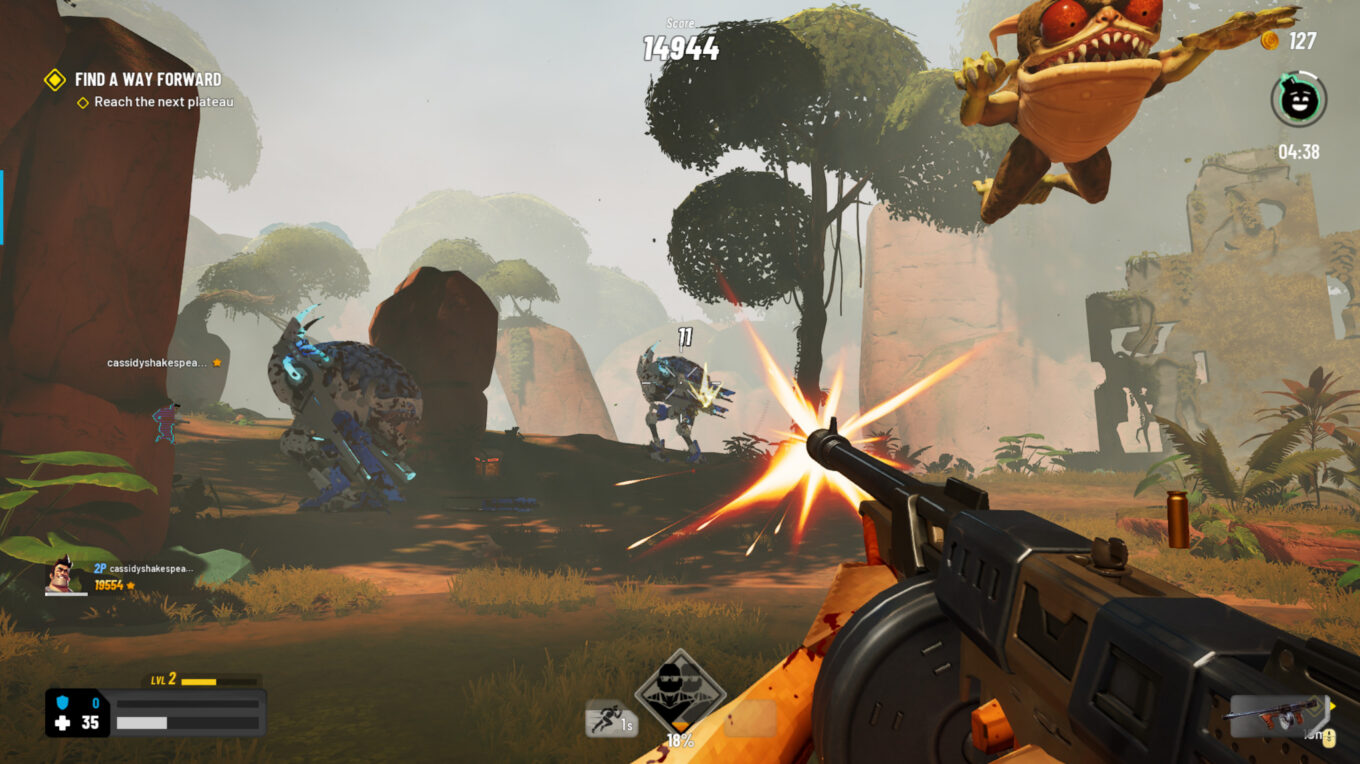
In combination, the various augments subtly affect the potency of your unlocked Sams, but they are predominantly numbers based, with no interesting compromises to deal with, and don’t offer any genuinely different play styles. The differences between the five Sams aren’t particularly pronounced, either – some move a little faster, others have more or less capacity for armour, etc. – but when playing with a full team of five it’s amusing enough to combine ultimate abilities while facing Shatterverse’s larger crowds. Retro Sam can deploy decoys of himself, while Orphan Sam opens up a razor portal, Cartoon Sam launches himself from a cannon, Broken Sam rains down a huge laser, and Alien Sam goes HAM with four weapons at once (one for each arm).
Playing with four friends (or, at a pinch, two) is really the only way to approach Shatterverse. The scaling doesn’t feel proportionate, making solo and dual play feel like a slog, and it will have to be friends – at the time of writing, several days after launch, it’s still nearly impossible to find a full squad via matchmaking.
But even playing with a full complement of Sams won’t inure you to the game’s lack of polish. Running (usually backwards) and gunning feels fine, and in line with the brand, but elsewhere things feel a little looser. That health-recovery mechanic, for instance, requires you to execute near-dead enemies with a melee attack, but doesn’t put them into a stun state like Doom – making it easy to accidentally kill them before triggering the finisher – and doesn’t feature any bespoke animations. You get perishingly little health back for each successful finisher and the staccato nature of managing all of this feels counter to the bullet-spraying abandon that characterises the Serious Sam games.
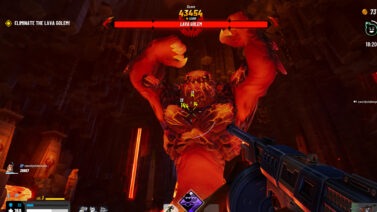
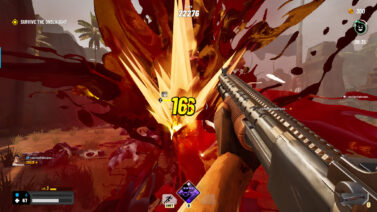
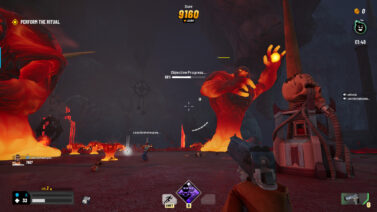
Bosses are hit and miss, too. There are some interesting attack patterns to deal with, but also quite a few that aren’t telegraphed clearly enough to avoid consistently. Progress on a run, especially when it comes to facing your first boss during the third stage while still lightly armed, comes down to luck of the draw in a manner that’s frustrating rather than one-more-go motivating. And I soon learned to hold back from choosing an Intel disk mid-battle because it takes a second to leave the menu, during which you can’t move, and can undo all the hard work put into topping up health with those finishers.
Rather than an outright disaster, Shatterverse feels like a frustrating near miss right now. The basic template should work, and the over-the-top multiplayer shooting is fun despite itself, but is held back by a lacklustre upgrade path, uneven balancing, undercooked UI elements, and a poorly executed health system. None of these are insurmountable, however, and if there is a willingness to lean into a chunky post-release update or two, the game could yet realise its potential.