Turnip Mountain’s stripped back, surreal visuals belie an unexpected commitment to realism. Sure, Luke Sanderson’s rage-inducing physics-based climbing game isn’t a turnip simulator per se, but just like real root vegetables, the brassica protagonist at its centre exhibits a profound and total disinterest in your mental wellbeing. In that respect, and that respect alone, Turnip Mountain is exactly like real life.
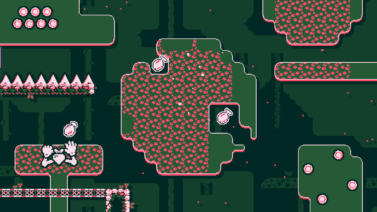
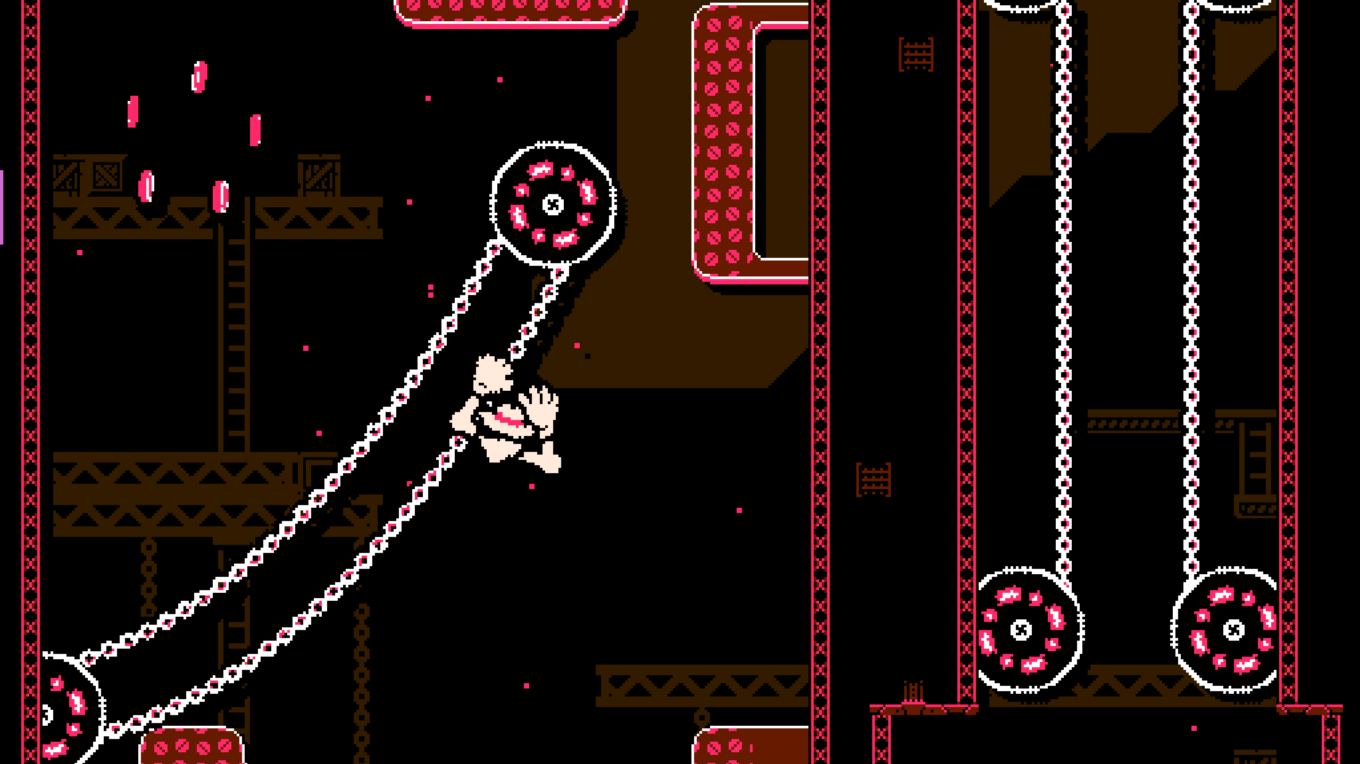
Beyond that point, it diverges somewhat and takes a few liberties. This turnip, for instance, has two big strong arms and a pair of natty white gloves. Controlled with each analogue stick (or, if you’re feeling particularly adventurous, two mice), you spend much of the time extending and retracting these limbs in order to move across progressively more fiendish confections of grippy (and much less grippy) surfaces, in the process taking care to avoid a variety of hazards. You grab by squeezing the corresponding trigger and you can jump by pulling back with one or both arms, then flicking in the direction you want to self-yeet as you let go.
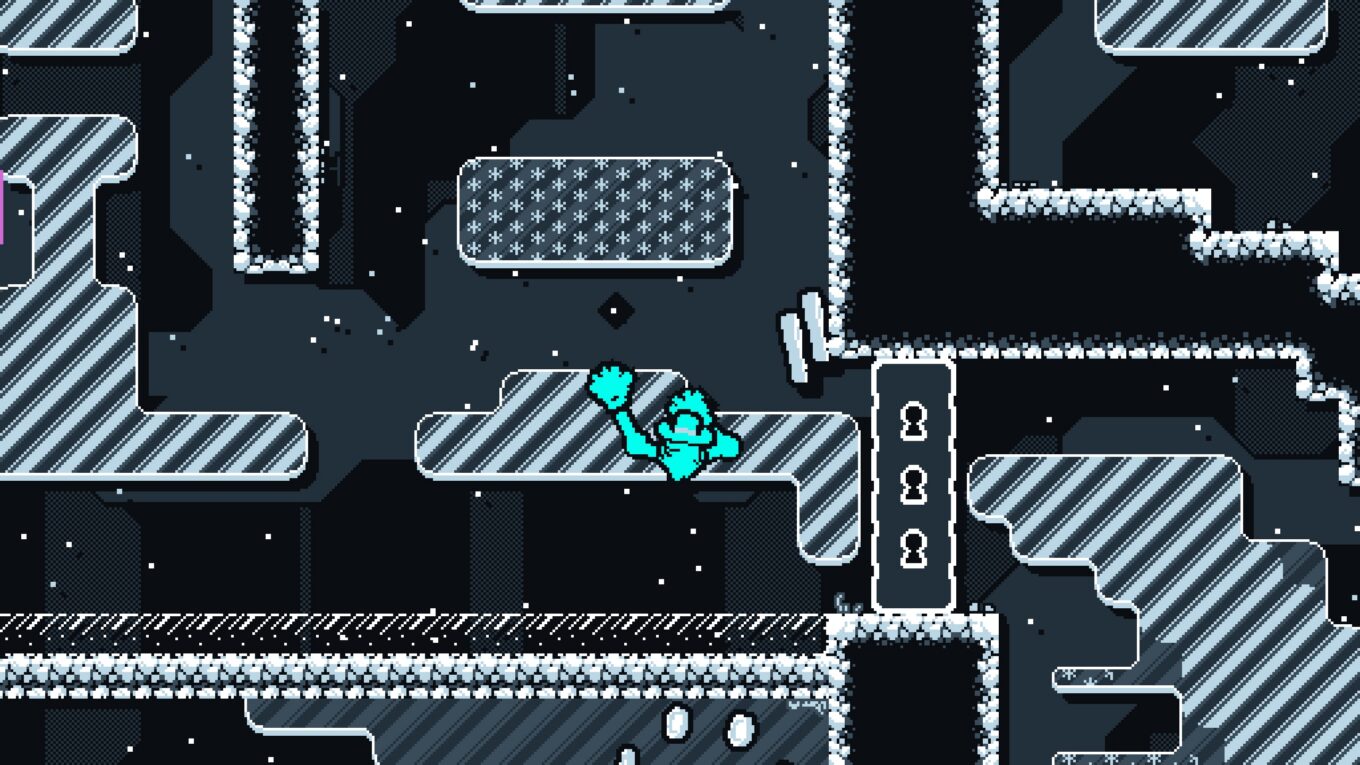
You can also hold B to retract your arms and roll about on the floor (when one is available), or press the same button while on the wall to switch to just one arm and turn things into a blindly optimistic shot-put event. If you drop or fling yourself and then hide your arms and start spinning, you can ricochet off of surfaces and pinball in a chosen direction. Paired with the game’s satisfying sense of momentum, movement in Turnip Mountain feels wonderfully tactile and, in the initial stages at least, fills you with confidence.
This simple-but-versatile moveset is showcased by an onslaught of creative level design that feels Nintendo-esque in its breathless pace. You barely go a room without some new mechanic or idea delighting (and then often infuriating) you. But in its singular turnip-y madness, perhaps a better comparison is Treasure’s oeuvre of self-assured 2D classics – a combination of uncompromising difficulty, original ideas and inverted expectations, and unwavering trust in players’ determination and skill.

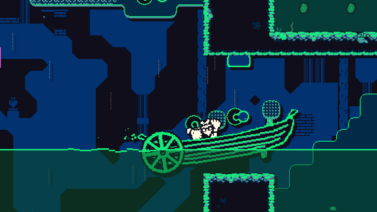
Across nine alliteratively named stages, from Beetroot Base to Turnip Top, you gradually ascend a mountain’s worth of discrete puzzle rooms filled with brilliantly conceived problems. One level forces you to deal with surfaces that are only grippable when illuminated by strafing searchlights (flipping the usual gamer instinct to avoid them on its head) and spotlights that you can move around on rails. Another switches between joyfully swift movement as a fish-turnip and piloting a boat by turning a lever to drive a paddle wheel at the back. Later, you’ll have to navigate one-handed while holding onto items – such as a bag of seeds that plants sprouting grippable texture – which need to be deployed well beyond your throwing range.
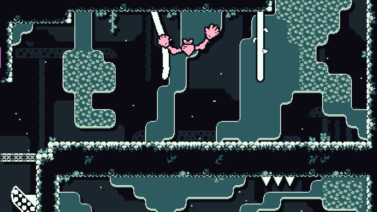
It would be a shame to spoil too many more of the surprises that await (including a brilliant treat gained after completing the main stages), but the game’s waterfalls are a perfect example of how well reassuring tactility and apparently insurmountable challenge dovetail. Climbing through them pushes you down, and quickly, so you must continually change your grip while moving to the side and slightly upwards to compensate. It sounds very simple, but feels just right, and these PTSD-causing water features are used to brilliant effect on a few occasions.
But they also highlight the eggplant in the room. Turnip Mountain’s more recent contemporaries – games such as Super Meat Boy, Celeste, and N++ – thrive on precision controls. They demand absolute accuracy and are built around responsive interfaces that ensure failure almost always feels like it was your fault. Turnip Mountain’s controls, while joyful, don’t always foster the same sense of symbiosis.
On occasion, often while falling, you won’t grab a surface despite being certain you squeezed the trigger at the right moment. More seriously, the angle that you jump doesn’t always match your intended trajectory – quite often I would find myself jumping diagonally when I absolutely needed to go straight up in order not to have to start an arduous climb all over again. I also experienced a couple of bugs at inopportune moments – one that saw my arms disappear indefinitely after flying out of a cannon, forcing a checkpoint reset, and another where I would pop off a series of fast-moving platforms whenever they went above a certain height, making the challenge impossible and again necessitating a reset.
While irritating, none of these issues are game-breaking, nor do they manage to fatally tarnish a game blessed with a surfeit of charm. Would I prefer it to be tuned absolutely perfectly? Sure. But over the course of the entire game there was only one instance of what I believed to be unjust failure which made me switch off for a bit in order to spare my sanity. The next day I returned to the challenge daunted, certainly, but no less enthused.
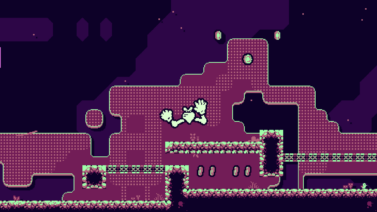
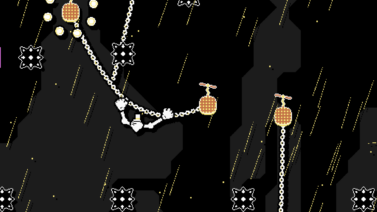
Along the way you collect coins, which can be exchanged for a variety of skins and hats in the game’s menu, and switchable palettes which offer attractive alternatives to the game’s striking initial black-and-white aesthetic – including a particularly handsome nod to the original Game Boy screen. These simple schemes call to mind Terry Cavanagh’s similarly brutal Super Hexagon (do go and play this if, for some reason, you still haven’t).
Turnip Mountain certainly isn’t for the faint of heart, but anybody who relishes a challenge will find much to enjoy here. Despite controls that don’t always match up to the task in hand, the game rarely feels unfair or unbalanced, and by the later stages you will find yourself attempting manoeuvres that seemed impossible only a few levels ago. And when everything lines up perfectly – intent, input, and outcome – Turnip Mountain delivers a rarified flow state that could earn it a place among the classics of the genre. Just don’t expect your relationship with real-life turnips to ever be the same again.