The RPG genre can be tricky to tackle, especially for smaller, lesser known teams. It would be unfair to say that the genre is overcrowded. Yet, there’s definitely an abundance of it. If the big studios aren’t making full blown RPGs that push the medium forward with massive open worlds and a myriad of tasks to tackle, or ever increasing skill trees to make builds around, their games are definitely integrating RPG mechanics either way. The snowball isn’t stopping anytime soon, and it will seemingly only get bigger with time.
Which is why the scope of Dimraeth was immediately surprising to me. Developed and published by Mudtek, a studio that started back in late 2022, it introduces itself as a 1-8 player fantasy RPG with handcrafted pixel art and, well, possibly every feature you can think of piled on top of each other. Its ambition is as overwhelming as it is admirable, making me wonder why they decided to be this expansive for a first project. Yet, as the game starts its early access period, the foundation already shows promise.
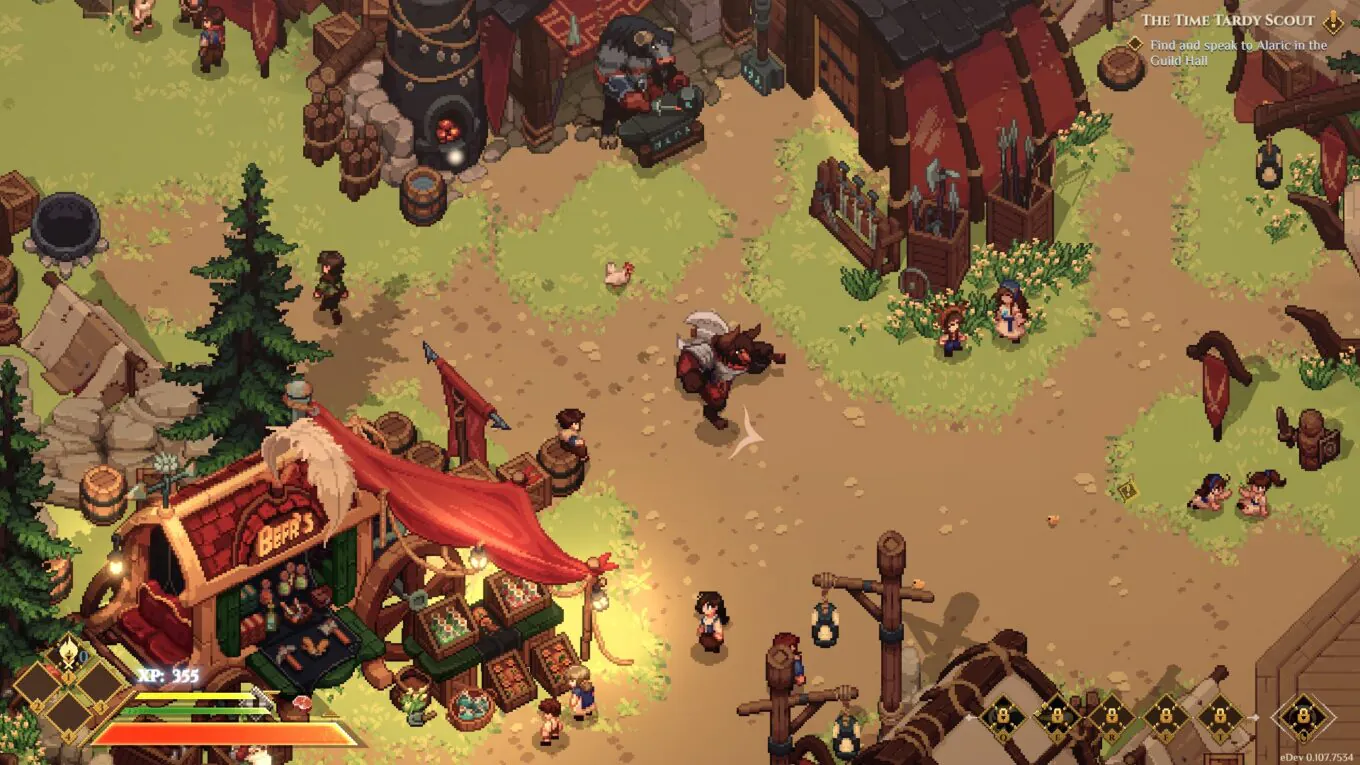
Dimraeth kicks off with a strong start. You’re invited to create your own character, picking from a number of aesthetic and mechanical options. In the current build, you can pick between human, minotaur, and elf as race, and there are three classes available: magician, brawler, and shadow, which are your mage, warrior, and rogue equivalents. Then, you can also pick a persona between heroic, scholar joker, and stoic. You can make your character to be a traditional hero driven by chivalry, a scholarly rhetoric hungry for knowledge, a carefree spirit, or someone who’d rather hide their emotions to prevent showing any sign of weakness, respectively. These choices are important, as your character will begin with a set sheet of stat numbers, which will be the foundation of your adventure.
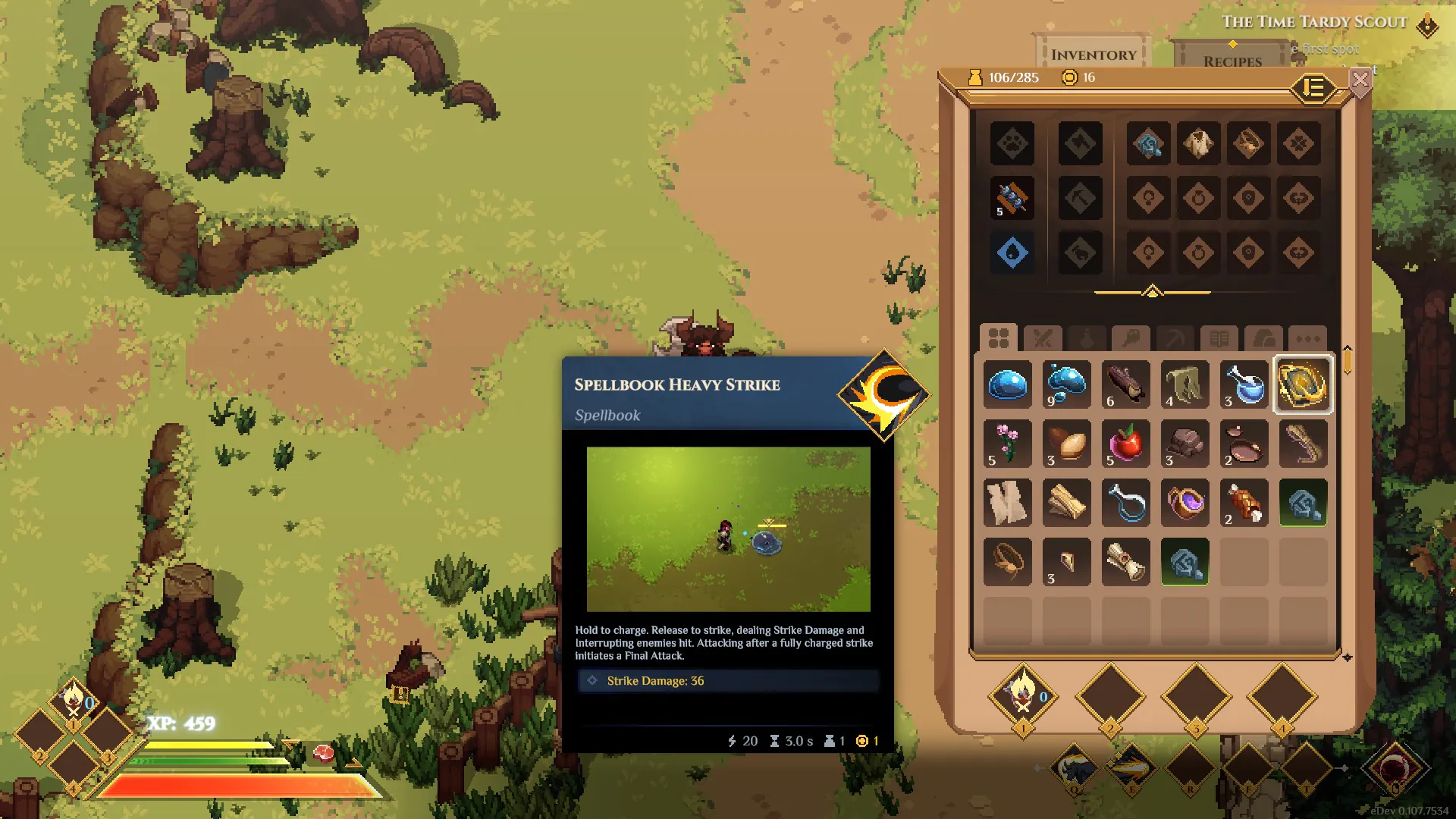
Speaking of adventure, here’s the gist of the story. You’re in Mirkea, a realm that is slowly being devoured by corruption. Syllabus, Last of the Ogre Magi, seeks to claim Dimraeth and its power. Your character is granted a powerful ability that you’re yet to understand. A wizard, called Faustas, provides guidance at the start after a tutorial section through a cavern filled with slimes. The lore exposition is ever-present, and it can fall into the territory of being not that arresting, especially when it occurs mostly in dialogue that feels more extensive than it should be, and isn’t particularly striking. You usually get to choose from different dialogue options, which give you some agency over how your character interacts with others. But for the most part, these weren’t the strongest moments.
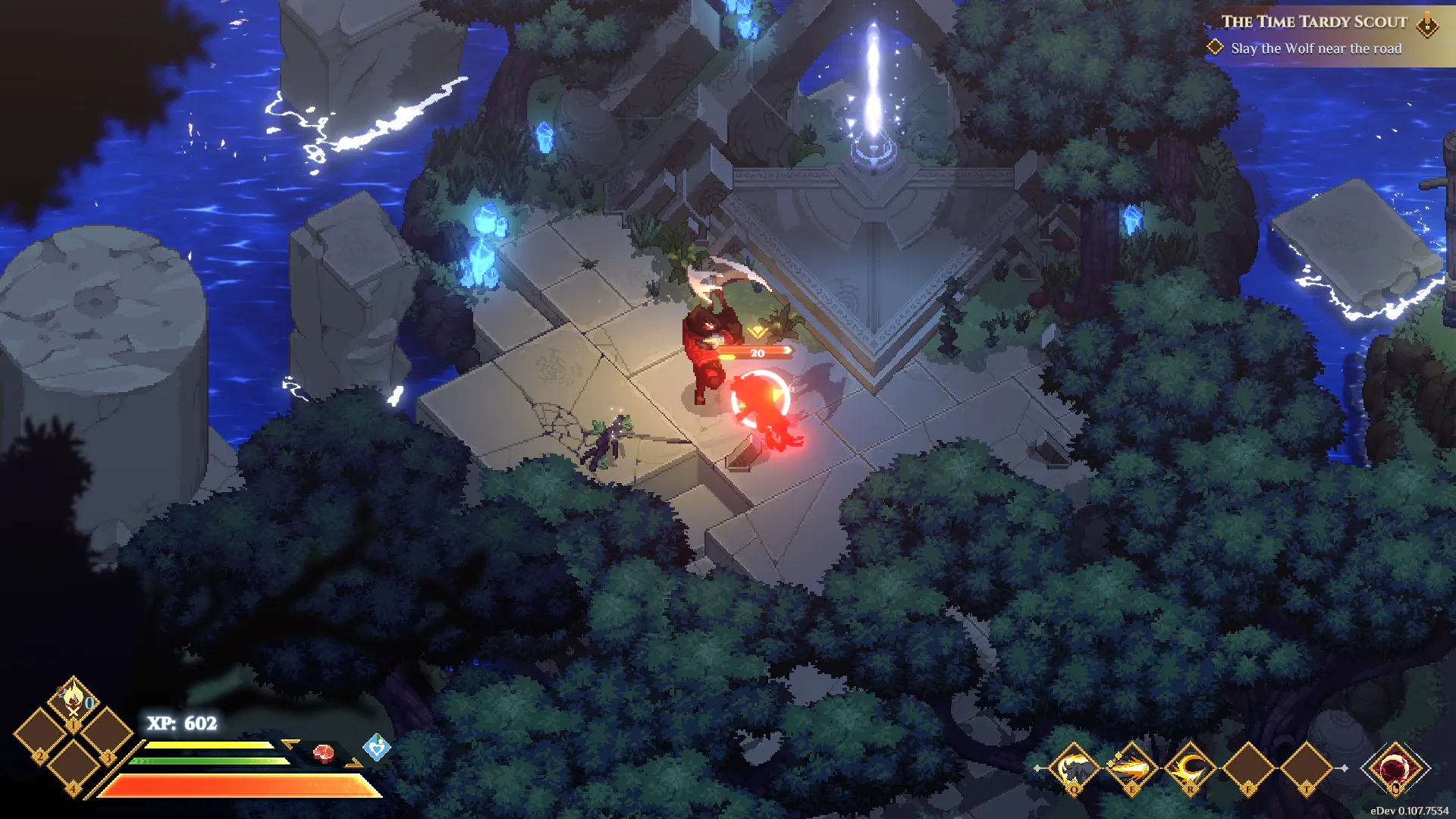
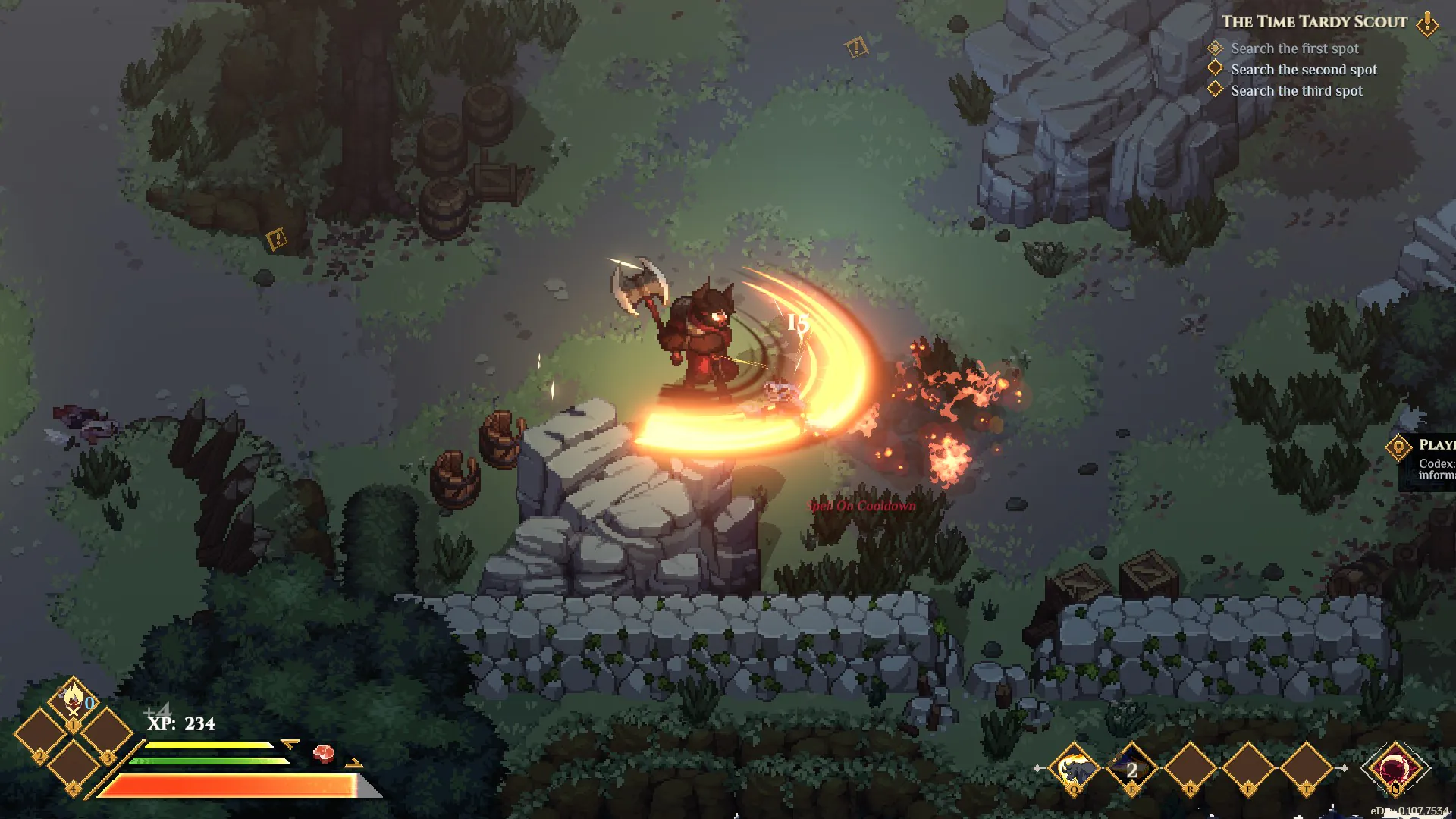
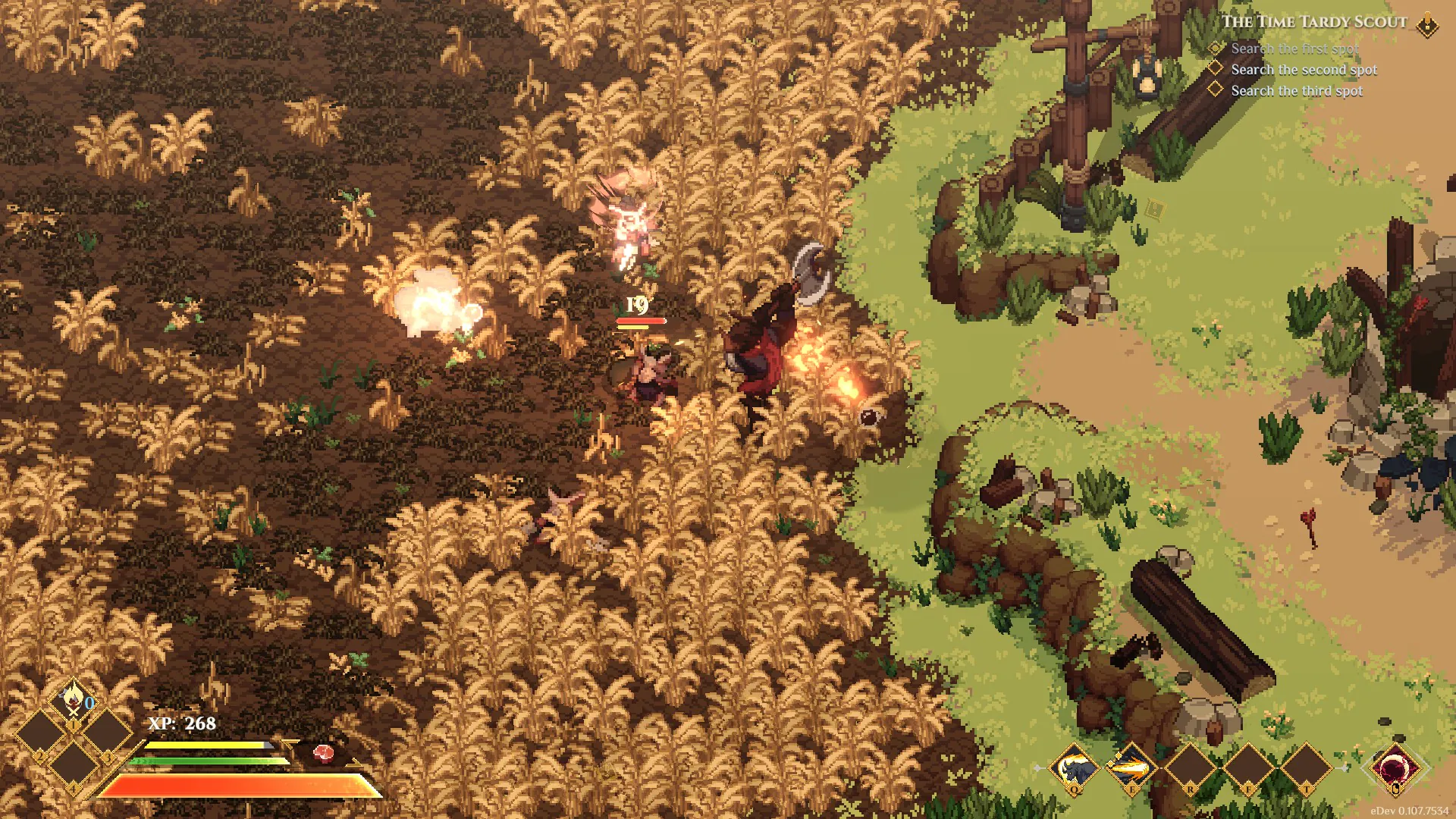
Combat, however, is entertaining from the get-go. I went with a brawler minotaur, which progressively became a close-quarter powerhouse. Fights are interesting, as the team is clearly trying to make them feel reminiscent of playing a Soulslike, albeit from a topdown view. Enemies, as well as yourself, have a stamina meter that doubles as a stance of sorts, which means that it’s easy to stagger and also be staggered. My character started with a dodge roll as well as the ability to block, but of course, these actions do have a cost, so it’s important to try and learn enemy patterns and use them at the right moment. In case you’re wondering, yes, there is a benefit in performing a perfect block by shielding yourself from a strike right before it lands. It’s fairly easy to use when it comes to slower enemies, but for the ones that tend to aim for subsequent attacks, I found blocking wasn’t as intuitive and resigned myself to use the dodge roll instead, which covers quite a bit of distance.
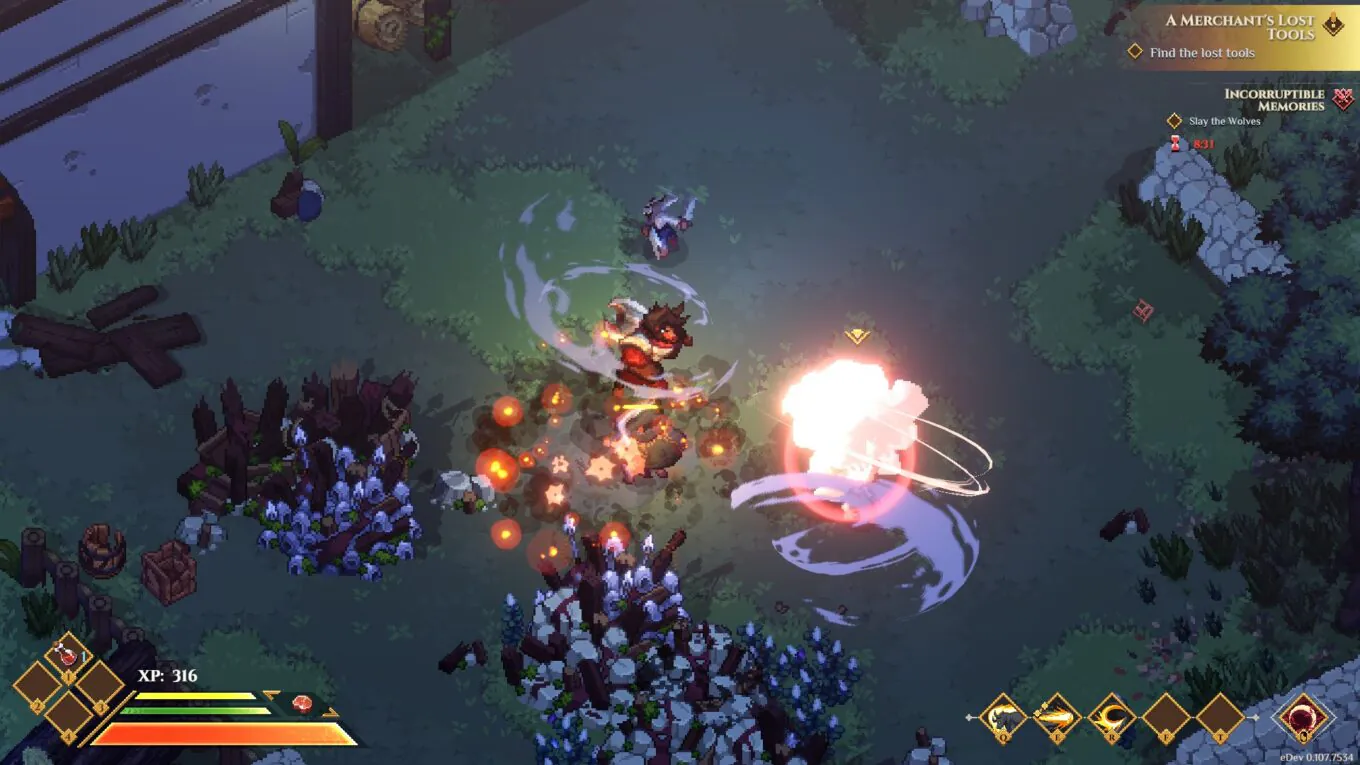
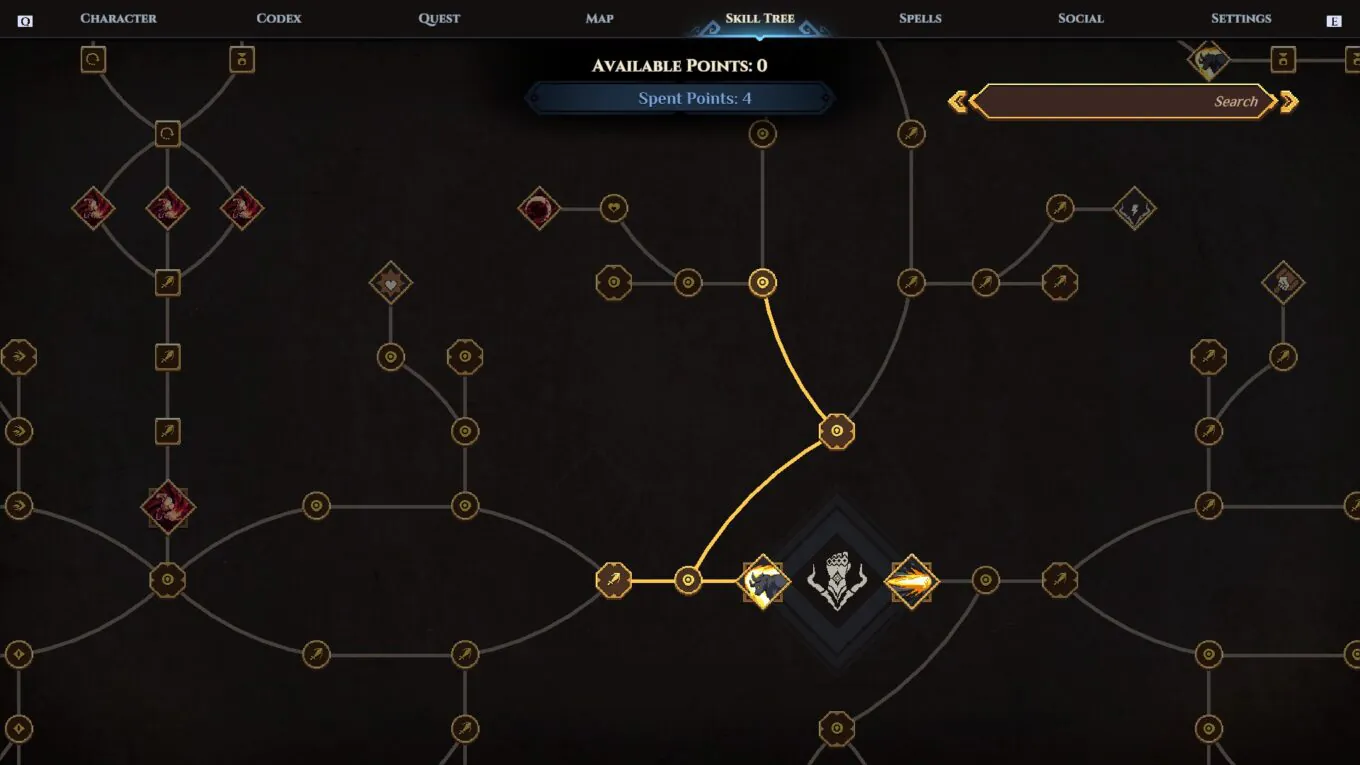
And hey, if the mention of Soulslikes doesn’t seem enough of an influence, don’t fret, as Dimraeth also features base building mechanics, quests that are split into main missions, side tasks, contracts called deeds, and limited-time events that pop up at random while you’re out there exploring. You also have cooking, which is tied to a survival-lite mechanic where you need to keep your hunger level satisfied to avoid penalties, as well as skill trees, which take cues from Path of Exile’s passive skill tree. In summary, it means you can zoom out and see no shortage of skills on your screen, all interconnected via nodes. Whenever you gain experience, you have to go to a camp or talk to a trainer to spend it on stats. For each time you increase a stat, you gain a skill point, which you can then spend on whichever node you want. Eventually, the trees will lead you to more substantial abilities, as they otherwise tend to be small buffs to health, stamina, attack, and other existing stats rather than a lot of abilities together.
There are many other similarities to find and compare the further you get into Dimraeth. During a loading screen, the game told me that pets can be sent back to town to sell items for me, which is one of my favorite mechanics from the first few Torchlight games. Yet, I hadn’t even learned that you could have pets at that point. It genuinely feels like a lot, and only time will tell if these features will be as effective as they should be, rather than feeling like padding. But the underlying ambition is impressive.
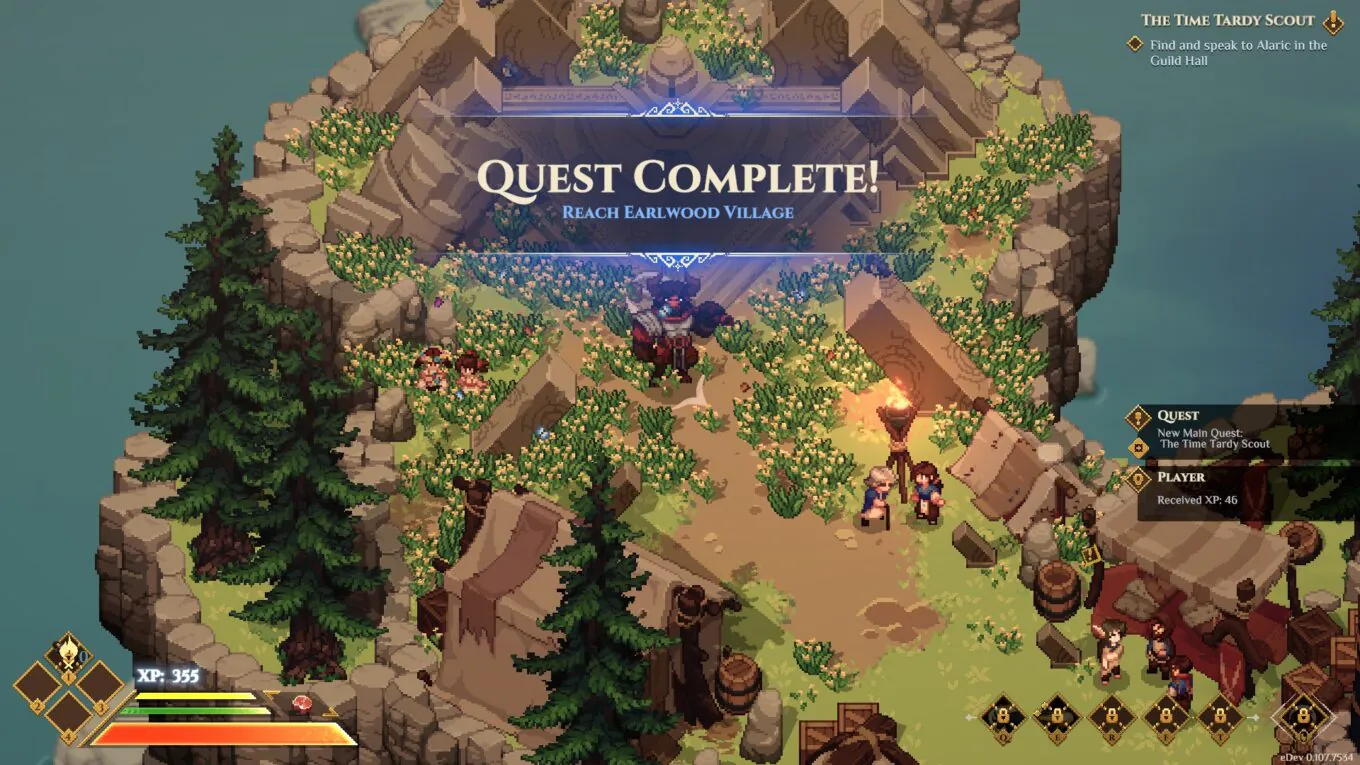
At the time of writing, the build includes Earlwood Village and the Wildwood Forest, which is quite a sizable and interconnected map on its own. I did find enemy variety to be somewhat lacking, as I spent a not insignificant amount of time fighting slime after slime. Then, it was goblins, and then wolves. Combat has a tight responsiveness to it, and in the moments in which I was attacked by large enemy groups, or the occasional boss with attack patterns I wasn’t used to, fights really shone. But when you’re exploring or just trying to get from point A to B, you’re likely to face the same enemies over and over.
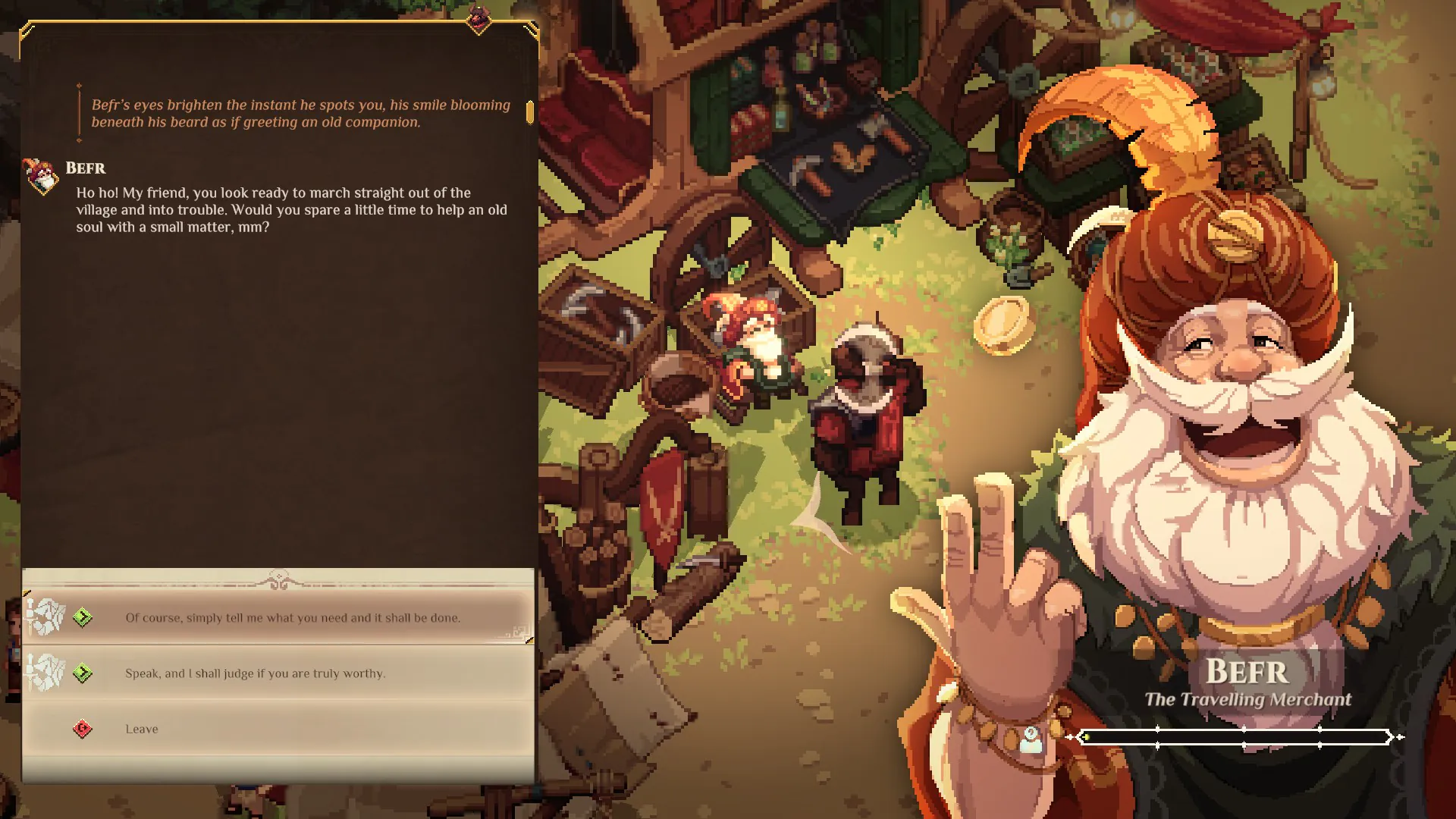
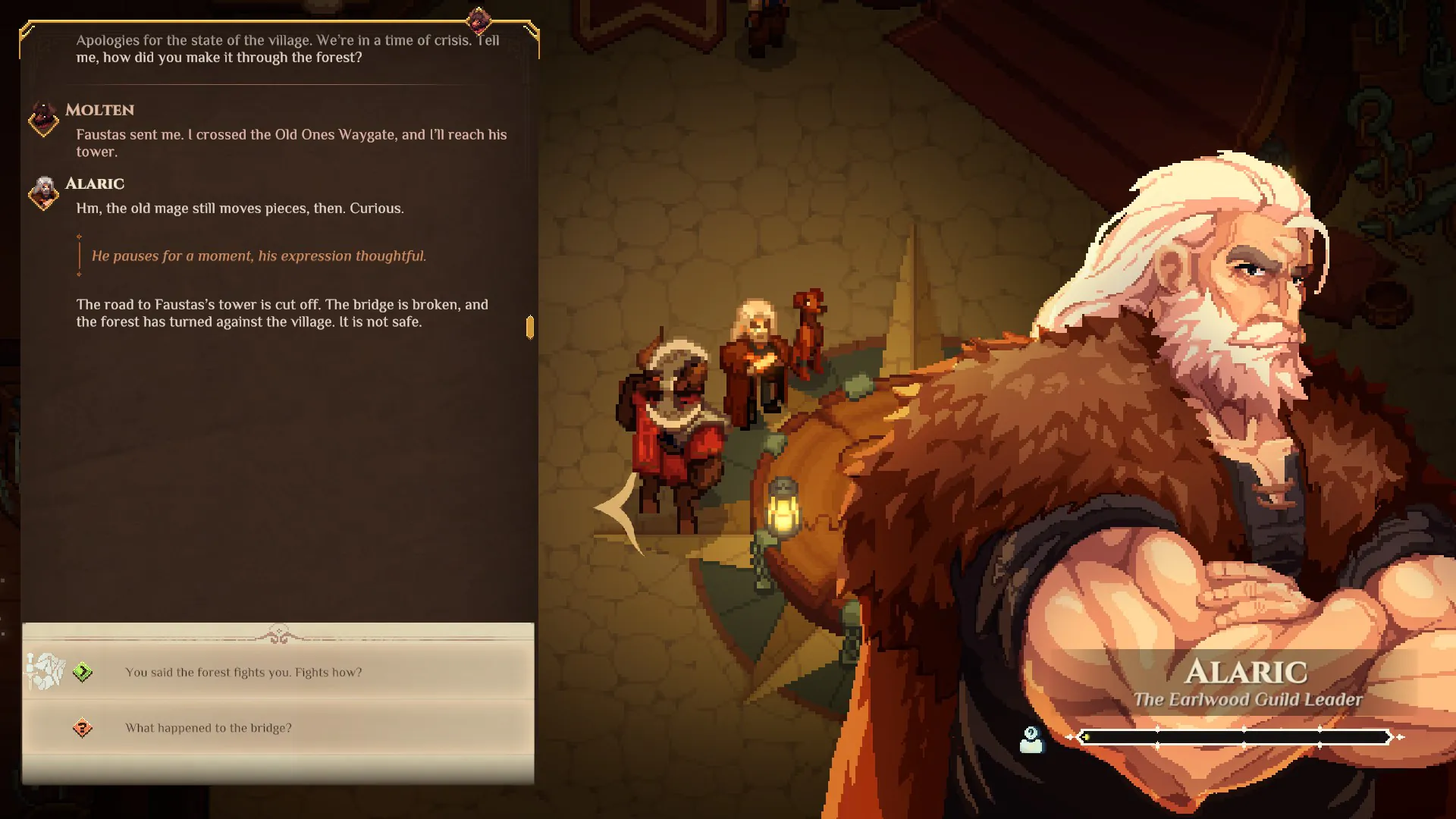
So far, that’s the core loop. The main mission isn’t anything to write home about, with quests basically taking you to discover parts of the map that you likely haven’t seen yet, fetch specific items, or complete small tutorials to learn each and every one of the features in place. Since waypoints aren’t rare, fast travel quickly erodes the incentive of exploring every nook and cranny, but the smaller tasks end up ensuring that you get to see most of what the current map has to offer.
For the time being, there isn’t a fixed date for when early access will end. The team is expecting a 18 to 24 month window, as per the description on the Steam store page, but the pace of development and player feedback might influence that roadmap. During this time, the developers want to add biomes and zones, increase the playable race and class options, expand the late-game progression, deep existing mechanics, and basically add more quantity of everything you come across. There are features I didn’t get to see in detail as of yet, such as character relationships, which can unlock conversations, personal quests, and even eventual romances.
It’s rare to encounter games like Dimraeth which exude confidence from the developers behind the project. It draws influence from many places, and it can feel unnecessarily expansive at times. If it can maintain momentum during early access and polish some of its core pillars, Dimraeth has potential to carve its own place in the RPG genre.