
Graveyard Keeper 2, Lazy Bear Games’ leaden and uncertain sequel, left me demoralised and cold. You play as Keeper, a man who looks remarkably like the protagonist of the first game but, the game goes through persistent pains to remind you, is not the same man. Nevermind that he talks and moves with the same laboured drollery, nor that he performs the same role. Graveyard Keeper 2, however, is more of the same.
Woken in an inquisitorial dungeon by a fairy who proceeds to loosen one of your fetters, it is up to you to break the other through strength alone. A sarcastic skull – who lacks the wit to wonder why you haven’t done so before – eggs you on. He’s not short on “jokes” as you escape to the town above where the townsfolk press-gang you into fending off a zombie horde.
A sequence that offers the basics of combat, which is barely required in-game, and creating materials, which will be required too often. Somehow, the tutorial fails to prepare the player for what’s to come.
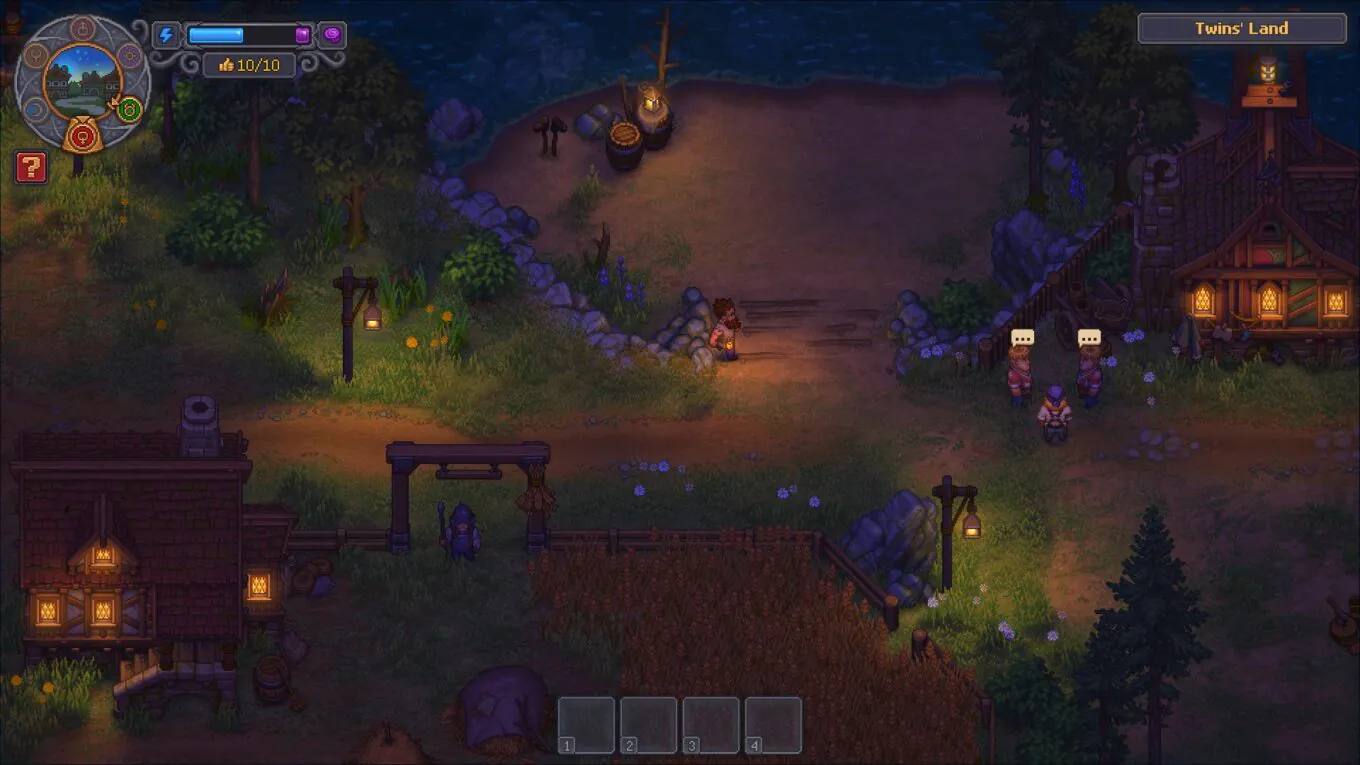
Tutorials and bad jokes (Graveyard Keeper 2, if it’s about anything, is often about things that aren’t funny) continue as you move into an abandoned inquisitorial base. There, you’re tasked with laying the dead to rest and raising your graveyard to 10 white skulls. What does that mean? No idea. It’s one of many poorly explained numbers you’ll have to address, this one increased by performing autopsies and burying bodies in decorated plots.
A better reading of the game’s title may be “Graveyard Keeper Too,” however, as you spend precious little time here. Instead, you’ll be crafting, cooking (though that, too, becomes obsolete fast), and building the apparatus by which to craft more materials to then build more apparatus. Get used to that cycle: it’s a big theme of this game, this review, and the next paragraph.
All of which grants you points (red, green, and blue) for unlocking blueprints. For instance, to build a woodworking bench, you must first cut down trees, carry each trunk to a specific spot, and shape them into logs. You’ll pick up inspiration points along the way, too. These can be redeemed to fill a bar towards a different kind of point, which is unnamed and looks like a star. That point can be spent to improve your skill level in one of many menus and sub-menus, or offer specific boons to help you do more activities to gain more points.
The first few inspiration points are free. Later, you’ll need to spend faith points to unlock them. You won’t get any of those for a while. Skills are also locked behind reputation points, with certain blueprints only available once you’re on good enough terms with certain characters.
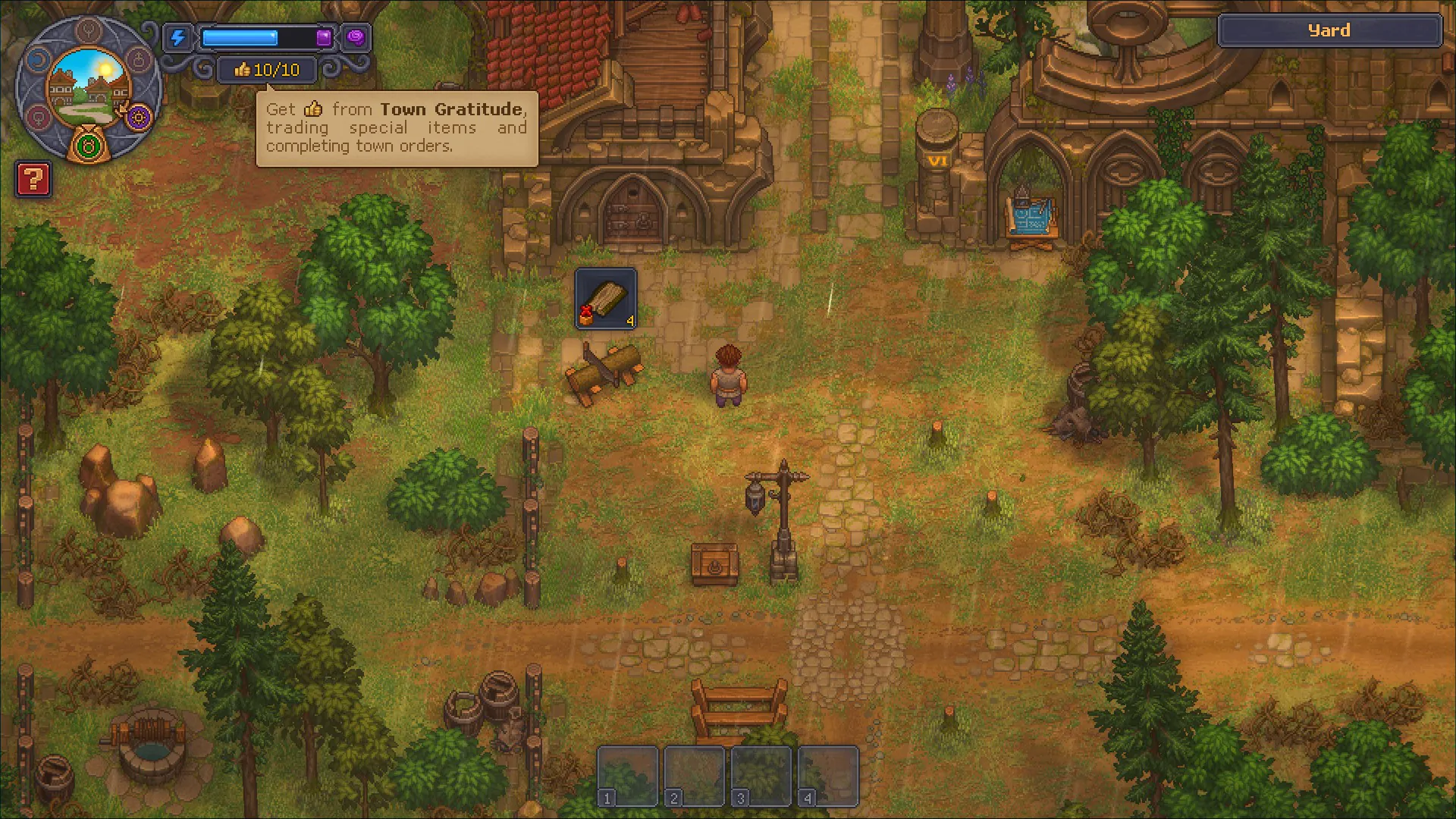
To do any of this, though, you need energy points (and wooden boards). Energy depletes with every task, several of which do not offer returns on that investment. Most of your time will be spent creating wooden boards: a requirement of most recipes and which take an exorbitant allotment of energy to create. That’s weighed against “insanity” points that accrue when handling bodies and whenever, really – including, but not limited to, while making wooden boards.
Though every mortician I have met has been among the most well-adjusted people I’ve known, Graveyard Keeper 2 insists that burying bodies makes you mad. The solution is beer. It also suggests “insanity” will decrease when you sleep, though that’s not true. It’s one of many descriptions in the game that is inaccurate. Instead, it appears to increase when you’re “tired.”
What does being tired entail? It’s having no energy, right? You’re dead wrong. Is it about the time of day? Nice try. What does it mean in-game? An excellent question that Graveyard Keeper 2 never answers.
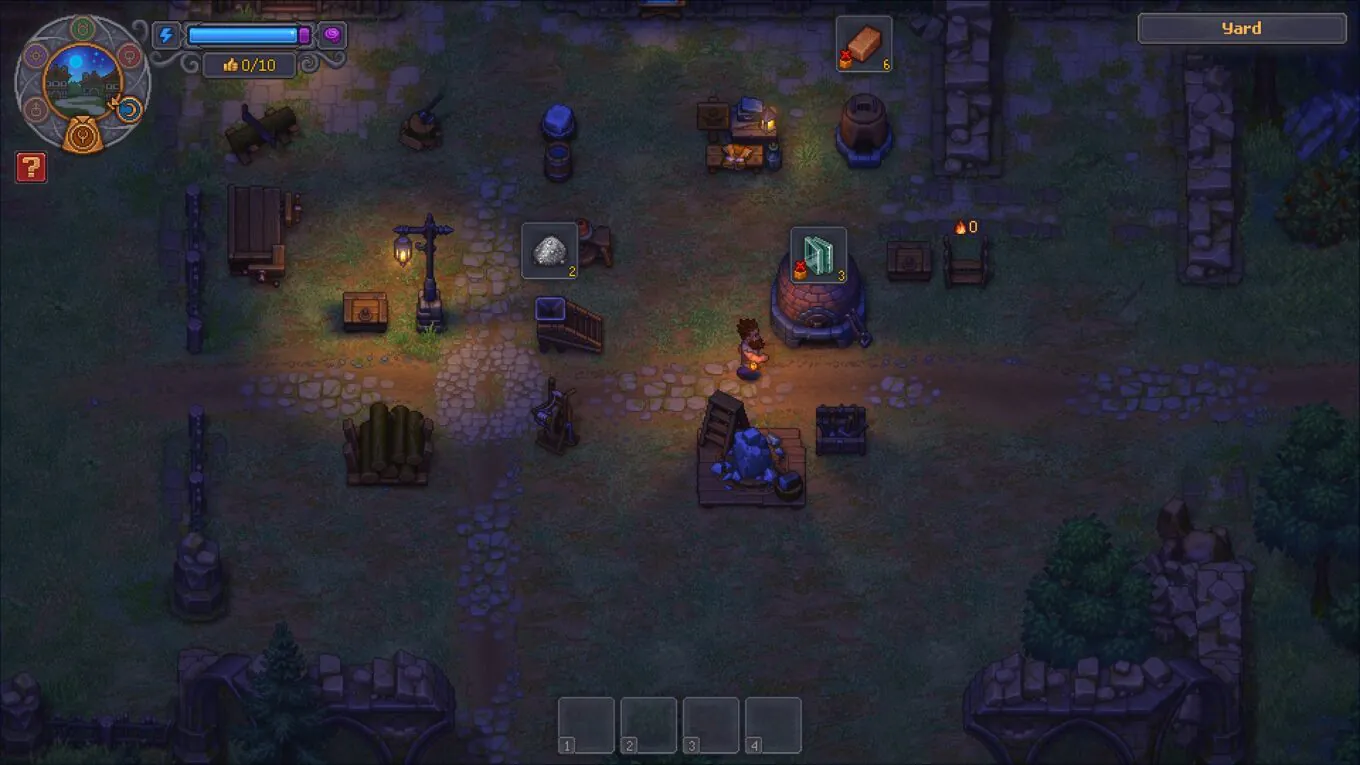
If that all sounds infuriating to parse: it is. Graveyard Keeper 2 drips in tutorials and few explain anything. You simply work things out by grinding more points and stumbling upon new technology to get points, opening more areas to grind more points, and spending those points on ways to acquire more points.
At which point, you understand that Graveyard Keeper 2 is built on a punitive system in which you must delight in numbers going up. There’s no reward. Your only reason for completing quests and opening new technologies is to open technologies. There’s no diversion; nothing to break up the grind, no real motivation to continue.
When you do discover hints of progression the game immediately blocks them. When you finally get a handle on alchemy – a process explained so poorly that it will take a while – you can finally go to the port everyone keeps mentioning. Except the area is inaccessible: locked behind more grinding quests which require the accumulation of points and materials.
Graveyard Keeper 2 does leave you alone with this on occasion. In which time it threatens, albeit briefly, to settle into a familiar, more pleasing, rhythm as you build up your base. But as you interact with further areas in which to build – a basement, sewers, a high street – you find that nothing is linked. Each build area has its own supply of projects and items.
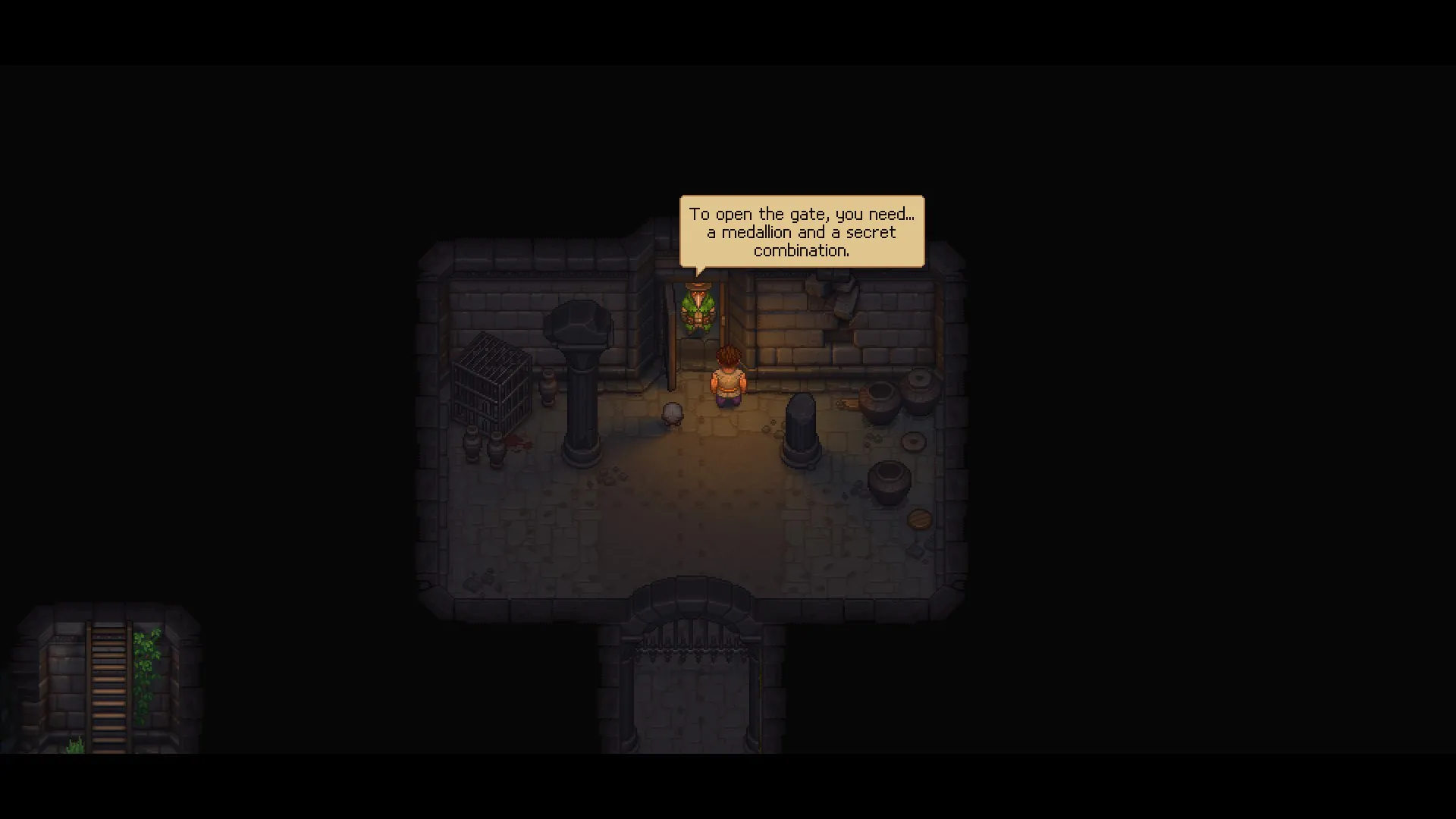
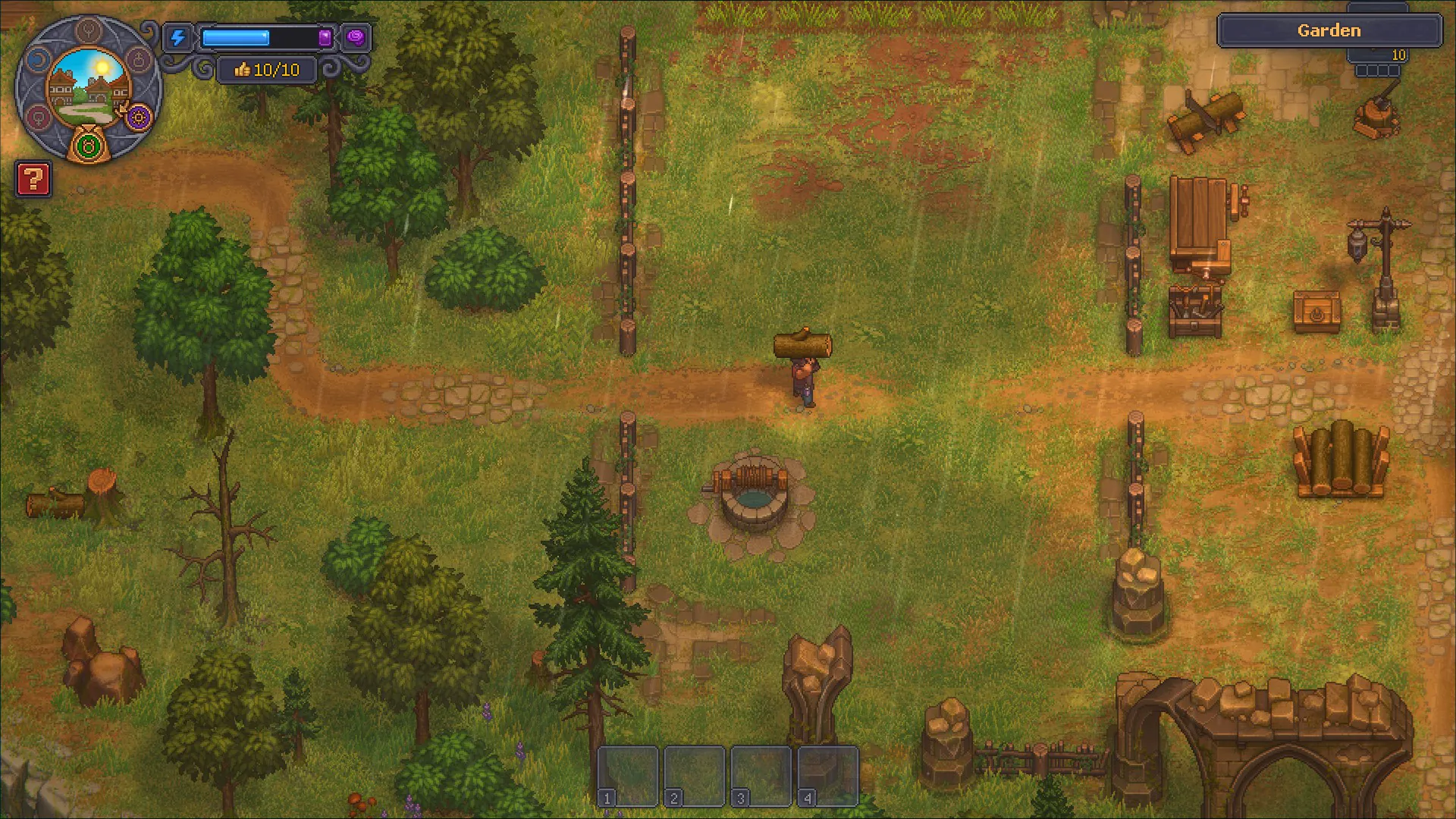
If you store wood in the workshop, you will have to actively remove it and take it over to the garden next door to build there. This is true for every single build area, in your base and in town. Worse, you cannot build workshops in other areas to mitigate having to schlep between them. If you want nails, boards, and beams from which you build most things, you must craft them in your workshop and transport them to another area.
Heaven forbid you forget something. Fast-travel, which is another mechanic unlocked via faith, is so expensive that you’ll have to hike back to your chest and hope you remember where you put the item you need. Worse still, if, going through short loads and doors, you forget the recipe the only way to solve that is to walk all the way back again because you cannot look them up. Why is the game like this?
Eventually, you will unlock a method to gain faith. You can restore the church and minister to the town. Though, that requires you to spend your reputation points and is limited to certain days, seemingly to stop you accruing the main currency of the game too fast and recognising how absurd it is to lock so much to so little.
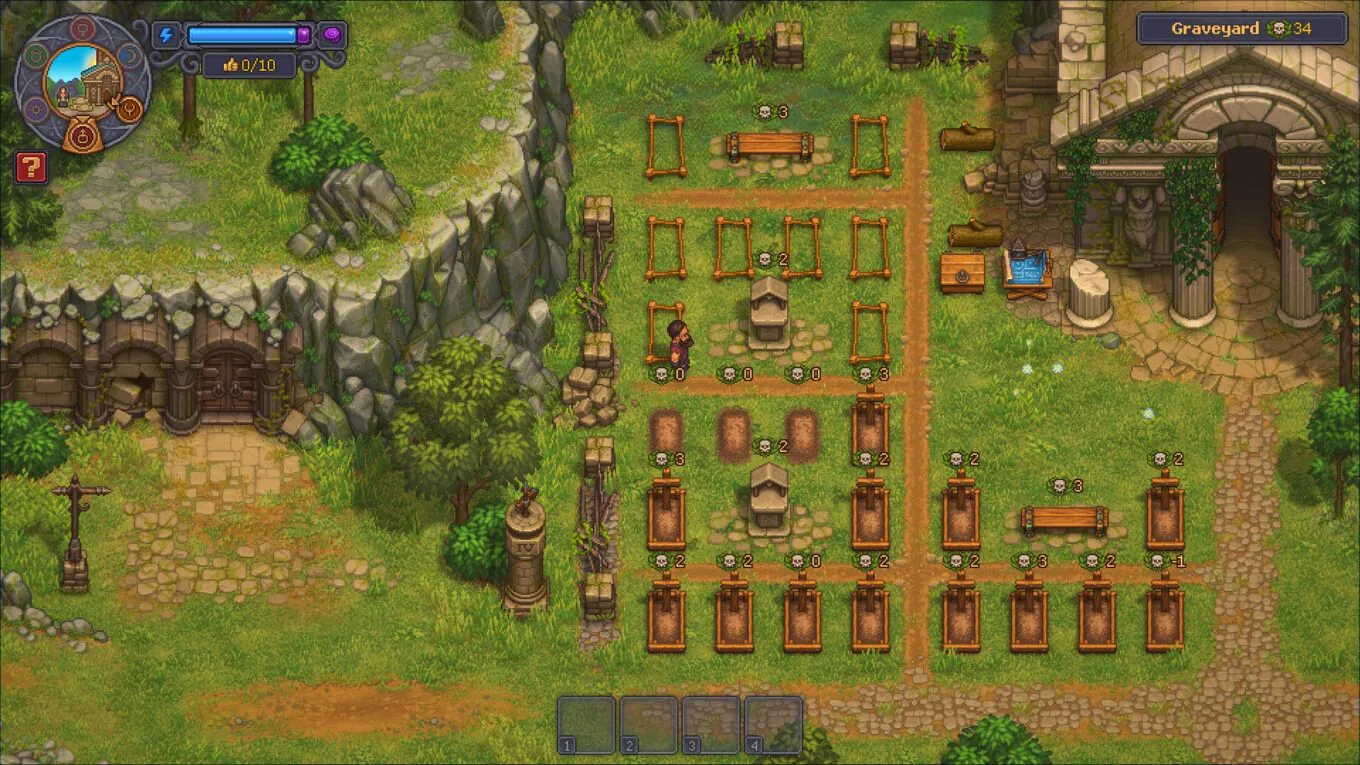
To gain more faith you must first gain more reputation, which is initially capped at a limit 10. To better do that, you’ll be spending what faith you do have on inspiration, to then complete quests more efficiently, which require more materials, created through unlocking the blueprints to fashion them, but you’ll need faith to make their construction viable, but you need reputation for that, which can be helped by buying more perks, but you need faith to gain inspiration, but you can’t get any as the game has roadblocked your attempts to complete quests behind obtuse directions and silence. Throughout all of this, all I could think was, “There must be a better way to do this.”
It’s hard to find any area of Graveyard Keeper 2 that isn’t contributing to this unyielding cycle. Combat is insipid, labour is tedious. You cannot even let your mind wander in the game’s, albeit jejune, mundanity because the game constantly imposes its narrative on you: driven by insufferable characters all speaking in the same cadence and with the same unbearable cynicism, and un-skippable cutscenes that offer no worldbuilding beyond desperately trying to remind you there might be narrative payoff at some point (there is not).
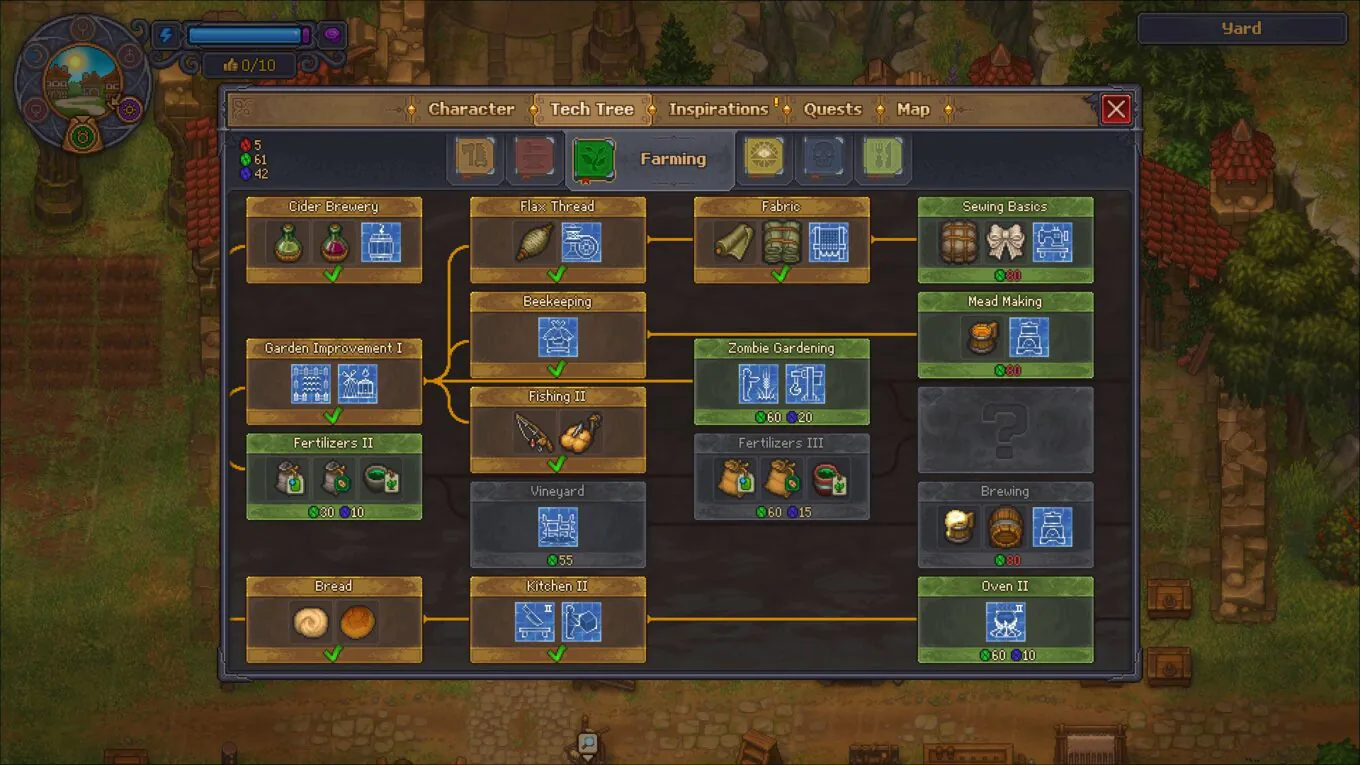
In a signal of just how shallow that narrative force is, once you’re turned back from the port your only option is to build up the barracks. There’s nothing to build; only the vague direction to buy more blueprints (with points). The only barracks points you can gain come from “persuading” a group of mercenaries to fight with you. How to do that? You pay them. That’s it. There’s nothing else. As with so much in Graveyard Keeper 2: there is nothing else.
It’s slow, grating, and tiring. What an exhausting game Graveyard Keeper 2 is. Even its zombies aren’t this lifeless. It feels like a game assembled on paper, appropriately stitched together from other games of its type but with every element dialled into its most frustrating and uncertain version. During which Graveyard Keeper 2 places steps on top of steps for no reason and, most importantly, with no worthwhile destination at their end.