
Doom is often invoked as a touchstone when describing Warhammer 40,000: Boltgun, but it’s a reductive comparison. Sure, Auroch Digital’s Games Workshop tie-in is also a fast-paced FPS stuffed full of demons, but better ‘90s reference points would be the more complex level design of Dark Forces and Heretic (as well as the latter’s satisfyingly long trails of health pickups), Quake’s oppressive gothic architecture, and Rise of the Triad: Dark War’s continual showers of eyeballs, bone, and brain matter. But Boltgun 2 does bear comparison to Doom II, in that it is a sequel in the simplest sense, delivering more of the same but bigger, bolder, and grimdarker.
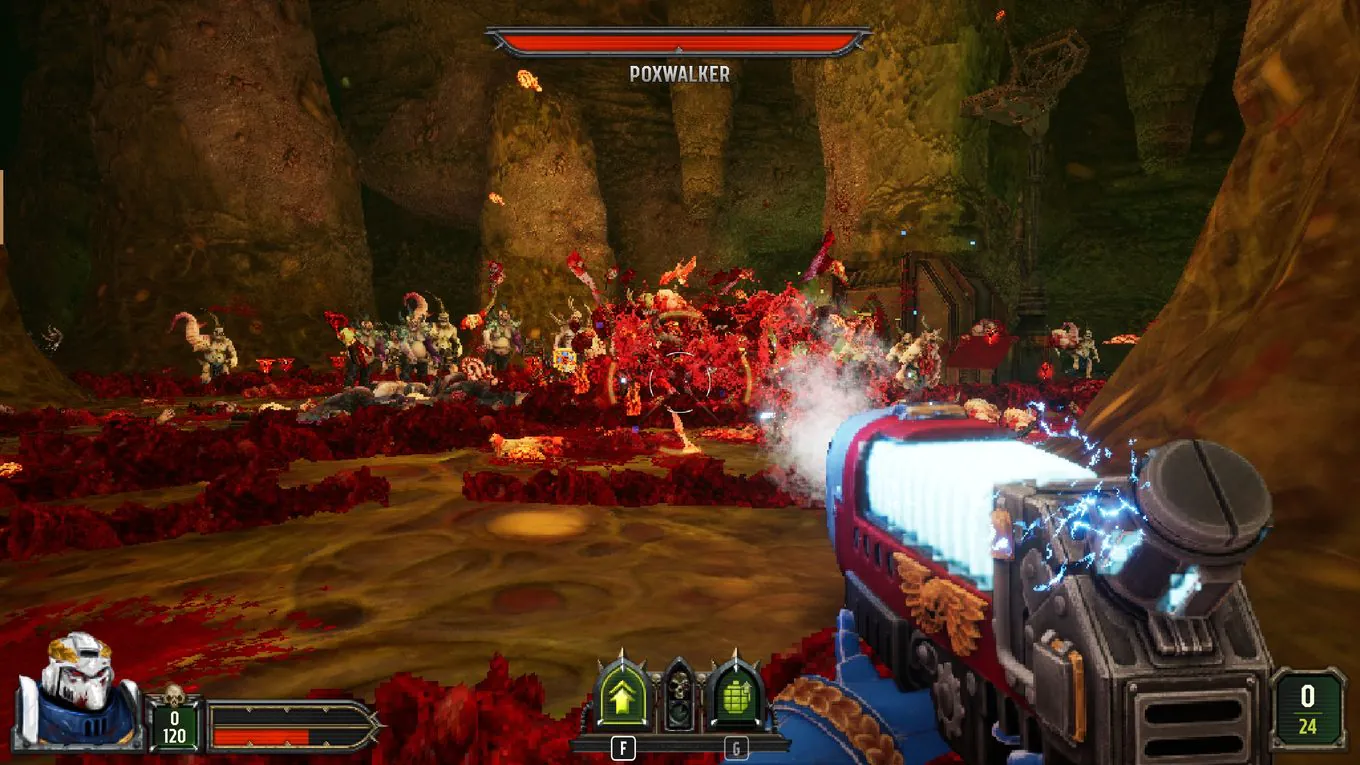
Like a skilfully washed miniature that lacks edge shading and non-metallic metal finishing, the first Boltgun was impressive, but fell short of Golden Demon greatness. While the mid-’90s FPS aesthetic and frenetic gunplay landed convincingly, a lack of enemy variety, poor enemy AI, and repetitive level design chipped away at an otherwise enticing proposition. With Boltgun 2, Auroch has methodically worked through the checklist of issues (there’s even a bullet-point list of improvements on the game’s Steam page) and attempted to fix all of them.
The most notable improvement is level design. Now levels are shorter and punchier, intricately designed around memorable set pieces, and delivered in location-specific batches of three or four via a new branching campaign. You choose which path to follow (which significantly dials up replayability), and whether to tackle some optional missions along the way. Highlights include an industrial area with fast-moving trains to negotiate (and lead enemies into the path of), a tank production line to oversee, and an elaborate rotating structure that must be twisted back and forth in order to find the path forward.
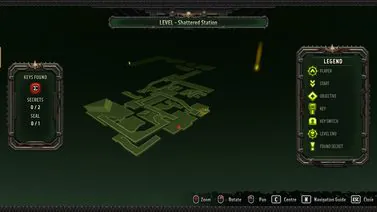
Even with this added complexity, it’s nowhere near as easy to get lost, especially given that you can now tap N to get your servo skull companion to overlay a helpful satnav route on your HUD. As with the first game, you’re still searching for coloured keys, but the variety of environments in which you do so is much richer.
Which is also true of enemies this time around. They’re still as thick as Citadel Dry paints, many happy to stand in place while you snipe them before moving in to mop up the rest, and often getting stuck on level geometry in a fortuitous manner. But there are certainly a lot more types of them now. I won’t list them all, but expect sword-wielding Bloodletters and mounted Bloodcrushers, various stocky terminators including Blightlord and Scarab Occult, Daemonettes, Plague Marines, and charging Juggernauts among the new roster. While they might not be strategic geniuses, they do employ varying tactics: some rushing or swarming, others showering you in plague bacteria from a distance, and there’s even some flanking to contend with.
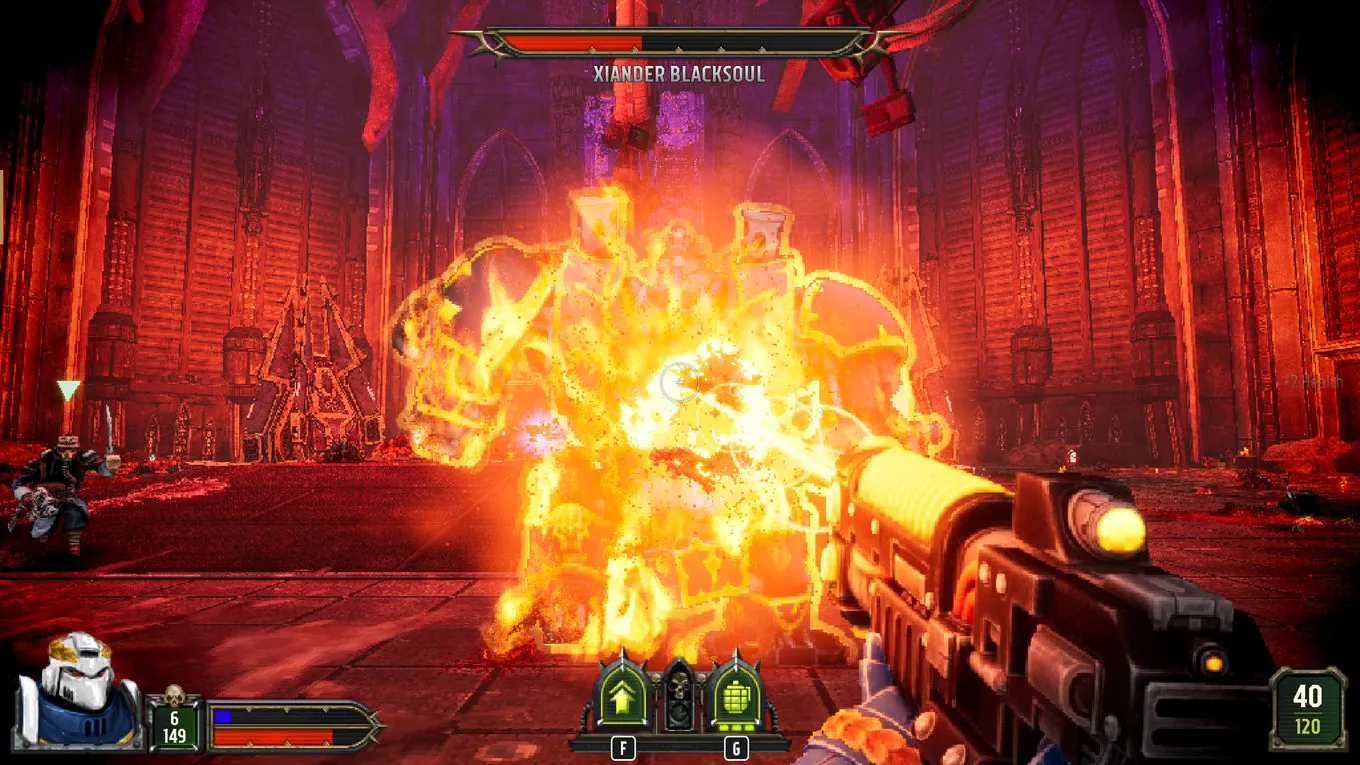
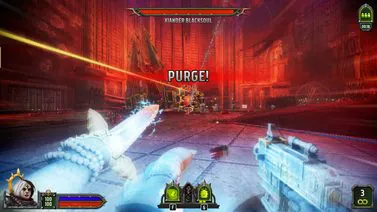
Crucially, they are also thrown at you in more combinations this time around. The ‘best tool for the job’ weapon specialisms of the first game have been softened in favour of making them all very capable, but it does still mean that you have to adapt more when zipping about in a battle, not least during the returning Purge lock-ins.
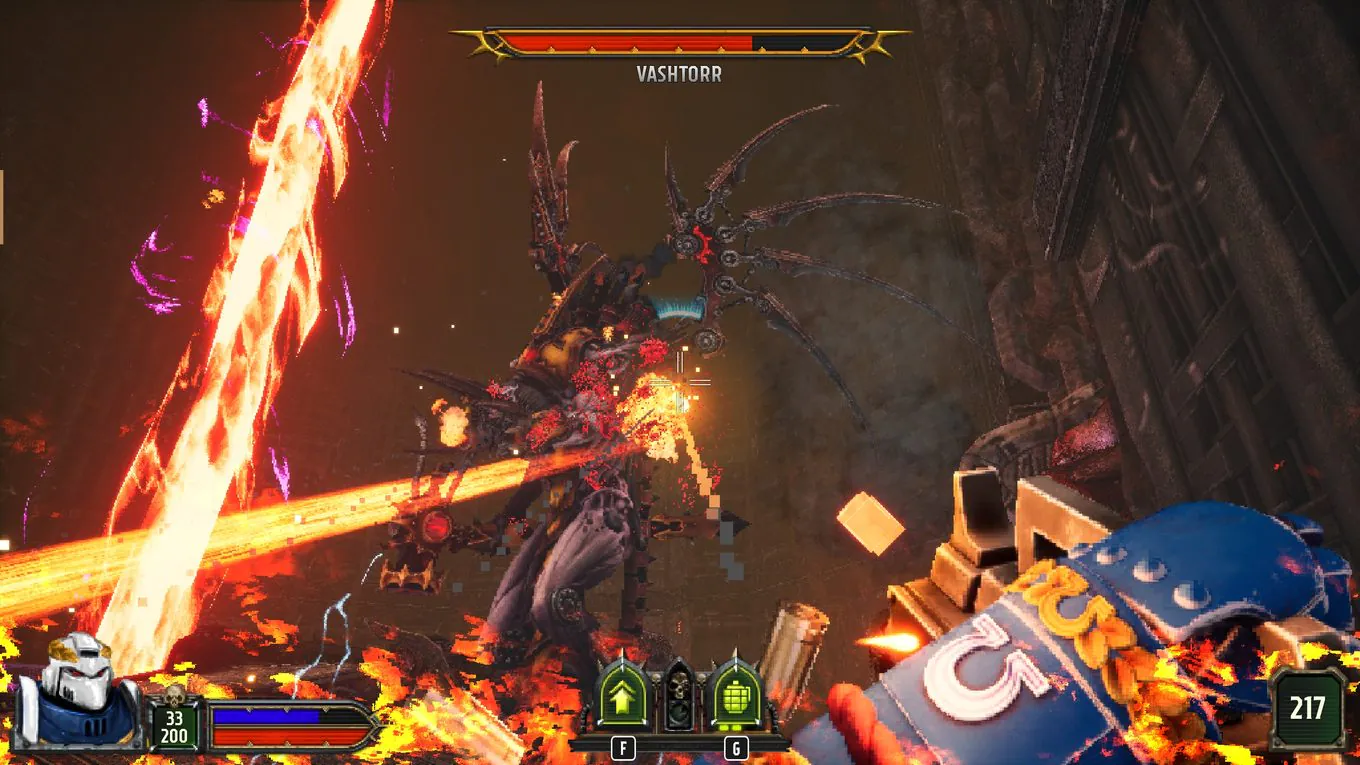
And what weapons. Everything’s been given a shot in the arm (a special mention here for the shotgun, which addresses the criticisms levelled at its predecessor and then some), to the point that you feel like a thunderous one-person army as your bullets, rockets, plasma bolts, and searing beams of flame gouge into enemies and inflict injuries that most paramedics would, at the very least, describe as ‘life changing’.
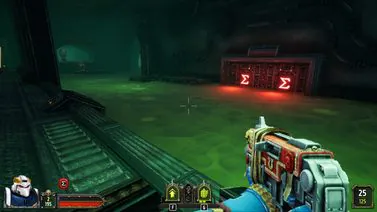
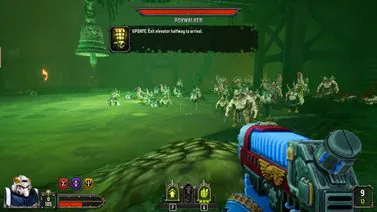
Auroch’s indulgent gore tech is given a great workout in this respect, and the plopping sound of entrails sloughing off the walls and ceiling you just saturated is a guilty pleasure. It’s also much easier to switch between your deathbringing doo-dads thanks to the introduction of a radial selection menu, and while ammo isn’t plentiful enough for any given weapon, you always seem to have rounds for something, encouraging experimentation.
There’s further variation thanks to a doubling of playable characters. Malum Caedo returns, favouring shoulder-barging bravado via his Obliterating Charge and Chainsword Lunge. He can also regenerate when near death, allowing for bloodied and broken rallies. He’s joined by Nyra Veyrath, whose increased agility allows her to slide along the ground, power sword in hand, and then leap into the air in slow motion, killing everything in her path. They each take different grenades into battle, too: Caedo’s blunt-force frags versus Veyrath’s scorching (but longer-fused) melta bombs. Each plays significantly differently, requiring strategic adjustments even when facing familiar enemies.
Nyra isn’t the only ally to join the fight, and at several points during the campaign you find yourself battling alongside legions of friendly Death Korps of Krieg troopers. It’s a lovely touch that adds to the sense of a wider world, and allows for some spectacular large-scale, crossfire-streaked encounters, but they’re terribly fragile, so you’ll also have to manage blue-on-blue-induced guilt (particularly when you accidentally splat them after jumping down from a ledge).
All of this is set against sweeping, evocative vistas from the 40,000 universe. The game’s a real looker, switching between grimy, intricate corridors and massive open spaces, and bathing everything in lurid lighting that evokes the gouraud-shaded illumination effects of games like Descent and Quake II. Certain scenes are particularly memorable, including the sticky and decaying pipelines of a bloodworks built to fuel a towering demon, and a giant press that crushes piles of thousands of skulls. The prospect of seeing whichever horrendous sight the dev team have dreamt up next is enough to propel you through the campaign on its own, irrespective of the tighter level design and broader combat scope. The pacing doesn’t always feel entirely nailed, however: there’s a stint where you don’t get any new weapons for a very long time, before the rest arrive in a breathless final third. And Auroch loves an ambush. And a double ambush. And a triple amb… well, you get the idea. But this predictability can occasionally sail dangerously close to wearying.
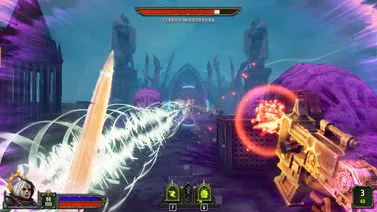
One particularly irksome foible is that, despite being as wide as a bus, you often can’t easily sweep up all the health and armour in one pass. It’s like there’s a very specific and quite small hitbox at your centre that you have to line up perfectly. I don’t want to have to think about that kind of thing when under fire from every conceivable angle, so it’s a shame there isn’t some level of item attraction to offset this.
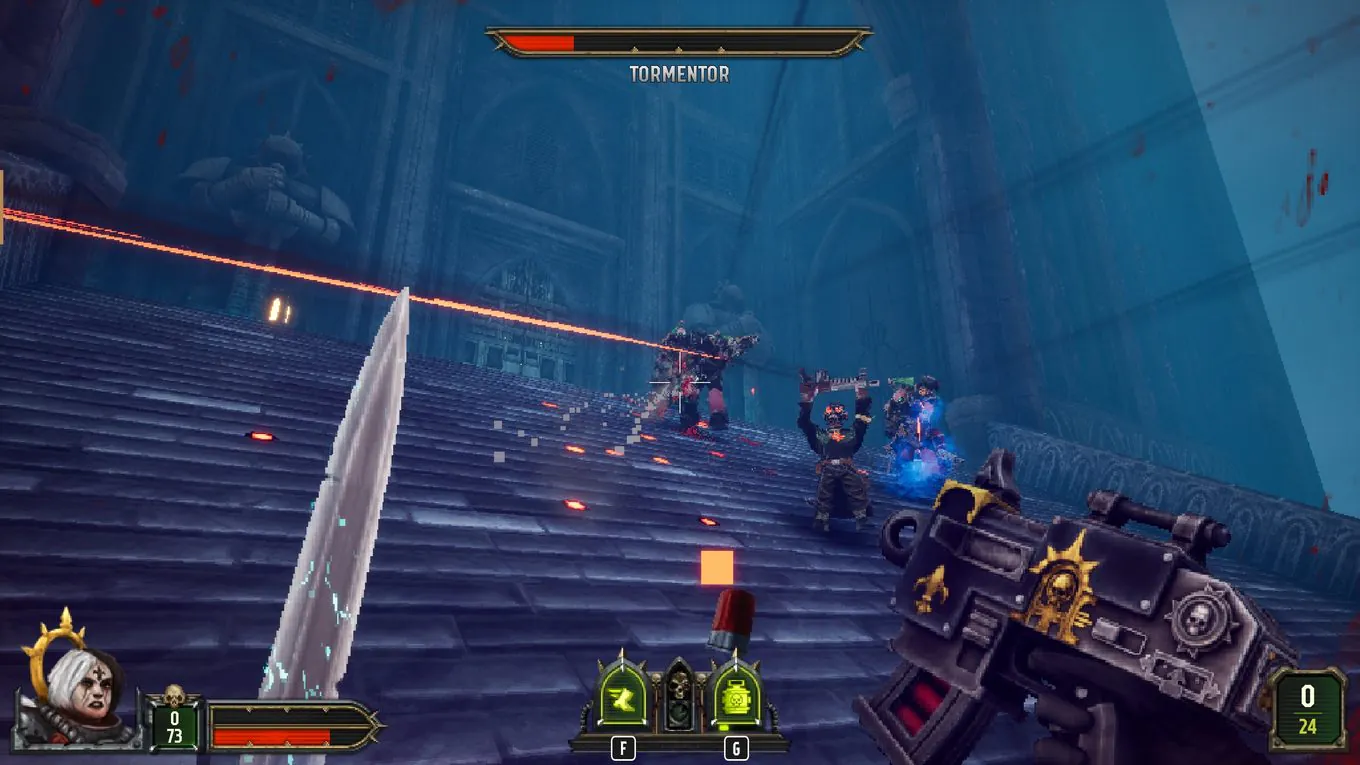
None of this is enough to sap the game’s appeal to any significant extent, though. Auroch established a commendable recipe with the first game, and has taken the sequel as an opportunity to refine it. It was time very well spent, and Boltgun 2 has confidence in spades as a result. Boltgun had plenty to love, but there’s much more to love this time and very little in the way of missteps. And don’t worry if you’re not a fan of Warhammer 40,000, either: Auroch has crafted one of the best FPS games in recent memory, one that calls back to the genre’s heyday without getting bogged down in the past.