“One who treats difficulties as the norm will never be discontented.” So reads the Testament of Ieyasu, a set of precepts he supposedly laid down in the year before his abdication as shogun. It’s unlikely Ieyasu Tokugawa was talking about video games, but in an industry beholden to difficulty, dodging, and parries, players delighting in difficulty certainly have been thriving. Now, Capcom is giving them even more reason to rejoice in Onimusha: Way of the Sword.
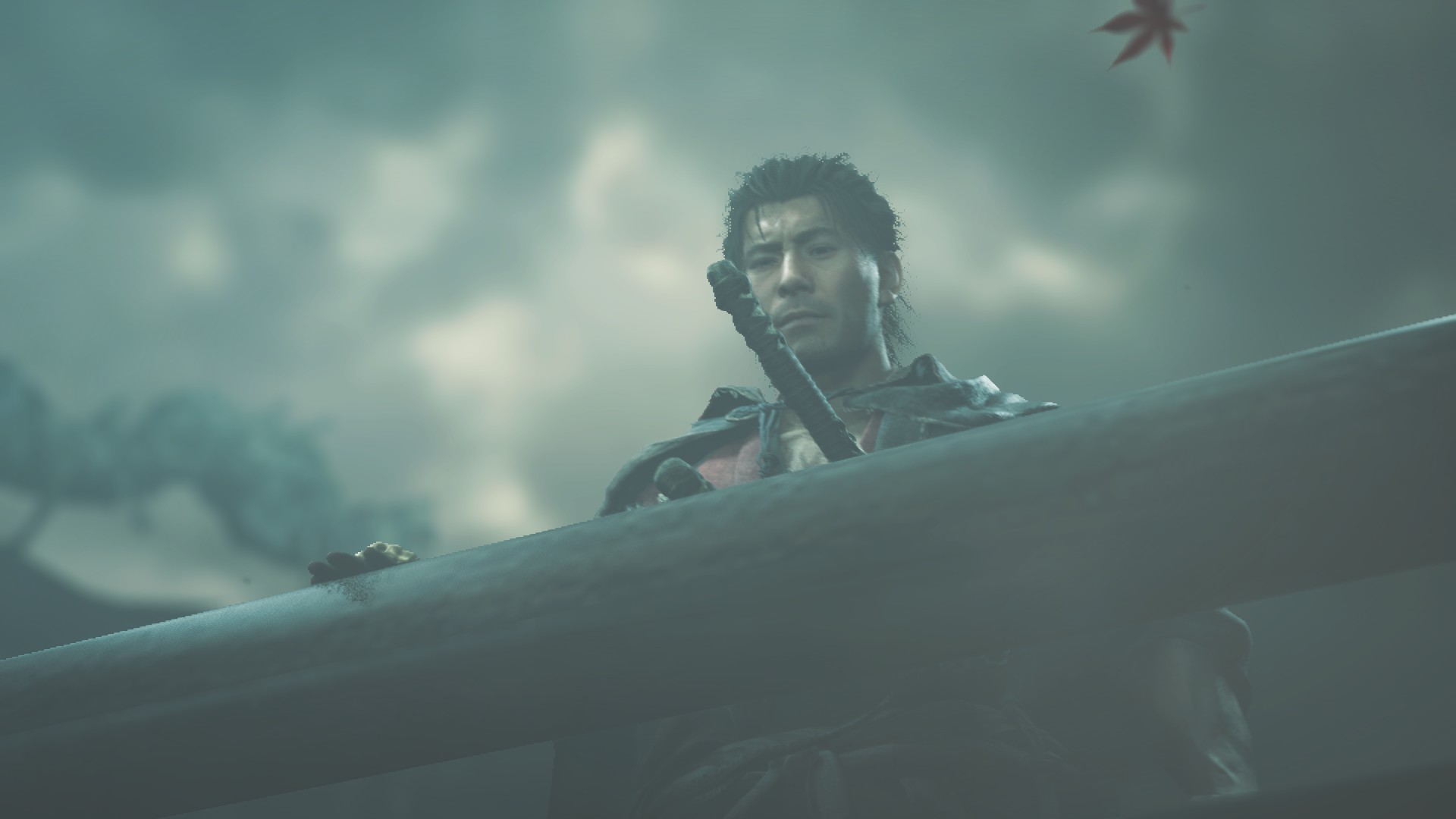
Appropriate, as the game thrusts one of Ieyasu’s vassals, Miyamoto Musashi, onto centre stage. Portrayed – at least in likeness; he is voiced by Kenichiro Thomson – by the late Toshirō Mifune 70 years after he played Musashi for the final time in Samurai III: Duel at Ganryu Island, Musashi grimaces and emotes with impressive verve as Way of the Sword renders a younger, brasher version of Musashi than we’ve previously seen.
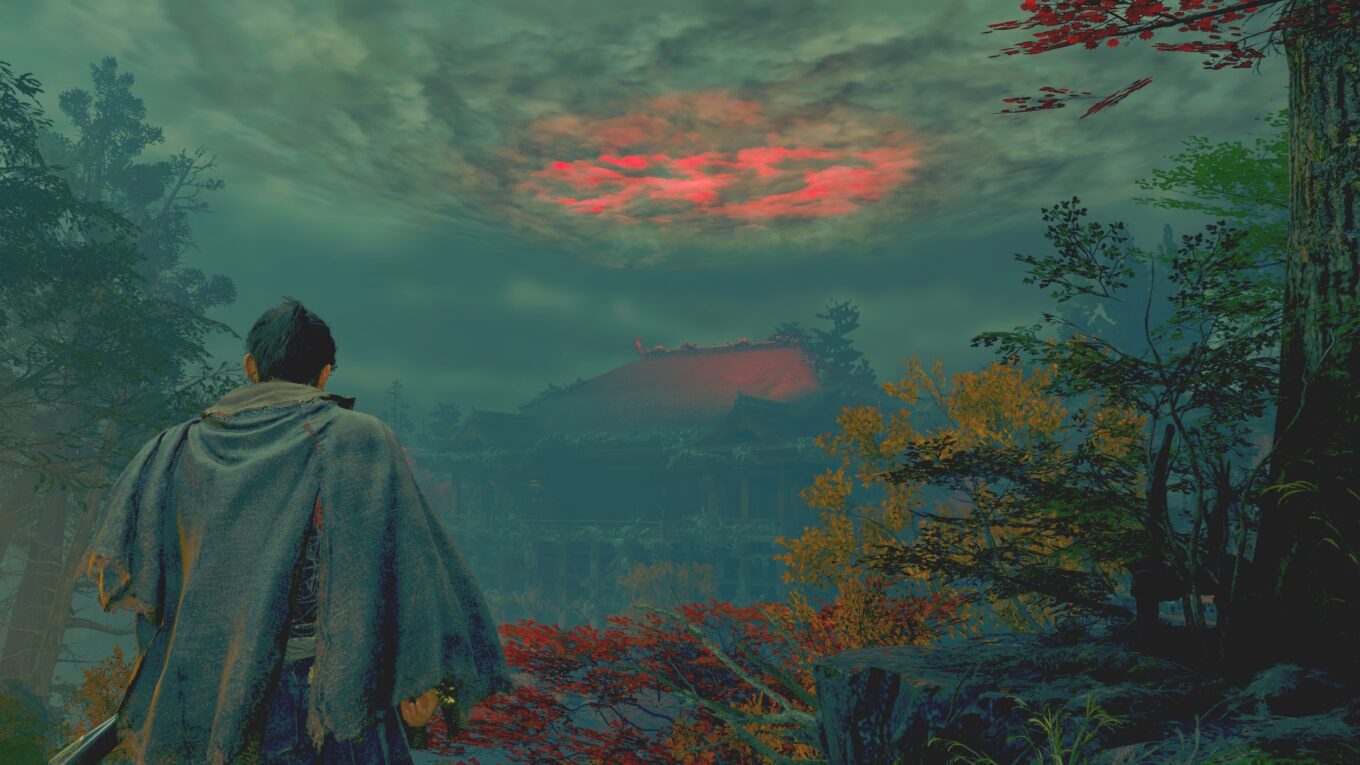
We meet Musashi as he seeks to reach the zenith of his craft by carving a carmine path through every samurai he meets. This includes the leader of a sword-fighting school and his students: a sequence of hijinks and slapstick comedy that are conspicuously absent thereafter. His aspirations of sword sainthood are cut (or rather, chewed) abruptly short when he is ambushed, and gnawed on, moments later by zombie-like Genma.
Death is not the end, however. A mysterious man in white fishes him from the river flowing into hell and places an oni gauntlet on his wrist. If the man in white – another historical figure: Minamoto no Yoshitsune – is hoping making Musashi an Onimusha might sway him to his cause, he’s chosen the wrong samurai. Musashi is cocky, ungracious, and so dismissive of authority that he’d rather be reduced to sausage meat than take orders from mysterious men in rivers distributing magical gloves.
It takes Takamura and his ward, kabuki OG Okuni, to bring Musashi around. If Yoshitsune offers power, Takamura offers purpose. The temple he protects stands above a gate to hell. Following Yoshitune’s conquest of the underworld, the gate is hard pressed as Genma slip through rifts to fill Kyoto’s streets with malice, a caustic vapour that weakens temples’ ability to keep demons in hell. Unless Musashi can stem the tide, there’s like to be a flood: of the flesh-eating kind.
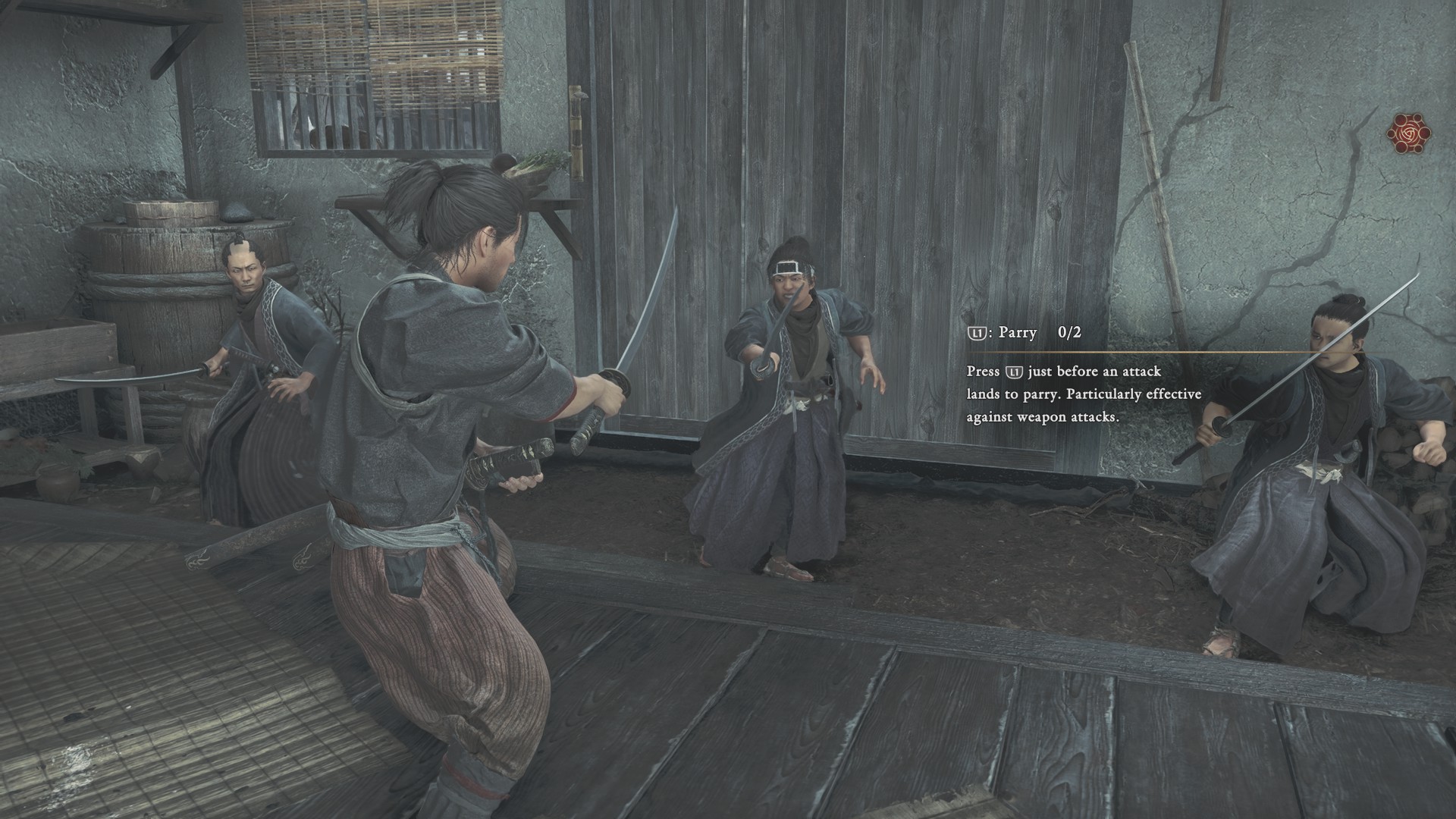
Your task is relatively simple on paper: go wherever Takamura sends you and kill Genma. Along for the ride is Shizuka Gozen (you should be noticing a pattern of historical Japanese figures turning up by now). Formerly Yoshitsune’s beau, she escaped his warpath and into Musashi’s gauntlet, from where she guides him.
Together, you travel around Kyoto and its surrounding environs to close rifts in linear, and beautifully rendered, surroundings that bring to mind the semi-open areas of Resident Evil: Requiem at their best. A link that is expressed further as the RE Engine renders waves of pleasingly grotesque monsters and demons in vivid detail.
All of whom you must cut to ribbons by deflecting and countering their attacks until you break their stamina, and open them to more devastating sword strokes. Naturally, a game about a samurai whose arm is replaced by a mechanism of mysterious provenance to parry demons to death invites comparison and, despite Onimusha offering some inspiration for Sekiro: Shadows Die Twice, Way of the Sword returns the favour by skewing towards rhythm-based swordplay that is more complex, fluid, and, frankly, more satisfying than any of its predecessors.
Enemy strikes come in flurries, often asking you to sight read deflections and dodges in rapid succession. I delighted in feeling like I was actually learning in Way of the Sword. In similar titles, combat eventually clicks in intangible and sudden moments. All at once, you find the rhythm. As I increasingly strung together sequences of uninterrupted parries and dodges in cinematic and visceral choreography, it felt like I was improving along with Musashi rather than having to play catch up with prowess the game had already established.
That’s not to say combat in Way of the Sword is all cinematic song and dance. Windows are tight and can feel inconsistent, particularly as you encounter more difficult (and visually complex) bosses. In places, this takes learning attacks and sequences; in others, attacks are simply too fast or hard to discern. Particularly when it comes to grabs and counters. Deflections, by and large, are easy to visually parse as they correlate with impressive fidelity to when a weapon contacts yours.
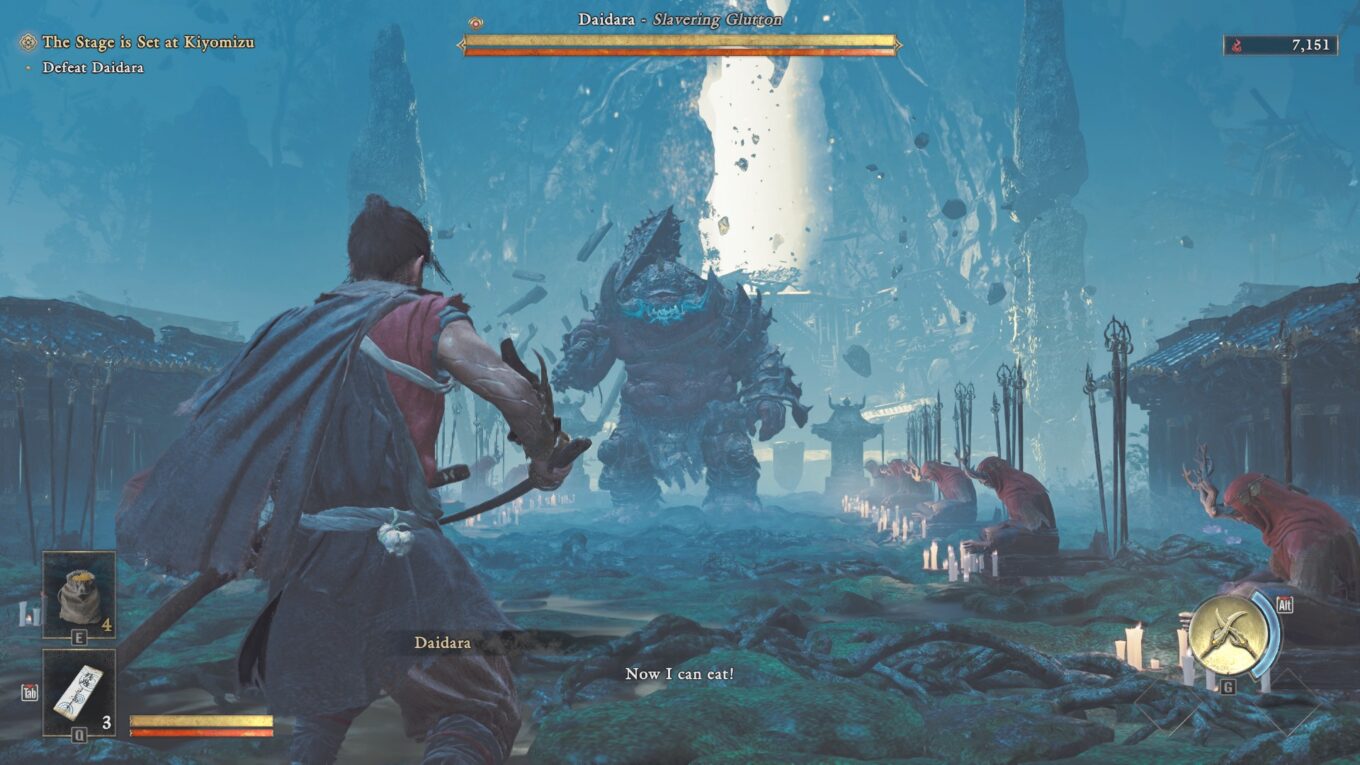
While those inconsistencies do mean you’ll find yourself grappled despite being sure you’ve dodged at the right moment, there are trade-offs. For me, that manifested in repeatedly performing perfect counters entirely by accident because I’d pressed the wrong button and just happened to Mr. Magoo my way into a devastating attack with persistently satisfying results.
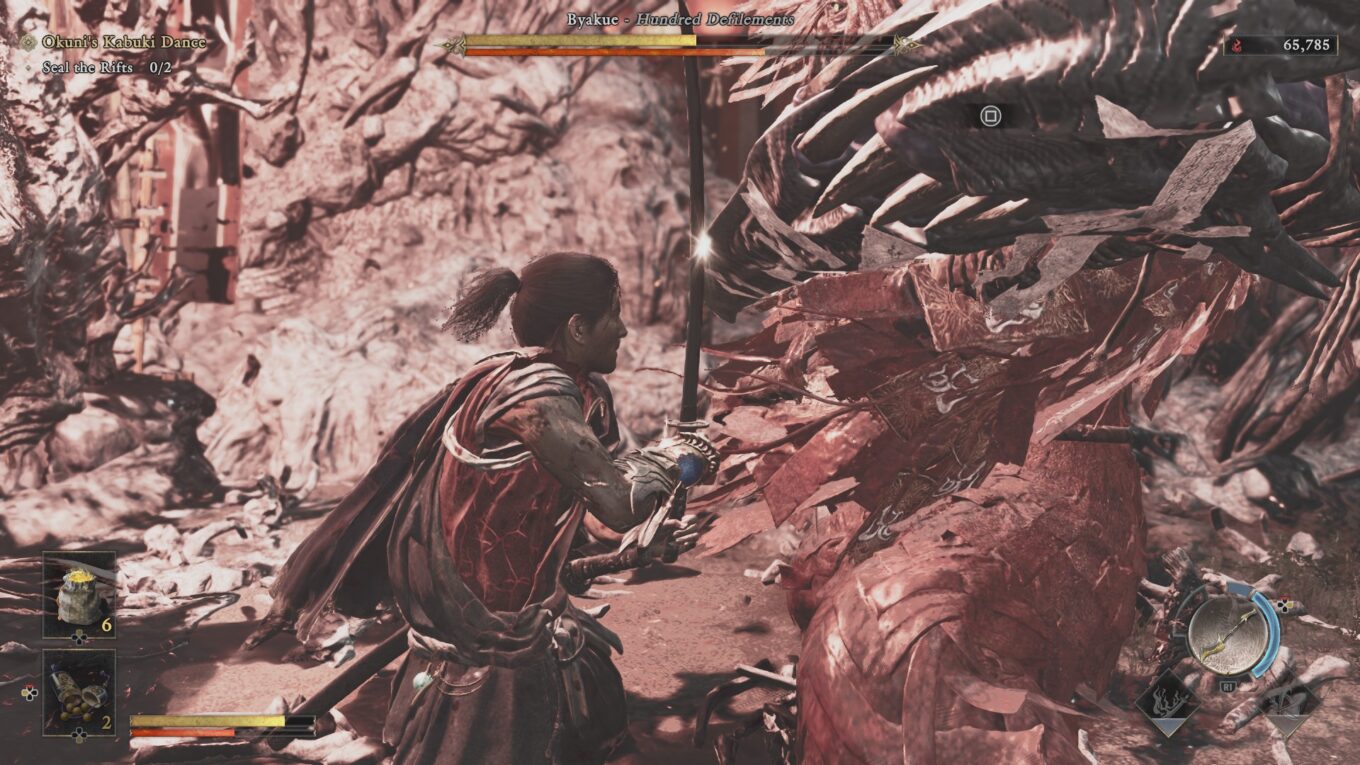
Less satisfying is Way of the Sword’s habit of regurgitating early-game bosses as mini-bosses to fill rifts. As a practice, it’s defensible. However, Way of the Sword frequently places them in areas for which neither they, nor the game’s camera, are designed. After three encounters, I started to groan every time I saw “Byakue: Hundred Defilements” emerge from a rift in a tiny courtyard.
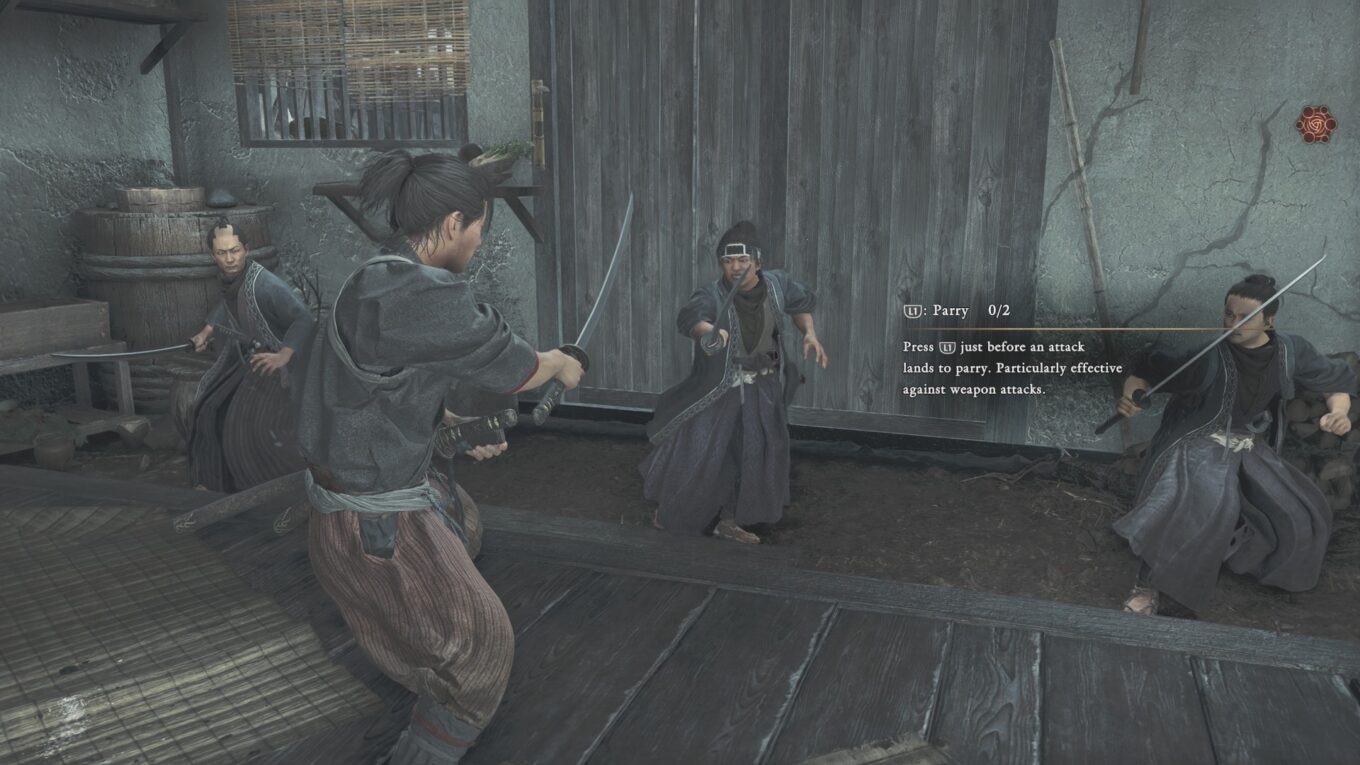
Those minor combat frustrations are mitigated by Way of the Sword being far from gruelling. Bosses rarely take more than two or three attempts – though, if you’re so inclined, you can fight harder versions as part of a broad slate of boss rematches. Generous checkpoints land you at the beginning of those fights after a death and a similarly generous spread of items and upgrades means you keep pace with the game’s difficulty curve with no need to grind. Standard enemies will occasionally put you on your back, but Way of the Sword strikes an almost perfect balance between difficulty and keeping you moving..
If combat lends an agreeable briskness to Way of the Sword, its narrative is less nimble. Let’s be real, in a game driven by the thrill of fighting gigantic bosses that can pummel you into jelly, narrative isn’t that important. But this is a modern Capcom game and you will be walking and talking often. That’s just one way that Capcom insists you engage with the game’s story, but the real surprise is that it is so weak.
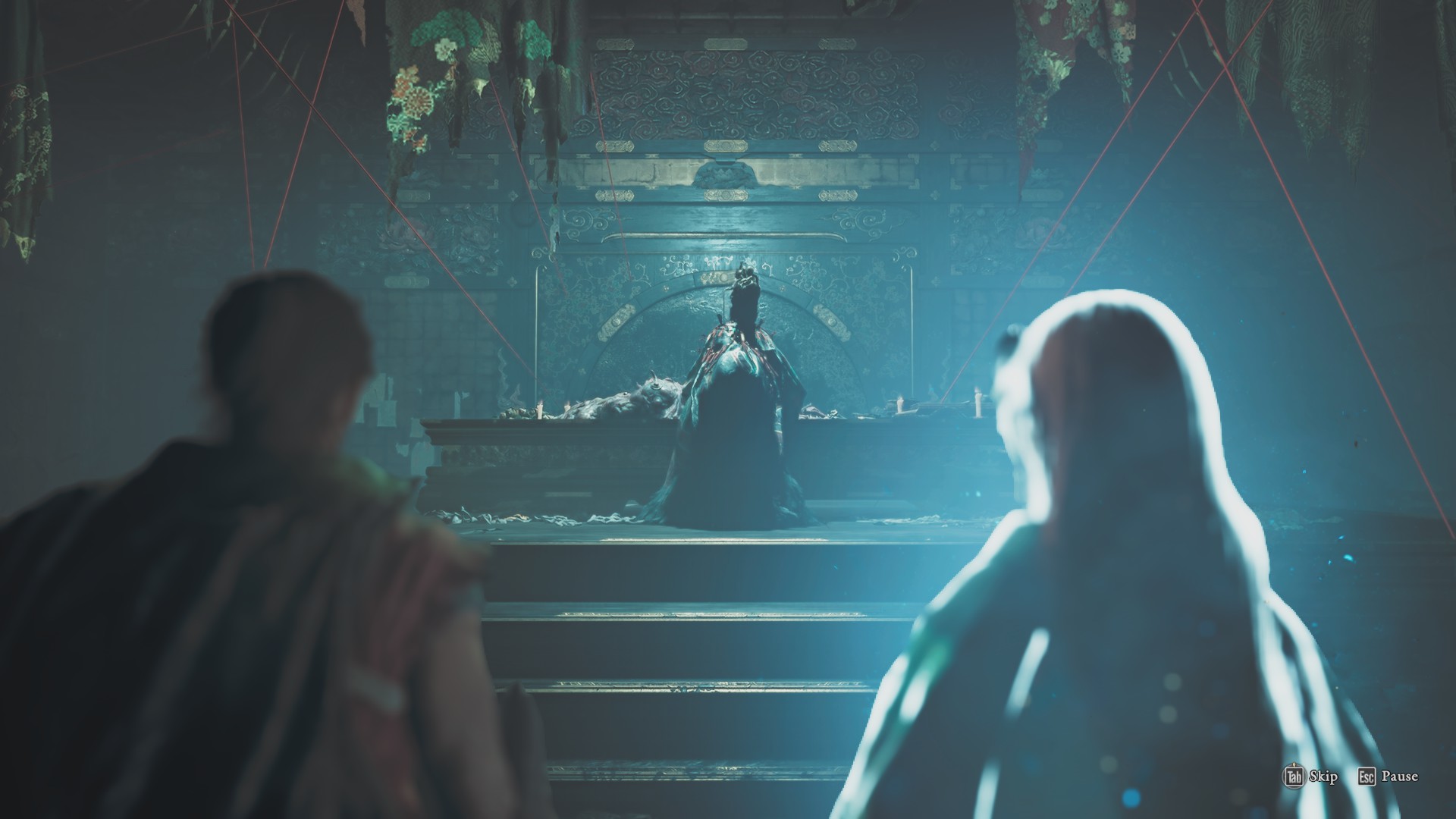
That starts with Musashi. He is unpleasant, arrogant, aloof. You get no prizes for guessing his character arc. That’s not necessarily a problem: protagonists do not have to be good people. They do, however, need to be sympathetic. One might be able to root for Musashi as someone single-minded at the expense of all else. Even then, for someone allegedly aspiring to martial excellence, Musashi is remarkably devoid of passion.
While this can be read on a surface level as he quips, ad infinitum, “Barely worth my time.” Or as he ends fights declaring, “Well, they were shit.” It’s a jarring apathy that is evident across his narrative, even as he slowly softens and forms a stronger bond with Okuni and Shizuka.
Way of the Sword is brimming with narrative concepts, such as when Musashi encounters an area in which residents are having minor pains cured by giving parts of their bodies to a demon, and are thrilled with the results. Yet, Musashi’s reactions always feel distant. He is prone to overblown responses, outbursts that feel inappropriate, and comments that don’t feel like they have real bearing on what’s happening. This can be seen in other characters, too, especially Okuni.
It creates a sense of the script having been assembled long after voice lines have been recorded. Something reinforced by Musashi and Shizuka’s surprisingly limited soundbites during gameplay, which are repeated to a surprising degree by modern gaming standards. None of which are of particular help if you get stuck – Way of the Sword can be difficult to navigate at times – where they are likely to be as clueless as you.
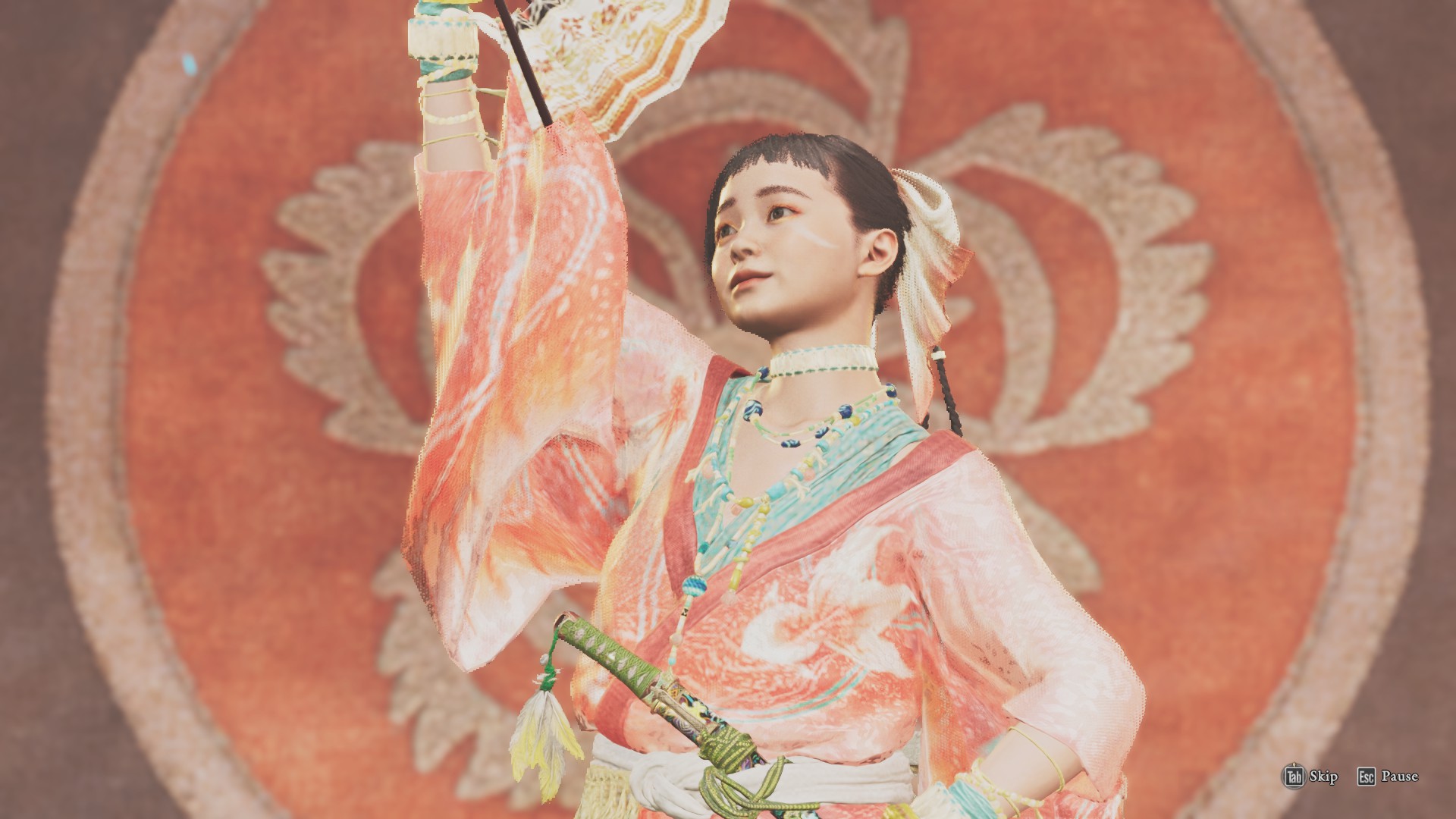
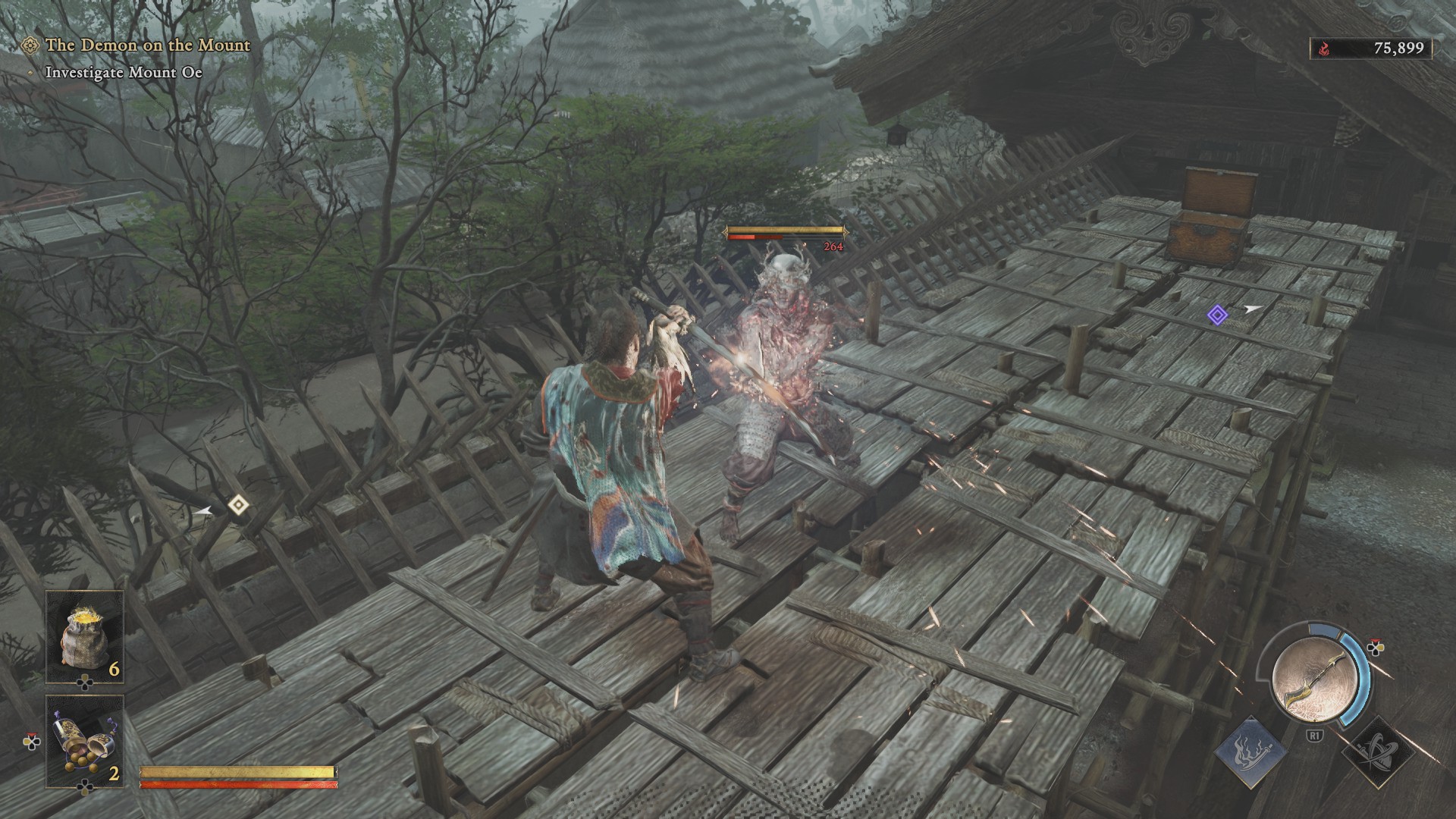
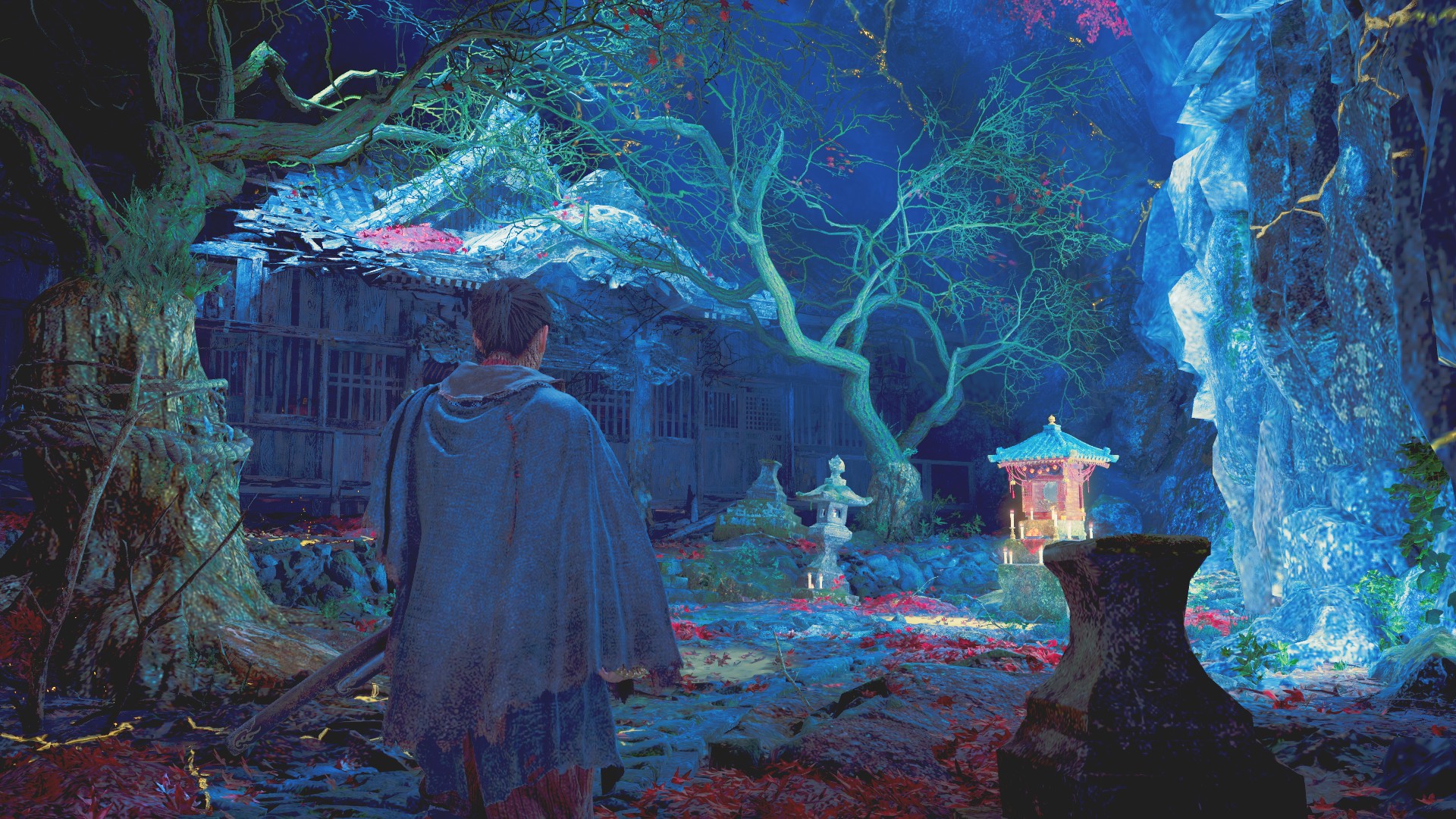
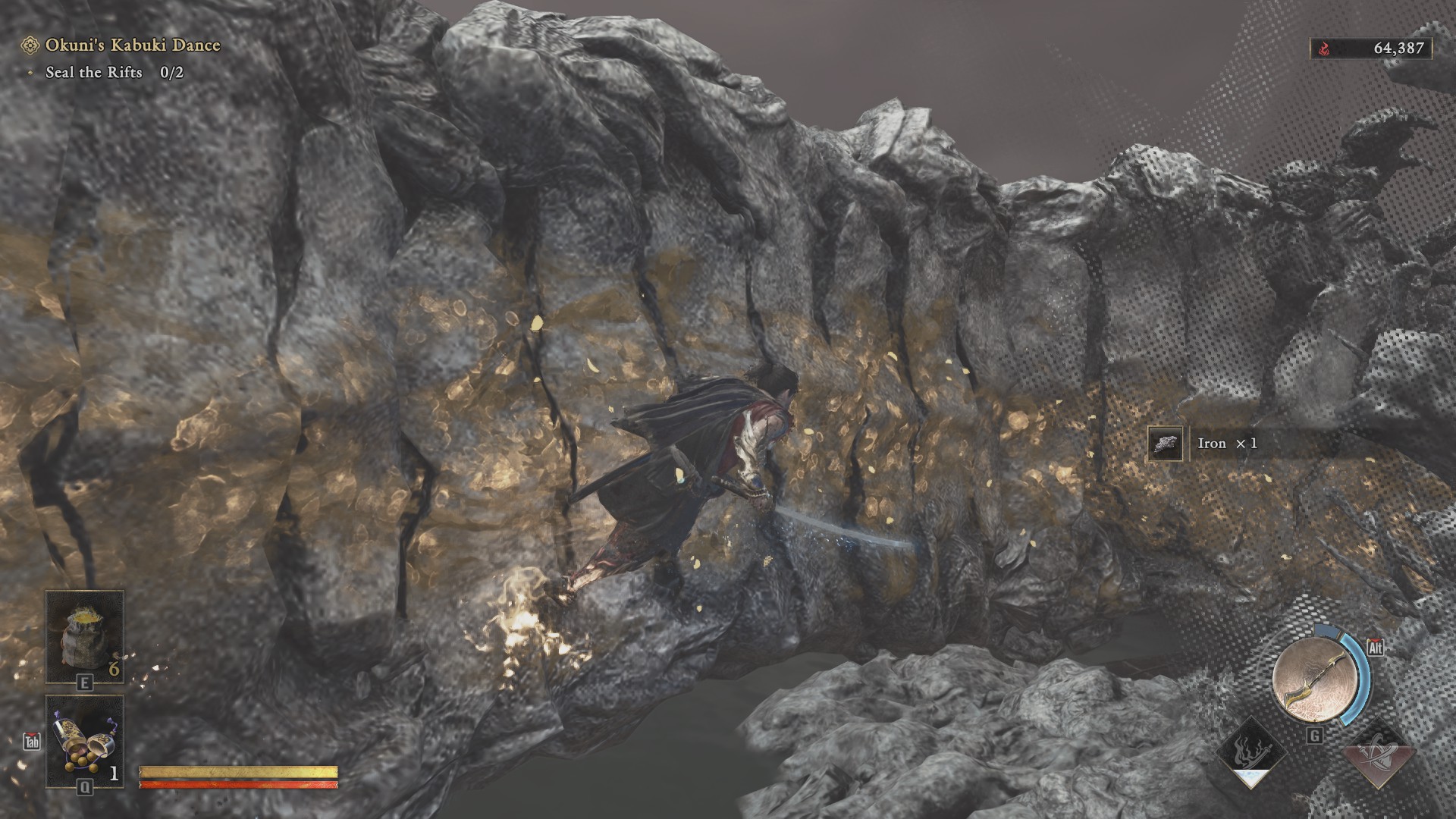
Way of the Sword is far from the only game to be terrified of silence. But where combat is decisive and earnest, its narrative and, particularly, development of character comes across as far more desultory. Which makes it all the stranger that Capcom constantly forces you to engage with it. This may be, in part, to draw attention to its world, a beautiful one: from kintsugi cracks filled with gold that streak like veins across the spirit world (and Musashi), to a surprisingly bustling Kyoto, and environments that brim with colour even as demons darken their corners. The result, however, is that the game’s narrative and narration makes it that much harder to just exist within the world of Way of the Sword, and explore it.
It detracts from Way of the Sword, but only slightly. You can skip cutscenes and, like me, turn voice volume down when the writing grates. It’s a noticeably large hole in a game that otherwise brims with excellence and polish: in level design, art direction, and particularly combat. The latter, on which the game really rests, is insulated by its own excellence as it remains joyful and potent throughout.