Paradox is a genre, as much as it’s a publisher or developer. Nobody approaches grand strategy in the same way, or manages quite this much depth or colour. With a few reams of text – actually, quite a lot of them – and some menus, Crusader Kings III can paint an incredibly vivid depiction of history. Vivid, and, with a degree of inevitability, absolutely chaotic.
There’s always a snide son trying to get you killed on a hunt, a resentful queen poisoning favour towards you in the royal court. A furious courtier you promised a vassalage 18 years ago and then completely forgot existed, because you were so concerned with putting on a grand tournament, which also left you critically injured after you fell in a jousting match.
Such is the life of a Crusader King. And Paradox’s excellent series of DLCs do nothing to quell that chaos. The last chapter introduced Mongolian nomads and Indonesian god-kings to the mix, and chapter five will let you play as the Pope himself, or act as the head of a merchant republic, a kind of Del Boy Trotter for the ages. That sounds absolutely fantastic, but we’re going to need a nice quiet, peaceful playthrough first to prepare ourselves for all that Papal spectacle and wheeler-dealing in Wessex. For those who don’t have several campaigns under their belt already, somewhere that could function as a beginner-friendly starting point.
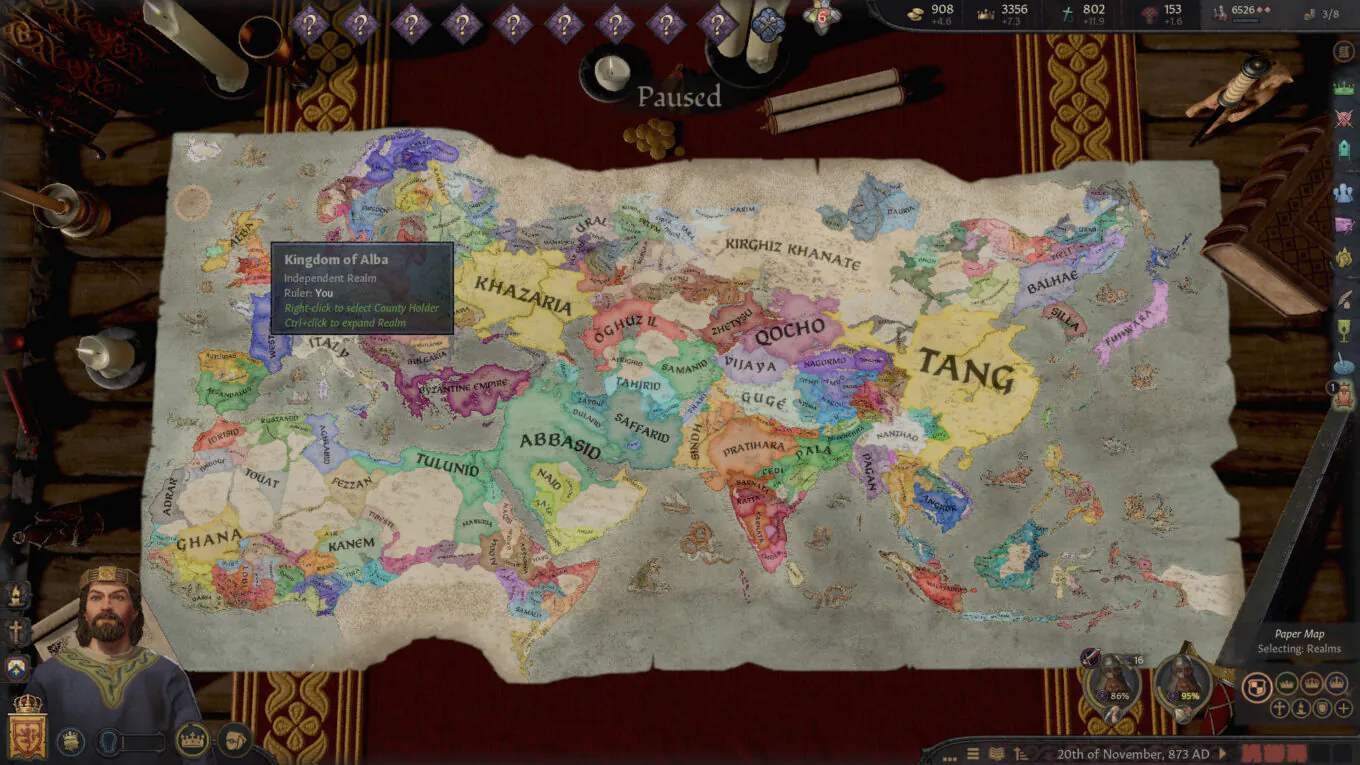
And that’s what takes me to 9th century Alba, a territory incorporating most of modern-day Scotland and Northern Ireland.
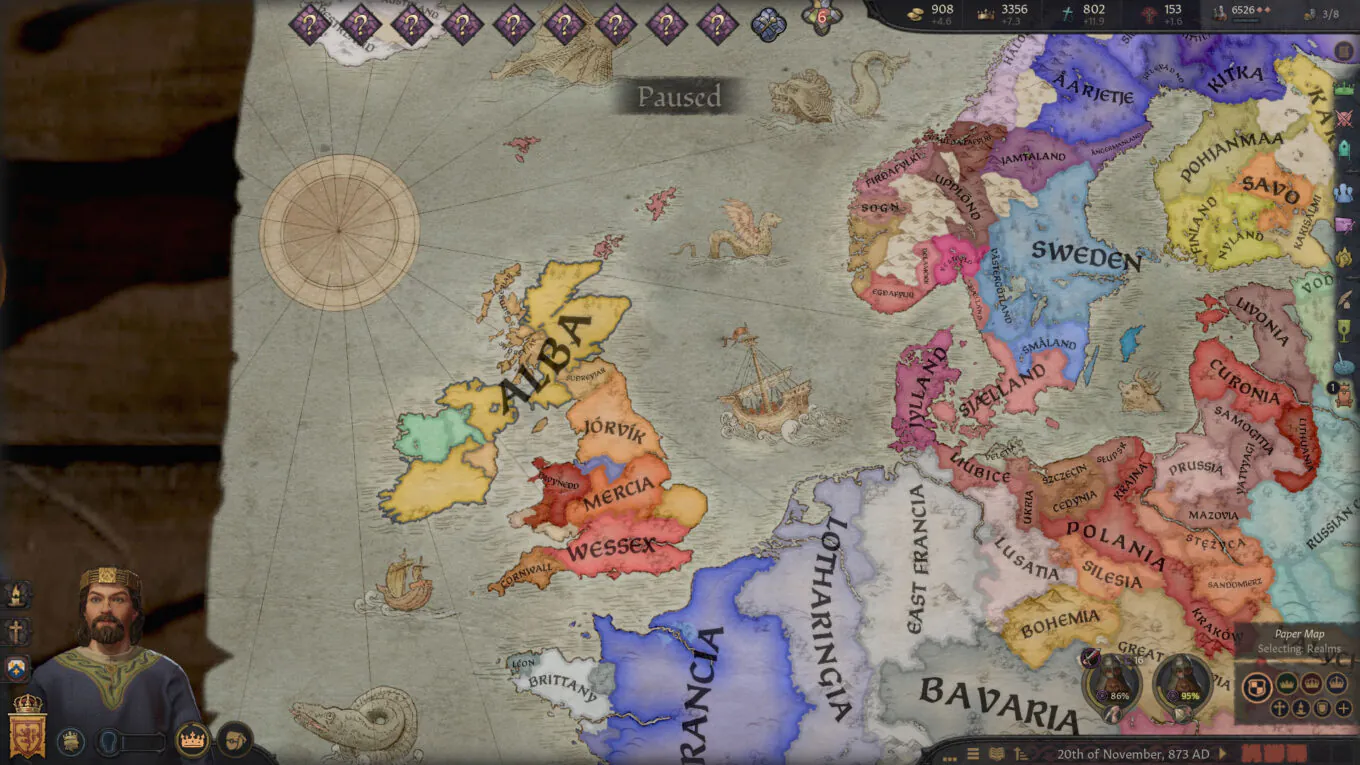
The ‘easiest’ or ‘best beginner’ starting location is a hotly debated subject in CKIII, and far wiser, more experienced minds than I have devised optimal starts which are not, it should be noted, in Scotland. The game itself, meanwhile, features a tutorial in Ireland that encourages you to unite the island, so a lot of players do start there and within a few years find themselves fighting off Vikings constantly. So there’s no right or wrong, no safe or unsafe. There are always Vikings, though.
Many recommend 1066, a year which in the mind’s eye does not conjure peace and tranquility, but rather bloody battlefields and people with arrows sticking out of their squishy bits. However, across much of the world map there’s a roughly even distribution of power between many neighbouring territories so you’re less likely to pick a kingdom that’s about to get gobbled up by a powerful rival. Succession laws are a bit easier in this time too, meaning when your leader dies, it’s more likely the crown will be passed on to a proper heir rather than your kingdom being fragmented.
Then there’s 867, which on paper is more chaotic because succession laws are more primitive and the distribution of power is less even. On the other hand, armies are raised with prestige rather than gold, which makes it easier to stick up for yourself against aggressors without having expert knowledge of the in-game economy. Plus, 867 just sounds more chill than 1066, right? Other than, you know, all the Vikings.
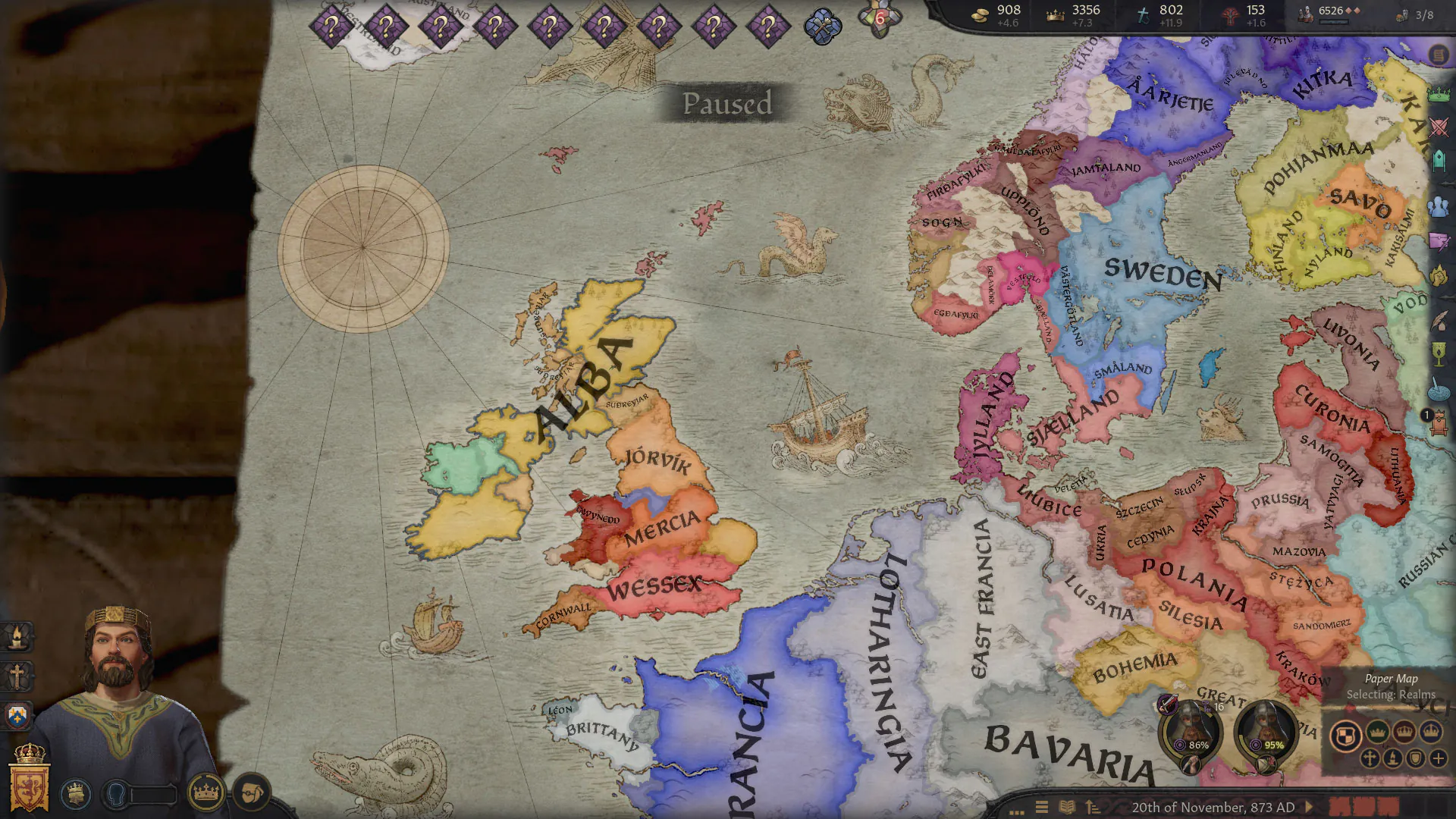
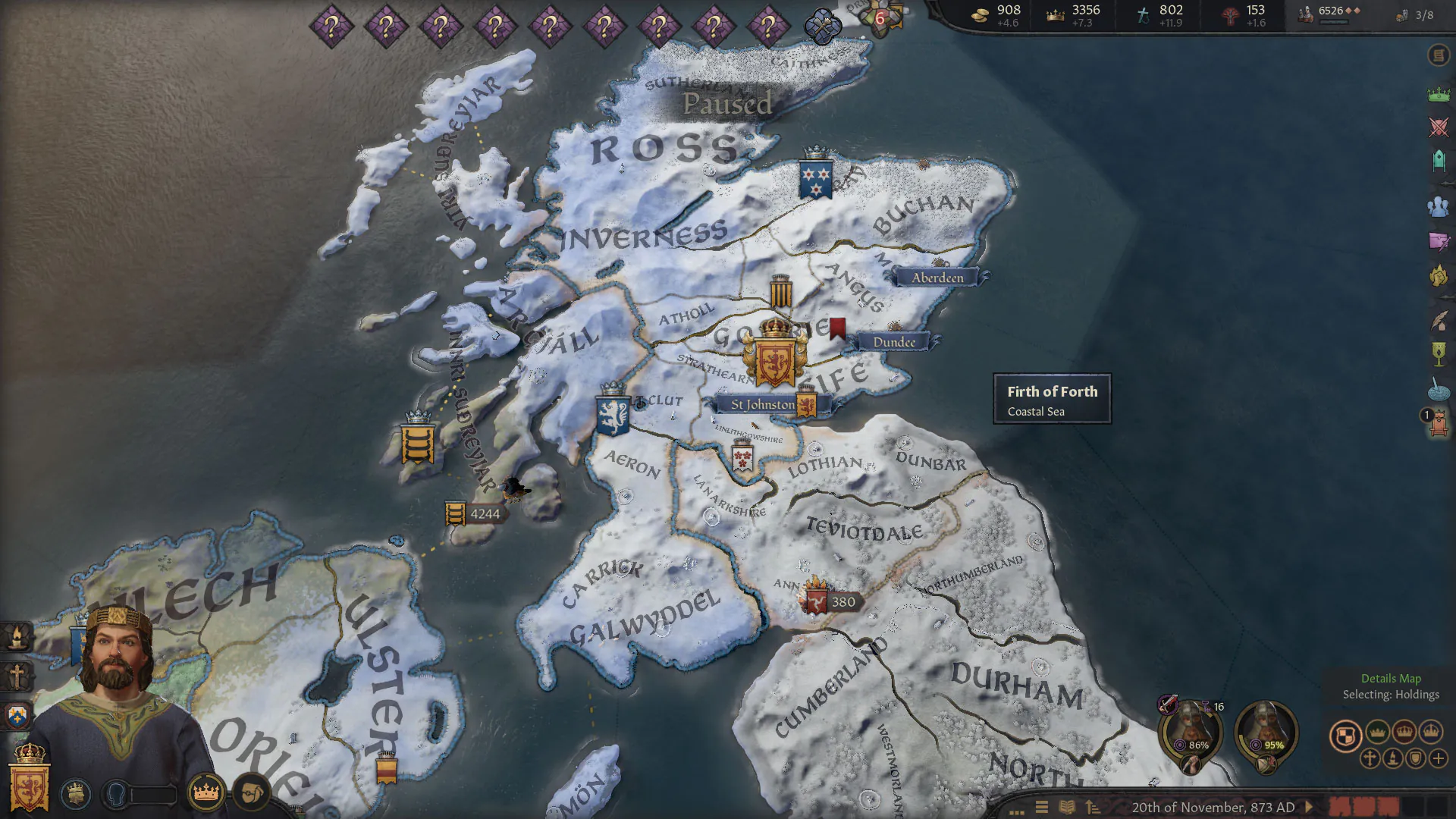
I’m not any safer from the Vikings in Alba. In fact, my land borders Jarl Ivar the Boneless’ Sudreyjar territory to the south and northwest. Thing is, 867 wasn’t a particularly peaceful time wherever in the world you lived. My thinking is this: at least there’s nice nature here.
There are other factors that make this a decent spot for a nice, chill, beginner-friendly save. I don’t have any immediate foes here, and my neighbours are of roughly similar power, so if they decided to just turn up and throw all their armies at me, they wouldn’t get very far. Similarly, Alba doesn’t have a vast military, so I don’t have to pay much attention to the resources required for their upkeep.
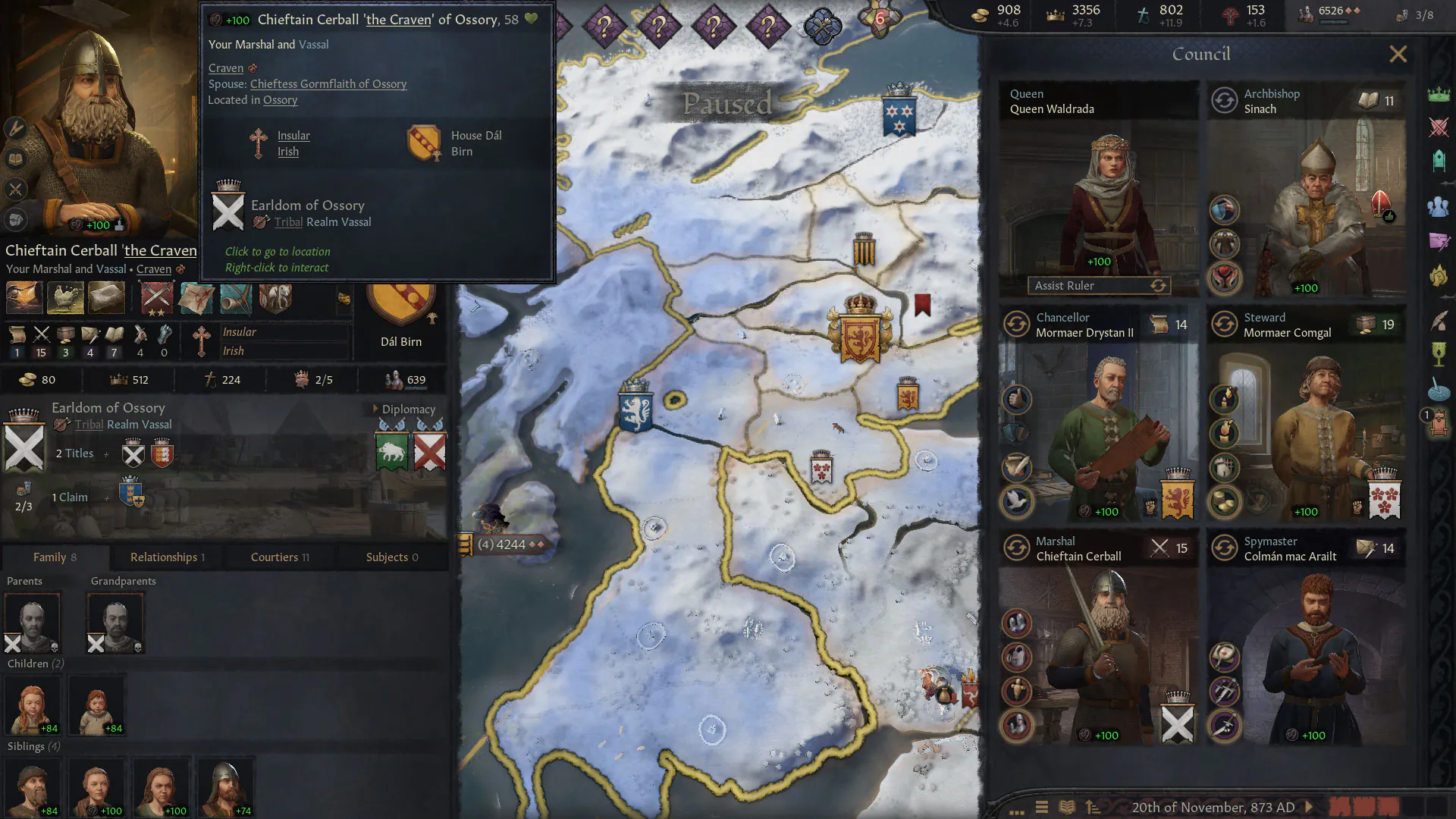
It’s also a nice, small territory. There are just a handful of proper settlements within my borders, so I’m not immediately overwhelmed by 20 tribe leaders demanding things from me. However, whenever my courtiers do approach me asking for favours, my default is: yes. Yes, absolutely, and have a title in the council, too.


This is a double-edged sword. The downside is that I seem to be keeping company with a lot of people with adjectives like ‘craven’, ‘blackguard’, ‘vindictive’ or ‘antagonist’ in their personality descriptions, and the rational king in me says having a craven Marshal is not a good thing.
The upside: they’re all content cravens and blackguards, for now. My utterly spineless and sycophantic ruling style means I’ve given nobody a chance to harbour a grudge against me, and that’s where a lot of the stress begins in this game. Even my closest neighbor, the ‘vindictive ravener’ Jarl Ivar The Boneless, seems to have a pretty neutral opinion of me and by laid-back empire. Then again, he is at war. With, er, everyone else.
So, what does one do when one isn’t at war, doesn’t need to defend oneself, and isn’t trying to gain territory? That’s for me to decide, and that’s one of the great things about this game. So much of it is user-determined.
I decide to upgrade the settlements of Dundee and Aberdeen to the north, and Dunfermline to the south. The tribal leaders of all three are very happy about this. Most of my coin, though, goes to St Johnston, where my council and royal court are assembled. Seems fair to me.
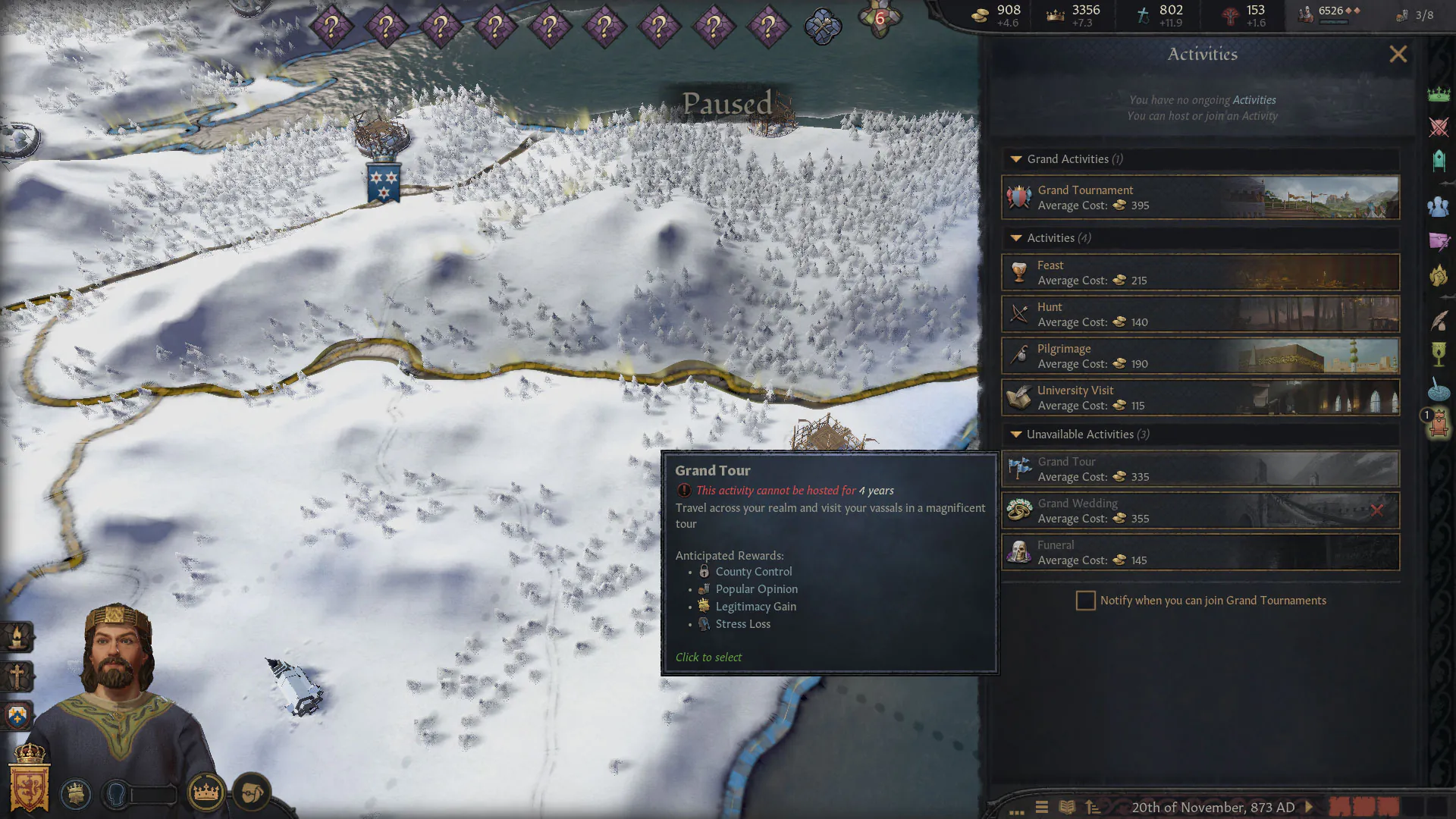
Next, I plan a grand tour, travelling across my realm and hoping to generate more prestige for the people of Alba while keeping all invitees sweet. There are difficult conversations with tribesmen who wish to test my disposition and resolve. Crucially, I do not die and nothing catches fire during the entire tour. A success.
Worryingly, while I’ve been away Jarl Ivar has now extended his war to the north of my territories. He’s fighting with absolutely everyone in my vicinity, but not me. This worries me.
So I do what any proud, steadfast and true monarch would do. I send him a massive gift of coins. He accepts.
The direction of this campaign from this point is up to me. I could use Wand to teach myself about CKIII’s systems by, say, adding more money, prestige, renown or dread, and learning the value of those resources by spending them. I could fast-track the playthrough by enabling the instant construction option and instant movement, giving both my settlements and armies a significant advantage and creating an accessible scenario for conquest.
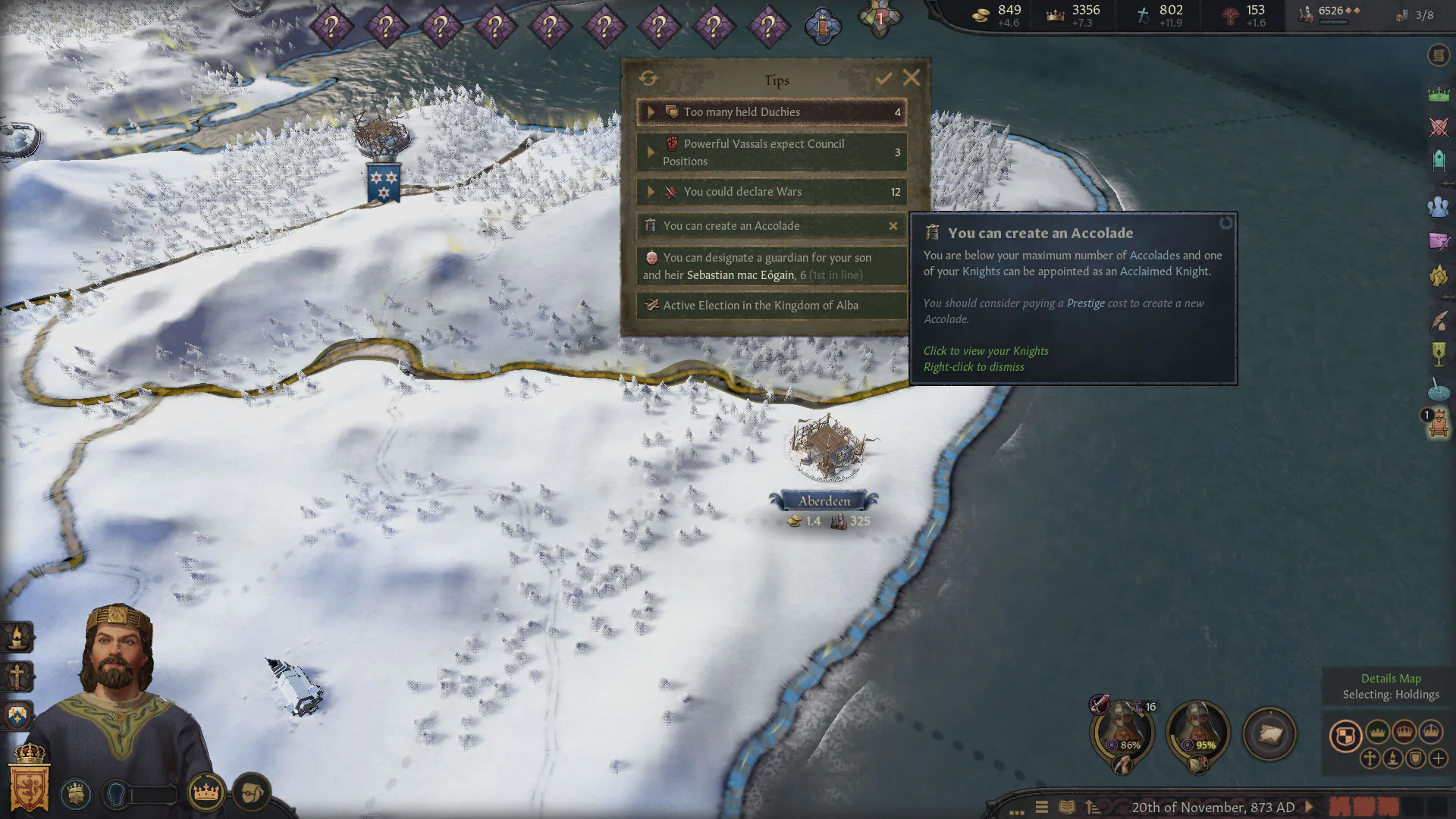
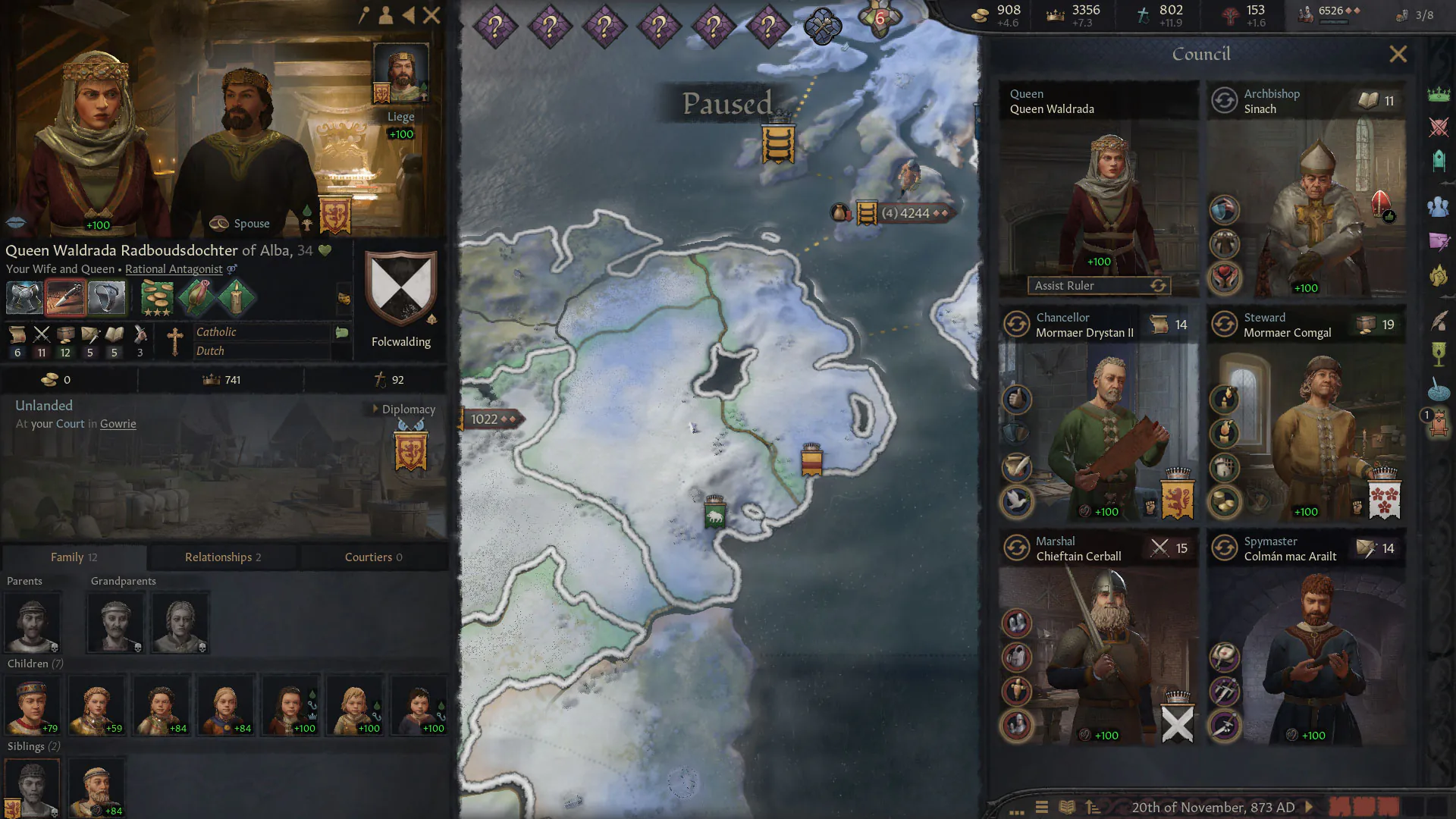
However, my immediate interests are more carnal. I set about finding a bride who can provide me an heir. And for that I don’t need Wand – I just need to put the word out and meet some eligible would-be queens of Alba. I pick a Dutch young lady with a permanent scowl, and make her Queen Waldrada Radboudsdochter of Alba. I call her Waldy for short.
Marital bliss has commenced, Jarl Ivar still continues the charade that he won’t one day soon invade my territories and destroy me, and my court of craven blackguards keeps on smiling at me. To my face. Mission accomplished.
Next: time to be Pope.