I am not unfamiliar with masochism. I am, after all, a video game journalist. Making my way past the halfway mark of a second playthrough of Twisted Tower, a new first-person shooter from Bezi sponsee Thomas Brush (under his studio moniker, Atmos Games), however, I wondered if even I – unkind as I am to myself – was taking the self-flagellation too far.
Twisted Tower is a strange game. In places, it is a dead game: without intent, imagination, and with only a shred of entertaining violence. It plays like a demo reel one might hastily assemble to pitch an intention to later make an ersatz Bioshock. That does not discount it being fun, but it does inform the lacklustre and sloppy gameplay that does.
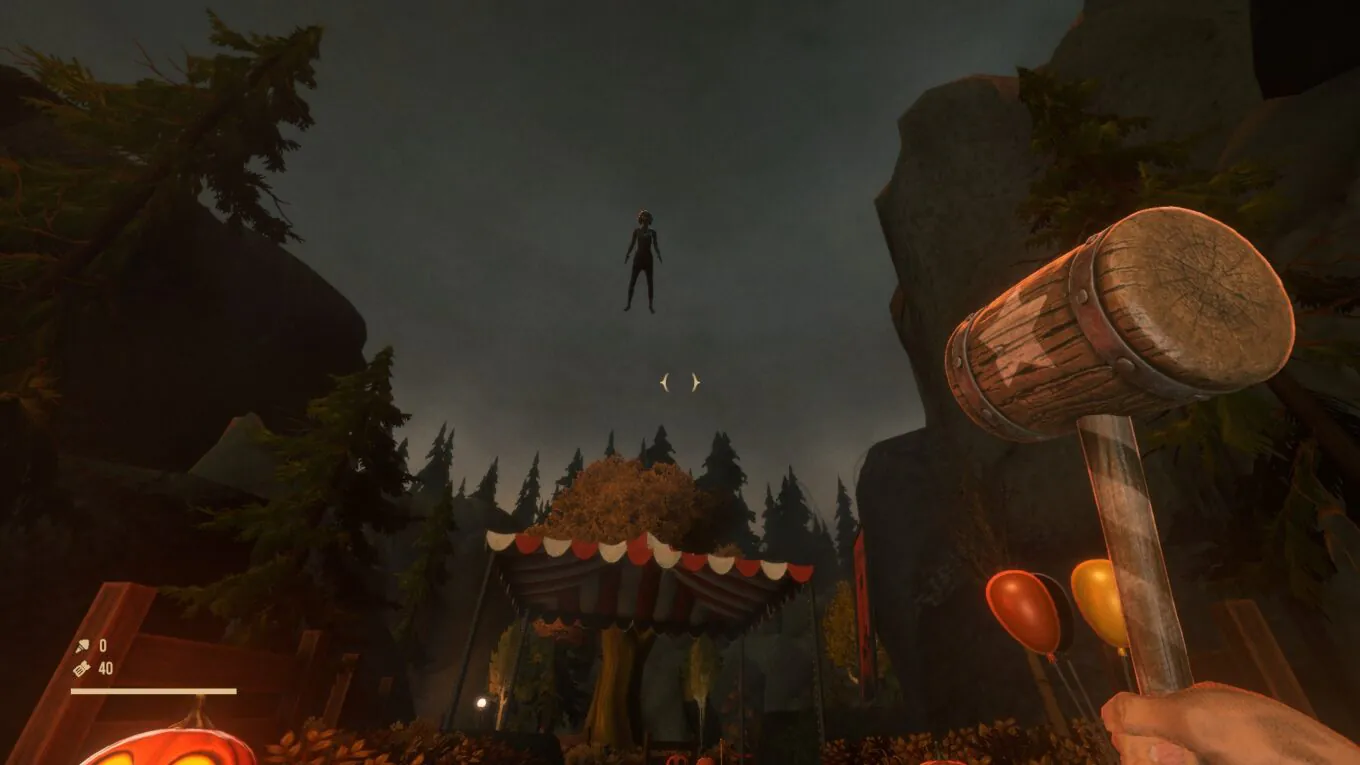
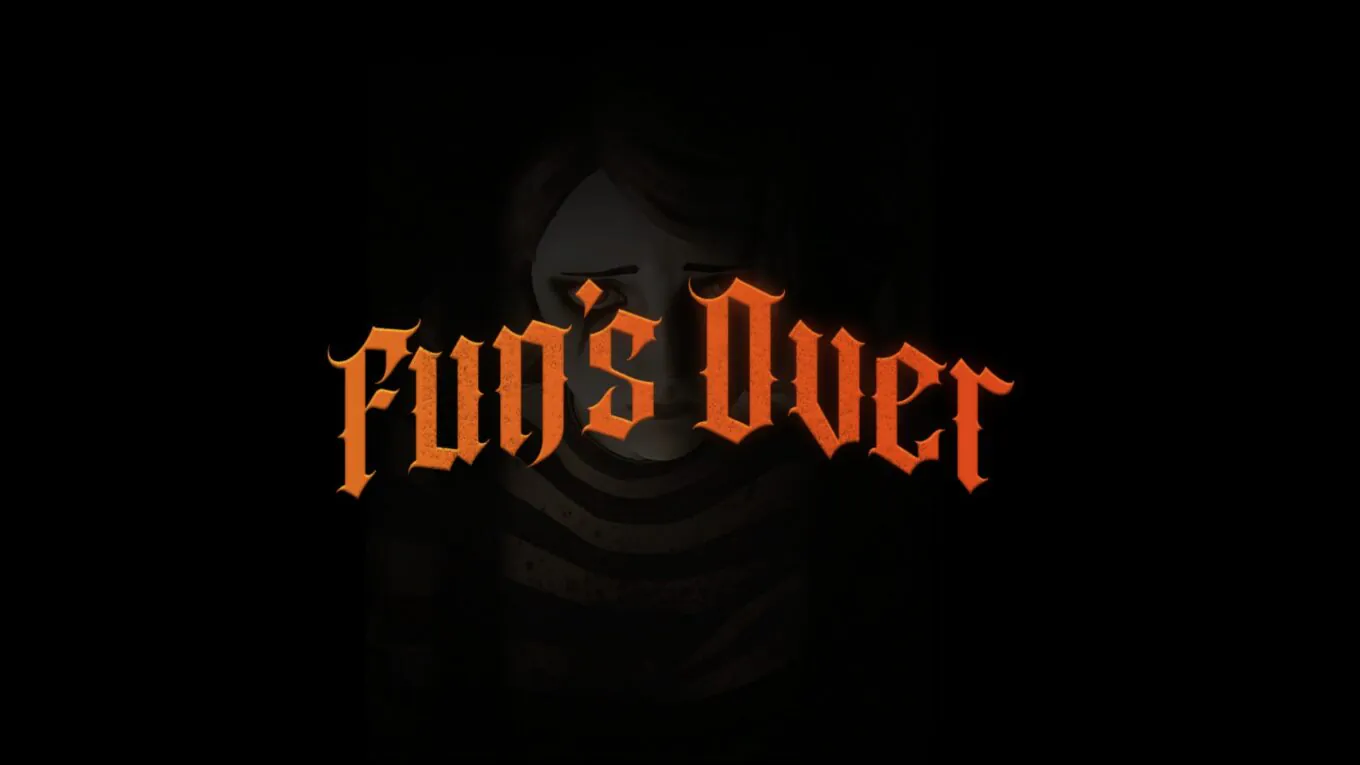
After your girlfriend, Charlotte, is kidnapped during a romantic trip to the drive-in theatre, you must rescue her from Twisted Tower. Part theme park and part clown-themed BDSM chamber, it is owned and operated by eccentric director V.C. Twister: a Jigsaw type, complete with colon cancer and a penchant for bloody traps. He is intent on recreating his most famous film – which, according to Charlotte, “won, like, eight Oscars” – which sees a young man ascend the tower to rescue a love interest from the Twisted Beast.
On this occasion, that young man is Vincent: a laughably one-dimensional failed surgeon. Though, that’s a good fit in a game in which character and narrative are, at best, a surface-level rehash of Bioshock. Accompanying Vincent is his nephew, for whom Vincent shows little concern as he dances and portends Charlotte’s current whereabouts.
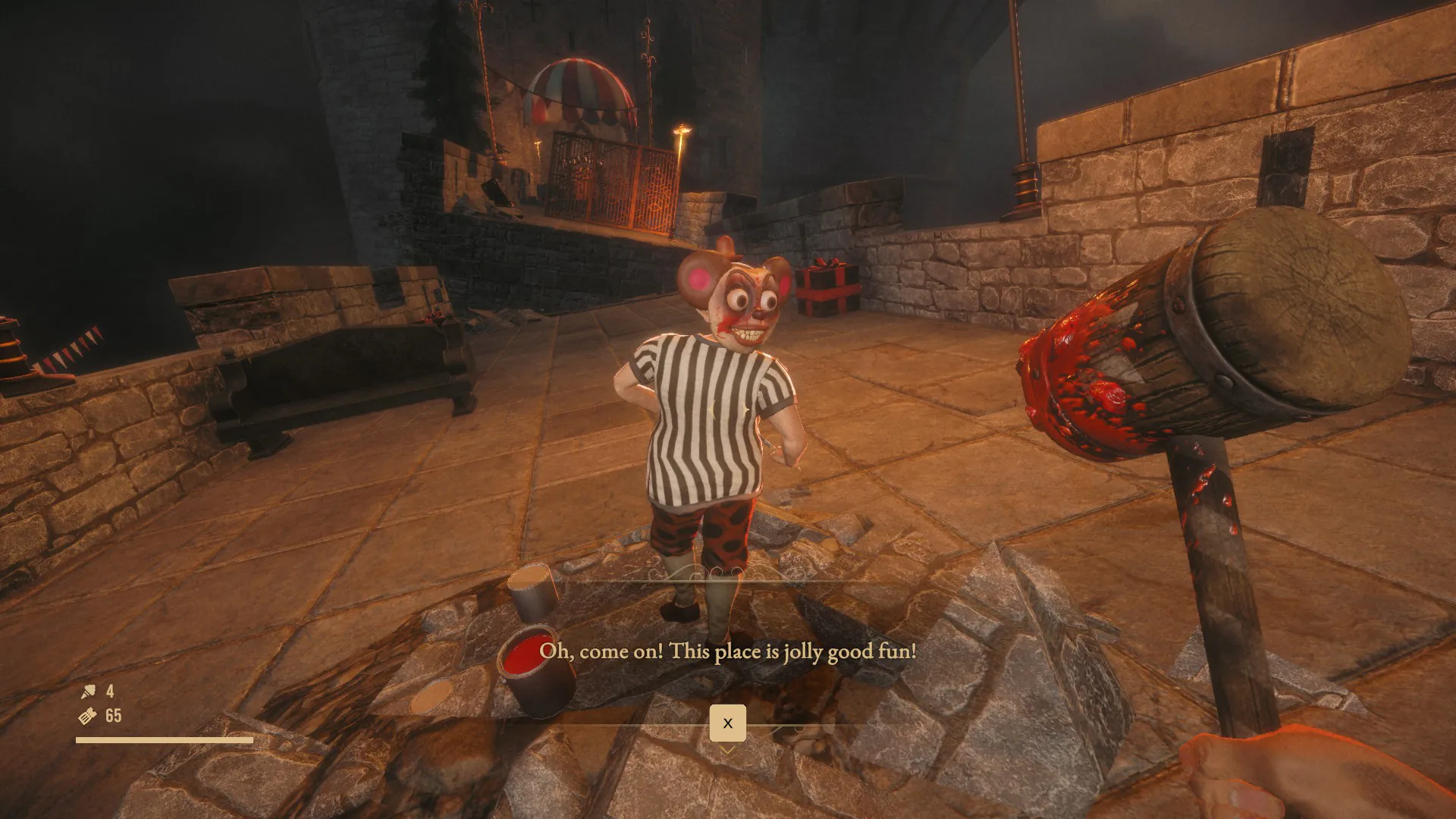
The loop that follows ushers you through linear corridors in search of levers that open more corridors. Sometimes those routes are circuitous. Many involve lengthy backtracking through hallways crawling with masked goons muttering awkward catchphrases (sentient murder-phones appear to cry “funfair”).
Twister makes that easier for you, as the masks he mandates his employees wear appear to obscure their vision to the point that many won’t notice you until you’re right in front of them and they’ll ignore that their colleagues are being slaughtered. Though, if my co-worker dressed as a giraffe and insisted on yelling “giraffic jam” ad nauseam, I might turn a blind eye, too.
Most of these sections end with an open room in which you must fight waves of enemies. This is where Twisted Tower is at its best, as it attempts to take advantage of its movement upgrades of grappling and dashing. It’s a low bar it sets for itself, but it’s as close to its pretensions of being a boomer-shooter as Twisted Tower comes. The game could have used more of them. But then, the game could have used anything: the violence is all mindless target practice, we never understand the seemingly supernatural world Twister has created, and what narrative we do see is spectacularly shallow.
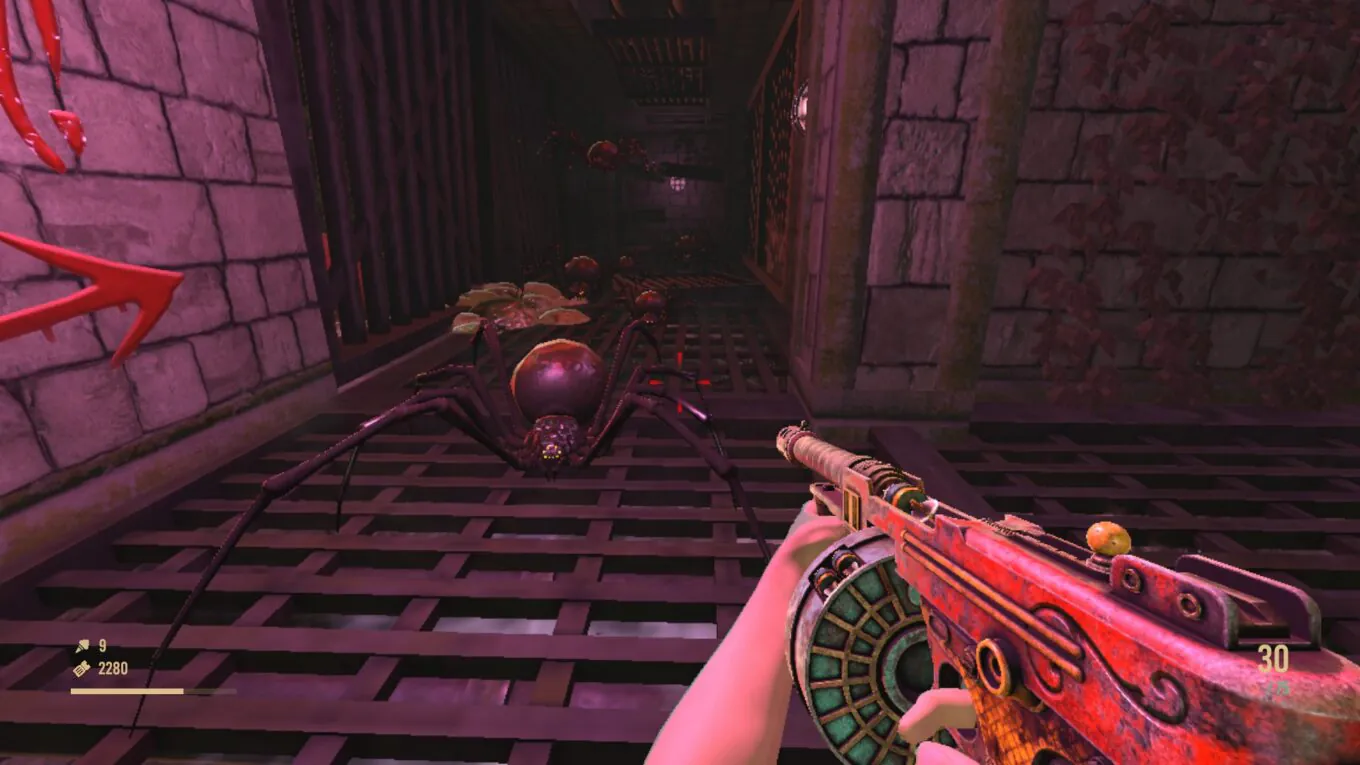
Those larger rooms are also where Twisted Tower’s persistent performance issues are most prominent. Much of my review period was spent moving like I was walking on the moon. Already floaty jumps are exacerbated by slowdowns, constant stutters, and skips that propelled me forward unbidden, often into enemy attacks. To be fair, the mascots were having as hard a time as I was being thrown around the map and unable to shoot me as I walked slowly to the side of their shots.
Other jank speaks of lacklustre design and a lack of consideration. Enemies with shields, for instance, only take damage to the shield even when you attack their body and headshot damage is an upgrade on a single gun rather than a given. Another upgrade, for the Tommy gun, ironically offers “bullet time.” I didn’t have the heart to skip it even though I was already functionally in bullet time. I wasn’t even on max settings.
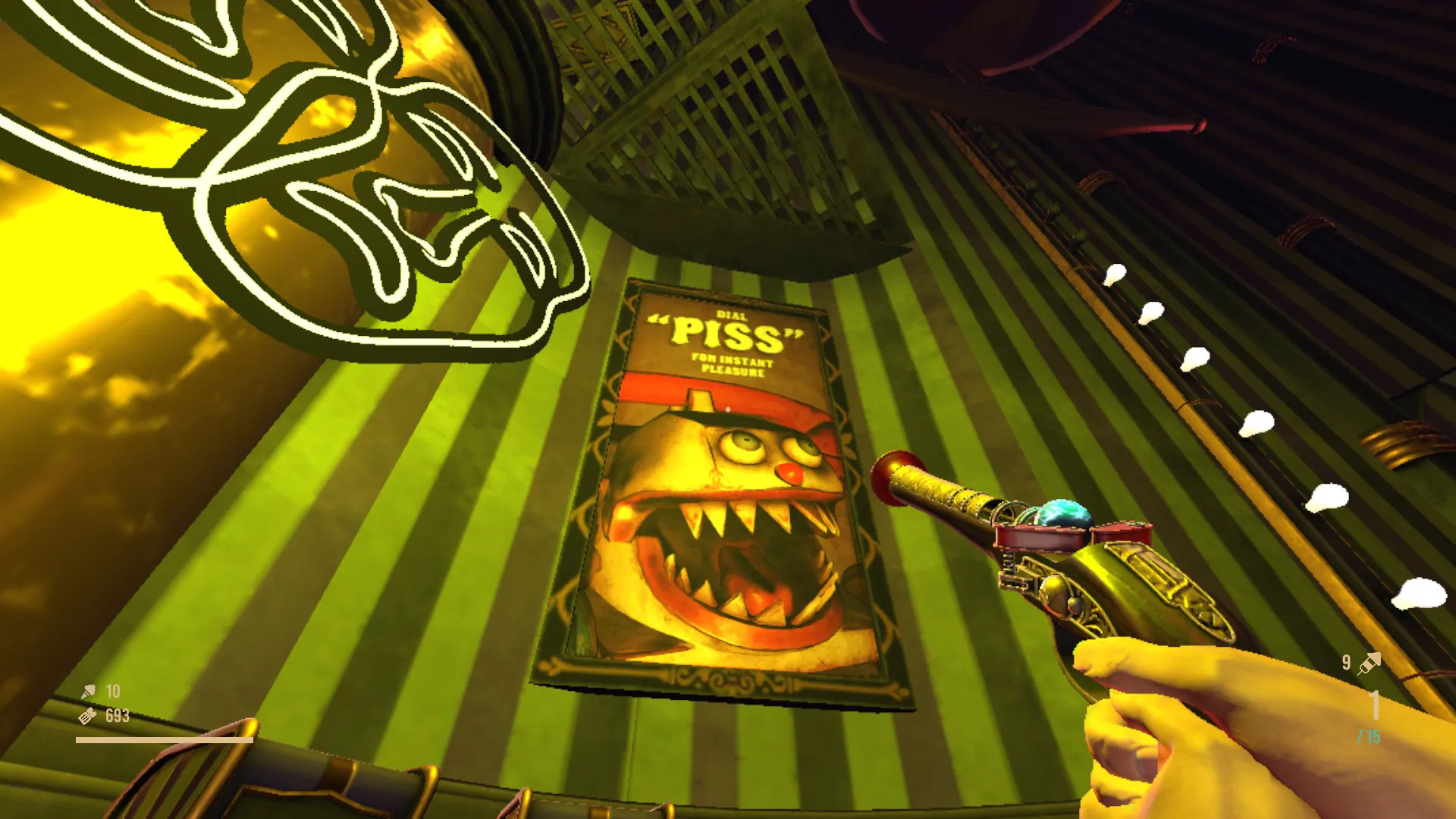
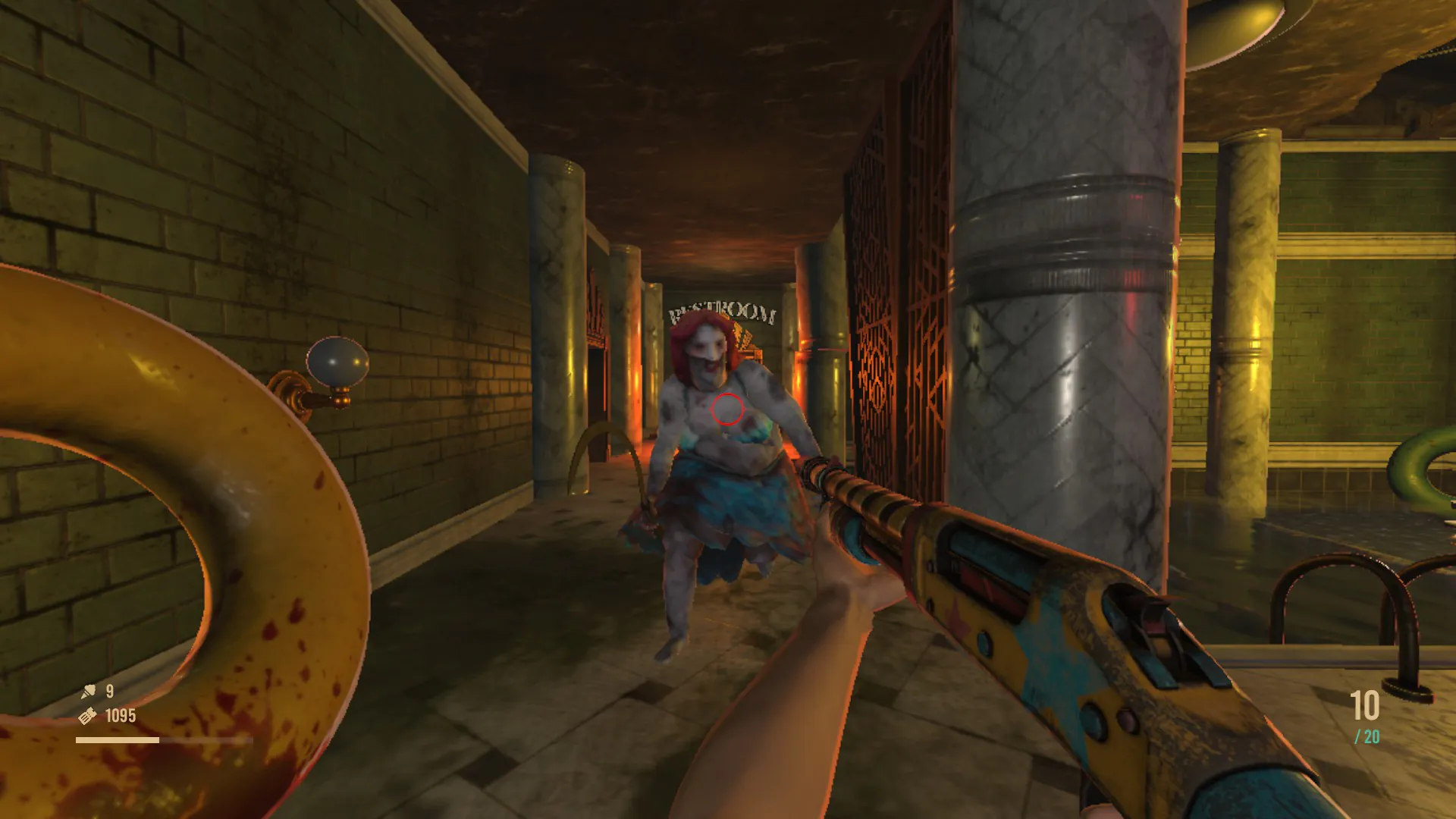
Reducing those settings to the bare minimum mitigated, but did not alleviate, those issues. Curiously — though, I tend to not care about graphics outside of them being an impediment to gameplay — I did note there appeared little difference in how the game looked on higher and its lowest settings.
It’s worth noting that Brush has spoken often about using generative AI in developing Twisted Tower (though, there is no disclosure on Steam at the time of writing). Some of that is no longer in the game, such as decorative assets generated in Midjourney. Though, he has continued to extoll the virtues of Claude and Bezi in coding and, in particular, debugging.
How much impact this reliance on AI has on Twisted Tower’s performance is uncertain. Similarly, mileage will vary on how its use impacts your desire to engage with it – likely depending on your existing concerns about AI and whether you view coding as part of the creative endeavour of game development.
Though, AI’s presence brings further problems: once you know AI has been used, it’s hard not to see its fingerprints across every surface of the game, even where it’s not been divulged. In Twisted Tower’s choppy narrative, it’s sloppy and derivative gameplay, and across a broader lack of imagination, it’s difficult to work out whether it’s worse that might be down to AI or a simple lack of creative intent on a human level.
It would be unfair to suggest there is nothing remotely redeeming in Twisted Tower. Though, minor positives are always tempered. Moments in gameplay are diverting despite the poor execution. The voice actors involved are doing their best with an appalling script. A gun that appears to be a gumball machine is fun, at first. But at every turn, Twisted Tower feels like it’s offering what players expect, no more and no less.
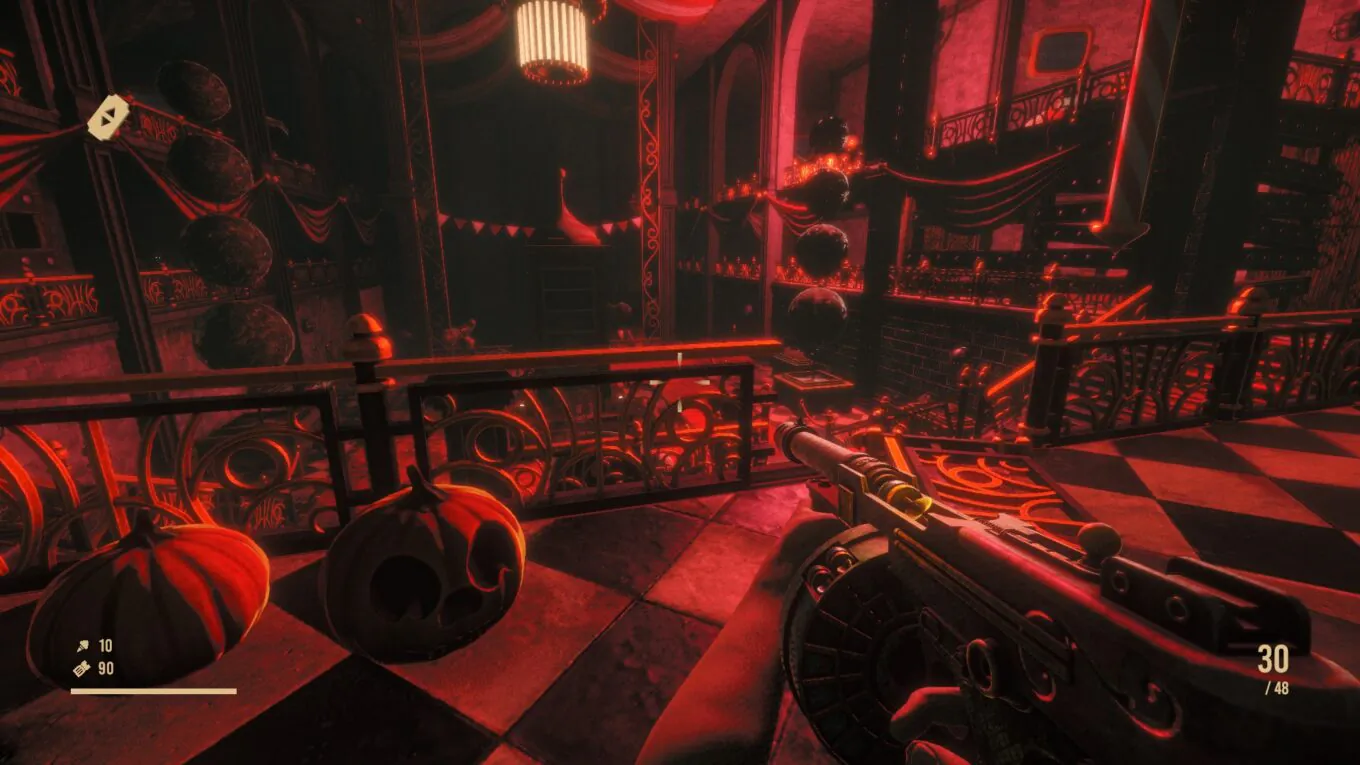
Given how much it apes Bioshock, you’d expect a narrative of twists and turns, so Twisted Tower fills its unimaginative plot soup with unearned revelations that relate little to your actual experience. Players assume a modern shooter will offer a plethora of weapons, and the game equips you with ten carnival-themed reskins of the usual suspects: shotguns (one called a “shart gun” in-game), machine guns, a cannon, et al. Being a platformer in part, there should be some reward for exploring, and thus Twisted Tower encourages you to discover its “secret” areas.
Areas which expose just how little creativity has gone into the game. These are simply alcoves and rooms in plain sight that require little effort to reach. What’s inside (ammo and carnival tickets that serve as in-game currency) similarly has little value.
If there’s one thing Twisted Tower threatens to excel in, it’s a range of movement. Outside of simple puzzles, however, it barely utilises any of it. The potential of a broad suite of movement options — albeit one that devolves into a double-jump, grapple, and dash — are neither explored nor justified in-world. Worse, using them in combat all but guarantees that enemies hit you.
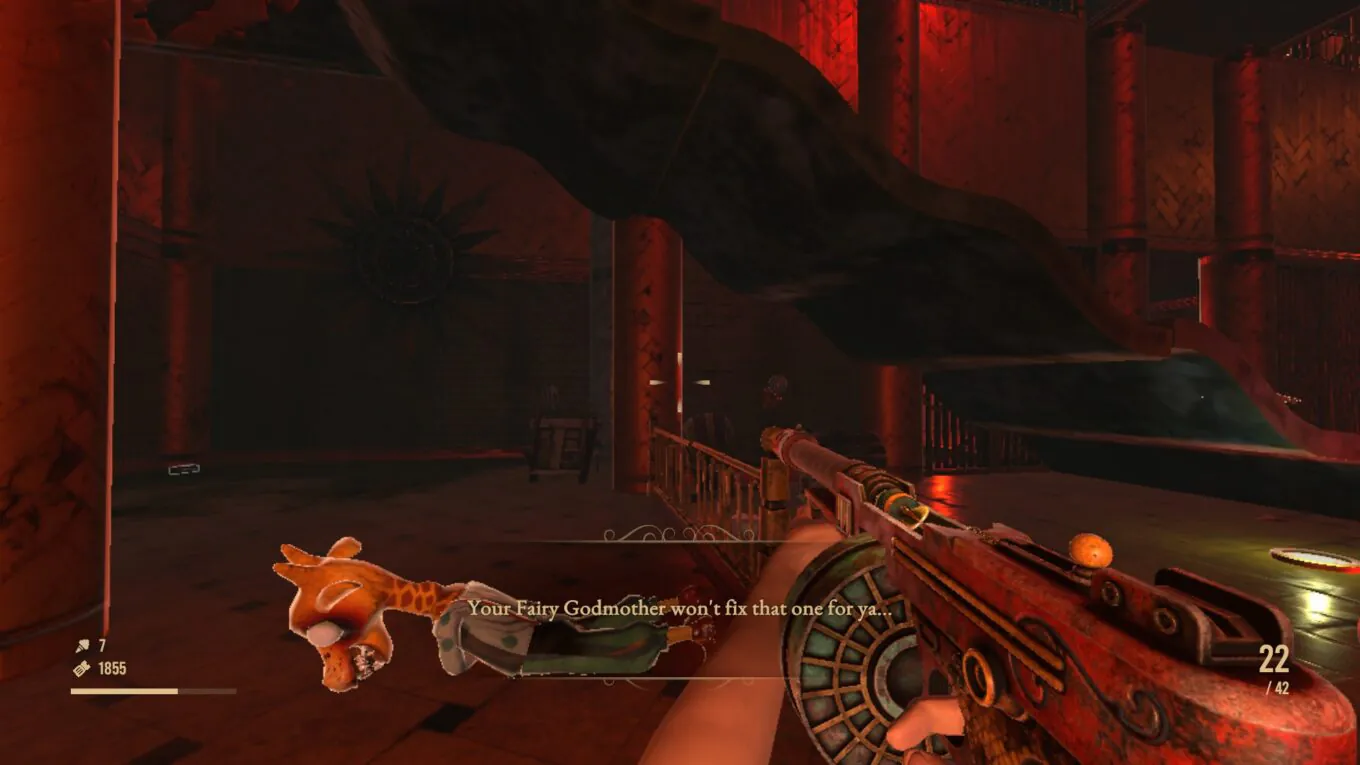
It plays as a roadmap of pattern recognition. These elements exist in the game because that’s what other games do. There is no consideration of how they are implemented — often inconsistently, it turns out — or why; no curiosity of how a player might interact with them. The only thing that matters is that they are there. Curiously, though players expect a certain level of authorial intent in modern games, Twisted Tower offers none.
Reaching the top of the tower and the end of the game — which took me under four hours despite my attempts to explore — unlocks Adventure Plus. According to the tooltip that introduces it, this opens previously locked areas. Making my way through the majority of the game again, I found none of them. I thought I had on occasion, though that was because I’d already forgotten many of the core areas I was now revisiting.
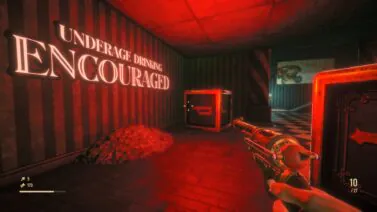
Twisted Tower is not an enjoyable game. It’s not unpleasant in a hostile way, as some games can be. There are hints of that: juvenile jokes (a sign that reads “underage drinking encouraged” exemplifies the humour in the game) and disrespect for mental and cognitive illness. But where other games are damned by an intent that only reveals developer bias, Twisted Tower stumbles into it through a lack of sincerity and consideration. A tepidity of intention that’s far more offensive than any of its childish jokes.
In many ways, with its sloppy presentation, empty narrative, and, at best derivative, gameplay, Twisted Tower evokes the Eurojank of the 2000s. Though, it does so without any of the ambition that defined that categorisation. Given how desperate Twisted Tower appears to succeed Bioshock, I’m not sure that’s what Brush intended. But then, nothing in Twisted Tower suggests any meaningful intent.