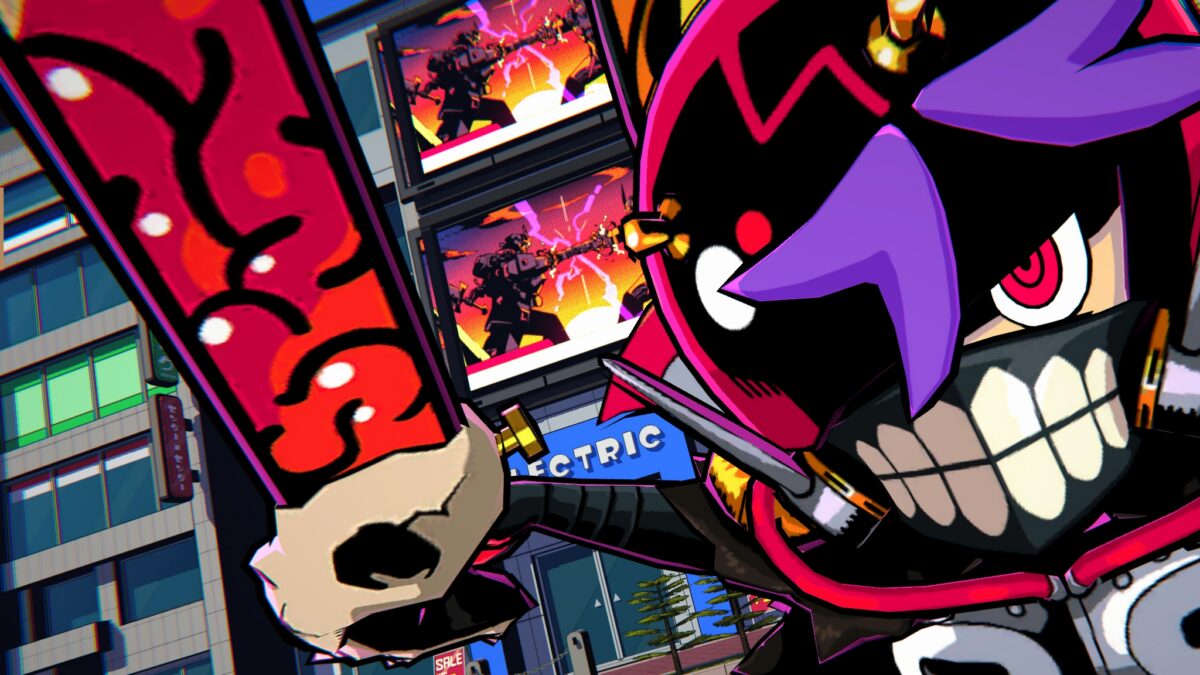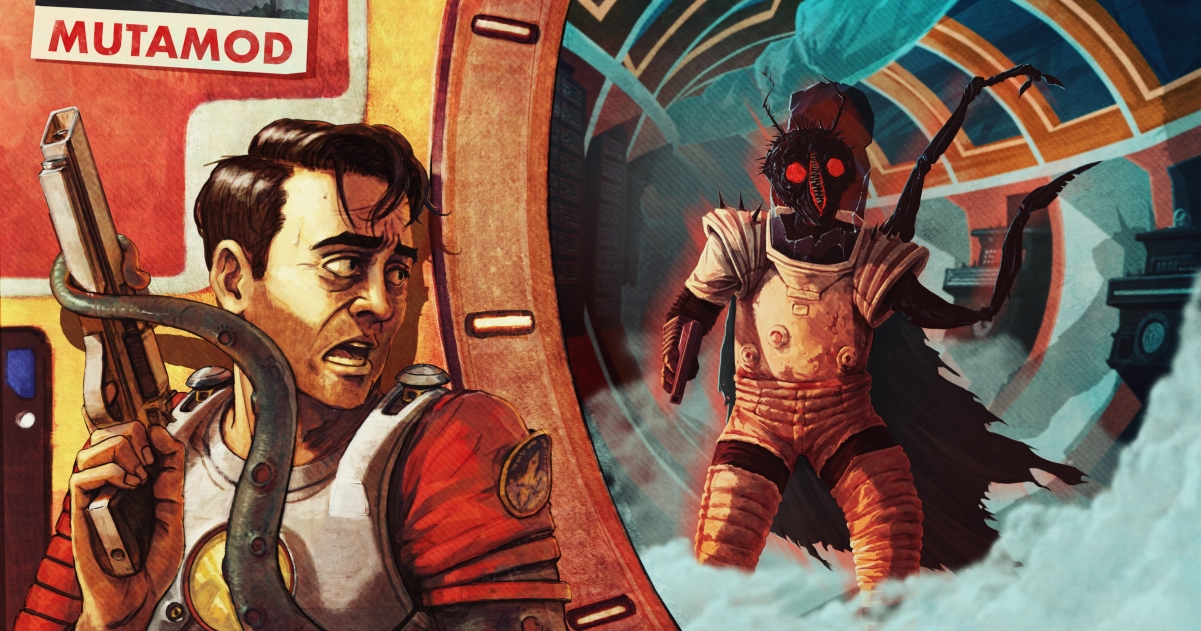
Lovecraftian horror subsists mainly on the unfathomable, which may seem diametrically opposed to the heavily visual facet of videogames. For all the grotesque and feral appearances of Eldritch creatures like the Elder Things and the Deep Ones, they cease to get too creepy after you’ve met them in the flesh. Thus what remains to prod at the vestiges of these fears is the literary quality of the tale, an element that Lovecraftian-inspired games like SOMA and Sunless Skies excel in. It’s why Lovecraftian fiction remains so enduring for decades; it’s the way the written word cajoles the terrors of cosmic entities into reality.
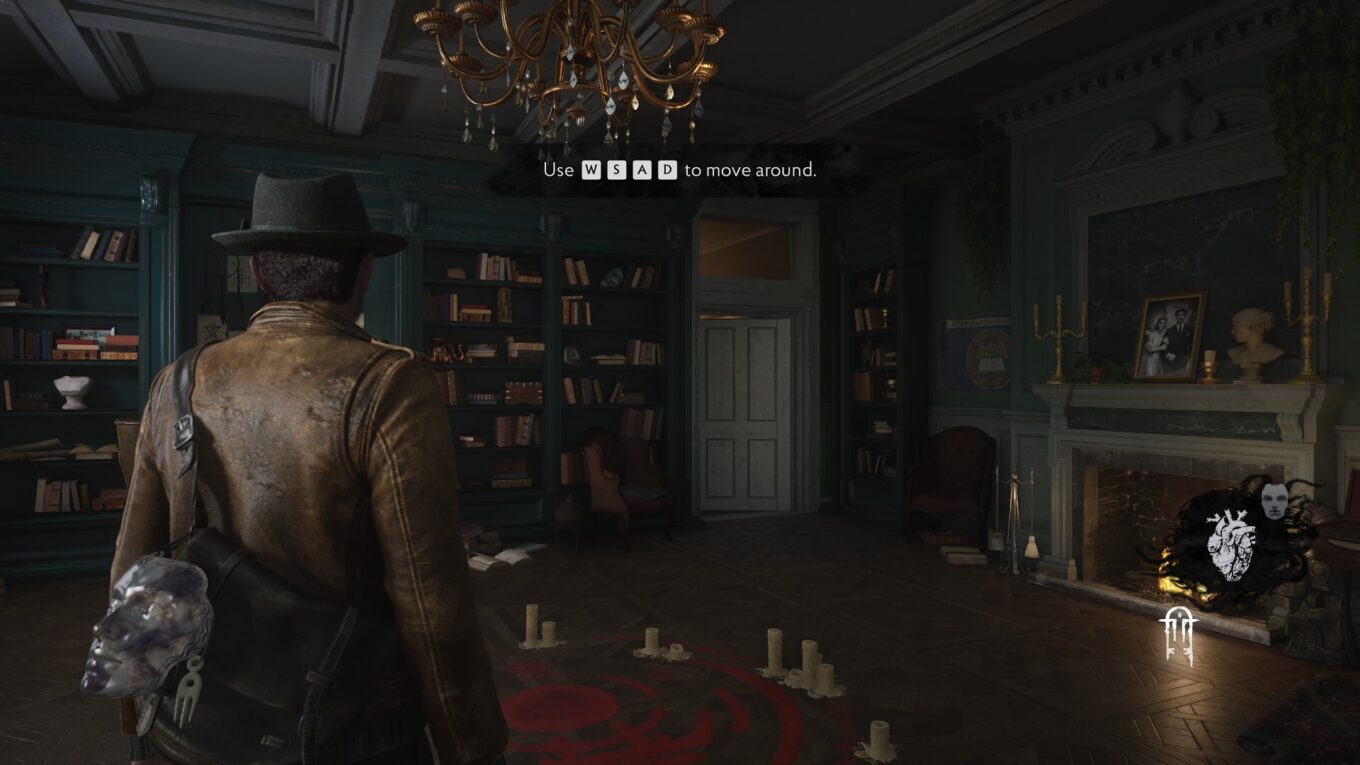
Then there’s The Sinking City 2, which instead attempts to impart what it means to survive the horrors of a Lovecraftian story. A departure from Frogwares’ decade-long portfolio of detective adventure games based on Sherlock Holmes, The Sinking City 2 steers away from the investigative elements of its first Sinking City, instead fleshing out combat and puzzles for a more adrenaline-fueled experience. Set in the flooded city of Arkham, you play as occult hunter Calvin Rafferty, whose partner – and fellow occult enthusiast – Faye Bennett was sent into supernaturally induced coma upon a ritual gone south. To bring her back to the realm of the living, Rafferty seeks to retrieve an arcane book from the library, which is surely a manuveur that will not lead to any dire consequences whatsoever.
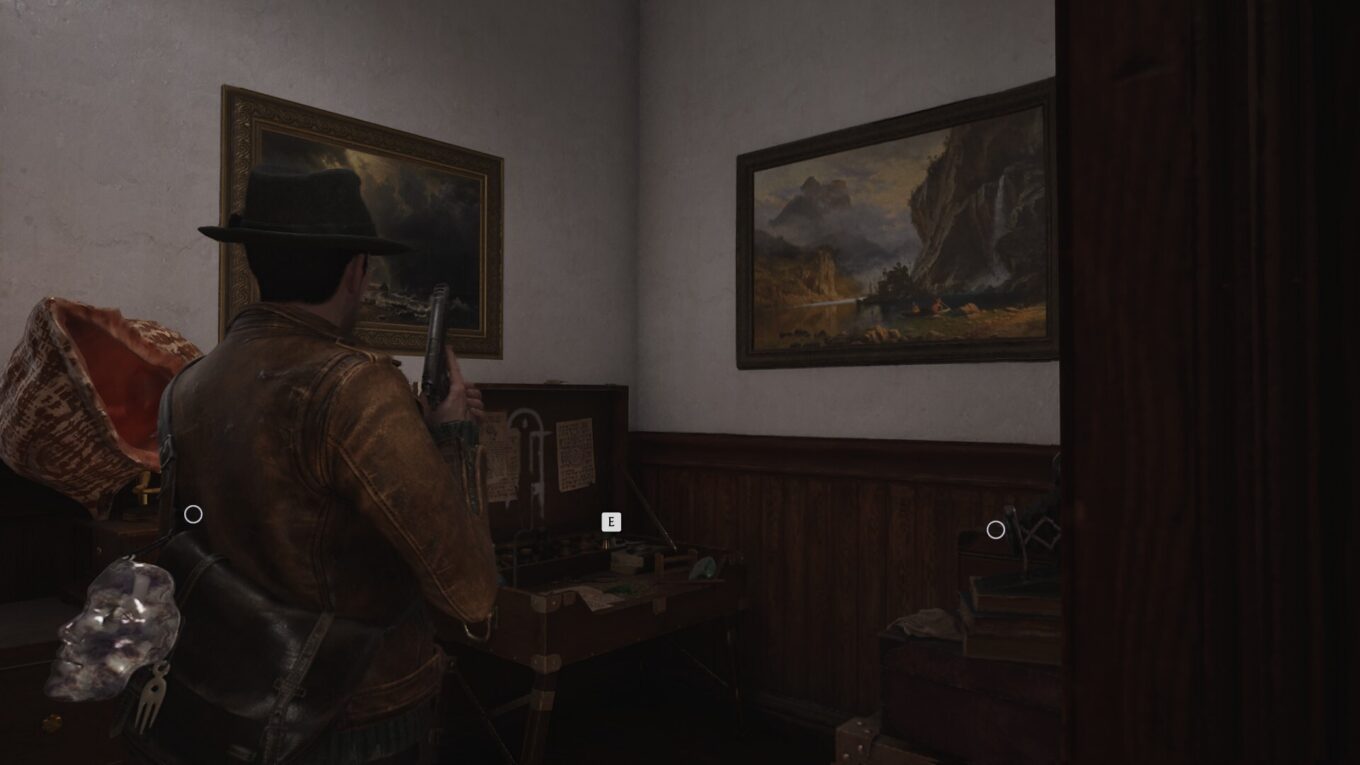
But while the first Sinking City is, in essence, a Cthulhu-wrapped detective game with an in-depth investigations, this isn’t the case in The Sinking City 2. Investigations are pretty straightforward to conduct and conclude; you explore the vicinity, gather glues, and piece them together in an Investigation Space. One thing I appreciate is that rooms with undiscovered clues are highlighted in red on the map, whereas areas where you’ve found all clues are coloured blue, which does eliminate the need for frustrating pixel hunts. At the same time, being able to connect disparate clues together in the Investigation Space rewards you with a resource known as a Dream Element, which you can spend to unlock perks for Rafferty, from fasting reloading speed to taking a little less damage from enemies. Puzzles, too, are merely a means to an end and aren’t that interesting, unlike the cases in Frogwares’ Sherlock Holmes games. It’s why the segment feels secondary to The Sinking City 2’s survival horror elements, which sees Rafferty fending off hordes of zombies (to be precise, undead bodies reanimated by an otherworldly infestation of worms known as the Slither) and other creatures.
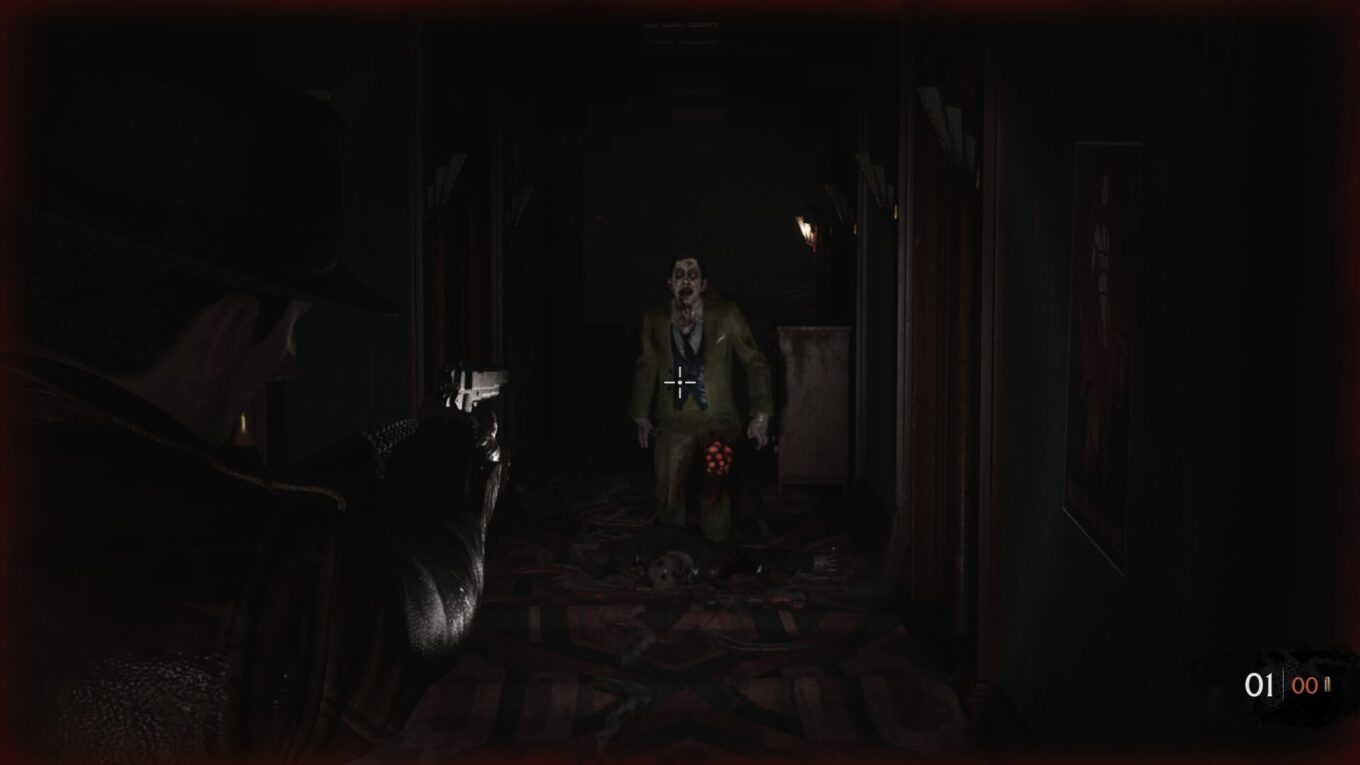
Combat is a gamble that Frogwares is placing its faith in with The Sinking City 2, but fights seems like a persistent Achilles Heel for the team. The truth is that Frogwares has never quite nailed the combat aspect of their games. Like the first Sinking City, gunfights here are functional at best but extremely tedious at worst, with Raffety’s movement feeling cumbersome and unwieldy. At the start you’re only given a handgun to defend yourself with, as well as a smattering of bullets. Melee attacks, too, are largely ineffective against your foes, and the tedium is exacerbated by the absolutely miniscule inventory space you have. The issue is that weapons, ammo, healing kits and everything else are being stored in the same space. Perhaps the point is to keep resources extremely scarce; The Sinking City 2 is marketed as a survival horror title rather than a shooter after all, but it treads a really thin line between exasperation and challenging. Then there’s another issue that makes the garden-variety zombies in this game a little more frustrating to eliminate: they jerk a bit too much, and their weak points – welts that materialize on their limbs – can take a while to materialize. Combined with the need to aim at these bits with the handgun’s small crosshair means you’ll need to be absolutely precise while shooting, or you’ll end up wasting your already scarce amount of bullets. Some of these zombies spit stuff or throw whatever’s nearby at you, too, so you’ll need to dodge them while looking down your sight.
The crux of The Sinking City 2’s problems is that many of them just feel pedestrian when they’re not being frustrating, almost as if the studio has a checklist to fulfill when developing the game. For one, enemy encounters are predictable. Solve a puzzle, and you’ll be greeted with an onslaught. When a path ahead is blocked by a colony of Slither, you know that you’re up against a timed attack where you’ll need to survive an incoming horde.
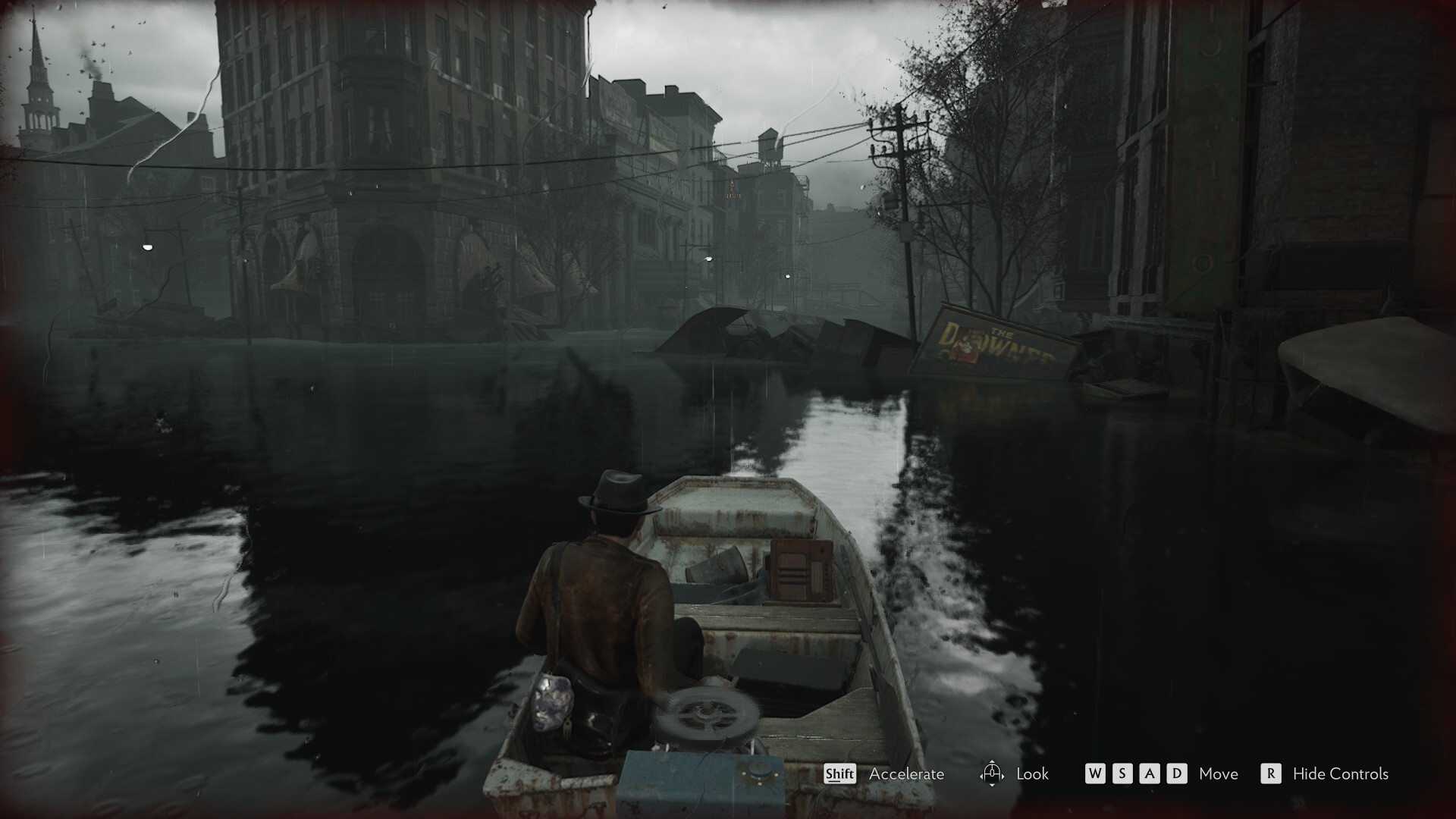
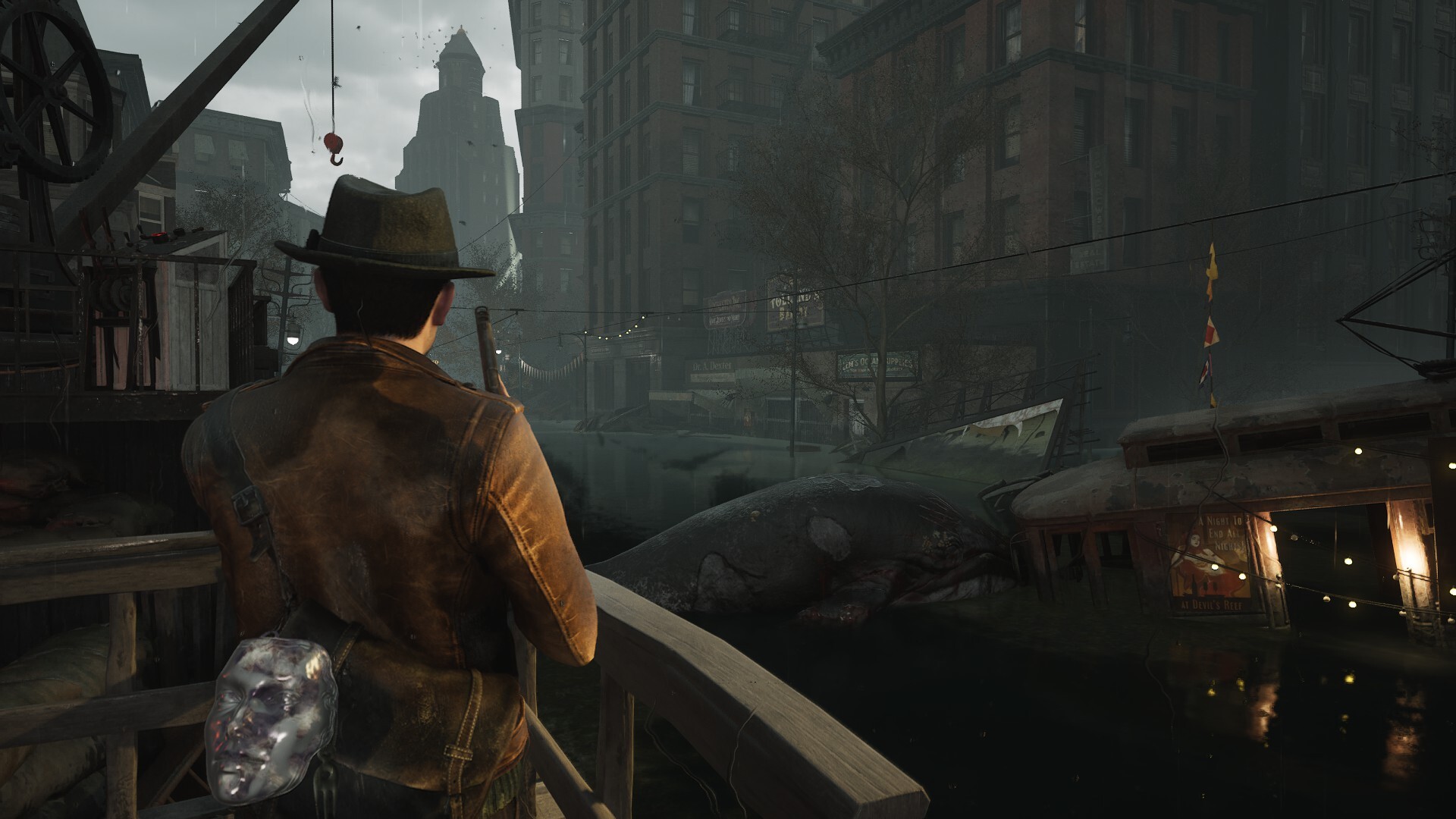
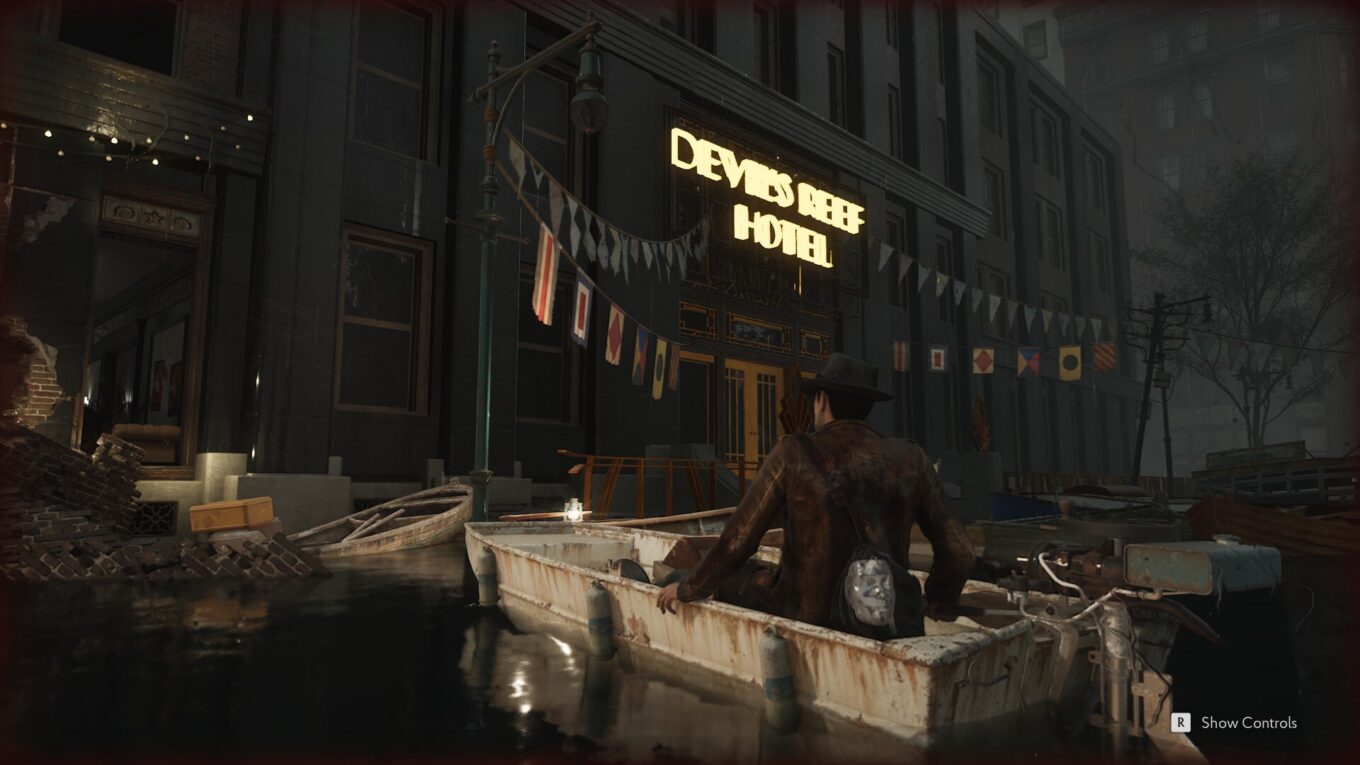
Visually, the city of Arkham is largely a muddy grey, a facsimile of the foggy, foreboding environments of apocalyptic worlds in other games. And then there’s the story about Rafferty and his partner Bennett, which is largely serviceable but rarely compelling. The twists are expected for a Lovecraftian story: eldritch horrors that shock but aren’t haunting, and a protagonist who seems like a dead ringer for Indiana Jones but without the charm.
That said, some of its issues are resolved in time. Upgrades in terms of increased inventory slots let you manage more resources, especially with more and larger weapons that take up more space are discovered. You gain access to a vastly improved arsenal that makes combat feel less of a chore, from a machine gun to a shotgun, alongside weapon upgrades that improve the potency of these damage dealers. You get more crafting materials, which also means having more ammo, which keeps the scarcity issue around bullets at bay. And when The Sinking City 2 becomes less tedious to experience, its world becomes a bit more engaging.
One of my favourite places to explore is the hospital, which is home to some predictably macabre experiments behind the scenes. Yet there’s still some small thrills to learning more about its background, from masks carved from human faces to notes on abducted figures and missing body parts. And perhaps the most fascinating part of The Sinking City 2 is the scant few living supporting characters you meet along the way: the scholar who stays behind at the library, and the lady who stayed behind in a dilapidated fish market. Alas, they’re mostly in the story for a brief few moments.
It’s a pity, then, that Frogwares had decided that making detective games is no longer as financially viable these days, given that investigating cases are what the studio has done best over the years. As such, The Sinking City 2 can be invigorating at times when you’re not dealing with its biggest issues: clunky combat, uninteresting environments, and the sheer sameness of it all. It’s by no means a groundbreaking game, but if you’re interested in a survival horror game set in a desecrated Lovecraftian world, along with combat elements that let you gun at zombies and some familiar creatures of the Cthulhu mythos, The Sinking City 2 may just scratch that itch. Otherwise, you may prefer to revisit some of Frogwares’ older Sherlock Holmes catalog – their investigations are, at the very least, much more intriguing than Rafferty’s expedition into the cosmic unknown.