
My dad has a particular way to enjoy multiplayer experiences, and that is to be an agent of chaos. Back in the day, playing Halo: Combat Evolved’s online Slayer mode, he discovered a rock into which it was possible to clip, rendering him invisible within the opaque textures but still able to shoot out. What began as a way to farm kills from the enemy team quickly devolved into the less discriminate pursuit of shooting at whoever it would annoy the most. This blue-on-blue (and, indeed, blue-on-red) needling amused him for far longer than it should have. More recently, he filled the forecourt of our Roadside Research garage with bins and radios, chipping away at the shared account my brothers and I had painstakingly amassed until we kicked him from the game. And he simply refuses to stay with the group in Fortnite, triggering regular trips back towards the storm or into gunfire so that we can grab his Reboot Card.
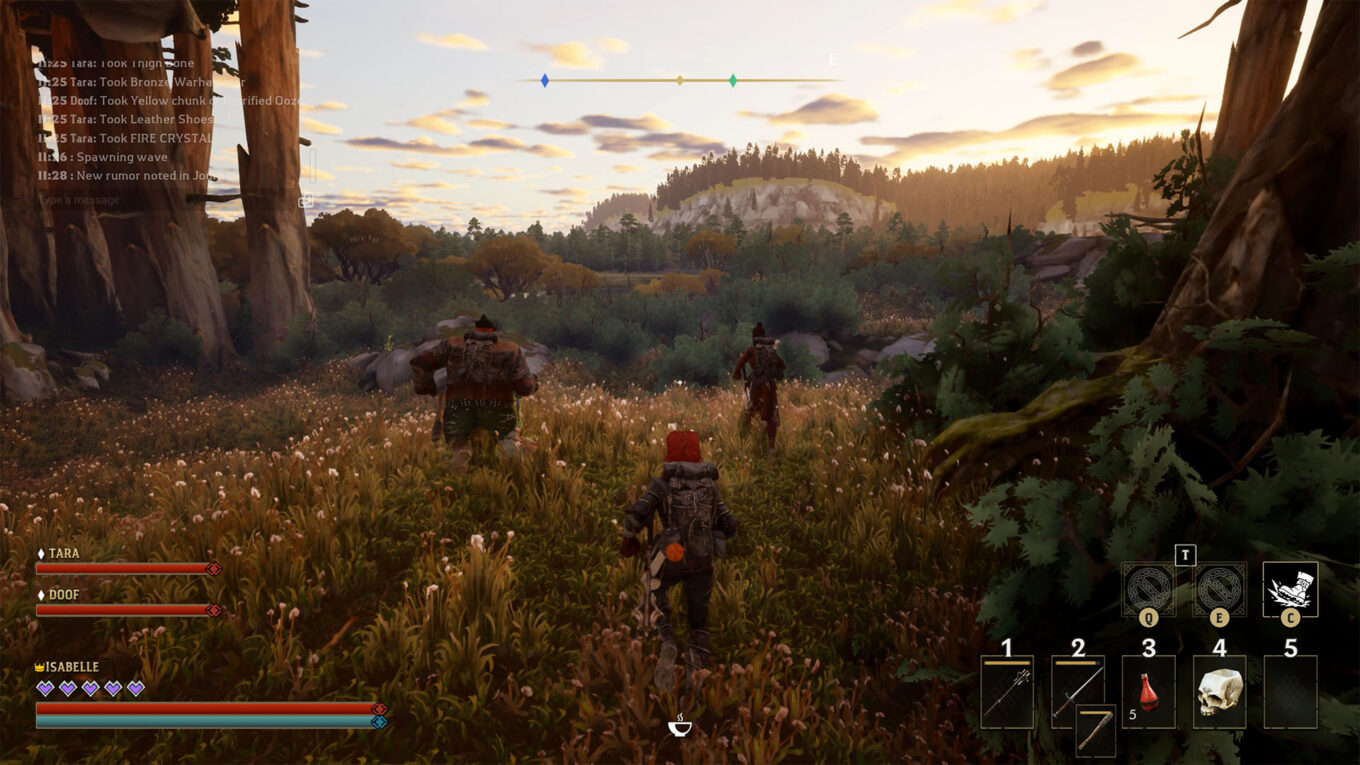
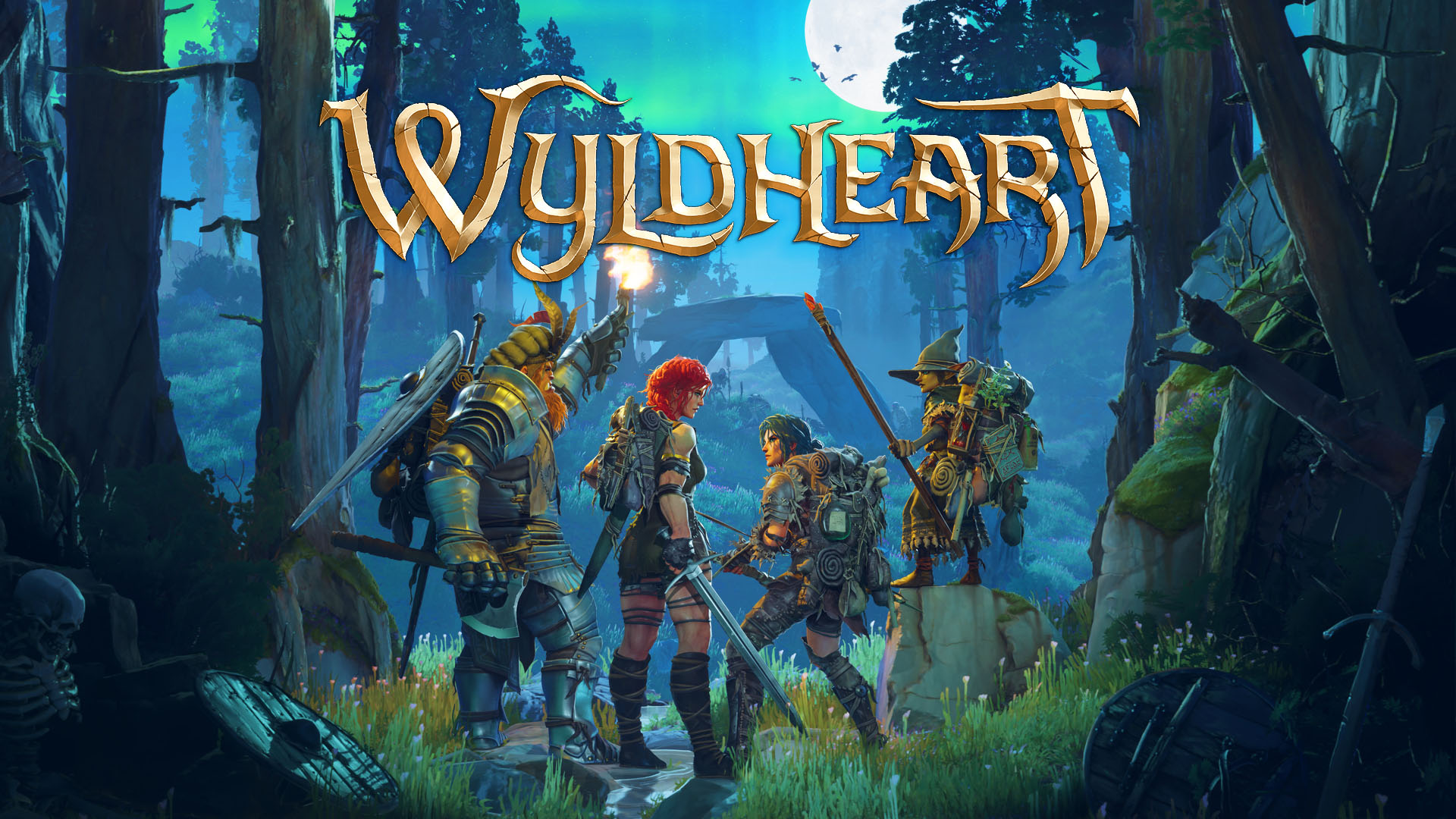
For these reasons and many more besides, I won’t be playing Wyldheart with him. I arrive at this conclusion while politely apologising to two members of the Wayfinder Studios team, just after asking them if their co‑op action RPG features friendly damage. It does, it turns out, and I’ve been flagrantly flailing the massive two-hander sword they let me take from the last loot spot in a way that, frankly, is making things more difficult for everyone. We all become our parents eventually, I just thought I had more time.
In my defence, I really am trying to help. There’s a gang of skeletal aggressors bearing down on our party and they’re bloody strong. I windmilled in expecting these early mobs to be one-hit wonders, but instead they’re doing a good impression of Dark Souls’ Hollow Warriors by humbling me early doors. Good thing my allies, sporting significantly less health than they had before I joined the fight, are here to finish them off.
Roll of the dice
“I don’t know if it’s a Swedish studio thing,” Wayfinder Studios creative director and co-founder Dennis Brännvall laughs. “But, like, [Helldivers developer] Arrowhead Game Studios and all of us think, ‘that’s kind of the fun of cooperative experiences’. As much as we love 5e D&D we also grew up really enjoying more indie or old-school tabletop RPGs – one of them is called Dragonbane, and it’s a Swedish game that’s gotten quite a bit of fame internationally. Its tagline is ‘mirth and mayhem’ as if that’s their philosophy for combat.
“I think in an action RPG, especially in MMOs, there tends to be quite a bit of structure. If you’re playing World of Warcraft or something like that the tank always pulls, the mage always does the polymorph crowd control, and you mark your targets so that you can all focus on the right thing. We wanted something that still felt like a fantasy RPG, but had a little bit more chaos in it.”

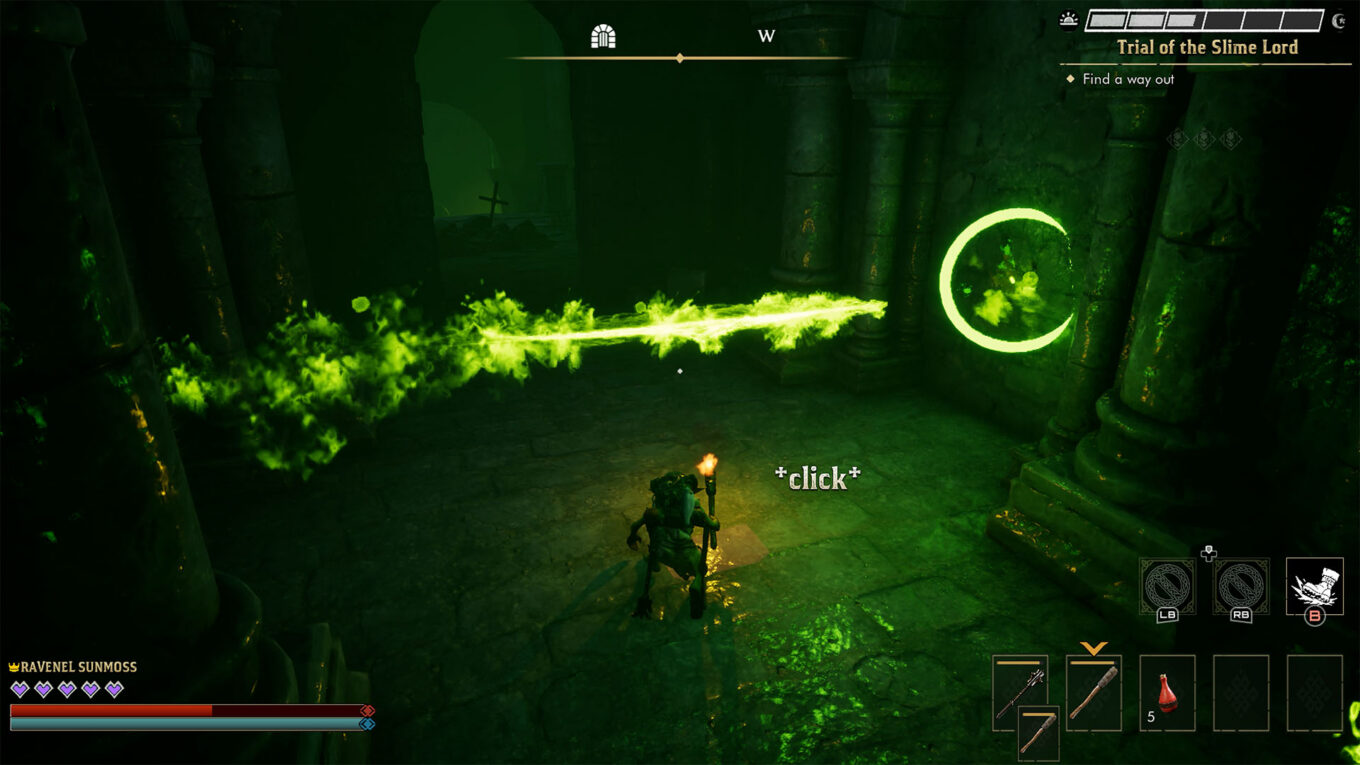
This set up is evident as enemies do more than just wait for your arrival. We’re ambushed several times while exploring the procedurally arranged (but hand-crafted) rooms of a very green dungeon – it’s full of gloopy glowing slime which is stuffed with goodies, but it’ll do you a mischief if you stand too close while delving for a pair of stronger bracers or some leather trousers. The room we’re currently in is filling with skeletons and ‘green puddings’ (not all slime is passive, it turns out…), so rummaging for slime-soaked threads is poor prioritisation on my part. One of our party barricades the doors we came through to try and stem the flow of mobs, but it won’t hold indefinitely. With cat-like reactions, I fire an arrow straight into their back by mistake and then change into one of the new hats I’ve just found. It’s pretty fetching, actually.
“Sometimes you get ambushed by enemies and sometimes you end up making mistakes,” continues Brännvall, “You throw a healing potion on your friend, but it actually ends up on the enemy so now you’ve healed the boss instead. It’s all this, in my opinion, fun craziness that we definitely want to encourage. So, when you start learning spells you should communicate to everyone that you’re tossing a fireball, or you’re going to roast them all. That’s kind of the chaotic nature of it that we want to embrace.”
Group chat
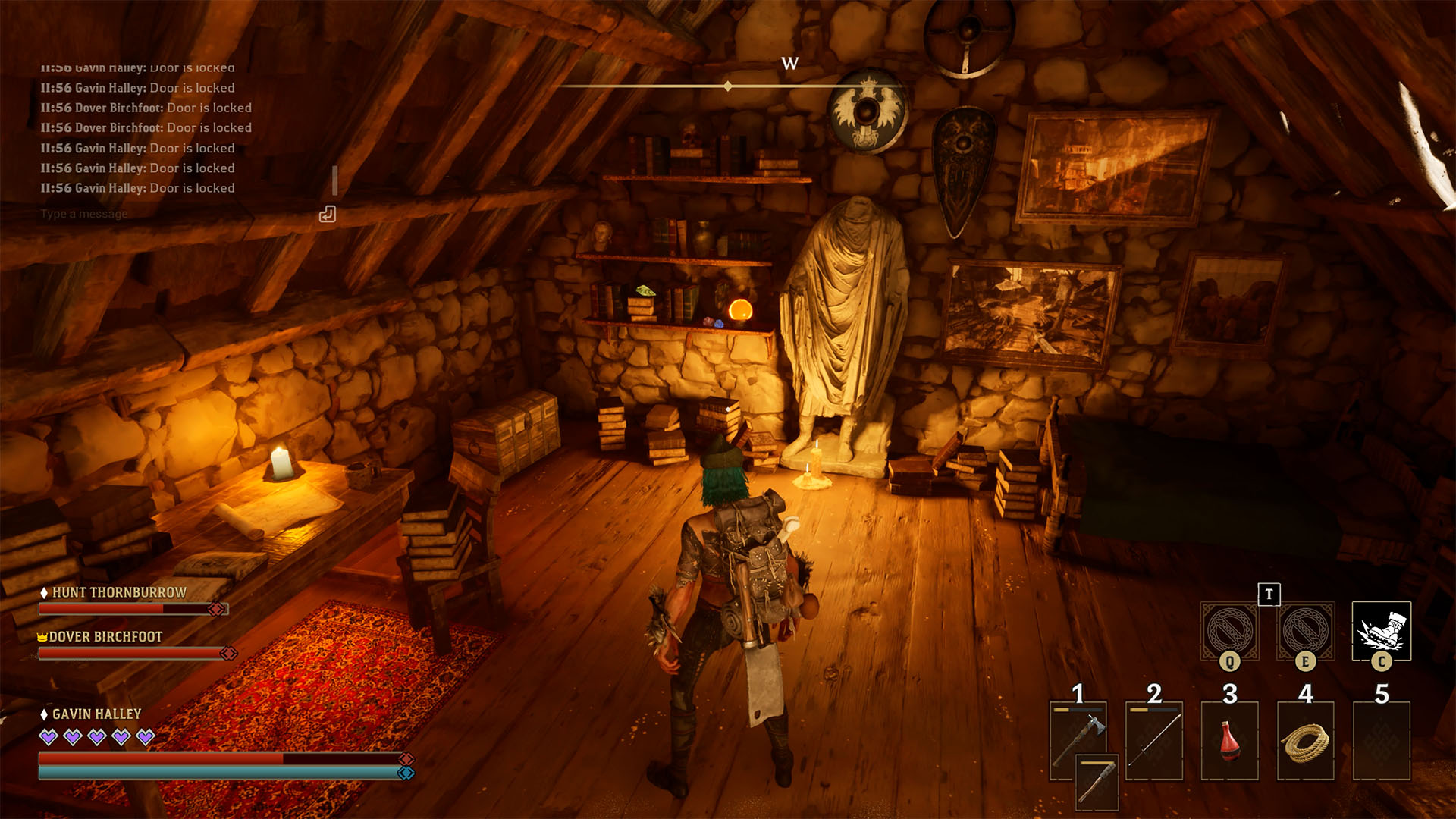
Sensibly, given the potential for finding yourself in a party with someone like me (or worse, my dad), cooperative guardrails are raised at various story-focused chokepoints. In its simplest form that takes the shape of requiring everyone to ready up at doors which lead to new areas, or be in the same spot to trigger a narrative event. But Wayfinder has also solved the longstanding genre problem of instanced NPC conversations in which everyone arrives at key plot points at different speeds – or worse, waiting in awkward silence for that one person (no names) who’s finally turned up after wandering off to the tavern to smash all the crockery, to finish reading and receive the quest that everyone else is already raring to start. In Wyldheart, each member of the party votes on responses (you can see what your companions have chosen), turning NPC conversations into a democratic minigame. It’s a really nice touch, and goes some way to shoring up the sense of being on the same adventure together.
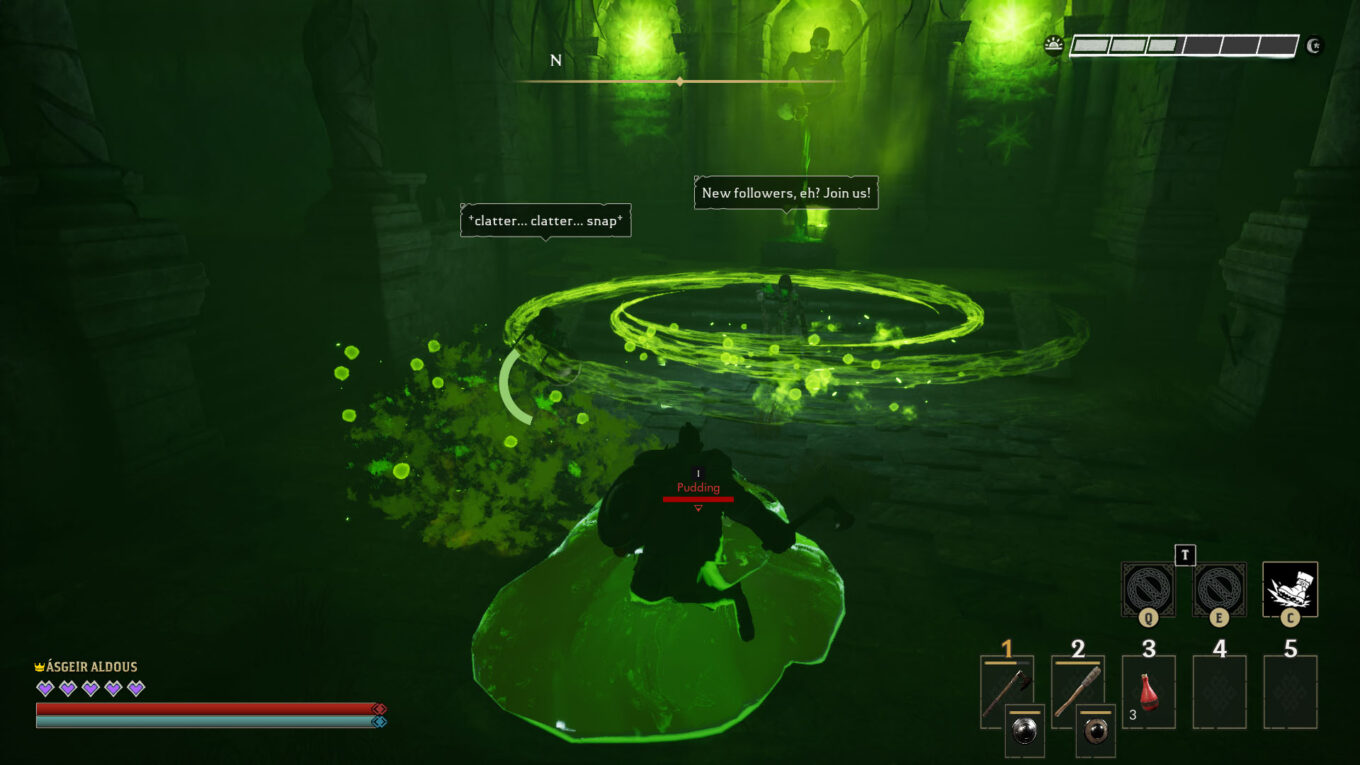
There are puzzles and traps, too, of course. The ones we encounter include matching coloured petrified ooze with a row of unsettling effigies in order to open the boss room, and the raised flagstone I stand on which triggers darts that further perforate my beleaguered adventure colleagues. The boss in this particular dungeon is, fittingly, a towering blob of slime that harries us with further puddings. Two of the party focus on keeping these busy, while I set about grabbing the conveniently placed braziers nearby and hurling them into the boss’s soft, mucusy flanks. The burning coals (combined, I would imagine, with my natural throwing strength) wipe huge swathes off of its health bar and before long we’re making our way back to the surface.
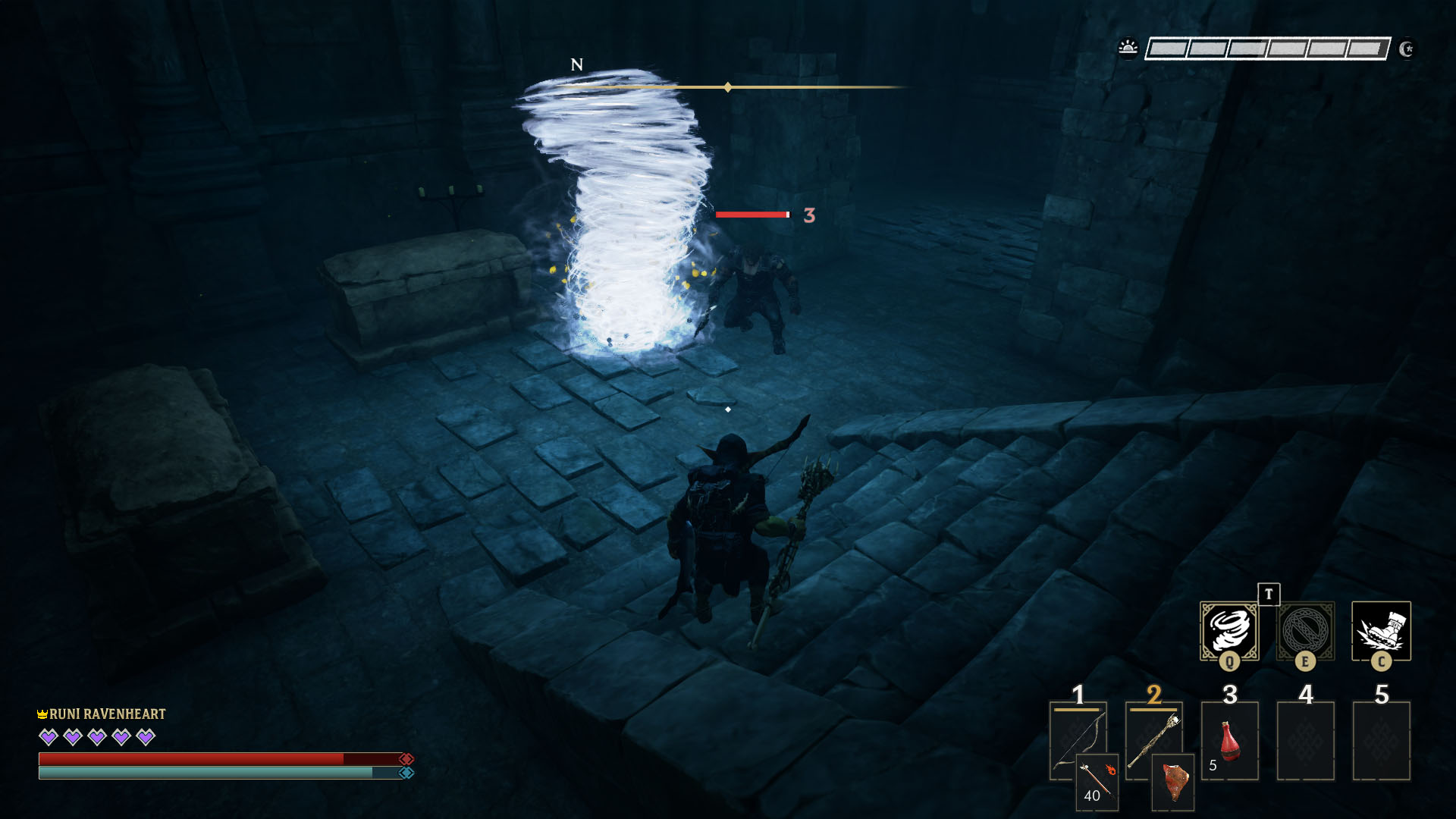
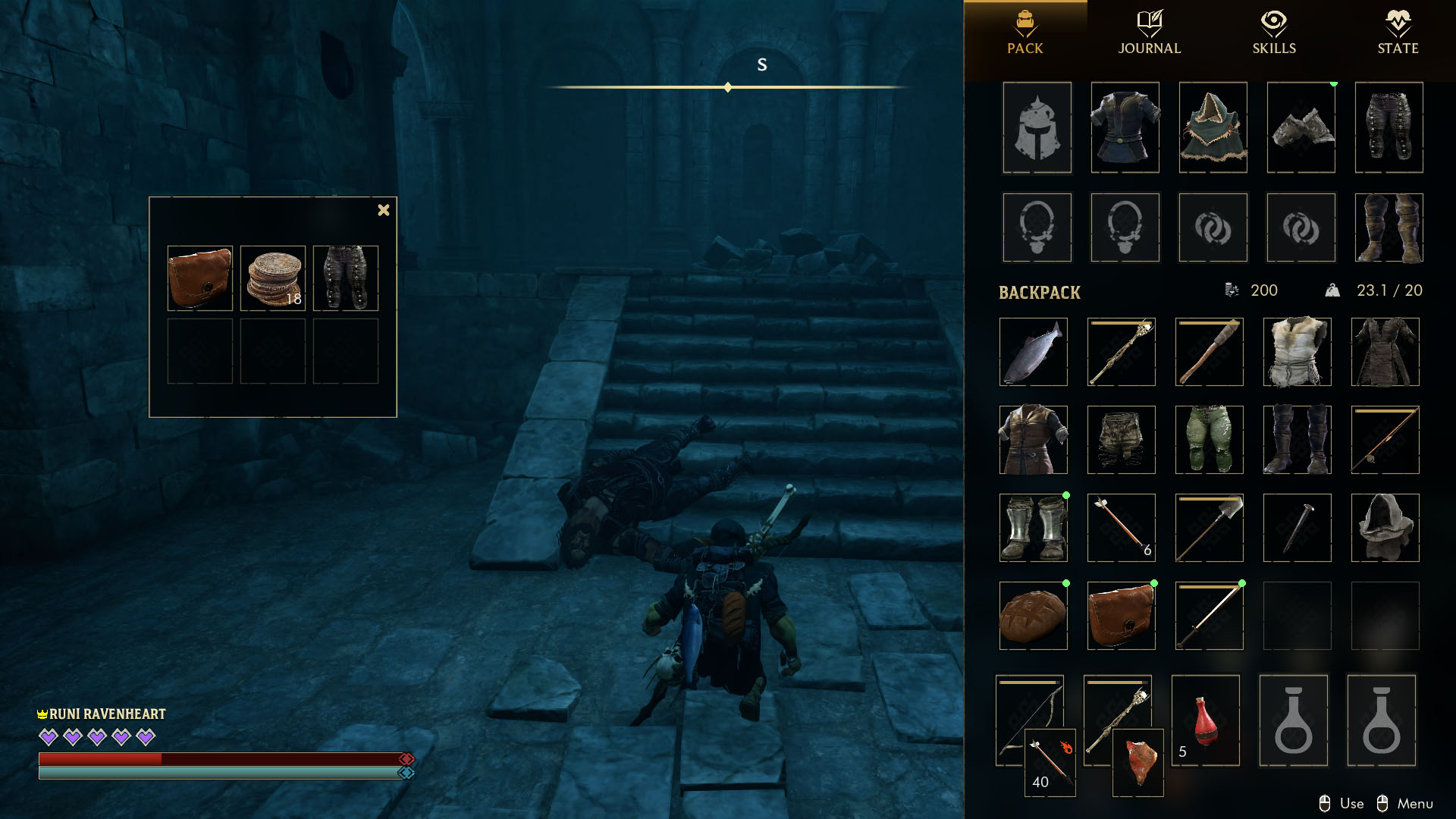
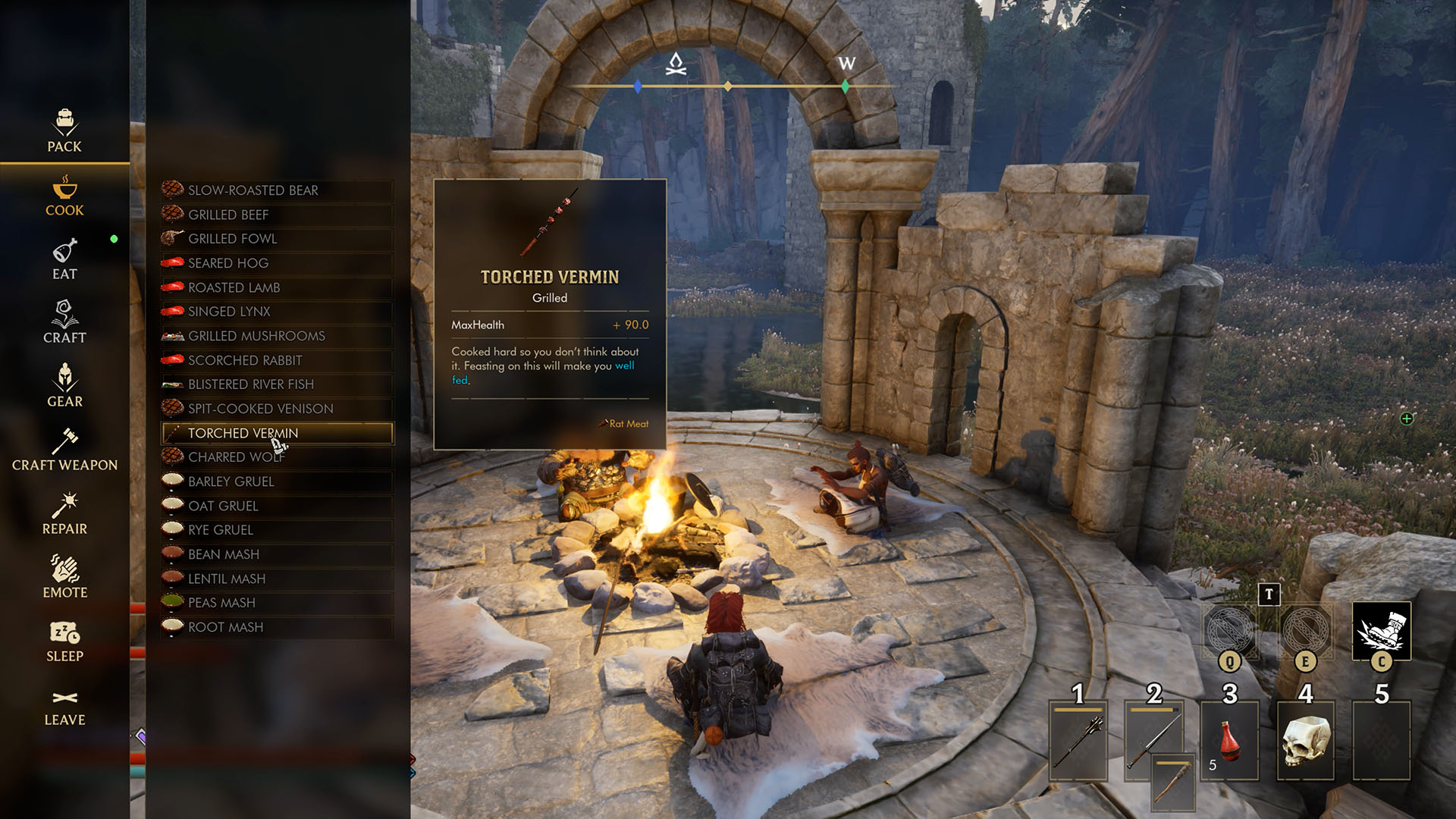
Once there we set up camp. Here the party can rest, save the game, craft gear and repair weapons, cook food (pleasingly, you can share any that you don’t need with the rest of the party), and, most importantly, emote. Camps also allow you to sleep, avoiding travelling at night when greater dangers lurk and being at risk of losing hope. Hope is represented by hearts above your healthbar, and if you reach zero HP while hopeless your character will die permanently. Worry not, though: if your party has a revive scroll (and are willing to use it), then it’s all gravy. If that’s not the case, you can create a new character, join the party at the same level, and go on a quest to resurrect your old one.
“It has a little bit of that D&D flare,” explains marketing director Erin Bower. “And you get into a situation where you’re like, ‘Okay, we’ve managed to resurrect my old character, but do I want to play my old one or the new one I’ve become attached to?’ So, it can be quite fun in that way.”
This is supported by another nice tabletop-referencing touch. While the game supports up to four players simultaneously, there are 20 character slots in any campaign. This setup provides room for those four players to have multiple characters on the go, of course, but it also opens the door to rotating groups.
“It’s inspired by a tabletop RPG playstyle called West Marches,” Brännvall explains. “It’s really made for groups of players who might not all be able to play at the same frequency. So, some might play more frequently than others or you might have multiple campaigns, like one with your significant other, one with your kids, and maybe you have one that you play solo because you play the game more often than other people. So it caters to drop in, drop out, join when you can type of play.”
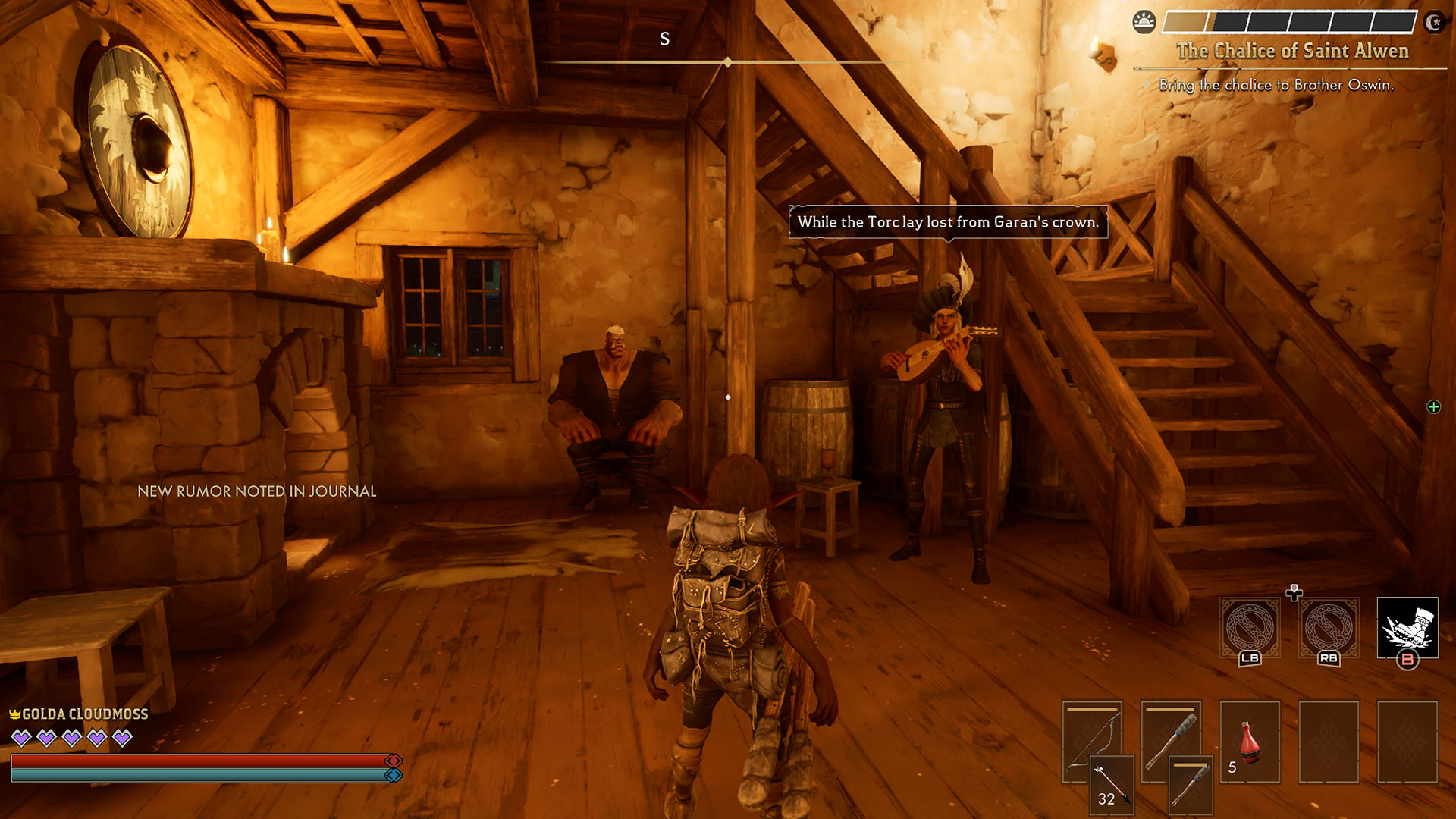
Once we finish at the camp we venture out into the overworld, an attractively drawn hex-grid with various terrain types. Moving through the swamp takes more time, cutting across farmland is easier, and of course there are innumerable sidequests, ambushes, and discoveries to encounter along the way. Our destination, however, is the town of Elder Light which does a great job of showing off the game’s “rustic fantasy” aesthetic, painted in pastels and shades of moss and stone. It’s a peaceful, otherworldly look that feels at once recognisable – it’s hard to shake thoughts of Fable on first contact – but also distinct. I’m particularly taken by the excellent lighting engine and some superb cows.
This same-but-different ethos runs through the game’s DNA, even down to the available races that swerve the usual mainstays for options that have slightly less-defined outlines. Freefolk are described as bold and adaptable, and look like a cross between humans and elves; mosslings are “small, cheerful forest folk with a mischievous streak,” which combine elements of goblins, dwarves, and fairies; and Grimhorns are “strong and loyal” and also, it must be noted, built like brick shithouses.
Tolkien gesture
It raises the question: how do you go about creating a fantasy world that feels new in such a heavily subscribed area of fiction? “Honestly, that’s something that took quite a while for us to align on when we were concepting the game,” Brännvall reveals.
“I saw a video with the author Brandon Sanderson a while back where he was criticising how we always follow Tolkien, and saying we should, like, ‘kill the elves’. There are tablestakes, things that you must have, but then maybe avoid certain other things – or if you do include them be mindful. If you’re going to have elves in your game, then you must be aware of the fact that there have been elves in other games, and so it comes with a lot of expectations. If you make them too alien or different from what we know elves to be, then they’re no longer elves. So the people who loved elves and came for the elves, they’re not going to be very happy.
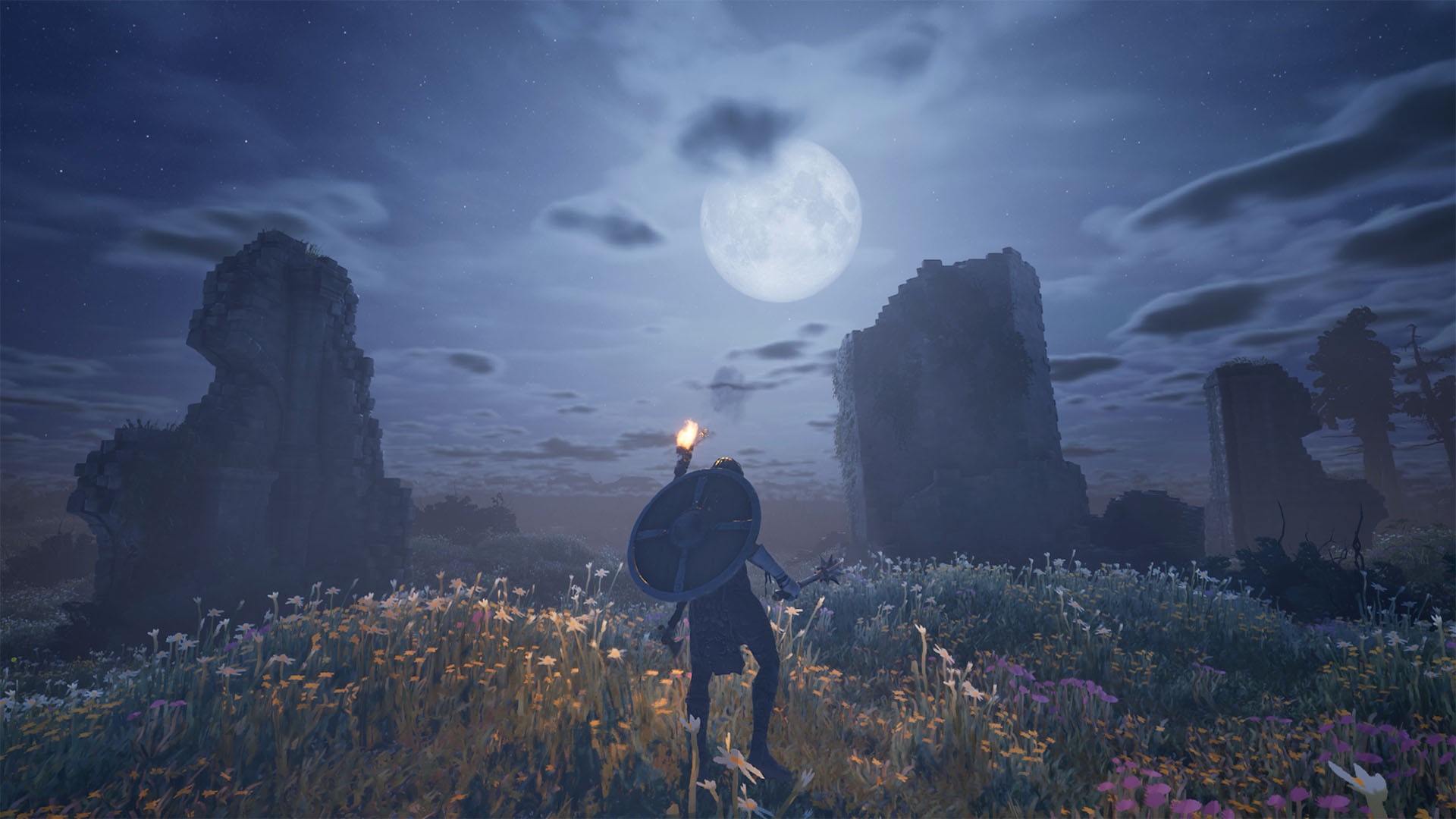
“Our game is more like Norwegian landscapes meeting old Irish medieval structures. That felt like something that… other fictions have taken inspiration from those two places in the past, but maybe not combined them in the same way. And also we wanted to make it rustic – have little mosslings and trolls and those types of things, but make them a little bit more fairytale-y, but at the same time not too much like Fable, you know? I guess you just have to be a huge fan of the genre and the fiction, and know enough so that you’re aware of what paths have been trodden before and how you find something new here.
“We’ll see – it’s tricky. Hopefully players will think that it’s familiar and fresh at the same time, which is usually what you want out of fantasy.”
Even at this early stage, Wayfinder appears to be living up to its name and carving out a unique path for the game. And in choosing to take inspiration from less well-known tabletop sources, it has given itself a foundation which feels ever-so-slightly shifted from what we’re used to – not least in its gleeful embrace of chaotic unpredictability. I’m certainly looking forward to playing more when the game is finished – just don’t let my dad know.