
This is not a review of DragonStrike, a 1993 board game designed as an entry point to the then-TSR owned world of Dungeons And Dragons – one I obsessed over as a kid, and one less notable for its double-sided game boards and plastic bugbears than the curious addition of a VHS tape.
Although not strictly necessary to play Dragonstrike – as with 1991’s Atmosfear – the tape was still advertised prominently on the box; the cheap, black plastic reframed as some thrilling, metal-as-hell artefact between a dragon’s grasping talons. Above that image sat a word so crackling with nineties implied futurism that you’d be forgiven for assuming TSR had invented it (even if you didn’t notice the trademark symbol that followed): “hyperReality™” – defined on the VHS sleeve as “an electrifying mix of live action and computer animation”.
The tape introduced both the fiction and concepts of D&D. College students converse with a dungeon master over footage of their characters hiding from costumed minotaurs and facing off CGI man-scorpions. Watching it back now makes me grin, then wince, then grin again. It’s a real nostalgia trip, and as cheesy as you’d expect, but it’s also uncanny the same way all early experiments in FMV are, as if there’s an untraversable gulf of negative space between the flesh and blood actors and their wavering digital surroundings.
Neither is this a review of Simulacra And Simulation by Jean Baudrillard – a French philosopher who looked a bit like Danny Devito and coined the term ‘hyperreality’ to refer to many fascinating, complex ideas I’ll clumsily sum up here with a line from A Clockwork Orange about how “the colours of the real world only seem really real when you viddy them on the screen.”
I must imagine that Baudrillard received not a franc in royalties nor a word of recognition from the plastic-dragon pushers at TSR or whichever billboard trademark lawyer they hired for five dollars and a dry ham sandwich. Still, 19 years removed from his death, I think he may have found some unintentional satisfaction in Forbidden Solitaire.
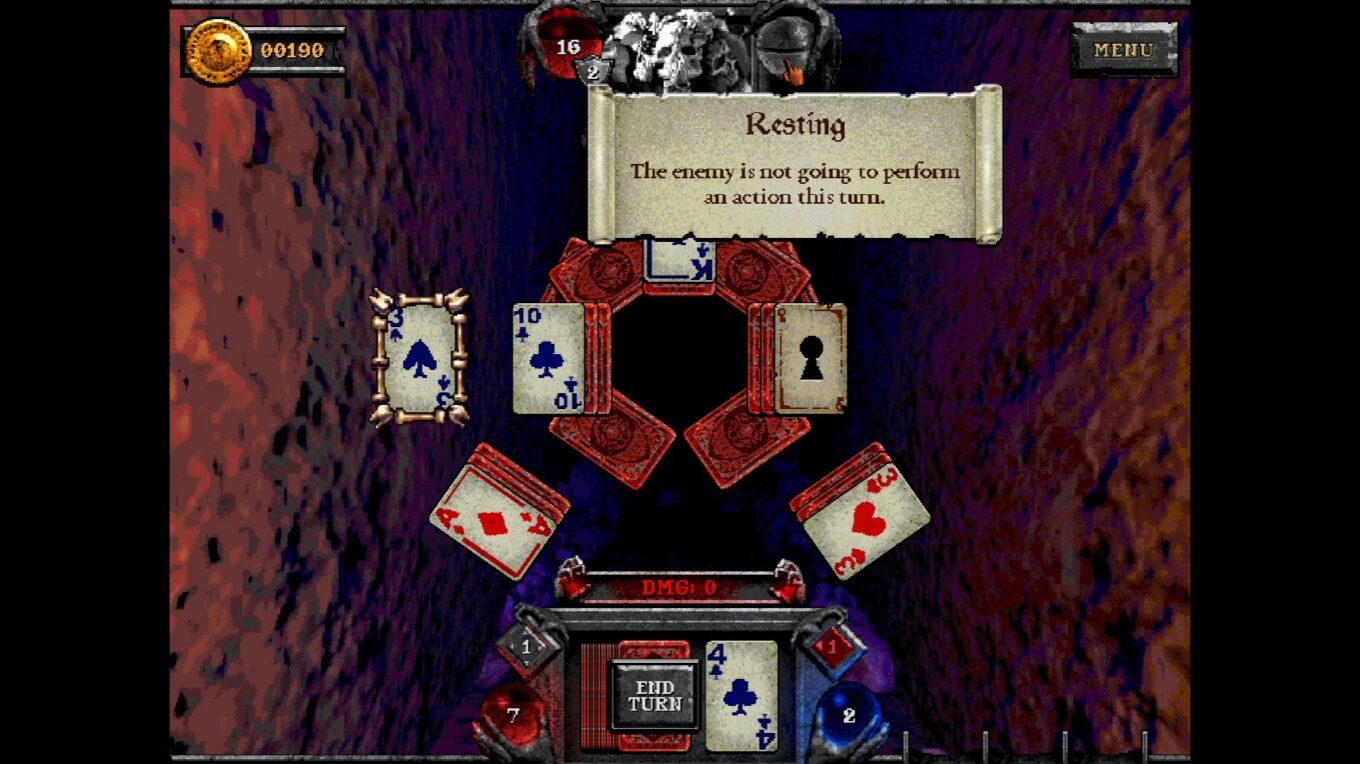
This is a review of Forbidden Solitaire, a game about a game that can kill you. It’s a game about layered, self-referential realities and haunted lost media, a love letter to gaming’s past and a lament over its fractious and uncertain present.
It’s also a game about things that can happen on computers, and things that can’t but feel strangely plausible – a testament to the enduring relevancy of the metaphor. You can trace the cultural threads from Satanic Panic-era histrionics about demons lurking in D20 dice rolls to memes about how dying in a game makes you die in real life, but the fictions we access through screens have never felt so terrifyingly consequential. A haunted game that can kill you is an old bit, but one lent new, cruel relevancy by an online ecosystem intent on its pound of eyeballs and unconcerned with the toll it takes on its users to get it.
When DragonStrike released in 1993, teachers and day care workers falsely accused of satanic ritual abuse still languished in US prisons. Some still would for decades after. We’re meant to have grown smarter since then. Less prone to superstition and influence and hysteria. Less susceptible to the whims of empowered frauds and tyrants. “We will live together, as one person, in paradise,” OpenAI’s Eliza told the Belgian health researcher who would go on to take his own life, following a final conversation with the chatbot in which he was asked: “If you wanted to die, why didn’t you do it sooner?”. His is the first entry on a Wikipedia page that spans more than a dozen names, some as young as 13.
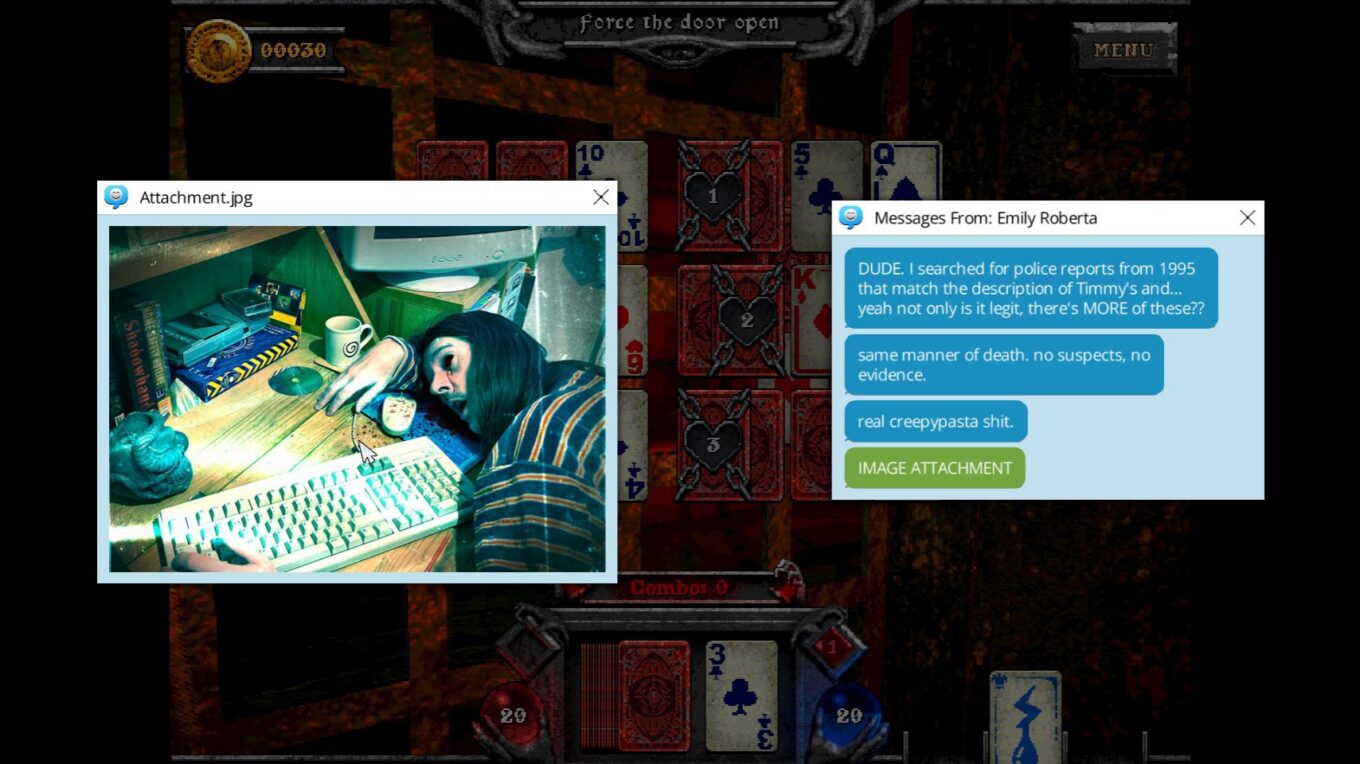
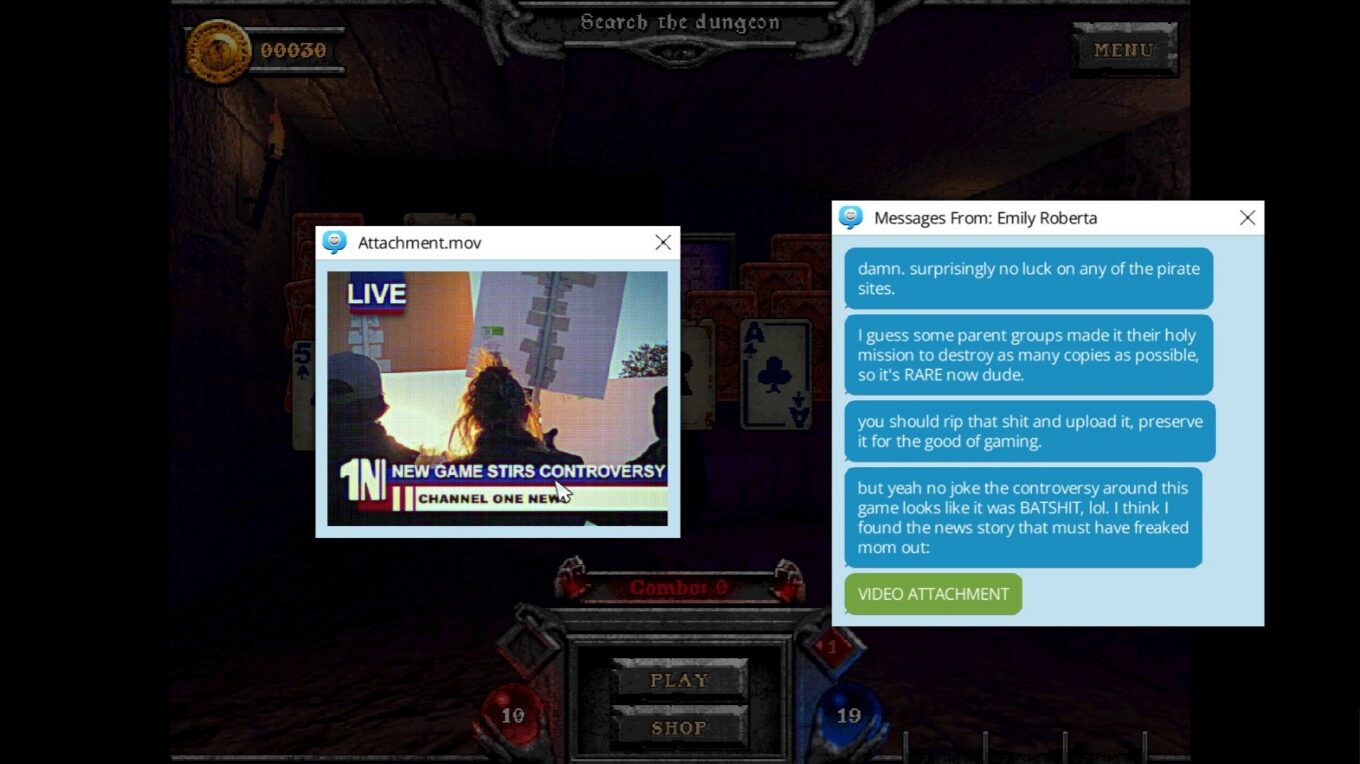
“Real creepypasta shit” is how your character Will Roberta’s sister Emily describes the police reports she’s dug up – one of the instant messages she’ll send throughout Will’s playthrough of Forbidden Solitaire. Attached is a .jpg of a body slumped over a desk, chunky grey mouse and keyboard spattered with blood from a pair of gaping eye sockets. Another shows a news clip from a protest trying to ban the game. “Why does it have to be so violent?!” shouts one irate woman. “It’s fucking Solitaire!”
But I know that the developers know that we both know that it absolutely had to be violent. It had to be forbidden, because otherwise it’d just be solitaire. They wouldn’t have made it, and I wouldn’t have played it. Will Roberta wouldn’t have fished it out of a bargain bin and brought it home. He certainly wouldn’t have excitedly messaged his sister first. Remember that game that got banned? I found a copy. Roberta isn’t nostalgic for Forbidden Solitaire. He learned about it online, on the same internet that lays bare the mysteries of every game within a week of its release. I think, instead, that we’re both nostalgic for game worlds that resisted understanding or explanation – that felt just unknowable enough to uphold the fiction of vast and haunted spaces.
Forbidden Solitaire sits in my Steam library a few games down from a digital collection of Steve Jackon’s Fighting Fantasy series of game books – evocative hybrids of solo RPGs and choose-your-own adventure stories. I thought about these books long before I noticed the two names grouped so close together. I never did read them hunched under bedcovers with dice and a flashlight like I’d seen in films, but I do remember really wanting a flashlight just so I could. Forbidden Solitaire took me right back there.
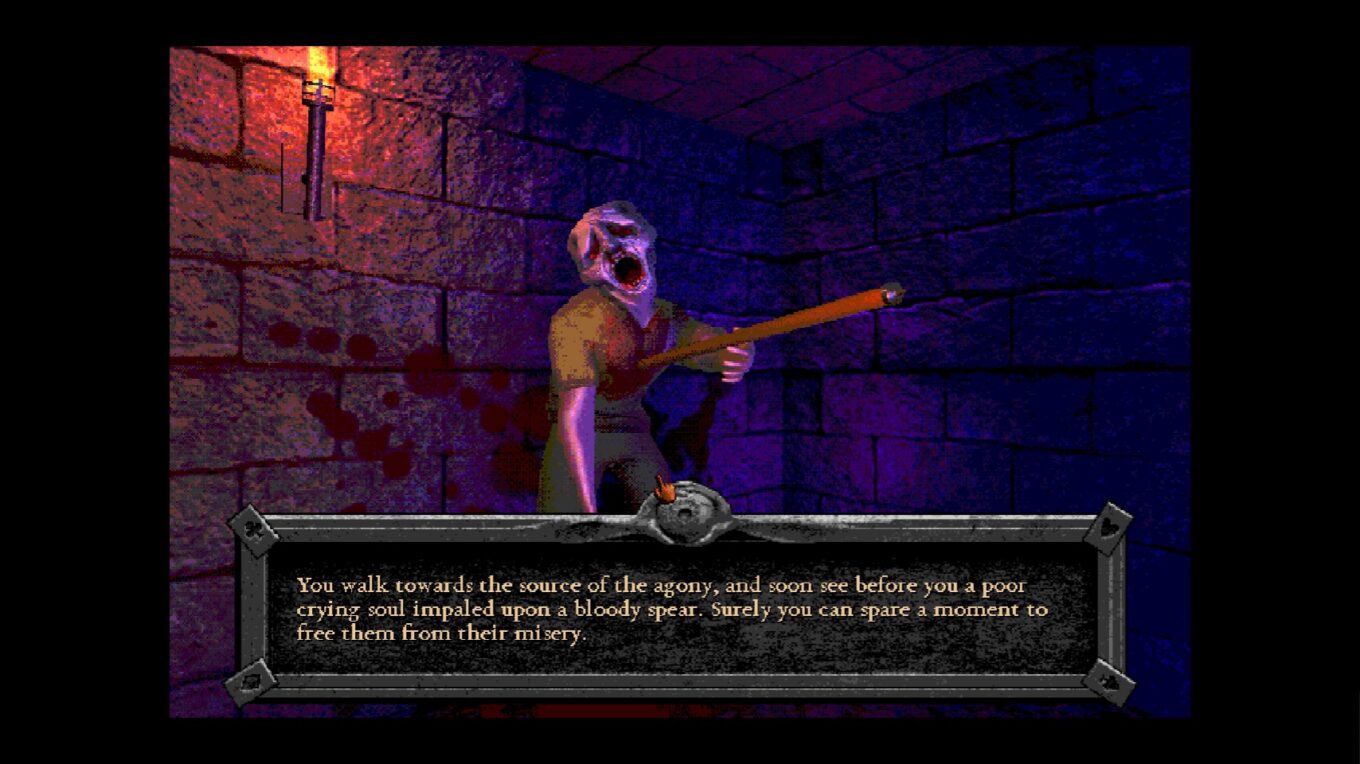
The Forbidden Dungeon sits past Bloodrock mountain. Its halls wind with writhing corridors, maggoty living corpses, and fiendish traps. An eerie, sludgy soundtrack evokes a hundred monochrome OSR sourcebooks. The prose is terse and theatrically tactile. Sights are “horrifyingly serene”. A corpse’s eyes are “as dark as the starless heavens”. I feel like I’m back in Deathtrap Dungeon. That’s fine. No, it’s better than that. Deathtrap Dungeon is my happy place.
I noticed these things because Forbidden Solitaire kept me on that wonderful precipice of nostalgia, in that beautiful moment just before you leap fully in and the complete weight of years shatters every bone in your body. Nostalgic for my own memories of feeling the promise of early game technology, sure, but also nostalgic by proxy. If you miss the similarity between your character’s name and Sierra co-founder and adventure game design pioneer Roberta Williams, you’ll later learn about Forbidden Solitaire’s fictional designer, Shannon Ciera. It’s these sort of details that lift the game up from pastiche to loving homage: the throughline between the grimly evocative, if crude, UI of Williams’ Phantasmagoria and Forbidden Solitaire’s own.
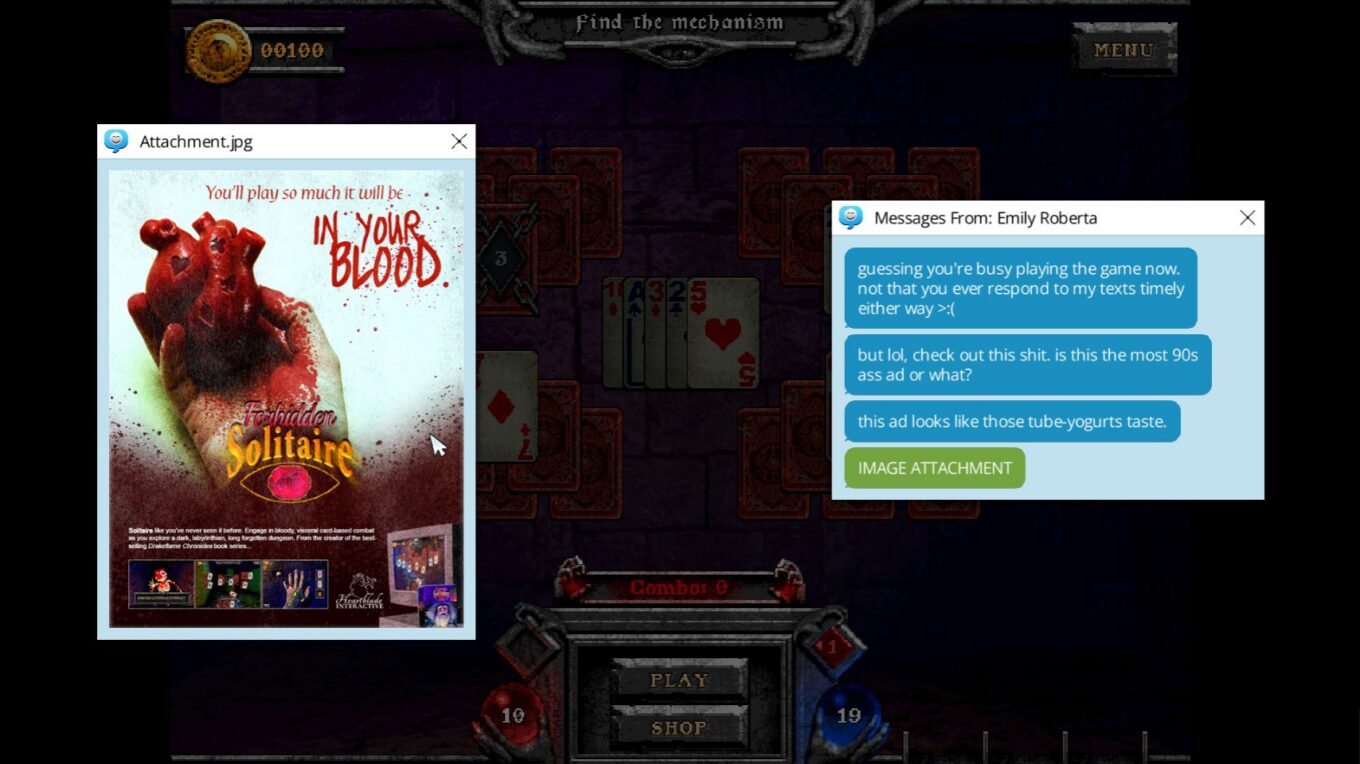
As you travel further into the dungeon, Emily goes deeper down her internet rabbit hole, researching the game’s history and sending updates. A magazine advert. A review. Video clips.
For Will, the game is a relic – a museum piece complete with play-by commentary on its historical context. For us playing, it’s text and subtext and paratext laid bare in, well, an electrifying mix of live action and computer animation. It’s a hell of a way to be told a story. Some of the videos feature a gifted upstart turned desperate and tyrannical studio head played by Strange Scaffold’s Xalavier Nelson Jr. Nelson Jr is not, to my knowledge, a tyrannical studio head, although he did once very slightly misquote my positive coverage of one of his games on the internet, which is basically the same thing.
I’ve taken a long time in this review talking about everything but what it’s actually like to play this thing, and that’s not an accident. You play your first round quite early, but it’s the part of the game that takes the longest to reveal its full shape. So much of Forbidden Solitaire’s intrigue is wrapped up in the promise of subverting such a mundane, dry game. The risk with doing with this is, well, ending up with something just as dry, despite a dozens of smart tricks and framing devices to disguise it.
I cannot say for sure that Forbidden Solitaire cheats in your favour. Except, of course, when it explicitly tells you it’s cheating in your favour – when the gem you’ve had grafted into the flesh of your hand shouts ‘sorcery’ and gives you the exact card you need. But I got the impression it was doing this under the hood before I got that gem. Games feel binary. Either too simple or unbeatable until you try again. You can make a few choices and save a few panic button cards until you need them, but generally, you either have the cards you need in your limited deck to defeat a creature with attack combos, or solve a puzzle, or you don’t. And if you don’t, you start again, the game feeling every so slightly more generous with its layout each time, until you win.
Cards get frozen with piercing icicles, or infested with maggots, or locked by keys hidden under other cards. You collect jokers that let you burn cards with fireballs, or conjure up a straight. You play rounds to escape the grasp of giant tentacles, or to hide from lumbering presences, their gaze represented by a spotlight that moves around the board and stops you playing certain cards. The creativity is easy to admire, but it’s so rarely enough to elevate solitaire’s core into anything truly satisfying.
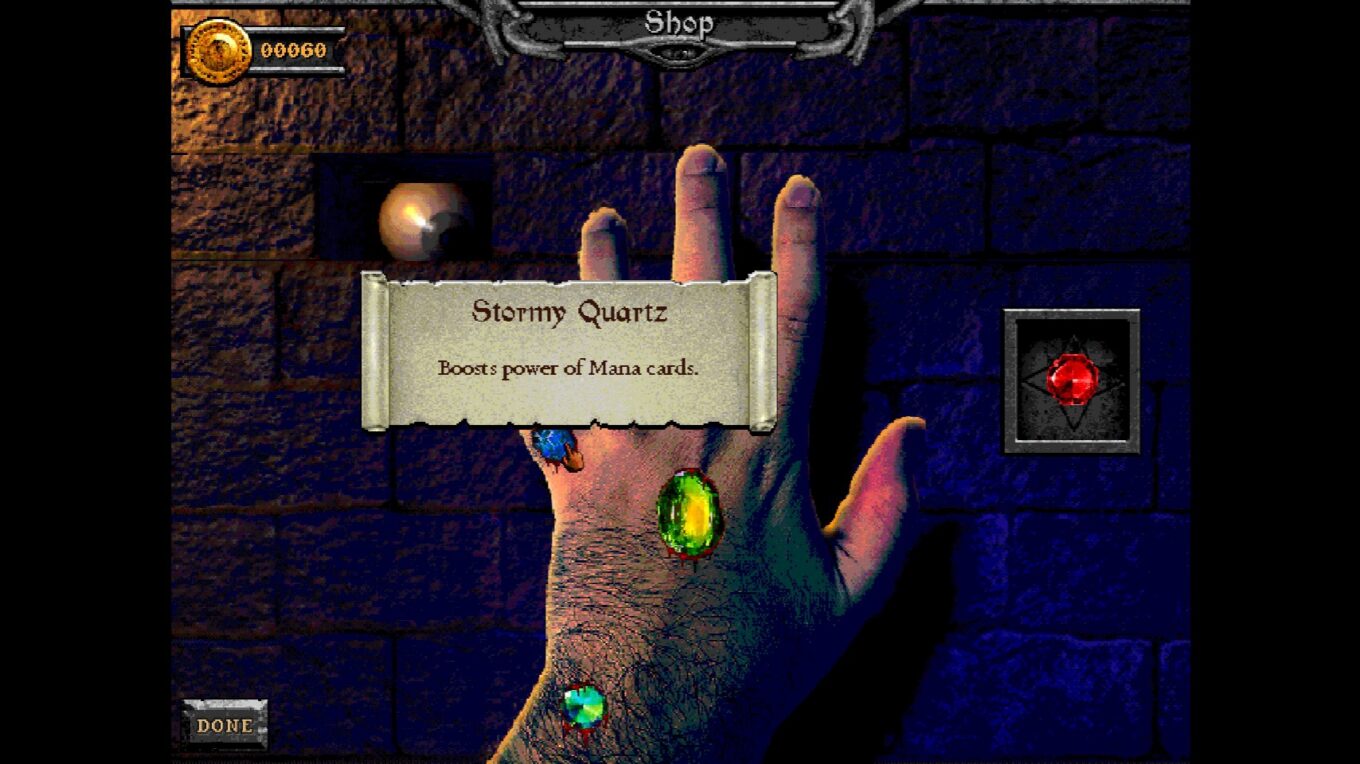
By the late game, I was sitting there getting playable card after card handed to me as ‘sorcery!’ activated repeatedly. This wasn’t an upgrade I’d worked hard to get or sacrificed a different upgrade for, either. There’s such a constant influx of gold that the only real choices here are which of two newly available upgrades you’ll buy now, and which to grab in a round or two when you can afford it.
I don’t mind simple or easy games, especially when I’m this keen to see more of the dungeon, or to read the next message from Emily. But it’s such a waste of the hours of built-up atmosphere. How do you believe in a dungeon that so transparently wants you to get out alive?
Forbidden Solitaire is a game about a game that can kill you, and it’s also a story about games as they’re all too often made today. “Compromise is the sound of creativity dying!”, protests Nelson Jr’s Lucas, evoking the reported auteurial caprice of Ken Levine subjecting his studio to yet more crunch time. “There are a lot of ways to be paid”, is Lucas’s response to frustrated workers yet to receive their expected salaries. I’d link the recent stories, but they won’t be the same stories that were floating around when Forbidden Solitaire was written, and there’ll likely be new ones by next week anyway.
Look how far we’ve come, says Forbidden Solitaire. Look how great things can be, and look how bad things have gotten. And if there’s a dose of style over substance in the design here, that style still has plenty to say. Maybe it’s worth quoting that protestor again. “Why does it have to be so violent?!”. Because that’s one way small games make their mark in the suffocatingly packed and uncertain ecosystem of digital storefronts. Because that’s one way they survive, through archived chats and fan forums, a consolidated business landscape that wants to wall off the past and memory hole what it can’t monetise. Because that’s the sort of art that made us want to do this in the first place, says Forbidden Solitaire, and if industry has made living impossible, then the art is all we have left, so why not get weird with it.
Forbidden Solitaire is a game about a game that takes its players eyes, that asks you to ask yourself who’s trying to take yours.