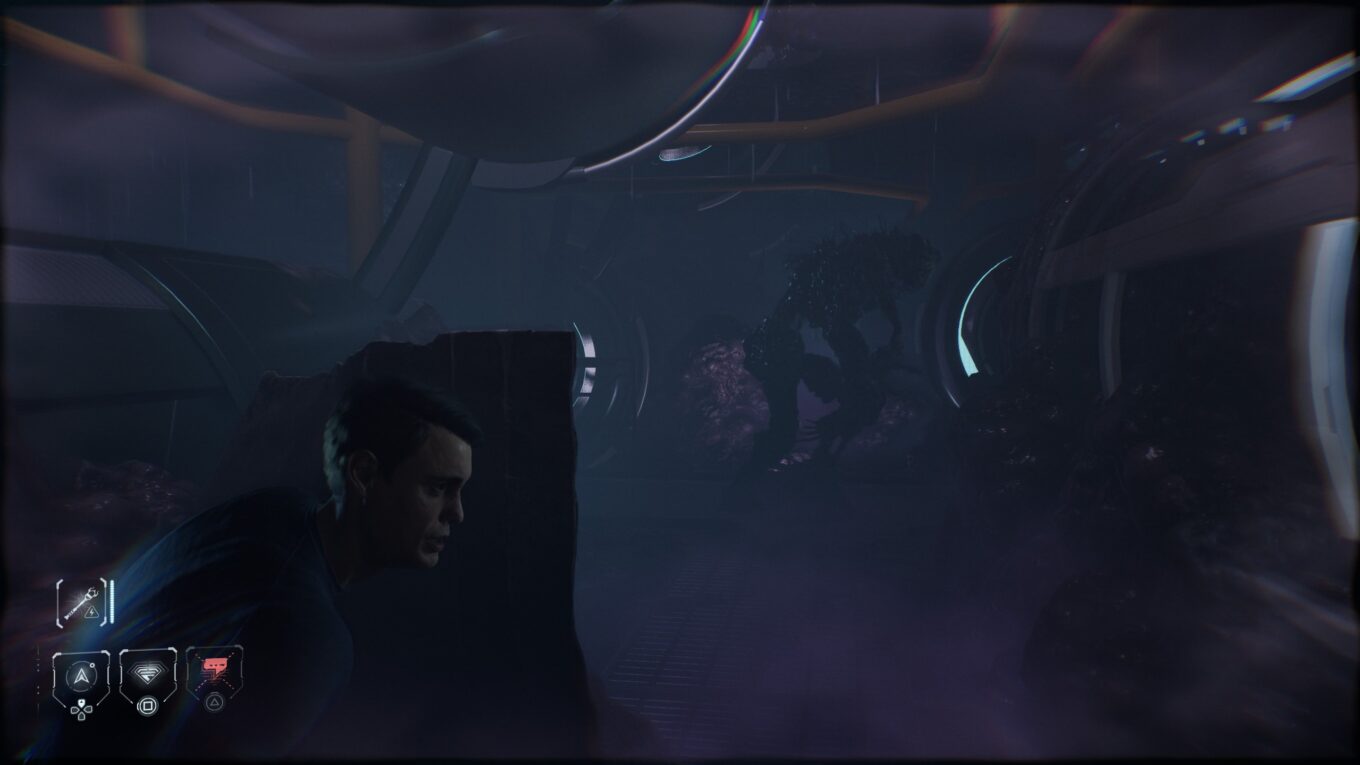
I like Cernan the best out of The Cassiopeia’s team. Perhaps it’s the touching story he told earlier about the loss of his husband, or his habit of reassuring his crewmates by quoting philosophy in a soft German accent. Perhaps it’s simply because Directive 8020 has given him comparatively few stupid lines so far – allowing for an earlier stealth section in which his pursuer taunted him for a story he apparently told offscreen about being some sort of child savant at hide and seek. You know, like astronauts say when they know they’re going to have to duck behind a desk a few scenes later.
The stakes feel higher now. Cernan’s being stalked by a bipedal Lovecraftian pre-chewed Starburst of a creature, with teeth for shoulders and eyeballs for nipples, and while I can’t be sure that he’ll die if he’s caught, it certainly feels like it. I’m playing the game’s version of ironman mode, so I can’t rewind if he dies, and I’m not sure that I’ve ever played a stealth scene this convincing and terrifying. Since Until Dawn, Supermassive’s calling card has been stories that reshape themselves around sudden character deaths, but spreading the tension usually found in QTE’s or choose-your-own-adventure choices across lengthy, freeform stealth sequences is Directive 8020’s niftiest new trick; fresh and fecund spaces for terror to linger unbearably.
The consequences of these stealth scenes on Directive 8020’s branching storytelling will eventually become its biggest problem, but we’ve got a while to go before then.
Let’s set the scene. We’re four years into the Cassiopeia’s journey to Tau Ceti F, and sleep technicians Carter and Simms are preparing to wake the rest of the crew from cryosleep. The Cassiopeia itself is a sort of scout vessel for the much larger Andromeda, and both ships have travelled from a declining Earth to gauge the habitability of this new planet (weird that it happened twice, etc). Simms and Carter are having a nice chat about bonsai trees and coffee beans when alarms start going off, and the pair soon discover that a strange asteroid has pierced the ship’s hull. Soon after, Simms starts acting murdery and chases Carter about with an electrified prodder, and we’re left uncertain about either’s fate as the story switches to the main crew.
The opening hour of Directive 8020 warms you up to each of the five crew members you’ll directly control before ratcheting up the tension. Taking control of each in turn, either alone or through customisable pass-the-pad multiplayer, you’ll highlight one of two personality traits through dialogue choices. Captain Stafford veers between military authority and grandfatherly warmth, for example, while science officer Eisele chooses between cold analytics or empathy. This is all wrapped up in the ‘Destiny’ system – a typically Supermassive bit of lily-gilding (you can picture the excited powerpoint presentation) for a largely cosmetic feature that adds a bit of roleplaying flavour, with a single exception. Either way, they’re a largely likeable bunch, and the game does a fine job of giving you reasons to root for each of its sizeable cast before it starts putting them in danger.
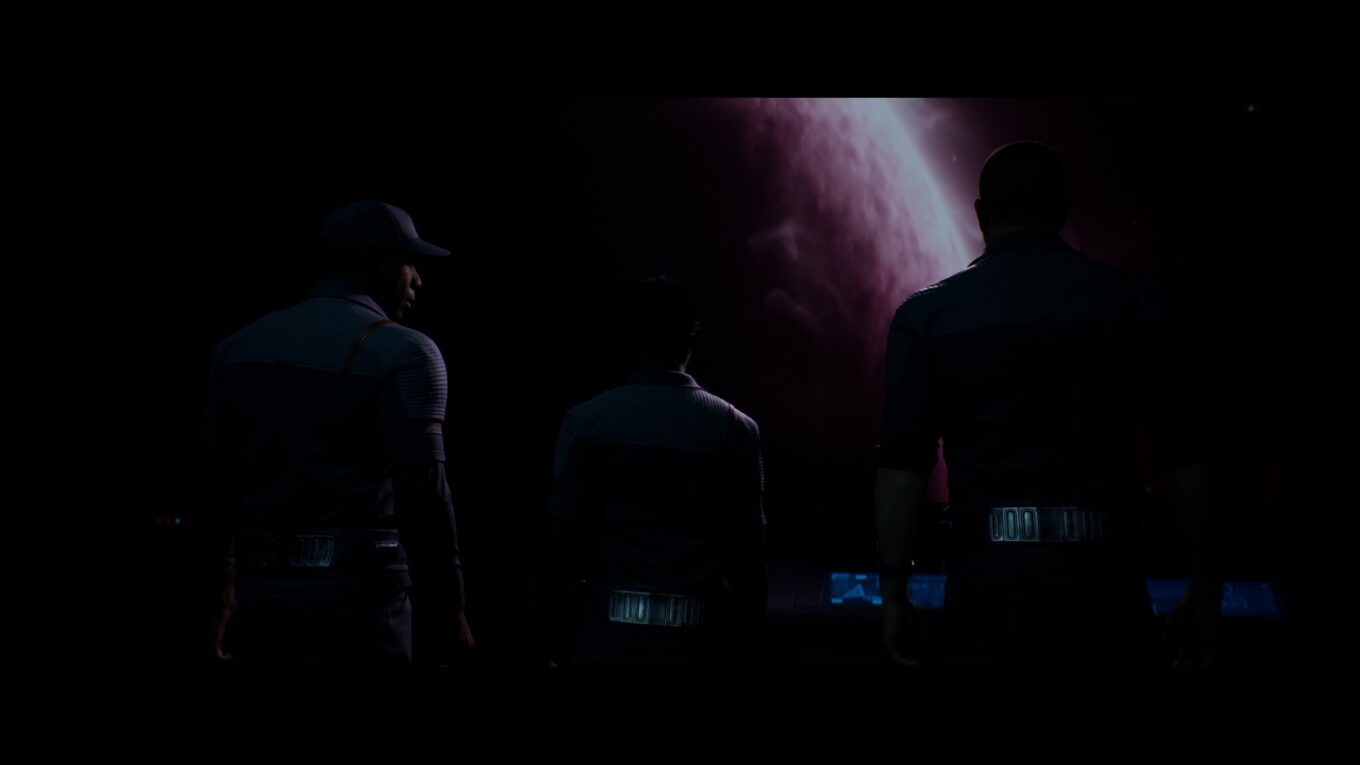
The ensuing hours of tension-building show off some of Supermassive’s most confident pacing work yet – even the effect is somewhat muted by flash-forward scenes that tell you outright: ok, that scene hasn’t happened yet, so I know Cernan is safe for at least that long. What’s most surprising here is how well the tension survives this. A lot can happen in the short introduction that takes the rest of the crew hours to piece together, and much of the pressure in the early chapters trades off of this dramatic irony.
This comes back to bite the game in the branching narrative when it starts evoking John Carpenter’s The Thing more deliberately and arming you with knowledge that leaves you screaming at your idiot crew, and more frustratingly, the game itself for not giving you options you feel you should have. Or, conversely, giving you so much knowledge that supposed choices aren’t choices at all. But, again, it’s very good at letting threats linger early on. Throughout, The Andromeda acts as somewhat of a Chekov’s bulletproof vest, its promised arrival providing an increasingly bright beacon as the crew’s situation grows more hopeless.
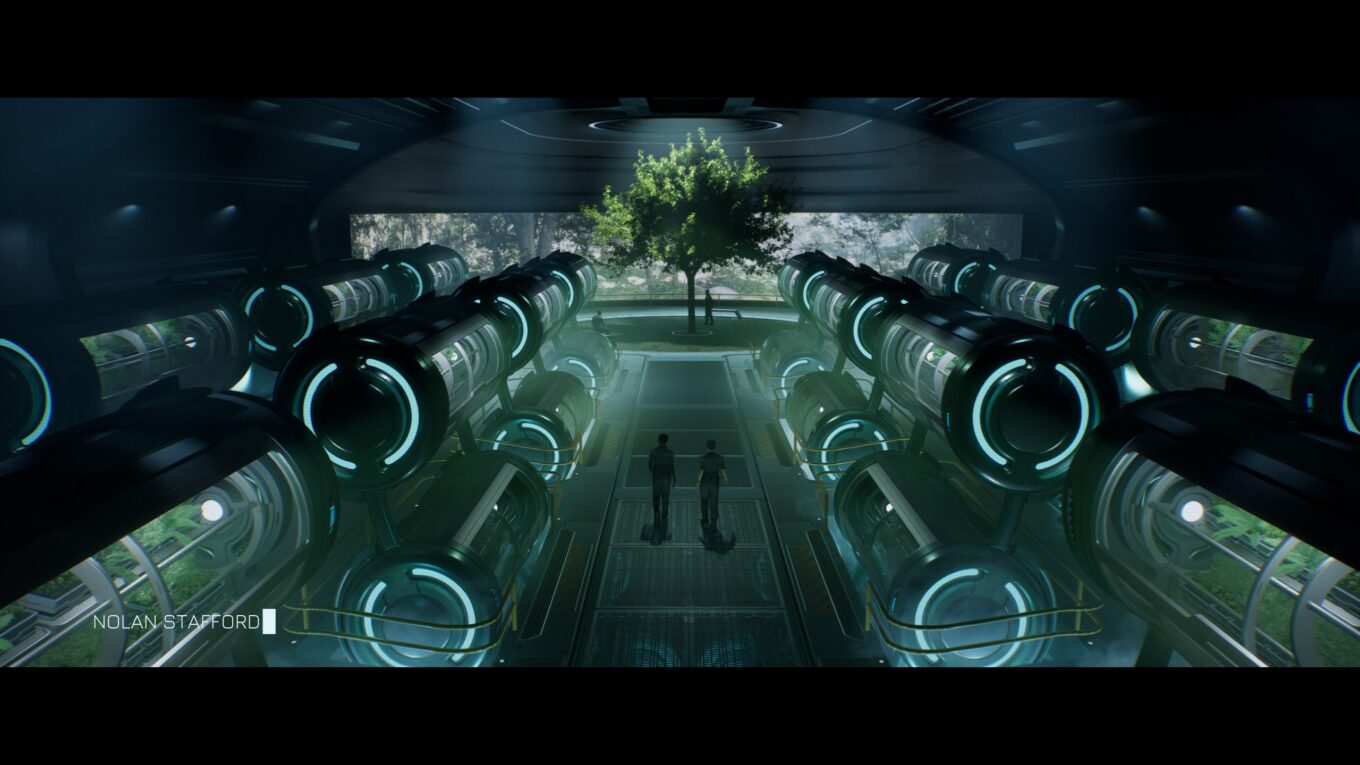
The design of the Cassopiea itself is clean, bright, and techy – somewhere between the SS Normandy and a business-class airplane bathroom. It’s an aseptic, ordered design that doesn’t immediately lend itself to horror, but leaves the vessel ripe for stark corruption as the alien organism spreads and festers. Pale blue and sterile white lighting gives way to bruise-purple growths and ominous reds. Screens bright with detailed flight analytics, that someone at Supermassive clearly worked for days on, are hijacked by mauve extraterrestrial static, or simply shattered. Happily, the studio have largely replaced their previous reliance on loading-bearing gap shimmying with vent crawls where hostile entities chirp and skitter like furious cockroaches. Even better, the few instances of ponderous shimmying that have survived are repurposed into effective scares.
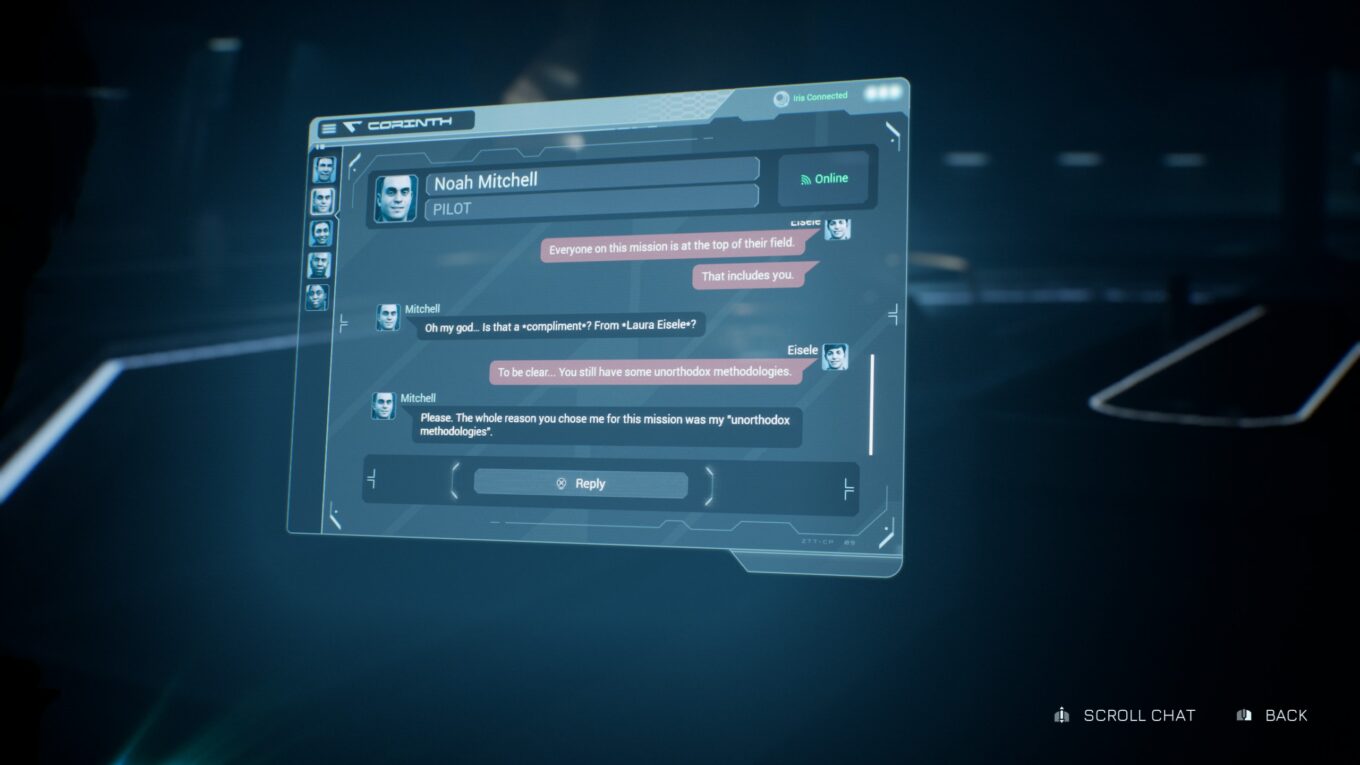
The final new thing Supermassive have added here is, uh, text messages. Unironically, they’re an excellent addition. I do wish I’d gotten the stopwatch out to time how long it took before the first (verbatim) “let’s split up” “what?!” “we’ll cover more ground!”, but it doesn’t take long. From then on, the crew are usually solo or in pairs for the game’s remainder. The frequent back-and-forth messages between them probably aren’t the most elegant way of building rapport or fleshing-out their backstories, but it does solve the issue of having characters struggle side-by-side in the late game who’ve barely spoken a word to each other. You’ll occasionally find something in the environment that prompts a new conversation, too, although this leads to a few instances where a character discovers revelatory – even lifesaving – information, which they then opt to keep to themselves for no sensible reason. Videogames!
So, a pretty successful crop of new ideas added to a formula that has both defined Supermassive and grown to be somewhat of a finger puzzle trap over the years? Well, almost. Up until now, if they wanted to put a character in danger of death, there were two real avenues for player failure: flubbing a QTE, or making a choice that either resulted in immediate disaster, or came back to haunt you later. But the longer Directive 8020 goes on, the clearer it is how tied each character’s chance of survival is to how you perform in those stealth sections, with QTEs a close second.
Which means that the most interesting part of these games – the story choices and their consequences – have to play third fiddle here. Providing you’re reasonably quick on the button taps and don’t fail any stealth, which isn’t a huge ask, there’s not that much of consequence that can go wrong for the Cassiopeia’s crew. It’s a problem of structure, but also feels very much like one of intent. Directive 8020 continues the trend of Supermassive separating themselves from the B-movie camp and irony of breakout hit Until Dawn. At their best, the games since have replaced this winking self-awareness with more empathy for, and insight into, their characters. At their worst, and most often, they’ve told self-serious tales with myriad scattered and watery thematic goals, rife with contrived rug pulls at the expense of simple, satisfying horror.
It’s a tension most evident in what I see as split priorities over whether these games want you to feel like a director or a player. As a player, I’m encouraged to ‘win’. To make ‘good’ choices’ and get everyone out alive. But that makes for pretty dull horror. My hopes for Directive 8020 were that it would split the difference – find a comfortable balance between irony and sincerity, and between the player’s dual roles as participant and orchestrator. But by having most serious consequences tied to live action, it feels like Supermassive are making a value judgement. Play well, and everyone gets out alive. When characters do die, it won’t be down to narrative butterfly effects, but because you pressed the wrong button, or moved into a monster’s line of sight. Narrative consequences as fail states.
This isn’t an assertion I’m making from a single playthrough, either. I finished the game twice, then went back to rewind scenes and get a sense for different routes. I’m confident in saying that unless you go into this thing intent on deliberately failing live action scenes, you aren’t going to see almost any of its more interesting, layered, or nasty outcomes. And even if you do make a few choices that lead the characters into sticky situations, you’re rarely more than a simple QTE away from saving their lives anyway.
And so Directive 8020, for all the varied potential of its character interactions, is ultimately so stubbornly bullish on wowing you with a broadly fixed narrative that it doesn’t want you to tell your own story until you’re safely past the finish line. At which point, you can go back and experiment without getting your sticky gamer hands all over their lovely story.
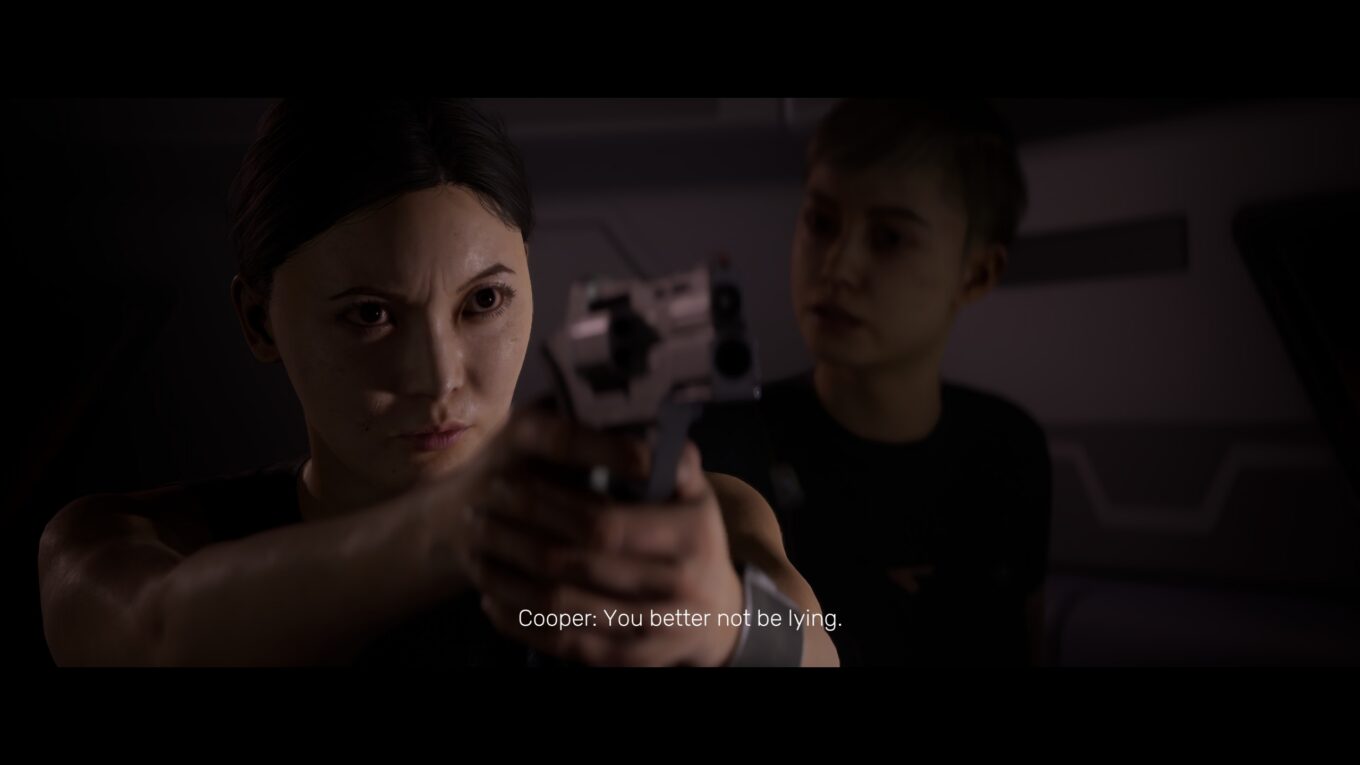
So, a dud then? Well, no. Because that broadly fixed narrative is actually quite compelling. The atmosphere and sound design are unsettling. The cast is likeable. Those stealth sections, despite the problems they introduce, do feel potent. I wasn’t satisfied with either ending, loaded with an imagined thematic profundity that just isn’t there, and the dialogue is often either awkward or far too snappy and writerly to feel like something a terrified person would actually say. But there’s enough heart and humanity and rapport between the crew, in the face of some convincingly bleak sci-fi terror, that I can’t say Directive 8020 isn’t entertaining.
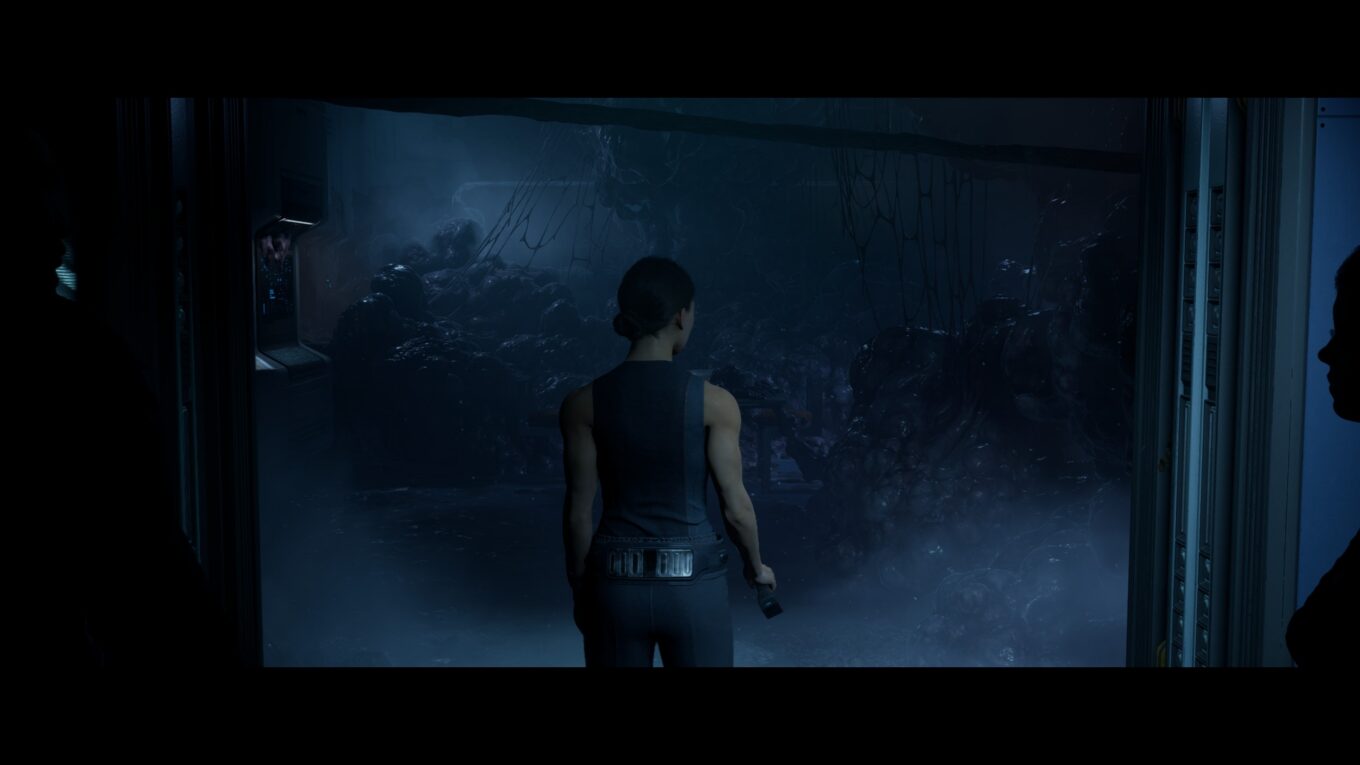
A scene I won’t soon forget, for all the wrong reasons, is the one where the game eventually made good on its allusions to Carpenter’s The Thing – its petri dish moment. The first time I played it, I made a bad call because a combination of dodgy facial animations and an incredibly forced sounding line of dialogue convinced me someone was an alien when they weren’t. When I replayed that scene, I picked an option that skipped that choice and caused the alien to reveal itself and attack. What would I have to sacrifice for avoiding such a difficult decision? Nothing, it turns out. Sacrifices are for people who can’t complete an incredibly simple QTE.
But there were also scenes that stuck with me for the right reasons. The crew’s likeably obnoxious pilot celebrating being the first human in history to stand on such a distant planet, in the unspoken knowledge that he’ll likely soon die out here. The sombre flashbacks between Stafford and Lashana Lynch’s Young that take on new, painful context on the second playthrough. The way the shit hits the fan for the crew something like four times in total, each instance leaving The Cassipoea feeling more convincingly perilous and threatening than the time before. It all makes for one of Supermassive’s better offerings, but it also feels their furthest removed from something only they could make.