There’s an inherent excitement in witnessing hundreds of enemy units on screen. The likes of They Are Billions, Diplomacy is Not an Option, and Age of Darkness: Final Stand understand this all too well. You’re given the task to scour for as many resources as you can to build defenses for a settlement, all as the clock continues ticking. When you least expect it, hordes of enemies begin to creep across the map, hellbent on destroying all of your efforts in minutes, if not seconds.
This video game subgenre, one that mixes real-time strategy, city building, and horde defense, is the foundation of Here Comes the Swarm. Launched into Early Access on March 5 by CableHook Games, the dev team proudly presents the project “with love and sleep deprivation,” as per the welcome message when you boot up the game. Here Comes the Swarm introduces you to Ulora, a medieval-type world that is under the threat of the hive, a bloodthirsty swarm of enemies that wants nothing more than to claw away at your defenses and destroy the core at the heart of your settlement.
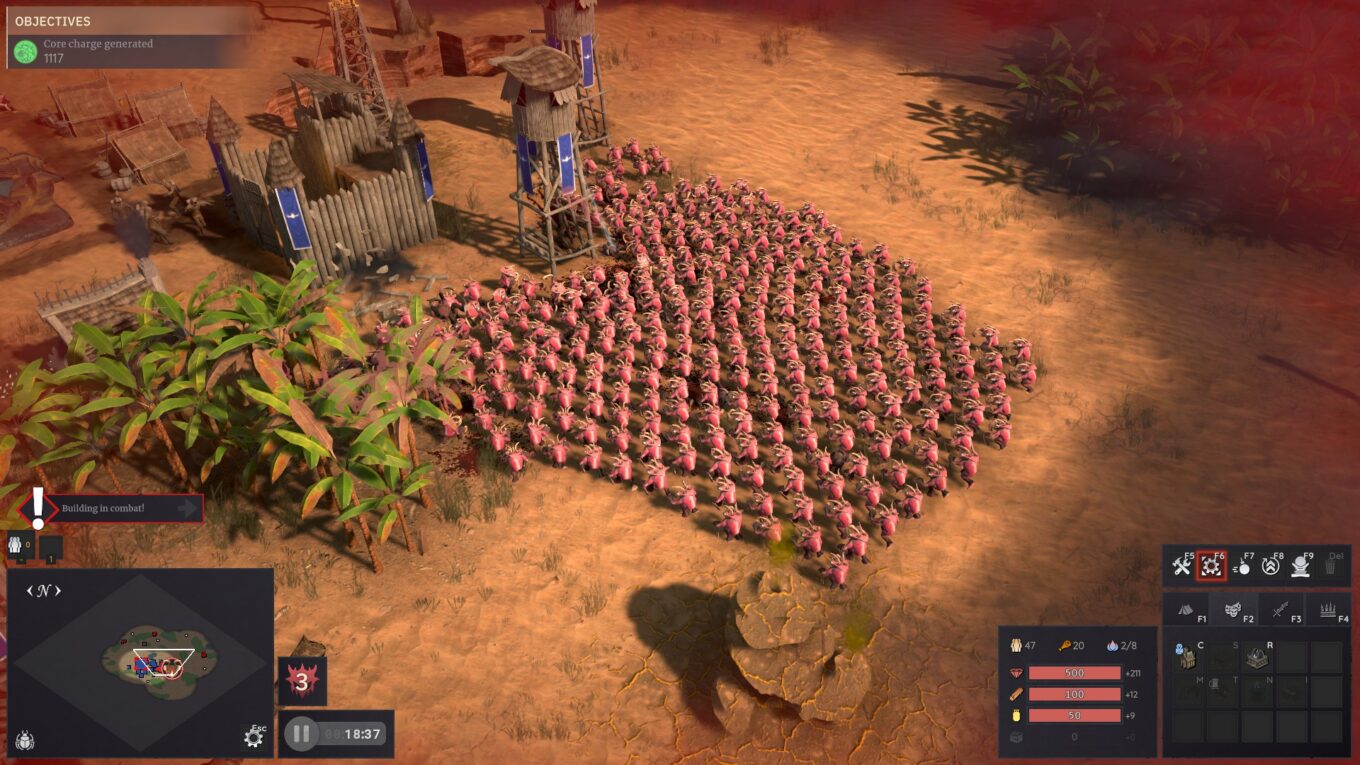
How do you prevent this from happening? Well, they say the best defense is a good offense, and that’s partially true in Here Comes the Swarm as well. The core, a massive artifact that’s ever-present in the center of your settlement, is both your strongest and weakest ally. Most buildings you place on the settlement, butchers for food, barracks to create units, houses to increase population, and so on, need to be connected to the core, which is done by placing road titles leading the way. The core is the literal lifeblood of all of your efforts, and thus requires a solid defense, from watchtowers that can shoot enemies from afar to as many walls as you can possibly rise.
Regardless of preparation, though, the hive is merciless, and swarms won’t take long to appear and try to ruin your plans.
Before diving fully into the experience, here are the features available to date in the current Early Access build. Alongside a robust (and optional) tutorial, there is skirmish mode (the standard for defending your settlement), endless mode (similar to skirmish, but the match lasts for as long as you can survive), and expeditions (a roguelike-style mode where you select from branching paths that have modifiers and tackle missions for better rewards the further you get).
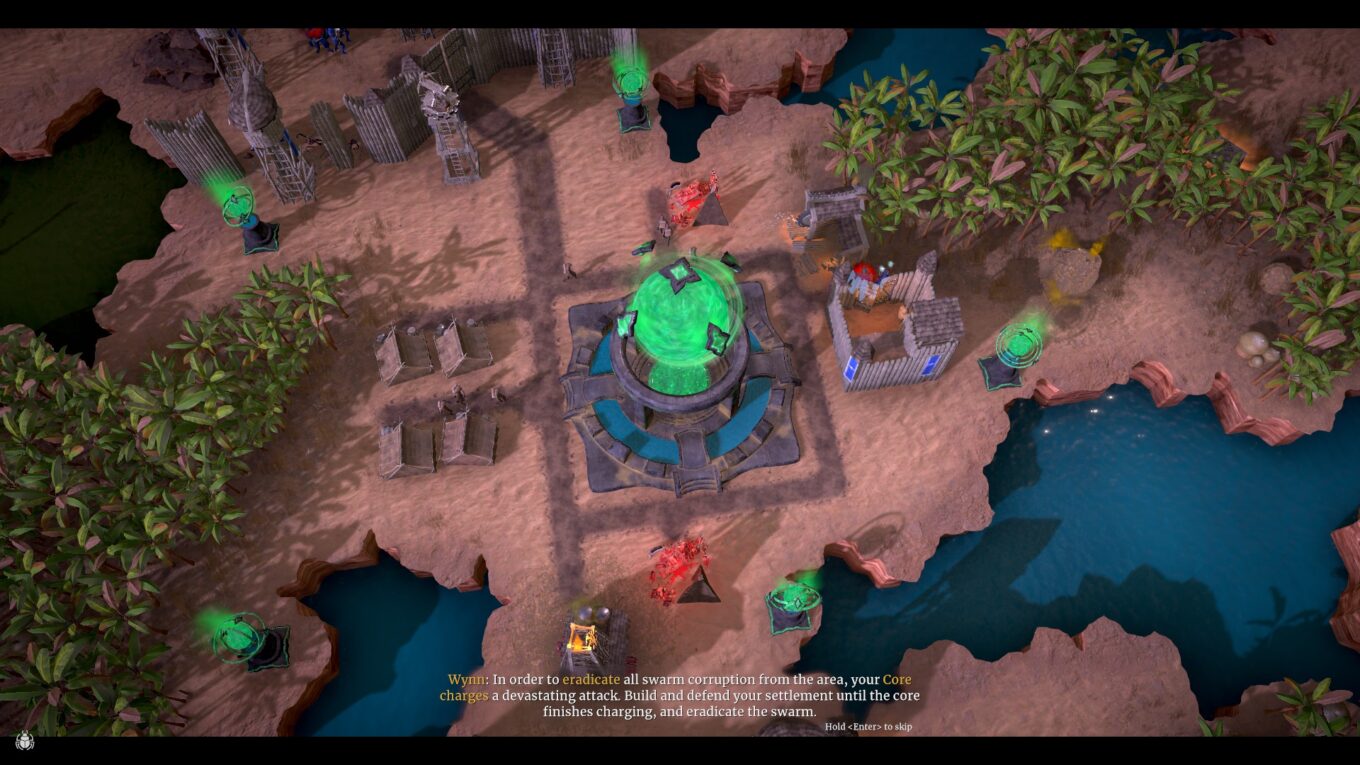
In the regular skirmish, the objective is to hold down the fort. The aforementioned core slowly charges up over time. If it remains unscathed by the time it’s done, it’ll automatically produce an attack that will destroy every single hive unit on the map. Getting there is easier said than done, of course, but it is a good way of getting acclimated with how the game works. Endless is similar, albeit without that end goal to pursue. Rather, the time you spend on the map relies solely on you and your skills. The swarm definitely won’t go easy.
Expeditions, however, is an interesting genre mashup, and my favorite aspect of Here Comes the Swarm. You’re presented with a map with branching paths, in a similar fashion to how a run in Slay the Spire is displayed. The first choice you make is picking a blessing, starting each skirmish with two additional knights, increasing the attack speed and range of defensive structures, and others. Then, it’s up to you which paths you want to follow. Some will have more skirmishes to tackle but might reward you with more blessings further down the line, for example. Each battle has its own set of rewards, but also different details, such as map type, area size, the overall length of the skirmish, and different burdens, which are specific debuffs or conditions bound to prove to be an obstacle.
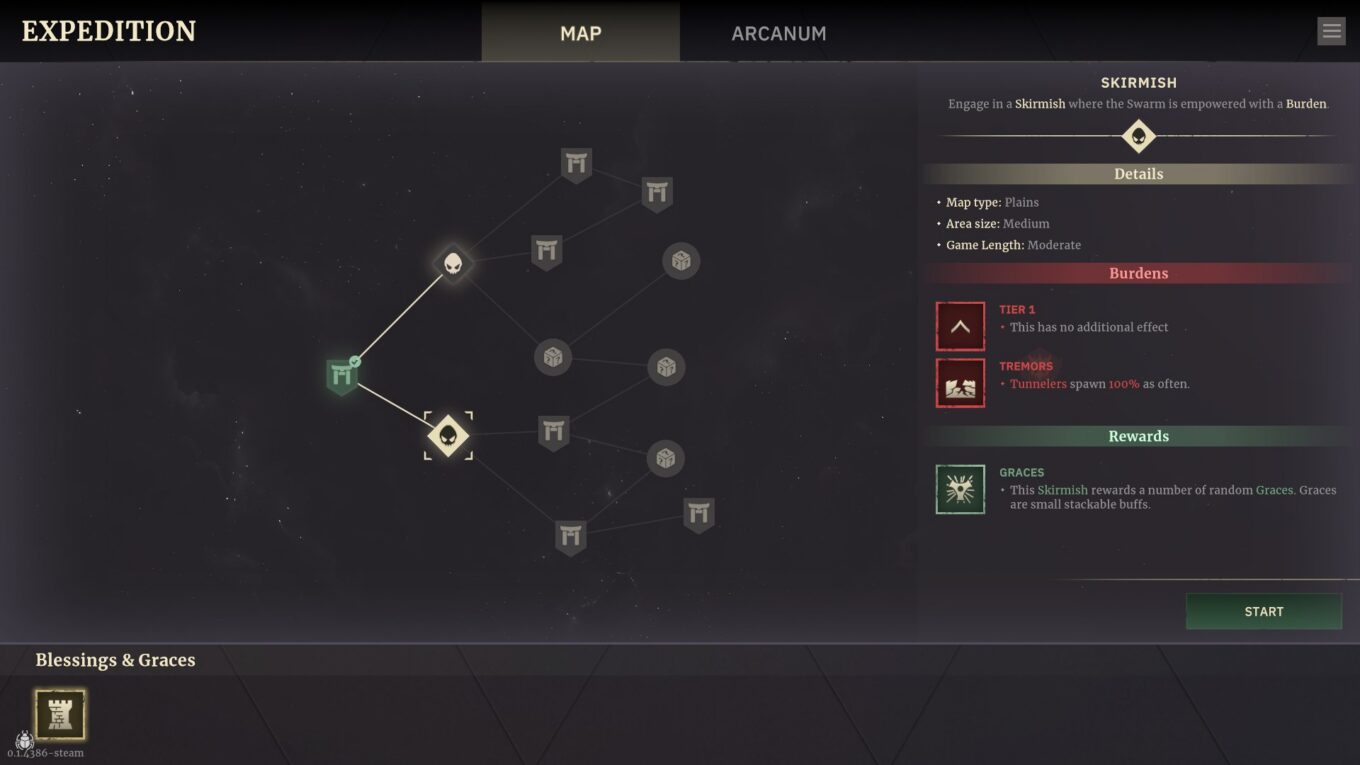
This roguelike mode is where Here Comes the Swarm truly shines. It’s nice to be able to tackle an individual skirmish if you so desire, but tackling expeditions is the definitive standout. As you’ve likely guessed by now, they’re quite challenging. But as with every other mode, a game over screen isn’t a complete failure, as you’re always being rewarded experience and points to distribute on skills to use during skirmishes.
Speaking of difficulty, there are different levels to choose from, a feature that is definitely welcoming, considering how tough the game can be even on normal. You can also pick between different control schemes, which range from WASD keys to grid keys. I went for a rather classic scheme, in which you use the mouse to control the top-down view camera. Different buildings and units all have a corresponding hotkey, which led me to associate them more naturally (‘R’ for roads, ‘K’ for knights, etc.), making it easier to build. If things get too dire, however, Here Comes the Swarm has a pause button that you can use at any time. And yes, you can build and set commands for your army while doing so. It’s a nice way of reassessing your current situation, thinking of different strategies as needed, and trying to get ahead of the swarm.
Combat is snappy, and animations are satisfying. The overall art style is fairly tame, but it is compelling and easy on the eyes, which is what you ultimately need for a game of this vein. You’re able to recognize different units without the need to zoom in all the time. Whenever you least realize it, you’ll reach that certain point that never gets old, in which your settlement is running without much of your input needed, and you’re free to grab a few units to explore the map, opening chests for resources, taking down enemy outposts, and destroying altars to gain arcana and spend it on boons.
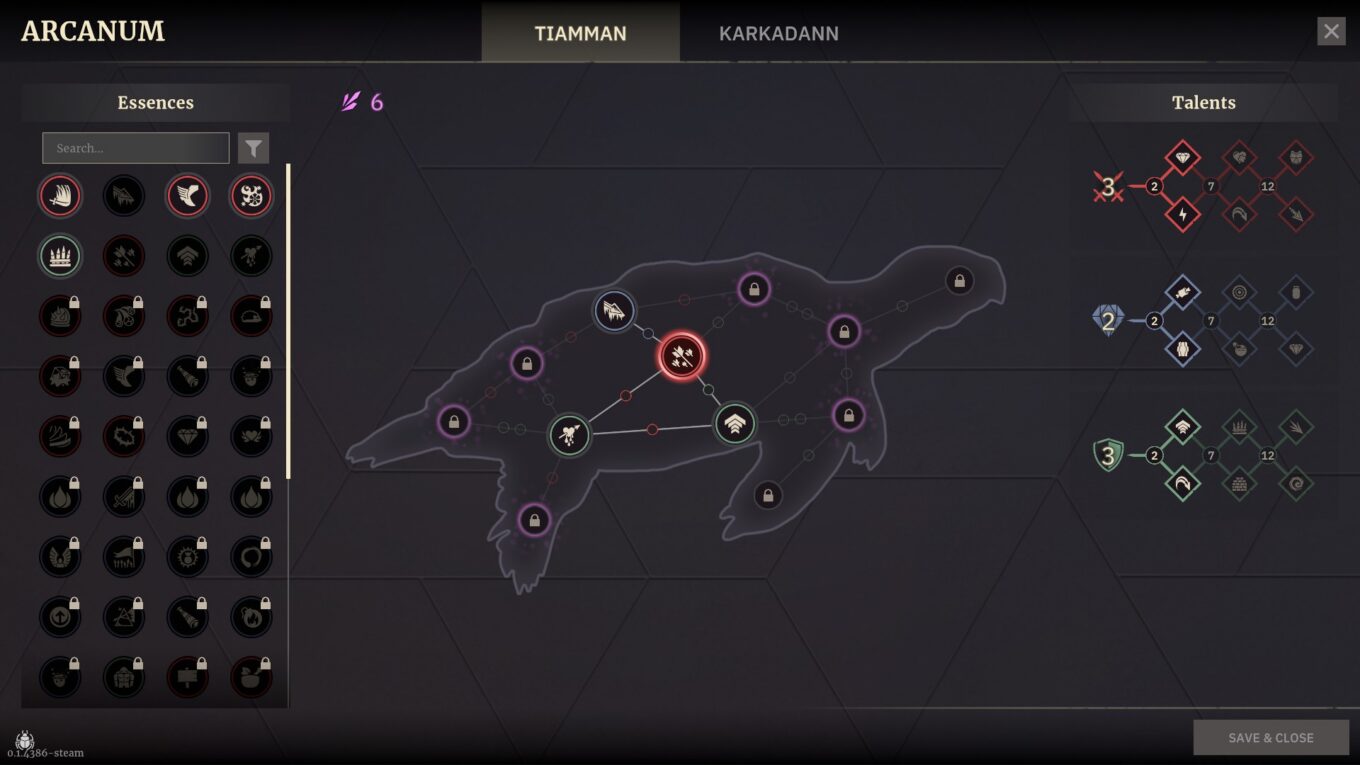
Here Comes the Swarm features deities, which are essentially skill trees to opt for. Each one of the three available in Early Access so far has a different focus, granting you an advantage over offense, defense, or resource gathering. As you collect arcana, you can use the currency to unlock skills, such as adding frost arrows to your arbalists or making their projectiles ricochet between enemies. This, in turn, also unlock talents, which are smaller yet useful bonuses to have, such as increasing your population or automatically gaining a stack of a specific resource like meat. The experience you gain after a skirmish levels up the deity, unlocking even more bonuses, and there’s also another currency to unlock slots on the skill tree and add more abilities to choose from. It’s a bit of a convoluted system, but it’s nice to know that you’re always working toward unlocking benefits for future battles.
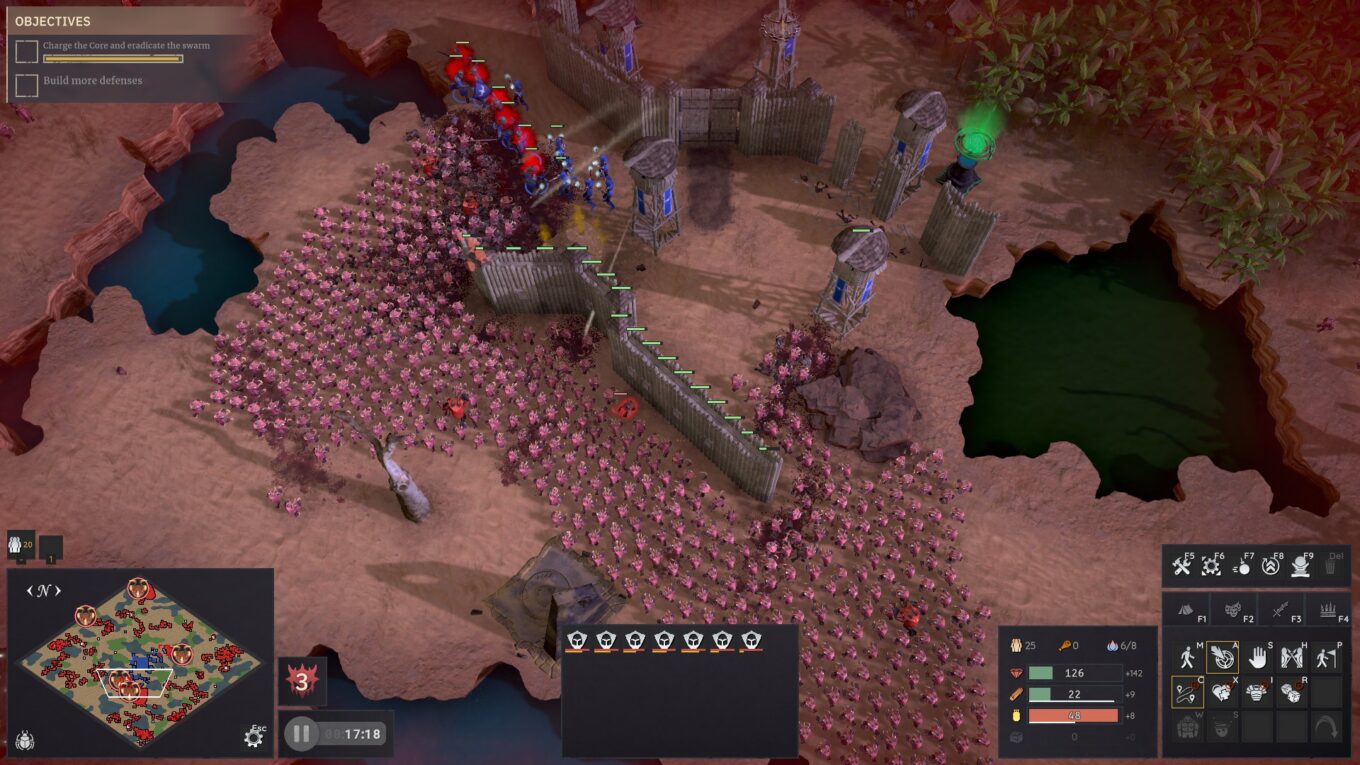
No matter how much you prepare, however, defeat is always lurking. Witnessing enemy waves rapidly approaching your settlement never ceases to feel overwhelming. At any time, you can see the current swarm hostility level, which adds to the tension, but you won’t really know what that translates to until the game notifies you of another swarm coming your way.
Both your units and buildings can be easily disposed of if you’re not careful. Even what might seem like a small group of weak enemies can quickly take down towers, walls, or even the core itself if you don’t have solid defenses. And even then, you can never get too attached to your army, as the slightest miscalculation or bad positioning can leave them exposed, therefore leading the enemy on a clear path toward your core. Combat can be particularly unnerving when you’re facing multiple hordes at once that approach the settlement from different directions. Making sure the outer area of your base is fortified as much as possible is always a good strategy. But if you’re leaving other spots without the same resistance, that can easily be used against your advantage.
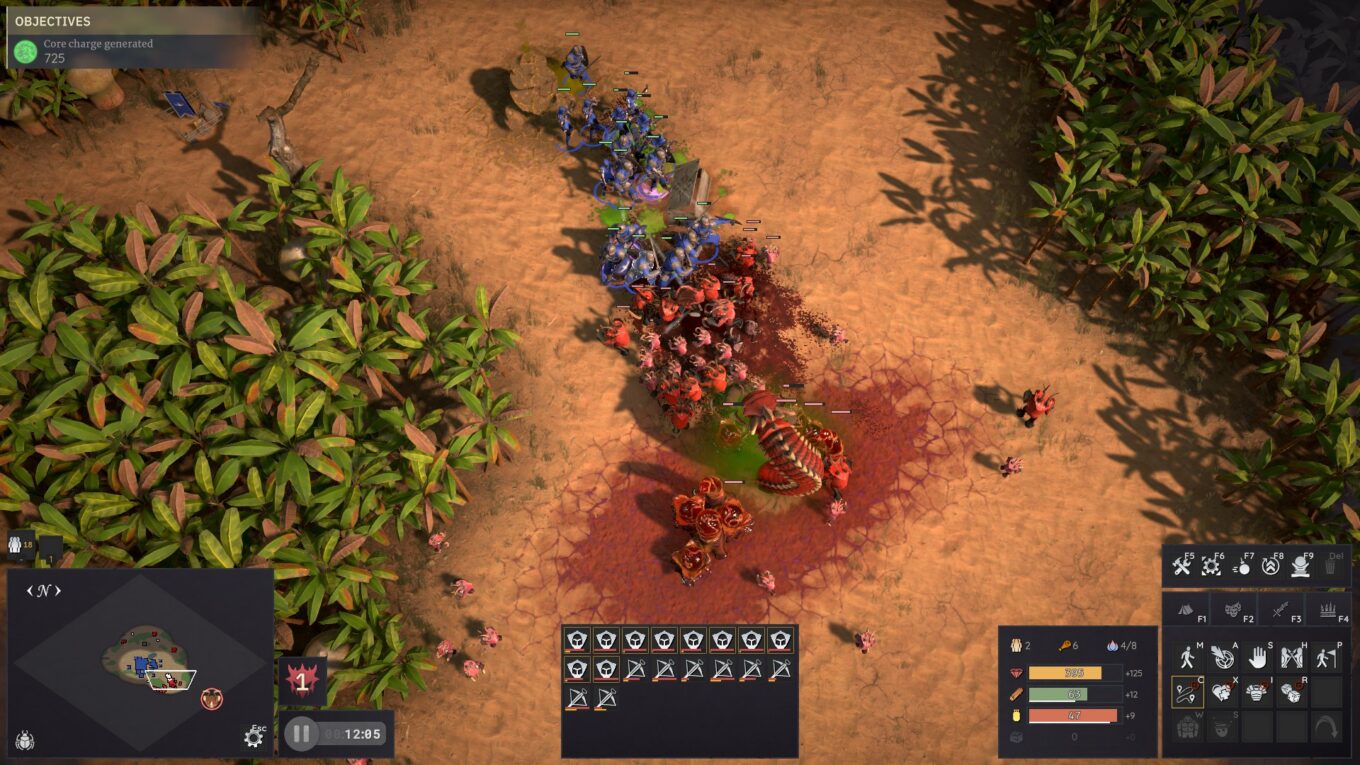
It is still early days for Here Comes the Swarm. The roadmap showcases a new deity and unit are on the way, while I believe the deities feature needs to be simplified a bit, it has plenty to offer as is, but more units are sorely needed. Sure, you can change how they behave depending on how you spend your arcana on skills, but that’s one aspect of the game that would benefit from more variety, or the inclusion of heroes, for example.
As of now, Here Comes the Swarm is building a strong foundation, taking just enough cues from its influences and iterating on them through a modern lens in promising ways. We’ll see if said foundation is solid enough to persist throughout Early Access over the next year, continuing to hone the elements that could make this game stand out from the rest.