Rhythm games have been undergoing a renaissance for a couple of years now. While Guitar Hero and Rock Band might be a thing of the past – the latter losing licenses of its extensive catalog with every passing week – smaller game development teams have taken it upon themselves to revitalize the genre. Dead as Disco, developed and published by Brain Jar Games, Inc., is but the latest example of this trend, and it might be one of the most impressive so far.
Following upon the punches and kicks of the likes of KickBeat and more traditional brawlers like Sifu, Dead as Disco introduces itself as a beat ’em up where the action is in sync with the song playing in the background. The current early access build on Steam, despite being fairly thin and with a few woes left to address, already shows great promise, and some of the most visually intensive boss fights I’ve seen in recent times.
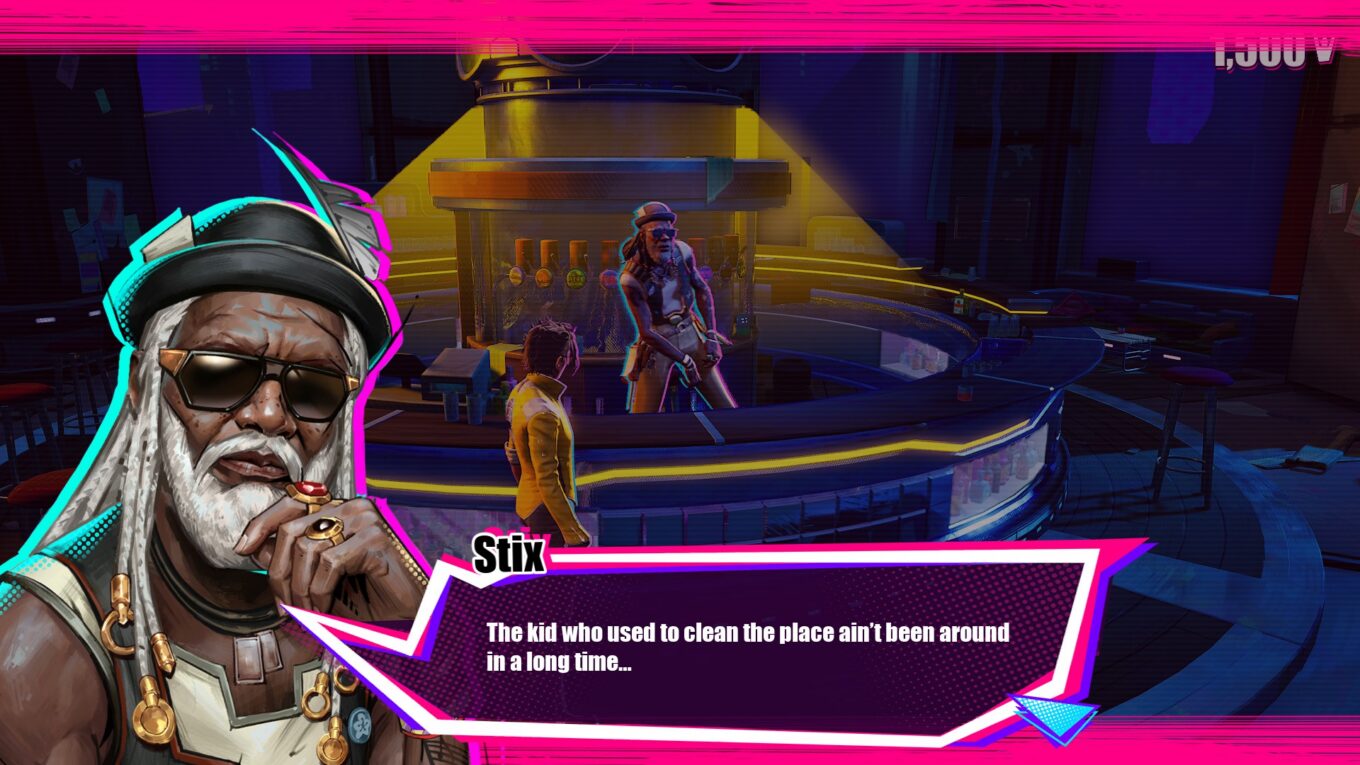
One of the first phrases you read in Dead as Disco is “burn out stars,” which is quite apt for its setup. An In Memoriam for Charlie Disco greets you soon after, giving you the option to sign and obtain one more night. As it turns out, Disco was pronounced dead ten years ago, and his friends and ex-bandmates, now musical legends, used his songs to get to the top. As you may have guessed, this is a revenge story in which you target each one of these characters in order to reclaim the spotlight. But it’s all in the purpose of teaming up once again, and learning what happened on that ill-fated night ten years ago.
The story is the least developed aspect of the current build, which is unfortunate considering I have no shortage of questions in need of answers. I want to know more about these characters, why they did what they did – some selling out professionally, others letting themselves become a pawn – defying what they used to believe in. There’s plenty of ground to build upon here. It’s the classic music story of a rockstar selling his soul to the devil, but presented through a slick, modern lens that seems adamant in taking things up a notch. As one of the characters tells Disco, “not everyone can sell their soul – you gotta have something the devil wants.” What that something is, however, remains unseen for now.
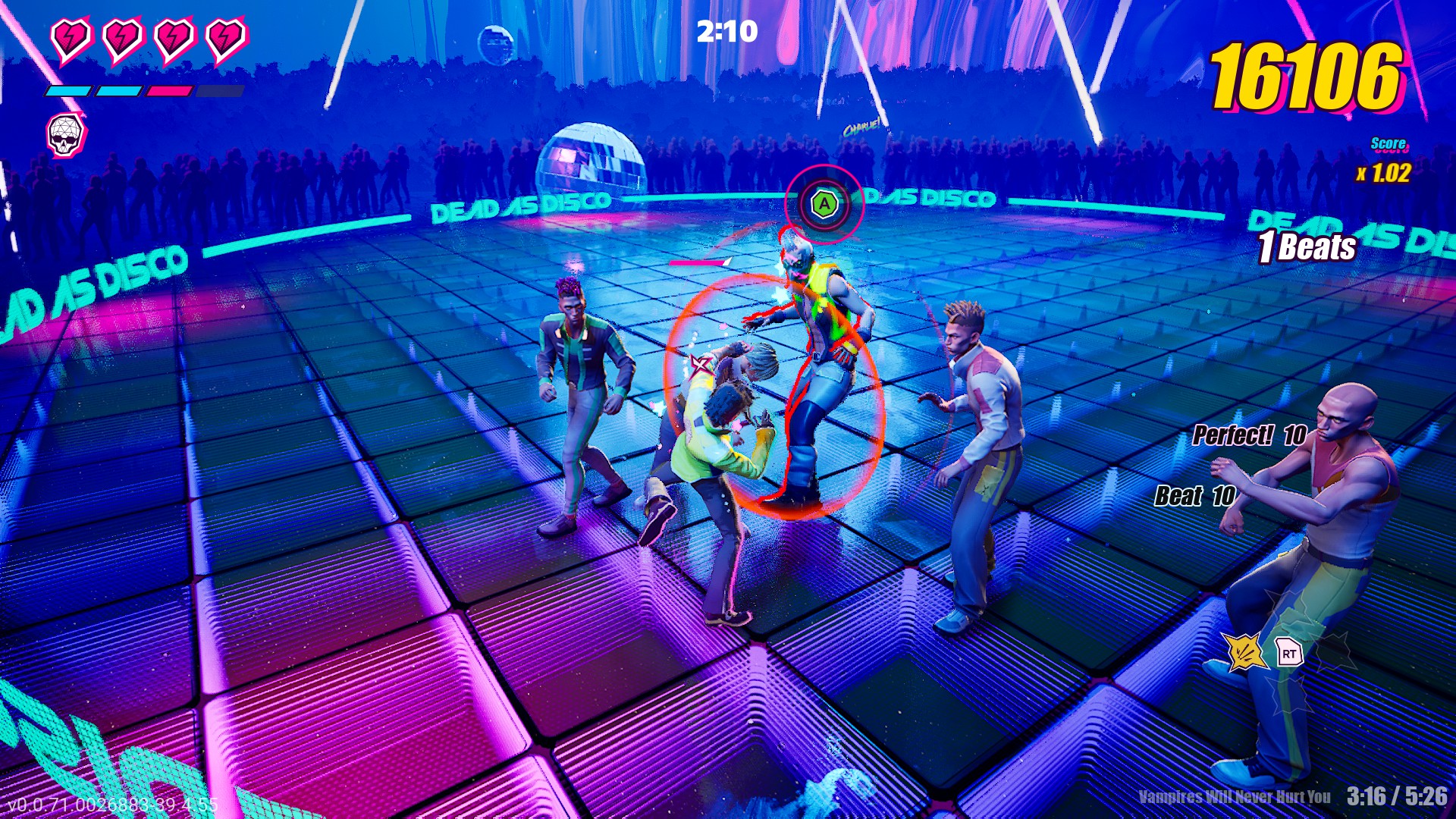
Thankfully, the missing story beats are made up for by fights against four of these idols, which you can tackle in any order. From the get-go, the presentation is quite stylish and oozes personality, from the way the protagonist always follows the beat, either tapping his foot against a surface or slightly nodding with his head, to how distinctive each of the encounters are. Before you dive straight into the action, there’s a gentle tutorial that runs you through the basics. Think of the Batman: Arkham games, in which you’re waiting for enemies to force you to either counterattack or dodge an upcoming impact. There’s an overall score running at all times, and of course, attacks that land on the exact beat of the song in the background count more, as those will sync. It’s not as restrictive a system as the one in games like Hi-Fi Rush or BPM: Bullets Per Minute, where staying on the beat carries a specific benefit, which diminishes the challenge a bit. Yet, this doesn’t make it any less satisfying, especially when attacks line up just right.
Being such a familiar combat system made my time with Dead as Disco fairly tame when it came to difficulty, which almost veered into the territory of becoming too repetitive. Thankfully, there are multiple skill trees to spend “fans” on, which is a currency gained from completing levels. Some of the upgrades are pretty substantial – increasing your health, gaining new close quarters and ranged attacks, the latter allowing you to just throw a drumstick, which is hilarious in motion, and much more.
Moreover, whenever you defeat a boss, you gain a signature ability from them, which also has an (albeit smaller) skill tree. The upgrades usually affect that ability, but there are other passive bonuses as well. Alternatively, you can spend fans on cosmetic items for Charlie, as well as memorabilia to display at The Encore, a bar that has seen better days and serves as a hub for the game. The problem is that this all feels kinda disjointed at the moment, as there isn’t a more traditional campaign in place. Rather, all of these parts are separated from each other.
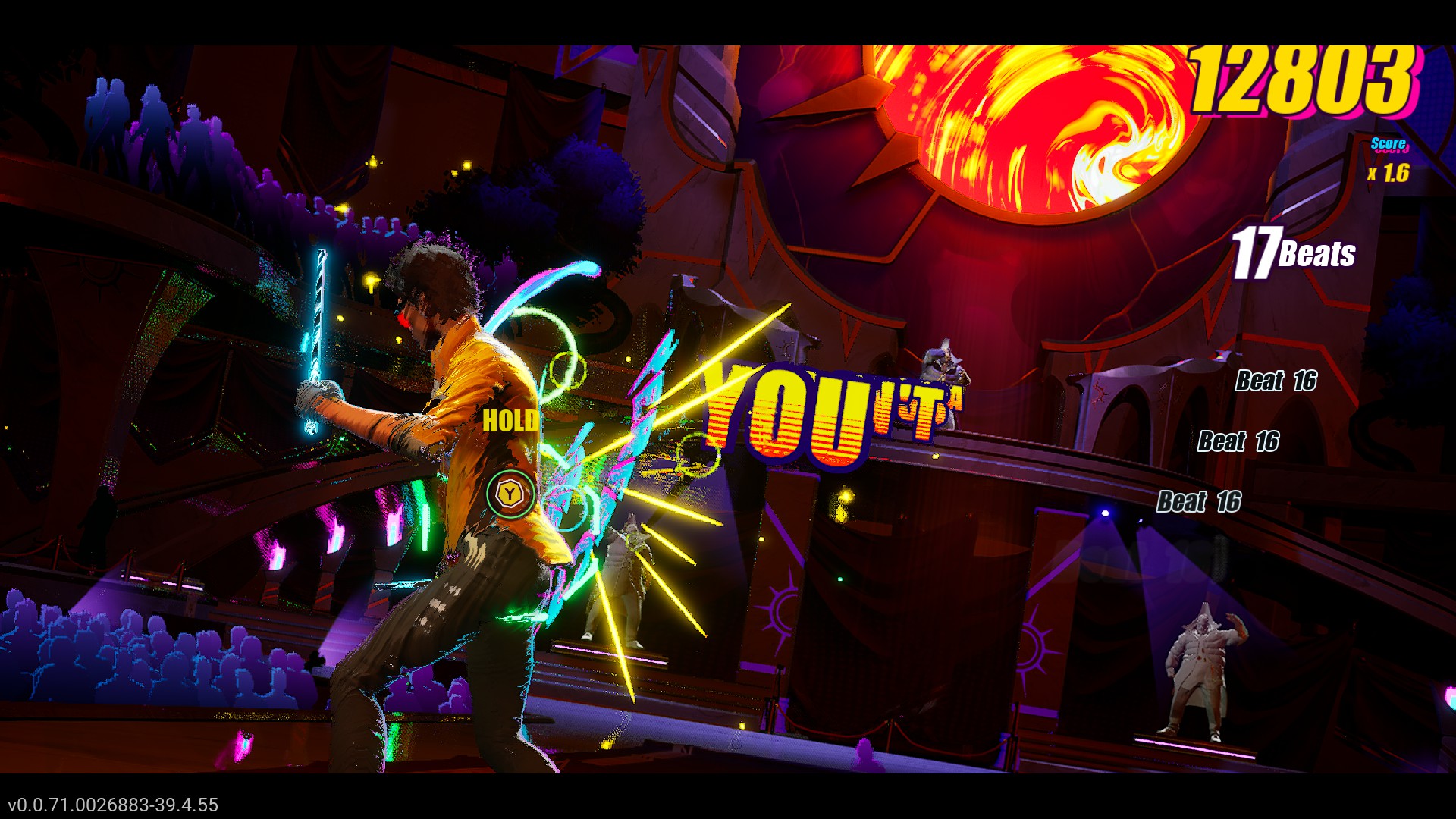
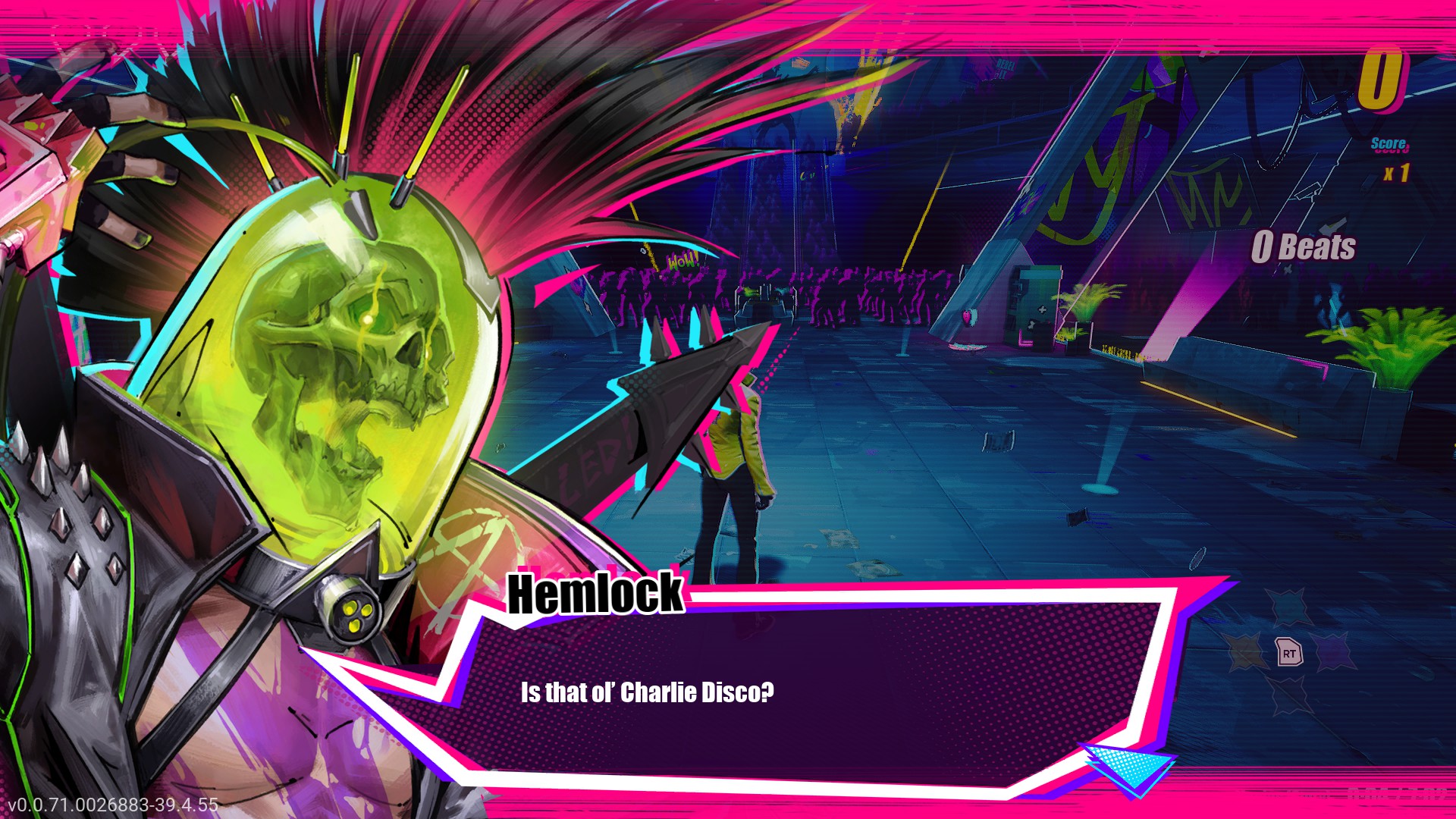
The main element of the current early access build is the four boss fights, which you can simply select from the main screen. I started with Dex, who has hooked himself up to the city’s generator to play music endlessly. It made for a great first encounter that mixed visuals reminiscent of Remedy Entertainment’s Control, cyberpunk-esque aesthetics, and an arena that reminded me of the ending of The One, with a hard techno song accompanying every moment. In gameplay terms, it wasn’t too hard, but Dex does hit hard. It took me a couple of tries until I had every combat movement memorized to a T. It was a good lesson in learning how satisfying to overcome levels when you’ve mastered each song and boss, which became a valuable reminder in the remaining fights.
Fighting Prophet, a hip-hop artist, made perfect sense for a second fight. During his encounter, Prophet would sing a song, and the lyrics would be shown on the side of the arena. Then, on a subsequent encounter, he used the lyrics as a ranged attack that you had to either deflect or dodge. In general, bosses have different voice and text lines, which is a welcoming element considering I had to retry these fights quite a few times.
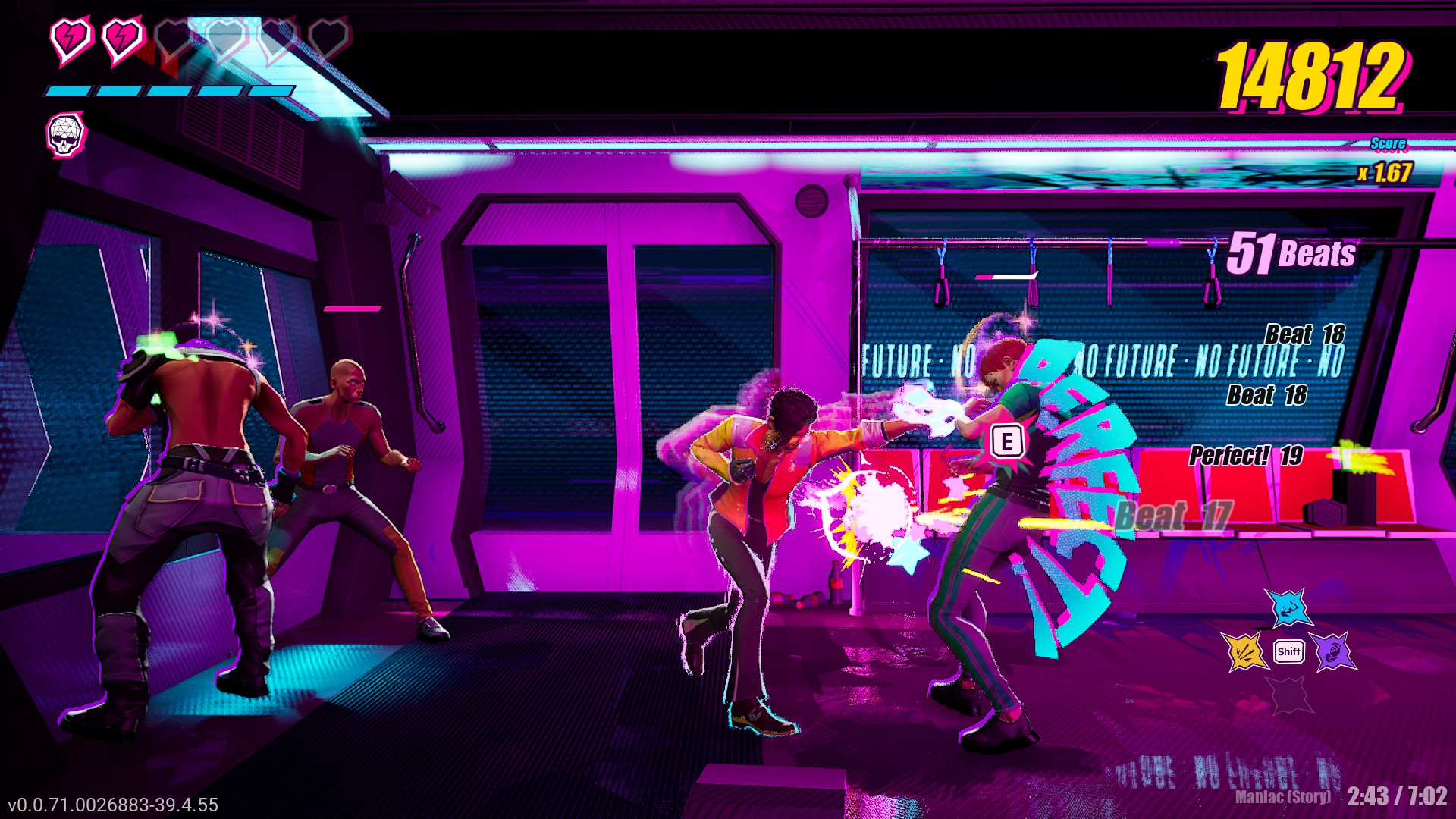
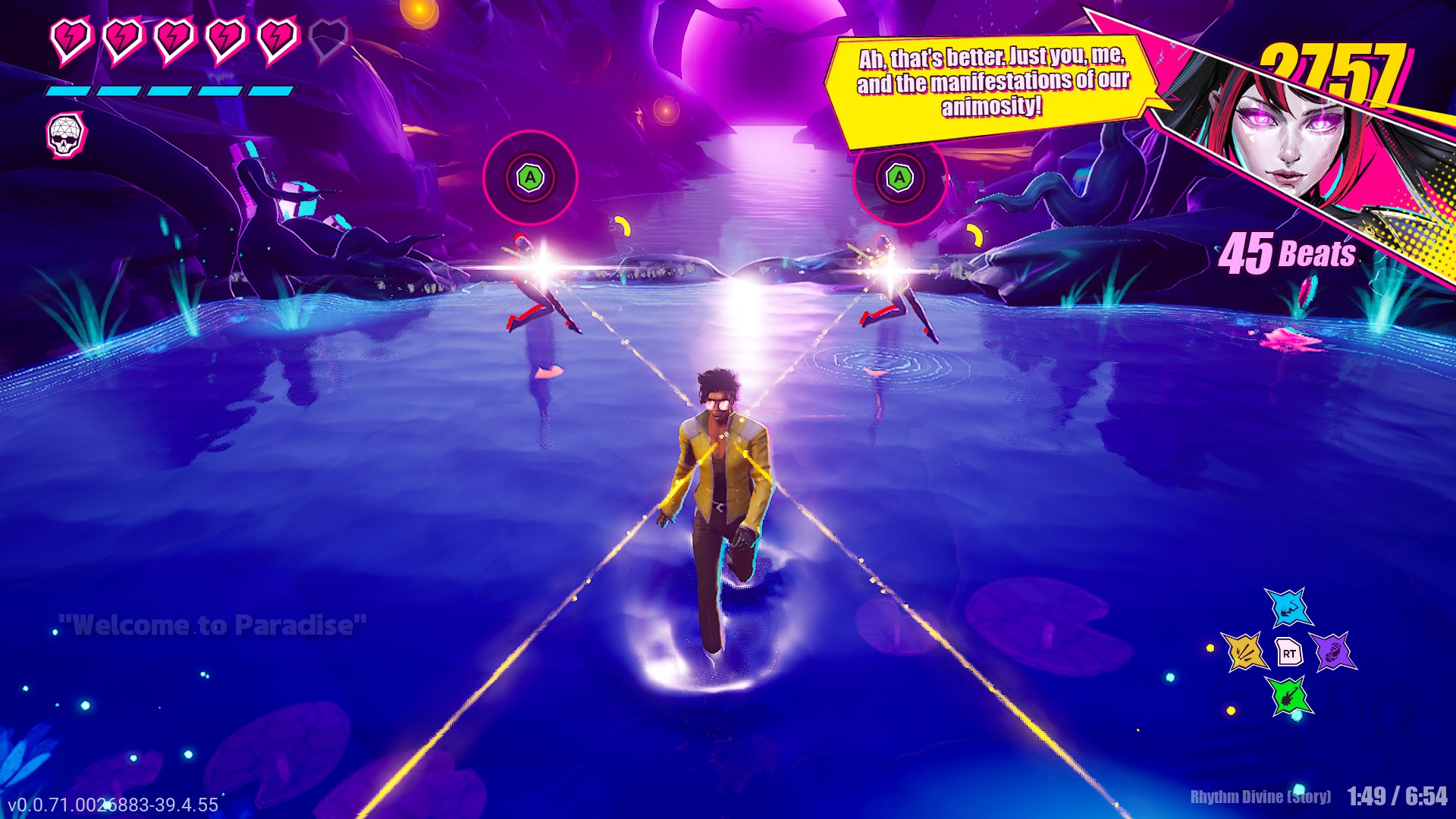
As visually impressive as fighting Prophet was, I did notice an issue that I thought was unique to Dex’s encounter. When fighting these bosses, you first need to deplete a stamina bar to open them up to a stagger, which is usually what leads to a transition to the next phase. When you’re at the last one, all you have to focus on is in the boss’ health bar. The problem is that, by the time you get to said phase, you’ll basically get the same set of attacks that you’ve already familiarized yourself with.
Sure, it’s still satisfying to learn every pattern and know exactly when to counterattack or dodge on the beat. But you end up repeating the same actions over and over while glancing at the health bar to see how long you have left, rather than feeling like you’re in the midst of the culmination of a grand fight, which I feel is a problem Dex, Prophet, and Hemlock, the latter being by far the least visually interesting of the bunch, despite being a bass player with a great mohawk that introduces enemies that jump at you as if they were entering a mosh pit with all of their might.
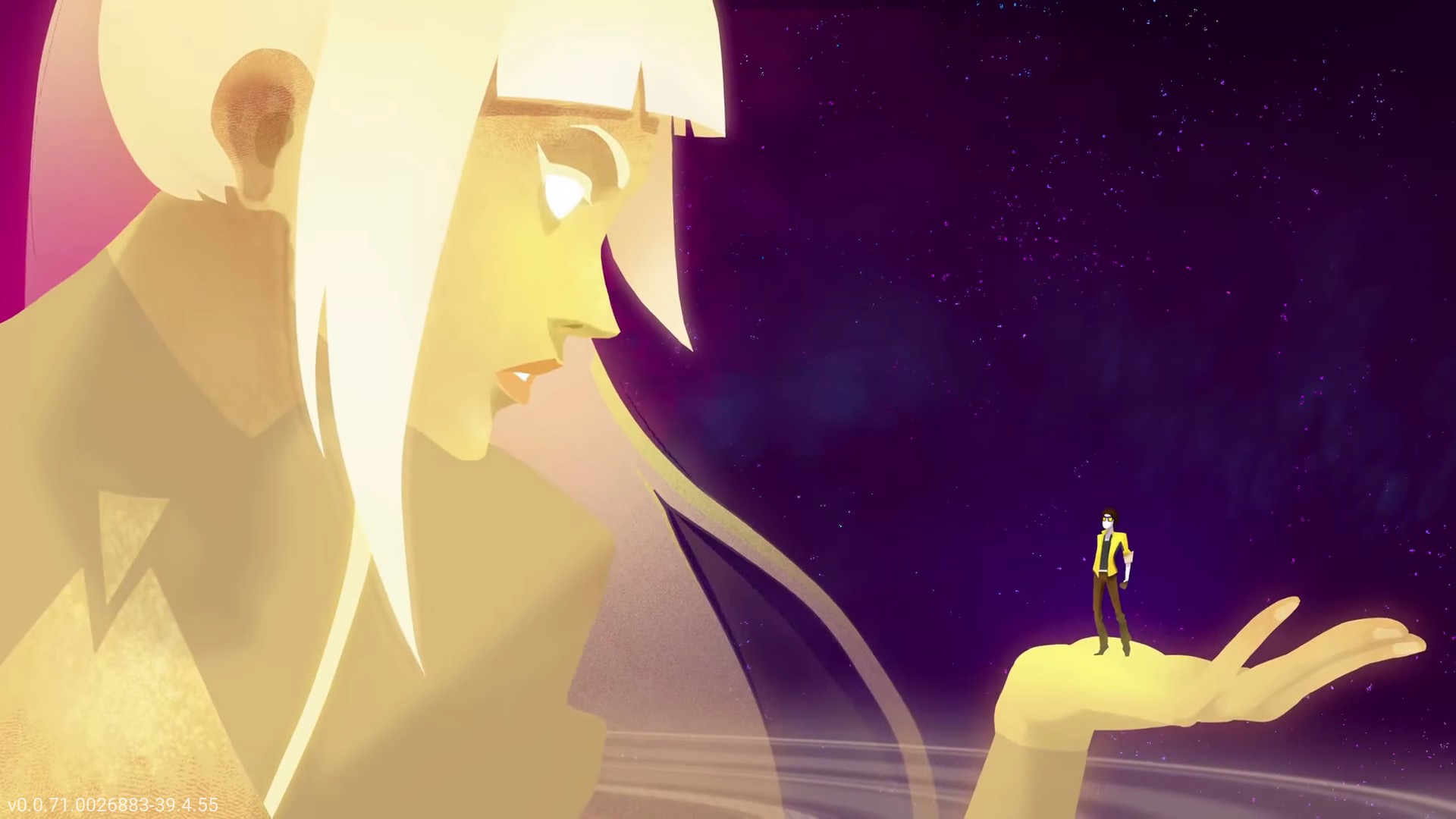
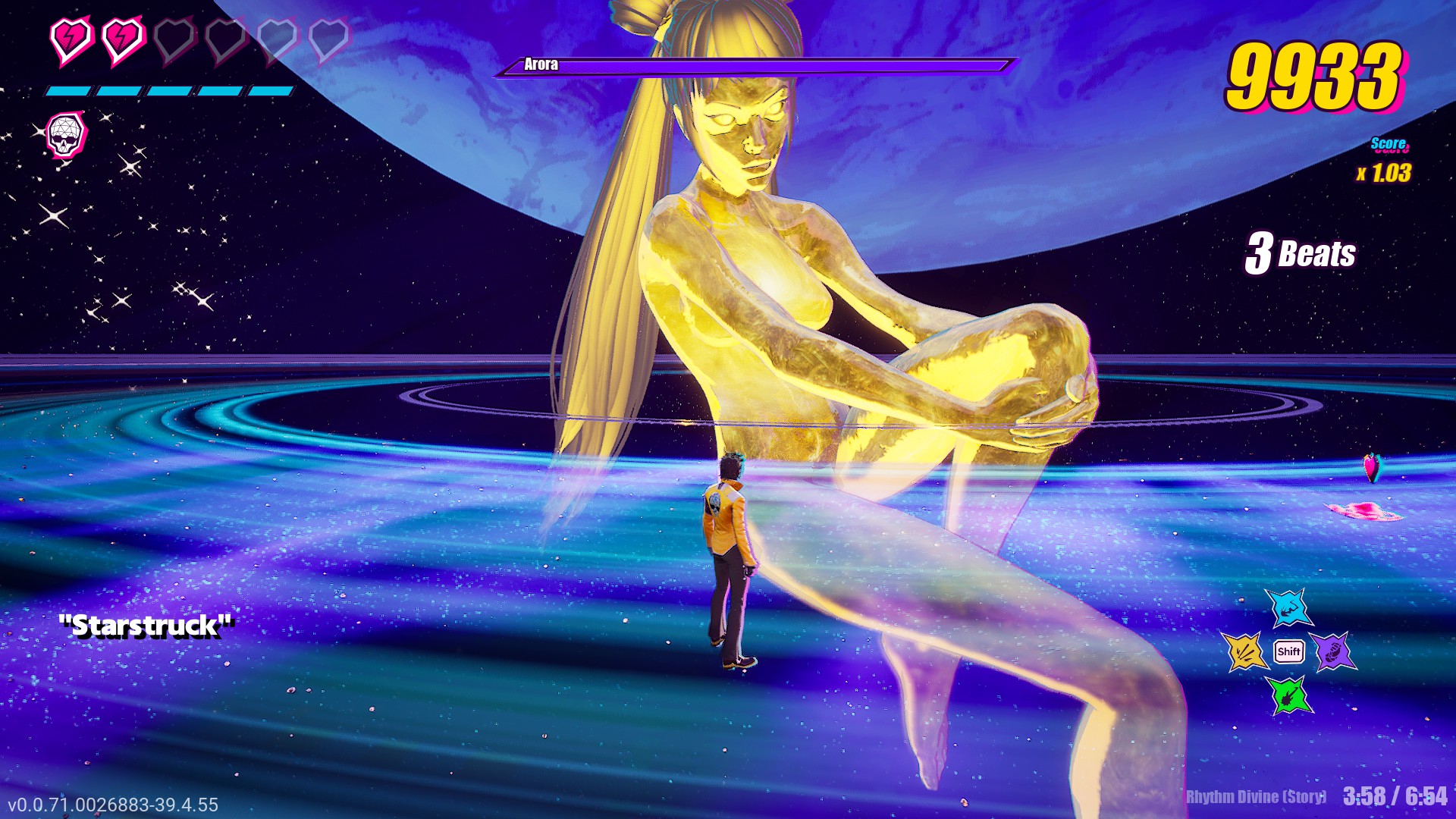
The fourth boss fight, however, felt like the most realized encounter so far. When fighting Arora, the first couple of stages were kinda short, but they were leading up to the bigger fights, with a massive digital depiction of Arora at the center stage of… space?, and then a fight against her that seemed straight out of Asura’s Wrath. Then, the final stage was a combination of the two, but it made much more sense here, taking what you’ve learned and forcing you to basically fight against two versions of the boss simultaneously. It felt quite good to finish that one.
Outside of bosses and the aforementioned hub – which gets progressively populated by the idols you’ve beaten, offering short but interesting dialogue if you speak to them – there’s also a list of songs available with specific challenges. Complete said challenges, and you’ll unlock more tracks. Most of these are original songs, with a few being a repeat of the tracks you’ve heard when fighting bosses, but there are quite a few songs to play for the first time. Dead as Disco doesn’t lean on licensed tracks that much, at least so far. Instead, it offers an assortment of covers with some licensed tracks from artists here and there. You can also import your own songs, and as cool as the potential of this is, it lacks the precision of the official levels, as you need to manually set the beats per minute of a song or manually adjust it. The feature definitely has the potential to become great as the developers tweak it, though.
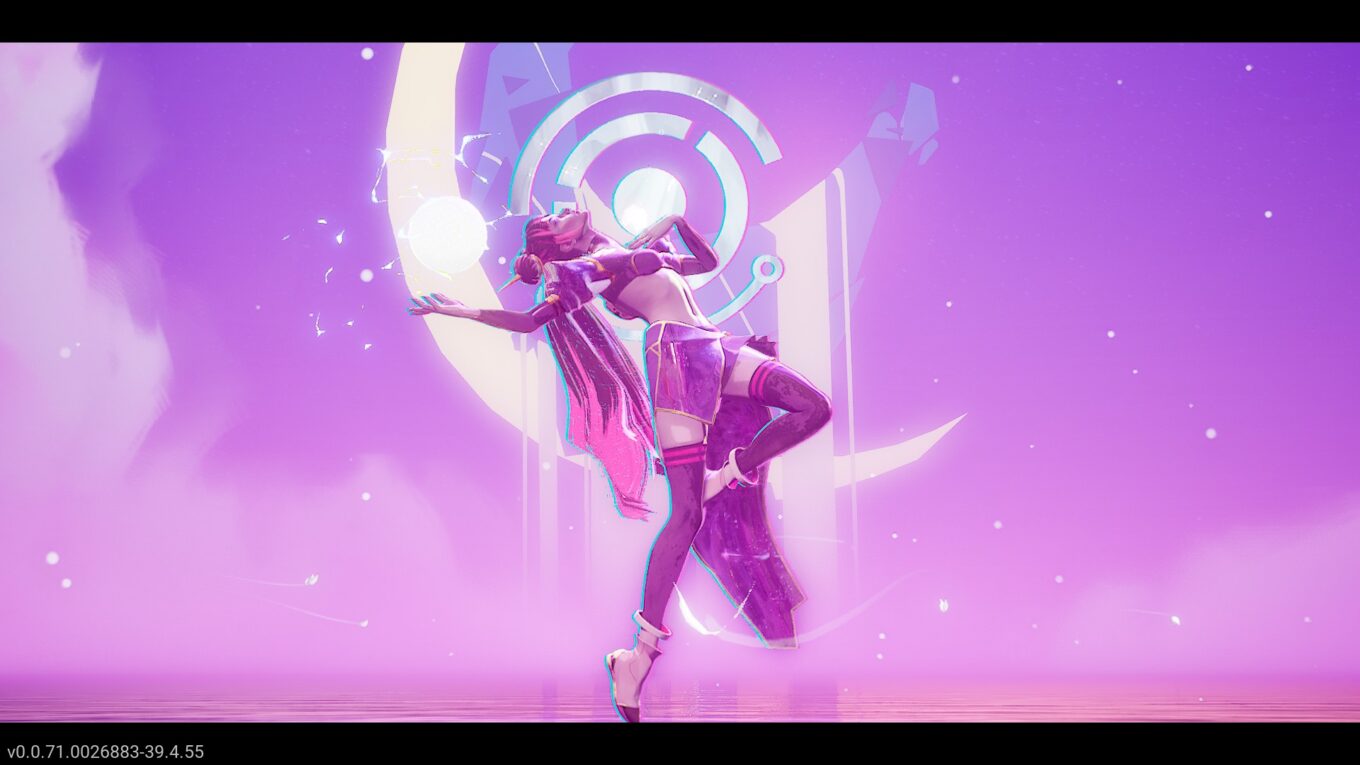
Speaking of which, it’ll be interesting to see how Dead as Disco continues to take shape. There are songs from the bosses in the free playlist that aren’t part of the fights themselves, hinting that there may be more than meets the eye with them in terms of fights. There will also be co-op multiplayer, which sounds wild for a game like this. Brain Jar Games, Inc. estimates that Dead as Disco will be in early access for around a year, although this may be adjusted based on feedback. During this period, the team is committed to adding new idols, moves, music, and keeping a consistent rhythm with fixes. The final version will also have more accessibility features, more skills and abilities, what the developers call “the true end game,” and more original and licensed music.
As it stands, it’s clear Dead as Disco has plenty more spectacle in store. If the upcoming boss fights can improve the very few shortcomings of its predecessors and deliver equally memorable presentations, then Dead as Disco is set to leave a strong mark, becoming a song impossible to get tired of listening to.