The roguelike (or roguelite) is an appealing format for indies for obvious reasons. For one, devs can make a game’s worth of assets and then use them over and over again, without seeming cheap. For another, these games tease our collective interest in systems. They can feel like the video game liquefied, almost a pure injection of random generation and numerical decision-making. Yet, there are so many of these now. The explosion of deckbuilders in the wake of Slay the Spire and the advent of action roguelite following in the shadow of Hades and its sequel, means that we are spoiled for choice. In this context, Valor of Man is an odd creation, in part because of how few differentiating ideas it has. Its enemies are straight out of the oft-cited pages of the Monster’s Manual; its heroes gruff men and clever elves. Still, the game has good bones. Valor of Man is a capable, if uninventive, tactics RPG.
Valor of Man steals its entire structure from Slay the Spire. Each run is made up of three maps of interconnected nodes. At each node is one of several options: a battle with relatively unimpressive foes, miniboss fights with “elite” enemies (language borrowed from you-know-where) which offer extra loot, merchants where players buy equipment to aid their runs, or a random events, where individual choices offer different costs and benefits. You start at one end of the map and make your way to the other, with a boss battle awaiting you at the end. Valor of Man’s innovation is in what players do during those battles.
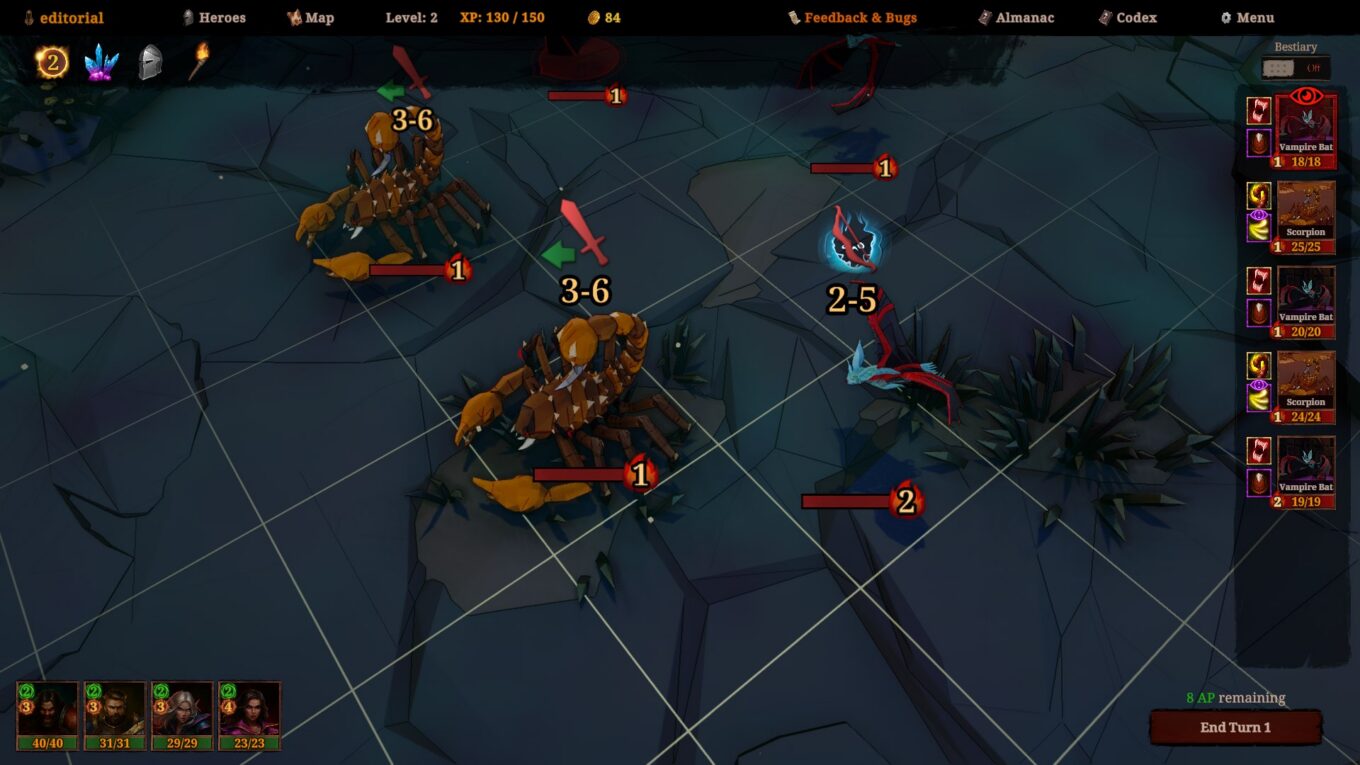
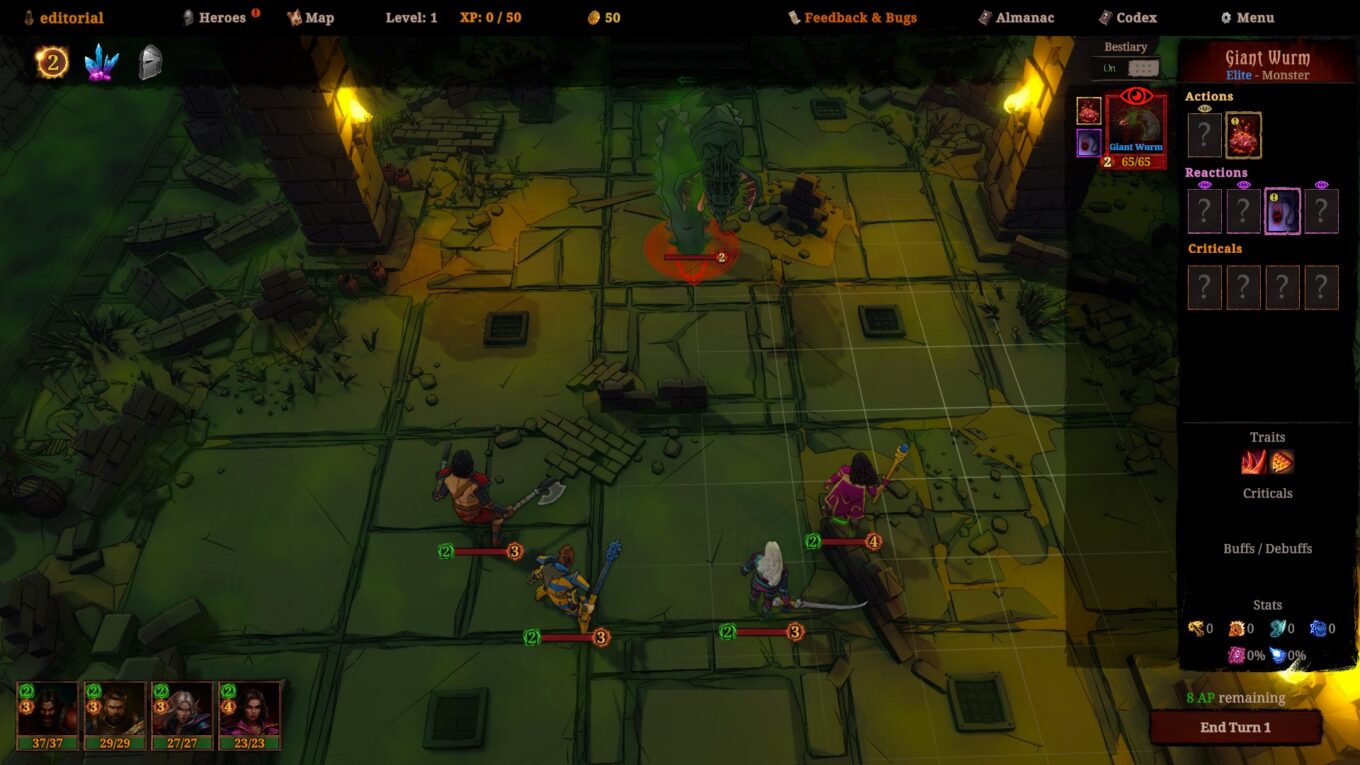
In each fight, you command your four heroes across a square grid. Most maps are simple arenas, with mere aesthetic differences. None have any environmental hazards to consider. The focus is on pure positioning. Each player character gets two action points to start, with items and some abilities granting more as you go. There’s no turn order, meaning you can act with each character at any time (at least until they run out of action points). This format makes the tactics feel both lean and spacious. Enemies, both big and small, react to each and every attack. New problems can arise quickly, but the game gives you equal tools to respond.
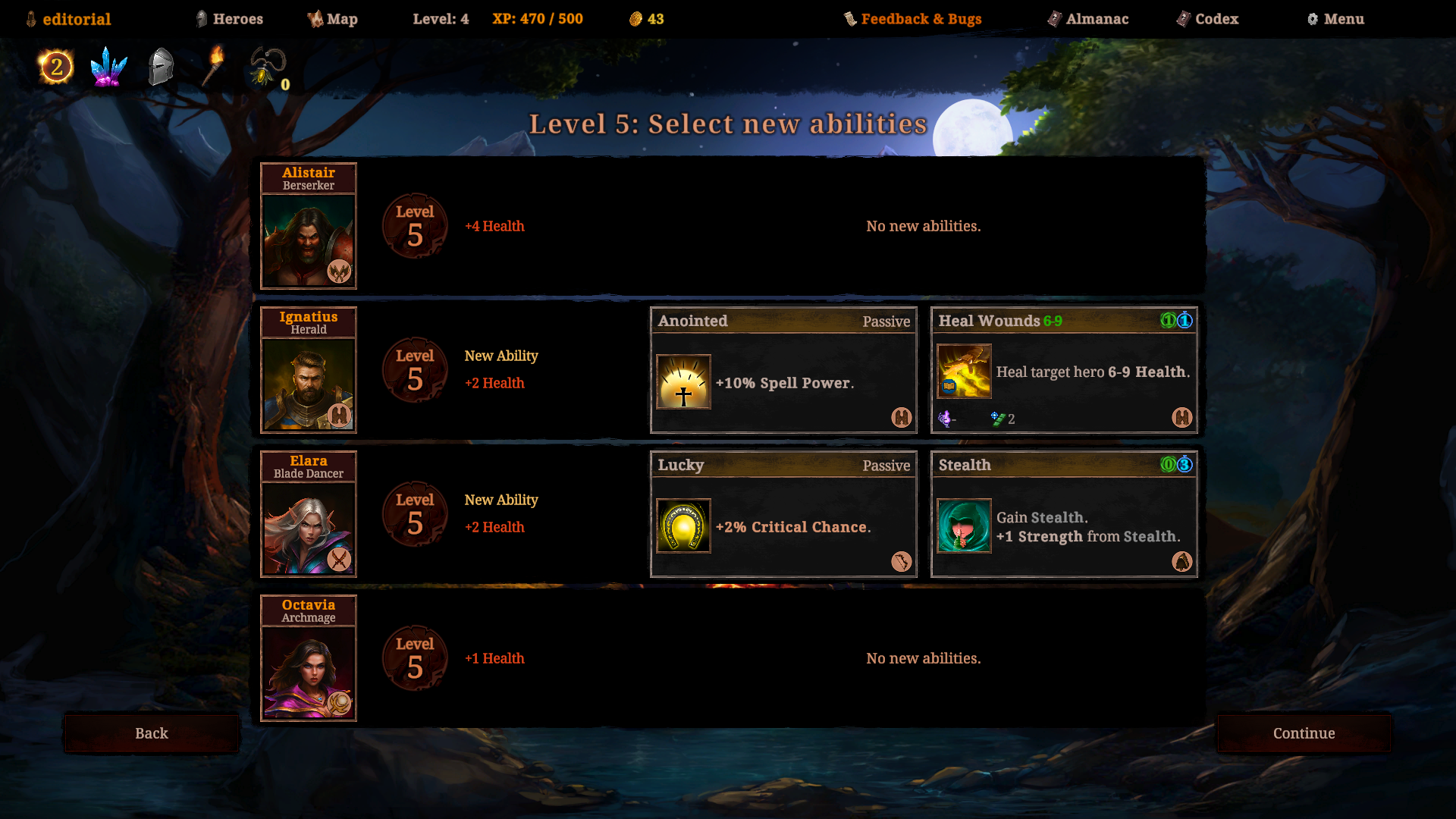
Each of the four party members belong to broad archetypes: healer, tank, rogueish speedster, and spellcaster. Sometimes they have different names, but all are recognizable classes reflected in the vast majority of RPGs on the market. They do what you would expect them to. The Berserker (read: Barbarian) can trigger a rage to do more actions. The Herald (read: Cleric) starts with healing abilities, but can also cast holy spells to blind and bewilder foes. Hidden behind some of the unlocks are more unconventional classes, like the enemy-manipulating Seer. But none venture outside of the D&D Player’s Handbook.
The advantage to this model is that it makes Valor of Man instantly approachable (at least, if you’ve played this sort of thing before). The game starts with each of the four classes in easy-to-understand configurations and lets you test the ropes before throwing more difficulties at you. The disadvantage is that it offers no real surprises. The original Slay the Spire, at least in the first few runs, is often unpredictable, to the point where the game develops its own, internal imagery. Think of the crow enemies, common in the first part of the tower. Each turn they gain a point of strength, which makes each of their attacks more powerful. If a player character gains the same ability, it is also represented by a feather. This is just one example of the network of meaning which Slay the Spire builds. Over every run, you learn portions of a vast array of symbols, until you understand each part of it. Valor of Man has no language of its own. While spending enough time with it will help you understand its component parts, they are pretty comprehensible to begin with. You can understand roughly what you’ll face when going up against a dragon or a lich.
Fortunately, Valor of Man does have some novelties, and its inspirations are broader than just the roguelike deckbuilder. While it isn’t quite the exacting puzzle box of Into the Breach, it does let players see what enemies are about to do next. A toggleable UI on the right side of the screen lets you see what enemies will do on their next turn, how they’ll react to your attacks, and even their moveset in entirety. But damage counts, even exact movements and targets, are variable. As you might expect from a game which borrows its basic ideas from Dungeons & Dragons (and thereby Baldur’s Gate 3), the predictability of enemy attacks is less about evading attacks and more about what damage you can tank and when. Sometimes it is best to retreat and lick your wounds. Other times you should unleash every attack you have. These are the basic choices that a tactical RPG is made out of, sure. But they are classic for a reason.
This brings up one of the game’s meaningful differences from its inspirations: At the end of every battle, every character heals back to full. If a player character dies, they awake with an injury which limits their capabilities. There is also another health bar. Each character starts with points of Courage, which represent their will to fight. These changes make Valor of Man feel less like a war of attrition, where each and every hit taken affects the possibility space of the run, and more like the series of battles of a tabletop RPG campaign. The game’s puzzle is chunky, rather than elegant. That might sound like a complaint, but when the game is at its best, it gives the battles a satisfying scale. The strategy in a Slay the Spire is more on the level of the run. Here, each encounter carries more weight.
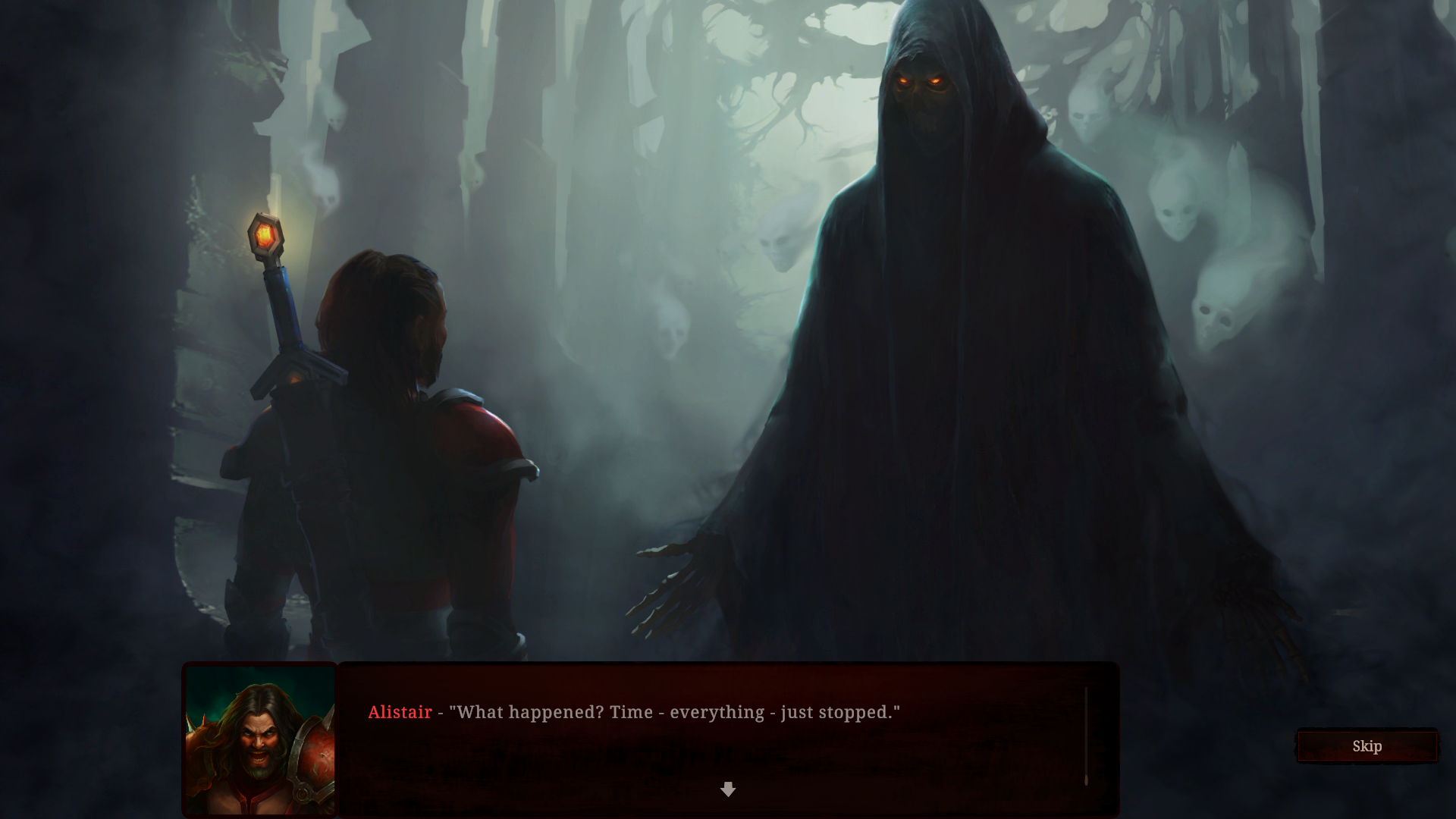
While Slay the Spire has some narrative ideas–the backstories of the heroes, the various layers of the spire itself–it’s all peripheral. In contrast, Valor of Man has dialogue trees and cutscenes. Each successful run starts the next part of a narrative arc, where your heroes attempt to defeat Malaki, a time-traveling wizard who resets your progress. Conceptually, this is not unwelcome, but Valor of Man is as flat as roadkill. When a game only has a little narrative room, it must rely on sharp and quick evocation. Valor of Man has only Laffytaffy level banter, alongside a thin plot. The only saving grace is that there isn’t much of it, only a few paragraphs of text after the boss of each area.
The aesthetics are similarly thin. Roguelikes thrive on surprise. Exactly the thrill is that you don’t know what is coming. In this light, Slay the Spire has the good sense to look weird. The enemies are not exactly iconic, but they do kind of stick in the brain. For as much as one can bemoan the almost amateur look of Slay the Spire, one cannot deny that it doesn’t really look like anything else. Valor of Man is not entirely without charm. The little goblins and critters you find are cute enough. But it has no verve, nothing that will make you think of it once you have turned it off. It is easy to find bewitching fan art of The Silent or The Ironclad. It’s hard to imagine anyone being charmed enough by Octavia or Ignatius to draw them.
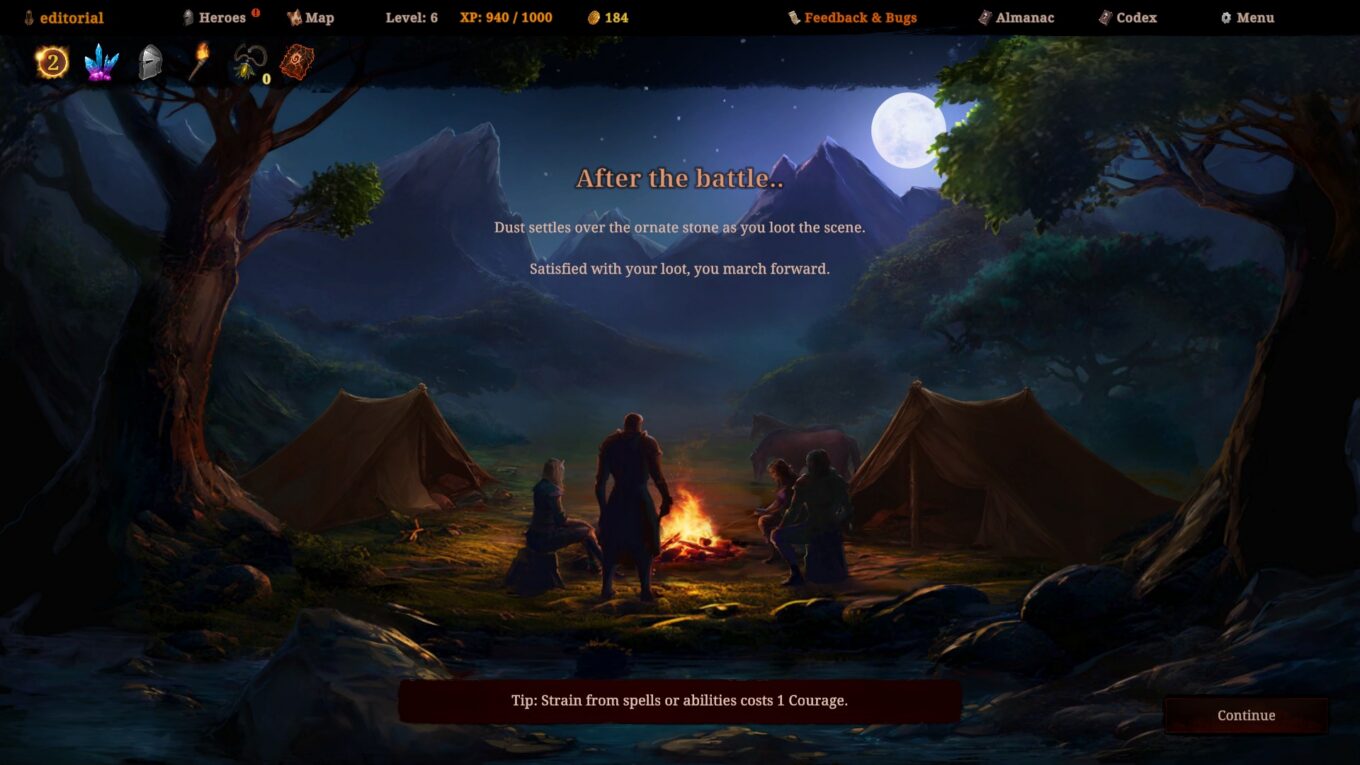
It’s hard to imagine what place Valor of Man will take in anyone’s gaming life. Slay the Spire 2 launched in early access just over a month ago. Vampire Survivors just got a surprise spin-off dungeon crawling deckbuilder. And this is without mentioning the hundreds of roguelike copycats which populate Steam. Valor of Man has little to set it apart from any of the games it is competing with. But for all that, it has a few charms and enough craft to be more than enjoyable. But in this crowded space, that may not be enough.