It’s taken a while for Ariane to get her bearings after crash-landing on Persephone. She’s part of a crew of two scientists on mission from an ecologically devasted earth to discover if this new world can support life. After clawing her way out of the ruined vessel (a wonderful example of the tessellated geometry and sparse colour palettes that define the visual identity of Aphelion’s technology), she finds herself navigating Persephone’s hostile topography – bitter temperatures and treacherous icy peaks.
I loved the humanity Ariane displays in these early hours. Fear and triumph and well-placed “fucks” are delivered in a breathy stream of consciousness, as she pits her grapple hook to crystal outcrops and swings over crevices, or balances across treacherous beams. It’s an absurd and dangerous situation by anyone’s measure, but Ariane’s reactions feel grounded; a scientist encountering science fiction for the first time. An ordinary person abruptly finding themselves in the role of protagonist.
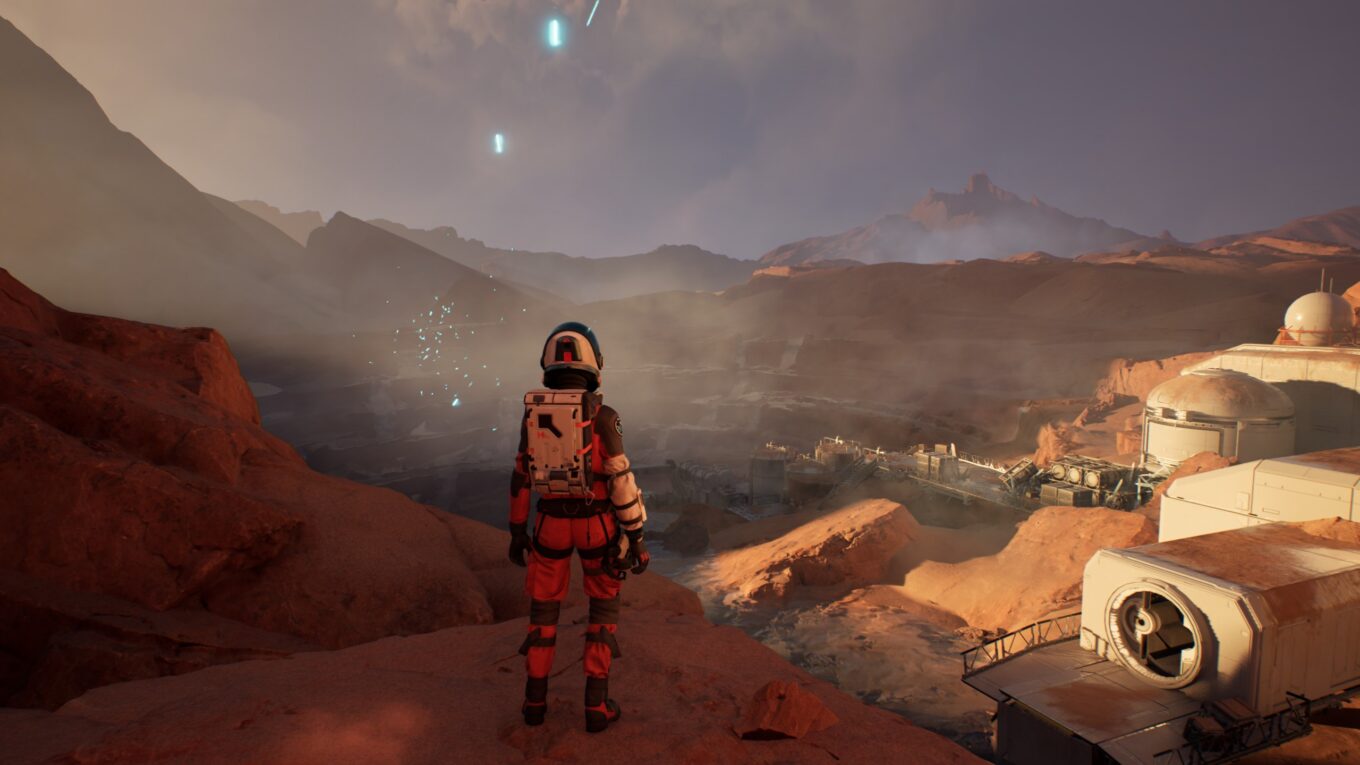
But by this point, we’re both feeling fatigued. There’s only so much climbing you can do in one go, especially when its only twist on what you’d find in a hundred Uncharted-likes is an extra button press to secure a firm grip. I’d like a coffee. Also, the washing up needs doing. I pause the game, potter around for a bit, and by the time I return I’ve forgotten where I was.
“See,” begins Ariane, in the midst of a monologue to herself, a habit that will eventually become so frequent it loses all meaning or narrative weight, like repeating the word ‘spoon’ until it feels alien on your tongue. “You can do it,” she pledges to herself. About two seconds later, still not caught up from my break on my exact surroundings, I flub a jump. Ariane falls to death, her character model flailing mid-air until she crumples on an invisible floor.
Jank does not a bad game make. It can often be charming. But it’s one of the great ironies of games that no matter how carefully tailored or directed a work’s atmosphere or script, the player always has the opportunity to shatter the vibe. Some games embrace this, like Dark Souls with its silly hats. Some games are so afraid of it they punish deviations from their intended paths immediately; Grand Theft Auto’s autofails for going off-script. For the most part, as soon as a game contracts some sort of cinematic ambition, it opens itself up to having its atmosphere ruined as soon as you start treating it like a videogame.
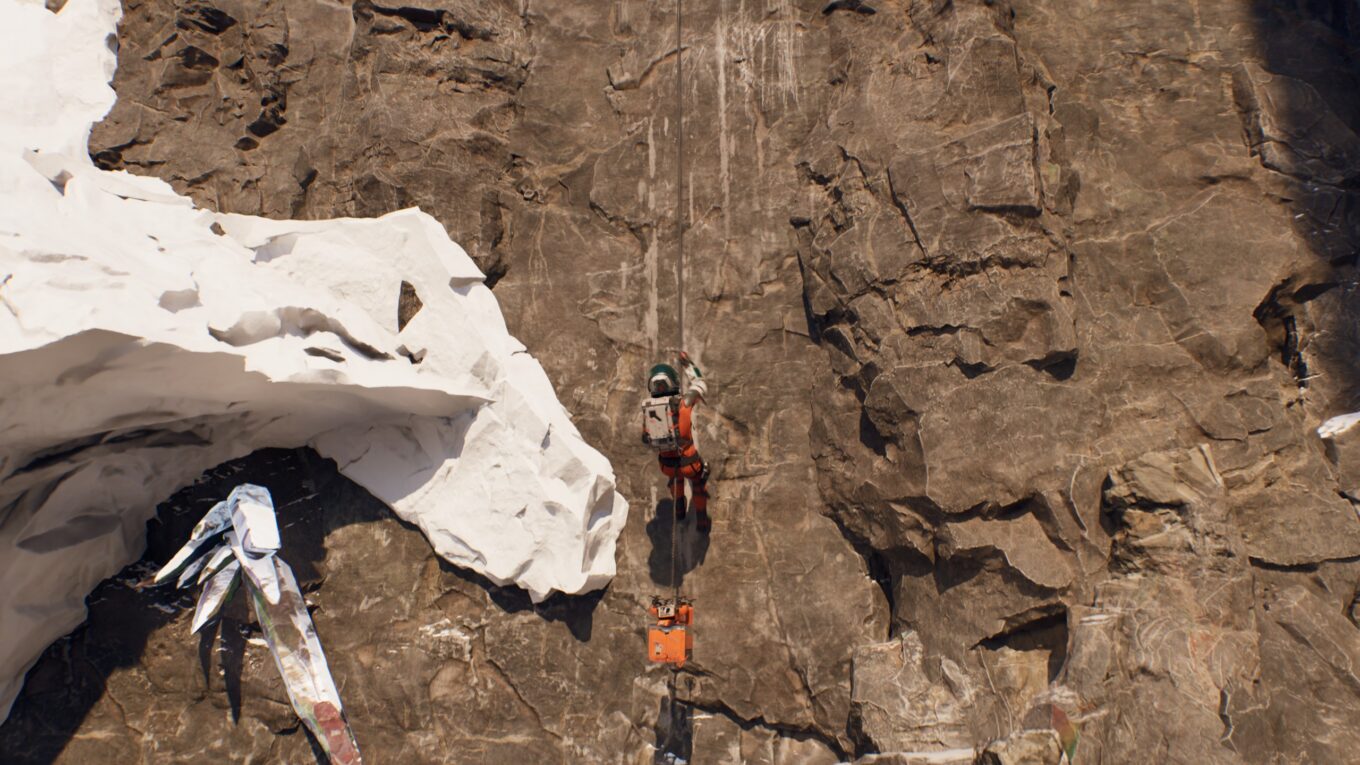
Aphelion can’t pull off its prestige cinematic ambitions. It isn’t up to the task, technically. Too rough and stiff and riddled with goofy quirks to stay convincing for long. Too insistent – through its musical swells and constant monologues and clumsy melodrama – on its sporadic moments of beauty landing that they too often land false. I wanted to play Aphelion because I loved the tender tone and and delphic alien landscapes of studio Don’t Nod’s previous Jusant; loved the vibrant tension of its climbing. If Aphelion can be called a spiritual successor to Jusant, it’s a poor one, in thrall to fidelity and realism and tiresome triple A guff at the cost of Jusant’s charm, creativity and soul.
Aphelion presents itself as, simultaneously: an ecological fable told through the referential lens of a grand Greek tragedy, a Jusant-like tale of overcoming an hostile environment to obtain a precious treasure, and a sci-fi survival horror. But it explores none of these ideas with nearly as much attention as it does its real story, which is about a woman who ends a relationship because of work commitments before eventually realising just how important that relationship was to her.
This is, nominally, a fine concept. Much good sci-fi throws complex set dressing over a simple emotional core. But any tenderness or pathos between Ariane and her crewmate Thomas is poisoned by a script so distrustful of the player’s attention span that it feels like one of Netflix’s ‘second screen’ films – art designed from conception to accommodate constant interruption and goldfish-tier attention spans. Ariane states and restates her every discovery, goal, thought, and feeling. Moments of quiet environmental beauty are cheapened as you’re told just how beautiful it all is, as if the game is terrified you might not feel the exact emotions it wants you to, exactly when it wants you to feel them.
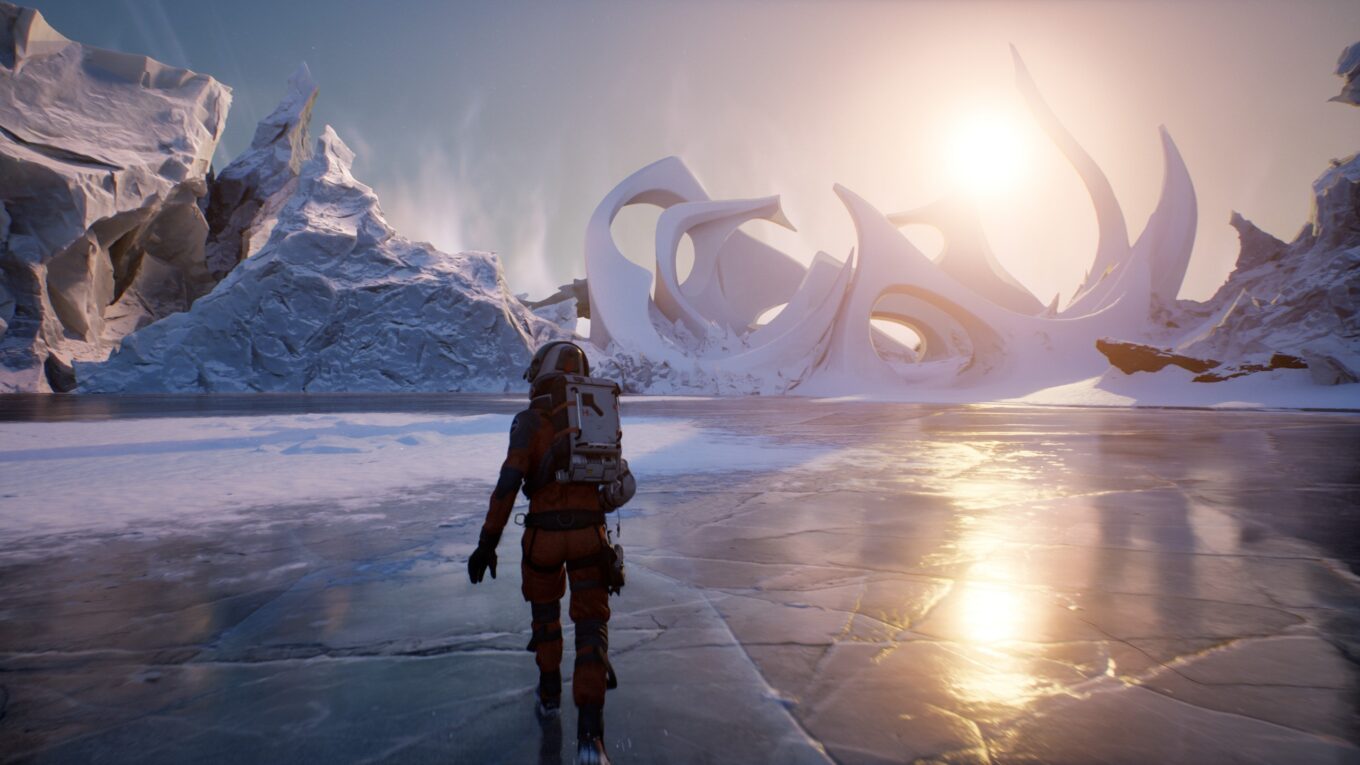
Ariane needs to find a device called the spectrum amplifier to progress. It’s used to study anomalies in the planet’s electromagnetic field – a sort of flowing blue space magic used here to explain everything from why you can knock the ice from grapple points with a scanner, to why Thomas keeps appearing as a force ghost. I learn about the spectrum amplifier, and how it works by studying anomalies in the EM field, from a series of computer logs. A large map marker tells me to find the spectrum amplifier. After completing a set piece stealth sequence, Ariane says something to the tune of “I can finally get to the spectrum amplifier”. When I reach it, I’m not allowed to interact with it until Ariane has finished saying: “So this is the spectrum amplifier? They designed it to study anomalies in the EM field!”.
This sort of thing keeps happening. Objectives and character motivations are highlighted, then underlined until the narrative’s proverbial pen has scratched the paper to fragments. I am numb by this point. I consider finding the nearest ledge and throwing myself off several times, just to feel something.
Perhaps I’ll find it in the “tense stealth” the game’s Steam page promises. Tense is, admittedly, one word for the five or six near identical sections so dull and loose that the threat of death – of having to spend a single second more than is necessary playing through them – is admittedly terrifying.

You’ll be hiding from a creature named Nemesis (geddit?) – a sort of massive shadow worm with a sharp beak made of ice. It’s a vague, flat bit of monster design, and Nemesis’ lack of presence or believable threat reduces its sections to a droning game of grandmother’s footsteps, with no room for ingenuity or expression or anything but plodding, start-and-stop instruction following. Worse still is a climatic story moment entirely predicated on finally being free of the creature after four of five identical sections – only to have to face the thing two more times.
A story about humanity seeking a safe haven among the stars after condemning their planet to ecological disaster might well inspire certain questions. “If we can make Perspehone habitable, what will we do to treat it differently?”, or, “isn’t there a sort of unspoken techno-nihilism in all this? A implicit ‘well, fuck our planet, we’ll just get a new one if things get dicey?’” Aphelion isn’t remotely interested in interrogating these issues, and it all ends up uncomfortably reminiscent of a narcissistic, Muskian space utopianism in which it’s easier to imagine a theme park on Mars than halting the brakes on rampant resource extraction long enough to fix our own terrestrial problems.
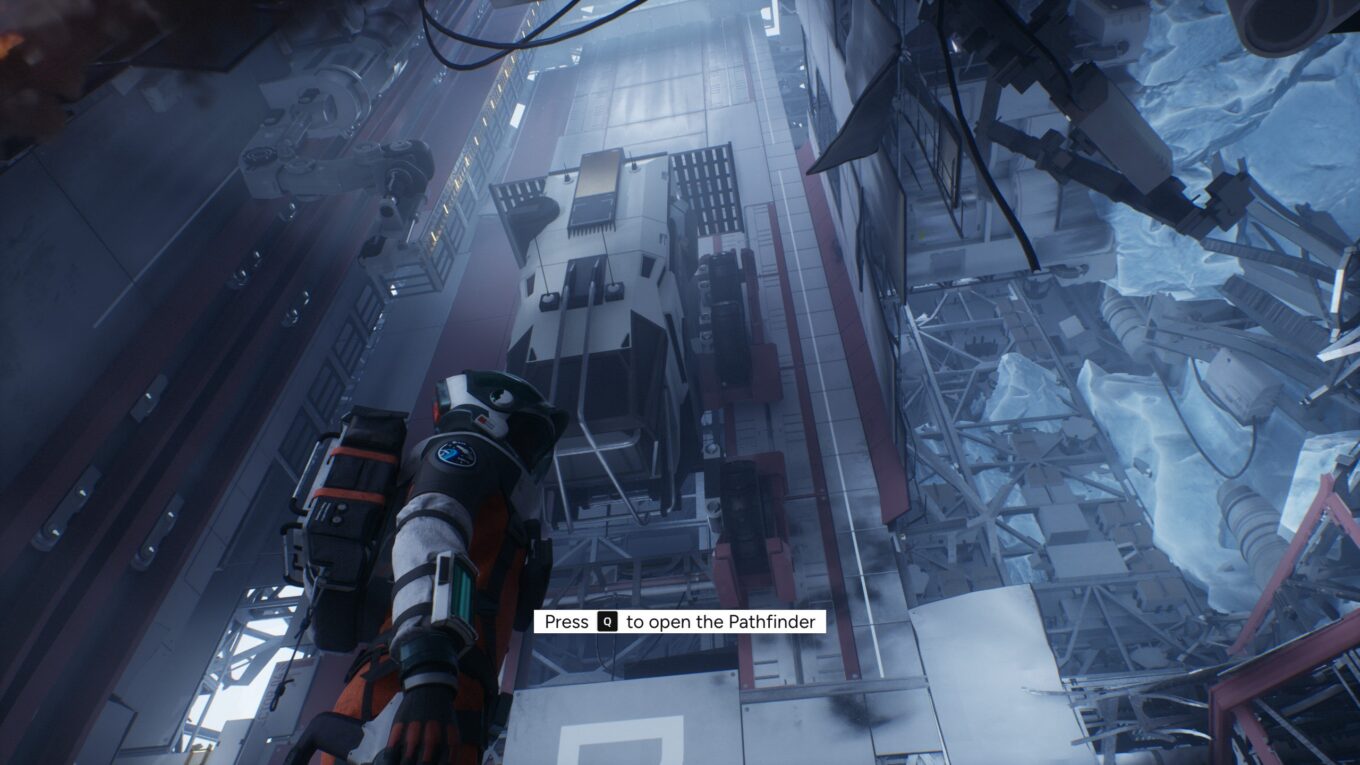
Aphelion briefly flirts with the consequences of mining too deeply and greedily. The nemesis creature, we learn, is a sort of planetary defence mechanism stirred to life after a previous expedition tried to terraform the place. Still, even this is framed as a necessary evil by Thomas. “They knew they were going to fast, but what was the alternative. The earth doesn’t have time, this was our last hope”. I’m…not sure that’s what the ancient Greeks were getting at.
Ultimately, any themes the game might have once had are abandoned to centre Ariane and Thomas’s relationship, which then has its own conclusion undermined by a Deus Ex Machina in which, ahem, blue space magic makes everything better. It’s tawdry and evasive – an avalanche of cheap sentiment that feels all the more cynical for its refusal to honestly engage with its own story’s stakes or circumstances. And if you’re going to make shimmy across any amount of ledges or squeeze through a dozen small gaps, you’ll have to offer something better than that.