There’s a man about to shoot me. A simple enough predicament in any other shooter – you aim your crosshair at them and left-click to resolve the problem. But here in Guns of Eschaton’s demo, I quickly come to the understanding that when the undead gunslingers that prowl its eerie deserts aim at you, things are more complicated. A lot more complicated.
This isn’t your dad’s shooter. You’re a long way from Counter-Strike here in Eschaton, a kind of purgatory for people who like covering their eyes with their hat brims. This is a bold and ambitious genre cross-pollination from Eschatology Entertainment, a studio formed by Wargaming veterans and the esteemed and sadly missed Half-Life 2 art director and Dishonored visual design director Viktor Antonov. It’s doing the shooter very differently. Simply headshotting enemies, for example, generally achieves nothing.
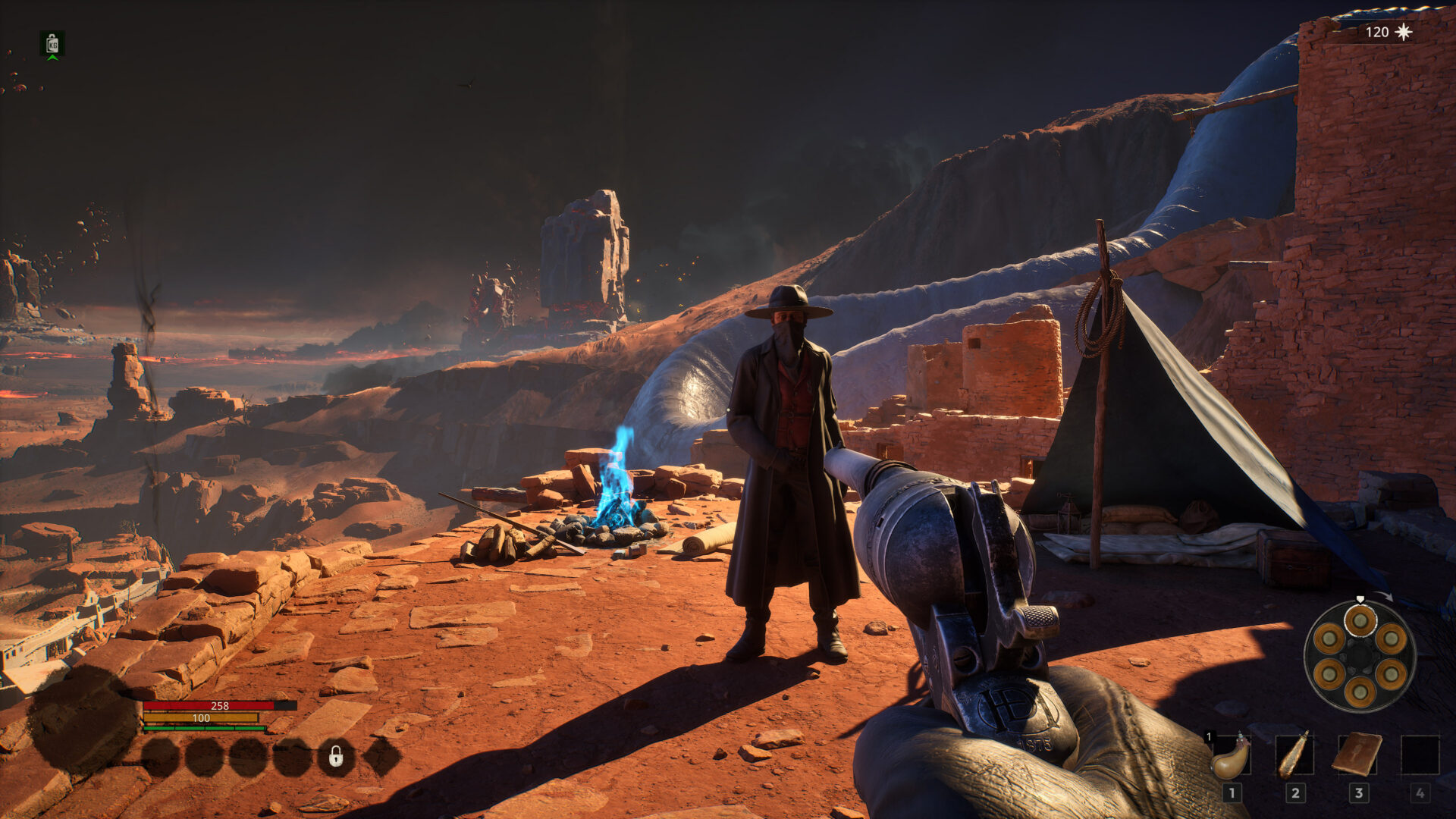
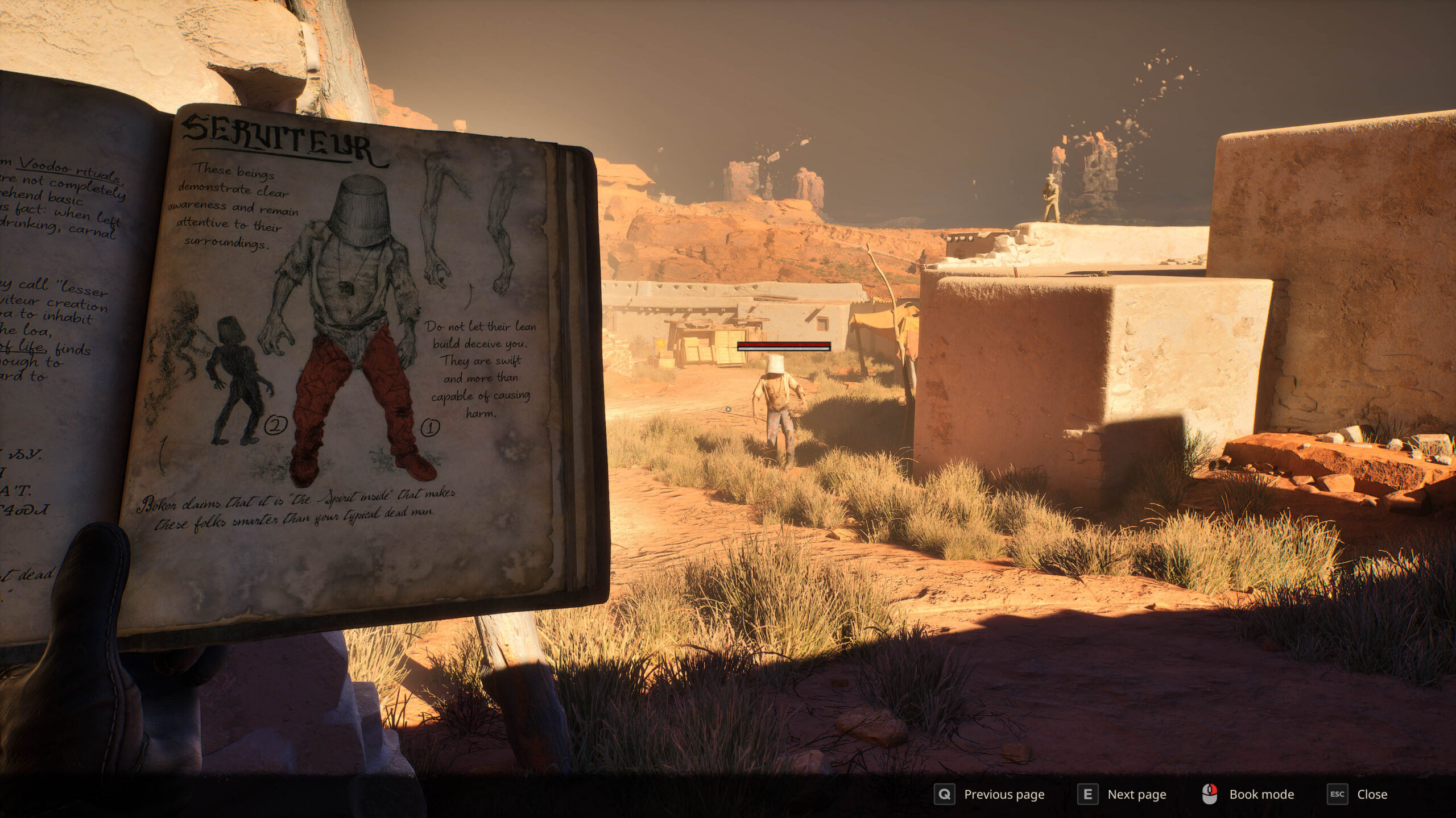
To drain their health bar most effectively, you need to shoot their weak points in sequence. What are their weak points, and do you know what order to shoot them in? Great question. It’s all in a book you carry around with you which details each enemy type. So quite often, you’re holding a revolver in your right hand, while holding an open codex in your left, peering at the supernatural cowboy about to shoot you to discern whether he’s a Serviteur or a Severed Lawman, and thus which limb needs shooting first.
It’s a preposterous image. Imagine Clint Eastwood thumbing through a big phone directory of desperados mid-shootout – some degree of dynamism would surely be lost. However, the inherent clunkiness of the system is offset by the satisfaction you get from committing various enemy silhouettes and their crit sequences to memory, and then popping off three revolver rounds exactly where they need to be.
But that’s only the tip of the complicated gunfight iceberg. Sometimes, for example, enemies will want to duel you. They’ll enter a particular stance to indicate this, and that means you don’t shoot first. You wait for them to begin their firing animation first, then hit the counter button. This stuns them, leaving them vulnerable to your counter-shot, which will kill them instantly.
That same counter can be used whenever an enemy fires at you, albeit within a narrow window of animation frames. You’ve got a quick dodge at your disposal too, which drains your stamina bar as you use it.
You’ll need to use both of these constantly. Because as the self-styled first ever soulslike FPS, every combat encounter against every type of enemy can kill you very quickly. Even a small mob often proves overwhelming since you need to shoot their weak points in sequence. Authentically fiddly for a 19th century firearm, your six-shot revolver is slow to cock, slow to reload, and low-damage. It’s like entering a shootout with a gun that just woke up and doesn’t like your tone.
There are thus two ways to progress. The first is to be supernaturally good at the game. The kind of insufferable jerk who streams themselves beating Promised Consort Radahn using a Kinect, has a photographic memory for attack patterns and can seemingly view the game’s code directly after spending two minutes playing it.
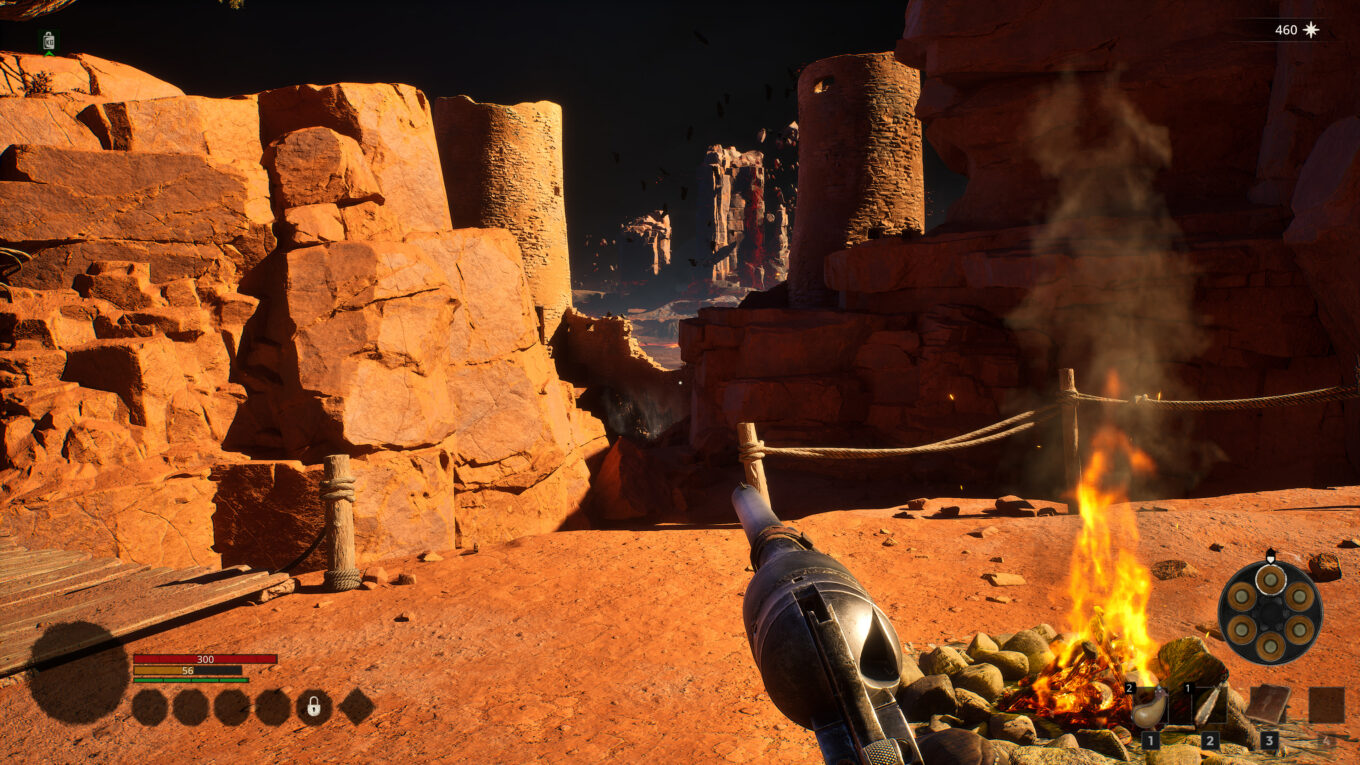
The second is to grind souls and upgrade your stats at a bonfire. I chose the latter. And it was during this grind that I saw both Eschaton’s great potential and considerable pitfalls.
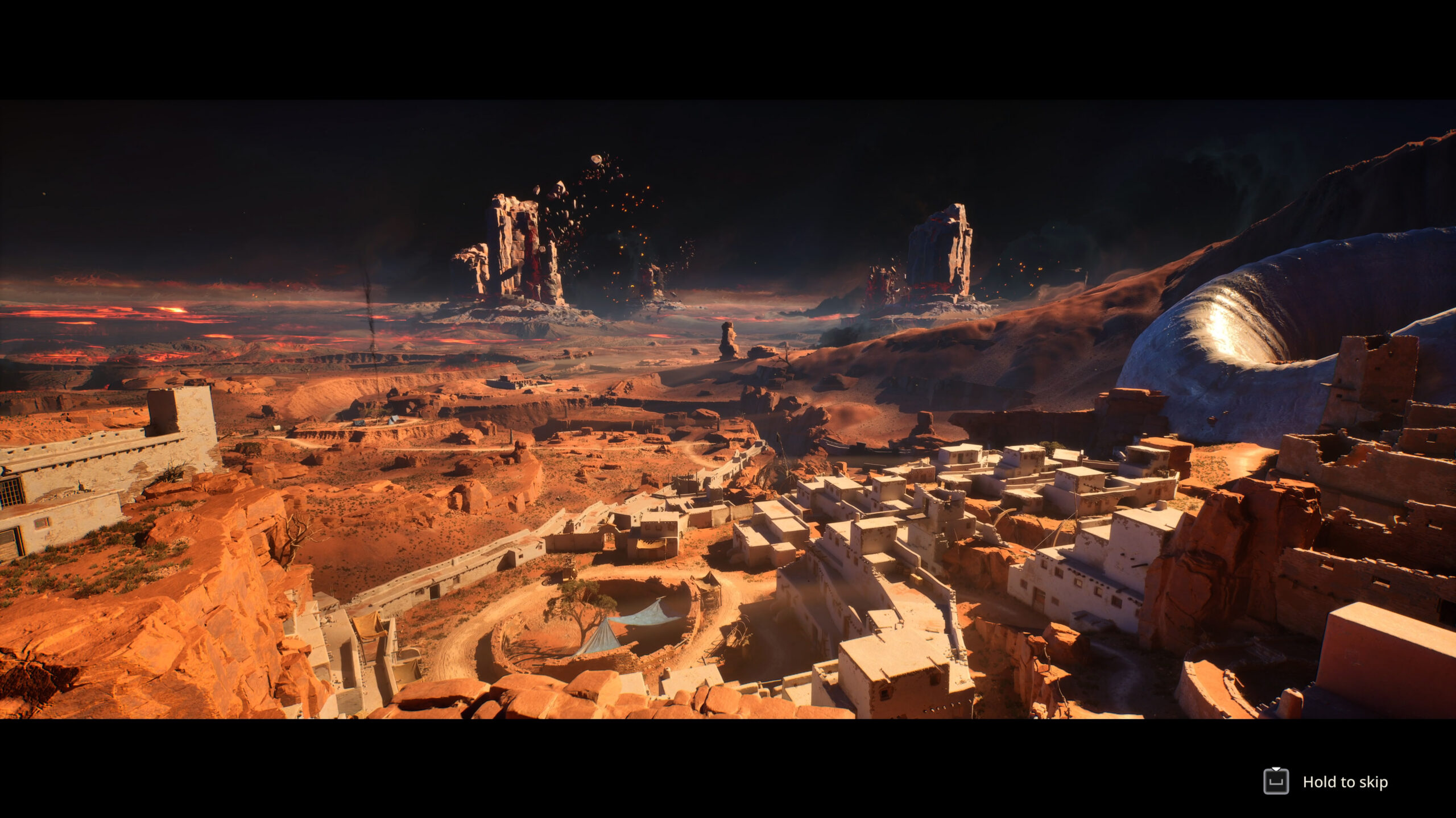
Typical of Antonov’s work, the world here is vivid and fascinatingly obscure in its points of reference. It’s the Wild West viewed through the eyes of the Holy Roman Empire, a place where ten gallon hats and bishop’s mitres meet. So it isn’t just determination to rise to the challenge that propels you forwards, but a desire to delve deeper into the strange.
And crucially, firing a gun feels good. Parrying at the right moment provides the satisfaction that it should, if you can deal with the fact that you’re repelling bullets with your forearms. The rhythm of combat feels right. There’s just enough time to read enemies, react, and plan your next move.
But there are mechanical problems in this demo. It’s true of both soulslikes and shooters that the more they ask of you, the more you demand of them. FromSoftware got everybody to commit to Dark Souls’ ruthless boss fights because its combat was immaculate, consistent, and transparent. You always know why You Died in a good soulslike, and you always feel that it was fair. Except for the times someone invaded your game and pushed you off a ledge. Screw those people.
So when you shoot a distant enemy and do no damage, then take damage from them a moment later at the same distance, a problem emerges. The rules of hit distance aren’t made explicit but simply seem to favour your enemies. They can hurt you from far away, but you can’t hurt them. Simple. Unfair.
There are environmental collision issues during gunfights, too. On several occasions I peeked out from cover with my crosshair on an enemy but hit the surface immediately in front of me instead, because bullet raycasting gets snagged on invisible surface geometry. If you’re going to expect pinpoint accuracy from me, I expect it in return.
There’s a conceptual gripe I have to air, too: the hit sequencing is a good idea, but right now there’s no logical reason why you should hit enemies’ body parts in a certain order. Serviteurs have only one piece of ‘armour’, and it’s the bucket on their head. Neither of their legs is armored, so there’s no in-universe reason why I should need to shoot either leg, let alone their left leg first. The sequence has no relationship to the enemy’s appearance. For this system to reach its potential, I want to see armour or equipment that needs to be shot off in a certain way because it exposes further weak points or visually impedes the enemy, not simply because a little book tells me that’s what I need to do.
This isn’t the kind of thing you uninstall a game over. Especially not when it seems to have so many other unusual ideas to offer. Your revolver’s chambers, for example, can be loaded individually with different ammo types. So if you know – by being killed 17 times before – that the next room has a particular enemy composition, you can plan ahead and load your gun so that you’re firing specific rounds at specific enemies.
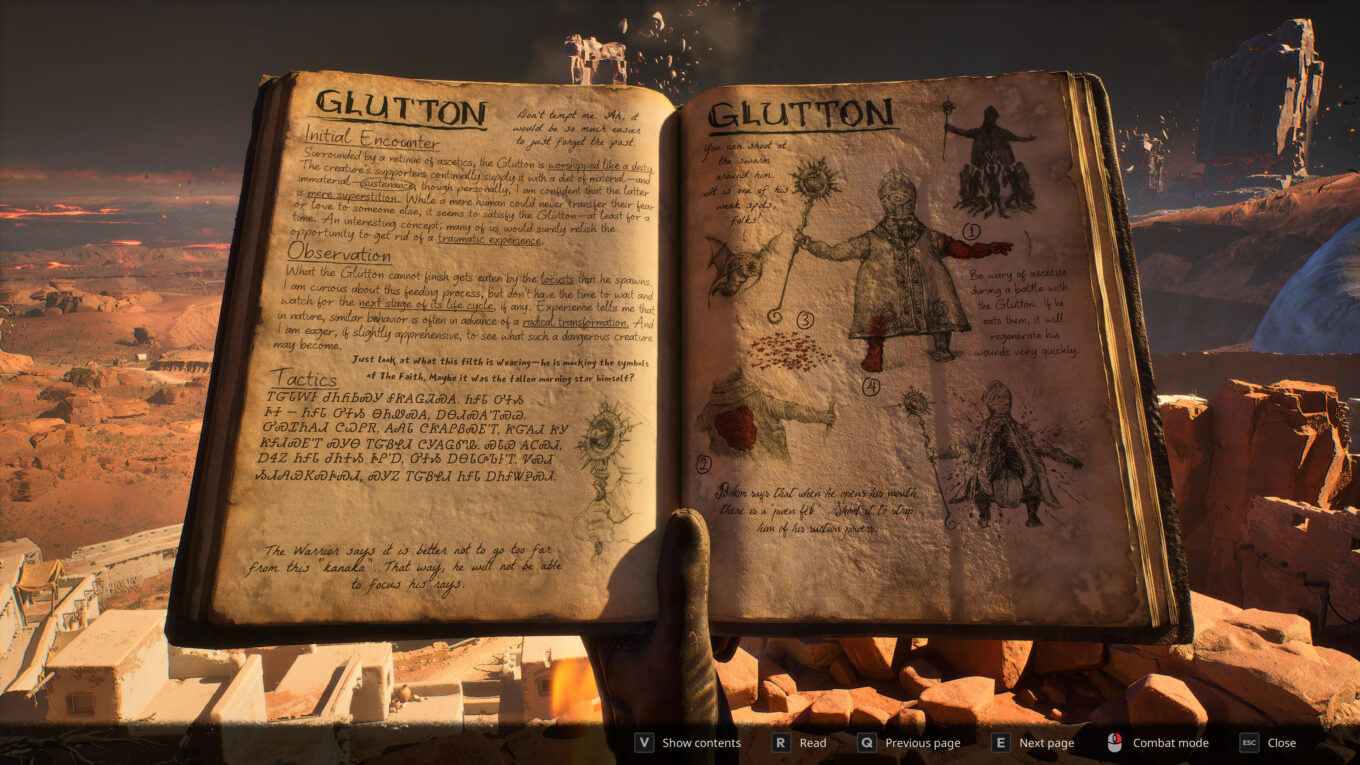
Then there are the boss fights, taking the idea of memorising hit sequences to the extreme. And NPCs who are, for once in this genre, happy to talk to you about the world and its lore. It’s surprising what a difference this makes, actually, particularly if you’re not into scrutinising the underside of a locket in an inventory screen and cross-referencing it against a symbol you saw on a wall three hours ago to figure out why the next boss ate her children, in classic FromSoft fashion. As much as I appreciate environmental storytelling that trusts your observation skills, it’s nice to have a natter with the folks of Eschaton in between ferocious gunfights.
There’s no specific release date yet, but this game is still slated to release in 2026, and the demo will be on Steam shortly. There’s some polishing yet to be done, but there’s real potential in this title to become a major talking point, and one of the year’s most ambitious and enjoyable releases.