
I was prepared to be unsurprised by Silver Pines, Wych Elm’s side-scrolling survival horror. It’s not subtle about its inspirations, sporting a limited inventory, stylised zombies, and scarce ammo. We’ve seen it all before across countless tepid rehashes of Twin Peaks and Resident Evil. Imagine my pleasure when I discovered that Silver Pines erects a fog-piercing nightmare on those foundations.
It sets you in the gumshoes of Red Walker: a private investigator who’s come to Silver Pines on the trail of missing musician Eddie Velvet. Why? He’s not sure yet. When we meet Walker, he wakes in an empty diner. Lights flicker and grey sky lours through the window; the radio repeats an evacuation order. He has arrived on the eve of a historic storm.
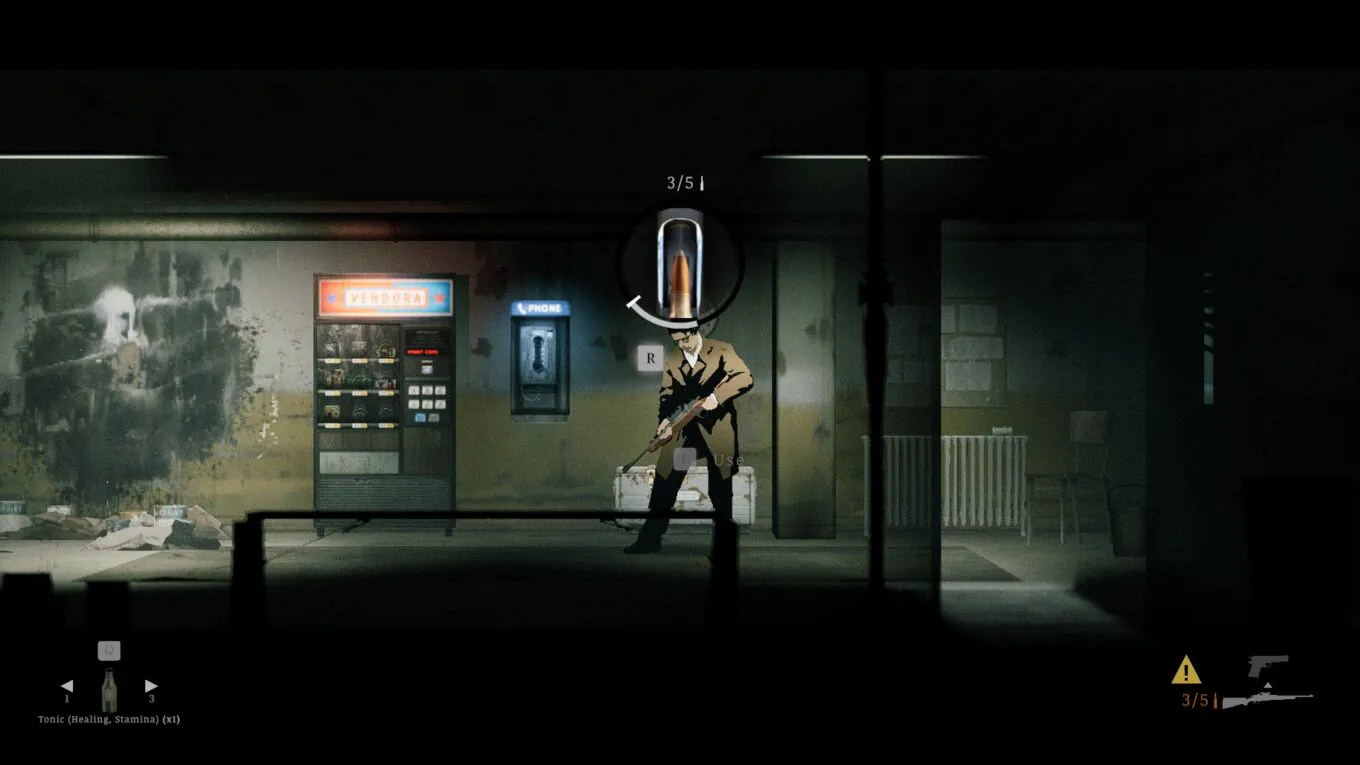
Outside, a payphone rings. Mr. Jackman, Walker’s de facto employer. There’s a sinister tone as he reminds Walker where he is and why, but it’s Walker’s uncertain cadence that’s more unsettling: as if on the edge of waking and sleeping and barely able to remember what side he’s on. Aloud, he even wonders if this isn’t a dream. As Karl Flodin’s gentle score tinkers beneath the patter of rain, Silver Pines gives us plenty of reasons to ask the same.
Heading into town proper, you navigate a maze of parallel streets. Far from recently deserted, decked with burning cars and papers rustling on the streets, Silver Pines looks like a ruin. The game divides the town’s exterior into bitesize side-scrolling chunks joined by transitions that form circuitous routes that allow Walker’s path to loop back on itself as needed. It’s one of many pleasing touches you’ll start noticing.
For instance, when you meet a deputy at the ferry office claiming to check that everyone’s left town, you can wade into the nearby water. Walker will quickly run out of stamina and sink. Rather than teleport you back, Silver Pines drops you onto the dock, sputtering and gasping for air, on all fours. The game has attention to detail like that. Most of those particulars are meaningless. Few would be bothered if Walker didn’t brace himself against walls with an audible “oof” when gleeful video game reviewers run him into them over and over. Yet, he does.
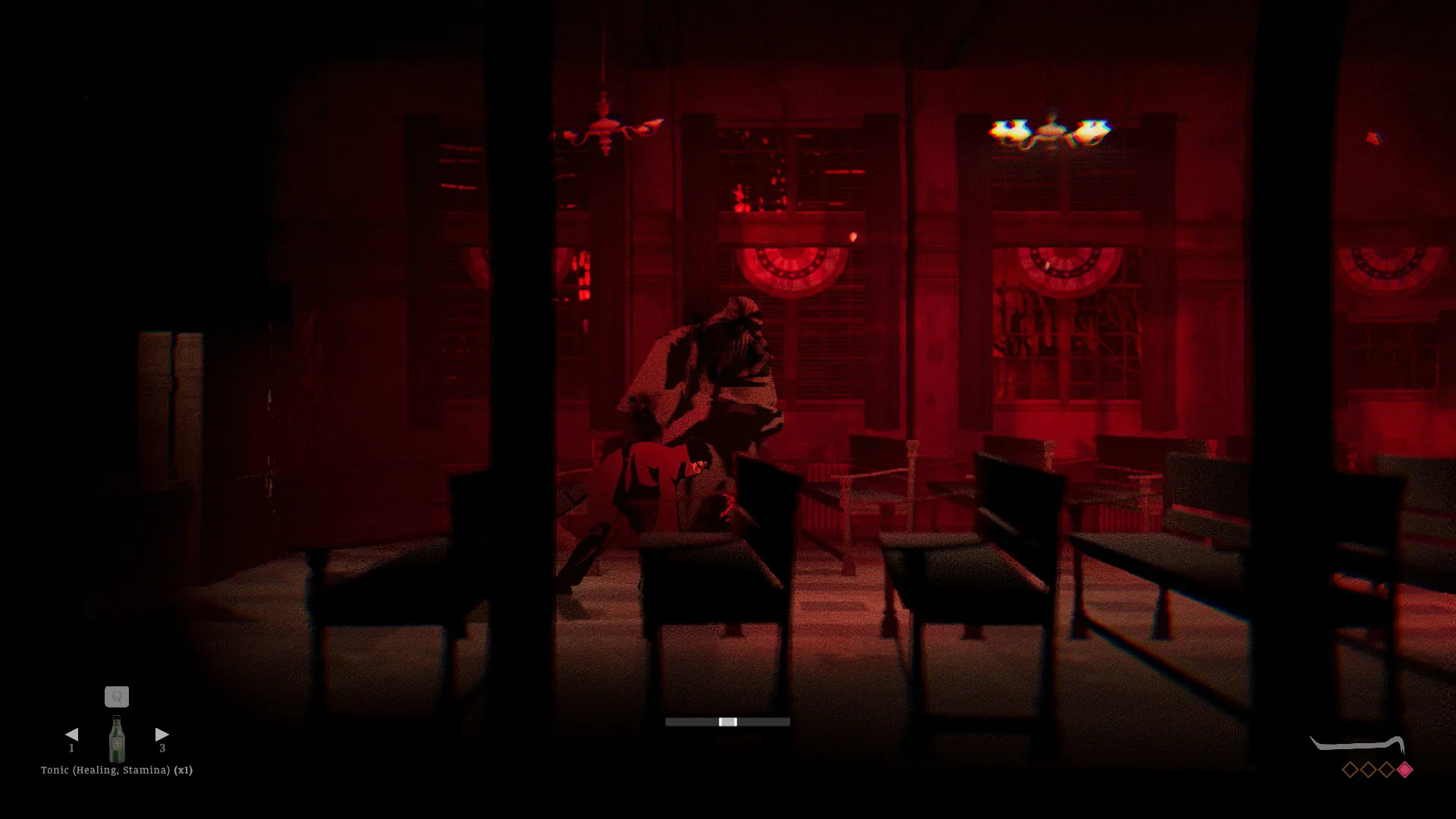
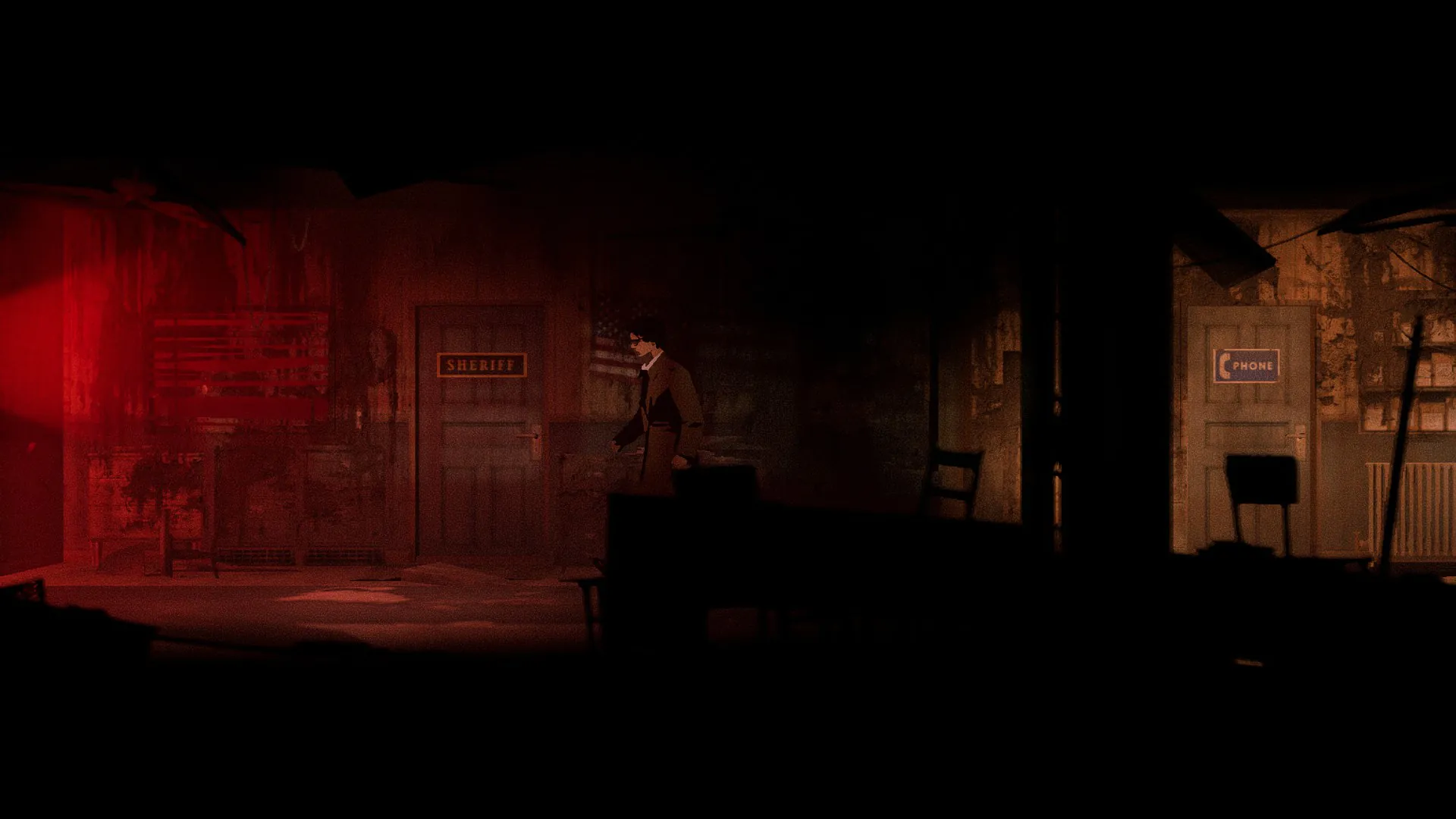
It’s part of a broader liveliness that belies Silver Pines’ dour, brooding gloom. Another is the decision to rotoscope character animations – a method by which animators trace motion picture footage frame-by-frame – giving Walker a movement and gait more natural than the average video game.
That’s fortunate, because the town does feel empty in these initial steps. It needs Walker, who begins as a milquetoast archetype, to fill its streets with something more humane. You’ll run into stragglers: strangers who make for unsettling interruptions here and there. But whether they’re brave in their lack of concern or sadistic in their acceptance, and possible relish, of what’s coming is uncertain as the clouds roll in and Silver Pines is swallowed by shadow.
Regrettably, you soon discover the town isn’t as depopulated as it appears. In the course of Walker’s initial investigation, you come across a human-shaped canvas bundle in an alley. It’s conveniently placed beside the key you need to progress and there are no prizes for guessing what happens next.
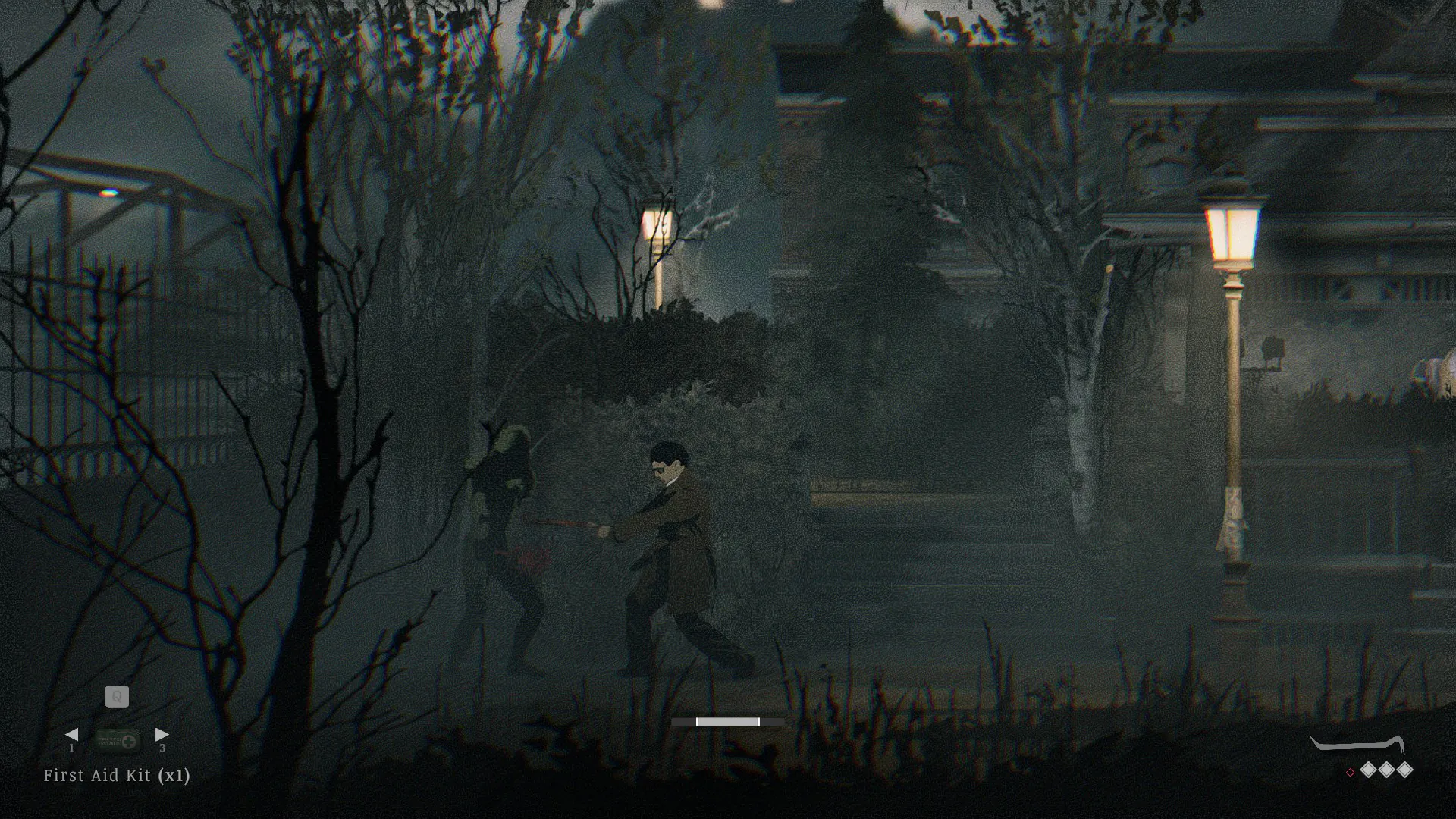
What emerges is best described as a shadowed zombie. Weeping and violent, a player’s first thoughts will likely bend to Alan Wake (and Silver Pines could, uncharitably and reductively, be compared to a side-scrolling Alan Wake). Armed with only a , your best bet is to run; for which Silver Pines furnishes you with a generous dodge. Stand and fight, however, and you quickly understand how imprecise combat is.
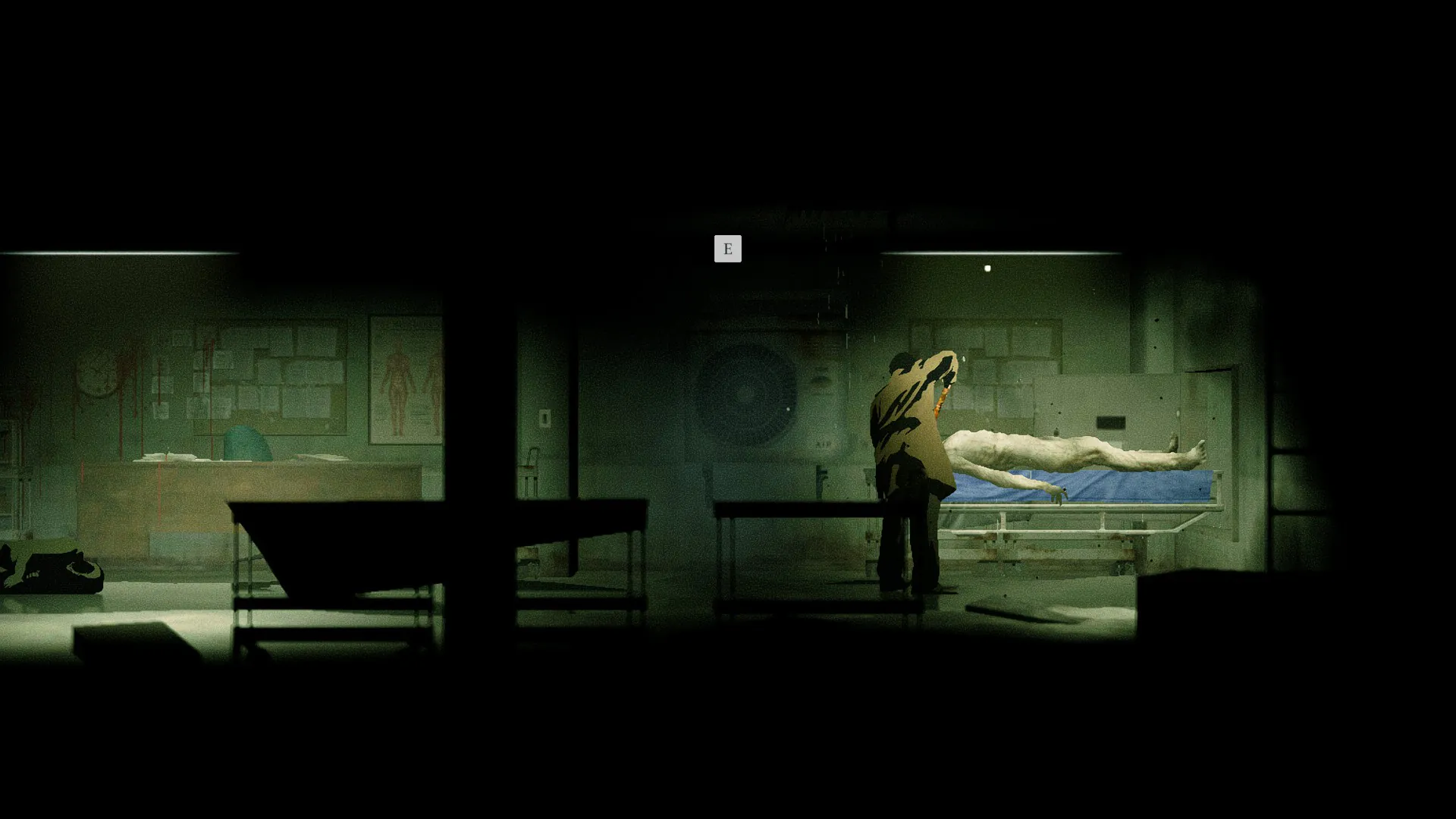
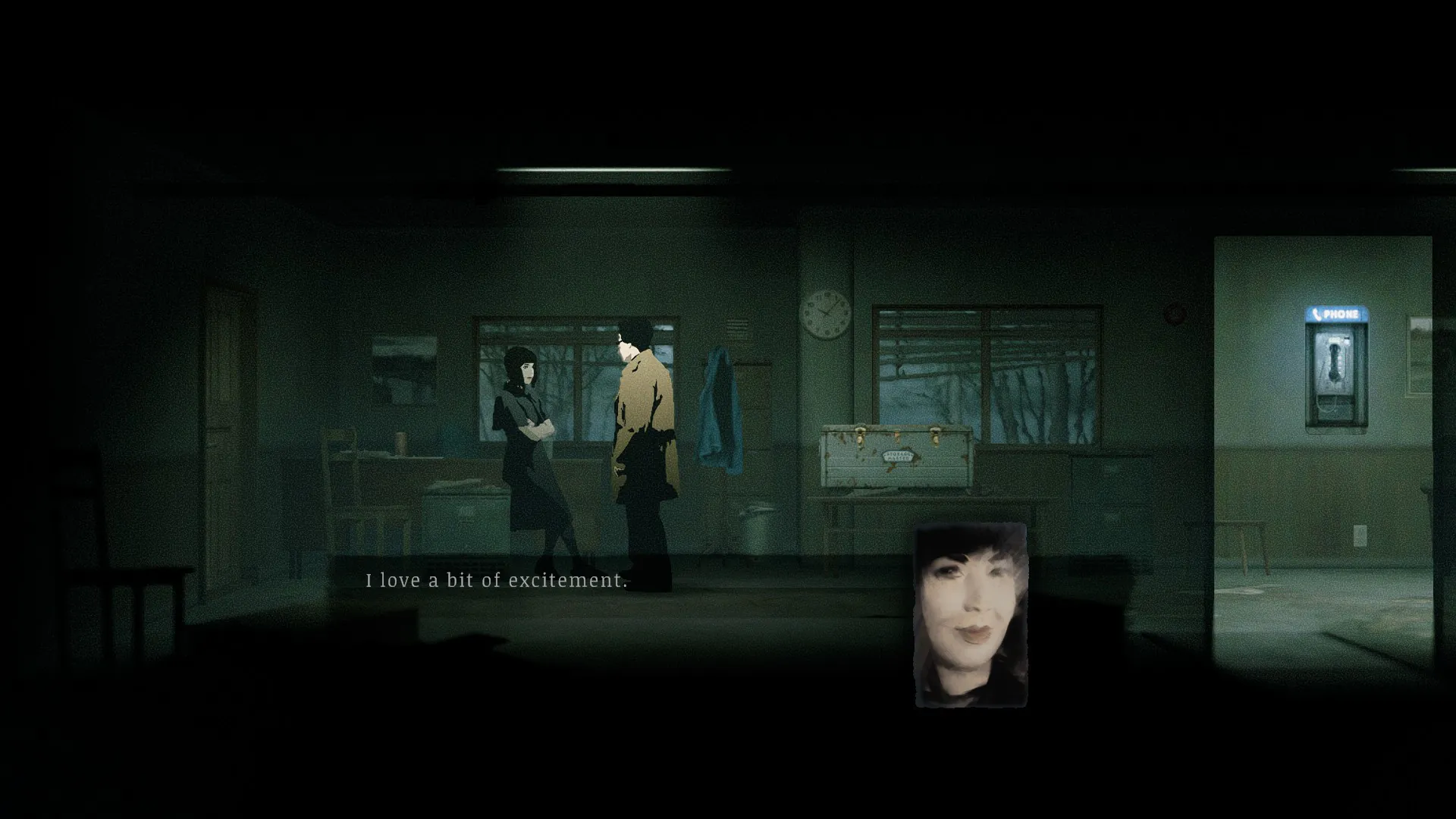
At first, I thought this might be an overt signal to avoid confrontations. Combat is built on stamina and while that exists predominantly to gate routes you’ll later swim, with so little it felt like using it to fight rather than dodge was a waste. You can increase it by brewing coffee but it remains a finite resource out of balance with enemy aggression and the environments built around them.
Supporting that was how scarce ammunition was when I did find the gun. You can buy it in vending machines (America!), from the same pool of money that Walker uses to save – having looted it from abandoned apartments and businesses. At this early stage, the pistol was the only way to open padlocked doors and I was impressed by the trade-off Silver Poses: put down a couple of zombies or use the gun as a key to find collectibles.
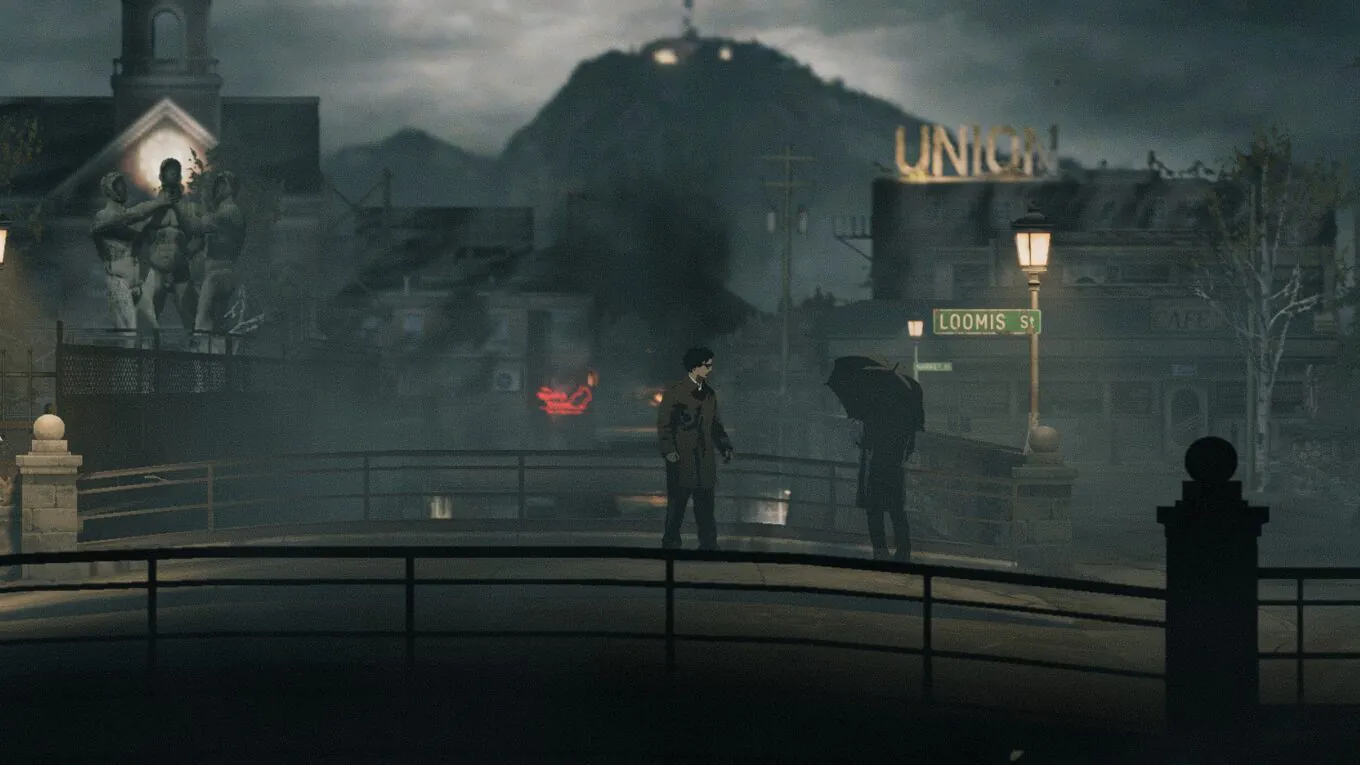
As the game progresses, however, Silver Pines showers you in bullets, persistently puts you in situations in which you must fight, and overpopulates the town. Shades appear every time you find a key item, when you read a note; in every building, street, and sewer grate. The triggers for which are off-kilter, regularly leaving you no time to back out of your inventory or reading information before you’re attacked. It all adds up to a combat system that feels clumsy, unfair, and often unnecessary.
Silver Pines, the town, is remarkably atmospheric even within the broad pantheon of horrific sleepy towns that have emerged from David Lynch’s influence. Its emptiness, and the strangeness in which that clothes the people who remain, contributes to a creeping dread rarely captured in horror media in general, let alone video games. It feels like being in school on a weekend or walking through a bustling city centre as the sun rises in summer. Silver Pines doesn’t capture the sense of these towns from what we know from TV and films, but from what we know about uncannily deserted spaces.

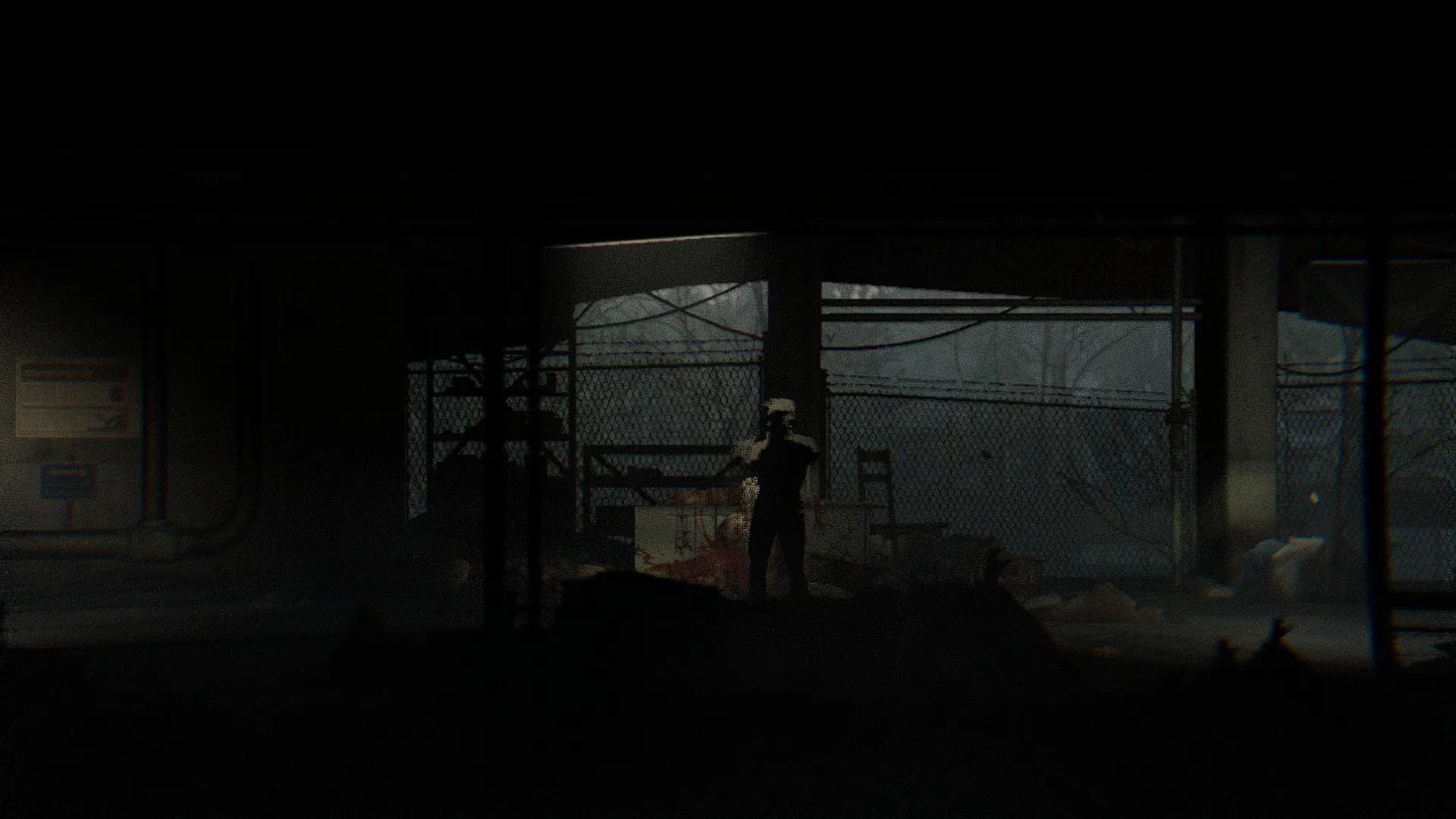
That’s why it’s such a shame Wych Elm resorts to cheap scares as Silver Pines’ zombies materialise from thin air, often behind silhouetted foreground scenery that makes them impossible to see even when you know they’re there. Goodbye fear of the unknown: you know that every building has something waiting: be it zombies, insects, or boss fights. The latter of which only escalates how maladroit combat is and how hard it can be to parse when black enemies attack from perpetually shadowed interiors.
I complain often that interactive media is afraid to let us exist in its worlds; unwilling to create sensation through thoughtful and characterful settings. Silver Pines accomplishes that, and how: a ghost town that doesn’t know it yet, isolating and cryptic. Though Silver Pines may be cobbled together from many Frankenstein parts – Twin Peaks, Resident Evil, a soupçon of Metroid by way of The X-Files and Deadlight – Wych Elm’s small team has marshalled them into a bewitching narrative replete with force and tension. It’s particularly galling that it squanders some of that with uninteresting and unbalanced confrontations.
It’s an unfortunate loss of nerve but Silver Pines is far from the first piece of media to not understand that zombies aren’t interesting. Fundamental as combat is to the game, however, its deficiencies cannot detract wholly from what Wych Elm has achieved. It’s frustrating, it’s obtrusive, but it’s not terminal. Alongside atmosphere and combat, Silver Pines understands – unlike some other puzzle games I’ve played alongside – the joy of following a trail: of unearthing clues to solve puzzles, and rewarding the player for that.
Throughout Silver Pines, as I deciphered door codes and pieced together the trail of Eddie Velvet, I did feel like I was playing the part of the detective. So enjoyable were the loops those puzzles led me on that I didn’t mind, as the map quickly filled and became unintuitive, being occasionally turned round.
It is one of the worst experiences to sit through a game trying to copy others to the point of lifelessness. In an industry of influence-driven, cynical games, Silver Pines bundles its inspirations with so much conviction and atmosphere that it feels less like homage than able continuation: a slithering afterglow of the best of Lynch, Resident Evil, and, in surprising places, Kiyoshi Kurosawa. Reference without pastiche; Silver Pines is a bad dream on the screen – in the best possible way.