I am babysitting a dozen bloodthirsty minotaurs. Ten turns ago, they brandished their axes from the top of the food chain, feasting on armoured griffin sashimi and giant spider Pâté. Now, they’re cowering in the corner hexes, the soil they once fed with their enemies’ viscera now nourished by stinky bovine fear piss. Long superseded by other units, I really should disband them, but I feel an almost fatherly duty to keep my large dumb snorting failsons alive.
My own experience with Heroes of Might and Magic goes back a few decades. Perhaps these beasts would stand a better chance if my brain hadn’t decided to jettison whatever knowledge I’d had and replace it with self-assessment tax figures and how long to microwave various sizes of baked potato. I wouldn’t say my time reacquainting myself was rough, exactly, but the game isn’t exactly forthcoming with the information you need to weather its campaign’s bumpy difficulty spikes. If this sounds like I’m handing down a negative assessment, though, I will say that Olden Era very much encouraged me to get good enough to see more of it.
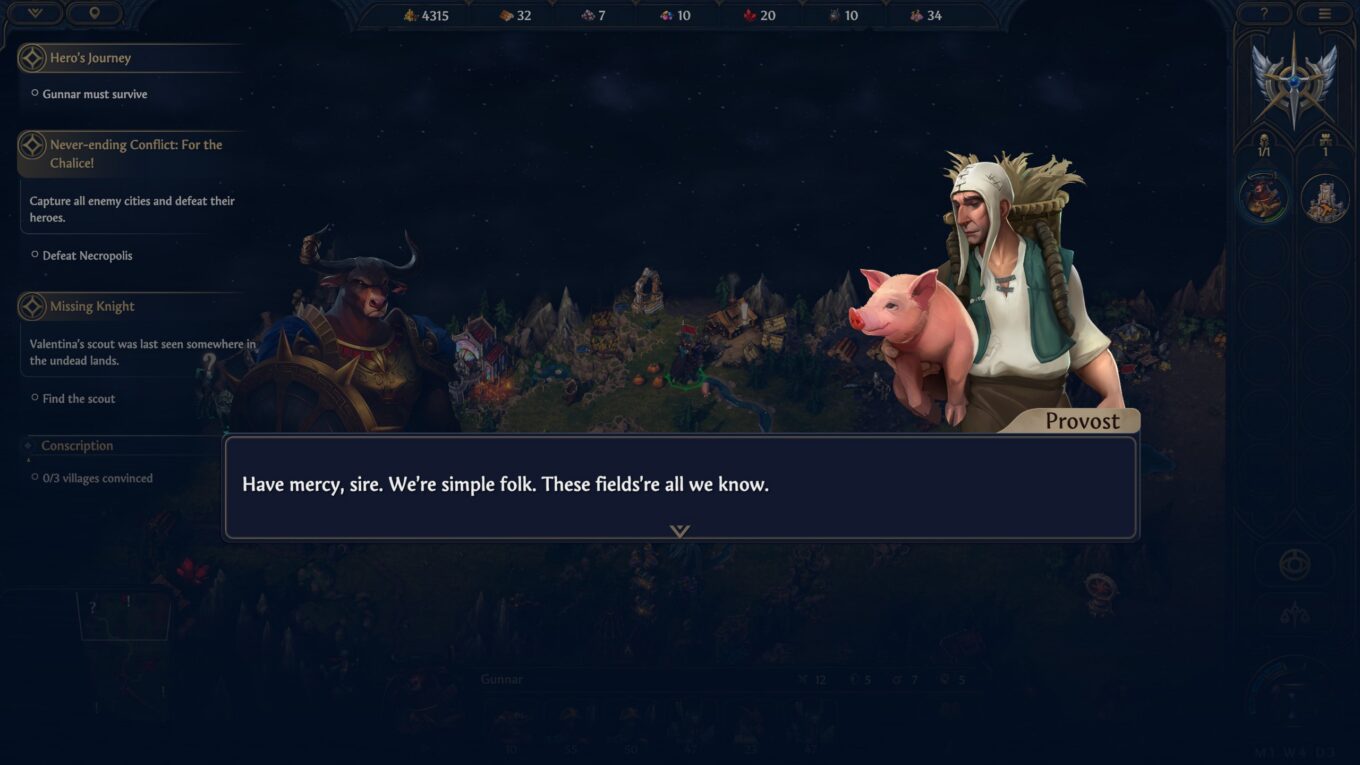
I’ll get into all that shortly. For now, I command my hero Gunnar to capture an undead castle. Two minotaurs fall in the battle. I bolster my ranks of human crossbowmen with ghosts and skeletons. Next turn, Gunnar gallops through the fog of war, revealing a portal leading to a gaggle of hydras. Three more of the big bulls bite it. The turn after that, I meet a dark elf scout who bolsters my ranks with teleporting assassins. And another. With each new stack, my minotaurs moo heartbreaking laments at their own growing irrelevance. I hear them not. I’m too intoxicated with my new collection of beasties, like a mad Victorian on safari.
“Hey, I know this game!”, I think to myself. “It’s Pokémon!”.
I’m certain that the game didn’t intend this, even if my uncle, who works for Nintendo, did once tell me that the company gets a real kick out of others mimicking Pokémon, and all games should do it liberally and without credit. But there’s a familiar joy here in finding strange creatures and adding them to my growing roster. A menagerie of gribblies litter the bright maps: Frogmen with spears. Quadruped gorillas. Unholy unicorn kitten hybrids with murderous glints in their eyes. I’ve got recruitment buildings to replace some of them if they die, but not all, making each odd creature feel like a precious find. Among those I can’t yet replace are my poor, dwindling cohort of minotaurs.
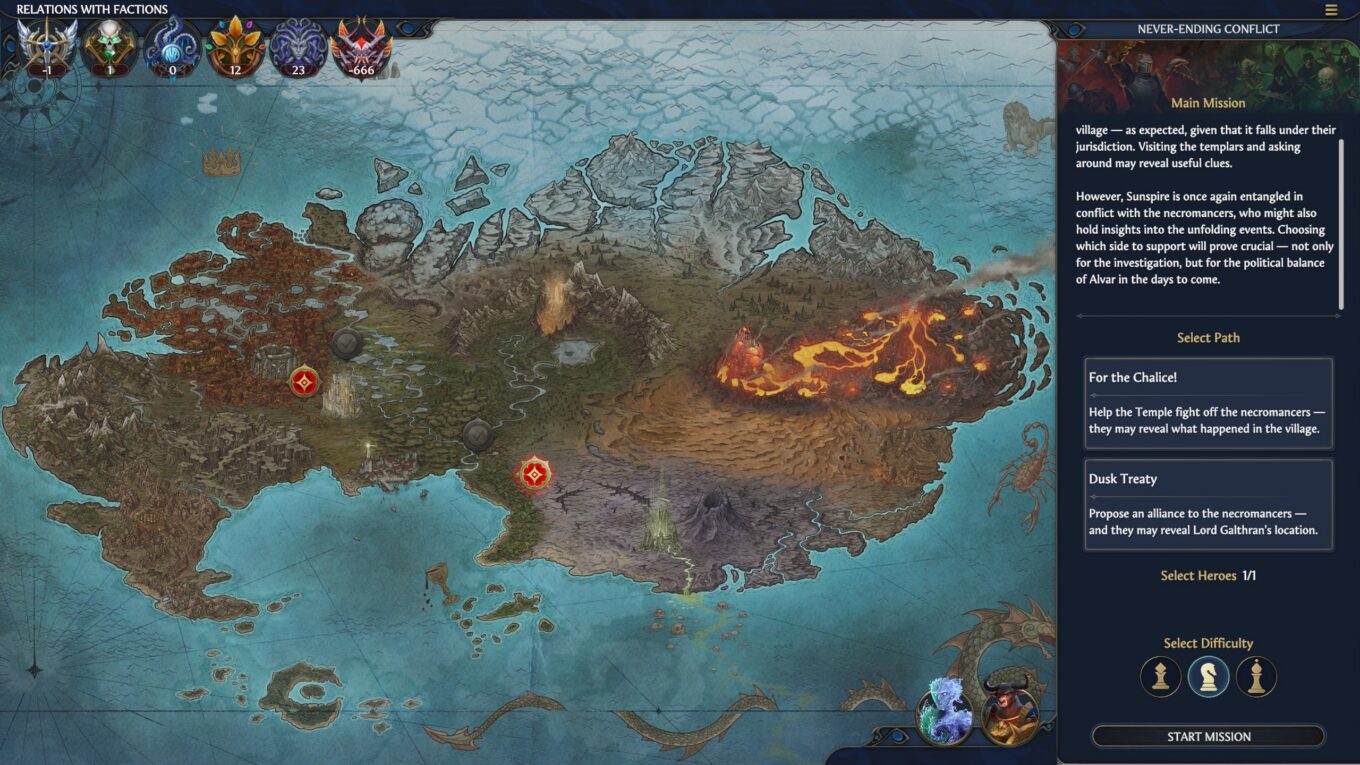
I should probably just send them to their deaths, since it’s actually inadvisable to mix units from different factions. Those wights and humans might allow for some interesting combos on these hex-based battlefields, but my knights are funny about sharing tents with walking corpses, the divas.
Which isn’t great for morale – a deceptively powerful stat that gives my units the chance to take two turns in a row. In one of the game’s well-hidden advanced tutorials (marked as ‘challenges’ on the menu), I learn that keeping my army single-faction also allows faster map travel on that faction’s terrain.
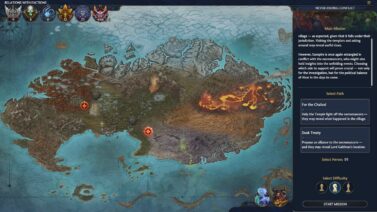
Or, to be more precise, I learn it by watching someone else beat the challenge on YouTube. This isn’t the only system in Olden Era kept obscured until you go poking around in wikis and menus, although the two-part tutorial does a fine job of conveying the basics. This is unlikely to be a problem for returning veterans, although it did mean that the story of my first hours with the game was structured as follows: Part one: “This is incredibly shallow and easy”. Part Two: “Oh bother, I’m getting my shit kicked in by skeletons” Part three: “This is actually quite complex and nuanced, I’m simply an idiot. Also, I’m still getting my shit kicked in by skeletons.”
Which doesn’t make for the most heartening introduction, but a charming campaign goes a long way toward keeping me motivated. There’s no getting around the glow of the bright, chirpy artstyle, but it suits the tone here, and there’s enough flair and detail to prevent it sliding into the sanded-down, candified visuals of Blizzard’s ubiquitous influence on fantasy.
But what really caught me off guard here was the writing. Firstly, there’s a lot more of it than I’d expected. The standard narrative mission bookends you usually get with strategy games are here, sure, but each mission is also dotted with side quests and other encounters. It makes things feel alive, full, and rich; gives you a reason to care about the place. Alongside this, there’s choices as early as the third mission around which factions to side with, affecting a reputation system.
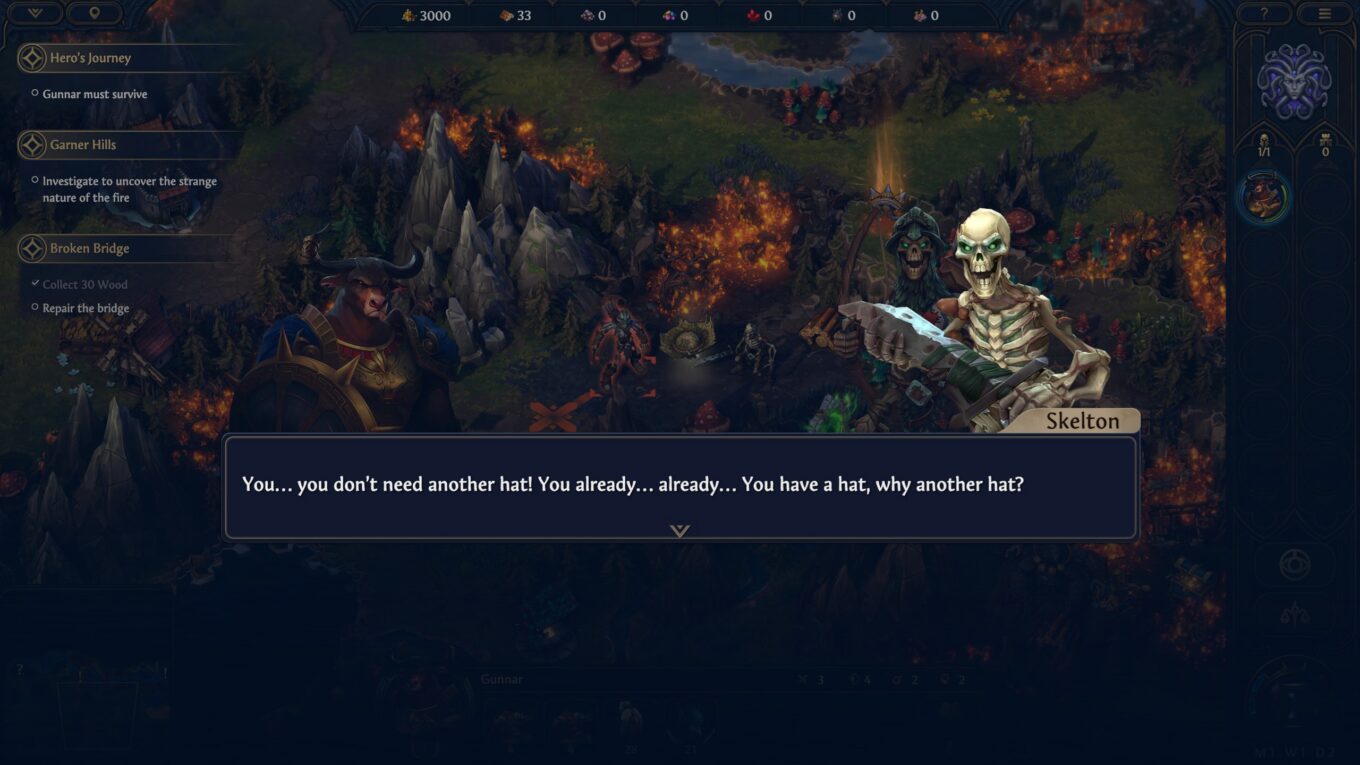
There’s also just a casual, natural humour to the writing. It’s almost low fantasy, in that it feels believable how these fantastic creatures might chat to each other. There’s plenty of high fantasy silliness – and just plain silliness – too, but even this is free of too much archaic overwriting or ill-fitting contemporariness.
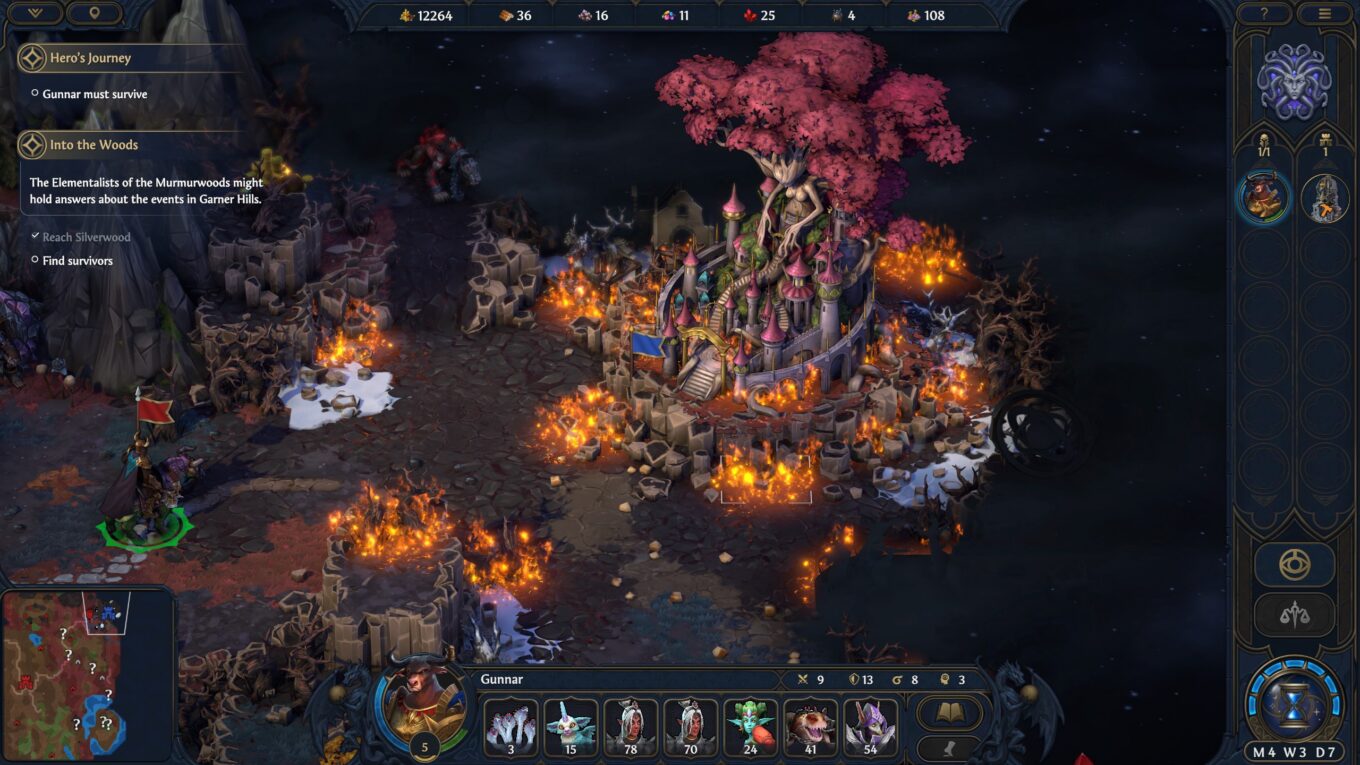
There’s also some real tension and pathos. Trying to get to the bottom of the strange eternal fire wreaking havoc through the forest, Gunnar scours the map for a scout. She’s dead when he finds her. The only way to get the information she had is to take a necromancer’s offer to resurrect her as a spirit. Once risen, she scolds Gunnar for selfishly burdening her with inescapable undeath. There’s no option to quip back at her, none of the flippant snark the artstyle’s friendliness might suggest, no attempt at lighthearted irony that just ends up shattering any sense of a world with heft or consequence. Gunnar can simply demand the information, or tell her he’s sorry.
It’s a lot more than I’d have expected from a game that is, fundamentally, about rushing around scooping up treasure and trinkets to make sure your little map goblins hit harder than your opponent’s little map goblins. There are no actual goblins here, mind, although there are halflings, who I consider to be basically goblins but with cast iron pans and body hair.
I’m sure you can recruit some, eventually, although my only encounters with them so far have been scouring their shires with extreme prejudice. It was slightly disappointing to learn that my initial ironclad strategy (filling my army with ranged units and murdering everything before it got close) doesn’t work for very long. Combat is another part of Olden Age that presents itself as simple, then cranks up the consequences for not learning the nuances.
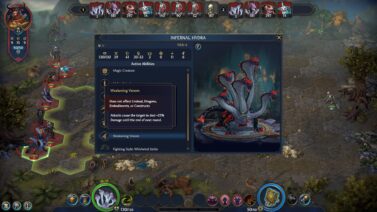
Among those nuances are approximately twelve billion spells I’d have appreciated being introduced at a slower rate, alongside stat cards for each unit detailing latent abilities that activate in certain circumstances. It’s a lot of reading, basically, and a lot of comparing stat lines.
I’m conscious this might come across me moaning about a strategy game having strategy in it. But it’s more that the onboarding process, spread out and often tucked away as it is, does lead to the game both selling itself short and overwhelming the player as you’re getting used to everything.
Broadly, combat is a game of using those twelve billion spells to shore up weaknesses while you allow yourself as many attacks as possible, while also denying your opponent as many attacks as possible. Key to this are once-per-turn counterattacks. It’s a game of positioning, and of weakening more threatening units so they’re less effective come their own turn. Like the rest of the game, it grows more engaging the more you understand about it.
I’m left with a list of both small frustrations and small encounters that brought me an immense amount of joy. Each human peasant you meet shares the same illustration that suggests every farmer in this world constantly carries a small pig under their arm while going about their daily business. Molten hellhounds whine like hungry puppies while you pelt them with arrows. There’s a human character simply named ‘Inquisitor’, who I remember because I simply wrote the word ‘INQUISITOR!’ in all-caps in my notes. He is the most Inquisitor-ass looking Inquisitor imaginable. He reads from a glowing book and I am sure no one has ever loved their job more than him.
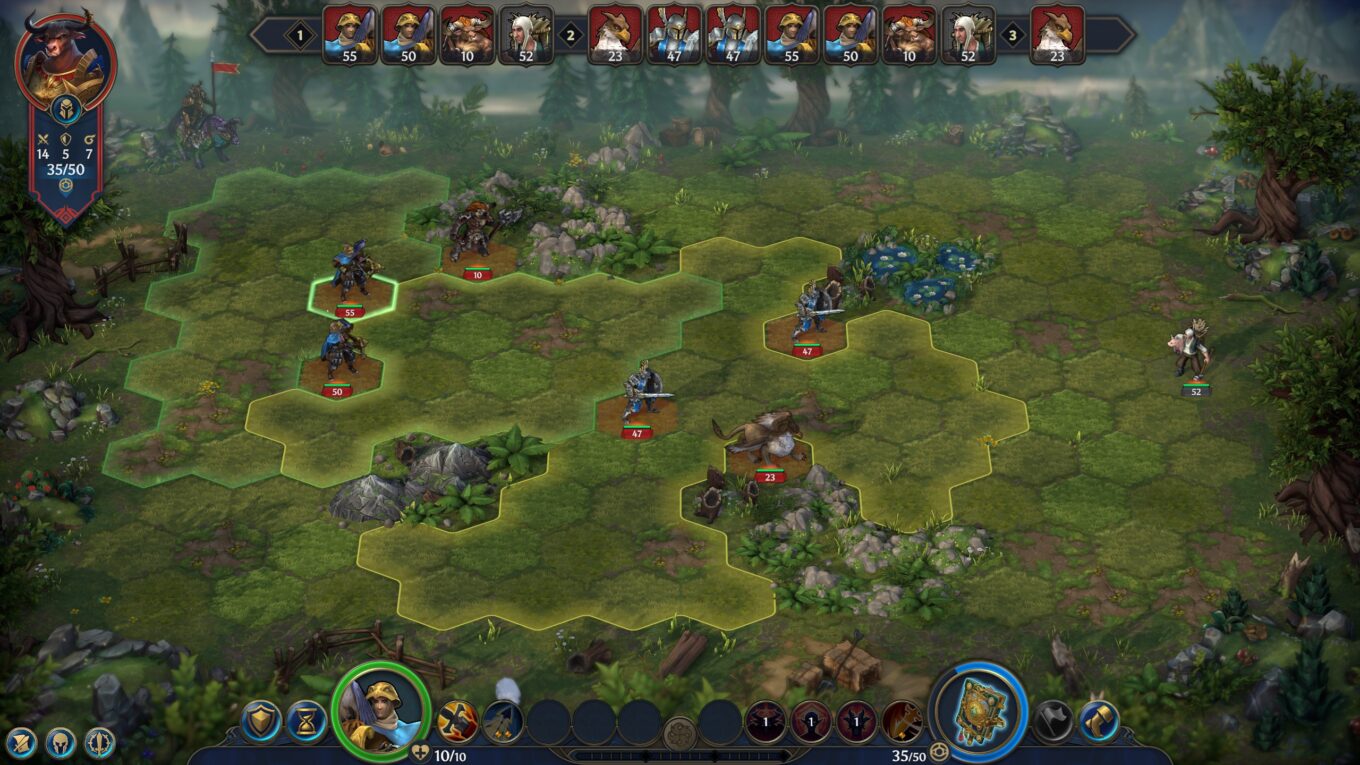
It is far too easy to click on an encounter you’re not strong enough for, and if you try to retreat, your entire army gets wiped out, leaving me to wonder what the point of a retreat button is in the first place. Many of the units expensive alt abilities just let you target two units for less damage to each, which I’ve never found a use for. The early campaign missions allow you to camp outside neutral recruitment building forever filling your roster with units – an awful introduction to a game that will introduce pressure from enemy factions on the next mission. But awful introductions are sort of a running theme here. A shame, because as soon as I stop being angry about the hoops Olden Era made me jump through to get a basic idea of anything beyond the absolute basics, I’m excited to jump right back in.